Mario Damen and Kim Overlaet (eds.), Constructing and Representing Territory in Late Medieval and Early Modern Europe – Amsterdam University Press, December 2021 (available open access)

Mario Damen and Kim Overlaet (eds.), Constructing and Representing Territory in Late Medieval and Early Modern Europe – Amsterdam University Press, December 2021

The book is available open access
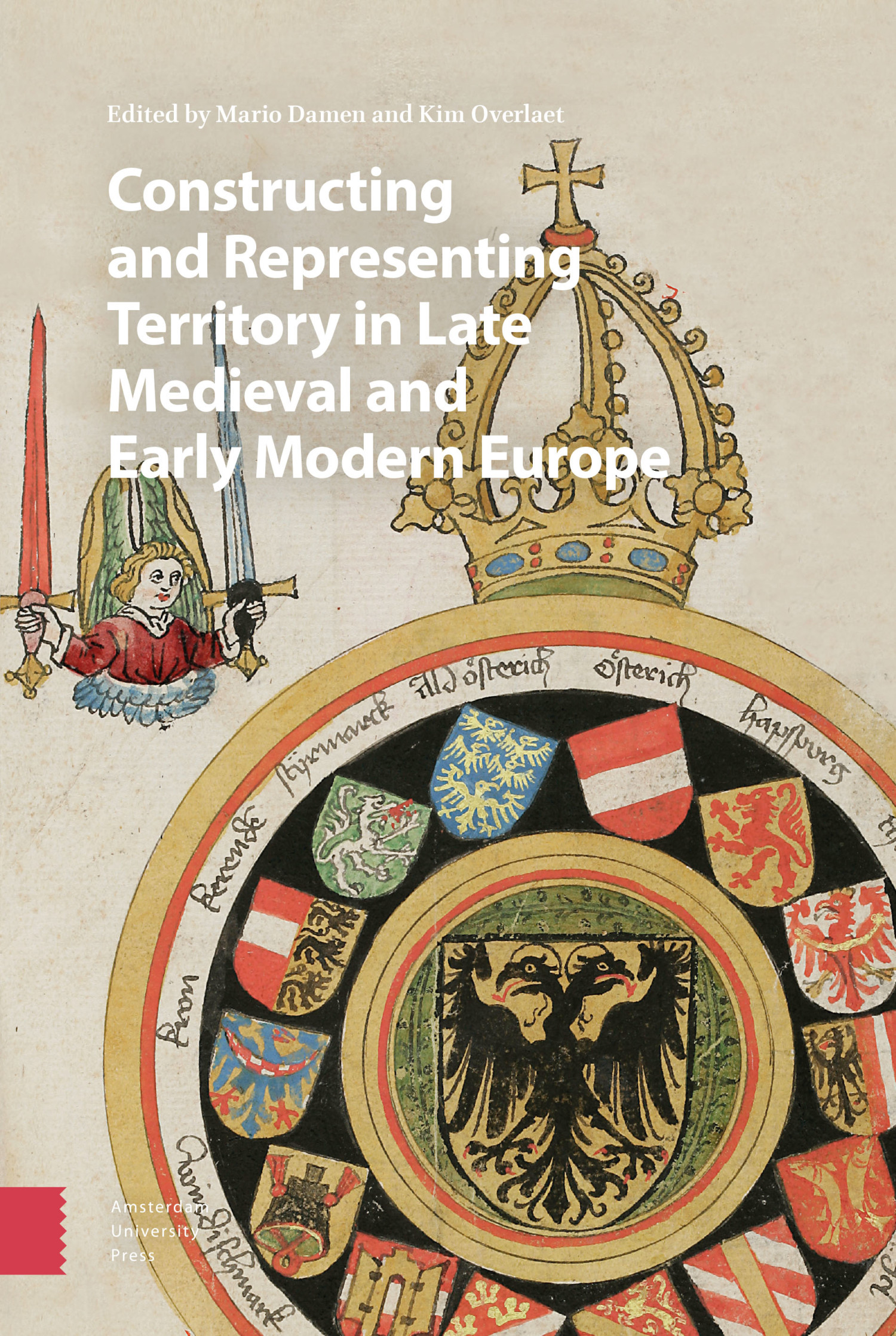
In recent political and legal history, scholars seldom specify how and why they use the concept of territory. In research on state-formation processes and nation building, for instance, the term mostly designates an enclosed geographical area ruled by a central government. Inspired by ideas from political geographers, this book explores the layered and constantly changing meanings of territory in late medieval and early modern Europe before cartography and state formation turned boundaries and territories into more fixed (but still changeable) geographical entities. Its central thesis is that assessing the notion of territory in a pre-modern setting involves analysing territorial practices: practices that relate people and power to space(s). The essays in this book not only examine the construction and spatial structure of pre-modern territories but also explore their perception and representation through the use of a broad range of sources: from administrative texts to maps, from stained-glass windows to chronicles.

Posted in Territory | Leave a comment

Foucault Studies 31 now published (open access)

Foucault Studies 31 now published. As ever, all articles are open access.

It includes a symposium on Richard Shusterman’s Ars Erotica and the collection of the Prison Information Group’s Intolerable, other articles and reviews.

The entire issue can be downloaded here; table of contents with individual article download links here.

Posted in Michel Foucault | Leave a comment

Books received – Kristeva, Santos, Moir, Puhvel

Mainly bought second-hand for the new project, along with Milton Santos, For a New Geography, sent by University of Minnesota Press, and Cat Moir, Ernst Bloch’s Speculative Materialism.

Posted in Uncategorized | Leave a comment

The Summer of Theory: History of a Rebellion, 1960-1990 (2021)

Philipp Felsch, The Summer of Theory: History of a Rebellion, 1960-1990, (Translated by Tony Crawford), Polity, 2021

Clare O'Farrell's avatarFoucault News

Philipp Felsch, The Summer of Theory: History of a Rebellion, 1960-1990, (Translated by Tony Crawford), Polity, 2021

‘Theory’ – a magical glow has emanated from this word since the sixties. Theory was more than just a succession of ideas: it was an article of faith, a claim to truth, a lifestyle. It spread among its adherents in cheap paperbacks and triggered heated debates in seminar rooms and cafés. The Frankfurt School, Structuralism, Post-Structuralism, Adorno, Derrida, Foucault: these and others were the exotic schools and thinkers whose ideas were being devoured by young minds. But where did the fascination for dangerous thoughts come from?

In his magnificently written book, Philipp Felsch follows the hopes and dreams of a generation that entered the jungle of difficult texts. His setting is West Germany in the decades from the 1960s to the 1990s: in a world frozen in the Cold War, movement only…

View original post 98 more words

Posted in Uncategorized | 1 Comment

Milton Santos, The Nature of Space and For a New Geography, with a commentary at Progress in Political Economy [and discussion at New Books Network]

Milton Santos, The Nature of Space, translated by Brenda Baletti (Duke, 2021).

In The Nature of Space, pioneering Afro-Brazilian geographer Milton Santos attends to globalization writ large and how local and global orders intersect in the construction of space. Santos offers a theory of human space based on relationships between time and ontology. He argues that when geographers consider the inseparability of time and space, they can then transcend fragmented realities and partial truths without trying to theorize their way around them. Based on these premises, Santos examines the role of space, which he defines as indissoluble systems of objects and systems of actions in social processes, while providing a geographic contribution to the production of a critical social theory.

Milton Santos, For a New Geography, translated by Archie Davis (Minnesota, 2021)

Originally published in 1978 in Portuguese, For a New Geography is a milestone in the history of critical geography and it marked the emergence of its author, Milton Santos (1926–2001), as a major interpreter of geographical thought, a prominent Afro-Brazilian public intellectual, and one of the foremost global theorists of space.

Published in the midst of a crisis in geographical thought, For a New Geography functioned as a bridge between geography’s past and its future. In advancing his vision of a geography of action and liberation, Santos begins by turning to the roots of modern geography and its colonial legacies. Moving from a critique of the shortcomings of geography from the field’s foundations as a modern science to the outline of a new field of critical geography, he sets forth both an ontology of space and a methodology for geography. In so doing, he introduces novel theoretical categories to the analysis of space. It is, in short, both a critique of the Northern, Anglo-centric discipline from within and a systematic critique of its flaws and assumptions from outside.

There is a commentary by David Avilés Espinoza at Progress in Political Economy.

And a discussion at New Books Network with Archie Davis.

Posted in Uncategorized | 2 Comments

Cat Moir, Ernst Bloch’s Speculative Materialism – discussion, 14 December 2021

Beginning soon – the video stream is here https://www.youtube.com/watch?v=eYvjwe2OcDk

Update – ignore above link, please go to new link – https://www.youtube.com/watch?v=OAbO7tQS-fM

stuartelden's avatarProgressive Geographies

Cat Moir,Ernst Bloch’s Speculative Materialism: Ontology, Epistemology, Politics– hardback Brill 2019; paperbackHaymarket, 2020

Discussion 14 December 2021, 5pm – details and registration here

Update: the stream of this discussion will be here

Cat Moir’s 2020 book Ernst Bloch’s Speculative Materialism: Ontology, Epistemology, Politics (Historical Materialism Books, Brill & Haymarket Books) situates Bloch’s philosophy in the context of historical and contemporary debates about utopianism, science, and the theoretical and practical tasks of Marxism. Bloch’s project of a speculative materialism was famously dismissed by Jürgen Habermas as naïve and outdated. By reconstructing it and bringing it into conversation with current work in new materialism and ecological Marxism, Moir demonstrates its relevance for illuminating questions of agency and the human-nature relation that concern us today.

This online roundtable discussion broadcast by Historical Materialism brings together respondents with a wide range of relevant expertise to discuss the issues raised by…

View original post 30 more words

Posted in Uncategorized | Leave a comment

Shifting Territory and Sovereignty: People, Place and Power – interview on Radio Northern Beaches

Shifting Territory and Sovereignty: People, Place and Power – interview on Radio Northern Beaches with Michael Lester, Not a great recording of my voice, but hopefully listenable.

in conversation with stuart elden, professor, political theory and geography, warwick university, uk, a specialist in the study of ‘territory’ as a ‘modern’ idea of’exclusive property ownership (his book “the birth of territory”) we explore the birth of the concept, its history and development on a global scale, and its bearing on understanding contemporary challenges to territorial sovereignty as illustrated by the war on terror, the middle east, and the displacement of indigenous cultures with their unique concepts of the relationships between people, place and power. The modern notion is historically produced and the discussion reflects the pluralism of ways of thinking about territory.

Posted in Boundaries, Michel Foucault, Shakespearean Territories, Territory, Terror and Territory, The Birth of Territory, William Shakespeare | Leave a comment

Foucault in the Panopticon (2021)

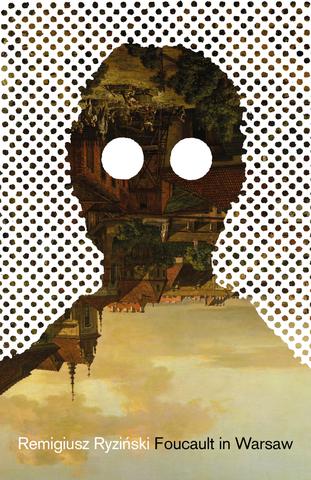
Remigiusz Ryziński’s Polish book on Foucault’s time in Warsaw now in English translation

Clare O'Farrell's avatarFoucault News

Foucault in the Panopticon
How Michel Foucault’s encounters in Poland’s heavily policed gay community informed his ideas
GEOFF SHULLENBERGER | Reason, FROM THE DECEMBER 2021 ISSUE

In 1958, the 32-year-old philosopher Michel Foucault arrived in Poland to assume the directorship of the Centre Français in Warsaw. Less than a year later, he abruptly left the country. According to a rumor that circulated for years, this rapid exit was precipitated by a sexual liaison with a young man who turned out to be on the payroll of the communist state’s secret police. Amid the minor scandal that ensued, the French embassy requested Foucault’s resignation and departure from Poland. His biographers have treated this Polish sojourn and the incident that brought it to an end as a footnote to his early career, covering it in a few pages.

In Foucault in Warsaw, first published in Polish in 2017 and now available…

View original post 37 more words

Posted in Uncategorized | Leave a comment

Angela Davis: An Autobiography – new edition, Haymarket, January 2022

Angela Davis: An Autobiography – new edition, Haymarket, January 2022

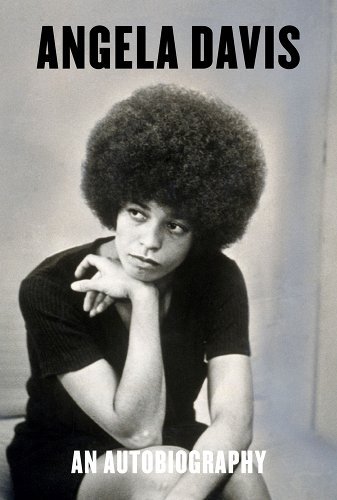
Angela Davis has been a political activist at the cutting edge of the Black Liberation, feminist, queer, and prison abolitionist movements for more than 50 years. First published and edited by Toni Morrison in 1974, An Autobiography is a powerful and commanding account of her early years in struggle. Davis describes her journey from a childhood on Dynamite Hill in Birmingham, Alabama, to one of the most significant political trials of the century: from her political activity in a New York high school to her work with the U.S. Communist Party, the Black Panther Party, and the Soledad Brothers; and from the faculty of the Philosophy Department at UCLA to the FBI’s list of the Ten Most Wanted Fugitives. Told with warmth, brilliance, humor and conviction, Angela Davis’s autobiography is a classic account of a life in struggle with echoes in our own time.

Posted in Uncategorized | Leave a comment

GUY DEBORD’S LETTERS & LIBRARY

Very interesting piece by Andy Merrifield about Guy Debord’s reading and writing.

Andy Merrifield's avatarandy merrifield

 Guy Debord has been dead twenty-seven years today. In Panegyric, his elegiac autobiography, the author of The Society of the Spectacle famously said that more than anything else his life had been marked by the habit of drinking, by consuming alcohol. “Among the small number of things I have liked and known how to do well,” he said, “what I have assuredly known how to do best is drink. Even though I have read a lot, I have drunk even more. I have written much less than most people who write, but I have drunk much more than most people who drink.”

Yale University’s Beinecke Library houses many black and white photos of Debord, taken in Italy during the 1970s. These comprise part of the archive of the Italian Situationist Gianfranco Sanguinetti, Debord’s close friend and political confidant. The images are tremendously evocative of the times, when radical…

View original post 4,522 more words

Posted in Uncategorized | Leave a comment