Indo-European thought in twentieth-century France – the next major project

Although the manuscript on Foucault in the 1960s is not complete, the end is in sight, and I hope to have most of it done by early 2022. That book will complete my four-volume intellectual history of Foucault’s entire career. That’s the main thing I’ve been working on since 2013, although parts of the work date back to much earlier – I was working on the Collège de France courses from the first publications in the late 1990s and early 2000s. Bringing that to a close feels like the end of a significant era in my work. For the past couple of years I’ve been thinking about what might come next. 

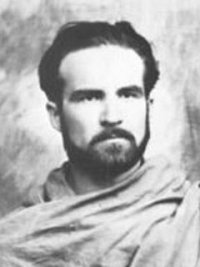
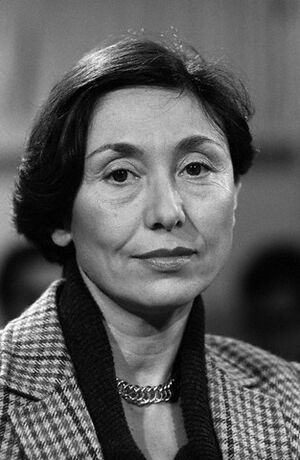
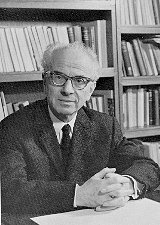
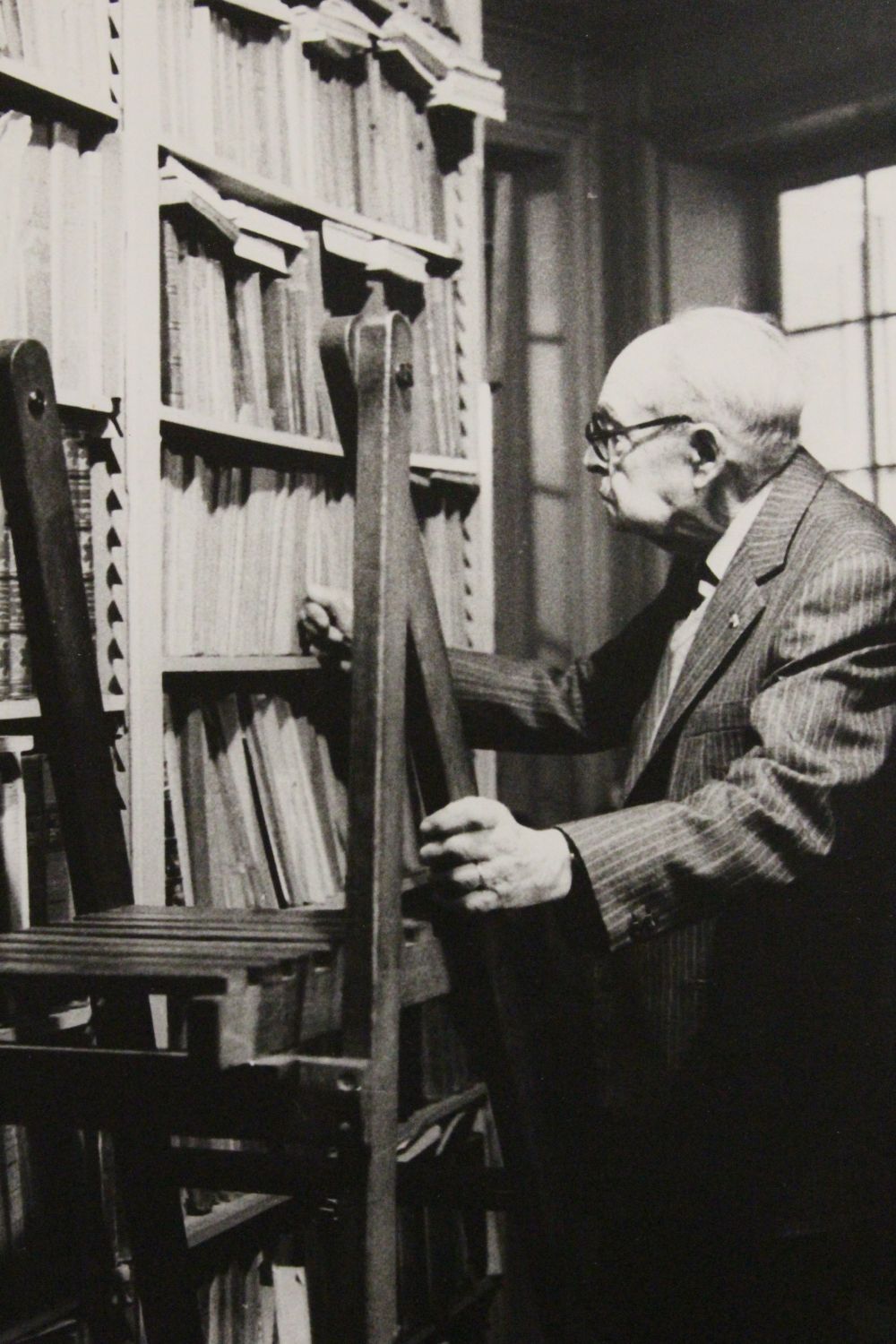
Although I debated some other ideas, the next major project will be a study of Indo-European thought in twentieth-century France, looking at both French and émigré scholars, with a particular focus on Emile Benveniste, Georges Dumézil, Mircea Eliade and Julia Kristeva. 

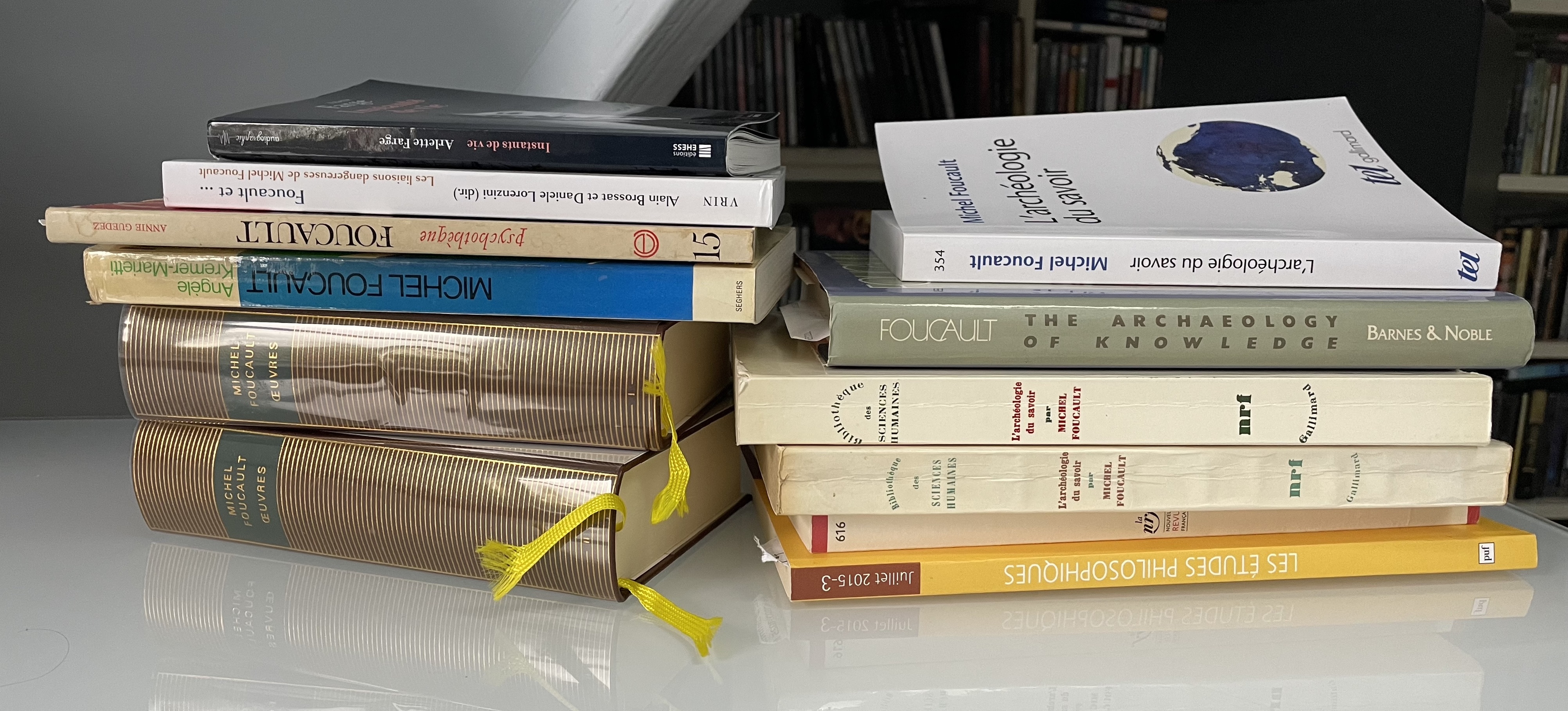
As people who follow the blog, and especially the ‘books received’ posts may realise, I’ve been slowly building up a collection of their books. While some of Dumézil and Benveniste’s French books are still in print, many of the early ones are very hard to find, and often expensive. The relatively few English translations of Dumézil are nearly all out of print, and again rather expensive second-hand. Benveniste’s major works in English are either available again in a new edition or about to be. But there is a lot of earlier work which is hard to find. Books by Eliade and Kristeva are generally easier to locate. There is some secondary literature on them all, but not much in English on these questions in their work. There are extensive archives in France and Eliade’s papers are in Chicago.
This project will be generously funded by a Leverhulme major research fellowship, to run for three years from 1 October 2022. Here’s the opening part of the grant proposal I submitted.

What is Europe? Where is it located, who are its people and what languages do they speak? Thinking historically about these questions usually traces a lineage from classical Greece and Rome, through the Christianization of late antiquity and the Middle Ages to the present. In this fellowship I will explore a quite different tradition of thinking. This is the pioneering research conducted on Indo-European mythology, language and thought in twentieth-century France, by both French and émigré scholars. 

Indo-European scholarship makes a central contribution to Europe’s self-understanding and its relation to the wider world. Although twentieth-century French scholarship has often been accused of Eurocentrism or orientalism, this fellowship will explore a much more complicated picture. This tradition shows the importance of extra-European sources in India and Iran, and the crucial role of Europe’s geographical peripheries – Ireland, Scandinavia and the Caucasus as well as its core of Greece, Rome, France and Germany. The vision of a classical world that emerges is much more unsettling and unfamiliar than uncritical lineages from antiquity to the modern West might suggest. This tradition therefore situates Europe within a broader heritage which challenges many of the boundaries drawn in more conventional accounts, both geographical, linguistic and racial. 

While French theory has been extensively discussed in Anglophone scholarship, with studies and biographies of nearly all the key figures and movements, the work on Indo-European thought has not been analysed in the same way, despite its importance and often obscured influence. This project will explore this body of work in detail. Four thinkers will be examined in particular: the comparative mythologist and philologist Georges Dumézil (1898-1986), the linguist Émile Benveniste (1902-1976), and two émigré scholars who worked in France, Mircea Eliade (1907-1986) and the early work of Julia Kristeva (1941-). For this project I will utilise the approach I have developed and successfully employed in previous work. My research is distinguished by working with texts in their original language, comparative work between editions, the use of archival sources, and a careful contextualisation of the history of ideas. The research will therefore be historical, philological and philosophical in its approach, and political, geographical and sociological in its importance.

As expansive as this work was, one crucial and troubling question is what is meant by Indo-European? A hypothetical language, from which others developed; a civilisation, with myths and history; or, most problematically, a racial ideal? These questions are inherently political, and there are controversies around this work which need to be fully explored. Such issues remain important and pressing today with a rise of populism, nationalism and reactionary politics, as well as a crisis of democracy and the appropriate of mythology by the right. A historical study, embedding these writings in an intellectual context and a European network of ideas, is thus both timely as well as overdue.

There is a page for the project here, though at the moment it only gives the above information. I plan to update it when I begin work next year. The first major task will be a critical edition of Georges Dumézil’s Mitra-Varuna: An Essay on Two Indo-European Concepts of Sovereignty. I have a chapter on Foucault and Dumézil forthcoming, and may write another piece on Foucault’s use of his work. But for now the focus is completing the final Foucault book.


Posted in Emile Benveniste, Georges Dumézil, Julia Kristeva, Mapping Indo-European Thought in Twentieth Century France, Michel Foucault, Mircea Eliade, The Archaeology of Foucault, Uncategorized | Leave a comment

Alex Danchev, Magritte: A Life – Profile, November 2021

Alex Danchev, Magritte: A Life – Profile, November 2021

Great to see this book is now out – completed after Danchev’s untimely death by Sarah Whitfield. There is a review in The Guardian.

‘The first significant biography of the artist’ Michael Prodger, The Times’ ‘Best art books of 2021’

‘For those who love Magritte and those who do not, Danchev’s biography will come as a revelation’ Literary Review

‘[A] monumental biography of the inimitable surrealist artist … sure to be the definitive account of the extraordinary artist’s life’ Publishers Weekly

The first major biography for our time, from the celebrated biographer of Cézanne

René Magritte’s surreal sensibility, deadpan melodrama, and fine-tuned outrageousness have all become inescapably part of our times. But these groundbreaking subversions all came from a middle-class Belgian gent, who kept a modest house in a Brussels suburb and whose first one-man show sold absolutely nothing. 

Through a deep examination of Magritte’s friendships and his artistic development, Alex Danchev explores the path of an highly unconventional artist who posed profound questions about the relationship between image and reality, challenged the very nature of authenticity and whose influence can be seen in the work of everyone from Jasper Johns to Beyoncé.

Posted in Uncategorized | 1 Comment

Eileen Hunt Botting (ed.), Portraits of Wollstonecraft, two volumes, Bloomsbury, May 2021

Eileen Hunt Botting (ed.), Portraits of Wollstonecraft, two volumes, Bloomsbury, May 2021

A major, and very expensive, reference work on Mary Wollstonecraft.

Mary Wollstonecraft’s watershed contribution to theories of women’s human rights and her international reception by both Western and non-Western intellectuals has ensured she continues to shape contemporary human rights debates around the world. Bringing together over 100 individual responses to Wollstonecraft’s life and work, Portraits of Wollstonecraft documents her international and cross-cultural reception from the late 18th-century to the early 21st-century.

Reflecting on over two centuries of responses to her political ideas, writing, and philosophy, it counters the persistent myth that she ceased to be read in the aftermath of the publication of her husband William Godwin’s scandalous posthumous Memoirs of her life in 1798. Beginning with her earliest portraiture and the first reviews of her published writings from the late 1780s, Volume I traces her emergence as an international public figure of women’s rights in her life, work, and philosophical, literary, and artistic reception throughout Britain, Ireland, Continental Europe, North and South America, and across the British Empire and its former colonies from Jamaica to India to South Africa. Volume II focuses on Wollstonecraft’s posthumous philosophical, literary, and artistic reception, especially within modern strands of feminism, by assembling responses from China, Japan, and South Korea as well as writing by Mary Shelley, Emma Goldman, Ruth Benedict, Virginia Woolf, Simone de Beauvoir, Betty Friedan, Susan Moller Okin, Barbara Johnson, Martha Nussbaum, and Amartya Sen that discusses her theories of virtue, love, gender, education, and rights.

Bringing to light many forgotten accounts and images of Wollstonecraft, pieces by major thinkers from across the history of philosophy, and 31 annotated illustrations showing her development into a feminist icon, Portraits of Wollstonecraft achieves what no other work on Wollstonecraft has yet to do. This comprehensive collection charts the depth and breadth of her legacies for philosophy, political theory, ethics, literature, art, and feminism on a global scale.

Posted in Uncategorized | Leave a comment

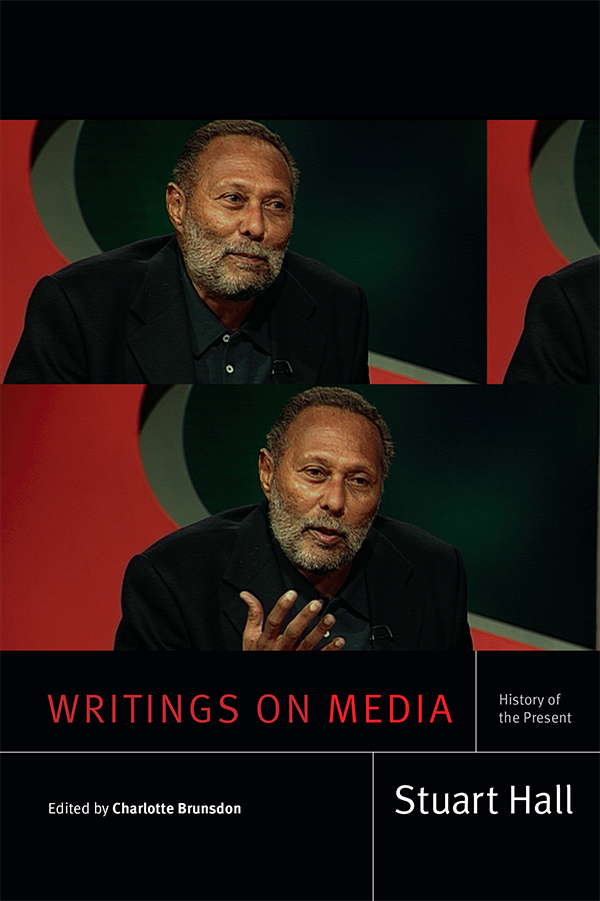
Stuart Hall, Writings on Media: History of the Present – Duke University Press, November 2021; and BBC Sounds ‘Afterwords: Stuart Hall’

Stuart Hall, Writings on Media: History of the Present, edited by Charlotte Brunsdon – Duke University Press, November 2021. This is the latest volume in the Selected Writings series.

Writings on Media gathers more than twenty of Stuart Hall’s media analyses, from scholarly essays such as “Encoding and Decoding in the Television Discourse” (1973) to other writings addressed to wider publics. Hall explores the practices of news photography, the development of media and cultural studies, the changing role of television, and how the nation imagines itself through popular media. He attends to Britain’s imperial history and the politics of race and cultural identity as well as the media’s relationship to the political project of the state. Testifying to the range and agility of Hall’s critical and pedagogic engagement with contemporary media culture—and also to his collaborative mode of working—this volume reaffirms his stature as an innovative media theorist while demonstrating the continuing relevance of his methods of analysis.

BBC Sounds – Afterwords: Stuart Hall

Posted in Stuart Hall, Uncategorized | Leave a comment

Keith Tribe, Constructing Economic Science: The Invention of a Discipline 1850-1950 – OUP, December 2021

Keith Tribe, Constructing Economic Science: The Invention of a Discipline 1850-1950 – OUP, December 2021. Only expensive hardback and e-book at the moment, unfortunately.

During the late nineteenth century concerns about international commercial rivalry were often expressed in terms of national provision for training and education, and the role of universities in such provision. It was in this context that the modern university discipline of economics emerged. The first undergraduate economics program was inaugurated in Cambridge in 1903; but this was merely a starting point. 

Constructing Economic Science charts the path through commercial education to the discipline of economics and the creation of an economics curriculum that could then be replicated around the world. Rather than describing this transition epistemologically, as a process of theoretical creation, Keith Tribe shows how the new “science” of economics was primarily an institutional creation of the modern university. He demonstrates how finance, student numbers, curricula, teaching, new media, the demands of employment, and more broadly, the international perception that industrializing economies required a technically-skilled workforce, all played their part in shaping economics as we know it today. This study explains the conditions originally shaping the science of economics, providing in turn a foundation for an understanding of the way in which this new language transformed public policy.

Posted in Uncategorized | Leave a comment

Cat Moir, Ernst Bloch’s Speculative Materialism – discussion, 14 December 2021

Cat Moir, Ernst Bloch’s Speculative Materialism: Ontology, Epistemology, Politics – hardback Brill 2019; paperback Haymarket, 2020

Discussion 14 December 2021, 5pm – details and registration here

Update: the stream of this discussion will be here

Cat Moir’s 2020 book Ernst Bloch’s Speculative Materialism: Ontology, Epistemology, Politics (Historical Materialism Books, Brill & Haymarket Books) situates Bloch’s philosophy in the context of historical and contemporary debates about utopianism, science, and the theoretical and practical tasks of Marxism. Bloch’s project of a speculative materialism was famously dismissed by Jürgen Habermas as naïve and outdated. By reconstructing it and bringing it into conversation with current work in new materialism and ecological Marxism, Moir demonstrates its relevance for illuminating questions of agency and the human-nature relation that concern us today.

This online roundtable discussion broadcast by Historical Materialism brings together respondents with a wide range of relevant expertise to discuss the issues raised by Moir’s book with the author. 

Cat Moir, University of Sydney

Helena Sheehan, Dublin City University

Dan Hartley, Durham University

Sebastian Truskolaski, University of Manchester

Thomas Telios, University of St. Gallen

Posted in Uncategorized | 1 Comment

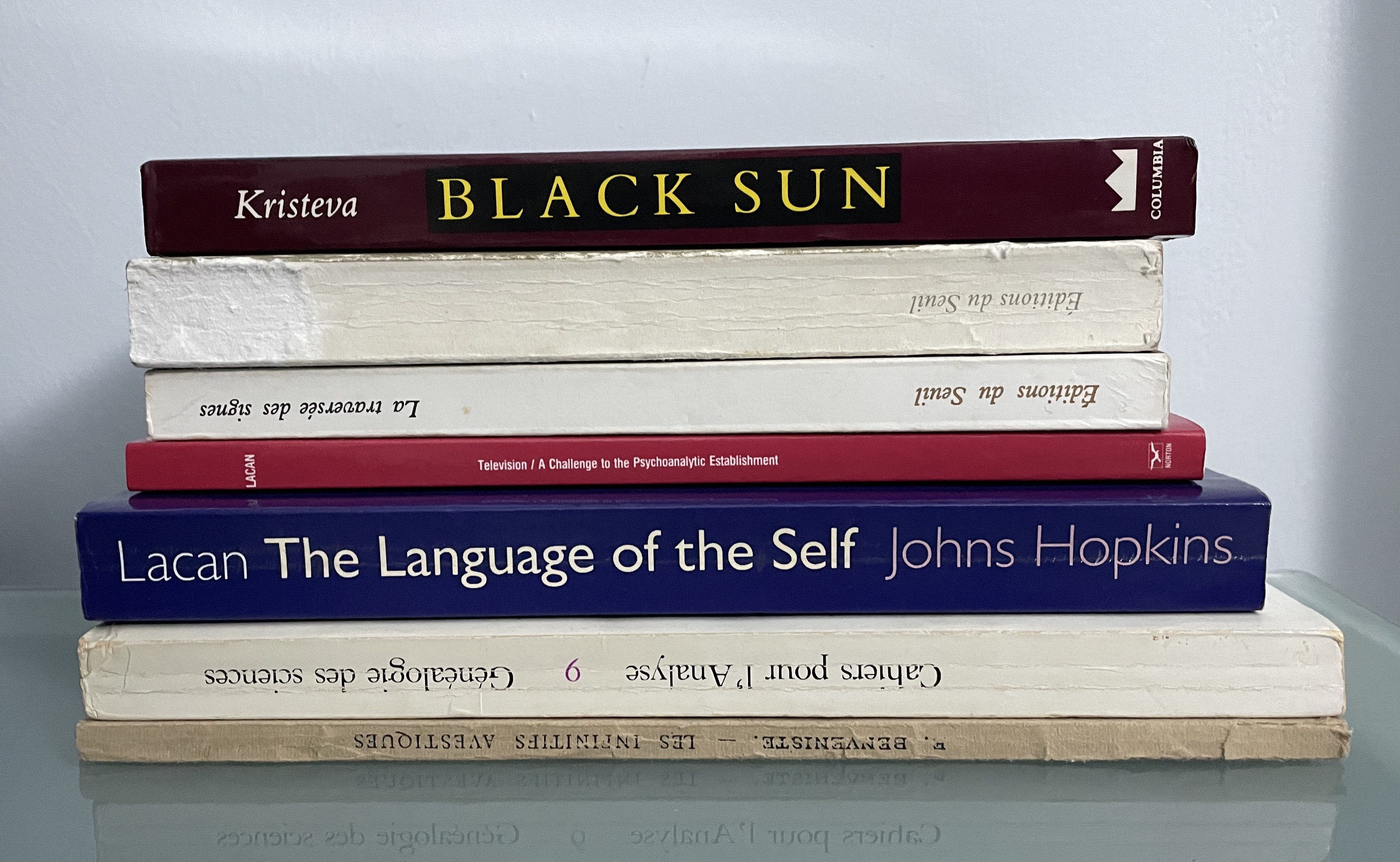
Books received – Kristeva, Lacan, Cahiers pour l’analyse, Benveniste

All bought second-hand, including the issue of Cahiers pour l’analyse with the questions to Foucault and his reply.

Posted in Emile Benveniste, Jacques Lacan, Julia Kristeva, Michel Foucault, The Archaeology of Foucault | Leave a comment

Philosophy and the Rise of Fascism: A Symposium on Lukács’s Destruction of Reason, New York, 1-3 February 2022

Philosophy and the Rise of Fascism: A Symposium on Lukács’s Destruction of Reason

Join us for a three-day online symposium on György Lukács’s 1954 work, The Destruction of Reason, one of the most important works of philosophy in the 20th century.

February 1st, 2nd and 3rd 2022
5:00 – 8:00 pm (New York time)
RSVP: https://destructionofreason.eventbrite.com

Presenters
Mariana Teixeira, Freie Universität Berlin
Vanessa Wills, George Washington University
Dirk Moses, University of North Carolina at Chapel Hill
Adrian Johnston, University of New Mexico
Daniel Lopez, Jacobin Magazine
Ishay Landa, Open University of Israel
Margit Köves, Delhi University
Carl Sachs, Marymount University
Tijana Okić, Scuola Normale Superiore

Hosted by
Study Groups On Psychoanalysis and Politics
Verso Books
Deakin University

Organized by
Daniel Tutt, Study Groups on Psychoanalysis and Politics
Matthew Sharpe, Deakin University

Questions: danielp.tutt@gmail.com

Posted in Uncategorized | Leave a comment

The Archaeology of Foucault update 12: archival work in Paris on drafts of The Archaeology of Knowledge and Foucault’s notebooks

As the last update on this book said, I was able to make a trip to Paris over reading week. I spent most of the time at the BNF working on archival materials related to The Archaeology of Knowledge. There is a manuscript on philosophical discourse, probably written in 1966, which seems to be an abandoned book project; a complete early draft of what became the book; and substantial fragments of another draft. The record is incomplete, and there are a lot of question marks around dating and sequence, but this is more preparatory material than any other of Foucault’s published books, with the exception of the second and third volumes of the History of Sexuality. In that case, this seems to be because Foucault was in hospital and unable to destroy these draft materials. I discuss those in Foucault’s Last Decade.

Some parts of the Archaeology materials are already published, with the introduction to one draft in Cahier de l’Herne, and the Introduction to the other draft in Les Études philosophiques along with a piece on Homer in La NRF. A forthcoming volume from Vrin will include more material, and the philosophical discourse text is being edited, along with a lecture course from Tunisia, for a volume in the EHESS/Seuil/Gallimard series of early courses and manuscripts. Those books are still a way off, so while I’m working with what is published, for the most part I’m reliant on the archive itself.

Martin Rueff edited two of the pieces mentioned above, and also edited the text of the book itself for its inclusion in the Pléiade Œuvres. His long text on the book in Œuvres, and the notes to the edited parts of the drafts are helpful, though I disagree with one of his claims. He also mentions that when L’archéologie du savoir went out of print in 1975, the reprint edition was slightly edited by Foucault. I didn’t know this before, and so I’ve now got to compare that to the 1969 edition. It’s a bit frustrating that the comparison wasn’t done for Œuvres, but then it wasn’t done properly for two other texts in that collection which exist in substantially distinct versions, so perhaps unsurprising. Some additional changes were introduced for the Tel reprint of L’archéologie du savoir, but since those were not made or authorised by Foucault, that’s less of a concern, and in any case they seem very minor.

It would be great to be able to say, with confidence, that this manuscript precedes that one, which leads to this one, and then the book. But that does not seem possible on the basis of the evidence available. Rather, it seems that there was simultaneous writing or editing of texts, that some intermediate versions were destroyed or lost, and that the arrangement of material in the archive does not necessarily reflect how Foucault left material in the late 1960s. While some manuscripts have page numbers, others do not, and their order isn’t clear. Foucault moved to Tunisia and back in this period too, which could have led to some textual confusion. Whatever else, there was certainly a version that was delivered to Gallimard, probably typed, and that would suggest a preceding manuscript, neither of which appear in the archive. But I’m now in a position to write the section on The Archaeology of Knowledge itself, which is the last major task for this chapter.

I also spent some time with the ‘intellectual notebooks’ of Foucault. While the majority of papers in the archive are on separate sheets of paper, grouped in folders or in folded sheets, these are school style cahiers, filled with writing – drafts of published texts, unpublished ideas, plans, reading notes, lists, more aphoristic entries, etc. An excerpt from one is in the Sexuality volume edited by Claude-Olivier Doron, who uses them in his notes and context to the text too, and they are occasionally referenced by Foucault’s other editors. Foucault often used the same notebook for two different purposes, writing from the start on one topic, and upside down from the back on another. They begin with notes on Birth of the Clinic and Raymond Roussel in the early 1960s, and run until the 1980s. Unlike almost everything else in the archive, Foucault puts dates before entries, though not always the year. I wish I’d had access to these when I did the research for Foucault’s Last Decade and Foucault: The Birth of Power. There is so much more material available now than when I wrote those books. But the notebooks are certainly a really helpful resource for this book on the 1960s, and so I concentrated on those on this trip.

Right at the end of my visit I looked at a couple of other boxes, including an older one which is a mix of different things. It includes parts of another course from Tunisia, and some material which possibly relates to a Vincennes course. I’d looked at this one before, but wanted to revisit it now I’d drafted sections on those periods. 

There is also yet another fonds of material, newly deposited and not yet catalogued, and I took a look at some of the material in here. It is fascinating and helps to resolve definitively something I’d been troubled with concerning the provenance of one published text (see here). In brief, the Buffalo version of the ‘What is an Author?’ lecture is very different from the one published. The version in Textual Strategies is a different translation of the Paris lecture, with some cuts and a bit of supplementary material from Buffalo. Unfortunately that’s the version in widest circulation in English, reprinted without the important editorial indications in the original English version. But the entire Buffalo lecture is not yet published.

Doing this work also helped to add some precision to some of the claims I’m making elsewhere in this book. This fonds also has a lot of correspondence, of which I looked at the material from universities and other institutions, including a couple of letters to Foucault about overdue library books. Much of the material dates from the early 1980s, shortly before Foucault’s death, so is outside the time period I’m now working on. But there is a lot of useful detail here about some things I discuss in my other Foucault books. There are some indications of what Foucault would have done in the 1984-85 academic year, had he lived. 

I also wanted to look at a few boxes of material relating to the early courses on sexuality, though I didn’t have time. This is not essential given those courses are now published, but there is other material in those boxes which I would have liked to see, though that’s on a different period and more for interest than necessity. But I squeezed a lot into this trip, and have a ton of notes to drawn on as I rework and add to the manuscript. 

I had hoped that I would be able to get back to Paris for one more visit, perhaps in mid-December or early January. But the Richelieu site of the BnF is going through renovation work – it’s been a building site all the years I’ve been going there – and the manuscripts room is closed from mid-January to early-March. Before that, the fonds I am using are being moved, and are unavailable from mid-November. I didn’t know this until I made this trip. I was already trying to squeeze in as much as I could, with a concern that travel might be more challenging in the winter if covid cases rise. As it was, this trip was just in time before the closure.

The two main chapters that still need work are the ones on sexuality, and on madness and medicine. I’ve already co-authored a review essay on the sexuality courses with Alison Downham Moore in Theory, Culture and Society (open access here; Alison’s video abstract here). For these chapters I have a lot of notes, and some finished text. But I think I can rework these without further archival work, and hopefully any new secondary sources I want to read can be found in UK libraries, so I hope to make progress on these chapters in the last part of term and the Christmas break. Submitting the manuscript in early 2022 still seems possible.

Previous updates on this book are hereThe Early Foucault was published by Polity in June 2021, and updates for its writing are here. A list of the resources on this site relating to Foucault – bibliographies, audio and video files, some textual comparisons, some short translations, etc. – can be found here. The earlier books in this series are Foucault: The Birth of Power and Foucault’s Last Decade, both available from Polity.

Posted in Michel Foucault, The Archaeology of Foucault, Uncategorized | 1 Comment

Sheila Hones, Literary Geography – Routledge, May 2022

Sheila Hones, Literary Geography – Routledge, May 2022

Literary Geography provides an introduction to work in the field, making the interdiscipline accessible and visible to students and academics working in literary studies and human geography, as well as related fields such as the geohumanities, place writing, and geopoetics. 

• provides an overview of literary geography as an interdiscipline which combines aims and methods from human geography and literary studies 

Emphasising the long tradition of work with literary texts in human geography, this volume:

• explains how and why literary geography differs from spatially-oriented critical approaches in literary studies

• reviews geographical work with literary texts from the late 19th century to the present day

• includes a glossary of key terms and concepts employed in contemporary literary geography

Accessible and clear, this comprehensive overview is an essential guide for anyone interested in learning more about the history, current activity, and future of work in the interdiscipline of literary geography.

Posted in Uncategorized | Leave a comment