William Walters, State Secrecy and Security: Refiguring the Covert Imaginary – Routledge, May 2021

William Walters, State Secrecy and Security: Refiguring the Covert Imaginary – Routledge, May 2021

In State Secrecy and Security: Refiguring the Covert Imaginary, William Walters calls for secrecy to be given a more central place in critical security studies and elevated to become a core concept when theorising power in liberal democracies. 

Through investigations into such themes as the mobility of cryptographic secrets, the power of public inquiries, the connection between secrecy and place-making, and the aesthetics of secrecy within immigration enforcement, Walters challenges commonplace understandings of the covert and develops new concepts, methods and themes for secrecy and security research. Walters identifies the covert imaginary as both a limit on our ability to think politics differently and a ground to develop a richer understanding of power. 

State Secrecy and Security offers readers a set of thinking tools to better understand the strange powers that hiding, revealing, lying, confessing, professing ignorance and many other operations of secrecy put in motion. It will be a valuable resource for scholars and students of security, secrecy and politics more broadly.

“State Secrecy and Security reverses the inattention to secrecy in critical security studies and proposes to unsettle the limits to how we understand secrecy and security. Walters probes how secrecy is problematised and assembled across a range of complex sites, from weapons testing to public inquiries and immigration enforcement. The book will be crucial reading for critical scholars analysing techno-social apparatuses of security and interdisciplinary research grappling with secrecy methodologically and conceptually.” – Claudia Aradau, Professor of International Studies, King’s College London.

“William Walters makes an excellent case for putting secrecy at the center of critical security studies. He expands the concept of secrecy to cover such topical and pervasive practices as strategic ignorance and conspiracies of silence. His case studies then show how these practices operate through emotions such as jealousy and fear, and how they reinforce social hierarchies. His book deserves to be widely read. It should inspire exciting new research agendas.” – Mark Bevir, Professor of Political Science, University of California, Berkeley.

“Can you keep a secret? You can? Well, just between you and me, this is a great book. William Walters looks at the ways that secrecy is used to organize and structure state security. He does so through four compelling case studies that examine espionage and cryptanalysis; covert military research sites; national inquiries and disclosure; and the public secret of immigration deportation. State Secrecy and Security exposes how covert imaginaries are constituted and reconstituted through places, technologies, publics and artefacts so that they become core to projects to both the making and unmaking of national security. You could keep all of these fascinating insights all to yourself. But you won’t want to. You’ll want to tell everyone you know.” – Emily Gilbert, Professor of Geography, University of Toronto.

“Through a meticulous probing of a series of case studies in secrecy, Walters exposes and unravels the covert imaginary at the heart of our political condition. This imaginary involves a matrix of assumptions, structures, images, and attitudes about secrecy that limit our political understanding, impoverish our ability to understand state power, and thwart attempts at critical analysis of security. The challenge, he argues, is not to define, delimit or measure secrecy, but to establish the political work that secrecy does, in the hope that we might then start to imagine politics differently.” – Mark Neocleous, Professor of the Critique of Political Economy, Brunel University London.

Expensive hardback, but the e-book is more reasonable.

Posted in Uncategorized | Leave a comment

What the Foucault? BBC Radio 4 discussion with Shahidha Bari

What the Foucault? BBC Radio 4 discussion with Shahidha Bari

Last December Liz Truss made a speech. The Minister for Women and Equalities spoke about her memories of being at school in Leeds. She was taught about sexism and racism, she said, but not enough time was spent on being taught how to read and write. “These ideas,” said Truss, “have their roots in post-modernist philosophy – pioneered by Foucault – that put societal power structures and labels ahead of individuals and their endeavours.”

So do Foucault’s ideas pose a real danger to social and cultural life in Britain? Or is he a “bogeyman” deployed by some politicians to divide and distract us from real issues?

In this edition of Analysis, writer and academic Shahidha Bari tries to make sense of Foucault’s influence in the UK – and asks whether his ideas really do have an effect on Britain today.

Producer: Ant Adeane
Editor: Jasper Corbett

Contributors:

Agnes Poirier, journalist and author of Left Bank: Art, Passion, and the Rebirth of Paris, 1940-50

Michael Drolet, Senior Research Fellow in the History of Political Thought, Worcester College, University of Oxford

Lisa Downing, Professor of French Discourses of Sexuality at the University of Birmingham

Richard Whatmore, Professor of Modern History at the University of St Andrews and Co-Director of the Institute of Intellectual History 

Matthew Goodwin, Professor of Politics in the School of Politics and International Relations at the University of Kent

Clare Chambers, Professor of Political Philosophy at the University of Cambridge

Charlotte Riley, Lecturer in Twentieth-Century British History at the University of Southampton

Posted in Uncategorized | Leave a comment

Books received – Eliade, Waltham-Smith, Marx-Scouras, Foucault, Olsen, Olander & Kristiansen

Mainly bought second-hand, but also the long-awaited Foucault, Binswanger et l’analyse existentielle, edited by Elisabetta Basso, and the new book by Warwick colleague Naomi Waltham-Smith, Shattering Biopolitics: Militant Listening and the Sound of Life.

Posted in Ludwig Binswanger, Michel Foucault, Mircea Eliade | Leave a comment

Rey Chow, A Face Drawn in Sand: Humanistic Inquiry and Foucault in the Present – Columbia University Press, April 2021

Rey Chow, A Face Drawn in Sand: Humanistic Inquiry and Foucault in the Present – Columbia University Press, April 2021

Leadership, innovation, diversity, inclusiveness, sharing, accountability—such is the resounding administrative refrain we keep hearing in the contemporary Western university. What kinds of benefits does this refrain generate? For whom? What discursive incitements undergird such benefits? Although there are innumerable discussions of Michel Foucault in the English-speaking academy, seldom is his work used systematically to unravel the dead ends and potentialities of humanistic inquiry as embedded in these simple but dynamic questions.

Rey Chow takes up this challenge by articulating the plight of the humanities in the age of global finance and neoliberal mores through a resharpened focus on Foucault’s concept “outside.” This general discussion is followed by a series of micro-arguments about several loosely linked topics: the biopolitics of literary study, visibilities and invisibilities, race and racism, sound/voice/listening, and confession and self-entrepreneurship. Against what she polemicizes as the moralistic-entrepreneurial norming of knowledge production, Chow foregrounds a nonutilitarian approach, stressing anew the intellectual and pedagogical objectives fundamental to humanistic inquiry: How to process, analyze, and evaluate different types of texts across languages and disciplines; how to form and sustain viable arguments; how to rethink familiar problems through less known as well as very well-known sources, figures, and methods. Above all, she asks in an abidingly humanistic spirit, how not to know all the answers before the questions have been posed.

In this lucid, concise, and passionate book, Rey Chow theorizes the dire effects of entrepreneurial capitalism in our digital age while showing how a humanistic intellectual should confront the essential problems created and obscured by that capitalism. This recovery of Foucault is brilliant, timely, and liberating. 

Paul A. Bové, author of Love’s Shadow

In A Face Drawn in Sand, Rey Chow not only offers a provocative and original reading of Foucault but also mobilizes this reading to analyze some of the most important oppositions in literary studies today: close reading versus distant reading, surface reading with its re-aestheticization of the text versus STEM-inspired social science approaches, identity versus racialization, among others. Rather than attempt simply to adjudicate these conflicts in the interests of compromise, Chow reconstructs their theoretical and historical conditions of possibility to determine how these oppositions came to be posed in their current form. In doing so, she allows us to rethink them and perhaps better articulate the problems they seek to address. This is a much-needed book. 

Warren Montag, coauthor of The Other Adam Smith

If, as Foucault said, we have yet to cut off the head of the king, Chow offers the sharpest blade yet: critique forged in immanence. With the equanimity of a saint and the tenacity of a battle-scarred scholar, she puts a point on Foucault’s productive hypothesis: to denounce power is not to say no to it. The result is a compelling series of interventions into the fields of study that matter most for humanistic inquiry today: critical race studies, sound studies, media studies, transnational and global studies. Chow’s gift is a vision of what these fields might be, beheaded. 

Thomas Lamarre, author of The Anime Ecology: A Genealogy of Television, Animation, and Game Media

A Face Drawn in Sand cuts into the present with breathtaking clarity. Redeploying Foucault’s work in startling new ways, Chow engages everything from humanistic study in the neoliberal university to racism, sound theory, the digitized smart self, and sand painting. As brilliant as it is courageous, this book not only changes how we read Foucault. It teaches us how to think: how to press against the limits of our contemporary order. A tour de force! 

Lynne Huffer, author of Foucault’s Strange Eros
Posted in Michel Foucault | 1 Comment

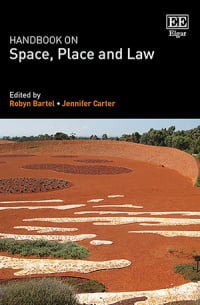
Handbook on Space, Place and Law, edited by Robyn Bartel and Jennifer Carter – Edward Elgar, 2021

Handbook on Space, Place and Law, edited by Robyn Bartel and Jennifer Carter – Edward Elgar, 2021

This innovative Handbook provides an expansive interrogation of the spaces and places of law, exploring how we engage relationally in a material world, within which we are inter-dependent and reliant, and governed by laws in a dynamic process. It advances novel insights into the numerous intersections of space, place and law in our lives.

International contributors offer a range of activity-orientated analyses, focusing on methodology, embodied experience, legal pluralism, conflict and resistance, and non-human and place agency. The Handbook examines a number of cross-cutting themes including social inequality, environmental justice, sustainability, urban development, indigenous legal systems, the effects of colonialism and property law. Representing a diversity of locales from all around the world, the chapters encompass both urban and rural, terrestrial and marine areas, agential and storied spaces, and fictional as well as ‘real’ places.

Taking a multi-disciplinary approach that incorporates law, human and legal geography, planning, sociology, political ecology, anthropology, and beyond, this comprehensive Handbook will be critical reading for scholars and students of these and cognate areas. Its discussion of empirical examples will also be beneficial for practitioners and policymakers interested in these fields. 

Just an expensive e-book and very expensive hardback unfortunately.

Posted in Uncategorized | 1 Comment

Centre Michel Foucault statement on Guy Sorman’s accusations against Michel Foucault and bibliography of Foucault in Tunisia

The Centre Michel Foucault have put out a statement on Guy Sorman’s accusations against Michel Foucault which is available in French, English, GermanSpanishItalian and Portuguese.

Foucault News has a very useful bibliography of Foucault in Tunisia for those who want to know more.

Editor: In light of a number of stories that have been circulating in the media and more broadly online in recent weeks, I have put together a select bibliography relating to Foucault’s time in Tunisia from 1966 to 1968, with a view to making accurate information widely available.

The link to the bibliography can also be found on the Bibliographies page on Foucault News. 

I wish to thank all the researchers who have helped in compiling this bibliography.

Posted in Michel Foucault | Leave a comment

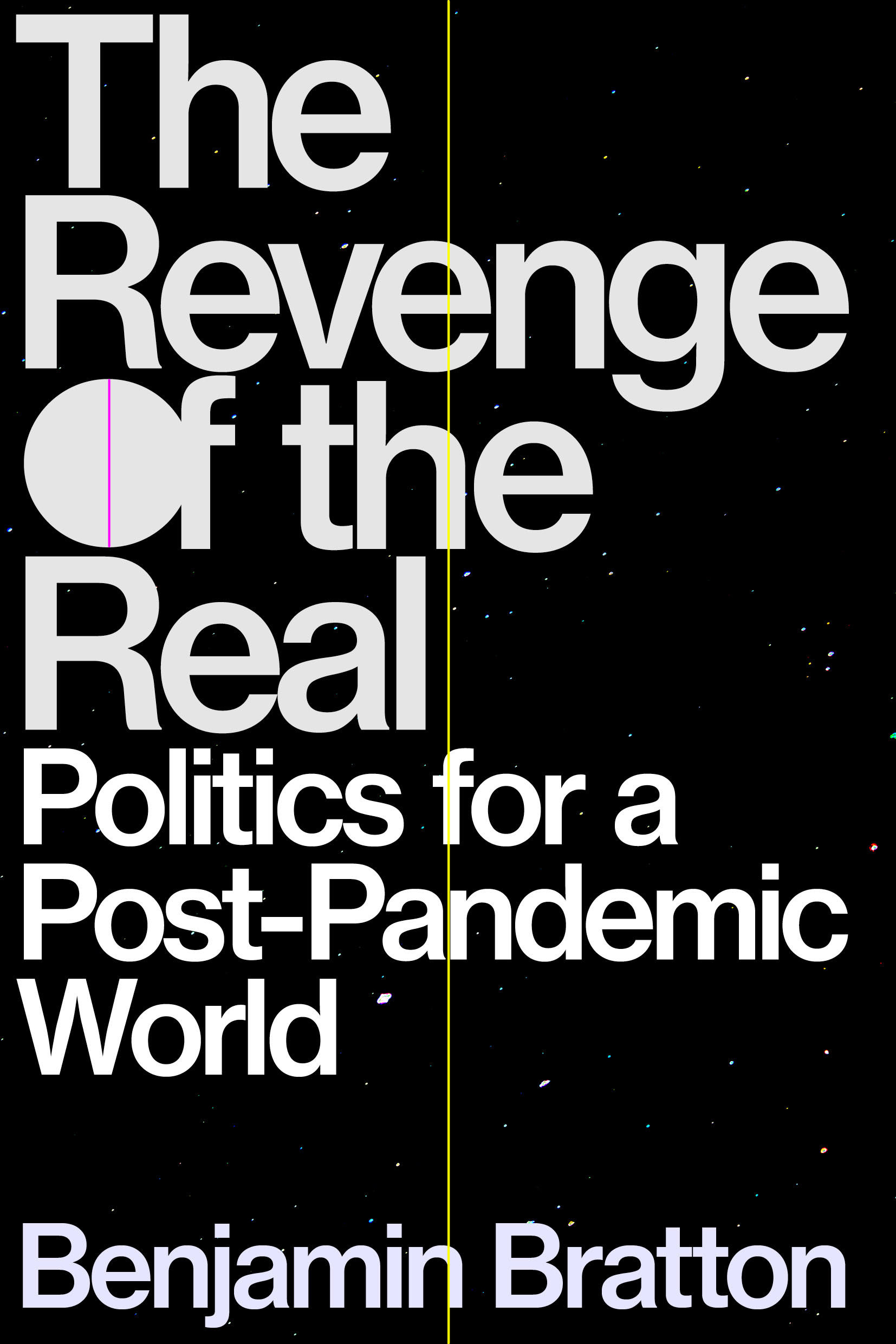
Benjamin Bratton, The Revenge of the Real: Post-Pandemic Politics – Verso, June 2021

Benjamin Bratton, The Revenge of the Real: Post-Pandemic Politics – Verso, June 2021

COVID-19 exposed the pre-existing conditions of the current global crisis. Many Western states failed to protect their populations, while others were able to suppress the virus only with sweeping social restrictions. In contrast, many Asian countries were able to make much more precise interventions. Everywhere, lockdown transformed everyday life, introducing an epidemiological view of society based on sensing, modeling, and filtering. What lessons are to be learned?

The Revenge of the Real envisions a new positive biopolitics that recognizes that governance is literally a matter of life and death. We are grappling with multiple interconnected dilemmas—climate change, pandemics, the tensions between the individual and society—all of which have to be addressed on a planetary scale. Even when separated, we are still enmeshed. Can the world govern itself differently? What models and philosophies are needed? Bratton argues that instead of thinking of biotechnologies as something imposed on society, we must see them as essential to a politics of infrastructure, knowledge, and direct intervention. In this way, we can build a society based on a new rationality of inclusion, care, and prevention.

Posted in Uncategorized | Leave a comment

Toposophia: thinking place/making space – relaunch of book series with Lexington books, edited by Jessica Dubow and Jeff Malpas

Toposophia: thinking place/making space – relaunch of book series with Lexington books, edited by Jessica Dubow (Sheffield) and Jeff Malpas (Tasmania).

Originally established by Robert Mugerauer and Brian Treanor, Toposophia is being continued in a new form under the editorial direction of Jessica Dubow and Jeff Malpas. Retaining the original focus on the combination of topos and sophia, and so on the reflective and critical engagement with issues of place and space, the series now has an expanded brief encompassing a wide range of disciplines from geography and environmental studies through to anthropology and politics, architecture and creative arts, history and philosophy. The aim is to make Toposophia the premier series for cutting edge explorations and investigations of the spatial and topological.

Peer-reviewed, and publishing in paper and hardback as well as electronically, the series includes monographs and edited collections. The editors encourage new proposals in keeping with the expanded brief. Proposals and inquiries should be addressed to Jana Hodges-Kluck (jhodges-kluck@rowman.com) or Jeff Malpas (jeff.malpas@utas.edu.au).

The series page is here, which gives the links to previously published volumes.

Posted in Uncategorized | Leave a comment

Foucault – Duby – Dumézil – Changeux – Thom : Cinq grands entretiens au Champ Freudien (2021)

A collection of interviews – the Foucault one is in Dits et écrits and translated as ‘The Confession of the Flesh’ in Power/Knowledge.

Clare O'Farrell's avatarFoucault News

Foucault – Duby – Dumézil – Changeux – Thom : Cinq grands entretiens au Champ Freudien, Navarin – Février 2021
Introduction par Christiane Alberti, Deborah Gutermann-Jacquet, France Jaigu

Lacan a toujours insisté pour que les psychanalystes ne s’isolent pas, mais s’ouvrent aux autres disciplines. Son enseignement porte la trace d’un intérêt constant pour les différents champs du savoir.
La psychanalyse a une affinité fondamentale avec la conversation. Ce volume invite à raviver les connexions.

Sont ici réunis cinq grands entretiens avec des figures de l’effervescence théorique d’une époque où la psychanalyse conversait à bâtons rompus avec les autres disciplines : Foucault, Dumézil, Duby, côté philosophie, anthropologie, histoire ; Changeux et Thom, côté biologie, épistémologie.

On y rencontre le scientifique aux prises avec son objet et ce qui résiste à sa saisie. On interroge, on ferraille. L’enquête est sérieuse, le ton enjoué. Les voix vibrent, l’énonciation est fulgurante. Échanges et…

View original post 70 more words

Posted in Uncategorized | Leave a comment

Martin Jay, Genesis and Validity: The Theory and Practice of Intellectual History – Penn Press, November 2021

Martin Jay, Genesis and Validity: The Theory and Practice of Intellectual History – Penn Press, November 2021

There is no more contentious and perennial issue in the history of modern Western thought than the vexed relationship between the genesis of an idea and its claim to validity beyond it. Can ideas or values transcend their temporal origins and overcome the sin of their original context, and in so doing earn abiding respect for their intrinsic merit? Or do they inevitably reflect them in ways that undermine their universal aspirations? Are discrete contexts so incommensurable and unique that the smooth passage of ideas from one to the other is impossible? Are we always trapped by the limits of our own cultural standpoints and partial perspectives, or can we somehow escape their constraints and enter into a fruitful dialogue with others?

These persistent questions are at the heart of the discipline known as intellectual history, which deals not only with ideas, but also with the men and women who generate, disseminate, and criticize them. The essays in this collection, by one of the most recognized figures in the field, address them through engagement with leading intellectual historians—Hans Blumenberg, Quentin Skinner, Hayden White, Isaiah Berlin, Frank Ankersmit—as well other giants of modern thought—Max Weber, Emile Durkheim, Georg Simmel, Walter Benjamin, Theodor Adorno, and Georg Lukács. They touch on a wide variety of related topics, ranging from the heroism of modern life to the ability of photographs to lie. In addition, they explore the fraught connections between philosophy and theory, the truth of history and the truthfulness of historians, and the weaponization of free speech for other purposes.

Martin Jay is Ehrman Professor of European History Emeritus at University of California, Berkeley. He is author of numerous books, including The Dialectical Imagination: A History of the Frankfurt School and the Institute of Social Research, 1923-50 and Reason After Its Eclipse: On Late Critical Theory.

Posted in Quentin Skinnner, Walter Benjamin | Leave a comment