Foucault’s Confessions, May 4-June 3 (2021)

Interesting looking series at Rice University, online and open – Foucault’s Confessions, May 4-June 3 (2021)

Clare O'Farrell's avatarFoucault News

Foucault’s Confessions,
May 4-June 3 2021
Tuesdays and Thursdays at 11 a.m.,
free and open to the public.
For more information and to register, visit foucaultsconfessions.org.

(See also this news item on the Rice University site)

Over five weeks in the month of May and the beginning of June, an international group of scholars will engage the work of Michel Foucault at the intersection of ethics, power, and Christianity in the context of the 2018 Éditions Gallimard publication of Les Aveux de la chair and its 2021 translation as Confessions of the Flesh. Foucault’s work and biography are not without controversy and we invite both critical and charitable engagement from speakers and audience members.

This series of virtual talks will take place on Tuesdays and Thursdays at 11:00 Houston/12:00 NYC/18:00 Paris & Johannesburg. Each session will last one hour, featuring a speaker’s paper for 30-45 minutes, and…

View original post 441 more words

Posted in Uncategorized | Leave a comment

Daniel Bensaïd, The Dispossessed: Karl Marx’s Debates on Wood Theft and the Right of the Poor – University of Minnesota Press, March 2021

Now published – Daniel Bensaïd, The Dispossessed: Karl Marx’s Debates on Wood Theft and the Right of the Poor – University of Minnesota Press, March 2021

stuartelden's avatarProgressive Geographies

Daniel Bensaïd, The Dispossessed: Karl Marx’s Debates on Wood Theft and the Right of the Poor – University of Minnesota Press, translated by Robert Nichols, March 2021

The politics of dispossession are everywhere. Troubling developments in intellectual property, genomics, and biotechnology are undermining established concepts of property, while land appropriation and ecological crises reconfigure basic institutions of ownership. In The Dispossessed, Daniel Bensaïd examines Karl Marx’s early writings to establish a new framework for addressing the rights of the poor, the idea of the commons, and private property as a social institution.

In his series of articles from 1842–43 about Rhineland parliamentary debates over the privatization of public lands and criminalization of poverty under the rubric of the “theft of wood,” Marx identified broader anxieties about customary law, property rights, and capitalist efforts to privatize the commons. Bensaïd studies these writings to interrogate how dispossession continues to function today…

View original post 62 more words

Posted in Uncategorized | Leave a comment

Books received – Eliade, Bratton, Lacan, Jacobsen & Beer, Benveniste, Backès-Clément, Deleuze, Kristeva, Witmore

Several bought second-hand, along with Benjamin Bratton, The Revenge of the Real: Post-Pandemic Politics sent by Verso; Ben Jacobsen and David Beer, Social Media and the Automatic Production of Memory: Classification, Ranking and the Sorting of the Past, sent by Bristol University Press, and Christopher Witmore, Old Lands: A Chorography of the Eastern Peloponnese, sent by Chris.

Posted in Claude Lévi-Strauss, Emile Benveniste, Gilles Deleuze, Jacques Lacan, Julia Kristeva, Mircea Eliade | Leave a comment

Carlo Ginzburg, Nevertheless: Machiavelli, Pascal – Verso, January 2022

Carlo Ginzburg, Nevertheless: Machiavelli, Pascal – Verso, January 2022

Through his repeated use of the adverb nondimanco (“nevertheless”), Machiavelli indicated that there is an exception to every rule. This may seem merely to confirm the traditional image of Machiavelli as a cynical, “machiavellian” thinker. But a close analysis of Machiavelli the reader, as well as of the ways in which some of Machiavelli’s most perceptive read his work, throws a different light on Machiavelli the writer. The same hermeneutic strategy inspires Ginzburg’s essays on the Provinciales, Pascal’s ferocious attack against Jesuitical casuistry, or case-based ethical reasoning.

Casuistry vs anti-casuistry; Machiavelli’s secular attitude towards religion vs Pascal’s deep religiosity. We are confronted, apparently, with two completely different worlds. But Pascal read Machiavelli and reflected deeply upon his work. A belated, contemporary echo of this reading can unveil the complex relationship between Machiavelli and Pascal—their divergences as well as their unexpected convergences.

Posted in Carlo Ginzburg, Niccolò Machiavelli | Leave a comment

Michel Foucault and the Social Contract, Chris Watkin with Stuart Elden and Mark Kelly – video of Monash discussion, 13 April 2021

Michel Foucault and the Social Contract, Chris Watkin with Stuart Elden and Mark Kelly – video of Monash discussion, 13 April 2021. Youtube video above, also available as a podcast.

My talk was entitled ‘The Yoke of Law and the Lustre of Glory’; Mark’s ‘Social Contract as Norm’.

Internationally renowned Foucault scholars Stuart Elden (Warwick University, UK) and Mark Kelly (Western Sydney University, Australia) discuss Michel Foucault’s relationship to the modern social contract idea. Followed by questions and discussion.

The seminar took place on 13 April 2021, and was hosted by Christopher Watkin (Monash University, Australia), as part of the Australian Research Council funded Future Fellowship project “Rewriting the Social Contract: Technology, Ecology, Extremism”.

To find out more about the Social Contract Research Network, please visit https://www.monash.edu/arts/languages…

Subscribe to the Social Contract Research Podcast at https://anchor.fm/social-contract-res…

Abstracts:

Stuart Elden (Warwick University), ‘The Yoke of Law and the Lustre of Glory’

Perhaps surprisingly, Foucault does not talk about social contract theory very often. In this talk I will briefly survey his discussions of the term and the tradition of political thought, especially in his Collège de France lecture courses – his discussion of civil war and the contract in The Punitive Society; the challenge to the tradition in ‘Society Must Be Defended’; and his indication of a shift from the implicit contract of security in territory to population security in his work on governmentality. The main focus, however, will be on a remark Foucault makes in ‘Society Must Be Defended’ about the dual nature of sovereignty, of the relation between political, juridical power and magical, supernatural power. These two faces or aspects are the power to bind and command, and the power to dazzle and petrify. He calls this the “yoke of law and the lustre of glory”. I will explore the links between this understanding of contracts and Georges Dumézil’s work on Indo-European mythology.

Mark Kelly (Western Sydney University), ‘Social Contract as Norm’

While Foucault’s own direct engagements with the social contract are few and far between, I want to offer a Foucauldian critique of social contract theory qua normative political theory. Contractarianism is notoriously premised on a profound ontological individualism, on the idea that individuals are prior to society, and can therefore either (on a strong reading) constitute civil society based on their free contracting to bring it into existence or (on a weak reading) change the form of society in accordance with their wishes. Against this, Foucault argues that the individual (and thus discourses of individualism like social contract theory) is an invention of disciplinary modernity. I will seek to progress this line of critique by combining it with Foucault’s critique of utopianism to suggest that social contract theory represents an incipient normalisation of society itself, indeed one that precedes and provides the background for the intense normalisation of individuals in late modernity.

Posted in Georges Dumézil, Michel Foucault, Uncategorized | 1 Comment

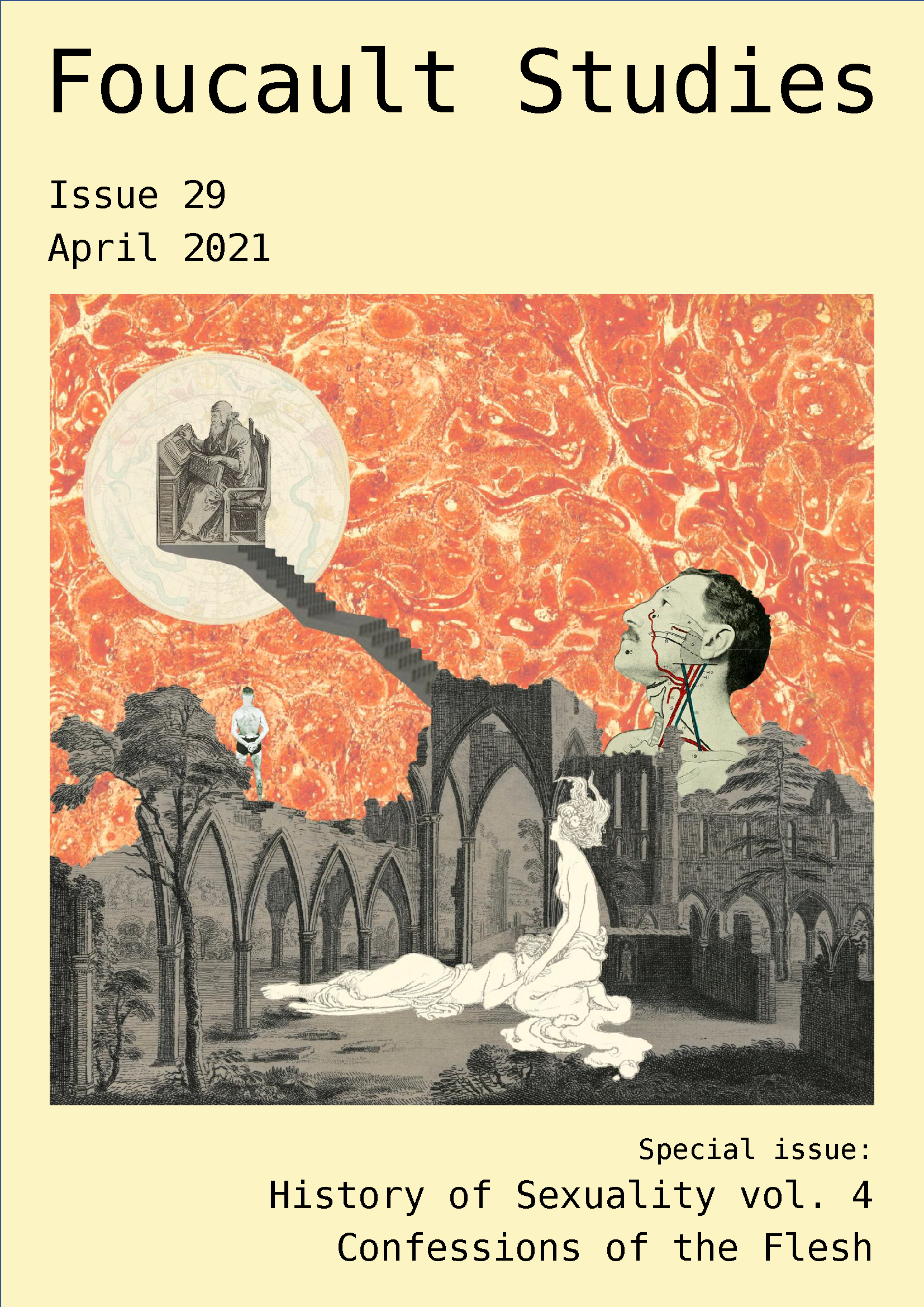
Foucault Studies: Special Issue. Foucault’s History of Sexuality Vol. 4, Confessions of the Flesh (2021)

New issue of Foucault Studies on the fourth volume of Foucault’s History of Sexuality.

Clare O'Farrell's avatarFoucault News

Foucault Studies, Number 29, 9 April 2021
Special Issue: Foucault’s History of Sexuality Vol. 4, Confessions of the Flesh

Editorial
Sverre Raffnsøe, Alain Beaulieu, Barbara Cruikshank, Bregham Dalgliesh, Knut Ove Eliassen, Varena Erlenbusch, Alex Feldman, Marius Gudmand-Høyer, Thomas Götselius, Robert Harvey, Robin Holt, Leonard Richard Lawlor, Daniele Lorenzini, Edward McGushin, Hernan Camilo Pulido Martinez, Giovanni Mascaretti, Johanna Oksala, Clare O’Farrell, Rodrigo Castro Orellana, Eva Bendix Petersen, Alan Rosenberg, Annika Skoglund, Dianna Taylor, Martina Tazzioli

Special Issue: Foucault’s History of Sexuality Vol. 4, Confessions of the Flesh

Confessions of the Flesh – Guest Editors’ Introduction
Agustín Colombo, Edward McGushin
1-5

Foucault’s Concept of Confession
Philippe Büttgen
6-21

Foucault’s Queer Virgins: An Unfinished History in Fragments
Lynne Huffer
22-37

Fascinating Flesh: Revealing the Catholic Foucault
James Bernauer
38-47

Foucault’s Keystone: Confessions of the Flesh
How the Fourth and Final Volume of The History of Sexuality Completes Foucault’s Critique of Modern Western Societies

View original post 12 more words

Posted in Uncategorized | Leave a comment

Paul Rabinow (1944 – 2021)

The death of Paul Rabinow, a very important anthropologist and a crucial figure in the Anglophone reception of Foucault.

Clare O'Farrell's avatarFoucault News

Portrait of Paul M. Rabinow by Saâd A. Tazi, during his Blaise Pascal professorship at the Ecole Normale Supérieure, rue d’Ulm, Paris.

Christopher Ying, UC Berkeley professor emeritus Paul Rabinow dies at age 76, The Daily Californian, April 11, 2021

Paul Rabinow, UC Berkeley professor emeritus of anthropology and world-renowned anthropologist, died April 6 at the age of 76 in his Berkeley home.

Rabinow spent about 41 years at UC Berkeley between 1978 to 2019, serving as the director of anthropology for the Contemporary Research Collaboratory and as the former director of human practices for the Synthetic Biology Engineering Research Center.
[…]

Rabinow is most well-known for his commentary on the works of French philosopher Michel Foucault, with whom he worked while Foucault was in Berkeley in the early 1980s.

View original post

Posted in Uncategorized | Leave a comment

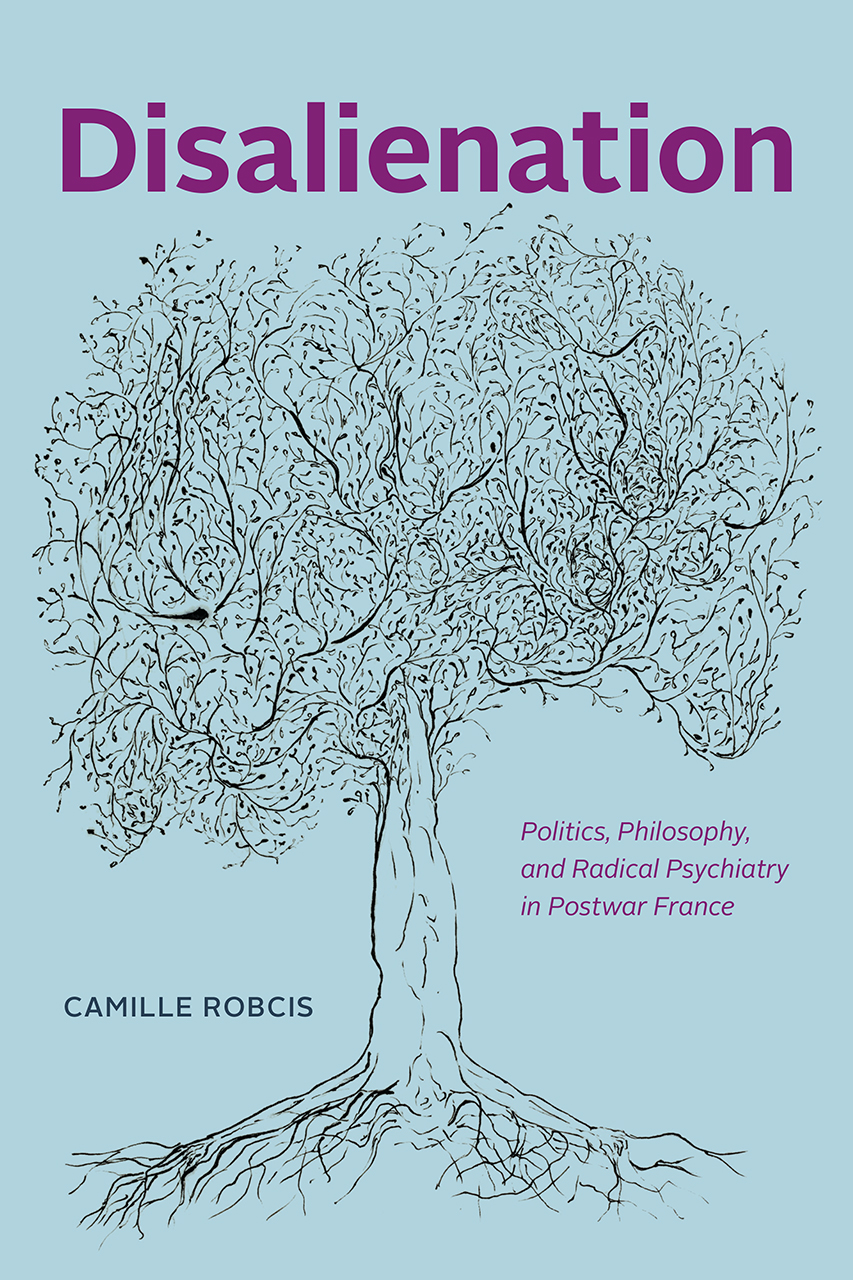
Camille Robcis, Disalienation: Politics, Philosophy, and Radical Psychiatry in Postwar France – University of Chicago Press, May 2021 and discussion

Camille Robcis, Disalienation: Politics, Philosophy, and Radical Psychiatry in Postwar France – University of Chicago Press, May 2021

There is a discussion of the book here.

From 1940 to 1945, forty thousand patients died in French psychiatric hospitals. The Vichy regime’s “soft extermination” let patients die of cold, starvation, or lack of care. But in Saint-Alban-sur-Limagnole, a small village in central France, one psychiatric hospital attempted to resist. Hoardingfood with the help of the local population, the staff not only worked to keep patients alive but began to rethink the practical and theoretical bases of psychiatric care. The movement that began at Saint-Alban came to be known as institutional psychotherapy and would go on to have a profound influence on postwar French thought.

In Disalienation, Camille Robcis grapples with the historical, intellectual, and psychiatric meaning of the ethics articulated at Saint-Alban by exploring the movement’s key thinkers, including François Tosquelles, Frantz Fanon, Félix Guattari, and Michel Foucault. Anchored in the history of one hospital, Robcis’s study draws on a wide geographic context—revolutionary Spain, occupied France, colonial Algeria, and beyond—and charts the movement’s place within a broad political-economic landscape, from fascism to Stalinism to postwar capitalism.

Posted in Uncategorized | 1 Comment

Jean-Marie Guyau, The Ethics of Epicurus and its Relation to Contemporary Doctrines, edited by Keith Ansell Pearson and Federico Testa – Bloomsbury, October 2021

Jean-Marie Guyau, The Ethics of Epicurus and its Relation to Contemporary Doctrines, edited by Keith Ansell Pearson and Federico Testa – Bloomsbury, October 2021

This is the first English translation of a compelling and highly original reading of Epicurus by Jean-Marie Guyau. This book has long been recognized as one of the best and most concerted attempts to explore one of the most important, yet controversial ancient philosophers whose thought, Guyau claims, remains vital to modern and contemporary culture. Throughout the text we are introduced to the origins of the philosophy of pleasure in Ancient Greece, with Guyau clearly demonstrating how this idea persists through the history of philosophy and how it is an essential trait in the Western tradition. 

With an introduction by Keith Ansell-Pearson and Federico Testa, which contextualizes the work of Guyau within the canon of French thought, and notes on both further reading and on Epicurean scholarship more generally, this translation also acts as a critical introduction to the philosophy of Guyau and Epicurus.

Posted in Uncategorized | 1 Comment

British Academy, The COVID decade: understanding the long-term societal impacts of COVID-19 – open access report

British Academy, The COVID decade: understanding the long-term societal impacts of COVID-19 – open access report

The British Academy was asked by the Government Office for Science to produce an independent review on the long-term societal impacts of COVID-19. This report outlines the evidence across a range of areas, building upon a series of expert reviews, engagement, synthesis and analysis across the research community in the Social Sciences, Humanities and the Arts (SHAPE). It is accompanied by a separate report, Shaping the COVID decade, which considers how policymakers might respond. History shows that pandemics and other crises can be catalysts to rebuild society in new ways, but that this requires vision and interconnectivity between policymakers at local, regional and national levels.

With the advent of vaccines and the imminent ending of lockdowns, we might think that the impact of COVID-19 is coming to an end. This would be wrong. We are in a COVID decade: the social, economic and cultural effects of the pandemic will cast a long shadow into the future – perhaps longer than a decade – and the sooner we begin to understand, the better placed we will be to address them.

There are of course many impacts which flowed from lockdowns, including not being able to see family and friends, travel or take part in leisure activities. These should ease quickly as lockdown comes to an end. But there are a set of deeper impacts on health and wellbeing, communities and cohesion, and skills, employment and the economy which will have profound effects upon the UK for many years to come. In sum, the pandemic has exacerbated existing inequalities and differences and created new ones, as well as exposing critical societal needs and strengths. These can emerge differently across places, and along different time courses, for individuals, communities, regions, nations and the UK as a whole.

We organised the evidence into three areas of societal effect. As we gathered evidence in these three areas, we continually assessed it according to five cross-cutting themes – governance, inequalities, cohesion, trust and sustainability – which the reader will find reflected across the chapters. Throughout the process of collating and assessing the evidence, the dimensions of place (physical and social context, locality), scale (individual, community, regional, national) and time (past, present, future; short, medium and longer term) played a significant role in assessing the nature of the societal impacts and how they might play out, altering their long-term effects. The three societal areas we chose to help structure our evidence collection and, ultimately, this report were:

Health and wellbeing – covering physical and mental health (including young people and work), wellbeing, and the environment we live in

Communities, culture and belonging – covering communities and civil society, cities and towns, family and kinship, and arts, media, culture, heritage and sport

Knowledge, employment and skills – covering education (compulsory and tertiary), skills, knowledge and research, and work and employment

Posted in Uncategorized | Leave a comment