Tom Slater, Shaking Up the City: Ignorance, Inequality, and the Urban Question – University of California Press, September 2021, foreword by Loic Wacquant
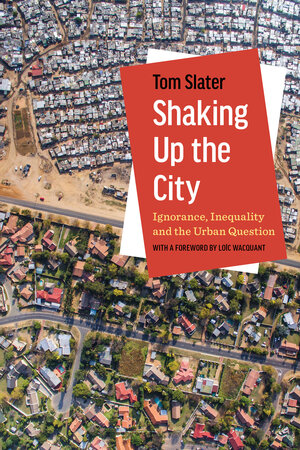
Tom Slater, Shaking Up the City: Ignorance, Inequality, and the Urban Question – University of California Press, September 2021, foreword by Loic Wacquant 

Shaking Up the City critically examines many of the concepts and categories within mainstream urban studies that serve dubious policy agendas. Through a combination of abstract theory and concrete empirical evidence, Tom Slater strives to ‘shake up’ mainstream urban studies in a concise and pointed fashion, turning on its head much of the prevailing wisdom in the field.  In doing so, he explores the themes of data-driven innovation, urban resilience, gentrification, displacement and rent control, neighborhood effects, territorial stigmatization, and ethnoracial segregation. 

Slater analyzes how the mechanisms behind urban inequalities, material deprivation, marginality, and social suffering in cities across the world are perpetuated and made invisible. With important contributions to ongoing debates in sociology, geography, planning, and public policy, and engaging closely with struggles for land rights and housing justice, Shaking Up The City offers numerous insights for scholarship and political action to guard against the spread of an urbanism rooted in vested interest.
Posted in urban/urbanisation | 1 Comment

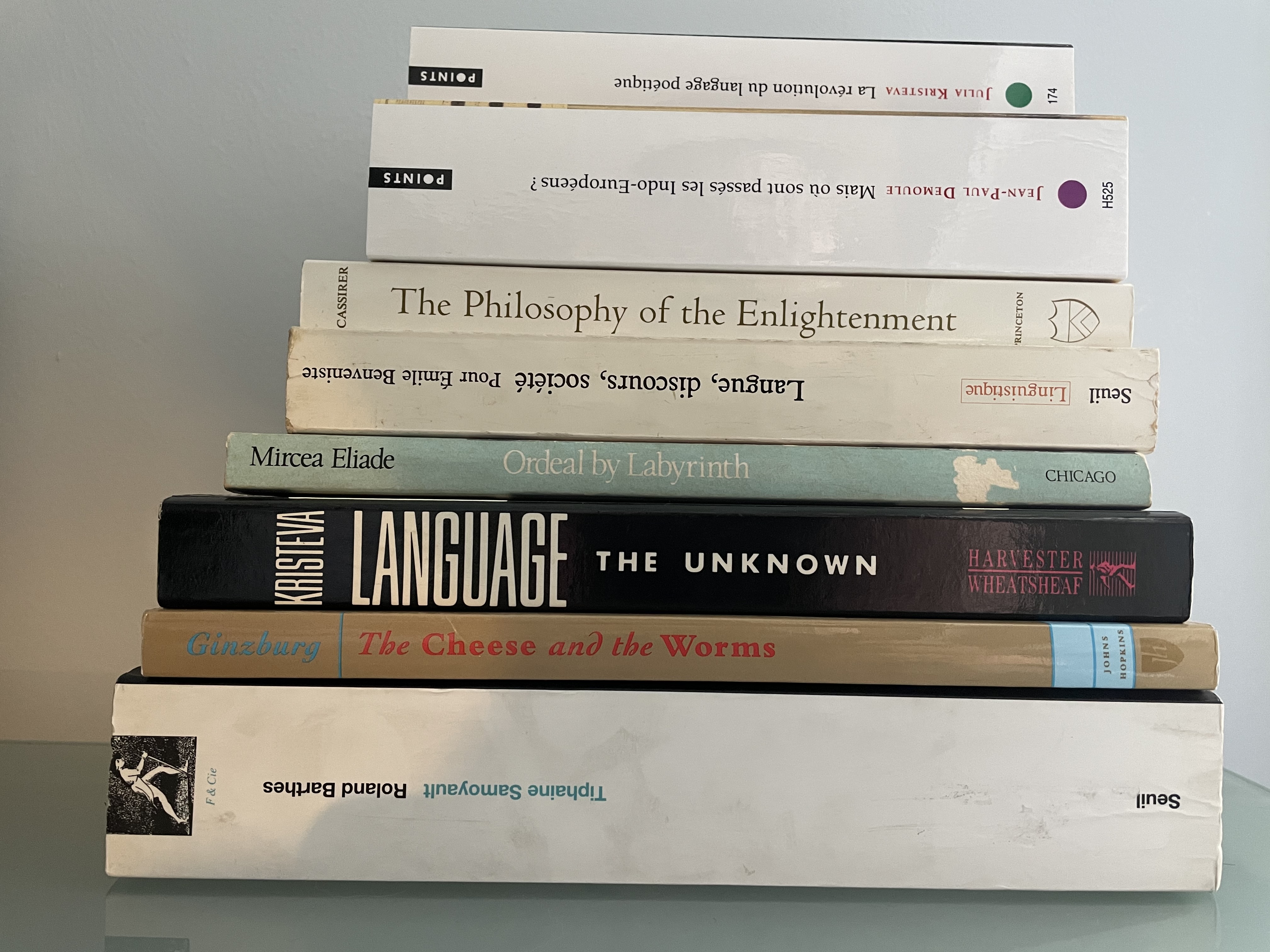
Books received – Kristeva, Demoule, Cassirer, Benveniste, Eliade, Ginzburg, Samayoult

Books received – a couple by Julia Kristeva, Jean-Paul Demoule, Ernst Cassirer, Pour Emile Benveniste, Mircea Eliade, Carlo Ginzburg, and Tiphaine Samayoult on Roland Barthes.

Posted in Uncategorized | 1 Comment

Samantha Rose Hill Reconsiders Hannah Arendt’s Thoughts on Hope, a Year into COVID-19 ‹ Literary Hub

Hosted by Paul Holdengräber, The Quarantine Tapes chronicles shifting paradigms in the age of social distancing. Each day, Paul calls a guest for a brief discussion about how they are experiencing the global pandemic.

On Episode 171 of The Quarantine Tapes, Paul Holdengräber is joined by Samantha Rose Hill. Samantha is the author of an upcoming book on Hannah Arendt. She talks with Paul about her work on Arendt, Walter Benjamin, and more. Then, they discuss how her year of writing, teaching, and researching in quarantine has gone, and Samantha reveals how this time has brought her to question her motto of “embrace despair.”

Samantha and Paul discuss how to think about loneliness in this moment and talk about her Quarantine Journal from last April. Then, Samantha takes Paul back to her first experience entering an archive as a researcher before talking about how she has experienced teaching remotely in the past year.

Posted in Hannah Arendt, Uncategorized | Leave a comment

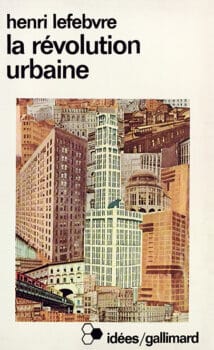
Andy Merrifield, Lefebvre in the age of COVID: Lessons from The Urban Revolution and Paris Commune – Monthly Review online

Andy Merrifield, Lefebvre in the age of COVID: Lessons from The Urban Revolution and Paris Commune – Monthly Review online

Henri Lefebvre’s The Urban Revolution (1970) quietly celebrated its 50th birthday under lockdown, and our greatest ever urban revolution, the Paris Commune (1871), just toasted its 150th. Both book and event have lost none of their lustre for helping progressive people think about city life, even as COVID-19 threatens to destroy that life. We might say especially as COVID-19 threatens that life, because both The Urban Revolution and the Paris Commune offer vital instruction about how we might rebuild a post-pandemic urban world, rebuild it democratically.

COVID has upended urban life as we once knew it. But it intensified already existing pathologies, those contaminating “normal,” pre-pandemic life. For decades, business-as-usual exploitation has meant cities have become not only functionally and financially standardised, but also unaffordable and unequal. Recent social distancing disrupts these inequities even more, crimping cities as sites of physical encounters, hurting poorer, immobile denizens the most. Nowadays, our urban reality is one of the de-encounter, a thinning down rather than thickening up, the dispersion and dilution of city life, its fear and loathing. [continues here]

Posted in Uncategorized | 4 Comments

Nick Vaughan-Williams, Vernacular Border Security: Citizens’ Narratives of Europe’s ‘Migration Crisis’ – Oxford University Press, June 2021

Nick Vaughan-Williams, Vernacular Border Security: Citizens’ Narratives of Europe’s ‘Migration Crisis’ – Oxford University Press, June 2021

Since the peak of Europe’s so-called 2015 ‘migration crisis’, the dominant governmental response has been to turn to deterrent border security across the Mediterranean and construct border walls throughout the EU. During the same timeframe, EU citizens are widely represented – by politicians, by media sources, and by opinion polls – as fearing a loss of control over national and EU borders. Despite the intensification of EU border security with visibly violent effects, EU citizens are portrayed as ‘threatened majorities’. These dynamics beg the question: Why is it that tougher deterrent border security and walling appear to have heightened rather than diminished border anxieties among EU citizens? While the populist mantra of ‘taking back control’ purports to speak on behalf of EU citizens, little is known about how diverse EU citizens conceptualize, understand, and talk about the so-called ‘crisis’. Yet, if social and cultural meanings of ‘migration’ and ‘border security’ are constructed intersubjectively and contested politically, then EU citizens —as well as governmental elites and people on the move— are significant in shaping dominant framings of and responses to the ‘crisis’. This book argues that, in order to address the overarching puzzle, a conceptual and methodological shift is required in the way that border security is understood: a new approach is urgently required that complements ‘top-down’ analyses of elite governmental practices with ‘bottom-up’ vernacular studies of how those practices are both reproduced and contested in everyday life.

Posted in Uncategorized | 1 Comment

Henri Lefebvre: The proclamation of the Commune 26th March 1871, translated by David Fernbach at the Verso blog

Henri Lefebvre: The proclamation of the Commune 26th March 1871, translated by David Fernbach at the Verso blog

Henri Lefebvre’s account of the ideology of the Paris Commune, newly translated into English… an extract from La Proclamation de la Commune: 26 Mars 1871 by Henri Lefebvre, La Fabrique, 2019; first published 1965

Posted in Henri Lefebvre | Leave a comment

Tuomo Alhojärvi, For Postcapitalist Studies: Inheriting Futures of Space and Economy – Nordia, March 2021 (open access)

Tuomo Alhojärvi, For Postcapitalist Studies: Inheriting Futures of Space and Economy – Nordia, March 2021

The worldwide social and ecological unravelling of the 21st century presents an unprecedented challenge for thinking and practising liveable economies. As life support systems are annihilated in view of the sustainable accumulation of capital, social and economic alternatives are rapidly emerging to shelter possibilities for life amidst the ruins. Postcapitalism has gained increasing attention as an invitation to amplify existing alternatives to systemic scale. The transformations required are the focus of social movements, political projects and academic research that demand the theorisation and organisation of alternatives to capitalist realism today. What has often received less attention is how such emancipatory alternatives are burdened with problematic legacies living on within, in the epistemic heritage enabling and organising societal transformation. The ‘post-’ prefix, and the break from capitalism that it announces, has largely been treated as a given. This study resists such temptations of the affirmative in order to ask how restrictive and counterproductive burdens are carried along in emancipatory thought and practice, and how their continuous negotiation might have to redefine postcapitalism itself. Taking the ‘post-’ seriously demands critical and theoretical skills capable of examining the complexity of our inherited troubles.

Posted in Uncategorized | 1 Comment

Books received – Eliade, Charachidzé, Mayhew, Hyppolite’s Hegel, Ginzburg, Fujikane, Mayhew

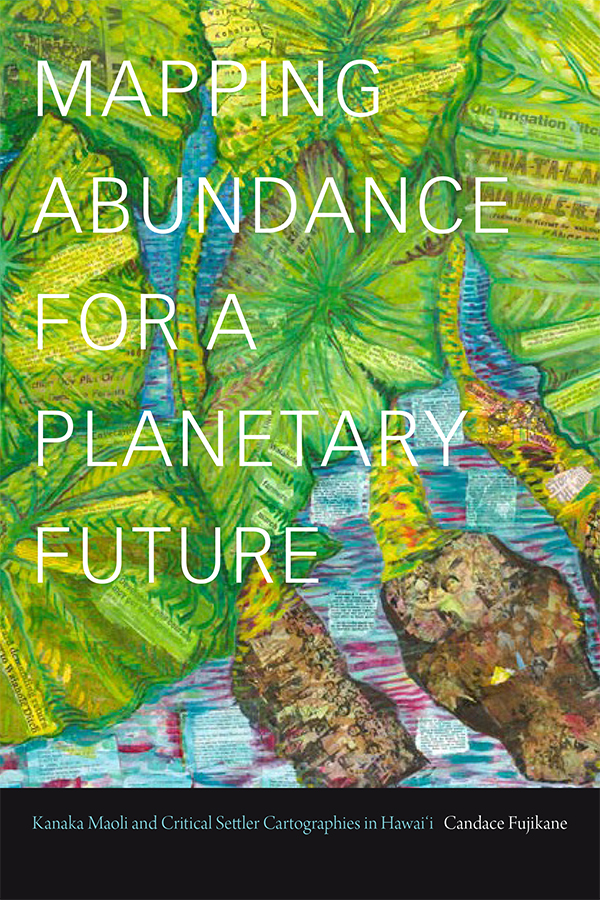
Mainly some older books picked up second-hand, including Jean Hyppolite’s translation of Hegel, and Robert Mayhew’s Malthus: The Life and Legacies of an Untimely Prophet, along with Candace Fujikane, Mapping Abundance for a Planetary Future: Kanaka Maoli and Critical Settler Cartographies in Hawai’i, which was sent by Duke University Press.

Posted in Carlo Ginzburg, Georg Wilhelm Friedrich Hegel, Jean Hyppolite, Mircea Eliade | Leave a comment

Candace Fujikane, Mapping Abundance for a Planetary Future: Kanaka Maoli and Critical Settler Cartographies in Hawai’i – Duke University Press, March 2021 (open access introduction)

Candace Fujikane, Mapping Abundance for a Planetary Future: Kanaka Maoli and Critical Settler Cartographies in Hawai’i – Duke University Press, March 2021

The Introduction is open access here.

In Mapping Abundance for a Planetary Future, Candace Fujikane contends that the practice of mapping abundance is a radical act in the face of settler capital’s fear of an abundance that feeds. Cartographies of capital enable the seizure of abundant lands by enclosing “wastelands” claimed to be underdeveloped. By contrast, Kanaka Maoli (Native Hawaiian) cartographies map the continuities of abundant worlds. Vital to restoration movements is the art of kilo, intergenerational observation of elemental forms encoded in storied histories, chants, and songs. As a participant in these movements, Fujikane maps the ecological lessons of these elemental forms: reptilian deities who protect the waterways, sharks who swim into the mountains, the navigator Maui who fishes up the islands, the deities of snow and mists on Mauna Kea. The laws of these elements are now being violated by toxic waste dumping, leaking military jet fuel tanks, and astronomical-industrial complexes. As Kanaka Maoli and their allies stand as land and water protectors, Fujikane calls for a profound attunement to the elemental forms in order to transform climate events into renewed possibilities for planetary abundance.

Mapping Abundance for a Planetary Future slays settler colonial cartographies that diminish life. The book breathes with the voices of Hawaiian communities, lands, movements, elements, and Candace Fujikane herself, at her best. Saturated in the abundance of Kanaka Maoli mappings and mo‘olelo, this book is a spear and a spade, medicine and masterpiece, a diagnosis and a portal, a lei and a ho‘okupu.” — Noelani Goodyear-Ka‘opua, author of The Seeds We Planted: Portraits of a Native Hawaiian Charter School

“With intellectual verve, analytical agility, and ethnographic gracefulness, Candace Fujikane unpacks the perversity of settler capitalism, which produces scarcity in order to claim its toxic surplus, as she amplifies Kanaka Maoli support of an earth cartography of abundant healing and protection. A groundbreaking work; a must-read.” — Elizabeth A. Povinelli, author of The Inheritance

Posted in Uncategorized | 1 Comment

Stuart Elden, ‘Terrain, Politics, History’ – Dialogues in Human Geography article with responses from Gastón Gordillo, Kimberley Peters and Deborah P. Dixon (and more to come)

My 2019 Dialogues in Human Geography lecture, ‘Terrain, Politics, History‘ has been published online first (open access). The responses are beginning to appear too.

The ones available so far are

Gastón Gordillo, The power of terrain: The affective materiality of planet Earth in the age of revolution (open access)

Kimberley Peters, For the place of terrain and materialist ‘re’-returns: Experience, life, force, and the importance of the socio-cultural

Deborah P. Dixon, Drift in an Anthropocene: On the work of terrain (open access)

Ones to come from Bruno Latour and Rachael Squire, and a reply from me – ‘The Limits of Territory and Terrain’.

[Update: the one from Bruno Latour is now available – The Anthill and the Beam: A Response to Elden]

[Update 2: Rachael Squire’s piece is now up: Where theories of terrain might land: Towards ‘pluriversal’ engagements with terrain]

[Update 3: The last piece is my reply – The limits of territory and terrain]

The others [now just my reply to come] should appear Online First – https://journals.sagepub.com/toc/dhga/0/0

Posted in Bruno Latour, Gaston Gordillo, terrain, Territory | 1 Comment