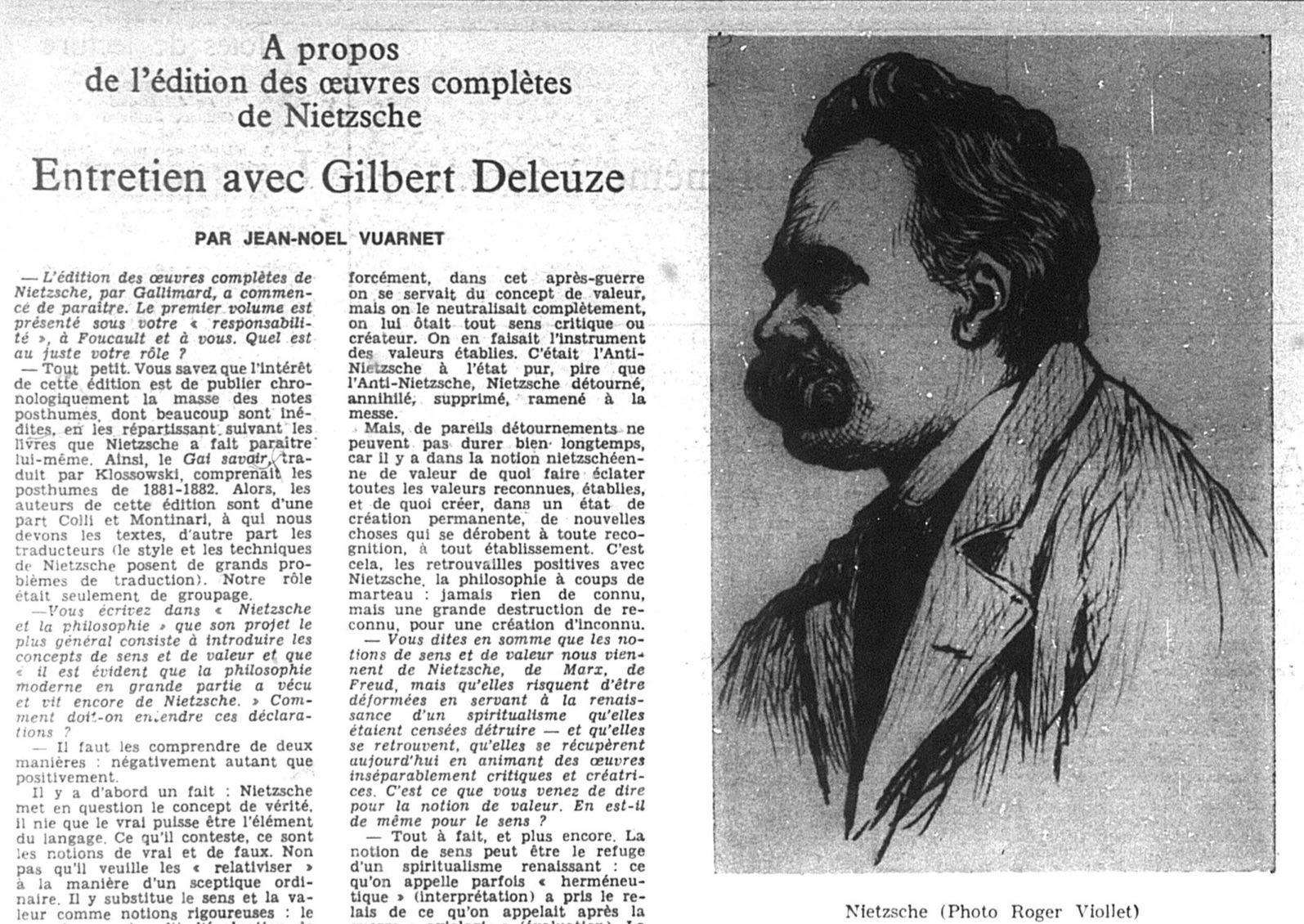
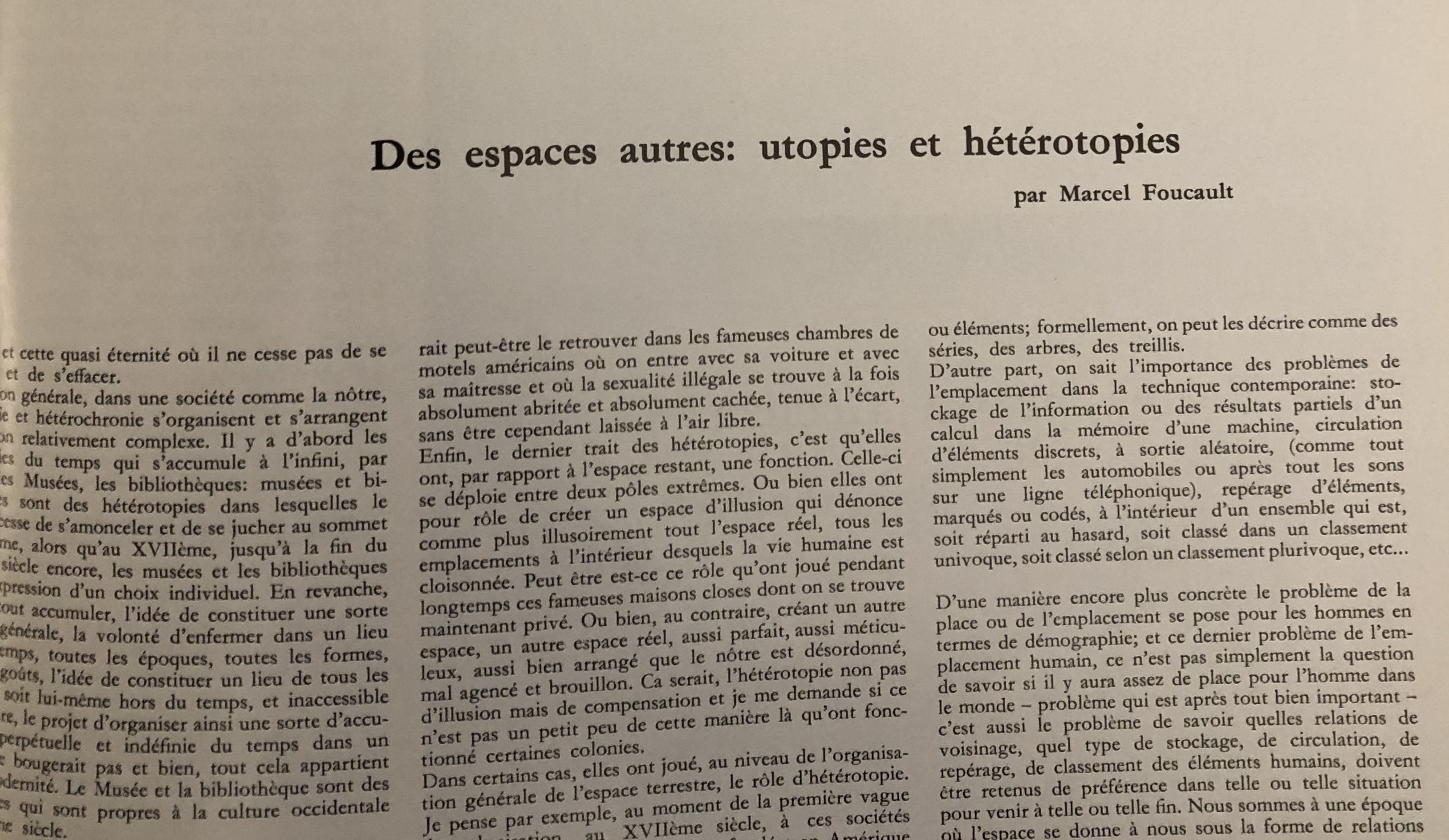
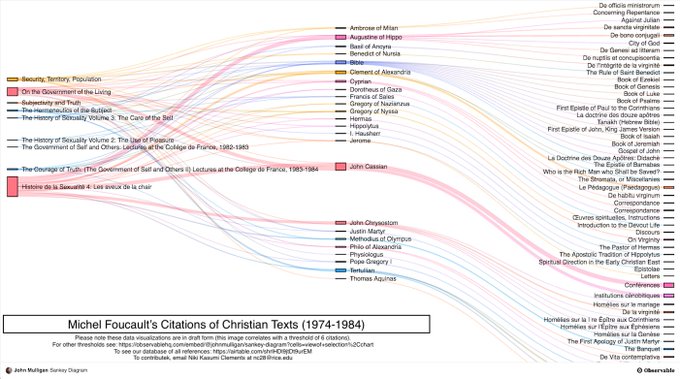
Foucault and Christianity – a really interesting online resource from Niki Kasumi Clements, as part of the research for her book Foucault the Confessor.
As part of my research on Michel Foucault’s engagement with early Christian texts, I have been tracing his citational practices from 1974-1984 through his published works; gradually I will include citations from Foucault’s meticulous notes in his archives at the Bibliothèque nationale de France. The 2018 posthumous publication, L’Histoire de la sexualité IV: Les aveux de la chair, edited by Frédéric Gros, is included; the 2021 translation by Robert Hurley, Confessions of the Flesh, contributes to the need to understand Foucault’s complex navigation of Christian texts and practices.
Currently processing the textual references Foucault makes to mainly early Christian texts in his monographs and Collège de France lectures between 1974 and 1984, the following dynamic data visualizations were built in Python by the Center for Research Computing at Rice University. Foucault’s works are on the left, leading to (mostly) ancient Christian authors in the middle, leading to cited works of those authors on the right. The number of connections across years and the density of citations are both important.
See also this tweet and the followup thread explaining the project and its uses.
Michel Foucault's draft of the 4th volume in the History of Sexuality was translated as "Confessions of the Flesh" last week. Focused on early Christian sources, Confessions makes better sense when looking at Foucault's engagement with Christian texts from 1974-1984 as we have… pic.twitter.com/J17jeFyWnK
Can Donald Trump really build that wall? What does Brexit mean for Ireland’s border? And what would happen if Elon Musk declared himself president of the Moon?
InBorder Wars, Professor Klaus Dodds takes us on a journey into the geopolitical conflict of tomorrow in an eye-opening tour of the world’s best-known, most dangerous and most unexpected border conflicts from the Gaza Strip to the space race.
Along the way, we’ll discover just what border truly mean in the modern world: how are they built; what do they mean for citizens and governments; how do they help understand our political past and, most importantly, our diplomatic future?
In thirteen interlocking chapters, Absentees explores the role of the missing in human communities, asking an urgent question: How does a person become a nonperson, whether by disappearance, disenfranchisement, or civil, social, or biological death? Only somebody can become a “nobody,” but, as Daniel Heller-Roazen shows, the ways of being a nonperson are as diverse and complex as they are mysterious and unpredictable. Heller-Roazen treats the variously missing persons of the subtitle in three parts: Vanishings, Lessenings, and Survivals. In each section and with multiple transhistorical and transcultural examples, he challenges the categories that define nonpersons in philosophy, ethics, law, and anthropology. Exclusion, infamy, and stigma; mortuary beliefs and customs; children’s games and state censuses; ghosts and “dead souls” illustrate the lives of those lacking or denied full personhood. In the archives of fiction, Heller-Roazen uncovers figurations of the missing — from Helen of Argos in Troy or Egypt to Hawthorne’s Wakefield, Swift’s Captain Gulliver, Kafka’s undead hunter Gracchus, and Chamisso’s long-lived shadowless Peter Schlemihl. Readers of The Enemy of All and No One’s Ways will find a continuation of those books’ intense intellectual adventures, with unexpected questions and arguments arising every step of the way. In a unique voice, Heller-Roazen’s thought and writing capture the intricacies of the all-too-human absent and absented.
Stuart Hall, Selected Writings on Race and Difference, edited by Paul Gilroy and Ruth Wilson Gilmore – Duke University Press, 2021 (and open access introduction by Paul Gilroy)
In Selected Writings on Race and Difference, editors Paul Gilroy and Ruth Wilson Gilmore gather more than twenty essays by Stuart Hall that highlight his extensive and groundbreaking engagement with race, representation, identity, difference, and diaspora. Spanning the whole of his career, this collection includes classic theoretical essays such as “The Whites of Their Eyes” (1981) and “Race, the Floating Signifier” (1997). It also features public lectures, political articles, and popular pieces that circulated in periodicals and newspapers, which demonstrate the breadth and depth of Hall’s contribution to public discourses of race. Foregrounding how and why the analysis of race and difference should be concrete and not merely descriptive, this collection gives organizers and students of social theory ways to approach the interconnections of race with culture and consciousness, state and society, policing and freedom.
The Introduction by Paul Gilroy is open access here. Thanks to dmf for the link. This book is part of the series of Hall’s Selected Works. Selected Writings on Marxism is also forthcoming in April.
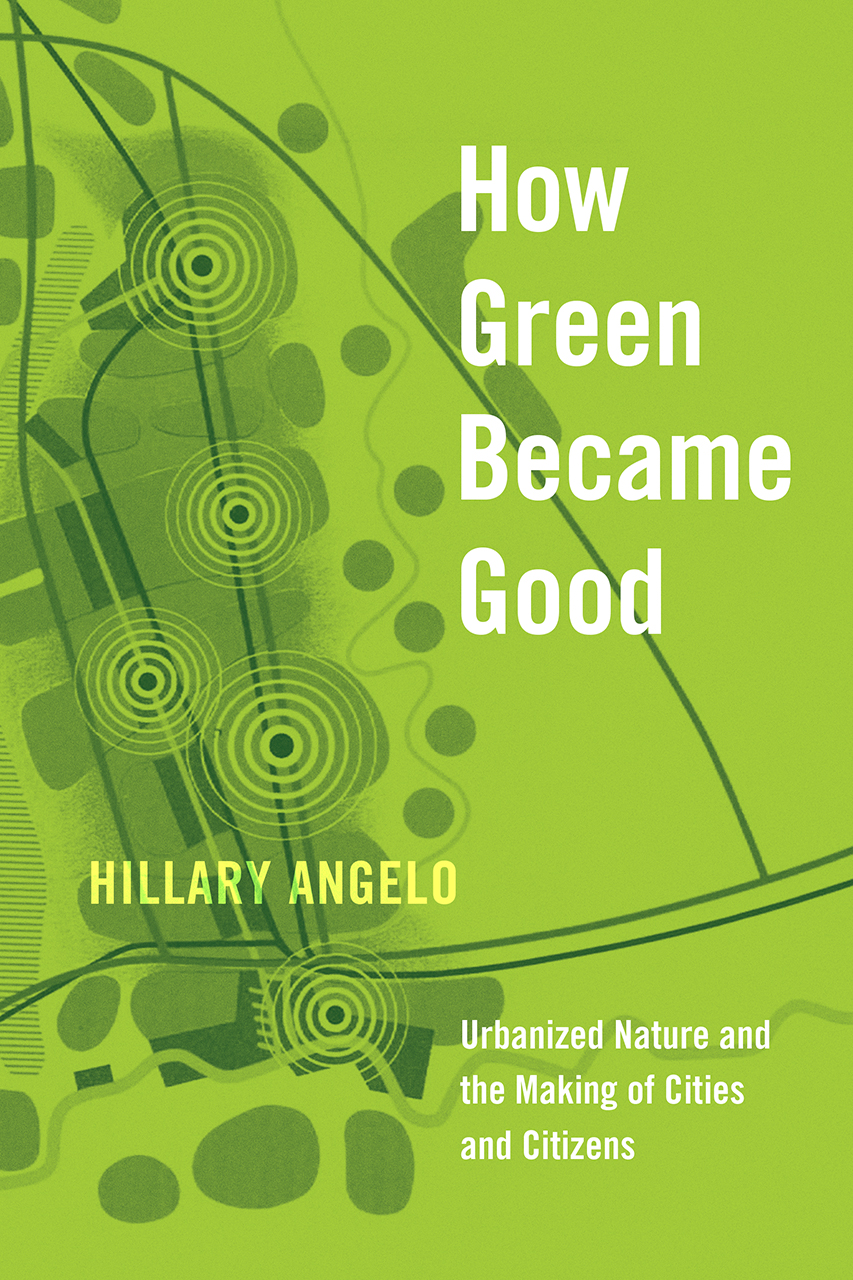
As projects like Manhattan’s High Line, Chicago’s 606, China’s eco-cities, and Ethiopia’s tree-planting efforts show, cities around the world are devoting serious resources to urban greening. Formerly neglected urban spaces and new high-end developments draw huge crowds thanks to the considerable efforts of city governments. But why are greening projects so widely taken up, and what good do they do? In How Green Became Good, Hillary Angelo uncovers the origins and meanings of the enduring appeal of urban green space, showing that city planners have long thought that creating green spaces would lead to social improvement. Turning to Germany’s Ruhr Valley (a region that, despite its ample open space, was “greened” with the addition of official parks and gardens), Angelo shows that greening is as much a…
It’s been a while since the last update, and I’d hoped that the Christmas break, a slightly lighter teaching load in term 2 and a reading week would see me make a bit more progress on this manuscript. I haven’t done as much as I’d hoped, and it’s mainly been on connected projects.
Probably the most significant is that the proofs and index of The Early Foucault are complete, and I’m now just waiting for its publication. It’s due out in June 2021. There are three really generous endorsements on the back-cover. Another book manuscript, this one co-edited, has been resubmitted following some minor revisions. More on that soon.
I did some work on Foucault and Georges Dumézil for a book chapter which looks at their views on sovereignty, and returned to Foucault’s course The Punitive Society for a brief contribution to an online seminar (see my blog contribution ‘From Dynastics to Genealogy’, and recording of discussion here). The question of dynastics has developed into a draft of something longer. I’ve also promised an article for a special issue on Georges Canguilhem. I felt I’d said what I wanted to say about him in my book, but I found a way to connect him to some other interests, so in this piece I’m looking at his readings of Georges Dumézil and Jean Hyppolite. A lot of these writing projects are dependent on access to London libraries and Paris archives. The British Library is currently closed and is likely to be for some time. I’m glad I did the short trip I did in mid-December. Although the BnF is open, I can’t travel in the current situation, and there are now new challenges with Brexit. All of this is making archival work much more challenging. While I’m hopeful I can eventually get through what I need to do for The Archaeology of Foucault, I’m doing some reassessment of future projects in these more challenging times.
Working on Hyppolite again has been interesting. I discuss him in The Early Foucault, as one of Foucault’s teachers, and as the supervisor of Foucault’s diploma thesis on Hegel and rapporteur for his secondary doctoral thesis on Kant’s Anthropology. But he is mainly known for his crucial work on Hegel – he was translator of the Phenomenology of Spirit, and wrote a long commentary on it, as well as the 1952 book Logic and Existence and a briefer study of the Philosophy of History. Canguilhem wrote about this aspect of Hyppolite’s work in an important piece called ‘Hegel en France’. A discussion of that is the key part of my piece. But Hyppolite also wrote on quite a number of other topics, and many of these pieces are collected in the posthumous collection Figures de la pensée philosophique. I’d had the two volumes of this checked out from Warwick for ages, but now have my own copy. Foucault led the tribute volume Hommage à Jean Hyppolite, to which Canguilhem contributed a chapter; and Hyppolite’s final seminar was also published after his death – with contributions from Derrida and Althusser, among others. I say a bit more about his teaching here. Exploring Canguilhem’s biographical and intellectual links to Hyppolite is a new and for me interesting way into his work. Canguilhem’s reading of Dumézil is more limited, but it comes up in his reading of Foucault’s Les mots et les choses, a couple of other minor mentions, and in his role as a respondent to a seminar to which Foucault contributed from autumn 1970. That seminar is not in either of their collected works, because their contributions are only summarised, not written out. It’s not widely discussed but I think it is quite interesting.
In terms of the book itself, it’s been more of a case of reading, adding in some references and reworking details, rather than any substantial new sections. I’ve been increasingly drawn to Claude Lévi-Strauss, André Martinet, Émile Benveniste as well as Dumézil, and this is helping with contextualising some of Foucault’s relation with linguistics and so-called structuralism in this period. I’m hoping I can make some more incremental progress on this in the second-half of the term, and then get to some more sustained writing in the Easter break.
Previous updates on this book are here, and updates for The Early Foucaulthere. A list of the resources on this site relating to Foucault – bibliographies, audio and video files, some textual comparisons, some short translations, etc. – can be found here. The earlier books Foucault: The Birth of Power and Foucault’s Last Decade are both available from Polity, and The Early Foucault is forthcoming in June 2021.
Through the concepts of the ‘coloniality of asylum’ and ‘solidarity as method’, this book links the question of the state to the one of civil society; in so doing, it questions the idea of ‘autonomous politics’, showing how both refugee mobility and solidarity are intimately marked by the coloniality of asylum, in its multiple ramifications of objectification, racialisation and victimisation.
Taking an interdisciplinary approach, The Coloniality of Asylum bridges border studies with decolonial theory and the anthropology of the state, and accounts for the mutual production of ‘refugees’ and ‘Europe’. It shows how Europe politically, legally and socially produces refugees while, in turn, through their border struggles and autonomous movements, refugees produce the space of Europe.
Drawing on ethnographic fieldwork conducted in Hamburg in the wake of the 2015 ‘long summer of migration’, the book offers a polyphonic account, moving between the standpoints of different subjects and wrestling with questions of protection, freedom, autonomy, solidarity and subjectivity.
Details of a (virtual) book launch on 10 March 2021 here.
Some books in recompense for review for Polity, along with Achille Mbembe, Out of the Dark Nightfrom Columbia University Press, Jacques Martin’s L’individu chez Hegel, edited by Jean-Baptiste Vuillerod, the translation of Foucault’s Confessions of the Flesh and an old book by Emile Benveniste
On the day the final volume of The History of Sexuality is published in English, over 36 years after Foucault’s death in 1984, Shahidha Bari and her panel assess its influence.
Shahidha Bari is joined by Lisa Downing, Stuart Elden, and Stephen Shapiro to look volume 4 of Foucault’s History of Sexuality at, translated into English for the first time, which examines beliefs and practices among the early Christians in Medieval Europe. Although he had specified in his will that his works shouldn’t be published after he died (in 1984), the rights holders of Foucault decided that these ideas could now be made public. So what do they tell us and how influential has his approach to sexuality been?
Lisa Downing, Professor of Modern Languages at the University of Birmingham. She writes about gender and sexuality and she’s the editor of The Cambridge Introduction to Michel Foucault.
Stuart Elden’s books include The Early Foucault, which will be published in June 2021. This continues the work in his earlier books Foucault’s Last Decade and Foucault: The Birth of Power. He is Professor of Political Theory and Geography at the University of Warwick.
And Stephen Shapiro, Professor of English and Comparative Literature also at the University of Warwick. He is co-author of how to Read Foucault’s Discipline and Punish.




 Hilary Angelo,