I don’t believe I shall ever forget the spring of 1937. Every day, except Friday and Saturday when I held the class and seminar at the university, I sat down at my desk immediately after lunch, at two o’clock. If I had any articles to write that day, I wrote them first; then I began working on Hasdeu, writing from five to fifteen pages (of introduction, annotation, or bibliography) until 10:00 or 11:00 P.M. After that, I cleared the desk and returned to the novel. I wrote until 3:00 or 4:00 A.M., fifteen or eighteen pages, which – sometimes without even reading them over – I put into an envelope and left beside the entryway door so the boy from the print shop could pick them up in the morning. Each day he collected the chapter I had written the night before.
Mircea Eliade, Autobiography Volume I: 1907-1937 Journey East, Journey West, translated by Mac Linscott Ricketts, 321.
In In Exile, Jessica Dubow situates exile in a new context in which it holds both critical capacity and political potential. She not only outlines the origin of the relationship between geography and philosophy in the Judaic intellectual tradition; but also makes secular claims out of Judaism’s theological sources.
Analysing key Jewish intellectual figures such as Walter Benjamin, Isaiah Berlin and Hannah Arendt, Dubow presents exile as a form of thought and action and reconsiders attachments of identity, history, time, and territory. In her unique combination of geography, philosophy and some of the key themes in Judaic thought, she has constructed more than a study of interdisciplinary fluidity. She delivers a striking case for understanding the critical imagination in spatial terms and traces this back to a fundamental – if forgotten – exilic pull at the heart of Judaic thought.
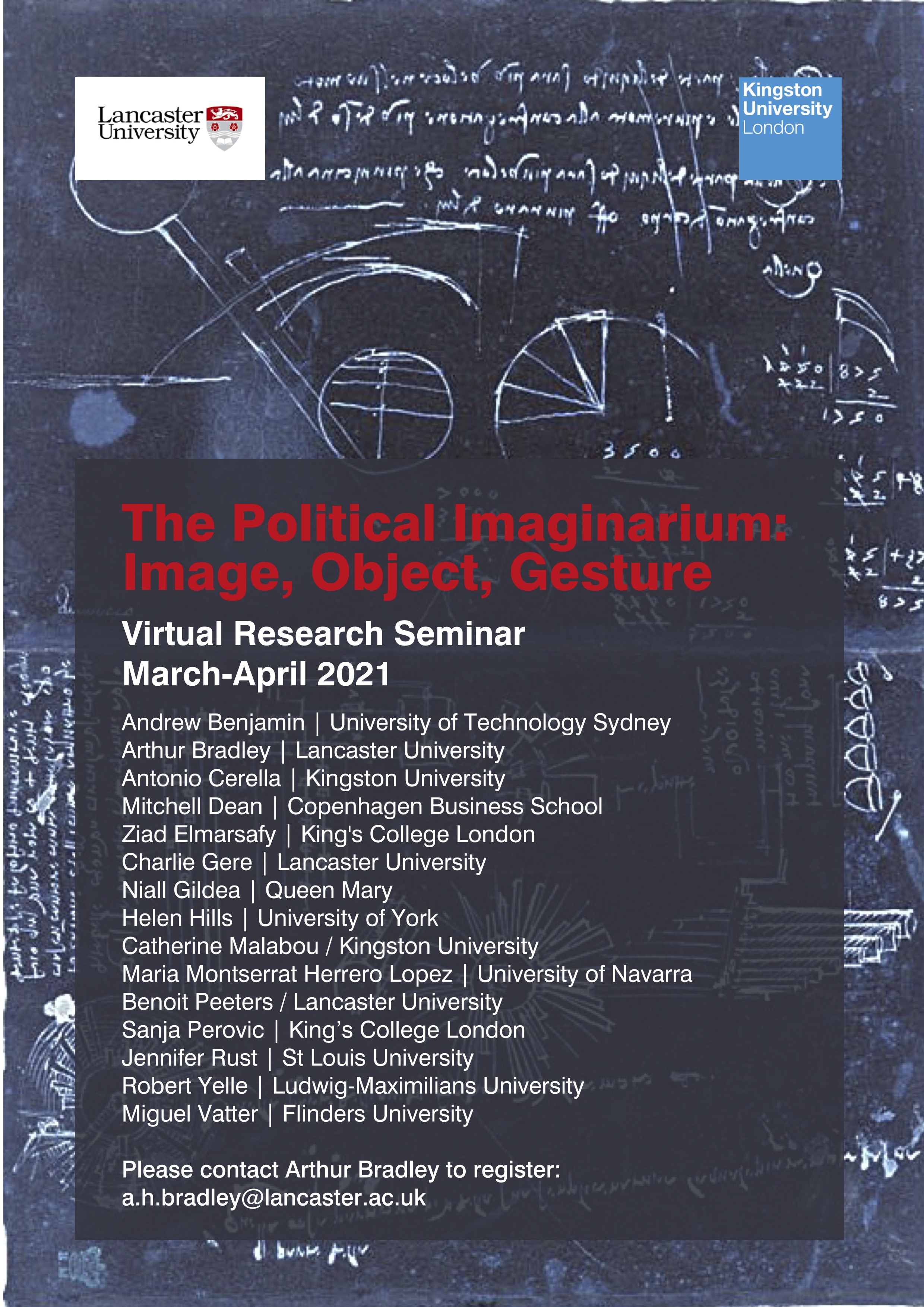
In his book Le Portrait du roi (1981), Louis Marin famously claims that “The king is only truly king, that is, monarch, in images.” To be sure, Marin’s work explicitly refers back to a premodern political theology of the image, but it arguably also inaugurates a modern genre of political iconography that brings together political theory, history, philosophy, sociology, religious studies, art and literary studies to explore the bond between the power of the image and the images of power. But what would it mean to speak of politics as a privileged place or site for making images? How far does politics consist in the power of the image or, conversely, the imageof power? To what extent do paintings, sculpture, literary texts and artifacts represent, perform, critique or resist the “reality” of political power? In short, what is the relation between the power to represent and the representation of power? In this series of webinars (March/April 2021), experts in political theory, sociology, history, philosophy, theology, art history and comparative literature explore the past and present of our “political imaginarium”.
Organisers: Arthur Bradley (Lancaster University) and Antonio Cerella (Kingston University).
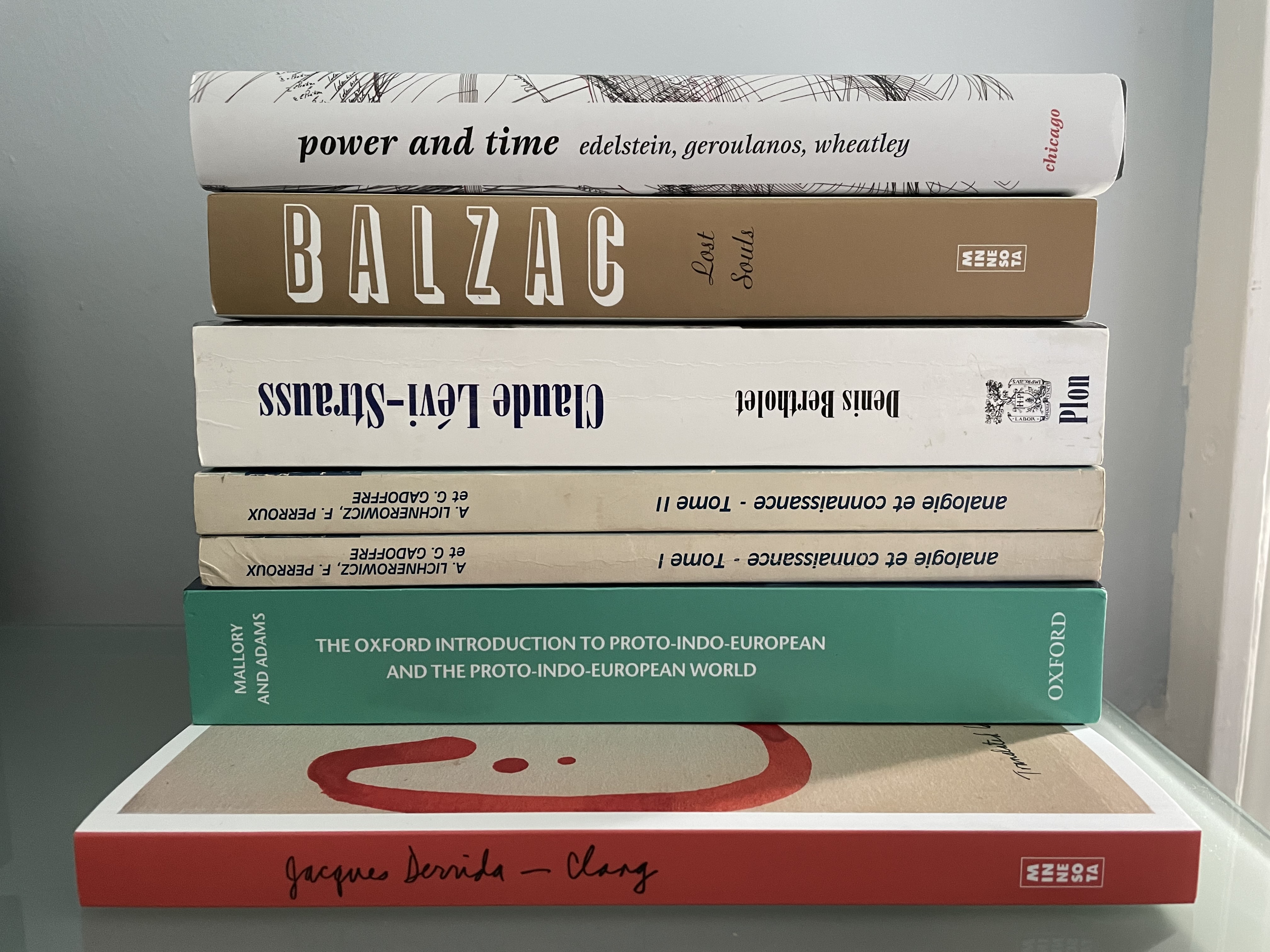
A mix of recently received books – the new translations of Balzac’s Lost Souls and Derrida’s Clang from University of Minnesota Press in recompense for review work, and Dan Edelstein, Stefanos Geroulanos & Natascha Wheatley (eds.), Power and Time: Temporalities in Conflict and the Making of History, sent by University of Chicago Press. The others were bought second-hand, mainly for the Foucault work.
Rebellion was in the air. Workers were on strike, students were demonstrating on campuses, discipline was breaking down. No relation of domination was left untouched – the relation between the sexes, the racial order, the hierarchies of class, relationships in families, workplaces and colleges. The upheavals of the late 1960s and early 1970s quickly spread through all sectors of social and economic life, threatening to make society ungovernable. This crisis was also the birthplace of the authoritarian liberalism which continues to cast its shadow across the world in which we now live.
To ward off the threat, new arts of government were devised by elites in business-related circles, which included a war against the trade unions, the primacy of shareholder value and a dethroning of politics. The neoliberalism that thus began its triumphal march was not, however, determined by a simple ‘state phobia’ and a desire to free up the economy from government interference. On the contrary, the strategy for overcoming the crisis of governability consisted in an authoritarian liberalism in which the liberalization of society went hand-in-hand with new forms of power imposed from above: a ‘strong state’ for a ‘free economy’ became the new magic formula of our capitalist societies.
The new arts of government devised by ruling elites are still with us today and we can understand their nature and lasting influence only by re-examining the history of the conflicts that brought them into being.
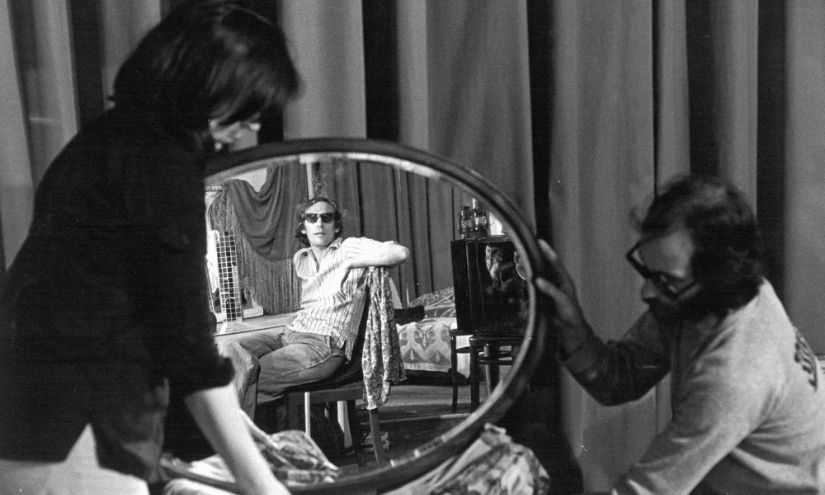
March 1973: two months after Britain joins the European Economic Community, the French historian of ideas Michel Foucault is scheduled to give a lecture in London. Foucault is one of the star attractions of the French Programme, a month-long series of lectures and screenings at the Institute of Contemporary Arts. Jacques Derrida, Gilles Deleuze, Felix Guattari, and Tzvetan Todorov are among the other avatars of Francophone structuralist and post-structuralist thought appearing throughout the month, described in the French newspaper Combat as “the most important French cultural event ever organised in Britain”, and one which has been almost entirely funded by the British Government, eager to foster positive cultural relations between Britain and its sister nations in the Common Market. [continues here]
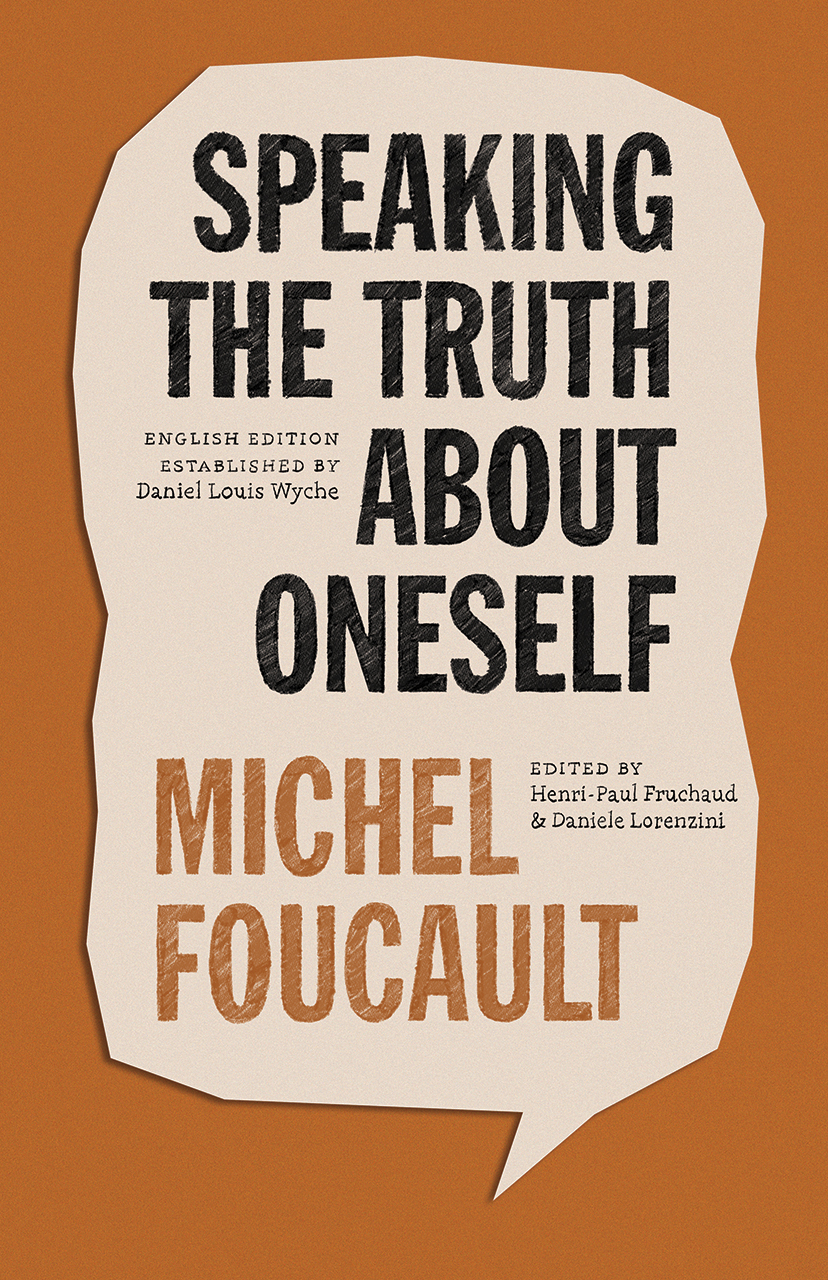
A collection of Foucault’s lectures that trace the historical formation and contemporary significance of the hermeneutics of the self.
Just before the summer of 1982, French philosopher Michel Foucault gave a series of lectures at Victoria University in Toronto. In these lectures, which were part of his project of writing a genealogy of the modern subject, he is concerned with the care and cultivation of the self, a theme that becomes central to the second, third, and fourth volumes of his History of Sexuality. Throughout his career, Foucault had always been interested in the question of how constellations of knowledge and power produce and shape subjects, and in the last phase of his life, he became especially interested not only in how subjects are formed by these forces, but in how they ethically constitute themselves.
In this lecture series and accompanying seminar, Foucault focuses on antiquity, starting with classical Greece, the early Roman empire, and concluding with Christian monasticism in the fourth and fifth centuries AD. Foucault traces the development of a new kind of verbal practice—“speaking the truth about oneself”—in which the subject increasingly comes to be defined by its inner thoughts and desires. He deemed this new form of “hermeneutical” subjectivity important not just for historical reasons, but also due to its enduring significance in modern society. Is another form of the self possible today?
Stuart Elden, University of Warwick “This is a crucial text in the development of Foucault’s ideas about technologies of the self and the question of parrēsia, especially for his contrast of Greco-Roman antiquity and early Christianity. Particularly notable is that as well as a partial record of his Toronto lectures, this volume also includes a rare record of how he conducted his seminars. Skillfully edited from surviving materials, this is a valuable addition to our understanding of Foucault’s final projects.“
David Halperin, University of Michigan “These newly recovered lectures and seminars constitute an important chapter in Foucault’s work on what he called ‘the history of subjectivity in the West.’ They show Foucault poring over the details of texts from classical antiquity so as to describe how the philosophical schools that flourished at the height of the Roman Empire produced distinctive practices of self-examination and self-cultivation. He thereby expands our sense of the possible relations among truth, speech, desire, and the self. The seminars in particular cast new light on Foucault’s late work on sexuality, parrhesia, and early Christianity.”
Updated May 2021 with revised publication date and the two endorsements