

Both published in their lifetimes…
Both published in their lifetimes…
It’s been a while since the last update, and I’d hoped that the Christmas break, a slightly lighter teaching load in term 2 and a reading week would see me make a bit more progress on this manuscript. I haven’t done as much as I’d hoped, and it’s mainly been on connected projects.
Probably the most significant is that the proofs and index of The Early Foucault are complete, and I’m now just waiting for its publication. It’s due out in June 2021. There are three really generous endorsements on the back-cover. Another book manuscript, this one co-edited, has been resubmitted following some minor revisions. More on that soon.

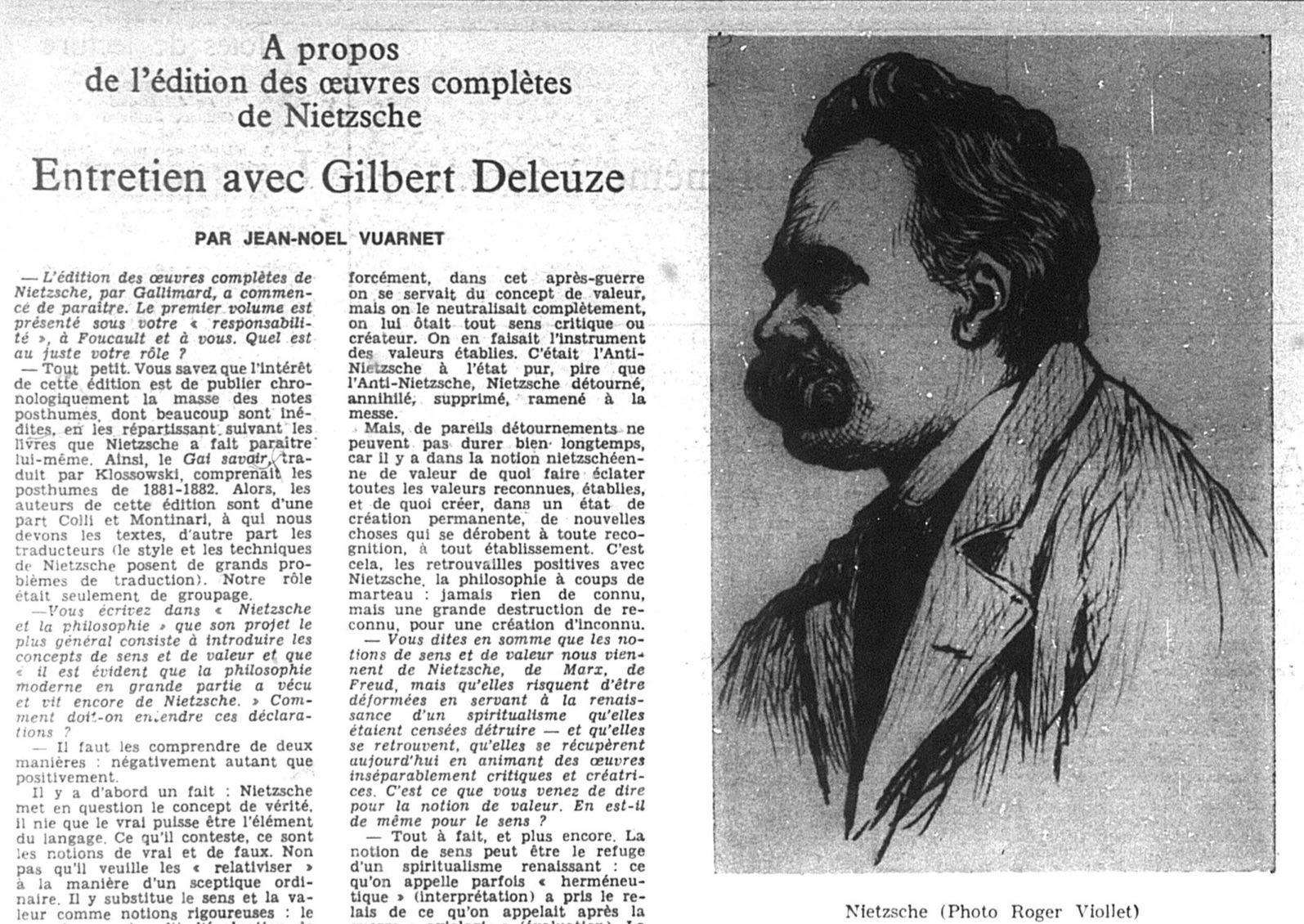
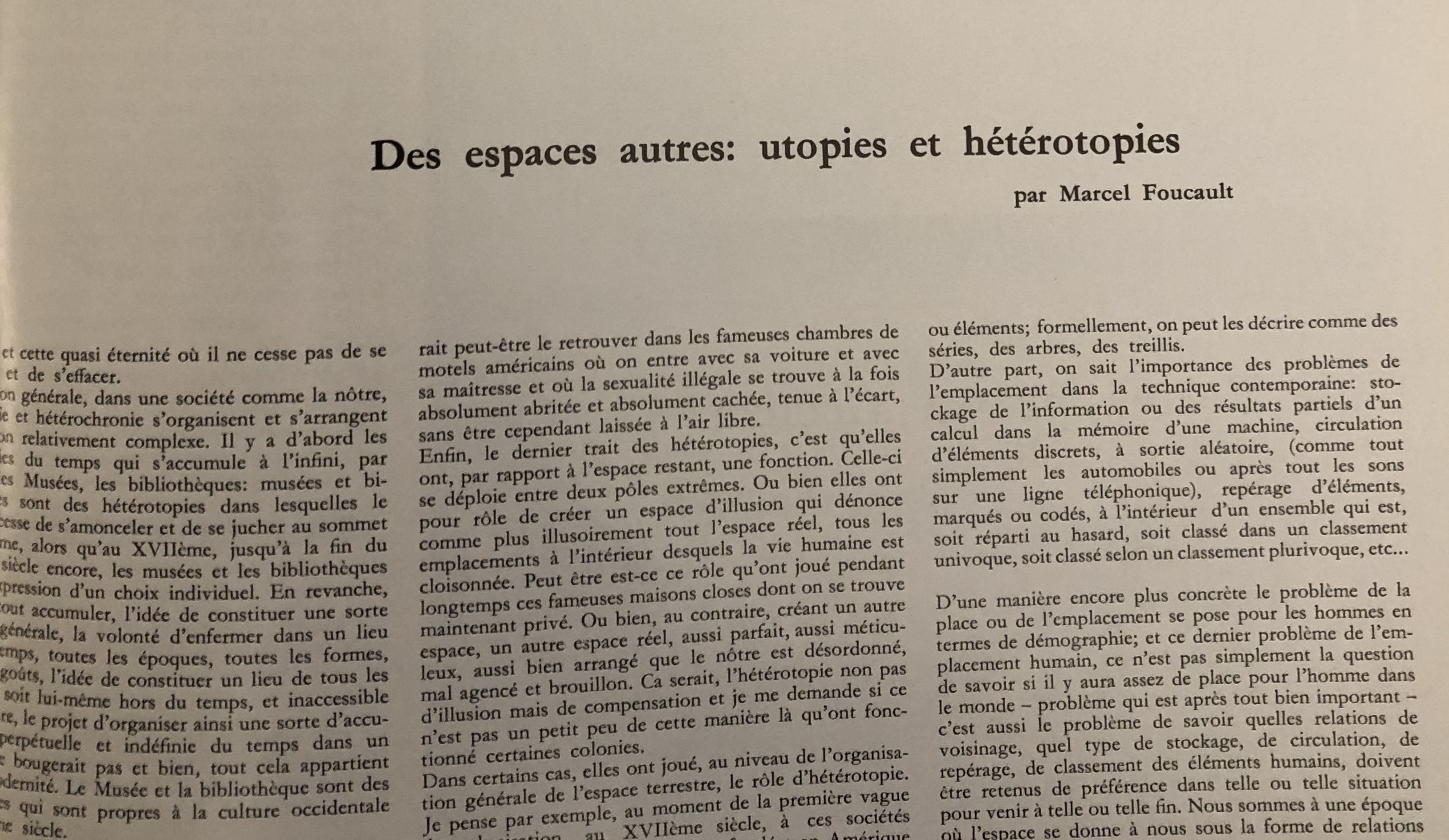
I did some work on Foucault and Georges Dumézil for a book chapter which looks at their views on sovereignty, and returned to Foucault’s course The Punitive Society for a brief contribution to an online seminar (see my blog contribution ‘From Dynastics to Genealogy’, and recording of discussion here). The question of dynastics has developed into a draft of something longer. I’ve also promised an article for a special issue on Georges Canguilhem. I felt I’d said what I wanted to say about him in my book, but I found a way to connect him to some other interests, so in this piece I’m looking at his readings of Georges Dumézil and Jean Hyppolite. A lot of these writing projects are dependent on access to London libraries and Paris archives. The British Library is currently closed and is likely to be for some time. I’m glad I did the short trip I did in mid-December. Although the BnF is open, I can’t travel in the current situation, and there are now new challenges with Brexit. All of this is making archival work much more challenging. While I’m hopeful I can eventually get through what I need to do for The Archaeology of Foucault, I’m doing some reassessment of future projects in these more challenging times.
Working on Hyppolite again has been interesting. I discuss him in The Early Foucault, as one of Foucault’s teachers, and as the supervisor of Foucault’s diploma thesis on Hegel and rapporteur for his secondary doctoral thesis on Kant’s Anthropology. But he is mainly known for his crucial work on Hegel – he was translator of the Phenomenology of Spirit, and wrote a long commentary on it, as well as the 1952 book Logic and Existence and a briefer study of the Philosophy of History. Canguilhem wrote about this aspect of Hyppolite’s work in an important piece called ‘Hegel en France’. A discussion of that is the key part of my piece. But Hyppolite also wrote on quite a number of other topics, and many of these pieces are collected in the posthumous collection Figures de la pensée philosophique. I’d had the two volumes of this checked out from Warwick for ages, but now have my own copy. Foucault led the tribute volume Hommage à Jean Hyppolite, to which Canguilhem contributed a chapter; and Hyppolite’s final seminar was also published after his death – with contributions from Derrida and Althusser, among others. I say a bit more about his teaching here. Exploring Canguilhem’s biographical and intellectual links to Hyppolite is a new and for me interesting way into his work. Canguilhem’s reading of Dumézil is more limited, but it comes up in his reading of Foucault’s Les mots et les choses, a couple of other minor mentions, and in his role as a respondent to a seminar to which Foucault contributed from autumn 1970. That seminar is not in either of their collected works, because their contributions are only summarised, not written out. It’s not widely discussed but I think it is quite interesting.
In terms of the book itself, it’s been more of a case of reading, adding in some references and reworking details, rather than any substantial new sections. I’ve been increasingly drawn to Claude Lévi-Strauss, André Martinet, Émile Benveniste as well as Dumézil, and this is helping with contextualising some of Foucault’s relation with linguistics and so-called structuralism in this period. I’m hoping I can make some more incremental progress on this in the second-half of the term, and then get to some more sustained writing in the Easter break.
Previous updates on this book are here, and updates for The Early Foucault here. A list of the resources on this site relating to Foucault – bibliographies, audio and video files, some textual comparisons, some short translations, etc. – can be found here. The earlier books Foucault: The Birth of Power and Foucault’s Last Decade are both available from Polity, and The Early Foucault is forthcoming in June 2021.
Fiorenza Picozza, The Coloniality of Asylum: Mobility, Autonomy and Solidarity in the Wake of Europe’s Refugee Crisis – Rowman International, February 2021
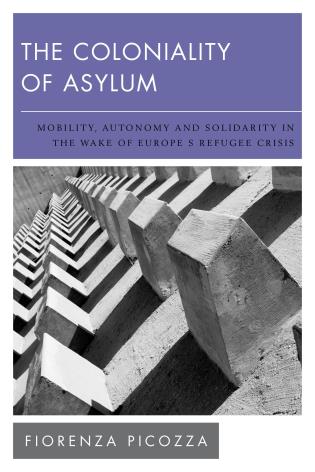
Through the concepts of the ‘coloniality of asylum’ and ‘solidarity as method’, this book links the question of the state to the one of civil society; in so doing, it questions the idea of ‘autonomous politics’, showing how both refugee mobility and solidarity are intimately marked by the coloniality of asylum, in its multiple ramifications of objectification, racialisation and victimisation.
Taking an interdisciplinary approach, The Coloniality of Asylum bridges border studies with decolonial theory and the anthropology of the state, and accounts for the mutual production of ‘refugees’ and ‘Europe’. It shows how Europe politically, legally and socially produces refugees while, in turn, through their border struggles and autonomous movements, refugees produce the space of Europe.
Drawing on ethnographic fieldwork conducted in Hamburg in the wake of the 2015 ‘long summer of migration’, the book offers a polyphonic account, moving between the standpoints of different subjects and wrestling with questions of protection, freedom, autonomy, solidarity and subjectivity.
Details of a (virtual) book launch on 10 March 2021 here.

Some books in recompense for review for Polity, along with Achille Mbembe, Out of the Dark Night from Columbia University Press, Jacques Martin’s L’individu chez Hegel, edited by Jean-Baptiste Vuillerod, the translation of Foucault’s Confessions of the Flesh and an old book by Emile Benveniste
BBC Radio 3 Free Thinking – ‘Foucault: The History of Sexuality, Volume 4‘ – Shahidha Bari with Lisa Downing, Stuart Elden, and Stephen Shapiro, 25 February 2021, 10pm (and now available online and download here).
On the day the final volume of The History of Sexuality is published in English, over 36 years after Foucault’s death in 1984, Shahidha Bari and her panel assess its influence.
Shahidha Bari is joined by Lisa Downing, Stuart Elden, and Stephen Shapiro to look volume 4 of Foucault’s History of Sexuality at, translated into English for the first time, which examines beliefs and practices among the early Christians in Medieval Europe. Although he had specified in his will that his works shouldn’t be published after he died (in 1984), the rights holders of Foucault decided that these ideas could now be made public. So what do they tell us and how influential has his approach to sexuality been?
Lisa Downing, Professor of Modern Languages at the University of Birmingham. She writes about gender and sexuality and she’s the editor of The Cambridge Introduction to Michel Foucault.
Stuart Elden’s books include The Early Foucault, which will be published in June 2021. This continues the work in his earlier books Foucault’s Last Decade and Foucault: The Birth of Power. He is Professor of Political Theory and Geography at the University of Warwick.
And Stephen Shapiro, Professor of English and Comparative Literature also at the University of Warwick. He is co-author of how to Read Foucault’s Discipline and Punish.
Producer: Luke Mulhall
You can find other episodes on philosophical themes in a Free Thinking playlist https://www.bbc.co.uk/programmes/p07x0twx

Details of the book are here; and a Warwick press release with some comments from me here. My review essay of the French edition of this text was published in 2018 – https://www.theoryculturesociety.org/review-foucaults-confessions-flesh/ (open access), and there is a roundup of other media reports from the French publication here.
Jacques Lacan, The Object Relation: The Seminar of Jacques Lacan, Book IV, translated by Adrian Price – Polity, February 2021
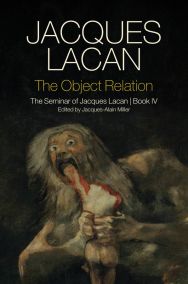
‘The unfulfilled and unsatisfied mother around whom the child ascends the upward slope of his narcissism is someone real. She is right there, and like all other unfulfilled creatures, she is in search of what she can devour, quaerens quem devoret. What the child once found as a means of quashing the symbolic unfulfilment is what he may possibly find across from him again as a wide-open maw […] To be devoured is a grave danger that our fantasies reveal to us. We find it at the origin, and we find it again at this turn in the path where it yields us the essential form in which phobia presents. We find it again when we look at the fears of Little Hans […] With the support of what I have shown you today, you will better see the relationships between phobia and perversion […] I shall go so far as to say that you will interpret the case better than did Freud himself […]’
Extract from Chapter XI
‘[…] it’s no accident that what has been perceived but dimly, yet perceived nevertheless, is that castration bears just as much relation to the mother as to the father. We can see in the description of the primordial situation how maternal castration implies for the child the possibility of devoration and biting. In relation to this anteriority of maternal castration, paternal castration is a substitute […]’
Extract from Chapter XXI
‘[In the case of little Hans] The initial transformation, which will prove decisive, is […] the transformation of the biting into the unscrewing of the bathtub, which is something utterly different, in particular for the relationship between the protagonists. Voraciously to bite the mother, as an act or an apprehension of her altogether natural signification, indeed to dread in return the notorious biting that is incarnated by the horse, is something quite different from unscrewing, from ousting, the mother, and mobilising her in this business, bringing her into the system as a whole, for this first time as a mobile element and, by like token, an element that is equivalent to all the rest.’
Extract from Chapter XXIII
As with their previous translations of Lacan, hardback initially (though relatively affordable), and paperback to follow.
Stephen Houlgate, Hegel on Being – two volumes, Bloomsbury, October 2021
Very expensive hardback and e-book at present, but this looks a major work.
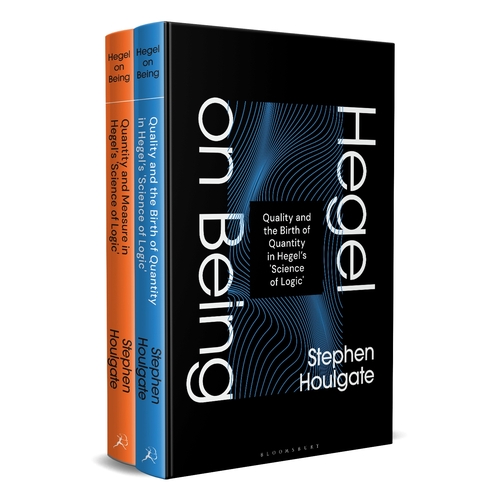
Hegel on Being provides an authoritative treatment of Hegel’s entire logic of being. Stephen Houlgate presents the Science of Logic as an important and neglected text within Hegel’s oeuvre that should hold a more significant place in the history of philosophy. In the Science of Logic, Hegel set forth a distinctive conception of the most fundamental forms of being through ideas on quality, quantity and measure. Exploring the full trajectory of Hegel’s logic of being from quality to quantity, this two-volume work by preeminent Hegel scholar, Houlgate situates Hegel’s text in relation to the work of Plato, Aristotle, Descartes, Spinoza, Kant, and Frege.
Volume I: Quality and the Birth of Quantity in Hegel’s ‘Science of Logic’ covers all material on the purpose and method of Hegel’s dialectical logic and charts the crucial transition from ideas of quality to quantity, as well as providing an original account of Hegel’s critique of Kant’s antinomies across several chapters. Volume II: Quantity and Measure in Hegel’s ‘Science of Logic’ continues the discussion of Hegel’s logic of being and considers all aspects of quantity in his logic, including his basic categories of being, writings on calculus, philosophy of mathematics, as well as a comparative study of Hegel and Frege’s approach to logic.
Lucidly written, with characteristic philosophical depth and analysis, Houlgate’s Hegel on Being explicates one of Hegel’s most complex works, providing a vital reference for a generation of Hegel scholars and a major contribution to the literature on 19th century German philosophy.
Arlette Farge, Instants de Vie, presented by Clémentine Vidal-Naquet, Éditions EHESS, February 2021

Le XVIIIesiècle d’Arlette Farge est sonore, odorant, tactile, à la fois familier et exotique, attachant. Elle a rencontré le peuple de Paris dans les archives, bavardes et hautes en couleur, de la police ; depuis, chacun de ses travaux redonne vie et laisse la parole à ces oubliés de l’histoire, à ce qui les occupe, les bouscule, leur tient à coeur.
Dans ces entretiens avec Perrine Kervran, Laure Adler et Patrick Boucheron, elle raconte sa formation, sa découverte des archives, son engagement féministe, les hasards et rencontres qui ont jalonné son parcours. Elle élabore également une réflexion sur la sensibilité, l’écriture de l’histoire, et le rôle de l’historien dans le présent.
Instants de viedessine ainsi le portrait d’une historienne pour qui réflexivité, émotion et recherche scientifique sont inséparables.
Update: There is a discussion…
View original post 8 more words
Remigiusz Ryziński. Foucault in Warsaw – forthcoming in English translation.
 Remigiusz Ryziński. Foucault in Warsaw, Open Letter Books (Forthcoming, June 2021)
The previously untold story of the plot to kick Michel Foucault out of Poland in the 1950s
In 1958, Michel Foucault arrived in Poland to work on his thesis—a work that eventually came to be published as The History of Madness. While he was there, he became involved with a number of members of the gay community, including a certain “Jurek,” who eventually lead the secret police directly to Foucault’s hotel room, causing his subsequent exit from Poland. That boy’s motivations and true identity were hidden among secret police documents for decades, until Remigiusz Ryziński stumbled upon the right report and uncovered the truth about the whole situation.
Nominated for the Nike Literary Award, Foucault in Warsaw reconstructs a vibrant, engaging picture of gay life in Poland under communism—from the joys found in secret nightclubs, to the fears…
View original post 172 more words
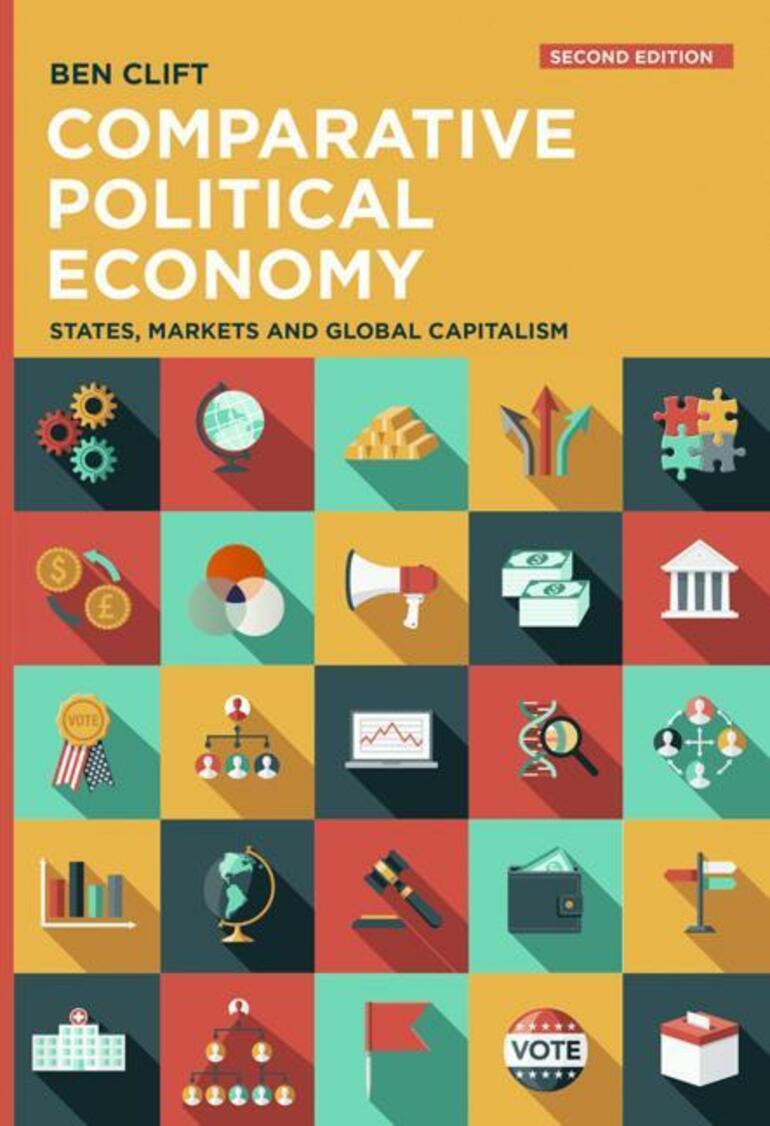
Ben Clift, Comparative Political Economy: States, Markets and Global Capitalism, 2nd edition – Red Globe Press/Macmillan, 2021
This is a book about how 21st-century capitalism really works. Modern economics strips away social, historical, and political context from analysis of ‘the economic’, but the economy is far too important to leave exclusively to the economists. Comparative Political Economy (CPE) is a much broader, richer intellectual undertaking which ‘re-embeds’ the analysis of the economic within the social and political realm. This is at the heart of how to think like a political economist.
This text maps the terrain and evolution of CPE, providing the analytical tools to explore the many variants of capitalism, unearthing their roots in competing visions of the desirable distribution of the fruits of growth. Connecting CPE systematically to the subfield of International Political Economy (IPE), the book explains how these visions generate ongoing political struggles over how to regulate and manage capitalism.
This is the perfect introduction to the field for all students of CPE and IPE.


