Claude Lévi-Strauss, Structural Anthropology Zero – Polity, July 2021

Claude Lévi-Strauss, Structural Anthropology Zero – Polity, July 2021, translated by Ninon Vinsonneau and Jonathan Magidoff

The original French edition of these texts was published by Seuil in 2019 as Anthropologie structurale zéro.

This volume of Lévi-Strauss’s writings from 1941 to 1947 bears witness to a period of his work which is often overlooked but which was the crucible for the structural anthropology that he would go on to develop in the years that followed.

Like many European Jewish intellectuals, Lévi-Strauss had sought refuge in New York while the Nazis overran and occupied much of Europe.  He had already been introduced to Jakobson and structural linguistics but he had not yet laid out an agenda for structuralism, which he would do in the 1950s and 60s.  At the same time, these American years were the time when Lévi-Strauss would learn of some of the world’s most devastating historical catastrophes – the genocide of the indigenous American peoples and of European Jews.  From the beginning of the 1950s, Lévi-Strauss’s anthropology tacitly bears the heavy weight of the memory and possibility of the Shoah. To speak of ‘structural anthropology zero’ is therefore to refer to the source of a way of thinking which turned our conception of the human on its head. But this prequel to Structural Anthropology also underlines the sense of a tabula rasa which animated its author at the end of the war as well as the project – shared with others – of a civilizational rebirth on novel grounds.

Published here in English for the first time, this volume of Lévi-Strauss’s texts from the 1940s will be of great interest to students and scholars in anthropology, sociology and the social sciences generally.

Posted in Claude Lévi-Strauss, Roman Jakobson | 1 Comment

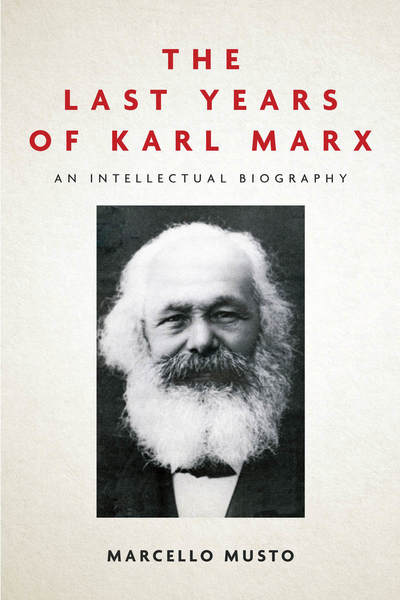
Marcello Musto, The Last Years of Karl Marx: An Intellectual Biography – Stanford University Press, July 2020

Marcello Musto, The Last Years of Karl Marx: An Intellectual Biography – Stanford University Press, July 2020

An innovative reassessment of the last writings and final years of Karl Marx.

In the last years of his life, Karl Marx expanded his research in new directions—studying recent anthropological discoveries, analyzing communal forms of ownership in precapitalist societies, supporting the populist movement in Russia, and expressing critiques of colonial oppression in India, Ireland, Algeria, and Egypt. Between 1881 and 1883, he also traveled beyond Europe for the first and only time. Focusing on these last years of Marx’s life, this book dispels two key misrepresentations of his work: that Marx ceased to write late in life, and that he was a Eurocentric and economic thinker fixated on class conflict alone.

With The Last Years of Karl Marx, Marcello Musto claims a renewed relevance for the late work of Marx, highlighting unpublished or previously neglected writings, many of which remain unavailable in English. Readers are invited to reconsider Marx’s critique of European colonialism, his ideas on non-Western societies, and his theories on the possibility of revolution in noncapitalist countries. From Marx’s late manuscripts, notebooks, and letters emerge an author markedly different from the one represented by many of his contemporary critics and followers alike. As Marx currently experiences a significant rediscovery, this volume fills a gap in the popularly accepted biography and suggests an innovative reassessment of some of his key concepts.

Update 7 Sept 2023: There is a New Books discussion between the author, David Norman Smith, Peter Audis and Sean Sayers, moderated by Morteza Hajizadeh here.

Posted in Karl Marx | Leave a comment

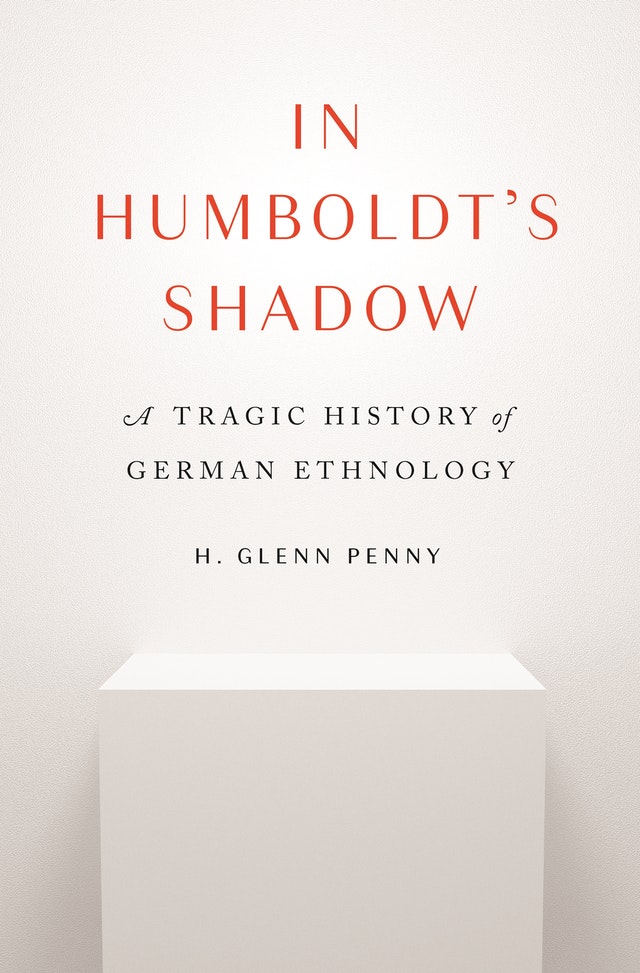
H. Glenn Penny, In Humboldt’s Shadow: A Tragic History of German Ethnology – Princeton University Press, 2021

H. Glenn Penny, In Humboldt’s Shadow: A Tragic History of German Ethnology – Princeton University Press, 2021

The Berlin Ethnological Museum is one of the world’s largest and most important anthropological museums, housing more than a half million objects collected from around the globe. In Humboldt’s Shadow tells the story of the German scientists and adventurers who, inspired by Alexander von Humboldt’s inclusive vision of the world, traveled the earth in pursuit of a total history of humanity. It also details the fate of their museum, which they hoped would be a scientists’ workshop, a place where a unitary history of humanity might emerge.

H. Glenn Penny shows how these early German ethnologists assembled vast ethnographic collections to facilitate their study of the multiplicity of humanity, not to confirm emerging racist theories of human difference. He traces how Adolf Bastian filled the Berlin museum in an effort to preserve the records of human diversity, yet how he and his supporters were swept up by the imperialist currents of the day and struck a series of Faustian bargains to ensure the growth of their collections. Penny describes how influential administrators such as Wilhelm von Bode demanded that the museum be transformed into a hall for public displays, and how Humboldt’s inspiring ideals were ultimately betrayed by politics and personal ambition.

In Humboldt’s Shadow calls on museums to embrace anew Bastian’s vision while deepening their engagement with indigenous peoples concerning the provenance and stewardship of these collections.

Posted in Uncategorized | Leave a comment

Ben Jacobsen and David Beer, Social Media and the Automatic Production of Memory: Classification, Ranking and the Sorting of the Past – Bristol University Press, April 2021

Ben Jacobsen and David Beer, Social Media and the Automatic Production of Memory: Classification, Ranking and the Sorting of the Past – Bristol University Press, April 2021 

Social media platforms hold vast amounts of biographical data about our lives. They repackage our past content as ‘memories’ and deliver them back to us. But how does that change the way we remember? 

Drawing on original qualitative research as well as industry documents and reports, this book critically explores the process behind this new form of memory making. In asking how social media are beginning to change the way we remember, it will be essential reading for scholars and students who are interested in understanding the algorithmically defined spaces of our lives.

Posted in Uncategorized | Leave a comment

Klaus Dodds, Border Wars: The Conflicts that will Define our Future – Ebury Press, February 2021

Klaus Dodds, Border Wars: The Conflicts that will Define our Future – Ebury Press, February 2021

Can Donald Trump really build that wall? What does Brexit mean for Ireland’s border? And what would happen if Elon Musk declared himself president of the Moon?

In Border Wars, Professor Klaus Dodds takes us on a journey into the geopolitical conflict of tomorrow in an eye-opening tour of the world’s best-known, most dangerous and most unexpected border conflicts from the Gaza Strip to the space race. 

Along the way, we’ll discover just what border truly mean in the modern world: how are they built; what do they mean for citizens and governments; how do they help understand our political past and, most importantly, our diplomatic future?

Posted in Uncategorized | 1 Comment

Patricia Owens and Katharina Rietzler (eds.), Women’s International Thought: A New History – Cambridge University Press, 2021 and book launch in Sussex

Patricia Owens and Katharina Rietzler (eds.), Women’s International Thought: A New History – Cambridge University Press, 2021

Women’s International Thought: A New History is the first cross-disciplinary history of women’s international thought. Bringing together some of the foremost historians and scholars of international relations working today, this book recovers and analyses the path-breaking work of eighteen leading thinkers of international politics from the early to mid-twentieth century. Recovering and analyzing this important work, the essays offer revisionist accounts of IR’s intellectual and disciplinary history and expand the locations, genres, and practices of international thinking. Systematically structured, and focusing in particular on Black diasporic, Anglo-American, and European historical women, it does more than ‘add women’ to the existing intellectual and disciplinary histories from which they were erased. Instead, it raises fundamental questions about which kinds of subjects and what kind of thinking constitutes international thought, opening new vistas to scholars and students of international history and theory, intellectual history and women’s and gender studies.

Recovers and analyzes the important work of Black diasporic, Anglo-American, and European historical women who are missing from existing histories of international thought

Systematically analyses the work of eighteen leading thinkers of international politics in the early and mid-twentieth century

Opens new vistas to scholars and students of international history and theory, intellectual history and women’s and gender studies, and provides a framework for future research

‘A breath-taking eye-opener of a book and required reading for everyone studying international relations and the history of political thought. With cutting-edge scholarship … it reveals new horizons of internationalism, socialism, and solidarity. It unveils fierce critiques of the nation-state and imperialism, centres race and gender as topics within international thought, and reveals the ways in which the politics of race and gender have shaped the field. This book reshapes the field beautifully.’ Hannah Dawson, King’s College London

‘This defies all conventions, categories, and canons to bring new, nuanced histories of women, intellectualism, and internationalism into view. With essays on socialist internationalist theory, war and empire, and global black liberation, these authors show that no study of internationalism – institutional or otherwise – can be complete without rigorous examination of women theorists.’ Ashley D. Farmer, University of Texas, Austin

‘This points the way to a renovation of our canon in a field first named by a woman in 1929. Portending a new historiography, the results so far correct, encourage, and reprimand all those who have tried to write the history of antiracism, human rights, and peace, among so many other international causes and frameworks.’ Samuel Moyn, Yale University

‘By recovering the international thought and practice of a diverse group of brilliant and dedicated women scholars and activists, this essential volume rewrites the history of the field. Often working under duress and at the edges of the academy, these thinkers nonetheless shaped understandings of – and galvanized engagement with – the pressing global problems of their times. We have much to learn from their work, and from their example.’ Susan Pedersen, Columbia University

‘This remarkable collection upends the unspoken consensus of virtually all of those who write about the foundational thinkers and ideas about international relations: that women never mattered.’ Robert Vitalis, University of Pennsylvania

There is a book launch for Women’s International Thought: A New History (CUP, 2021), hosted by the Sussex Centre for Intellectual History on 11 February 2021 – details here.

Speakers include Duncan Bell (Cambridge), Synne Dyvik (Sussex) and Matthew Specter (Berkeley). Chaired by Joanne Paul (Sussex). Join us for a zoom discussion of the book and a live Q&A with the editors.

Posted in Uncategorized | 1 Comment

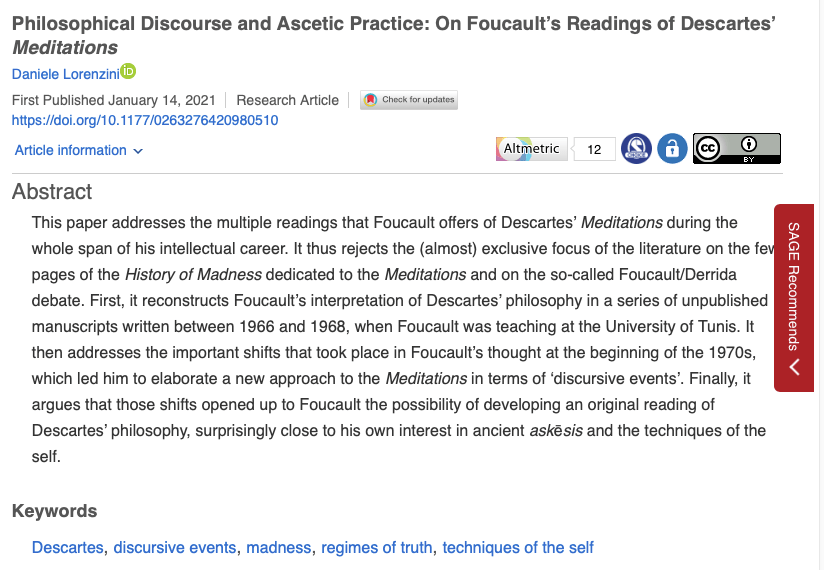
Daniele Lorenzini on Foucault and Descartes (open access and video abstract) – part of Theory, Culture & Society Special Issue: ‘Foucault Before the Collège de France’

Daniele Lorenzini’s article “Philosophical Discourse and Ascetic Practice: On Foucault’s Readings of Descartes’ Meditations” is now available open access. The article is part of a Theory, Culture & Society Special Issue: ‘Foucault Before the Collège de France’ which I’m co-editing with Daniele and Orazio Irrera.

The other papers so far available are listed here, along with two video abstracts. My article is open access too; the others require subscription.

Posted in Michel Foucault, René Descartes | 3 Comments

Books received – Paine, Du Bois, Lévi-Strauss, Hyppolite, Martinet, de Saussure, Ewald, Della Dora

Paine and Du Bois are for teaching, the others relate to the ongoing Foucault work, along with a long-awaited copy of Veronica Della Dora’s excellent book The Mantle of the Earth: Genealogies of a Geographical Metaphor, which I read in manuscript.

Posted in Claude Lévi-Strauss, Michel Foucault, The Archaeology of Foucault | 1 Comment

‘From Dynastics to Genealogy’, my contribution to Abolition Democracy 13/13, Beyond the Punitive Society

This piece now reposted at Critical Legal Thinking

stuartelden's avatarProgressive Geographies

On 7 January 2021 I’ll be part of a panel discussion for the Abolition Democracy 13/13 series, hosted by Bernard E. Harcourt at the Columbia Center for Contemporary Critical Thought, and co-organised with Daniele Lorenzini of The Centre for Research in Post-Kantian European Philosophy at Warwick. We will be discussing Foucault’s 1972-73 lecture course The Punitive Society. Before the event, which will be live-streamed, participants have been asked to post a short piece about one or more ideas in the course. I’ve written a piece entitled ‘From Dynastics to Genealogy‘, which is a synopsis of a longer piece in progress.

It can be read here, and the other contributions from Goldie Osuri, Daniele Lorenzini, Bernard Harcourt, Rahsaan Thomas and others here. That last link has all the details of how to follow the discussion.

View original post

Posted in Uncategorized | Leave a comment

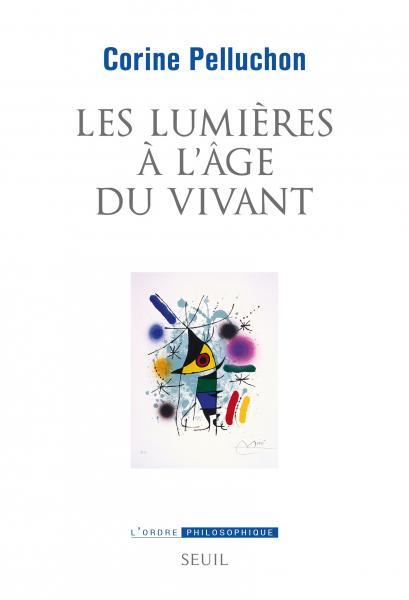
Corine Pelluchon, Les Lumières à l’âge du vivant – Seuil, January 2021

Corine Pelluchon, Les Lumières à l’âge du vivant – Seuil, January 2021

Comment défendre les Lumières aujourd’hui ? Leur idéal d’émancipation a-t-il encore un sens ?

On ne saurait se borner à invoquer un esprit des Lumières immuable dans un contexte marqué par le réveil du nationalisme, les crises environnementales et sanitaires et l’augmentation des inégalités. Faire face au danger d’effondrement de notre civilisation sans renoncer à la rationalité philosophico-scientifique, mais en tenant compte de notre dépendance à l’égard de la nature et des autres vivants : telle est la démarche qui fonde ce livre. Pour combattre les anti-Lumières qui souhaitent rétablir une société hiérarchique ou théocratique et répondre aux accusations des postmodernes qui suspectent tout universalisme d’être hégémonique, il faut donc proposer de nouvelles Lumières. Celles-ci supposent de revisiter l’histoire des Lumières, mais aussi de lutter contre l’amputation de la raison qui a été réduite à un instrument de calcul et d’exploitation.

L’objectif des Lumières à l’âge du vivant et de leur projet d’une société démocratique et écologique est bien de destituer le principe de la domination – une domination des autres et de la nature à l’intérieur et à l’extérieur de soi qui traduit un mépris du corps et de la vulnérabilité. 

Corine Pelluchon est philosophe et professeur à l’université Gustave-Eiffel. Elle a publié une dizaine d’ouvrages, parmi lesquels Les Nourritures. Philosophie du corps politique (Seuil, 2015, Points, 2020), Éthique de la considération (Seuil, 2018) et Pour comprendre Levinas (Seuil, 2020). Son œuvre a été récompensé en 2020 par le prix de la pensée critique Günther Anders.

Posted in Uncategorized | Leave a comment