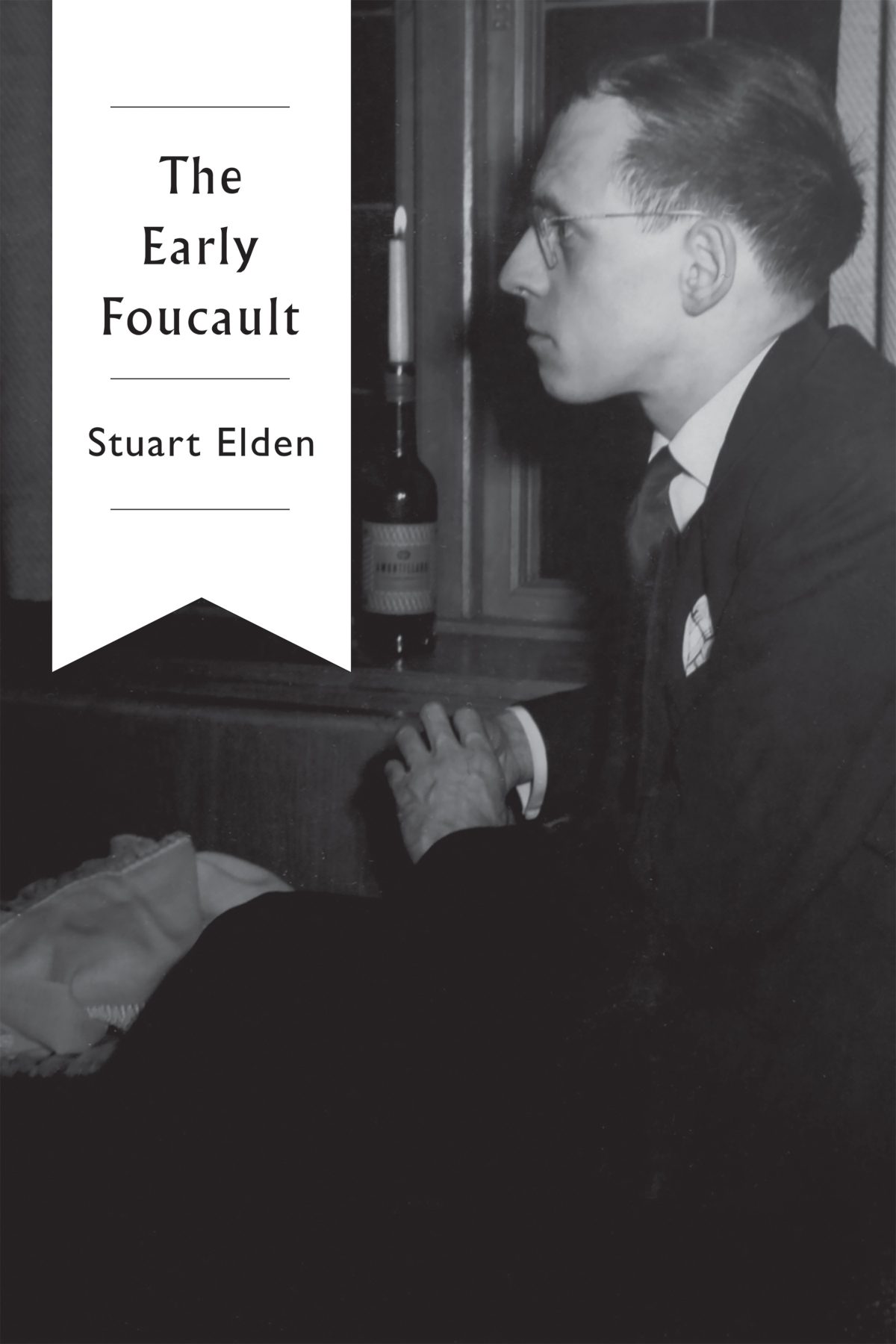
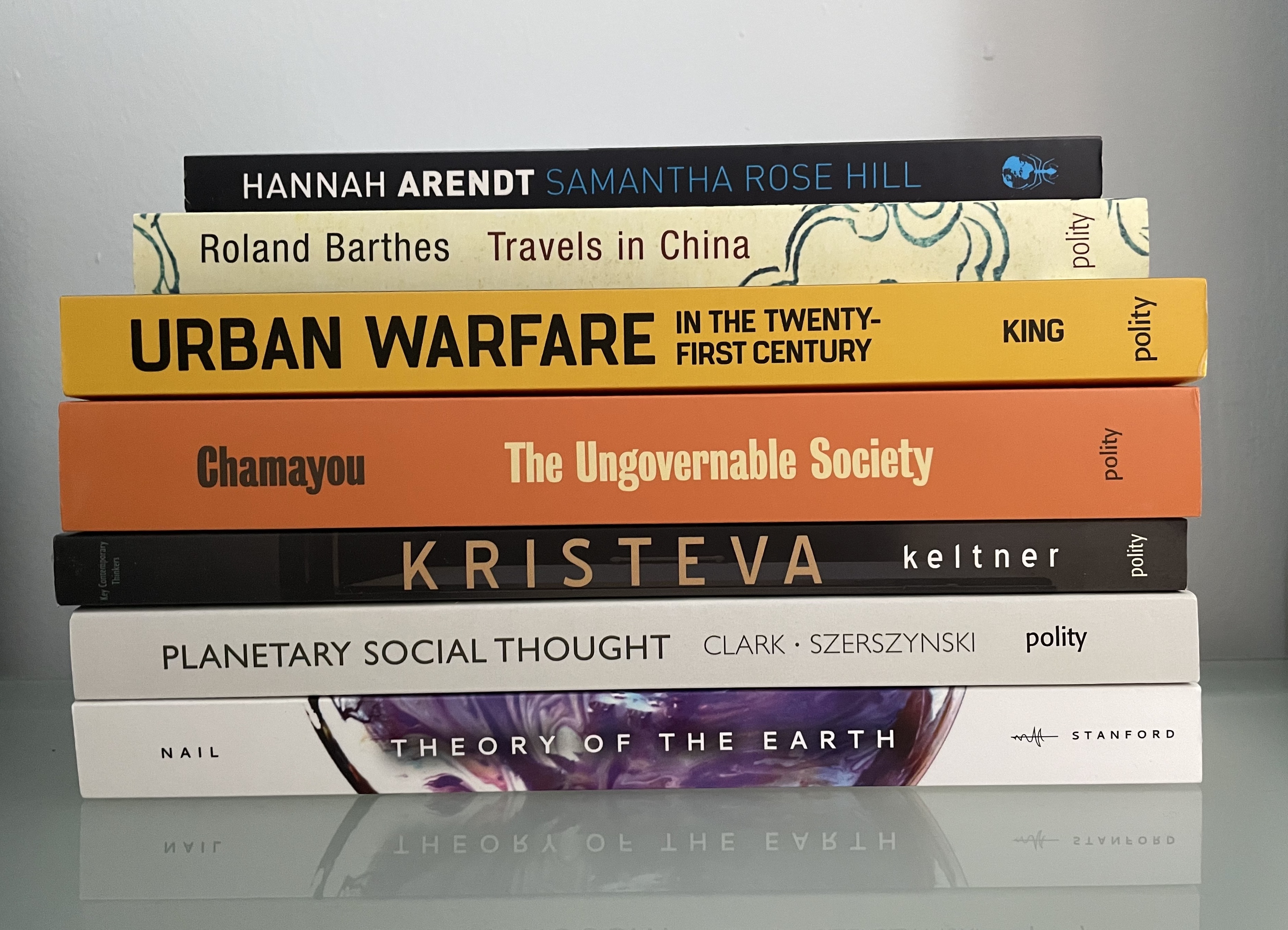
On this episode, Adam and Will are joined by Stuart Elden to discuss his latest book, The Early Foucault. We discuss the academic experiences and personal relationships that were formative in the Foucault’s development as an intellectual. The conversation ranges from Foucault’s early interest in Hegelianism to the influence of Canguilhem, Hyppolite, Barraqué, Althusser, and others!
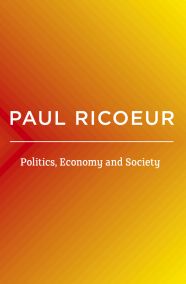
The philosophy of Paul Ricoeur is rarely viewed through the lens of political philosophy, and yet questions of power, and of how to live together in the polis, were a constant preoccupation of his writings. This volume brings together a selection of his texts spanning six decades, from 1958 to 2003, which together present Ricoeur’s political project in its coherence and diversity.
In Ricoeur’s view, the political is the realm of a tension between ‘rationality’ (the attempt to provide a coherent explanation of the world) and ‘irrationality’, which manifests itself in force and repression. This ‘political paradox’ lies at the heart of politics, for the claim to explain the world generates its own form of violence : the more one desires the good, the more one is inclined to impose it. Ricoeur warns citizens, the guardians of democracy, against any totalizing system of thought and any dogmatic understanding of history. Power should be divided and controlled, and Ricoeur defends a form of political liberalism in which states are conscious of the limits of their power and respectful of the freedom of their citizens.Ranging from questions of power and repression to those of ethics, identity and responsibility, these little-known political texts by one of the leading philosophers of the twentieth century will be of interest to students and scholars of philosophy, politics and theology and to anyone concerned with the great political questions of our time.
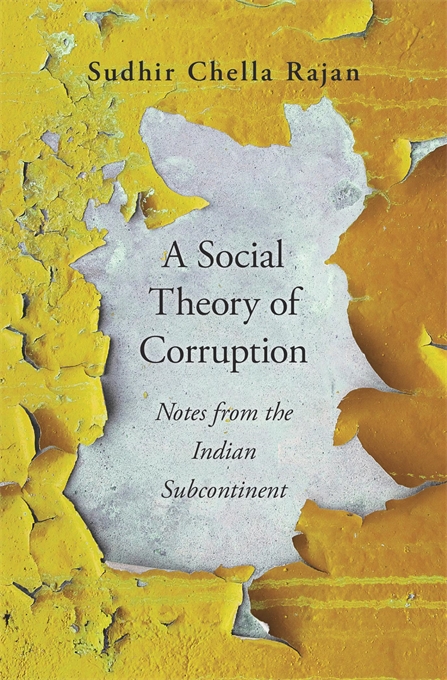
Sudhir Chella Rajan, A Social Theory of Corruption: Notes from the Indian Subcontinent – Harvard University Press, 2020
A social theory of grand corruption from antiquity to the twenty-first century.
In contemporary policy discourse, the notion of corruption is highly constricted, understood just as the pursuit of private gain while fulfilling a public duty. Its paradigmatic manifestations are bribery and extortion, placing the onus on individuals, typically bureaucrats. Sudhir Chella Rajan argues that this understanding ignores the true depths of corruption, which is properly seen as a foundation of social structures. Not just bribes but also caste, gender relations, and the reproduction of class are forms of corruption.
Using South Asia as a case study, Rajan argues that syndromes of corruption can be identified by paying attention to social orders and the elites they support. From the breakup of the Harappan civilization in the second millennium BCE to the anticolonial movement in the late nineteenth and early twentieth centuries, elites and their descendants made off with substantial material and symbolic gains for hundreds of years before their schemes unraveled.
Rajan makes clear that this grander form of corruption is not limited to India or the annals of global history. Societal corruption is endemic, as tax cheats and complicit bankers squirrel away public money in offshore accounts, corporate titans buy political influence, and the rich ensure that their children live lavishly no matter how little they contribute. These elites use their privileged access to power to fix the rules of the game—legal structures and social norms—benefiting themselves, even while most ordinary people remain faithful to the rubrics of everyday life.
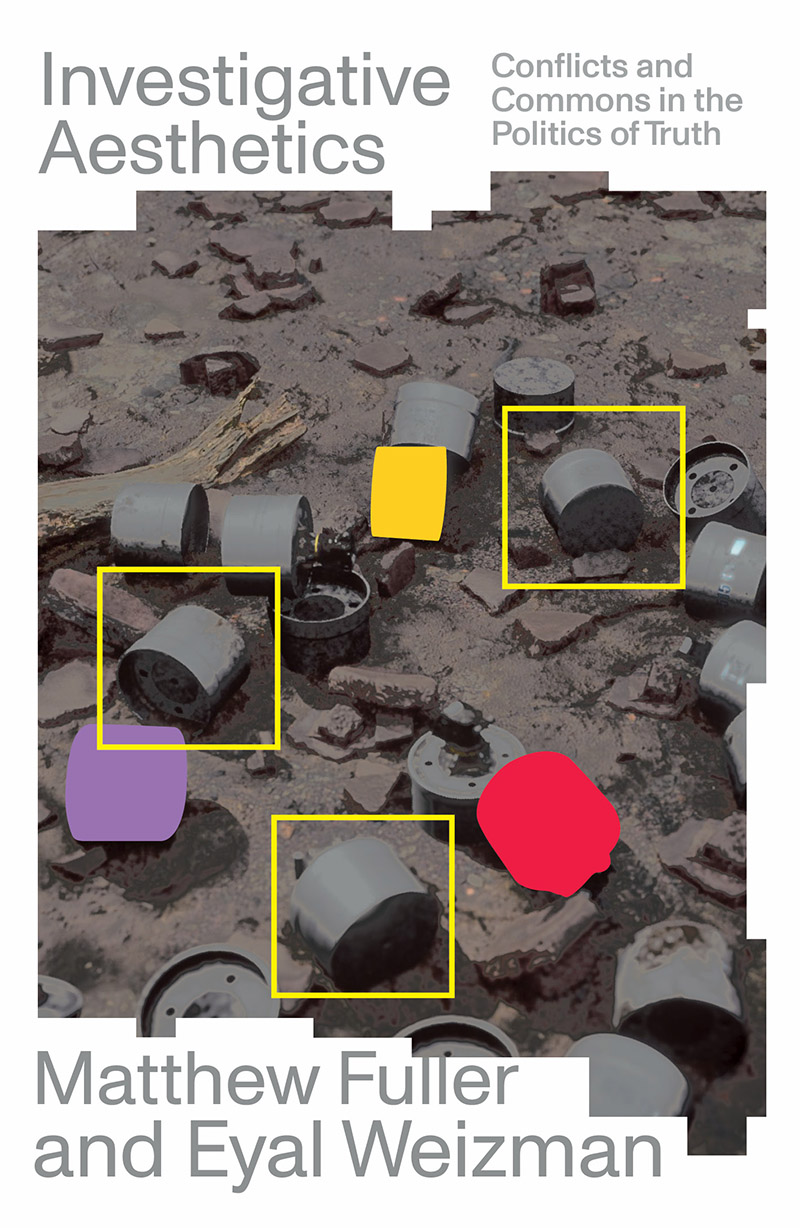
Today, artists are engaged in investigation. They probe corruption, human rights violations, environmental crimes and technological domination. At the same time, areas not usually thought of as artistic make powerful use of aesthetics. Journalists and legal professionals pore over opensource videos and satellite imagery to undertake visual investigations. This combination of diverse fields is what the authors call “investigative aesthetics”: the mobilisation of sensibilities associated with art, architecture and other such practices in order to speak truth to power.
Investigative Aesthetics draws on theories of knowledge, ecology and technology; evaluates the methods of citizen counter-forensics, micro-history and art; and examines radical practices such as those of WikiLeaks, Bellingcat, and Forensic Architecture. These new practices take place in the studio and the laboratory, the courtroom and the gallery, online and in the streets, as they strive towards the construction of a new common sense.
Matthew Fuller and Eyal Weizman have here provided an inspiring introduction to a new field that will change how we understand and confront power today.
One excellent piece of advice I picked up sometime in June [here] was that while it might make sense to think of the autumn term as the beginning of the academic year, for research it makes sense to think of the beginning of summer as a fresh start. So that rather than the summer months being used to catch up on all the things that, this year above all others, didn’t get done, I began July thinking of this as a new year of writing, with the aim of getting ahead of things before teaching comes back to dominate. It’s a simple mental shift, but 2020/21 was an awful year, and thinking about now as 2021/22 really helped with giving this project new impetus.
With this book on Foucault in the 1960s, initially I worked on the chapter on art. I had quite a lot of notes, but not much good text in this chapter. I first compared the 1965 publication ‘Les suivantes’ (Dits et écrits text 32) with the first chapter of Les mots et le choses. It is very much the same piece on Velázquez, with some minor grammatical changes and a few bits of light rewording, and then a few cuts – ranging from a paragraph to a few sentences or phrases. I then wrote a section discussing this text.
With the Magritte essay, this was a bit more difficult, as there are some quite large additions to the 1973 book version Ceci n’est pas une pipe compared to the 1968 essay (Dits et écrits text 53) as well as lots of smaller changes. The book is in English translation as This is Not a Pipe and that translation is used as the basis of the version in Essential WorksVolume 2, which is supposed to be a translation of the 1968 essay (and for large parts is). I have a marked-up version of the French text from Dits et écrits, and the same with the English from Essential Works. The latter uses the translation of the book as its basis, which makes sense, given how similar the texts are, aside from some additions in 1973. But in doing this comparison, I realised the extent to which the reliance on the translation of the 1973 text distorted the translation in Essential Works, with some small but important changes missed. Following the 1973 translation masked things that were there in 1968. There is a post explaining some of the more significant differences here. Again, this was preparatory work for writing a section discussing this essay. Following up on Foucault’s short quotations from Magritte opened up some interesting things, since one of his quotations does not come from the text he says. This is not at all surprising – Foucault was pretty poor at referencing, but then so too were Canguilhem, Lefebvre and others of that generation. I did find the quote, which led me to Magritte’s Ecrits complets and back to the English Selected Writings.
I then moved on to Manet. Foucault lectured on Manet in Milan, Buffalo, Florence, Tokyo, Tunis and possibly elsewhere. He signed a contract for a book on him, and said he wrote a ‘thick manuscript’ on Manet, but this was never published and was apparently destroyed late in his life. There are fragments of writing of Manet surviving, however. The Tunisia lecture has been transcribed and published three times – first in an unreliable version in Les Cahiers de Tunisie, then a more reliable version of the lecture in the bulletin of La Sociéte française d’esthétique (I’m trying to source a copy of this), and finally in the book La peinture de Manet based on a complete recording. The version in the latter was translated as Manet and the Object of Painting, though the accompanying essays by others were not included. A lecture manuscript on Manet entitled ‘Le noir et la surface’ is included in the Cahier de l’Herne on Foucault, both reproducing Foucault’s handwritten notes and providing a transcription. (The collection also includes the version in La peinture de Manet.) I don’t think ‘Le noir et la surface’ has been translated into English. The Paris archive has some other material on Manet, including about 50 pages of written text, but certainly not a full book manuscript.
In 1970 Foucault wrote a text on Picasso’s Las Meninas, a series of paintings responding to Velázquez. It was destined for a film which was never completed, and Foucault did not publish the text. It was included in the Cahier de l’Herne, but again I don’t think there is an English translation. It’s an interesting text and I have a discussion of this which I might develop further. I also went back over some of the secondary sources on Foucault and art (notably the books by Gary Shapiro, Joseph Tanke and Catherine Soussloff), and filled in some detail. Although I’d read these before, I thought I’d write the sections before returning to them, in the hope of making my reading as close to Foucault as possible, rather than swayed by others.
In the final part of this chapter I have a brief discussion of some of the later pieces Foucault wrote about art, mainly as texts for gallery catalogues. These include pieces on Maxime Defert, Paul Rebeyrolle, Gérard Fromanger, Dios Byzantios, and Duane Michels. Thematically these fit here, even if chronologically they relate to the other books in my series. There is also a brief text on Andy Warhol which Foucault never published. There are also some notes on painting and fragments of other things in the Paris archive, including pieces on the quattrocento and on Cubism. I’ve looked at these pieces before, but need some more time with them, so the discussion of these will have to wait until I can get back to Paris. There are also a bunch of things to check in London libraries. But other than these things, this chapter is in good shape now.
I then moved onto the chapter on literature. I had a lot more of this chapter drafted already, though it was missing some key parts, most particularly the discussion of Foucault’s book on Raymond Roussel, his 1964 lecture in Brussels on “Language and Literature” (in Language, Madness, Desire)and taking into account the texts in Folie, langage, littérature. But I already had sections on Tel Quel, shorter works on literature, and Foucault’s work on Bataille, including ‘Preface to Transgression’ but also something about his work on the Bataille Oeuvres project.
The texts in Folie, langage, littérature fall roughly into three groups – ones which relate literary work to madness; ones on literary analysis and its relation to structuralism; and the two 1970 lectures from SUNY Buffalo on Flaubert and Balzac. It took me a while to decide this, but I think it makes sense to discuss these separately from the chapter on literature. I have an early chapter which looks at how Foucault developed themes from the History of Madness in various ways in the 1960s, and the first group of texts works best there. The 1970 lectures from Buffalo are chronologically distinct from most of the other texts on literature, and I think I’ll discuss all of the 1970 lectures (including the ones on Sade in Language, Madness and Desire, as I mentioned in the last update) in this book’s Coda.
The second group of texts in Folie, langage, littérature relate to some other texts by Foucault. “Language and Literature” is one, along with “Linguistics and Social Sciences”, published in Foucault’s lifetime and reprinted in Dits et écrits as text 70 (an English translation will be in the theme issue of Theory, Culture & Society I’m co-editing). Another is “Structuralism and Literary Analysis”, which has been available in unauthorised form for a while, with a more reliable transcription in Folie, langage, littérature (translated in Critical Inquiry in 2019). The most famous is “What is an Author?” which exists is in two versions from Paris and Buffalo, with a discussion that is only partly translated into English (on the textual issues see here). The remaining texts in Folie, langage, littérature relate to these. For the moment I’ve taken all this material out of the literature chapter, in a separate file on linguistics. I have some work to do on this still, and I need to develop the reading of Roussel as well, but I now have most of a very long chapter on the work on literature as well as about half of one on linguistics.
As well as discussing the Buffalo lectures from 1970, I also wrote a bit on the lectures Foucault gave in Japan later that year. This overlaps a bit with the period of Foucault: The Birth of Power, but thematically they fit better here. The version of the Manet lecture given in Japan does not seem to be extant (though it could, conceivably, be the one in the Cahier de l’Herne). But there is a lecture on history and structuralism with an interesting discussion of Georges Dumézil, and there are two lectures on ‘Madness and Society”, a shorter one from Kyoto and a longer one from Tokyo. Only the Kyoto one is in English. In Tokyo Foucault says he gave this lecture five times on this trip, but there doesn’t seem to be a record of the other lectures – Defert gives the cities visited, but I’m unaware of other sources. There is a lecture manuscript with this title transcribed in Folie, langage, littérature, but it seems to come from an earlier date: at least, it doesn’t match either the Kyoto or Tokyo version.I’ve made quite good progress this month, although I’m still a long way behind where I’d hoped to be. The teaching and cancelled leave in 2020-21 is a major reason for this, as well as the difficulty of getting to archives. While I’m hopeful archive work will become easier, teaching looks like it will be the same as this last year, and the getting the accrued leave is still some way off. I had a much-postponed trip to France rebooked for August, but I’ve changed the dates yet again. At the moment there are too many problems to make this possible – mainly but not only the self-isolation period on return. I’m hoping I can get there in September. Although this is frustrating, I’m trying to keep moving this manuscript forward, even if there will be parts I can’t complete without time back in the archives. But I have got some days in London next week when I plan to visit two or maybe three libraries to look at some sources and hopefully resolve some issues.
Previous updates on this book are here. The Early Foucault was published by Polity in June 2021, and updates for its writing are here. A list of the resources on this site relating to Foucault – bibliographies, audio and video files, some textual comparisons, some short translations, etc. – can be found here. The earlier books in this series are Foucault: The Birth of Power and Foucault’s Last Decade, both available from Polity.
Europe is inseparable from its history. That history has been extensively studied in terms of its political history, its economic history, its religious history, its literary and cultural history, and so on. Could there be a distinctively philosophical history of Europe? Not a history of philosophy in Europe, but a history of Europe that focuses on what, in its history and identity, ties it to philosophy.
In the two volumes of Europe: A Philosophical History – The Promise of Modernity and Beyond Modernity – Simon Glendinning takes up this question, telling the story of Europe’s history as a philosophical history.
In Part 1, The Promise of Modernity, Glendinning examines the conception of Europe that links it to ideas of rational Enlightenment and modernity. Tracking this self-understanding as it unfolds in the writings of Kant, Hegel and Marx, Glendinning explores the transition in Europe from a conception of its modernity that was philosophical and religious to one which was philosophical and scientific. While this transition profoundly altered Europe’s own history, Glendinning shows how its self-confident core remained intact in this development. But not for long. This volume ends with an examination of the abrupt shattering of this confidence brought on by the first world-wide war of European origin – and the imminence of a second. The promise of modernity was in ruins. Nothing, for Europe, would ever be the same again.
Looks interesting, but a shame about the prohibitive price.
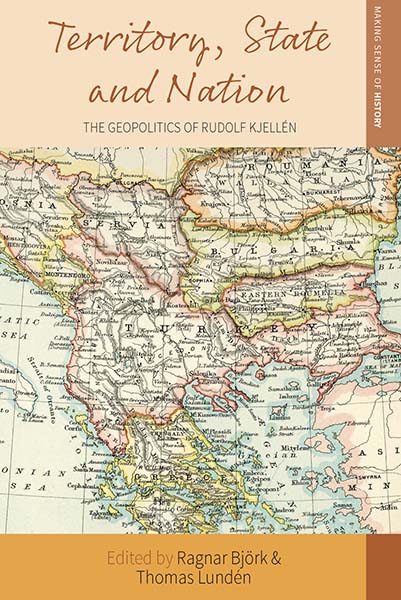
Rudolf Kjellén, regularly referred to as “the father of geopolitics,” developed in the first decade of the twentieth century an analytical model for calculating the capabilities of great-power states and promoting their interests in the international arena. It was an ambitious intellectual project that sought to bring politics into the sphere of social science. Bringing together experts on Kjellén from across the disciplines, Territory, State and Nation explores the century-long international impact, analytical model, and historical theories of a figure immensely influential in his time who is curiously little-known today.
“With an engaging critical perspective on classical geopolitics, the contributions to this volume illuminate both the historical and theoretical contributions of Kjellén and his pivotal role in the development of the field as a sub-discipline of political science.” • Geoff Sloan, University of Reading
In A Philosophy for Communism: Rethinking Althusser, Panagiotis Sotiris undertakes a reading of the work of the French philosopher centered upon his deeply political conception of philosophy. Althusser’s endeavour is presented as a quest for a new practice of philosophy that would enable a new practice of politics for communism, in opposition to idealism and teleology. Sotiris’s central claim is that Althusser remained a communist in his philosophy throughout the trajectory of his thought, from the crucial interventions of the 1960s to his writings on aleatory materialism. This argument is based on a careful reading of the tensions and dynamics running through Althusser’s work, as well as his dialogue with other thinkers. Particular attention is paid to crucial texts by Althusser that remained unpublished until relatively recently.