Peter Salmon’s Top 10 books about great thinkers

Peter Salmon’s Top 10 books about great thinkers in The Guardian

Books about St Augustine, Wittgenstein, André and Simone Weil, Kant, Simone de Beauvoir, Frantz Fanon, Georges Perec, Existentialists, Angela Davis, and Jean-Paul Sartre. Salmon’s own An Event, Perhaps: A Biography of Jacques Derrida was published earlier this year.

Posted in Uncategorized | Leave a comment

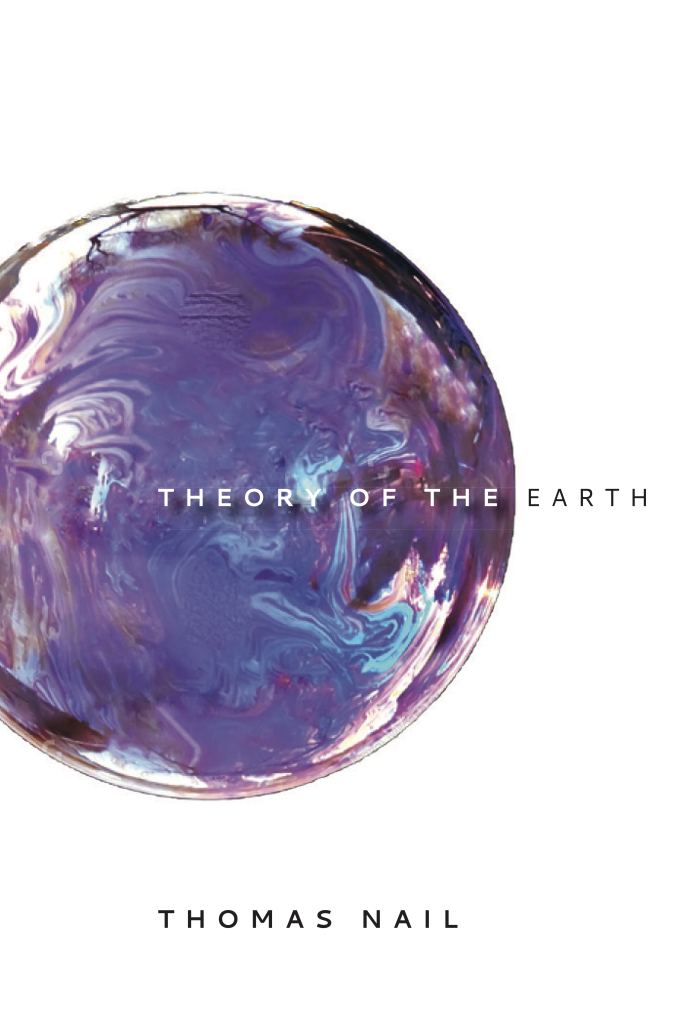
Theory of the Earth (Stanford University Press, 2021)

The extraordinarily prolific Thomas Nail has a forthcoming book Theory of the Earth (Stanford University Press, 2021).

Thomas Nail's avatarThe Philosophy of Movement

We need a new philosophy of the earth. Geological time used to refer to slow and gradual processes, but today we are watching land sink into the sea and forests transform into deserts. We can even see the creation of new geological strata made of plastic, chicken bones, and other waste that could remain in the fossil record for millennia or longer. Crafting a philosophy of geology that rewrites natural and human history from the broader perspective of movement, Thomas Nail provides a new materialist, kinetic ethics of the earth that speaks to this moment.

Climate change and other ecological disruptions challenge us to reconsider the deep history of minerals, atmosphere, plants, and animals and to take a more process-oriented perspective that sees humanity as part of the larger cosmic and terrestrial drama of mobility and flow. Building on his earlier work on the philosophy of movement, Nail argues that…

View original post 48 more words

Posted in Uncategorized | Leave a comment

Four more papers from the ‘Foucault before the Collège de France’ special issue of Theory, Culture & Society

Four more papers from the ‘Foucault before the Collège de France’ special issue of Theory, Culture & Society, which I’m co-editing with Orazio Irrera and Daniele Lorenzini, are available online first. These require subscription.

Rainer Nicolaysen, Foucault in Hamburg. Notes on a One-Year Stay, 1959–60, translated by Melissa Pawelski

This article provides a detailed account of the year that Michel Foucault spent as Director of the Institut Français in Hamburg and as a guest lecturer at the Romance Studies Department at the University of Hamburg. It discusses the beginning of Foucault’s time in Hamburg, the courses he taught at these two institutions, his interactions with German students in his classes, and events with invited guests from the French intellectual sphere. But it also sheds light on the friendships he made in Hamburg, in particular with Rolf Italiaander; the completion of his own projects including Histoire de la folie and the translation of Kant’s Anthropology from a Pragmatic Point of View; and finally his nocturnal wanderings through Hamburg’s red light district, Sankt-Pauli.

Arianna Sforzini, Foucault and the History of Anthropology: Man, before the ‘Death of Man’

In the unpublished manuscript of a lecture course probably given by Foucault at the École normale supérieure of Paris in 1954–5 (‘On Anthropology’; the dating is still uncertain), Foucault undertakes an erudite and detailed reconstruction of the history of anthropological knowledge, from modernity (Descartes and Malebranche) to 20th-century Nietzschean commentaries (Jaspers and Heidegger), including analyses by Kant, Feuerbach, and Dilthey, among others. My article explores this lecture course to emphasize the importance of anthropological criticism for the young Foucault, addressing in particular the anti-anthropological significance of the encounter with Nietzsche’s philosophy, which becomes an output power (puissance de sortie) both of the figure of man and the notion of truth in which he was involved. These unpublished manuscripts will therefore allow me to find a common thread in Foucault’s work in the 1950s and 1960s (and even beyond): the exploration of new potentialities for thought opened by ‘the death of man’.

Elisabetta Basso, Foucault’s Critique of the Human Sciences in the 1950s: Between Psychology and Philosophy

This paper is based on the archives of Michel Foucault collected (since 2013) at the manuscripts department of the Bibliothèque nationale de France, Paris. Our investigation focuses in particular on the documents of the 1950s, in order to study the role of the reflection on anthropology and phenomenology at the beginning of Foucault’s philosophical path. This archival material allows us to discover the tremendous work that is at the basis of the relatively few works that Foucault published in the 1950s. The access to the 1950s documents enables us at last to investigate the reasons for the seemingly sharp break that divides these works from the works published by Foucault in the 1960s and the 1970s, in which emerges the archaeological refusal of phenomenology and anthropology, as well as the strong criticism against any form of psychopathological discourse.

Azucena G. Bianco, Foucault on Raymond Roussel: The Extralinguistic Outside of Literature

Madness, Language, Literature (2019) brings together a series of unpublished works on literature that belong to Michel Foucault’s first stage of production. This article focuses on those works that express a concept of madness as social partition or outside, and also on those that elucidate the concept of the ‘extralinguistic’ of literature. The combined reading of these texts sheds light on a concept of the extralinguistic outside of literature that enables Foucault to overcome a concept of ontological outside and, therefore, using literature, think on this discourse’s historical possibilities of resistance. As a result of this new reading, I analyse some fundamental aspects of this early Foucault. First, his development of a politics of literary form in the 1960s. Second, I propose that Foucault’s studies on literature in the 1960s were a kind of laboratory in which he was already raising some questions concerning his political history of truth. And, lastly, I examine the capacity of literature to make visible a part of reality that remains hidden (the excluded), the processes by which literature creates (language’s mechanism of self-representation), the possible forms of subjectivation that the fiction of every episteme allows (what Foucault calls verisimilitude), and the formulation of novel forms of being (that he later developed as aesthetics of existence).

My own article, Foucault as Translator of Binswanger and von Weizsäcker, is open access. Several other articles for this issue, which I’m editing with Orazio Irrera and Daniele Lorenzini, are in production or under review.

Update:

Bernard E. Harcourt, Five Modalities of Michel Foucault’s Use of Nietzsche’s Writings (1959–73): Critical, Epistemological, Linguistic, Alethurgic and Political (requires subscription)

In a series of essays, conferences, and lectures over the period 1959–73, Michel Foucault directly engaged the writings of Nietzsche. This article demonstrates the five different modalities of Foucault’s use of Nietzsche’s writings: namely, critical, epistemological, linguistic, alethurgic, and political. Each of these modalities is tied to a particular intellectual turning point in Foucault’s philosophical investigations and can be located chronologically in five important texts from that period.

Daniele Lorenzini, Philosophical Discourse and Ascetic Practice: On Foucault’s Readings of Descartes’ Meditations (Open Access)

This paper addresses the multiple readings that Foucault offers of Descartes’ ‘Meditations’ during the whole span of his intellectual career. It thus rejects the (almost) exclusive focus of the literature on the few pages of the ‘History of Madness’ dedicated to the ‘Meditations’ and on the so-called Foucault/Derrida debate. First, it reconstructs Foucault’s interpretation of Descartes’ philosophy in a series of unpublished manuscripts written between 1966 and 1968, when Foucault was teaching at the University of Tunis. It then addresses the important shifts that took place in Foucault’s thought at the beginning of the 1970s, which led him to elaborate a new approach to the ‘Meditation’s’ in terms of ‘discursive events’. Finally, it argues that those shifts opened up to Foucault the possibility of developing an original reading of Descartes’ philosophy, surprisingly close to his own interest in ancient ‘askēsis’ and the techniques of the self.

Posted in Friedrich Nietzsche, Immanuel Kant, Karl Jaspers, Ludwig Binswanger, Martin Heidegger, Michel Foucault, The Archaeology of Foucault, The Early Foucault, Uncategorized | Leave a comment

Henry V: Literary and Historical Territories at War/Territoires d’histoire, territoires littéraires en guerre, Université Toulouse Jean Jaurès, 11 December 2020 (livestream)

On 11 December I’ll be taking part in an online conference on Shakespeare’s Henry V. Appropriately enough, given its themes and some of the dialogue, the conference will be in both French and English.

Henry V: Literary and Historical Territories at War/Territoires d’histoire, territoires littéraires en guerre, Université Toulouse Jean Jaurès, 11 December 2020 (livestream).

My own paper will be on “The Legal Geographies of Henry V”, using some of the claims I made in Shakespearean Territories, but hopefully developing a little beyond that.

The conference will take place online, with the presentations and q&a available on a livestream.

Posted in Shakespearean Territories, William Shakespeare | Leave a comment

Achille Mbembe interviewed at Chilperic

Achille Mbembe interviewed at Chilperic. Talks about his work, but also the process of writing.

Where does your writing start? 

Most of the time in my head. Sometimes from what I see, what I hear, what I read. It can start in the shower, when I am cooking or while I lie on the bed waiting to fall asleep. I can spend long months without writing anything. Things first need to boil. I need to find myself in a position where I can no longer bracket the interpellation addressed to me by reality, an event or an encounter. 

Do you take notes? 

Not really, or not all the time. I may have notebooks, but I keep misplacing them and hardly ever return to them in any structured way. My writing generally begins with a word, a concept, a sound, a landscape or an event which suddenly resonates in me. I do have a very lively mental scape. As a result, writing is like translating an image into words. In fact my books are full of images of the mind, non-visual images. But I never know in advance where these images will lead me to or whether at the end of the process I will be able to adequately translate them into words without losing their allure. It’s a rather intuitive process. That’s also why I write my introductions at the end, as I’ll only be able to tell you what the book is about once it’s written, when all the images have been curated. 

Posted in Achille Mbembe | Leave a comment

Daniela Vellega-Neu, Heidegger’s Poietic Writings: From Contributions to Philosophy to the Event – Indiana University Press, 2018, discussed at New Books Network

Daniela Vellega-Neu, Heidegger’s Poietic Writings: From Contributions to Philosophy to the Event – Indiana University Press, 2018, discussed at New Books Network with Stephen Dozeman.

Scholarship on the German philosopher Martin Heidegger has traditionally focused on his magnum opus Being and Time and related earlier work, his later essays and lectures often relegated to an ambiguous later period that many consider philosophically insubstantial, or simply too esoteric and obscure to merit any serious engagement. Luckily, that is starting to change, especially with the publication of the Black Notebooks, as well as a number of manuscripts, essays and lectures from this period. These texts are starting to give us insight into Heidegger’s philosophical development, helping us understand old texts in new light, and trace the development of various themes from throughout his life with greater detail. 

Joining me to discuss some of these developments is my guest today, Daniela Vellega-Neu, here with her recent book Heidegger’s Poietic Writings: From Contributions to Philosophy to the Event (Indiana University Press, 2018). Looking at Heidegger’s writing from 1936-1942, Vallega-Neu’s text is an excellent guide through this incredibly difficult period of Heidegger’s thinking. She works to unpack key terms, guiding us through difficult translations, and showing us how Heidegger was always trying to do something rather unique in attuning us to hidden philosophical and linguistic baggage. The book follows not only the explicit content of Heidegger’s texts, but also their underlying spirit, partaking in a sustained attempt to cultivate an attuned understanding to ourselves and our history, subtly shifting our attention (and what it even means to be attentive) in the hopes of pointing towards an elusive understanding of being that always remains just beyond our reach.

Daniela Vallega-Neu is a professor of philosophy at the University of Oregon. In addition to Heidegger’s Poietic Writings, she is also the author of The Bodily Dimension in Thinking and Heidegger’s Contributions to Philosophy. She is also one of the co-translators of Indiana University Press’s 2012 translation of Heidegger’s Contributions to Philosophy (of the Event).

Posted in Uncategorized | Leave a comment

Claude Lévi-Strauss on writing (1977)

Although I am going to talk about what I have written, my books and papers are so on, unfortunately I forget what I have written practically as soon as it is finished. There is probably going to be some trouble about this. But nevertheless I think there is also something significant about it, in that I don’t have the feeling that I write my books. I have the feeling that my books get written through me and that once they have got across me I feel empty and nothing is left.

You may remember that I have written that myths get thought in man unbeknownst to him. This has been much discussed and even criticised by my English-speaking colleagues, because their feeling is that, from an empirical point of view, it is an utterly meaningless sentence. But for me it describes a lived experience, because it says exactly how I perceive my own relationship to my work. That is, my work gets thought in me unbeknown to me.

Massey radio lectures, 1977, Claude Lévi-Strauss, Myth and Meaning, London: Routledge, 1978, p. 1

Update: there is a recording of the lectures online here.

Posted in Uncategorized | 2 Comments

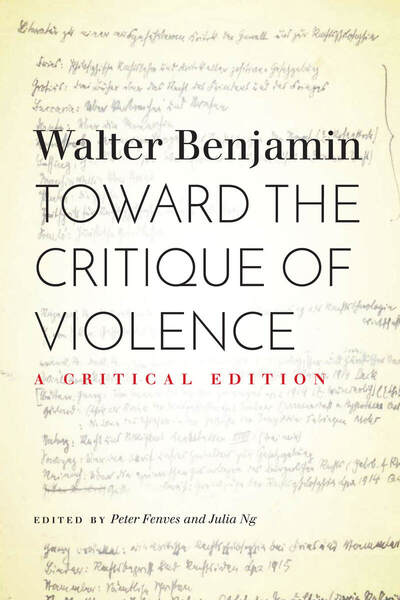
Walter Benjamin, Toward the Critique of Violence: A Critical Edition, edited by Peter Fenves and Julia Ng – Stanford University Press, June 2021

Walter Benjamin, Toward the Critique of Violence: A Critical Edition, edited by Peter Fenves and Julia Ng – Stanford University Press, June 2021

Marking the centenary of Walter Benjamin’s immensely influential essay, “Toward the Critique of Violence,” this critical edition presents readers with an altogether new, fully annotated translation of a work that is widely recognized as a classic of modern political theory. 

The volume includes twenty-one notes and fragments by Benjamin along with passages from all of the contemporaneous texts to which his essay refers. Readers thus encounter for the first time in English provocative arguments about law and violence advanced by Hermann Cohen, Kurt Hiller, Erich Unger, and Emil Lederer. A new translation of selections from Georges Sorel’s Reflections on Violence further illuminates Benjamin’s critical program. The volume also includes, for the first time in any language, a bibliography Benjamin drafted for the expansion of the essay and the development of a corresponding philosophy of law. An extensive introduction and afterword provide additional context. 

With its challenging argument concerning violence, law, and justice—which addresses such topical matters as police violence, the death penalty, and the ambiguous force of religion—Benjamin’s work is as important today as it was upon its publication in Weimar Germany a century ago.

Posted in Walter Benjamin | 1 Comment

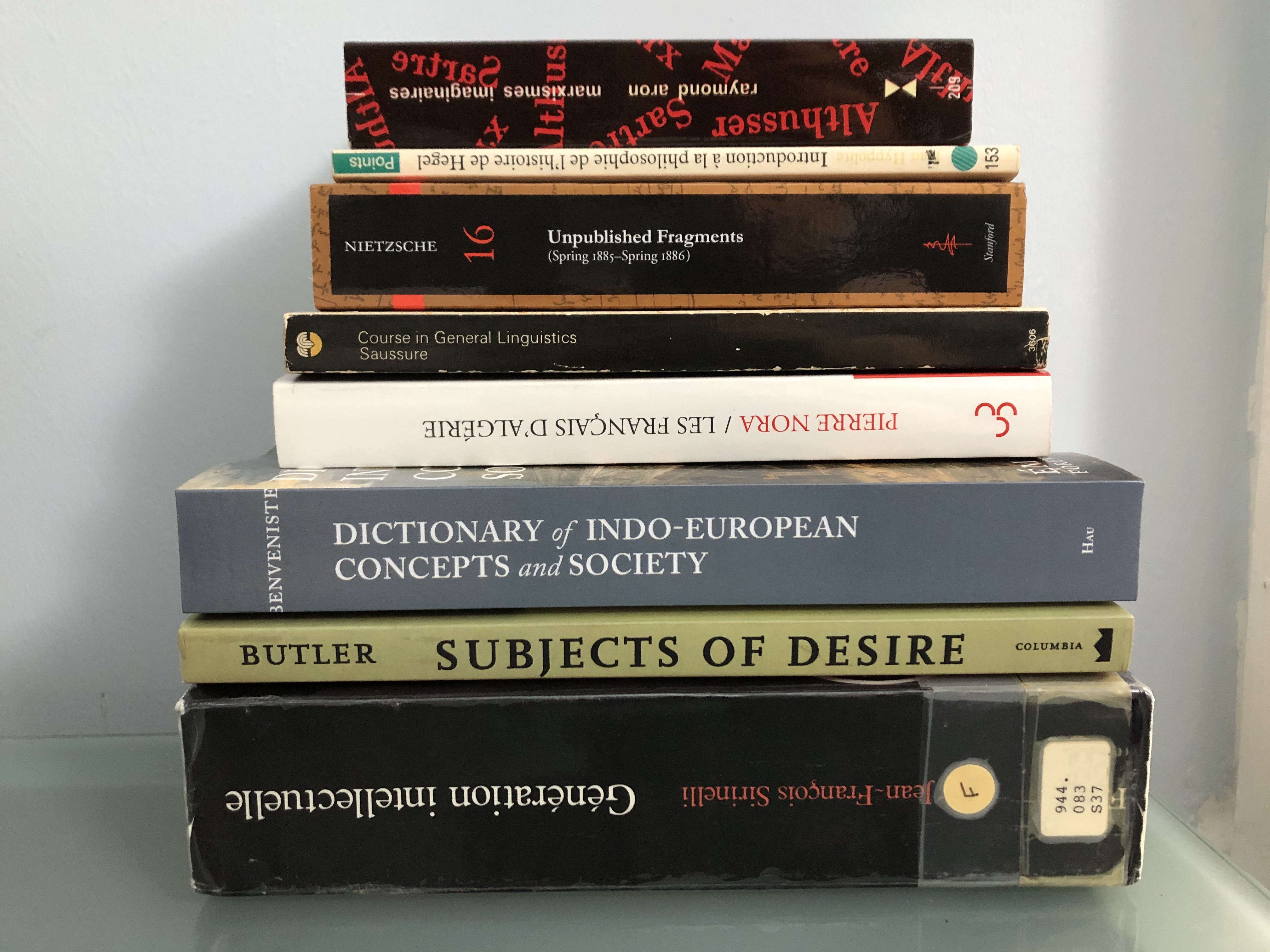
Books received – Aron, Hyppolite, Nietzsche, Saussure, Nora, Benveniste, Butler, Sirinelli

Some new and second-hand books for the Foucault work and related projects.

Posted in Emile Benveniste, Friedrich Nietzsche, Judith Butler, Michel Foucault | Leave a comment

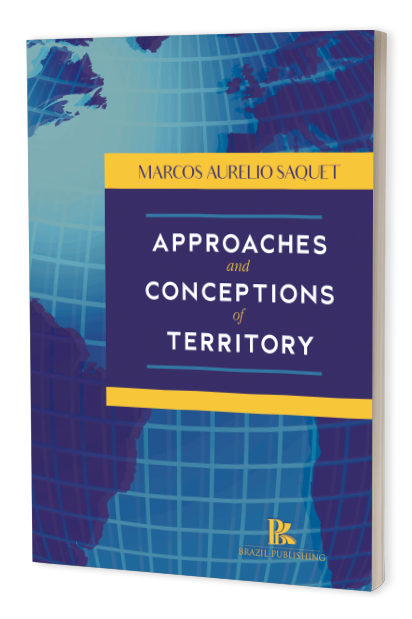
Marcos Saquet, Approaches and conceptions of territory – Platão, 2020

Marcos Saquet, Approaches and conceptions of territory – Platão, 2020

An English translation of a book originally published in Portuguese – description is in Portuguese below.

Este texto publicado originalmente em língua portuguesa (2007) está sendo preparado para a 5ª. Edição nesta língua. Ao mesmo tempo, foi publicado em língua italiana, em Milão (2012) e em língua espanhola, em bogotá (2019), tendo ampla circulação em virtude da amplitude de utilização do território.

O território tem sido objeto de estudos em diferentes áreas do conhecimento, como a geografia e a sociologia, a antropologia e a economia, no entanto, teve centralidade na geografia, assumindo histórica e geograficamente distintos significados, alguns conservadores do status quo e outros histórico-críticos. É um conceito polissêmico, de grande amplitude e utilizaçao no ensino, na pesquia e na extensão acadêmica e científica, assim, assume também um significado político e prático fundamental para compreender e transformar a realidade de vida cotidiana, considerando a necessidade de construir uma sociedade mais justa e ecológica. O território, desse modo, é um conceito fundamental, bem como objeto de estudos em diferentes áreas do conhecimento e, ao mesmo tempo, espaço de (in)formação, mobilização, resistência, luta e enfrentamento diante do estado burguês e dos agentes do capital: por de uma abordagem territorial histórico-crítica, conforme argumentamos, voltada para as pessoas mais simples e humildes, é tranquilamente viável a construção de projetos de desenvolvimento territorial de base local, ecológica e cultural, trabalhando-se para e com as pessoas, numa perspectiva dialógica, solidária, participativa e cooperada. Pesquisa e ação, diálogo e reflexão podem acontecer simultaneamente, no nível de cada território, em diferentes níveis escalares, em uma práxis popular e sustentável, entendendo-se o território como patrimônio da humanidade e lugar de vida saudável e emancipatória politicamente.

Posted in Territory | Leave a comment