Bahriye Kemal, Writing Cyprus: Postcolonial and Partitioned Literatures of Place and Space – Routledge, October 2019

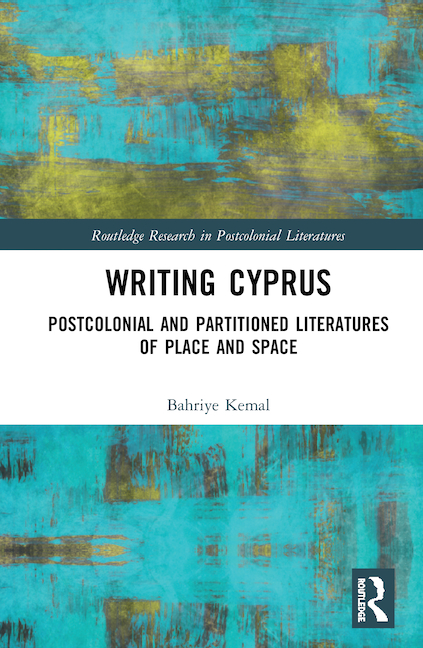
Bahriye Kemal, Writing Cyprus: Postcolonial and Partitioned Literatures of Place and Space – Routledge, October 2019

Bahriye Kemal’s ground-breaking new work serves as the first study of the literatures of Cyprus from a postcolonial and partition perspective. Her book explores Anglophone, Hellenophone and Turkophone writings from the 1920s to the present.

Drawing on Yi-Fu Tuan’s humanistic geography and Henri Lefebvre’s Marxist philosophy, Kemal proposes a new interdisciplinary spatial model, at once theoretical and empirical, that demonstrates the power of space and place in postcolonial partition cases. The book shows the ways that place and space determine identity so as to create identifications; together these places, spaces and identifications are always in production. In analysing practices of writing, inventing, experiencing, reading, and construction, the book offers a distinct ‘solidarity’ that captures the ‘truth of space’ and place for the production of multiple-mutable Cypruses shaped by and for multiple-mutable selves, ending in a ‘differential’ Cyprus, Mediterranean, and world.

Writing Cyprus offers not only a nuanced understanding of the actual and active production of colonialism, postcolonialism and partition that dismantles the dominant binary legacy of historical-political deadlock discourse, but a fruitful model for understanding other sites of conflict and division

Posted in Uncategorized | Leave a comment

Daniel Bensaïd, Recorded Fragments: Twelve reflections on the 20th century – Resistance Books, November 2020

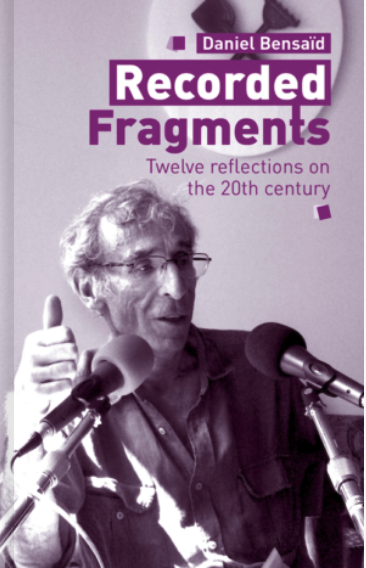
Daniel Bensaïd, Recorded Fragments: Twelve reflections on the 20th century – Resistance Books, November 2020

These interviews with Daniel Bensaïd were broadcast in 2008 on the radio station Fréquence Paris Plurielle. Through them, Bensaïd gives his insight into twelve significant events including the October Revolution, the Spanish Civil War, the assassination of Lumumba, the 1973 coup in Chile, and the fall of the Berlin Wall. These milestones of the ‘short twentieth century’ are necessarily a biased and partial choice. In this book, one reads some of the main analyses that structure Daniel Bensaïd’s thinking at the beginning of the 21st century.

Posted in Uncategorized | Leave a comment

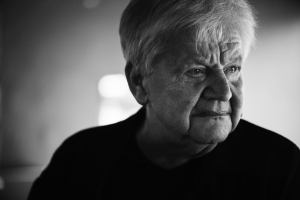
Mark Cousins (1947-2020)

Sorry to hear this news of Mark Cousins – co-author of one of the first books on Foucault and an important figure in architectural theory.

Clare O'Farrell's avatarFoucault News

Ryan Dillon, Mark Morris, Denis Macshane
Mark Cousins: Architectural theorist who captivated experts and enthusiasts alike, Independent, 22 October 2020

(photo: Pichan Sujaritsatit)
For more than 30 years, Mark Cousins’s Friday evening lectures at the Architectural Association were the place to be, not only for those who worked and studied at the school in London, but for people from all walks of life. An intellectual and theoretician, he was much loved by students and staff alike; a constant presence in the spaces of the AA and always ready to engage in or instigate an impromptu conversation.
[…]

Cousins was widely recognised as one of the best minds amongst his contemporaries, and a brilliant speaker, whether sitting around a dinner table or standing behind a lectern delivering countless talks and lectures. Despite co-authoring (with Athar Hussein) Michel Foucault (1984), his only completed book, he was mostly unable to translate…

View original post 113 more words

Posted in Uncategorized | Leave a comment

Daniel Bensaïd, The Dispossessed: Karl Marx’s Debates on Wood Theft and the Right of the Poor – University of Minnesota Press, March 2021

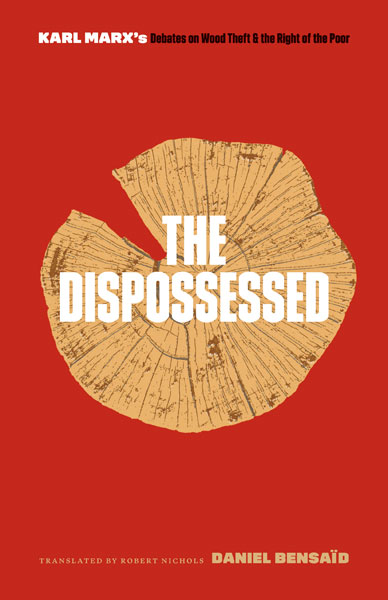
Daniel Bensaïd, The Dispossessed: Karl Marx’s Debates on Wood Theft and the Right of the Poor – University of Minnesota Press, translated by Robert Nichols, March 2021

The politics of dispossession are everywhere. Troubling developments in intellectual property, genomics, and biotechnology are undermining established concepts of property, while land appropriation and ecological crises reconfigure basic institutions of ownership. In The Dispossessed, Daniel Bensaïd examines Karl Marx’s early writings to establish a new framework for addressing the rights of the poor, the idea of the commons, and private property as a social institution.

In his series of articles from 1842–43 about Rhineland parliamentary debates over the privatization of public lands and criminalization of poverty under the rubric of the “theft of wood,” Marx identified broader anxieties about customary law, property rights, and capitalist efforts to privatize the commons. Bensaïd studies these writings to interrogate how dispossession continues to function today as a key modality of power. Brilliantly tacking between past and present, The Dispossessed discloses continuity and rupture in our relationships to property and, through that, to one another.

In addition to Bensaïd’s prescient work of political philosophy, The Dispossessed includes new translations of Marx’s original “theft of wood” articles and an introductory essay by Robert Nichols that lucidly contextualizes the essays.

Posted in Uncategorized | 1 Comment

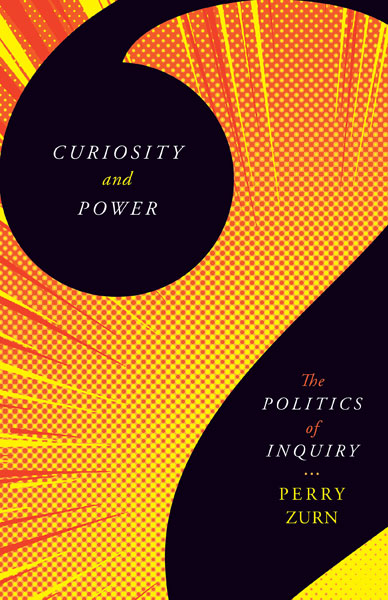
Perry Zurn, Curiosity and Power: The Politics of Inquiry – University of Minnesota Press, March 2021

Perry Zurn, Curiosity and Power: The Politics of Inquiry – University of Minnesota Press, March 2021

Curiosity is political. Who is curious, when, and how reflects the social values and power structures of a given society. In Curiosity and Power, Perry Zurn explores the political philosophy of curiosity, staking the groundbreaking claim that it is a social force—the heartbeat of political resistance and a critical factor in social justice. He argues that the very scaffolding of curiosity is the product of political architectures, and exploring these values and architectures is crucial if we are to better understand, and more ethically navigate, the struggle over inquiry in an unequal world.

Curiosity and Power explores curiosity through the lens of political philosophy—weaving in Nietzsche, Foucault, and Derrida in doing so—and the experience of political marginalization, demonstrating that curiosity is implicated equally in the maintenance of societies and in their transformation. Curiosity plays as central a role in establishing social institutions and fields of inquiry as it does in their deconstruction and in building new forms of political community. Understanding curiosity is critical to understanding politics, and understanding politics is critical to understanding curiosity.

Drawing not only on philosophy and political theory but also on feminist theory, race theory, disability studies, and trans studies, Curiosity and Power tracks curiosity in the structures of political marginalization and resistance—from the Civil Rights Movement to building better social relationships. Curiosity and Power insists that the power of curiosity be recognized and engaged responsibly.

Posted in Uncategorized | 1 Comment

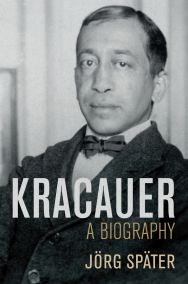
Jörg Später, Kracauer: A Biography – Polity, September 2020

Jörg Später, Kracauer: A Biography – Polity, September 2020, translated by Daniel Steuer

Siegfried Kracauer was one of the most important German thinkers of the twentieth century. His writings on Weimar culture, mass society, photography and film were groundbreaking and they anticipated many of the themes later developed members of the Frankfurt School and other cultural theorists.  

No less remarkable were the circumstances under which he made these contributions. After his early years as a journalist in Germany, the rise of the Nazis forced Kracauer into exile – first in Paris and then, after a protracted flight via Marseilles and Lisbon, to the United States. The existential challenges, personal losses and unrelenting hardship Kracauer faced during these years of exile formed the backdrop against which he offered his acute observations of modern life.

Jörg Später provides the first comprehensive biography of this extraordinary man. Based on extensive archival research, Später’s biography expertly traces the key influences on Kracauer’s intellectual development and presents his most important works and ideas with great clarity.  At the same time, Später ably documents the intensity of Kracauer’s personal relationships, the trauma of his flight and exile, and his embrace of his new homeland, where, finally, the ‘groundlessness’ of refugee existence gave way to a more stable life and, with it, some of the intellectually most fruitful years of Kracauer’s career.

The result is a vivid portrait of a man driven both by an urge to capture reality – to attend to the things that are ‘overlooked or misjudged’, that still ‘lack a name’, as he put it – and by a need to find his place in a hostile, threatening world.

There is a review in the JC here.

Posted in Uncategorized | Leave a comment

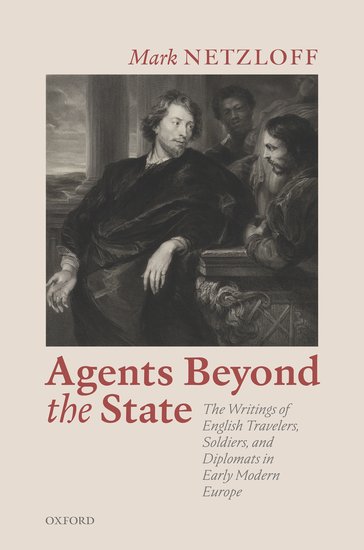
Mark Netzloff, Agents beyond the State: The Writings of English Travelers, Soldiers, and Diplomats in Early Modern Europe – Oxford University Press, November 2020

Mark Netzloff, Agents beyond the State: The Writings of English Travelers, Soldiers, and Diplomats in Early Modern Europe – Oxford University Press, November 2020

The early modern period is often seen as a pivotal stage in the emergence of a recognizably modern form of the state. Agents beyond the State returns to this context in order to examine the literary and social practices through which the early modern state was constituted. The state was defined not through the elaboration of theoretical models of sovereignty but rather as an effect of the literary and professional lives of its extraterritorial representatives. Netzloff focuses on the textual networks and literary production of three groups of extraterritorial agents: travelers and intelligence agents, mercenaries, and diplomats. These figures reveal the extent to which the administration of the English state as well as definitions of national culture were shaped by England’s military, commercial, and diplomatic relations in Europe and other regions across the globe. Netzloff emphasizes the transnational contexts of early modern state formation, from the Dutch Revolt and relations with Venice to the role of Catholic exiles and nonstate agents in diplomacy and international law. These global histories of travel, service, and labor additionally transformed definitions of domestic culture, from the social relations of classes and regions to the private sphere of households and families. Literary writing and state service were interconnected in the careers of Fynes Moryson, George Gascoigne, and Sir Henry Wotton, among others. As they entered the realm of print and addressed a reading public, they introduced the practices of governance to an emerging public sphere.

Posted in Uncategorized | Leave a comment

Adam Kotsko, Agamben’s Philosophical Trajectory – Edinburgh University Press, September 2020

Adam Kotsko, Agamben’s Philosophical Trajectory – Edinburgh University Press, September 2020

  • Focuses on Agamben’s intellectual development
  • Offers the first study of the complete Homo Sacer series
  • Takes into account Agamben’s recently-published memoir
  • Addresses the full range of Agamben’s thought on linguistics, poetics, politics and theology

Giorgio Agamben has emerged as one of the most perceptive and even prophetic political thinkers of his era. Now that he has completed his multi-volume Homo Sacer series – his career-defining work – Adam Kotsko, one of his leading translators, shows how Agamben’s political concerns emerged and evolved as he responded to contemporary events and new intellectual influences while striving to remain true to his deepest intuitions. Kotsko reveals the trajectory of Agamben’s work and shows us what it means to practice philosophy as a living, responsive discipline.

Adam Kotsko’s brilliant study provides a chronological and systematic reading of Giorgio Agamben’s writings that allows us to see the evolution of Agamben’s thought over the years, as it responds to the varied historical contexts and philosophical problems uniquely characteristic of his oeuvre. As Kotsko is particularly attuned to the turn from the poetic to the political, he demonstrates subtle nuances often otherwise missed within Agamben’s work, making Agamben’s Philosophical Trajectory a fascinating portrait of the many twists and turns, continuities and discontinuities alike, within his philosophy. This book will most certainly serve as a definitive account of Agamben’s development for years to come.- Colby Dickinson, Associate Professor of Theology, Loyola University Chicago

Posted in Uncategorized | 1 Comment

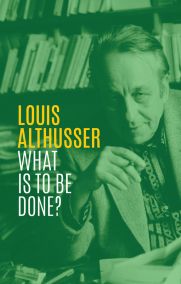
Louis Althusser, What is to be Done? – Polity, December 2020

Louis Althusser, What is to be Done? translated by G.M. Goshgarian, Polity, December 2020

What is to be done? This was the question asked by Lenin in 1901 when he was having doubts about the revolutionary capabilities of the Russian working class. 77 years later, Louis Althusser asked the same question. Faced with the tidal wave of May ‘68 and the recurrent hostility of the Communist Party towards the protests, he wanted to offer readers a succinct guide for the revolution to come. Lively, brilliant and engaged, this short text is wholly oriented towards one objective: to organise the working class struggle. Althusser provides a sharp critique of Antonio Gramsci’s writings and of Eurocommunism, which seduced various Marxists at the time. But this book is above all the opportunity for Althusser to state what he had not succeeded in articulating elsewhere: what concrete conditions would need to be satisfied before the revolution could take place. Left unfinished, it is published here in English for the first time.

Posted in Louis Althusser | Leave a comment

Call for applications: Beyond Borders PhD scholarships

Call for Applications – BEYOND BORDERS supports research about borders and boundaries in past and present times. It promotes interdisciplinary exchange in the social sciences and humanities. The Call for Applications 2020 is open till January 15, 2021 and focuses on “Borders, Democracy and Security”.

The ZEIT-Stiftung offers three types of Ph.D. scholarships: Start Up Scholarships for research project development, Ph.D. Scholarships for up to 3 years and Dissertation Completion Scholarships. We invite applications from Ph.D. students worldwide studying borders and bordering phenomena in different regions of the world. Both empirical research based on extensive fieldwork and projects centered on theoretical reflection are eligible for support. Innovative and challenging research questions as well as comparative approaches are highly welcome. Further information about the programme and application requirements can be found under https://beyondborders.zeit-stiftung.de

Focus 2020 – Borders, Democracy and Security

The unprecedented travel bans and closures of national borders during this time of COVID-19 make borders more visible than ever before. However, the ad-hoc restrictions introduced in spring 2020 were selective: Citizens, permanent residents, migrant workers judged “essential” for health care, social welfare and public services could still enter “sealed” national territories. Other travelers such as temporary residents, visitors, circular migrant workers or refugees were excluded. The numerous images of extensive controls and closed doors, and at the same time, new forms of cross-border political, economic, cultural life that emerged in response, made clear how regionally and globally interdependent we have become.

How does globalization influence the dismantling and the resurrection of borders worldwide, be they political, economic, cultural or intellectual? Which borders and boundaries are shifting and why? What kinds of new pathways of connections and cooperation are emerging in response? What kinds of historical processes have led to the transformation of borders and border regimes? How do these challenge longstanding power hierarchies? To what extent might cultural revolutions transform or pull apart borders and boundaries? Can democracy function beyond national borders? How are the relationships between citizens and state changing with respect to rights and social protection, and how does that differ in different regions of the world? 

Questions concerning borders, state transformation, democracy, social welfare, and security are the focus of the current call for applications for Ph.D. scholarships. We encourage applications for projects concentrating on following aspects, although other topics will also be considered:

– the conceptual construction of borders,

– the changing nature and functionality of national borders and its effect on regionalization,

– materiality and symbolism of borders, 

– transformation of border and regional regimes,

– supra- and sub-national integration,

– citizenship and belonging,

– security and securitization,

– transnational social protection,

– cultural borders and their manifestation in arts and cultural production.
Posted in Uncategorized | Leave a comment