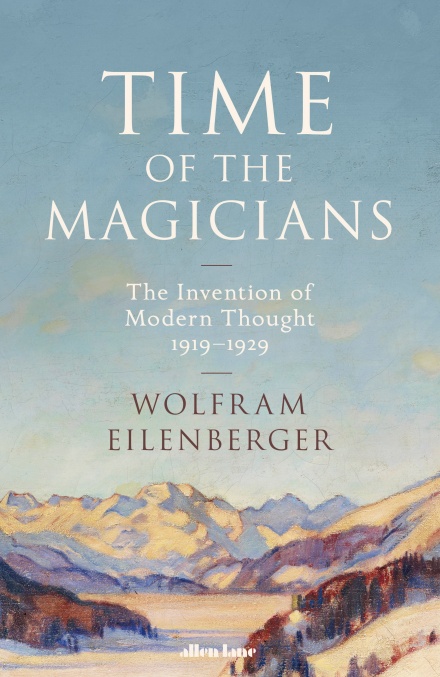
Wolfram Eilenberger, Time of the Magicians: The Invention of Modern Thought 1919-1929 – Allen Lane, August 2020

Wolfram Eilenberger, Time of the Magicians: The Invention of Modern Thought 1919-1929 – Allen Lane, August 2020

The year is 1919. Walter Benjamin flees his overbearing father to scrape a living as a critic. Ludwig Wittgenstein, scion of one of Europe’s wealthiest families, signs away his inheritance, seeking spiritual clarity. Martin Heidegger renounces his faith and aligns his fortunes with Husserl’s phenomenological school. Ernst Cassirer sketches a new schema of human culture on a cramped Berlin tram. The stage is set for a great intellectual drama. Over the next decade the lives and thought of this quartet will converge and intertwine, as each gains world-historical significance, between them remaking philosophy.

Time of the Magicians brings to life this miraculous burst of intellectual creativity, unparalleled in philosophy’s history, and with it an entire era, from post-war exuberance to economic crisis and the emergence of National Socialism. With great art, Wolfram Eilenberger traces the paths of these titanic figures through the tumult. He captures their personalities as well as their achievements, and illuminates with singular clarity the philosophies each embodied as well as espoused. It becomes an intellectual adventure story, a captivating journey through the greatest revolution in Western thought told through its four protagonists, each with their own penetrating gaze and answer to the question which has animated philosophy from the very beginning: What are we?

There is a review in the Financial Times, which concentrates on the Heidegger-Cassirer debate at Davos, which is also explored in Peter E. Gordon, Continental Divide: Heidegger, Cassirer, Davos (Harvard University Press, 2010).

Posted in Uncategorized | Leave a comment

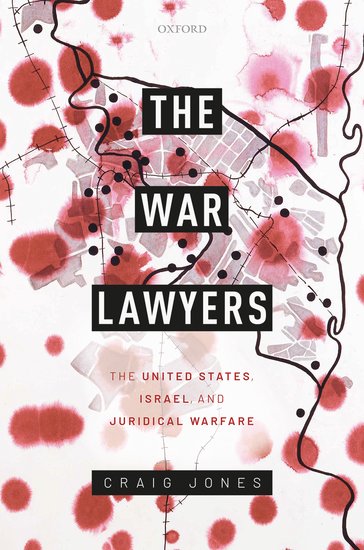
Craig Jones, The War Lawyers: The United States, Israel and Juridical Warfare – Oxford University Press, December 2020

Craig Jones, The War Lawyers: The United States, Israel and Juridical Warfare – Oxford University Press, December 2020

Over the last 20 years the world’s most advanced militaries have invited a small number of military legal professionals into the heart of their targeting operations, spaces which had previously been exclusively for generals and commanders. These professionals, trained and hired to give legal advice on an array of military operations, have become known as war lawyers.

The War Lawyers examines the laws of war as applied by military lawyers to aerial targeting operations carried out by the US military in Iraq and Afghanistan, and the Israel military in Gaza. Drawing on interviews with military lawyers and others, this book explains why some lawyers became integrated in the chain of command whereby military targets are identified and attacked, whether by manned aircraft, drones, and/or ground forces, and with what results. 

This book shows just how important law and military lawyers have become in the conduct of contemporary warfare, and how it is understood. Jones argues that circulations of law and policy between the US and Israel have bolstered targeting practices considered legally questionable, contending that the involvement of war lawyers in targeting operations enables, legitimises, and sometimes even extends military violence.

via Derek Gregory’s Geographical Imaginations blog.

Posted in Uncategorized | Leave a comment

Distinguished Professor Bob Jessop Virtual Festschrift Thursday 29 October 1.00pm-17.00pm GMT (UK Timezone)

Distinguished Professor Bob Jessop Virtual Festschrift Thursday 29 October 1.00pm-17.00pm GMT (UK Timezone)

The Centre for Alternatives to Social and Economic Inequalities and its Director, Distinguished Professor Beverley Skeggs, are pleased to host a Festschrift event to celebrate and recognise the intellectual contribution of Distinguished Professor Bob Jessop on Thursday 29 October 2020 from 1pm-5pm via MS Teams.

Bob arrived as a Professor in Sociology at Lancaster University in 1990, having worked in the Department of Government at the University of Essex since 1975. Whilst at Lancaster Bob served as Head of Department, Director of the Institute of Advanced Studies, and the Founder and Director of the Centre for Cultural Political Economy. Over the course of an academic career spanning fifty years, Bob has contributed immeasurably to our contemporary understanding of society and the intellectual life of Lancaster University.

Bob blazed a trail through his work on state theory. Influenced by the work of the Greek Marxist theorist Nicos Poulantzas and the political economy approaches pioneered by Karl Marx, his contribution continues to shape debates beyond the demise of the Soviet bloc with the rise of neoliberalism. His work has spanned six books including: The Capitalist State: Marxist Theories and Methods (Martin Robertson, 1982), Nicos Poulantzas: Marxist Theory and Political Strategy(Palgrave, 1985), State Theory: Putting Capitalist States in their Place(Polity, 1990), The Future of the Capitalist State (Polity, 2002), State Power: A Strategic-Relational Approach (Polity, 2007) and The State: Past, Present, Future (Polity, 2015).

More recently Bob’s interest in political economy has led to the development of approaches to change in capitalism influenced by Italian Marxist Antonio Gramsci and French social philosopher Michel Foucault. He has developed this approach closely with Dr Ngai-Ling Sum and together they have shaped the field of cultural political economy, notably through Beyond the Regulation Approach: Putting Capitalist Economies in their Place (Edward Elgar, 2005) and Towards a Cultural Political Economy: Putting Culture in its Place in Political Economy (Edward Elgar, 2013).

Beyond his work on state theory and cultural political economy, Bob has shaped our understanding of developments in the postwar British economy and the transition from a Fordist corporate compromise to neoliberalism and growing financialisation. His work has embraced local and global perspectives and his work includes: Traditionalism, Conservatism and British Political Culture (Allen and Unwin, 1974), Thatcherism: The British Road to Post-Fordism (University of Essex Department of Government, 1989), From the Keynesian Welfare to the Schumpeterian Workfare State (Lancaster Regionalism Group, 1992), and with Kevin Bonnett, Tom Ling and Simon Bromley their influential, Thatcherism: A Tale of Two Nations (Polity, 1988).

Bob has also supported generations of scholars to critically engage with Marxist approaches, theories and ideas, and how this analysis shapes our understanding of change under capitalism. He has edited two editions of the four-volume series with Charlie Malcolm-Brownand Russell Wheatley, Karl Marx’s Social and Political Thought(Routledge, 1990; 1999), a five volume series Regulation Theory and the Crisis of Capitalism (Edward Elgar, 2001) and with Neil Brenner, Martin Jones and Gordon MacLeod, State/Space: A Reader (Wiley-Blackwell, 2003). This support for subsequent generations extends beyond intellectual theory to practical politics through his influence on the ideas of Podemos in Spain and Syriza in Greece as a response to the 2008 financial crisis and austerity regimes.

This event celebrates and recognises Bob’s contribution through a series of papers from distinguished colleagues related to different spheres of his intellectual approach paired with a response from Bob. The event will be chaired by the Director of the Centre for Alternatives to Social and Economic Inequalities, Distinguished Professor Bev Skeggs:

Register and further details here

Posted in Uncategorized | Leave a comment

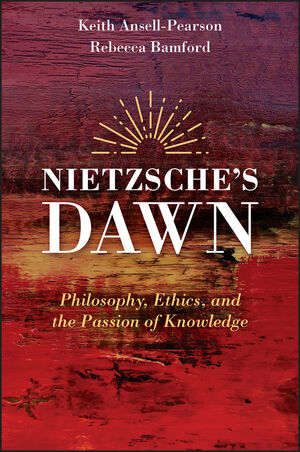
Keith Ansell-Pearson & Rebecca Bamford, Nietzsche’s Dawn: Philosophy, Ethics, and the Passion of Knowledge – Wiley-Blackwell, November 2020

Keith Ansell-Pearson & Rebecca Bamford, Nietzsche’s Dawn: Philosophy, Ethics, and the Passion of Knowledge – Wiley-Blackwell, November 2020

The first focused study of Nietzsche’s Dawn, offering a close reading of the text by two of the leading scholars on the philosophy of Nietzsche

Published in 1881, Dawn: Thoughts on the Presumptions of Morality represents a significant moment in the development of Nietzsche’s philosophy and his break with German philosophic thought. Though groundbreaking in many ways, Dawn remains the least studied of Nietzsche’s work. In Nietzsche’s Dawn: Philosophy, Ethics, and the Passion of Knowledge, authors Keith Ansell-Pearson and Rebecca Bamfordpresent a thorough treatment of the second of Nietzsche’s so-called “free spirit” trilogy. 

This unique book explores Nietzsche’s philosophy at the time of Dawn’s writing and discusses the modern relevance of themes such as fear, superstition, terror, and moral and religious fanaticism. The authors highlight Dawn’s links with key areas of philosophical inquiry, such as “the art of living well,” skepticism, and naturalism. The book begins by introducing Dawn anddiscussing how to read Nietzsche, his literary and philosophical influences, his relation to German philosophy, and his efforts to advance his ‘free spirit’ philosophy. Subsequent discussions address a wide range of topics relevant to Dawn, including presumptions of customary morality, hatred of the self, free-minded thinking, and embracing science and the passion of knowledge. Providing a lively and imaginative engagement with Nietzsche’s text, this book:

Highlights the importance of an often-neglected text from Nietzsche’s middle writings

Examines Nietzsche’s campaign against customary morality

Discusses Nietzsche’s responsiveness to key Enlightenment ideas

Offers insights on Nietzsche’s philosophical practice and influences

Contextualizes a long-overlooked work by Nietzsche within the philosopher’s life of writing

Like no other book on the subject, Nietzsche’s Dawn: Philosophy, Ethics, and the Passion of Knowledge is a must-read for advanced undergraduate and graduate students, instructors, and scholars in philosophy, as well as general readers with interest in Nietzsche, particularly his middle writings.  

Posted in Uncategorized | Leave a comment

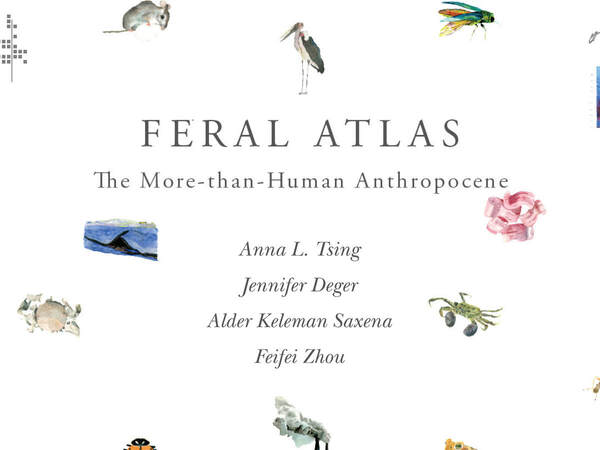
Anna Lowenhaupt Tsing, Jennifer Deger, Alder Keleman Saxena, Feifei Zhou eds. Feral Atlas: The More-Than-Human Anthropocene – Stanford University Press, 2020

Anna Lowenhaupt Tsing, Jennifer Deger, Alder Keleman Saxena, Feifei Zhou eds. Feral Atlas: The More-Than-Human Anthropocene – Stanford University Press, 2020

A digital, online project – here

Every event in human history has been a more-than-human event. When hunter-gatherers burn the land, they cooperate with herbs that seed quickly and grasses that sprout after fires, attracting game. Inside us, intestinal bacteria make it possible for us to digest our food. Other things, living and nonliving, make it possible to be human. Yet powerful habits of thought over the last centuries have made this statement less than obvious. With the arrival of the idea of the Anthropocene, we move away from such thinking to reconsider how human and nonhuman histories are inextricably intertwined.

Convening over one hundred researchers to trace a whole range of such intertwinements, Feral Atlas offers an original and playful approach to studying the Anthropocene. Focused on the world’s feral reactions to human intervention, the editors explore the structures and qualities that lie at the heart of the feral and make the phenomenon possible. This publication features original contributions by high-profile artists, humanists and scientists such as Amitav Ghosh, Elizabeth Fenn, Simon Lewis, Mark Maslin, and many others.

Posted in Uncategorized | Leave a comment

Jamie Lorimer, The Probiotic Planet – University of Minnesota Press, November 2020

Jamie Lorimer, The Probiotic Planet: Using Life to Manage Life – University of Minnesota Press, November 2020

Most of us are familiar with probiotics added to milk or yogurt to improve gastrointestinal health. In fact, the term refers to any intervention in which life is used to manage life—from the microscopic, like consuming fermented food to improve gut health, to macro approaches such as biological pest control and natural flood management. In this ambitious and original work, Jamie Lorimer offers a sweeping overview of diverse probiotic approaches and an insightful critique of their promise and limitations. 

During our current epoch—the Anthropocene—human activity has been the dominant influence on climate and the environment, leading to the loss of ecological abundance, diversity, and functionality. Lorimer describes cases in which scientists and managers are working with biological processes to improve human, environmental, and even planetary health, pursuing strategies that stand in contrast to the “antibiotic approach”: Big Pharma, extreme hygiene, and industrial agriculture. The Probiotic Planet focuses on two forms of “rewilding” occurring on vastly different scales. The first is the use of keystone species like wolves and beavers as part of landscape restoration. The second is the introduction of hookworms into human hosts to treat autoimmune disorders. In both cases, the goal is to improve environmental health, whether the environment being managed is planetary or human. Lorimer argues that, all too often, such interventions are viewed in isolation, and he calls for a rethinking of artificial barriers between science and policy. He also describes the stark and unequal geographies of the use of probiotic approaches and examines why these patterns exist. 

The author’s preface provides a thoughtful discussion of the COVID-19 pandemic as it relates to the probiotic approach. Informed by deep engagement with microbiology, immunology, ecology, and conservation biology as well as food, agriculture, and waste management, The Probiotic Planet offers nothing less than a new paradigm for collaboration between the policy realm and the natural sciences.

Posted in Uncategorized | Leave a comment

Adriana Cavarero, Judith Butler and Bonnie Honig, Towards a Feminist Ethics of Non-Violence – Fordham University Press, 2021

Adriana Cavarero, Judith Butler and Bonnie Honig, Towards a Feminist Ethics of Non-Violence – Fordham University Press, 2021

Toward a Feminist Ethics of Nonviolence brings together major feminist thinkers to debate Cavarero’s call for a postural ethics of nonviolence and a sociality rooted in bodily interdependence.

Toward a Feminist Ethics of Nonviolence brings together three major feminist thinkers—Adriana Cavarero, Judith Butler, and Bonnie Honig—to debate Cavarero’s call for a postural ethics of nonviolence. The book consists of three longer essays by Cavarero, Butler, and Honig, followed by shorter responses by a range of scholars that widen the dialogue, drawing on post-Marxism, Italian feminism, queer theory, and lesbian and gay politics. Together, the authors contest the boundaries of their common project for a pluralistic, heterogeneous, but urgent feminist ethics of nonviolence.

Posted in Uncategorized | Leave a comment

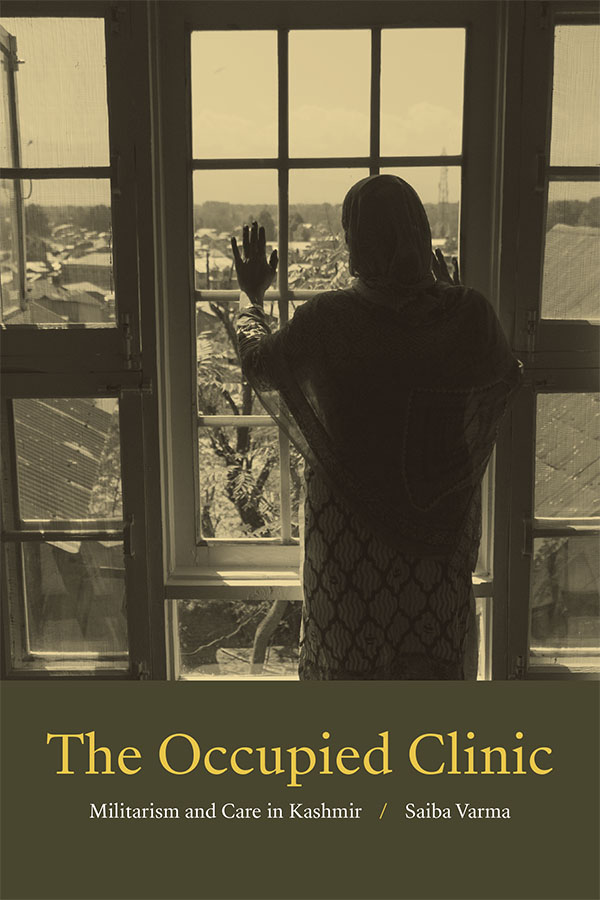
Saiba Varma, The Occupied Clinic: Militarism and Care in Kashmir – Duke University Press, October 2020

Saiba Varma, The Occupied Clinic: Militarism and Care in Kashmir – Duke University Press, October 2020

The Introduction is open access here.

In The Occupied Clinic, Saiba Varma explores the psychological, ontological, and political entanglements between medicine and violence in Indian-controlled Kashmir—the world’s most densely militarized place. Into a long history of occupations, insurgencies, suppressions, natural disasters, and a crisis of public health infrastructure come interventions in human distress, especially those of doctors and humanitarians, who struggle against an epidemic: more than sixty percent of the civilian population suffers from depression, anxiety, PTSD, or acute stress. Drawing on encounters between medical providers and patients in an array of settings, Varma reveals how colonization is embodied and how overlapping state practices of care and violence create disorienting worlds for doctors and patients alike. Varma shows how occupation creates worlds of disrupted meaning in which clinical life is connected to political disorder, subverting biomedical neutrality, ethics, and processes of care in profound ways. By highlighting the imbrications between humanitarianism and militarism and between care and violence, Varma theorizes care not as a redemptive practice, but as a fraught sphere of action that is never quite what it seems.

Posted in Uncategorized | Leave a comment

Federico Italiano (ed.), The Dark Side of Translation – Routledge, 2020

Federico Italiano (ed.), The Dark Side of Translation – Routledge, 2020

We tend to consider translation as something good, virtuous and bright, but it can also function as an instrument of concealment, silencing and misdirection—as something that darkens and obscures. Propaganda, misinformation, narratives of trauma and imagery of the enemy—to mention just a few of the negative phenomena that shape our lives—show patterns of communication in which translation either functions as a weapon or constitutes a space of conflict. But what does this dark side of translation look like? How does it work? 

Ground-breaking in its theoretical conception and pioneering in its thematic approach, this book unites international scholars from a range of disciplines including philosophy, translation studies, literary theory, ecocriticism, game studies, history and political science. With examples that illustrate complex theoretical and philosophical issues, this book also has a major focus on the translational dimension of ecology and climate change.

Transdisciplinary and topical, this book is key reading for researchers, scholars and advanced students of translation studies, literature and related areas.

Posted in Uncategorized | 2 Comments

Conflict in Nagorno-Karabakh: What you need to know about the war between Armenia and Azerbaijan – video with Gerard Toal, John O’Laughlin and Maia Otarashvili

Join us for a special virtual panel discussion about the ongoing conflict between Armenia and Azerbaijan over Nagorno-Karabakh. The “frozen conflict” in Nagorno Karabakh is no longer “frozen”. Fighting between Armenian and Azerbaijani forces over the breakaway territory of Nagorno-Karabakh renewed on September 27th and still continues to rage. The current death toll stands at nearly 300 and counting, this includes civilians. Both sides are shelling major cities, and the conflict appears to be intensifying. The conflict has major ramifications not just for Armenia and Azerbaijan, but also for the region more broadly and could draw in major regional powers – Russia, Turkey, Iran. It threatens to destabilize the Black Sea/ Caucasus region, where peace is already fragile.

Video from 15 October 2020

Posted in Uncategorized | Leave a comment