Siniša Malešević, Nationalism as a Way of Life: The Rise and Transformation of Modern Subjectivities – Cambridge University Press, November 2025

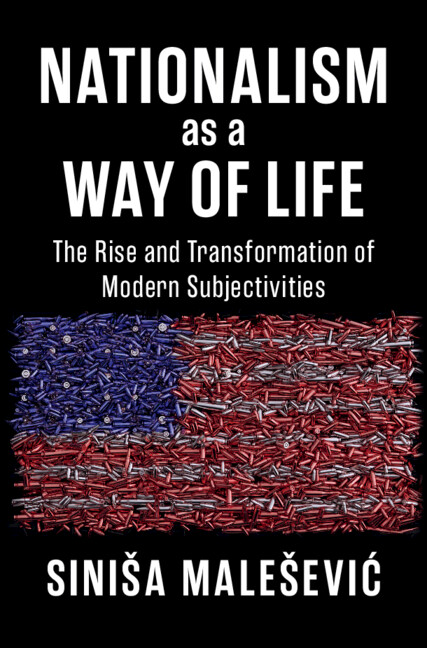
Siniša Malešević, Nationalism as a Way of Life: The Rise and Transformation of Modern Subjectivities – Cambridge University Press, November 2025

While nationalism is a term that is often associated with instability, violence, extremism, terrorism, wars and even genocide, in fact most forms of nationalism are nonviolent. Beyond politics, it is a set of discourses and practices that shape economic, social, legal, and cultural life all over the globe. This book explores the global rise and transformation of nationalism and analyses the organisational, ideological, and micro-interactional mechanisms that have made it the dominant way of life in the twenty-first century. In a series of case studies across time and space, the book zooms in on three key forms of lived experience: how nationalism operates as a multi-faceted meta-ideology, how national categories have become organisationally embedded in everyday practices and why nationalism has become the dominant form of modern subjectivity. The book is aimed at readers interested in understanding how nation-states and nationalisms have attained such influence in contemporary world.

  • A comprehensive sociological explanation of the dominance of nation-states
  • Based on the author’s theoretical and empirical research on nation-state formation
  • For scholars and students in sociology, history, anthropology, geography, and nationalism studies
Posted in Uncategorized | Leave a comment

Joseph Petek and Brian G. Henning eds. Whitehead at Harvard, 1925-1927 – Edinburgh University Press, August 2025

Joseph Petek and Brian G. Henning eds. Whitehead at Harvard, 1925-1927 – Edinburgh University Press, August 2025

This book examines the significance of the second volume of The Edinburgh Critical Edition of the Complete Works of Alfred North Whitehead: The Harvard Lectures of Alfred North Whitehead, 1925–1927: General Metaphysical Problems of Science, published in 2021, which covers Whitehead’s second and third years of American lectures in philosophy

  • Aims to catalyse the broader scholarly community’s engagement with the new materials published in the second volume of the Edinburgh Critical Edition of the Complete Works of Alfred North Whitehead
  • Questions how the Harvard Lectures and the Edinburgh Critical Editions change our understanding of the meaning or development of Whitehead’s thought
  • Covers a broad range of ways in which Whitehead’s Harvard Lectures change and broaden our understanding of his work, from mathematics, to ethics, his view of time, and the role of biology in his thought

Long-standing theories about Whitehead’s early philosophical efforts can now be challenged or overturned. In this volume, leading Whitehead scholars address the ways in which the 1925-1927 Harvard lectures challenge or confirm previous understanding of Whitehead’s published works, trace the development of Whitehead’s thought in the crucial period after Science and the Modern World but before Process and Reality, examine Whitehead’s singular guest lecture in Richard Clarke Cabot’s seminar in social ethics – a topic which Whitehead usually avoided – and elucidate how these lectures be seen as a bridge between his mathematical and philosophical work.

Posted in Uncategorized | Leave a comment

The Andrea Rosenthal Memorial Lecture – “Émile Benveniste, the Second World War and the Making of the Vocabulary of Indo-European Institutions”, Brown University, 22 October 2025, 5.30pm

The Andrea Rosenthal Memorial Lecture – “Émile Benveniste, the Second World War and the Making of the Vocabulary of Indo-European Institutions”, Brown University, 22 October 2025, 5.30pm

The Comparative Literature Department cordially invites you to join us for Émile Benveniste, the Second World War and the Making of the Vocabulary of Indo-European Institutions, a lecture presented by Stuart Elden from the University of Warwick. This event will take place Wednesday, October 22, at 5:30 PM at the Brown Faculty Club.

The French linguist Émile Benveniste’s final book was the two-volume Vocabulaire des institutions indo-européennes, recently republished as the Dictionary of Indo-European Concepts and Society. Published in 1969, shortly before a stroke put an end to Benveniste’s active career, the book was based on a series of lectures at the Collège de France. It is one of the crowning glories of the rich vein of post-war French research on Indo-European mythology and linguistics, alongside the work of Georges Dumézil.

Existing accounts of Benveniste’s life give only the basic outline of his experiences in the Second World War. He was mobilised in 1939, captured in 1940, escaped in 1941, moved to the unoccupied zone, crossed the border to Switzerland in 1943, and returned to Paris after the Liberation. He lost his chair at the Collège de France because he was Jewish, but regained it in 1944. His brother was arrested in Paris, and deported to Auschwitz, where he was killed. But much of this time remains obscure, and any impact on Benveniste’s work is rarely mentioned or even explicitly denied.

Using archives in Paris, Geneva, Fribourg, Berne, London and Cambridge this lecture reconstructs this period of his life, and how immediately after his return to Paris he began a series of courses with the same title as the book. The surviving teaching materials show how he moved to much more explicitly political themes in his work at this time. Tracing the making of the book, this talk shows how his war-time experiences provide a valuable context to this important and influential study.

Stuart Elden is Professor of Political Theory and Geography at the University of Warwick, UK. He is the author of books including The Birth of Territory(University of Chicago Press, 2013), Shakespearean Territories (University of Chicago Press, 2018) and a four-volume intellectual history of Michel Foucault’s entire career (Polity, 2016-2023). He is currently writing a history of Indo-European thought in twentieth-century France, focusing on Émile Benveniste and Georges Dumézil, funded by a Leverhulme Trust major research fellowship.

As always, this event is free and open to the public and a reception will follow. We hope to see you there!

Posted in Conferences, Emile Benveniste, Mapping Indo-European Thought in Twentieth Century France | 1 Comment

Aleks Krotoski, The Immortalists: The Death of Death and the Race for Eternal Life – Bodley Head, October 2025

Aleks Krotoski, The Immortalists: The Death of Death and the Race for Eternal Life – Bodley Head, October 2025

Thanks to Adalbert Saurma for the link.

From the epic of Gilgamesh to the alchemy of the philosopher’s stone, humanity’s eternal quest for immortality – and its rejuvenation tricks, therapies and tinctures – has always been our most mortal endeavour.

But now the giants of invention and investment are building a fountain of youth of their own creation: one they not only engineer, but also own and control. Death is simply their next problem to solve, the latest expression of a hubris that regards humans as appliances to be fixed and machines to be upgraded. By harnessing technology to ‘cure’ ageing, and funding cutting-edge – and often controversial – research, today’s immortalists are locked in an arms race to be the first to pocket the profits of longevity.

What was once a wild west of experimentation has wormed its way into Washington’s corridors of power. Award-winning broadcaster and academic Aleks Krotoski journeys from those cult fringes to the heartlands of government to meet the moguls, effective altruists, geroscientists and entrepreneurs who are disrupting death. Along the way she encounters radical life extensionists transfusing their teenage son’s blood, transhumanists who want to upload consciousness to the cloud, biohackers flogging AI-powered wellness apps and billionaire kingmakers building brand-new nations.

This razor-sharp, powerful and at times chilling investigation empowers us to consider what it truly means to be human, asking: do we really want a handful of Silicon Valley techno-fundamentalists to be the architects of our forever?

Posted in Uncategorized | Leave a comment

Leonie Ansems de Vries, Politics of Exhaustion: Border Violence and Struggles Over Movement – Bristol University Press, April 2026

Leonie Ansems de Vries, Politics of Exhaustion: Border Violence and Struggles Over Movement – Bristol University Press, April 2026

This book exposes the strategies that make migrants’ lives unliveable and explores their resistance to this violence. Drawing on years of research across Europe, the author captures the lived reality of asylum seekers, refugees and other marginalised migrants, including their struggles with constant evictions, detention, push-backs, deportations and violence. 

Blending feminist, intersectional and decolonial perspectives, the book reframes exhaustion as both a tool of governance and a site of struggle. By amplifying neglected voices and envisioning politics grounded in solidarity, care and friendship, this is a powerful call to rethink how movement, borders and resistance are understood.

Posted in Uncategorized | Leave a comment

Federico Testa, On the Politics of the Living: Foucault and Canguilhem on Life and Norms – Bloomsbury, December 2024; Book launch, University of Bristol 22 October 2025

Federico Testa, On the Politics of the Living: Foucault and Canguilhem on Life and Norms – Bloomsbury, December 2024

Book launch, University of Bristol 22 October 2025

You are warmly invited to a book launch and roundtable discussion with Dr. Federico Testa, UEA, On the Politics of the Living: Foucault and Canguilhem on Life and Norms. This event is free and does not require booking.

The event will begin with the author giving a short introductory presentation on the book’s argument and this will be followed by a discussion with a number of panellists and questions from the audience.

Paul Earlie (Senior Lecturer in French Thought, University of Bristol); Kathryn Body (Phd candidate, Philosophy, University of Bristol), Francesco Tava (Associate Professor of Philosophy, UWE), and TzuChien Tho (Senior Lecturer in Philosophy, University of Bristol).

Bringing the philosophies of Michel Foucault and Georges Canguilhem into dialogue, Federico Testa examines the notions of life and norms underlying our modern experience of politics. 

Today’s global health crisis acts as a stark reminder that life is at the core of our political debates and dilemmas. We can no longer think of forms of political organization, citizenship and participation without considering the materiality and precarity of our own organic life. Ours is a politics of the living.

Within this context, this book examines Foucault’s work on the politicization of life and biopolitics through the lens of Canguilhem’s notion of norms. Testa extracts from Canguilhem’s philosophy the conceptual tools to re-interpret Foucault’s ideas on power, and reconceptualises normativity as a process of the creation of norms that provide tools for political and social analysis and for thinking resistance. In so doing, he uncovers new and important possibilities for biopolitical resistance. 

Demonstrating not only Canguilhem’s underexplored social and political concerns but also the intellectual osmosis between the two thinkers, On the Politics of the Living is an urgent examination of the ever-increasing significance of the concepts of life, care and health in today’s political discourse.

Posted in Georges Canguilhem, Michel Foucault, Uncategorized | 1 Comment

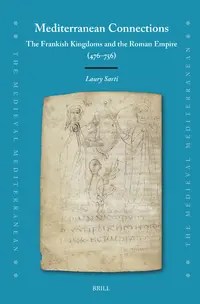
Laury Sarti, Mediterranean Connections: The Frankish Kingdoms and the Roman Empire (476–756) – Brill, October 2025 (print and open access)

Laury Sarti, Mediterranean Connections: The Frankish Kingdoms and the Roman Empire (476–756) – Brill, October 2025 (print and open access)

This monograph challenges the idea that Roman imperial authority in the West ended in 476. It shows how the Frankish realm maintained ties to the empire, with real separation only emerging in the late sixth century.
Tracing enduring Frankish-Byzantine diplomacy, shared identities, religious controversy, and trade into the seventh century, it reveals a landscape of continued exchange rather than abrupt decline. Including previously overlooked sources, the study offers a new perspective on Frankish identity, imperial affiliation, and the evolving relationship between Rome, the empire, and the Merovingians from the fifth to the eighth century.

Posted in Uncategorized | Leave a comment

David Glimp, Security, Fiscal Policy, and Sovereignty in Renaissance English Literature – Cambridge University Press, September 2025

David Glimp, Security, Fiscal Policy, and Sovereignty in Renaissance English Literature – Cambridge University Press, September 2025

Taxation was a central challenge for England’s rulers during the Renaissance, and consequently became a major theme for some of the period’s greatest writers. Through close readings of works by Thomas More, Christopher Marlowe, William Shakespeare, George Herbert, and John Milton, David Glimp reveals how these writers and others grappled with the period’s expanding systems of taxation and changing understandings of collective security. Such debates involved questions of political obligation, what it meant to be safe, and the nature of political community itself. Challenging dominant understandings of Renaissance sovereignty, Glimp explores in greater detail than ever before how early modern authors thought about and engaged the fiscal realities of government. From Utopia to Paradise Lost, his groundbreaking analysis illuminates how Renaissance literature addressed concerns about fiscal policy, state power, and collective wellbeing and will appeal to scholars of Renaissance literature, political theory, and economic history alike.

  • Explores in greater detail than ever before how early modern authors thought about and engaged the fiscal realities of government, tracing a historically rich moment in the long tradition of literary responses to governmental controversy
  • Challenges dominant understandings of sovereign authority in the period, showing how fiscal reality limited and often undermined the seemingly decisive power of Early modern English rulers
  • Reveals how a striking majority of authors engaged with the unsustainability of growth through imperial expansion, foregrounding geopolitical reality and national security as central concerns in the Renaissance literary imagination
Posted in Uncategorized | Leave a comment

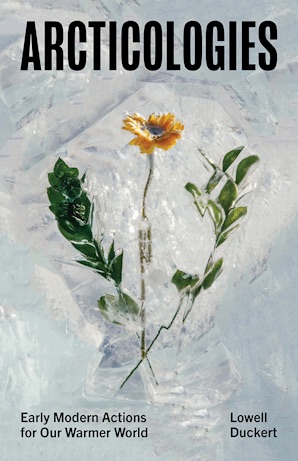
Lowell Duckert, Arcticologies: Early Modern Actions for our Warmer World – University of Minnesota Press, August 2025

Lowell Duckert, Arcticologies: Early Modern Actions for our Warmer World – University of Minnesota Press, August 2025

Exploring the frozen past to rethink our warming future

Do we really know what cold is? In Arcticologies, Lowell Duckert delves into early modern European texts to trace how representations of frigidity from the sixteenth and seventeenth centuries have contributed to historical understandings of climate and contemporary debates on climate change. Arguing that human culture and science are, in fact, indebted to the cold, Duckert suggests that these early depictions offer critical terms for advancing the aims of climate-change activism and assisting in counterapocalyptic thinking. 

An imaginative and intellectual journey, Arcticologies reveals the enduring role of cold in wide-ranging storytelling traditions. It draws on Shakespeare’s Hamlet and Othello and the works of Thomas Dekker, René Descartes, and Thomas Hobbes and is informed throughout by contemporary Indigenous writing, including that of Sheila Watt-Cloutier and Leanne Betasamosake Simpson. In reflecting on these assorted accounts, Duckert sees cold as not only an environmental hardship but a source of cultural creativity and resilience, highlighting moments of collaboration between humans and the icy world, from arctic exploration to urban fairs on frozen rivers. 

Cold, Duckert makes clear, is more than the absence of warmth. Situating our contemporary obsession with impending planetary meltdown within the mazelike arcticologies of the past, Duckert shows how early modern cold brought about forms of curiosity, vocabulary, and interspecies relationality that can serve us today. In doing so, he asks us to identify what has been lost and who is at risk in today’s thinning cold—while also urging us to imagine alternative futures focused not on inevitable and total collapse but on adaptation and preserving what remains.

Posted in Uncategorized | Leave a comment

Claude Lévi-Strauss, Georges Dumézil and Benoîte Groult: the Académie française and the debate about feminine nouns for professions

In his dialogues with Didier Eribon, published in 1989, Claude Lévi-Strauss commented on the linguistic work of the Académie française, and especially a campaign to amend the gender terminology of professions. Should, for example, a female politician be referred to as le ministre or la ministre? In other cases it might require a different spelling rather than just a change of article:

I’m not against adopting certain feminine derivatives if they are current usage and are not contrary to the spirit of the language or the rules of word-formation. What seems unacceptable to me is to bow to a pressure group and promulgate words by decree. Especially when it is the result of something as blatant as the confusion between sex and grammatical gender. Dumézil wrote an outstanding article on the subject in Le Nouvel Observateur that is worth handing down to posterity (Lévi-Strauss and Eribon, De près et de loin, p. 126; Conversations with Claude Lévi-Strauss, pp. 86-87). 

Lévi-Strauss was elected to one of the forty chairs of the Académie française in May 1973, and Dumézil in June 1979. Lévi-Strauss inducted Dumézil as one of the immortals in the ceremony, with Dumézil having the names of Franz Bopp, Michel Bréal, Sylvain Lévi, Marcel Mauss, Marcel Granet and Émile Benveniste inscribed on the ceremonial sword.

The Académie française, https://www.academie-francaise.fr

The immortality is not of the 40 members, who are only replaced when they die but are often quite elderly when elected. It is supposedly the immortality of the French language, of which the Académie is the authority, and produces its dictionary. This particular dispute which Lévi-Strauss mentions arose in 1984, when the Minister of Women’s Rights under President Mitterand, Yvette Roudy, set up a committee on terminology of occupations. The journalist and novelist Benoîte Groult was the president of the committee, established on 29 February 1984 by decree 84-153. The aim was to examine “the feminization of titles and functions, and more generally, vocabulary relating to women’s activities”, to itemise the “gaps in vocabulary”, and to “establish rules for forming unusual feminine forms” or propose new words if necessary to avoid confusion. The aim was “to make the necessary proposals to prevent the French language from promoting sex discrimination” (on the history, see Khaznadar, Baider and Moreau, “Les enjeux de la parité linguistique”). 

The more general debates about the French language are quite widely discussed, but I was interested in the piece Lévi-Strauss mentioned written by Dumézil. Lévi-Strauss’s biographer Emmanuelle Loyer says that this was published in 1983, but it is actually from a year later (see her discussion in Lévi-Strauss, French pp. 680-81; English pp. 532-33). And in looking at Dumézil’s article, I realised it was a reply to a piece in Le Monde, which itself was a response to a declaration by the Académie, and this led me backwards through a few pieces. Here is what I think is the correct sequence of key pieces in this debate, at least as they relate to Dumézil and Lévi-Strauss.

After the initial role of the Groult committee was reported in the French press, the Académie française presented a negative declaration of principle concerning any change to the language. They indicated that the grammatical genders of the French language, like other Indo-European languages, while traditionally called masculine and feminine, were misnamed, and might be better understood as unmarked and marked. The Académie was effectively claiming the “masculine” gender was really a neuter form. The Académie’s advice was written by Dumézil and Lévi-Strauss (as the Académie itself reported in 2014) and was adopted unanimously as the position in a session of 14 June 1984. Loyer indicates that Lévi-Strauss was the author, and that a typed copy is in his archives at the Bibliothèque nationale (Loyer, Lévi-Strauss, French p. 680, English p. 687; referencing NAF 28150, box 218).

The Académie’s resolution suggested that the “task assigned to this commission is based on a misinterpretation of the concept of grammatical gender and that it will lead to proposals that are contrary to the spirit of the language”. It gave examples to illustrate how grammatical gender and natural gender were not equivalent. There are collective nouns of masculine gender which apply to both men and women, while feminine gender nouns are exclusive. They therefore proposed that “the unmarked [i.e. masculine] gender be preferred for professional designations”.

Its concluding claim was that:

It should also be noted that in French, the feminine marker serves only incidentally to make the distinction between male and female. The division of nouns into two genders establishes a principle of classification within the entire lexicon, making it possible to distinguish homonyms, highlight different spellings, classify suffixes, to indicate relative sizes and relationships of derivation, and through the agreement of adjectives, show the variety of nominal constructions. All these uses of grammatical gender constitute a complex network in which the contrasting designation of sexes plays only a minor role. Changes made deliberately in one area, can have unexpected consequences in others. They risk sowing confusion and disorder in a subtle balance born of usage, and it would seem wiser to leave the task of modification to usage.

A few days later Groult responded in Le Monde, accusing the forty of “verbal terrorism” and “ignorance and bad faith”. Groult closed by claiming that the male Académie was using “their influence to try to discourage all change and perpetuate immobility”.  At the time, I think Marguerite Yourcenar was the only female academician, the first woman elected to one of the chairs. I do note the irony that because Académie is a feminine noun, when Groult avoids its proper name, she has to refer to it with the pronoun ‘elle’.

It was to this piece by Groult to which Dumézil responded in Le Nouvel observateur. As well as the substantive disagreement, perhaps he was particularly irritated by Groult’s claim that since the death of Roger Caillois, the Académie no longer had a linguist in its number. Given his extensive work in this area, especially on Caucasian languages, he had some justification. He would doubtless also have been unhappy with her accusation that the “arguments produced, which claim to be linguistic, are in fact only ideological and stem from the naïve phallocentrism that has presided over so many judgments, theories, laws, and historical decisions in the past”. Dumézil’s article in response was “Mme Mitterrande? Mme Fabia?”, published in Le Nouvel Observateur in September 1984, and although it was presented as an interview Dumézil wrote both questions and responses. The title comes from the idea that names could be feminised, and takes the president and prime minister, François Mitterand and Laurent Fabius, as examples.

Dumézil calls Groult’s piece a “pathetic diatribe”, taking exception to the language used (p. 48). But after this initial bad-tempered burst, he patiently outlines the linguistic case, saying that it is not due to choice, but the history of the French language, and its pre-history in Latin and further back, Indo-European. “It is an inheritance, and like inheritances sometimes, an embarrassment”. He talks of the distinction between animate and inanimate classes of nouns, and the distinction within animate nouns of “what we now call the masculine and feminine”. But he argues that the distinction is not primarily sexual, and there are peculiarities – the sun is often masculine, in French it is le soleil, while the moon is feminine, la lune. But Germanic languages reverse this – die Sonne and der Mond. Greek rhodon, Latin rosa and French la rose, all mean ‘rose’, but the Greek is neuter and the others feminine. “These are not decisions of academies, nor commissions” (p. 49). He adds: “Like any living organism, language is, at every moment, the product of an uninterrupted history, with its contingencies, crises, countless adjustments” (p. 49). He notes that Groult is a novelist, and is part of the creation of language, with innovations which will either take or not take, like all inventions in languages. But this is different from a decree, especially one which makes changes as generalisations (p. 50).

While the specific debate was about language and gender, part of the stakes of the dispute were about whether the government or the Académie française should act as the arbiter of the French language. A government-established committee could not be seen to promulgate linguistic changes without the Académie’s role being usurped; but equally, as Groult points out, the Académie was, with one exception, all constituted by men.  Unsurprisingly, in her autobiography, Mon évasion, Groult is highly critical of the Académie in general terms (pp. 184-85) and in regard to its role in frustrating the work of the commission (pp. 210-25).

Dumézil died just two years later, in October 1986, and it was left to others to defend this reactionary line, including Lévi-Strauss. As well as the dialogues with Eribon, it was also raised in his 1994 interview with Ada Giusti about the Académie. He explains the point he and Dumézil made about the distinction between marked and unmarked gender, and claimed that “by using the unmarked gender, we are putting men and women on the same level. By demanding a marked gender, women are demanding a separate place”. The point about usage is also stressed: “when a term has been used for fifty years in the feminine, it will enter the dictionary, and there will be nothing to say” (pp. 77-78). But this is about a dictionary reflecting the way language is employed, not about imposing a change. Giusti raised the two forms of the word for a lawyer, un avocat and une avocate, which Lévi-Strauss accepted was “perfectly correct”, but said that “‘une écrivaine’ seems completely absurd to me. A woman is a writer [un écrivain] just as a man is a writer”. He also agreed that un avocat alone would be better as the one and general term, though recognised this was a transformation which had already occurred. 

He was also presented with Thérèse Moreau’s claim that “language is not neutral, that it is misogynistic and establishes a hierarchy between the sexes”, and said that this too was “absurd” (p. 78). A further clarification comes later, when he insists that the point of the Académie’s dictionary project was not the same as the dictionaries of Le Robert or Larousse, which indicate all the ways language is used, from great writers to the language of the street. The Académie’s project was a more restricted one (p. 82). This does not mean modest or quick: the first volume of the new edition was published in 1992, while Lévi-Strauss was still alive, and it was finally completed with a fourth volume and supplements in November 2024, several years after his death.

It is easy to see Lévi-Strauss and Dumézil as being conservative voices, perpetuating a male view of language and society, on the wrong side of a cultural divide. But it took a long time to overcome this tradition, and it seems that it was usage which finally forced the Académie to bend. In 2019, in their report “La féminisation des noms de métiers et fonctions”, the Académie accepted that job and profession names could have a female form.

References

Académie française, declaration of 14 June 1984, reproduced in Edwige Khaznadar, Fabienne Baider, Thérèse Moreau, “Les enjeux de la parité linguistique: Un dossier de la revue Nouvelles questions féministes”, LMSI, 4 December 2007, https://lmsi.net/Les-enjeux-de-la-parite

Académie française, “La féminisation des noms de métiers, fonctions, grades ou titres – Mise au point de l’Académie française”, 10 October 2014, https://www.academie-francaise.fr/actualites/la-feminisation-des-noms-de-metiers-fonctions-grades-ou-titres-mise-au-point-de-lacademie

Académie française, “La féminisation des noms de métiers et fonctions”, 2019, https://www.academie-francaise.fr/sites/academie-francaise.fr/files/rapport_feminisation_noms_de_metier_et_de_fonction.pdf

Académie française, “La 9e édition du Dictionnaire de l’Académie française”, 2024, https://www.dictionnaire-academie.fr/9e_edition

La République française décret 84-153, 29 February 1984, https://www.legifrance.gouv.fr/jorf/id/JORFTEXT000000677343

Dictionnaire de l’académie française, Paris: Fayard, 9th edition, four volumes, 1992-2024.

Georges Dumézil, “Mme Mitterrande? Mme Fabia?”, Le Nouvel Observateur, 7-13 September 1984, 48-50; reproduced in Hervé Coutau-Bégarie, L’Œuvre de Georges Dumézil: Catalogue raisonné, Paris: Economica, 1998, 191-95.

Daniel Elmiger, “Féminisation de la langue française: une brève histoire des positions politiques et du positionnement linguistique”, in Alexandre Duchêne and Claudine Moïse (eds), Langage, genre et sexualité, Québec: Nota bene, 2011, 71-89.

Ada Giusti, “L’Academie francaise: Entretien avec Claude Lévi-Strauss”, Contemporary French Civilization 19 (1), 1995, 70-84.

Benoîte Groult, “Réponse à quarante Messieurs-Dame”, Le Monde, 17 July 1984, 2.

Benoîte Groult, Mon évasion: autobiographie, Paris: Grasset, 2008.

Alina Iftime, “Sociolinguistic Aspects of the Feminisation of Names of Professions in the Contemporary French Language”, IJASOS – International E-Journal of Advances in Social Sciences II (4), 2016, 152-57.

Edwige Khaznadar, Fabienne Baider, Thérèse Moreau, “Les enjeux de la parité linguistique: Un dossier de la revue Nouvelles questions feminists”, LMSI, 4 December 2007, https://lmsi.net/Les-enjeux-de-la-parite

Claude Lévi-Strauss and Didier Eribon, De près et de loin suivi de «Deux ans après», Paris: Odile Jacob, 1990; Conversations with Claude Lévi-Strauss, trans. Paula Wissing, Chicago: University of Chicago Press, 1991.

Emmanuelle Loyer, Lévi-Strauss, Paris: Flammarion, 2015; Lévi-Strauss: A Biography, trans. Ninon Vinsonneau and Jonathan Magidoff, Polity, 2018.

Raphaëlle Rérolle, “L’Académie française se résout à la féminisation des noms de métiers”, Le Monde, 28 February 2019.


This is the 42nd post of a weekly series, where I post short essays with some indications of further reading and sources, but which are not as formal as something I’d try to publish more conventionally. They are usually tangential to my main writing focus, a home for spare ideas, asides, dead-ends and possible futures. I hope there is some interest in them. They are provisional and suggestions are welcome. A few shorter pieces in a similar style have been posted mid-week.

The full chronological list of ‘Sunday histories’ is here, with a thematic ordering here.

Posted in Claude Lévi-Strauss, Georges Dumézil, Roger Caillois, Sunday Histories, Uncategorized | 4 Comments