Book censorship in Turkey including Althusser, Spinoza and Camus

Thanks to G.M. Goshgarian for bringing this to my attention – Books come under suspicion in post-coup Turkey. This obviously needs to be seen in the wider context of Turkish politics, but seems indicative of what is being reported about academics and journalists more generally.

Ever since Turkey’s attempted 2016 coup, a growing number of books have been outlawed and confiscated, with some even being considered evidence for certain crimes. Publishers, authors and readers are deeply concerned. Istanbul - Buchmesse (DW/B. Ösay)

“Early in the morning, when we wanted to deliver the manuscript to the publishing house, we were arrested. All our notes that had something to do with the book, as well as all computers — in other words basically everything — was confiscated. We then decided to write the book anew in jail. As we were not allowed to use a computer or a typewriter, we wrote it all down with a pencil. As we were in different cells, we sent each other our texts.”…

… Following the coup attempt, a state of emergency was declared in Turkey. According to Turkish publishers, a total of 30 publishing houses have since been closed by decree, while more than 670 books have been confiscated for allegedly serving as “propaganda of a terror organization.”

Another 135,000 books have been banned from public libraries on the same or similar grounds. Some works by Louis Althusser, Server Tanilli and Nazım Hikmet have even been considered as evidence for criminal actions. Baruch Spinoza, one of the most renowned philosophers of the 17th century, as well as 20th century French writer and philosopher Albert Camus, have been accused of having been members of terror organizations. A farmer was arrested for owning their works, even though he himself is illiterate. [more here]

Posted in Albert Camus, Baruch Spinoza, Louis Althusser, Politics, Publishing, Uncategorized | Leave a comment

Peter Linebaugh’s address to the House of Commons on the 800th anniversary of the Charter of the Forest

Peter Linebaugh’s address to the House of Commons on the 800th anniversary of the Charter of the Forest on the Verso blog

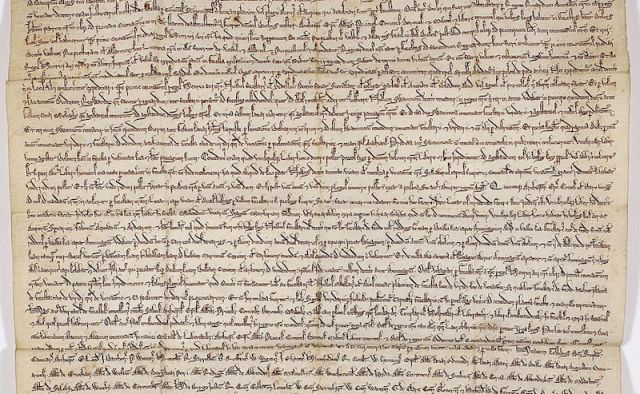
Forest-charter-1225-

This text, delivered in the State Rooms at the House of Commons on 7 November 2017, was first published in Counterpunch

Two winds have propelled me here to you, to this House of Commons.

One wind, a hurricane and diabalo, brought flood and fire threatening the destruction of petrochemial civilization, call it capitalism. Homelessness or prison accompany the wind from, Detroit, Michigan, to Houston, Texas, from Puerto Rico in the Caribbean to northern California at the Pacific edge.

A second gentler, softer wind, a zephyr, has renewed my spirit from the Lacandón jungle in Chiapas where the Zapatistas have vowed to protect the forest and reclaim the land, or from the Great Plains of the American continent where pipe lines of oil and gas endanger the pollution of land and the rivers. Encampments of indigenous people and their allies by prayer and by protest have become, in their words, “water protectors.”

Then, day before yesterday on Guy Fawkes Day, with some merry companions of the indigenous people of these islands, I visited Sherwood Forest and Laxton parish in Nottinghamshire. [continues here]

Posted in Uncategorized | Leave a comment

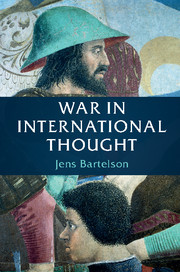
Jens Bartelson, War in International Thought – now out from Cambridge University Press

9781108419352Jens Bartelson, War in International Thought – now out from Cambridge University Press

As scholars and citizens, we are predisposed to think of war as a profoundly destructive activity that ideally should be abolished altogether. Yet before the twentieth century, war was widely understood as a productive force in human affairs that should be harnessed for the purposes of creating peace and order. Analyzing how the concept of war has been used in different contexts from the seventeenth to the late nineteenth century, Jens Bartelson addresses this transition by inquiring into the underlying and often unspoken assumptions about the nature of war, and how these have shaped our understanding of the modern political world and the role of war within it. He explores its functions in the process of state making and in the creation of the modern international system to bring the argument up to date to the present day, where war is now on the centre stage of world politics.

Posted in Uncategorized | Leave a comment

Stuart Hall bibliography – compiled by Nick Beech for the Stuart Hall Foundation

Stuart Hall bibliography – compiled by Nick Beech for the Stuart Hall Foundation

The Stuart Hall Foundation has published a bibliography of Stuart Hall’s published works, including all known political, literary, critical, theoretical, creative prose and poetry, interviews, and ephemera, published between 1953 — 2014. It also includes, for the first time, public radio and television broadcasts.

Presented in chronological order, the bibliography still has a few pieces of information missing. Minor errors may well have been made. The Foundation invites visitors to the site to contribute corrections if they are able.

This looks a really useful resource – thanks to Nick for sending me the link.

Posted in Stuart Hall, Uncategorized | 1 Comment

CFP 2nd International and Multidisciplinary Conference on Baudrillard Studies – Oxford, 5-7 September 2018

untitled.pngApplied Baudrillard: 2nd International and Multidisciplinary Conference on Baudrillard Studies – Oxford, 5-7 September 2018

Confirmed Keynote Speakers to date: Professor Mike Gane (Loughborough University)

This is the Call For Papers for the 2nd International Conference on Baudrillard Studies to be held in the United Kingdom (September 2018, Oxford Brookes University). The title and overarching theme of the conference is: “Applied Baudrillard”. We invite participants from all over the world from all disciplines and fields of knowledge whether within or outside of academia to contribute to this international and multidisciplinary conference. We welcome all contributions that engage with Jean Baudrillard’s (1929–2007) ideas and oeuvre. For this 2nd International Baudrillard Studies Conference we especially welcome contributions that pertain to the applicability of Baudrillard’s philosophy in established and emerging fields of enquiry across and beyond the humanities and social sciences.

Moving on from the 1st International Conference on Baudrillard Studies – “Engaging Baudrillard” held at Swansea University in 2006 – the ‘Applied Baudrillard’ conference at Oxford Brookes University seeks to capture the ever increasing significance and importance of Baudrillard’s writings and ideas across the world in numerous disciplines. In the first instance the conference organizers invite and welcome brief abstracts for presentations. Our intention is to organize received papers into themed panel sessions which will be decided by the organizers once abstracts have been received and reviewed.

Abstracts of no more than 200 words should be sent BEFORE 31st January 2018.

Please complete the Applied Baudrillard Abstract Submission Form.

Full details here

Posted in Conferences, jean baudrillard, Uncategorized | Leave a comment

Elizabeth Goodstein, Georg Simmel and the Disciplinary Imaginary

pid_26583Elizabeth Goodstein, Georg Simmel and the Disciplinary Imaginarypublished earlier this year with Stanford University Press. Thanks to David Beer for the alert.

An internationally famous philosopher and best-selling author during his lifetime, Georg Simmel has been marginalized in contemporary intellectual and cultural history. This neglect belies his pathbreaking role in revealing the theoretical significance of phenomena—including money, gender, urban life, and technology—that subsequently became established arenas of inquiry in cultural theory. It further ignores his philosophical impact on thinkers as diverse as Benjamin, Musil, and Heidegger. Integrating intellectual biography, philosophical interpretation, and a critical examination of the history of academic disciplines, this book restores Simmel to his rightful place as a major figure and challenges the frameworks through which his contributions to modern thought have been at once remembered and forgotten.

Posted in Uncategorized | Leave a comment

Rivers of the Anthropocene: new (Free!) book now available

New open access book from the Rivers of the Anthropocene Network

Jeremy Schmidt's avatarJeremy J Schmidt

This is a great looking new title, available here for free by the University of California Press. Regular UC Press site here.

9780520295025Rivers of the Anthropocene

Jason M. Kelly, Philip Scarpino , Helen Berry, James Syvitski , Michel Meybeck (Eds)

This exciting volume presents the work and research of the Rivers of the Anthropocene Network, an international collaborative group of scientists, social scientists, humanists, artists, policymakers, and community organizers working to produce innovative transdisciplinary research on global freshwater systems. In an attempt to bridge disciplinary divides, the essays in this volume address the challenge in studying the intersection of biophysical and human sociocultural systems in the age of the Anthropocene, a new geological epoch of humans’ own making. Featuring contributions from authors in a rich diversity of disciplines—from toxicology to archaeology to philosophy— this book is an excellent resource for students and scholars studying both freshwater systems and…

View original post 2 more words

Posted in Uncategorized | Leave a comment

Lisa Parks and Caren Kaplan (eds.), Life in the Age of Drone Warfare

978-0-8223-6973-8_prLisa Parks and Caren Kaplan (eds.), Life in the Age of Drone Warfare – now out with Duke University Press.

This volume’s contributors offer a new critical language through which to explore and assess the historical, juridical, geopolitical, and cultural dimensions of drone technology and warfare. They show how drones generate particular ways of visualizing the spaces and targets of war while acting as tools to exercise state power. Essays include discussions of the legal justifications of extrajudicial killings and how US drone strikes in the Horn of Africa impact life on the ground, as well as a personal narrative of a former drone operator. The contributors also explore drone warfare in relation to sovereignty, governance, and social difference; provide accounts of the relationships between drone technologies and modes of perception and mediation; and theorize drones’ relation to biopolitics, robotics, automation, and art. Interdisciplinary and timely, Life in the Age of Drone Warfare extends the critical study of drones while expanding the public discussion of one of our era’s most ubiquitous instruments of war.

Contributors. Peter Asaro, Brandon Wayne Bryant, Katherine Chandler, Jordan Crandall, Ricardo Dominguez, Derek Gregory, Inderpal Grewal, Lisa Hajjar, Caren Kaplan, Andrea Miller, Anjali Nath, Jeremy Packer, Lisa Parks, Joshua Reeves, Thomas Stubblefield, Madiha Tahir

Posted in Caren Kaplan, Derek Gregory, Uncategorized | Leave a comment

150 Years of Marx’s Capital, with David Harvey, Nancy Holmstrom, Ajay Singh Chaudhary

150 Years of Marx’s Capital, with David Harvey, Nancy Holmstrom, Ajay Singh Chaudhary (via Reading Marx’s Capital)

Posted in David Harvey, Karl Marx, Uncategorized | 2 Comments

The Early Foucault Update 14 – another month of slow, steady progress

Update 14It’s been a month since the last update on this book, and it’s been another one of slow, steady progress. As I said in the last update, before term began I made a list of smaller tasks which I thought I could accomplish in short work sessions, and I’ve now worked nearly through all of those. There were days where I maybe added only 50 or 100 words, but ticked something off the list; other days I was able to string a paragraph or two together with some quotes and it added a few hundred. It all moves the project forward.

I said a couple of updates ago that I was struggling to write about the things that Foucault actually did publish in the 1950s – the two short book chapters published in 1957 (but both written a few years before), the Binswanger introduction and Maladie mentale et personnalité. I decided to force myself to begin work on the chapters and sections on each came together fairly well. One of these chapters is very historical; the other an assessment of the contemporary state of the field. (I got a bit tied up with a textual issue with one of these pieces, on which I may post more in due course.) Writing a short section on each chapter took about a week, and then I moved to the 1954 book. This book is much better known in its 1962 revision, Maladie mentale et psychologie, which is the one translated into English. For the first half the two versions are almost, but not entirely, identical; the second halves are entirely distinct.

I’m working through the book chapter by chapter, taking detailed notes and sketching out how I might discuss this. For the first half it’s a three-way reference – to the 1954 version and then to the 1962 version and its English translation. Doing it this way means I should also spot all the changes made between editions, which I am noting in a separate file. They will, in time be used in my book’s final chapter which is currently called ‘Revising the Past’ and discusses how Foucault revisited both this book and how he made the abridgement of Histoire de la folie in 1964. James Bernauer has a very helpful discussion of the changes between 1954 and 1962 in his Michel Foucault’s Force of Flight book, but it’s not complete, and I want to do the analysis myself as well. I’m only three chapters in, so far, so it’s going to take at a few more weeks to finish this – hopefully by the end of term, but the second half will take more time as there is no English version to reference.

I also spent a bit of time on Foucault’s 1983 retrospective interview about his book Raymond Roussel, translated as Death and the Labyrinth. For The Early Foucault my interest is in what Foucault says about first reading Roussel in the late 1950s, rather than the book itself. There are differences between the English and French versions of this interview, which I discuss here (now also with a brief addendum).

As well as this slow, textual work, I’ve also been making some progress on more obscure references, often when I’m in London. The British Library is always my first port of call, but in recent weeks I’ve also been using the Wellcome Library, the LSE, UCL and Senate House. There is also a long list of things to check when I’m next in Paris. Inter-library loan sometimes works, but often not. One thing I was pleased to find was a memoir from one of Foucault’s colleagues in Uppsala. While his own work quite radically diverged from Foucault, and his assessment of Foucault’s research is scathing, he does provide some useful information, as well as describing Foucault’s ineptness at ice skating.


The previous updates on this project are here; and the previous books Foucault’s Last Decade and Foucault: The Birth of Power are both available from Polity. Several Foucault research resources such as bibliographies, short translations, textual comparisons and so on are available here. On the related Canguilhem project, see this page.

Posted in Michel Foucault, The Early Foucault, Uncategorized | 3 Comments