Preparing for your Viva: Collected Resources

This is a useful resource for those preparing for a viva.

Hannah Awcock's avatarTurbulent Isles

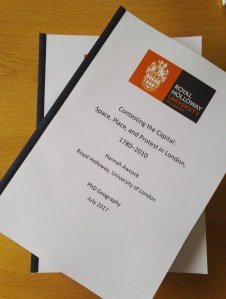
dav The printed copies of my thesis before I submitted them (Photo: Hannah Awcock)

A few weeks ago, I passed my PhD viva! As my viva got closer, I spoke to lots of people about theirs, and many had actually enjoyed the chance to talk in-depth about their work. I also trusted the work that I have put in over the last four years, and trusted that my supervisors would have told me if they thought my thesis would fail the viva. So whilst I was nervous about my viva, I was also quite looking forward to it. Whilst I wouldn’t go so far as to say I enjoyed the viva, I definitely would not say it was a negative experience, and it definitely wasn’t the terrifying occasion that some people expect it to be.

I think part of the reason I wasn’t too nervous before and during my viva was…

View original post 626 more words

Posted in Uncategorized | Leave a comment

Jeremy Bentham’s preserved head goes back on public display

Benthams-Head-1It’s fairly well known that Jeremy Bentham’s body is preserved in a glass case at University College London. But it’s less well known that his head was also preserved, and was brought out of storage every so often to be checked. Now that head is also going on display in a new exhibition on ‘Curating Heads’ in the Octagon Gallery, Wilkins Building at UCL. News story here and here. Thanks to Justin Choi for the link.

Posted in Jeremy Bentham, Uncategorized | Leave a comment

Political Philosophy meets Politics, Bristol, 30 October 2017

Political Philosophy meets Politics, Bristol, 30 October 2017, 9am-5pm

What happens when political philosophers get involved in politics? The only way to find out is to ask them; to have them tell their story, and share whatever lessons they’ve learnt with those who would like to do similar things in the future. As a result, we’re putting on a one-day event here in Bristol during which a select few political philosophers, with real experience of ‘real politics’, address and interact with an audience made up of both early-career political philosophers/theorists from around the country and Bristol-based students, staff, and members of the general public.

This event will be a chance to hear at length from our keynote speakers as regards their academic and political experience, as well as a chance to ask questions and interact with them and other interested attendees throughout the day. Early-career political theorists/philosophers based in the UK are very likely to have their travel expenses covered to attend this event (PhD students and those within a few years of their first appointment). In order to secure this funding, and to check that it is still available at the time of your enquiry, please book a ticket below and then email Jonathan.Floyd@Bristol.ac.uk. Food and drink will be provided for everyone attending throughout the day.

Keynote speakers are as follows:

Professor Philip Pettit (ANU/Princeton)

Professor/Baroness Onora O’Neill (University of Cambridge/The House of Lords)

Professor Tariq Modood (University of Bristol)

Professor Karma Nabulsi (University of Oxford)

Professor Tony Wright (UCL)

For more info, see here

Posted in Uncategorized | Leave a comment

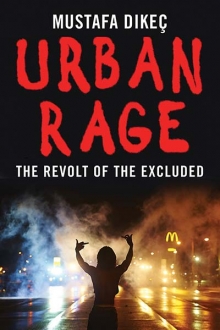
Mustafa Dikeç, Urban Rage: The Revolt of the Excluded forthcoming with Yale University Press.

e56a2cbd36469c41ad431c09caf53763Mustafa Dikeç, Urban Rage: The Revolt of the Excluded forthcoming with Yale University Press.

A timely and incisive examination of contemporary urban unrest that explains why riots will continue until citizens are equally treated and politically included

In the past few decades, urban riots have erupted in democracies across the world. While high profile politicians often react by condemning protestors’ actions and passing crackdown measures, urban studies professor Mustafa Dikeç shows how these revolts are in fact rooted in exclusions and genuine grievances which our democracies are failing to address. In this eye-opening study, he argues that global revolts may be sparked by a particular police or government action but nonetheless are expressions of much longer and deep seated rage accumulated through hardship and injustices that have become routine.

Increasingly recognized as an expert on urban unrest, Dikeç examines urban revolts in the United States, United Kingdom, France, Sweden, Greece, and Turkey and, in a sweeping and engaging account, makes it clear that change is only possible if we address the failures of democratic systems and rethink the established practices of policing and political decision-making.

Thanks to Derek Gregory for the link.

Posted in Uncategorized, urban/urbanisation | 1 Comment

Vincent Blok, Ernst Jünger’s Philosophy of Technology: Heidegger and the Poetics of the Anthropocene

9781138737594Vincent Blok, Ernst Jünger’s Philosophy of Technology: Heidegger and the Poetics of the Anthropocene – looks interesting, but unfortunately another Routledge book at a prohibitive price.

This book examines the work of Ernst Jünger and its effect on the development of Martin Heidegger’s influential philosophy of technology. Vincent Blok offers a unique treatment of Jünger’s philosophy and his conception of the age of technology, in which both world and man appear in terms of their functionality and efficiency. The primary objective of Jünger’s novels and essays is to make the transition from the totally mobilized world of the 20th century toward a world in which a new type of man represents the gestalt of the worker and is responsive to this new age. Blok proceeds to demonstrate Jünger’s influence on Heidegger’s analysis of the technological age in his later work, as well as Heidegger’s conceptions of will, work and gestalt at the beginning of the 1930s. At the same time, Blok evaluates Heidegger’s criticism of Jünger and provides a novel interpretation of the Jünger-Heidegger connection: that Jünger’s work in fact testifies to a transformation of our relationship to language and conceptualizes the future in terms of the Anthropocene. This book, which arrives alongside several new English-language translations of Jünger’s work, will interest scholars of 20th-century continental philosophy, Heidegger, and the history of philosophy of technology.

Update: there a very critical review at NDPR by Robert P. Crease.

Posted in Martin Heidegger, Uncategorized | Leave a comment

You Should Learn Descriptive Bibliography

A fascinating post about descriptive bibliography – something else I’ve been thinking about with the Shakespeare work, and the use of archives and rare book rooms.

Posted in Uncategorized | Leave a comment

the media of thinking and arguing: paper, dust, discs and the cloud

Some interesting reflections from Gillian Rose about notes and forms of archiving. This is something I think about quite a bit, well aware that had Foucault been a generation younger, the kind of work I’m doing might not be possible in nearly the same way…

profgillian's avatarvisual/method/culture

I started a new job on 1 October as Professor of Human Geography at the University of Oxford, so over the summer I cleared out my office at The Open University. I’ve been at The OU for 17 years, so there was a lot of stuff to clear. And a lot of things to reflect on. One of which was the partiality of the shift in my scholarship media from paper to digital.

img_1781.jpg

There were piles of handwritten notes on books and papers in my office, some filed alphabetically by author, and a lot in piles depending on the project they’d been read for. Some lovely juxtapositions emerged as I began to empty the filing cabinets, probably possible only in the freedom of PhD years and in that most eclectic of disciplines, mine, geography.

img_1790-e1506880686516.jpg

Some of these handwritten notes went back to my PhD and possibly beyond: faded and yellowing…

View original post 442 more words

Posted in Uncategorized | Leave a comment

Adam David Morton, The Architecture of ‘Passive Revolution’: Society, State and Space in Modern Mexico

Adam David Morton, ‘The Architecture of ‘Passive Revolution’: Society, State and Space in Modern Mexico‘, Journal of Latin American Studies (requires subscription). Adam discusses the piece at the Progress in Political Economy blog.

This article analyses the political economy of Henri Lefebvre’s concept of ‘state space’ with specific attention directed towards the Monument to the Revolution in Mexico City, completed in 1938. The conditions of modernity can be generally related to the spatial ordering of urban landscapes within capital cities conjoining the specifics of national identity with imitative processes. Antonio Gramsci captured such sentiments through his understanding of the condition of ‘passive revolution’. The key contribution of this article is to draw attention to forms of everyday passive revolution, recognising both cosmopolitan and vernacular aspects of modern architecture in relation to the Monument to the Revolution. A focus on the Monument to the Revolution thus reveals specific spatial practices of everyday passive revolution relevant to the codification of architecture and the political economy of modern state formation in Mexico. These issues are revealed, literally, as vital expressions in the architecture of everyday passive revolution in modern Mexico.

Posted in Adam David Morton, Henri Lefebvre, Uncategorized | Leave a comment

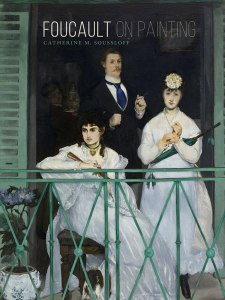
Catherine M. Soussloff, Foucault on Painting – forthcoming in November 2017 with University of Minnesota Press

imageCatherine M. Soussloff, Foucault on Painting – forthcoming in November 2017 with University of Minnesota Press.

A timely exploration of Foucault’s art historical and philosophical engagement with painting as knowledge

Catherine M. Soussloff argues that Michel Foucault’s sustained engagement with European art history critically addresses present concerns about the mediated nature of the image in the digital age. She explores the meaning of painting for Foucault’s philosophy, and for contemporary art theory, proposing a new relevance for a Foucauldian view of ethics and the pleasures and predicaments of contemporary existence.

Catherine Soussloff is certainly one of the most intellectually intelligent and reflective art historians I can think of. Foucault on Painting is a clear, deeply thoughtful, and perfectly written contribution to the important field of intersect between art and philosophy.

—James Rubin, Stony Brook University


Posted in Michel Foucault, Uncategorized | 3 Comments

Shannon Mattern, Mapping’s Intelligent Agents

A very interesting piece in Places journal – Shannon Mattern, “Mapping’s Intelligent Agents“. Thanks to Jenny Edkins for the link.

Self-driving cars have sparked a “billion dollar war over maps,” but the cars are the most boring thing about it. How do machine intelligences read and write the world? And what Other intelligences deserve our attention?

Posted in Uncategorized | 1 Comment