Christopher Watkin, French Philosophy Today now in paperback

9781474425834_1.jpgChristopher Watkin, French Philosophy Today: New Figures of the Human in Badiou, Meillassoux, Malabou, Serres and Latour is now available in paperback.

Contemporary French philosophy is laying fresh claim to the human. Through a series of independent, simultaneous initiatives, arising in the writing of diverse current French thinkers, the figured of the human is being transformed and reworked.

Christopher Watkin draws out both the promises and perils inherent in these attempts to rethink humanity’s relation to ‘nature’ and ‘culture’, to the objects that surround us, to the possibility of social and political change, to ecology and even to our own brains. This comparative assessment makes visible for the first time one of the most important trends in French thought today.

Posted in Alain Badiou, Catherine Malabou, Quentin Meillassoux, Uncategorized | Leave a comment

Emilio de Ípola, Althusser, The Infinite Farewell forthcoming from Duke University Press

Emilio de Ípola, Althusser, The Infinite Farewell forthcoming from Duke University Press. Few details as yet, except for a glowing review from Warren Montag.

“Emilio de Ípola’s Althusser: the Infinite Farewell is one of the most important books ever written on Althusser, not least because it offers a reading of Althusser from a perspective that is neither European nor North American. De Ípola’s account brings structuralism to life and demonstrates the relevance of structuralism’s questions and problems to our own time. De Ípola suggests that, seen from Latin America, reading and understanding Althusser is not a return to the past, but a confrontation with the most profound contradictions of the present.” — Warren Montag, author of, Althusser and His Contemporaries: Philosophy’s Perpetual War

Posted in Uncategorized | Leave a comment

Laurence Publicover, Dramatic Geography – the latest volume in the Early Modern Literary Geographies series from OUP

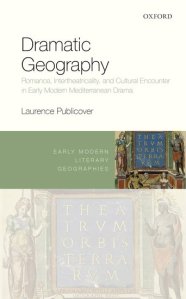
9780198806813.jpgLaurence Publicover, Dramatic Geography: Romance, Intertheatricality, and Cultural Encounter in Early Modern Mediterranean Drama – the latest volume in the Early Modern Literary Geographies series from OUP.

Focusing on early modern plays which stage encounters between peoples of different cultures, this book asks how a sense of geographical location was created in early modern theatres that featured minimal scenery. While previous studies have stressed these plays’ connections to a historical Mediterranean in which England was increasingly involved, this volume demonstrates how their dramatic geography was shaped through a literary and theatrical heritage.

Reading canonical plays including The Merchant of Venice, The Jew of Malta, and The Tempest alongside lesser-known dramas such as Soliman and Perseda, Guy of Warwick, and The Travels of the Three English Brothers, Dramatic Geography illustrates how early modern dramatists staging foreign worlds drew upon a romance tradition dating back to the medieval period, and how they responded to one another’s plays to create an ‘intertheatrical geography’. These strategies shape the plays’ wider meanings in important ways, and could only have operated within the theatrical environment peculiar to early modern London: one in which playwrights worked in close proximity, in one instance perhaps even living together while composing Mediterranean dramas, and one where they could expect audiences to respond to subtle generic and intertextual negotiations. In reassessing this group of plays, Laurence Publicover brings into conversation scholarship on theatre history, cultural encounter, and literary geography; the book also contributes to current debates in early modern studies regarding the nature of dramatic authorship, the relationship between genre and history, and the continuities that run between the fourteenth and seventeenth centuries.

Posted in Uncategorized | Leave a comment

A guide to close reading – Marika Rose at An und für sich

A guide to close reading – Marika Rose at An und für sich

I’m planning to give my first year undergraduates a worksheet designed to help them engage with the theological and philosophical texts we study during our course. I’ve noticed that a lot of my students struggle to find critical ways into the texts, and I’m hoping that giving them some fairly generic questions to work through will help them find ways in. I’m planning to talk through the list of questions when I hand them out then use them as a basis for some of our seminar discussions over the rest of the semester so that the students can get a handle on how to use them.

Here’s the list of questions I’ve drafted so far; I’d really appreciate any comments/suggestions/wisdom gleaned from other people’s teaching experience, and of course you’re welcome to appropriate these for yourself if they look like they’d help you in your own teaching: [continues here]


Posted in Uncategorized | 2 Comments

Clarence Glacken’s ‘Traces on the Rhodian Shore’ at 50: Summaries and reflections

Philip Conway discusses the recent session on Clarence Glacken’s ‘Traces on the Rhodian Shore’ at 50 held at the RGS-IBG conference. He also shares an archive interview between Glacken and Allan Pred.

Posted in Clarence J. Glacken, Uncategorized | Leave a comment

Michel Foucault’s acid trip in Death Valley: Interview with Simeon Wade with great archival photos (updated)

Updated 14 November 2017: I’ve just heard that Simeon Wade died in October, making this interview even more important. There is a brief obituary here. My condolences to Wade’s family.

Boom California has just published an interview with Simeon Wade, conducted by Heather Dundas. If you’ve read the Foucault biographies, you’ll probably know about the acid trip in Death Valley story. James Miller makes a great deal of this, having talked to Simeon Wade who, with his partner Michael Stoneman, took Foucault on the journey. Wade was the originator of the ‘Chez Foucault’ fanzine which I’ve previously discussed and shared on this site.

The interview with Wade is fascinating, though some of its claims need to be taken with caution. The visit took place in June 1975, four months after Surveiller et punir appeared in French, and eighteen months before History of Sexuality volume I was published. That the trip had a profound effect on Foucault may well be true, but that it led him to criticise Bentham for the first time is impossible. And if it had such an impact on his thinking for the History of Sexuality, then why did he continue to work on the book for over a year, along with outlining the initial plan which, according to Wade, the trip made him discard?

The piece is open access and well worth a read. I was asked to look at it before publication, and the editors of Boom have used some of my comments in the notes. But what I didn’t see until its publication are the photos. Well worth a look. That jacket!

Another picture of Foucault with Wade and Stoneman was used for a feature in Time magazine in 1981. It can be seen here. Wade is also the author of an unpublished “121 page typescript”, ‘Foucault in California’, which recounts the trip in Death Valley in detail. Miller used this for his biography.

[Update 2019: the memoir, Foucault in California, has now been published]

Posted in Michel Foucault | 4 Comments

Foucault’s Punitive Society and my two Foucault books reviewed in 3am Magazine by Peter Gratton

140304_OUT_MichelFoucault.jpg.CROP_.promo-mediumlarge.jpgFoucault’s The Punitive Society lecture course and my Foucault’s Last Decade and Foucault: The Birth of Power are reviewed in 3am Magazine by Peter Gratton. It’s a long, thoughtful and generous review. As well as saying many insightful things about the books reviewed, it’s also a good meditation on Foucault’s enduring impact today. Many thanks to Peter for writing it.

Posted in Foucault's Last Decade, Foucault: The Birth of Power, Michel Foucault, Peter Gratton, Uncategorized | 1 Comment

5 Critical Theory books from August 2017

august-2017-critical-theory-releases-672x372.png5 Critical Theory books from August 2017 – a useful roundup of Agamben, Kleinberg, Morton, Johnson and Lubin, and Evangelou.
Posted in Giorgio Agamben, Timothy Morton | Leave a comment

Le foucaldien. Open access journal (2017)

New issue of Le foucaldien now available

Clare O'Farrell's avatarFoucault News

Le foucaldien. Open access journal along Foucauldian lines

Volume 3 – Issue 1 – 2017

The peer-reviewed open access journal Le foucaldien publishes interdisciplinary research along the lines of the philosopher and historian Michel Foucault (1926–1984) in English, German, and French. The Internet Encyclopedia of Philosophy credits Foucault with being “the author most frequently cited in the humanities” at the beginning of the 21st century, but his concepts are challenged in emerging fields such as media studies, digital humanities, post-colonialism, new materialism, and science and technology studies. Hence the main focus of Le foucaldien lies on updating and operationalizing Foucauldian approaches in preferably plain language.

View original post

Posted in Uncategorized | Leave a comment

Imagining a territory. Constructions and representations of late medieval Brabant

An outline of an intriguing new research project on the late medieval Duchy of Brabant.

Mario Damen's avatarImagined territories

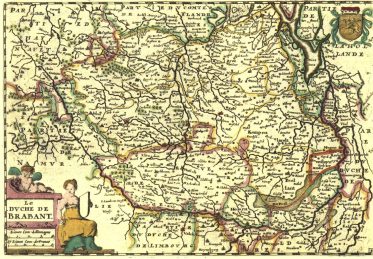
This research-project analyses how the interaction between prince, nobles and urban elites influenced the construction, perception, and representation of a territory. The test case will be the late medieval Duchy of Brabant, which still has historical and territorial significance for many people in present-day Belgium and the Netherlands. To underscore the fluidity and multiplicity of the concept of territory, this project sets out to disentangle the divergent, though sometimes overlapping, conceptions of what exactly Brabant was (or should be) in the eyes of different political actors, in this time before the availability of reliable scale maps. To answer the main research question the project takes a twofold approach. On the one hand, we will define ducal, noble, and urban conceptions of cropped-brabant1.jpgBrabant mainly through administrative sources, particularly those of the fourteenth century that reflect a turning point in the capturing of territory. On the other hand, we will explicate how…

View original post 105 more words

Posted in Uncategorized | Leave a comment