At the turn of the twentieth century, depictions of the colonized world were prevalent throughout the German metropole. Tobacco advertisements catered to the erotic gaze of imperial enthusiasts with images of Ovaherero girls, and youth magazines allowed children to escape into “exotic domains” where their imaginations could wander freely. While racist beliefs framed such narratives, the abundance of colonial imaginaries nevertheless compelled German citizens and settlers to contemplate the world beyond Europe as a part of their daily lives.
An Imperial Homeland reorients our understanding of the relationship between imperial Germany and its empire in Southwest Africa (present-day Namibia). Colonialism had an especially significant effect on shared interpretations of the Heimat (home/homeland) ideal, a historically elusive perception that conveyed among Germans a sense of place through national peculiarities and local landmarks. Focusing on colonial encounters that took place between 1842 and 1915, Adam A. Blackler reveals how Africans confronted foreign rule and altered German national identity. As Blackler shows, once the façade of imperial fantasy gave way to colonial reality, German metropolitans and white settlers increasingly sought to fortify their presence in Africa using juridical and physical acts of violence, culminating in the first genocide of the twentieth century.
Grounded in extensive archival research, An Imperial Homeland enriches our understanding of German identity, allowing us to see how a distant colony with diverse ecologies, peoples, and social dynamics grew into an extension of German memory and tradition. It will be of interest to German Studies scholars, particularly those interested in colonial Africa.
This review was written and accepted well over a year ago, and it seems crazy to me how long journals let reviews sit in their queue. It’s subscription only, but I’m happy to share if you contact me.
After centuries of contemplating utopias, late nineteenth- and early twentieth-century writers began to warn of dystopian futures. Yet these fears extended beyond the canonical texts of dystopian fiction into postwar discourses on totalitarianism, mass society, and technology, as well as subsequent political theories of freedom and domination. Fear the Future demonstrates the centrality of dystopian thinking to twentieth century political thought, showing the pervasiveness of dystopian images, themes, and anxieties.
Offering a novel reading of major themes and thinkers, Fear the Futureexplores visions of the future from literary figures such as Yevgeny Zamyatin, Aldous Huxley, and George Orwell; political theorists such as Max Weber, Hannah Arendt, Herbert Marcuse, Jürgen Habermas, and Michel Foucault; and mid-century social scientists such as Erich Fromm, Max Horkheimer, Theodor Adorno, David Reisman, C. Wright Mills, and Jacques Ellul. It offers a comparative analysis of distinct intellectual and literary traditions, including modern utopianism and anti-utopianism, midcentury social science, Frankfurt School critical theory, and continental political philosophy. With detailed case studies of key thinkers from the Enlightenment to the late twentieth century, the book synthesizes secondary literature and research from a range of disciplinary areas, including in political theory, intellectual history, literary studies, and utopian studies. This wide-ranging reconstruction shows that while dystopian thinking has illustrated the dangers of domination and dehumanization, it has also illuminated new possibilities for freedom.
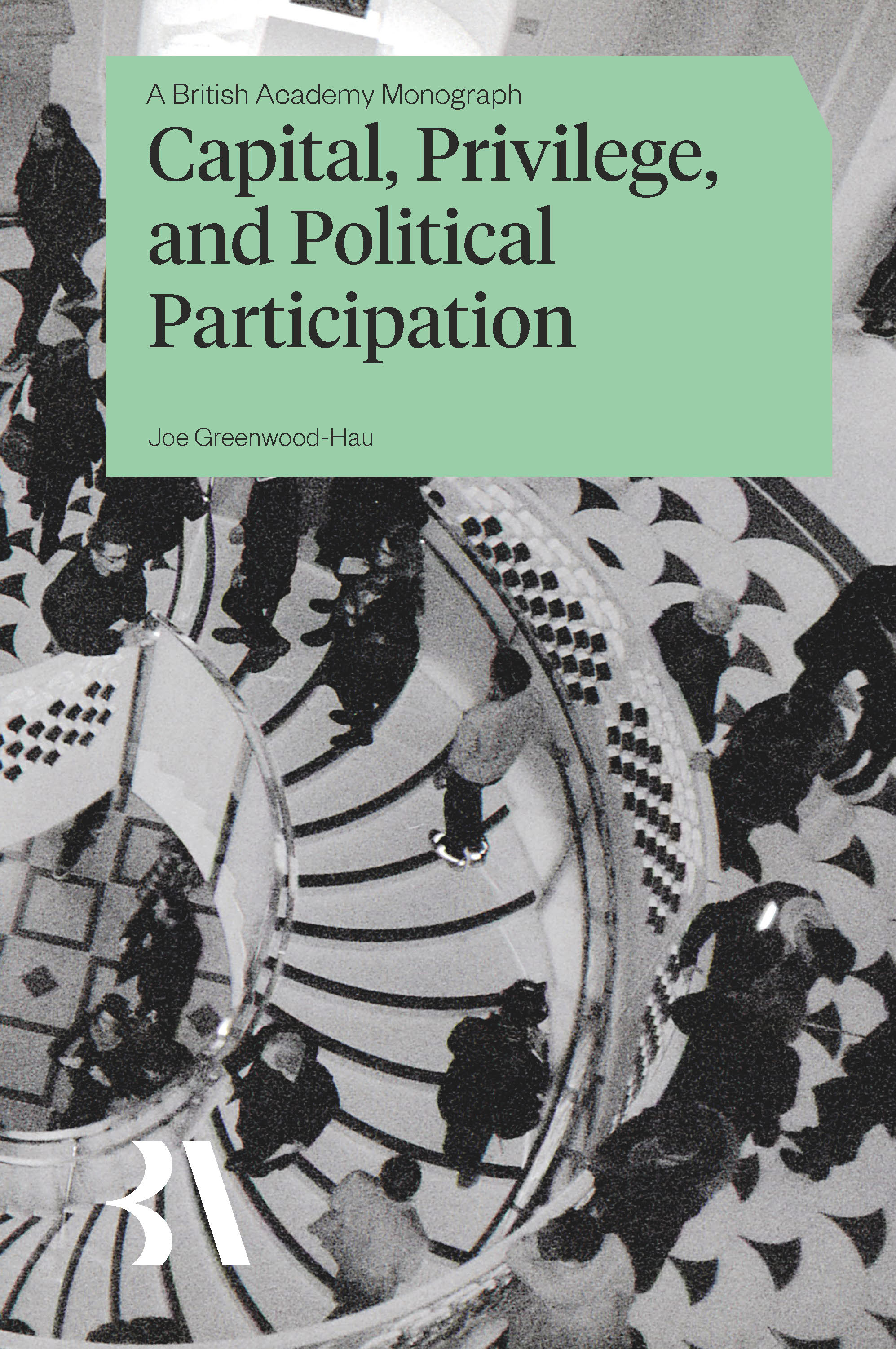
Capital, Privilege, and Political Participation examines how privilege and people’s perceptions of it relate to their involvement in politics. It treats people’s stocks of economic, social and cultural capital as indicators of privilege as well as resources that help them engage with politics. It also argues that how people perceive privilege in society, their own lives and politics matters for their political participation. Using survey, interview and focus group evidence, the book shows that capital and perceptions of privilege do, indeed, relate to involvement in a host of political activities. Whilst political participation is a normal if not daily feature of many people’s lives, having more economic and cultural capital is associated with being more politically active. Perceiving the role of privilege in society is also linked to higher levels of participation, whilst perceiving privilege in politics is unsurprisingly associated with being less politically active. Questions abound about how, if at all, capital and perceptions of privilege are causally related to political participation, but the book concludes that getting involved in politics is a distinguished activity. Efforts to tackle these inequalities in participation should, according to the people who participated in the research, centre on outreach activities by political institutions, more extensive and consistent citizenship education, and the active opening up of politics to the population.
This illuminating book offers a new perspective on social science inquiry into the spatial dimensions of societal well-being; addressing the key question of who gets what, and where.
Leading scholars Linda M. Lobao and Gregory Hooks adopt an organizing framework that speaks to the concept of spatial inequality, how it forms a lens on societal disparities, and how it gives rise to work with underlying commonalities across different social science disciplines. With this scaffolding, the authors consider spatial inequality across spatial scales, places, and populations, including the subnational scale, so often missing in inequality research. Illustrative cases center on poverty, public service provision and austerity policies, environmental justice, and war and conflict. The book concludes by advancing an integrative social science agenda to guide future emancipatory research on inequality.
Rethinking Spatial Inequality is a vital resource for students and scholars of inequality across the social sciences including sociology, human geography, development, regional, urban, and rural studies, demography, and political science. Policymakers and practitioners in public service provision will also benefit from this perceptive book.
Between 2011 and 2022 I wrote eleven pieces for the much-missed Berfrois site. Most were reviews of recent books. Although the site closed to new submissions in 2022, I thought the archive would be preserved. I was therefore disappointed to discover recently that a link to one of my pieces was broken, and on checking I found that the whole archive has gone, though much is archived at the Wayback Machine.
I think these are the pieces I wrote for the site. I’ve posted most here, and when I can will complete uploading them and link to them from this page. I can’t immediately find the second and third, written when I was at Durham, though they may be on an older archive drive. The Foucault reviews were important in the process of working for what became my series of books on him; others relate to different publications.
Aside from my own work, I’m struck by the ephemeral nature of digital-only material like this. In my own attempts to reconstruct the work of various theorists, and sometimes the histories of journals or publishing ventures, I’ve often sought out some fairly hard-to-find texts. But things in print, somewhere, usually turn up eventually – even if it can require a lot of leg-work between different libraries or patient inter-library loan staff. But this digital record, even quite recent, just seems to have gone. I’m not sure what is on the Wayback Machine is everything. Collectively we need to get better at preserving records like this…
For more pieces in a related vein, see my series of ‘Sunday Histories‘ – one posted every Sunday so far in 2025
Integrating political, social, and technical dimensions of territorial governance, this timely Handbook provides insights into the topic from scholars across urban and regional planning, policy, geography and economics. It offers a comprehensive exploration of territorial governance systems across different theoretical perspectives, themes and geographies, from Europe to Asia, Africa, and beyond.
The Handbook addresses the ambiguities of the concept from different points of view and identifies the challenges of transferring territorial governance, exploring the topical concept of territorial meta-governance. Leading experts discuss territorial governance in relation to concrete spatial policy issues, including housing and transportation policies, as well as broader aspects of human existence, such as climate change and planetary commons. Chapters examine the roles of institutions, jurisdictions, infrastructures and urban properties in territorial governance, shedding light on multi-level and multi-actor governance.
The Handbook of Territorial Governance is an essential guide for students and academics in planning, human geography, governance and urban studies. Its valuable insights will be beneficial to practitioners in urban and regional planning and governance, as well as policymakers, government officials and environmental scientists.
Postwar French writers were at the vanguard of global literary innovation—from the experimental minimalism of the Nouveau Roman to the literary games of the OuLiPo—but less often appreciated is the extent to which they worked closely with US editors and translators, published actively with American presses, and often theorized transatlantic connections within their work.
In this exciting new work, Sara Kippur proposes a new French literary history that traces the deep connections between postwar literary experimentalism and the New York publishing industry, compellingly arguing that US-based editors, publishers, producers, professors, and translators crucially intervened to shape French literature. While Kippur attends closely to well-known writers such as Marguerite Duras, Samuel Beckett, Eugène Ionesco, Georges Perec, and Alain Robbe-Grillet, she also amplifies the voices of those who have been less visible, though no less relevant, including women whose contributions have not received proper credit but who helped to foster a sense of new possibilities for twentieth-century French writing. With these untold histories, stitched together in this book through new archival discoveries from special collections and personal archives on both sides of the Atlantic, Kippur begins to dismantle rigid notions of canonicity, authorship, and national literature.
Now it is almost automatic: a new book by Foucault in French is translated within a couple of years. The Collège de France courses, the Vrin series of critical editions of lecture courses and now other material, the fourth volume of the History of Sexuality,the pre-Collège de France courses and works – all have followed this pattern. All of these are, of course, posthumous. In the second half of his career, the pattern was similar –Discipline and Punish and the three volumes of the History of Sexuality were all translated quite quickly. Even the studies of Herculine Barbin and Pierre Rivière were translated in Foucault’s lifetime (1980 and 1982). His 1982 collaborative book with Arlette Farge is a key exception, since the English Disorderly Familiesonly appeared in 2016.
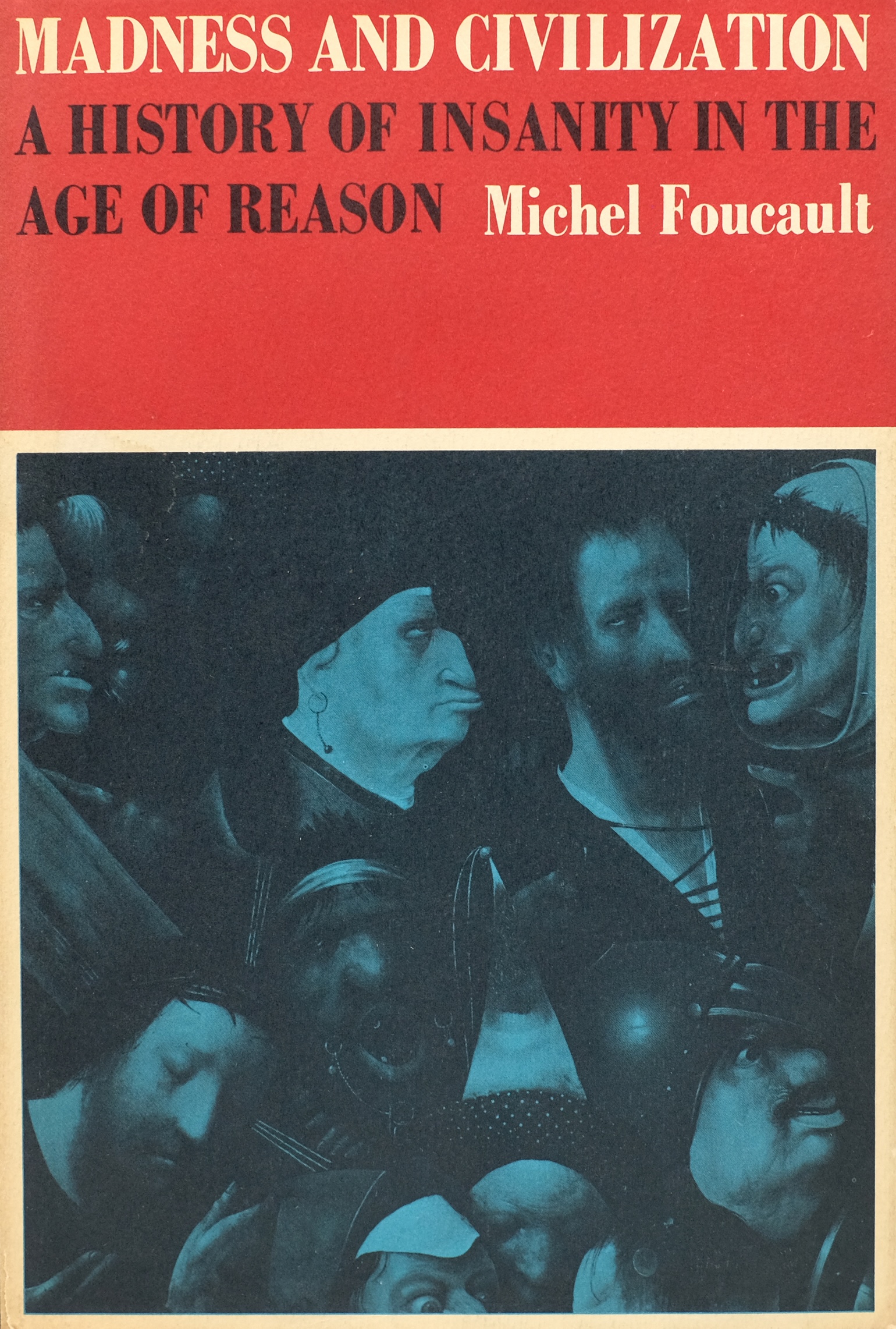
The beginning of his career was quite different. Folie et déraison: Histoire de la folie à l’âge classique was published in 1961, but a complete English translation as History of Madness did not appear until 2005. The abridged version from 1964 was translated in 1965 as Madness and Civilization– the quickest of Foucault’s early works. (On the different editions, see here.) Naissance de la Clinique was published in 1963 and in a second edition in 1972. The 1973 English translation The Birth of the Clinicis an erratic mix of material from both editions, with a new translation of the 1972 text forthcoming, with an apparatus comparing it to the first edition. Raymond Roussel was published in 1963, but in English as Death and the Labyrinth only in 1986, a couple of years after Foucault’s death. Les Mots et les choses took four years before it was translated as The Order of Things (1966 to 1970); L’Archéologie du savoir was translated three years later as The Archaeology of Knowledge(1969 to 1972). Most of these early books appeared with Pantheon in the USA and Tavistock in the UK, and are now published by Penguin Random House and Routledge.
Archives in New York give a little insight into the discussions of the translations of Foucault’s first few works. The main one I’m drawing on here is the Georges Borchardt literary agency, held at Columbia University. Here are some of the things that this archive reveals, also adding information from a few other sources I know about.
Foucault’s first major book was his principal doctoral thesis Folie et déraison: Histoire de la folie à l’âge classique. The literary agency did try to get Folie et déraison translated, but this was a challenge for a 700-page book by a relatively unknown author. The front-page review of Folie et déraison in The Times Literary Supplement in October 1961 would have helped raise his profile. That review is anonymous, though I’ve seen it credited to Richard Howard. I did ask him about this, but he said it was not by him. Howard went on to translate the abridged version of Histoire de la folie as Madness and Civilization, but he was also a reader of the longer text when it was being considered for translation by George Braziller Inc. in February 1962. His view was that it was more suited for a University Press. Macmillan, The Free Press of Glencoe, McGraw-Hill, Alfred A. Knopf, Inc., and Basic Books also considered the full original book, but all declined. In November 1961 Gerald Gross turned down Histoire de la folie as “a bit special for Pantheon”.
Pantheon were much more enthusiastic about doing a translation of the abridged French version. Foucault made the abridgement himself, and the changes are quite interesting (see The Early Foucault, pp. 185-88.) Pantheon asked if Foucault wanted to make any changes to the text for the translation, and the only one passed on was a correction of a mention of an English king, which I’ve written about here. The English Madness and Civilization does include a chapter not in the abridged French edition, “Passion and Delirium”, but I’ve not seen when or by whom that decision was made. Pantheon editor André Schiffrin has a slightly different story where he says Histoire de la folie was something he was keen to translate after finding it in a Paris bookstore (The Business of Books, p. 48). In the longer account in his memoir A Political Education, he adds that he would meet with Foucault in Paris once a year to discuss his forthcoming works, which Pantheon would translate. He also says that once Foucault was being invited to speak in the United States they would meet in New York too, and it was there that he introduced Foucault to Susan Sontag (pp. 201-2). (Edmund White recalls though that Foucault didn’t like socialising with Sontag.) Schiffrin also admits it was his fault Histoire de la folie was “needlessly retitled Madness and Civilization”. This book appeared with Tavistock Publications in the UK and British Commonwealth a few years later through the interest of R.D. Laing. (His very brief reader report is in the frontmatter of the Routledge translation of History of Madness.) In her memories of working for ‘Tavipubs’, Diana Burfield recalls introducing Schiffrin to Laing “in a NW1 bistro” (p. 220 n. 13). She says that Tavistock did a lot of co-publications with US presses, making books viable through distribution deals (p. 209), but that some were slow to sell:
Editors were increasingly compelled to justify to semi-literate executives their choice of titles that did not return an immediate profit. For example, since only 300 copies of one of Foucault’s works were sold in its first year, it was suggested that the remaining sheets should be pulped. Much time was wasted explaining that difficult, innovative books do not make an immediate impact and that the 300 copies were bought by influential heads of department who would generate a steady readership. Forty years later this book and others by the same author are still in print (p. 220 n. 21).
After Madness and Civilization in 1965, I think the next translation of Foucault was in 1966, when the second chapter of Les Mots et les choses was excerpted to appear in the journal Diogène and was published in English as “The Prose of the World” in the parallel-journal Diogenes, translated by Victor Velan. Diogène/Diogenes was edited by Roger Caillois and supported by UNESCO’s International Council for Philosophy and Human Sciences. Caillois had invited Foucault to contribute personally. Reports differ as to whether Caillois read the book for Gallimard, or was introduced to Foucault’s work by Dumézil. Both may well be true. Caillois certainly did editorial work for Gallimard, and Dumézil called him “the most brilliant of my students”. A 1965 letter from Foucault to Caillois agreeing to an excerpt, and recognising their “shared Dumézilian ancestry”, was published in 1981 (for more details, see my The Archaeology of Foucault, pp. 70-71). A different translation of this chapter was used when the English version of the book itself was published.
I’ve written before about the peculiarity of not naming the translator of The Order of Things. Like most people, I think, I’d been content to follow Alan Sheridan’s claim – in his book on Foucault and on his website – that he was the translator. But then I found a letter in the Zone books archives, also at Columbia University, in which Derek Coltman claims that he translated it. I discuss that, and the different bits of evidence more fully in that earlier post. In the Borchardt archives there is a June 1966 letter reporting that Sontag was encouraging US presses to consider Les Mots et les choses, which helps support Coltman’s claim that she and Howard persuaded him to translate it. (It also indicates that Sontag knew Foucault’s work before Schiffrin introduced them to each other.) Although Tavistock and Pantheon published this translation, whoever translated it, other presses were interested. The Archaeology of Knowledge was also translated by Pantheon, who had an option after doing The Order of Things, though they wanted to see how that book had done first, which might explain part of the time lag between editions. Another factor is that all these books seem to have been discussed for translation after the appearance of the French edition, rather than the rights being discussed when the book was in production. That in itself helps explain some of the time gaps between French and English.
The early book which I’ve not been able to find out about from the Borchardt archive is Naissance de la clinique, which is a shame given my involvement in the new edition. I suspect this is because it was published by Presses Universitaires de France (PUF), rather than Plon (Folie et déraison) or Gallimard (almost all the others). I don’t know if PUF used a different agency to negotiate foreign rights, but it seems likely. I’ve found no evidence his shorter 1954 book Maladie mentale et personnalité, also with PUF, was discussed at the time. It was a book Foucault tried to disown, but unable to prevent its republication he agreed to revise it in 1962 as Maladie mentale et psychologie. The changes are discussed in detail in The Early Foucault (pp. 174-84) and outlined in full here. That revision was translated after Foucault’s death as Mental Illness and Psychology (now republished as the confusingly titled Madness: The Invention of an Idea). University of California Press had wanted to translate the 1954 version, but were prevented by PUF. As I discuss in The Early Foucault, p. 184, their officious view on this, claiming to be defending the “thought and memory” of Foucault, is at odds with their own republication of a book Foucault wanted to bury.
Two other little curiosities from the Borchardt archive. One is that a translation of Raymond Roussel was discussed in 1975, with Donald J. McDonell as a translator. (McDonell wrote a piece on Foucault in 1976, published in the Canadian Journal of Philosophyin 1977, at a time when articles on Foucault were still uncommon.) A copy of Foucault’s letter to McDonell supporting him as its translator is in the Borchardt archive. I don’t know what prevented this, since the book wasn’t actually translated until the mid-1980s, by Charles Ruas. Ruas interviewed Foucault about that book in 1983, which is included in the English translation, and I’ve discussed the differences between the French and English versions of the interview before. Ruas himself replied to that post clarifying why they are different. What this means is that there isn’t an English translation of the Dits et écrits text; nor a French version of the English.
Another curiosity is that James Harkness translated Foucault’s little 1973 book on René Magritte, Ceci n’est pas une pipe, before the English rights were sold. He approached Borchardt in August 1978 to try to negotiate the rights and then to find a publisher. The book did appear with University of California Press as This is Not a Pipe, translated by Harkness, but not until 1983. This is another piece with two French versions, an earlier article and then the expanded book. Again, Essential Works mangles the text. In this case it uses the translation of the book as the basis, revising it to approximate the French article, but missing importance differences and therefore providing a misleading English version which relates to neither French text. Howard had previously translated the article for October.There is more about Foucault’s revised texts, with some comparisons, here.
The Borchardt archive also has some letters concerning requests to publish excerpts of Foucault’s work in different places. When these are parts of books, Borchardt are able to negotiate that; when separate articles they indicate that they are not responsible. I’m sure much more could be done with the question of Foucault’s early translations, but this archive seems to me to reveal quite a lot. The Pantheon archives are also at Columbia, but the ones listed are from 1944 until 1968, while the Tavistock archives are in the Wellcome Collection, largely uncatalogued. Neither appear to have any records relating to Foucault.
Many thanks to Patrick ffrench for leading me to the Schiffrin and Burfield recollections, and to Clare O’Farrell, Maya Gavin and Colm McAuliffe for discussions of related questions.
This is the 34th post of a weekly series, where I post short essays with some indications of further reading and sources, but which are not as formal as something I’d try to publish more conventionally. They are usually tangential to my main writing focus, a home for spare ideas, asides, dead-ends and possible futures. I hope there is some interest in them. They are provisional and suggestions are welcome. A few shorter pieces in a similar style have been posted mid-week.
Gilles Deleuze, Sur Spinoza, ed. David Lapoujade, Minuit, 2024
Juste après la destruction de l’université de Vincennes en 1980, Deleuze consacre ses premiers cours dans les nouveaux locaux de Saint-Denis à l’Éthique de Spinoza. Ce n’est certainement pas un hasard, étant donné la place centrale chez Deleuze de cette œuvre immense, unique dans l’histoire de la philosophie, à laquelle il a consacré deux livres. Ce cours est constitué de quinze séances au cours desquelles Deleuze veut montrer l’importance, non pas théorique, mais profondément vitale de la philosophie de Spinoza. Dans cette traversée, sont abordées des questions fondamentales du spinozisme. Comment se défaire de la négativité des passions mauvaises (haine, ressentiment, envie) ? Comment en finir avec le jugement moral (bien et mal) pour lui substituer une éthique du bon et du mauvais ? Ces questions engagent chez Spinoza une nouvelle théorie des signes. Quels signes doivent guider les existences si elles veulent atteindre, au cours même de cette vie, une forme d’éternité ? Dès lors, quelle différence entre l’éternité – expérimentée ici et maintenant – et l’immortalité que philosophies et religions nous promettent ? De séance en séance, Deleuze montre comment Spinoza met fin à un monde fortement hiérarchisé dont Dieu était le sommet autoritaire et impénétrable, un monde où les individus étaient égarés par des signes sombres et équivoques, pour proposer un monde où règne la lumière de la raison, où Dieu se confond avec les puissances de la nature, où désormais les êtres sont tous à égalité, capables de posséder leur puissance de vie, pourvu qu’ils apprennent à en connaître la logique et la valeur.