Gastón Gordillo on Terrain

terrain-blogOne of the key people I am in dialogue with for my work on terrain is UBC Anthropology Professor, Gaston Gordillo. He provides a preview of a forthcoming essay on terrain at his Space and Politics blog. It will appear in Lexicon for an Anthropocene Yet Unseen, edited by Anand Pandian and Cymene Howe (2017, Punctum).

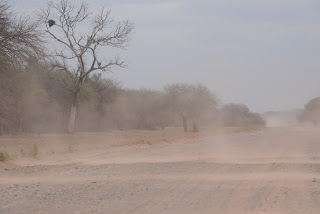
The piece begins with the rich ethnographic description familiar to readers of his books  Landscapes of Devils: Tensions of Place and Memory in the Argentinean Chaco and  Rubble: The Afterlife of Destruction. But it shifts into a powerful emphasis on the concept of terrain:

Global warming challenges human-centered views of places, landscapes, and territories as socially configured spatial fields for a simple reason: it confronts us with the vast, uncontrollable physicality of terrain. I propose “terrain” for our lexicon of the future because only this term admits that all actually-existing places have volumes, forms, and textures that are irreducible and indifferent to human practice, and whose dynamism becomes most apparent in the elusive physicality of the wind. And the air moves because we live in a planet in motion that rhythmically exposes the ocean and the atmosphere to the heat of the sun, creating temperature imbalances, flows, and currents in a state of flux.

You can learn more about his remarkable work in an interview I conducted with him for the Society and Space open site a couple of years ago.
Posted in Uncategorized | 1 Comment

6 Critical Theory Books That Came Out in December, 2016

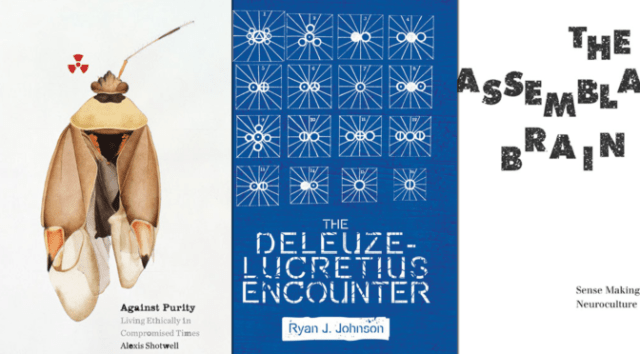
December-2016-critical-theory-books-672x372.pngAs ever, a very useful roundup here.

Posted in Uncategorized | Leave a comment

Peter Adamson’s 20 rules or “suggestions of best practice” for doing the history of philosophy

Peter Adamson, professor of philosophy at Ludwig-Maximilians-Universität in Munich and creator of the podcast History Of Philosophy Without Any Gaps, has put together a list of 20 rules or “suggestions of best practice” for doing the history of philosophy.

The rules were culled from various podcasts and posts over the past couple of years. Some of them, he admits, are obvious, and others he says he ought not have to say but must owing to common violations of it.

Read more at the Daily Nous (summary), or History of Philosophy (original version). Lots of good advice here, and I think this is useful for more general work in the history of thought or intellectual history too. Many of these are principles I try to follow (but don’t necessarily or always succeed in doing…)


Posted in Uncategorized | Leave a comment

Achille Mbembe, The age of humanism is ending

Achille Mbembe, ‘The age of humanism is ending‘, Mail and Guardian, 22 December 2016

There is no sign that 2017 will be much different from 2016.

Under Israeli occupation for decades, Gaza will still be the biggest open prison on Earth.

In the United States, the killing of black people at the hands of the police will proceed unabated and hundreds of thousands more will join those already housed in the prison-industrial complex that came on the heels of plantation slavery and Jim Crow laws.

Europe will continue its slow descent into liberal authoritarianism or what cultural theorist Stuart Hall called authoritarian populism. Despite complex agreements reached at international forums, the ecological destruction of the Earth will continue and the war on terror will increasingly morph into a war of extermination between various forms of nihilism.

Posted in Uncategorized | 3 Comments

Warwick historians on the growing racism in the UK

Warwick historians have written a powerful piece about the growing racism in the UK at Open Democracy.

We historians at the University of Warwick are very concerned about the racism that is becoming increasingly commonplace over Britain, especially in the aftermath of the Brexit vote.

We are witnessing a profound authoritarian shift in long-established liberal democracies around the world. The recent result of the US election is only the most dramatic illustration of this. But while we have reason to worry about Trump, grave developments are also afoot in Britain.

Posted in Uncategorized | Leave a comment

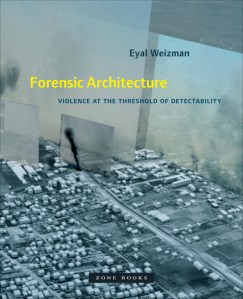
Eyal Weizman, Forensic Architecture – forthcoming from Zone

weizman-forensic-architecture.jpgEyal Weizman, Forensic Architecture: Violence at the Threshold of Detectability – forthcoming from Zone. This builds on the work of his Forensic Architecture research agency at Goldsmiths.

In recent years, a little-known research group named Forensic Architecture began using novel research methods to undertake a series of investigations into human rights abuses. Today, the group provides crucial evidence for international courts and works with a wide range of activist groups, NGOs, Amnesty International, and the UN. Beyond shedding new light on human rights violations and state crimes across the globe, Forensic Architecture has also created a new form of investigative practice that bears its name. The group uses architecture as an optical device to investigate armed conflicts and environmental destruction, as well as to cross-reference a variety of evidence sources, such as new media, remote sensing, material analysis, witness testimony, and crowd sourcing.

In Forensic Architecture, Eyal Weizman, the group’s founder, provides, for the first time, an in-depth introduction to the history, practice, assumptions, potentials, and double binds of this practice. The book includes an extensive array of images, maps, and detailed documentation that records the intricate work the group has performed. Included in this volume are case studies that traverse multiple scales and durations, ranging from the analysis of the shrapnel fragments in a room struck by drones in Pakistan, the reconstruction of a contested shooting in the West Bank, the architectural recreation of a secret Syrian detention center from the memory of its survivors, a blow-by-blow account of a day-long battle in Gaza, and an investigation of environmental violence and climate change in the Guatemalan highlands and elsewhere.

Weizman’s Forensic Architecture, stunning and shocking in its critical narrative, powerful images, and daring investigations, presents a new form of public truth, technologically, architecturally, and aesthetically produced. Their practice calls for a transformative politics in which architecture as a field of knowledge and a mode of interpretation exposes and confronts ever-new forms of state violence and secrecy.

Posted in Eyal Weizman, Uncategorized | 2 Comments

New Perspectives 24.02 out now – including open access tribute to Alex Danchev

NP_2016_02_Cover-1.jpgNew Perspectives Vol 24 No 2 is now out. It includes a wonderful tribute to Alex Danchev by Roland Bleiker.

– our subscribers have access to the full contents of the journal, which are listed and linked-to here. However, we are also very happy to be able to offer free, open access to Derek Sayer’s fascinating review essay (see below) as well as the Editorial, which, for the first time split into two parts. Roland Bleiker provides a moving and illuminating tribute to the brilliant and pathbreaking Alex Danchev, who passed away in 2016. Scholars like Danchev and Bleiker helped inspire the creation of New Perspectives and I draw extensively on their work in defending and advocating adventurous, interdisciplinary scholarship of the kind that our journal promotes. You can download these pieces as they appear in the journal from this post (click on the links below) or read them online.

Posted in Uncategorized | Leave a comment

Intervention Symposium – “Did We Accomplish the Revolution in Geographic Thought?”

Antipode forum on a classic David Harvey essay.

Antipode Editorial Office's avatarAntipodeFoundation.org

44 years ago we published David Harvey’s essay “Revolutionary and Counter-Revolutionary Theory in Geography and the Problem of Ghetto Formation”. Taking geographers to task, demanding some serious self-criticism, it was subject to its fair share of discussion and debate then, has re-appeared in a few venues over the years (from Harvey’s own Social Justice and the City, to our “best of”, and a number of criticalreaders), and, we’re pleased to say, it’s still providing food for thought today…

At the 2016 AAG annual meeting in San Francisco, Joaquín Villanueva organised a panel session, “Did We Accomplish the Revolution in Geographic Thought?”, inviting participants Matthew Hannah, George Henderson, Don Mitchell, Jenny Pickerill, Robert Ross and Simon Springer to consider the meaning of Harvey’s call for revolutionary auto-critique today: Does it still apply? How have the stakes changed? What is the battle over now? What does contemporary radical geographic thought look like? And what is its value…

View original post 1,725 more words

Posted in Uncategorized | Leave a comment

Marx and Capital: The Concept, The Book, The History – David Harvey video lectures

Marx and Capital: The Concept, The Book, The History
A Series of Six Video Lectures in Political Economy by David Harvey

  1. CAPITAL AS VALUE IN MOTION
  2. VALUE AND ANTI-VALUE
  3. VALUE AND ITS MONETARY EXPRESSION
  4. THE SPACE AND TIME OF VALUE
  5. USE VALUES: THE PRODUCTION OF WANTS, NEEDS AND DESIRES
  6. BAD INFINITY AND THE MADNESS OF ECONOMIC REASON

The lectures in this series were given from September through December, 2016 at The Graduate Center, CUNY and sponsored by the Center for Place, Culture and Politics.

Posted in David Harvey, Uncategorized | Leave a comment

Foucault, Disorderly Families: Infamous Letters from the Bastille Archives (2016)

It’s only taken 35 years, but Farge and Foucault’s Disorderly Families has finally appeared in English. Looking forward to seeing a copy soon.

Clare O'Farrell's avatarFoucault News

fargeDisorderly Families: Infamous Letters from the Bastille Archives
By Arlette Farge and Michel Foucault
Edited by Nancy Luxon
Translated by Thomas Scott-Railton
University of Minnesota Press | 344 pages | January 2017
ISBN 978-0-8166-9534-8 | jacketed cloth | $35.00

First published in French in 1982, this first English translation of Disorderly Families contains ninety-four letters collected by Arlette Farge and Michel Foucault from ordinary families who submitted complaints to the king of France in the eighteenth century to intervene and resolve their family disputes. Together, these letters offer unusual insight into the infamies of daily life.

PRAISE FOR DISORDERLY FAMILIES:
“An enlightening compilation that will leave historically inclined readers wanting to dig a little further into the archives.” —Kirkus Reviews

“Expertly edited, this thoughtful translation of Disorderly Families adds a central pillar to the English archive of Michel Foucault’s work. A source of fascination for him since at least…

View original post 240 more words

Posted in Uncategorized | Leave a comment