A response to the publishing advice from yesterday from David Enoch

A few people didn’t like the publishing advice I linked to yesterday, so here’s a response from the same blog, the Daily Nous, from David Enoch. But do look at the comments to the original post, where Jason Brennan responds to all the criticisms made of his advice.

I should add the standard disclaimer: there is no correct way to do things, just ways that work for different people. But I see so many people, at different career stages, stuck in patterns that don’t work for them, that it seems good to share advice that may be useful to some. If you don’t like it, that’s fine.

Posted in Publishing, Uncategorized, Writing | Leave a comment

Endorsements for Foucault: The Birth of Power from Caren Kaplan and Bernard Harcourt

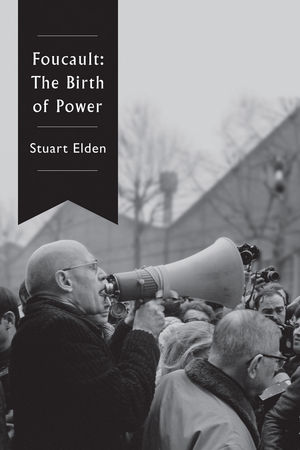
1509507256Two very generous endorsements for my next book Foucault: The Birth of Power, due out in early 2017.

‘Foucault: The Birth of Power opens an illuminating window into the process of political awakening and philosophical transformation as intellectual history. Drawing on lectures, talks and unpublished as well as published material, Stuart Elden has marshalled the contents of a massive archive to substantiate this pivotal period in the development of one of the most influential thinkers of the twentieth century.’
Caren Kaplan, University of California, Davis

‘This is a brilliant prequel to Elden’s masterful book, Foucault’s Last Decade. Here, Elden offers a meticulous, erudite reading of the thinker’s early years at the Collège de France – a critical time in the arc of his research, which included seminars and conferences on disciplinary power, with deep political engagement and activism on behalf of prisoners. With his unmatched knowledge of Foucault, Elden unearths key intellectual moments and carefully traces Foucault’s intellectual journey to the mid-1970s, the publication of Discipline and Punish and the lectures on psychiatric power. Foucault: The Birth of Power is the perfect reading companion to Foucault’s “power-knowledge” period.’
Bernard Harcourt, Columbia University

Posted in Caren Kaplan, Foucault: The Birth of Power, Michel Foucault, Uncategorized | 2 Comments

New Historical Materialism website

New Historical Materialism website – looks good.

Posted in Uncategorized | Leave a comment

A great comment from a university press editor on publishing

A great comment to Productive in Publishing (guest post by Jason Brennan) at the Daily Nous.

Matt McAdam ·November 10, 2016 at 1:39 pm

I think this is all very good advice, and I also think those who find it off-putting or impossible to put into practice should really ask themselves whether academia is for them. As a university press editor, I work with lots of authors, and it’s clear to me that the most successful ones do some version of what Brennan describes. Perhaps more importantly, the _happiest_ authors I know follow some version of Brennan’s plan. In particular, productive and happy academics, in my experience, write everyday, vigorously guard and prioritize their writing time, write shitty first drafts that they edit later, and read the secondary literature only after they’ve written something. Sure, there are other ways of making it as an academic, perhaps most commonly being just productive enough by squeaking out work under intense pressure, but these often involve near constant anxiety. This is why I say that Brennan’s suggestions here are a good prompt for the question of whether one really wants to go into academia.

See also my posts – You can’t polish a turd, but you can edit one – the importance of early drafting and My sabbatical rules for writing which make similar points.

Posted in Publishing, Uncategorized, Writing | 3 Comments

Some of the best advice I’ve read on being productive in publishing

Productive in Publishing (guest post by Jason Brennan) at the Daily Nous.

Read the whole thing – it’s an outline, not a full article. But here are some especially good points:

1b: Publishing is not the price of being an academic. It’s the point.

2. Don’t let the urgent take precedence over the important
a. Write first; prep second; answer emails third
b. Prep less. Don’t let teaching be your excuse
c. Never sacrifice research to get other things done

3. Write every weekday, 20 hours/week
a. Keep a log

8. Always have multiple projects at different stages
a. When you get stuck on one, move on to the next
b. Come back with a clear head in a few weeks

18. Read your papers out loud. Rewrite until they sound good.

Worth reading the comments below the post too, which provide some clarifications. 2b is open to misinterpretation, but I’d see it less as say under-prepare your teaching, than don’t over-prepare. It is entirely possible to take teaching seriously, without taking it too seriously. And reading others’ work, while essential, should not be the barrier to writing.


Posted in Publishing, Uncategorized | Leave a comment

When did Foucault translate Leo Spitzer?

Spitzer.jpgOne of the few translations made by Michel Foucault, and perhaps the most unusual, was an essay by literary theorist Leo Spitzer.

It was published as “Arts du langage et linguistique”, in Leo Spitzer, Etudes de style, Paris: Gallimard, 1970, pp. 45-78. (There are several other pieces in there, translated by others. The text has since been reissued in the Tel series.) Daniel Defert’s ‘Chronology’ dates the publication to 21 January 1970.

The original text was “Linguistics and Literary History”, in Leo Spitzer, Linguistics and Literary History: Essays in Stylistics, Princeton: Princeton University Press, 1948, pp. 1-39.

The original was written in English, even though Spitzer had written most of his earlier work in German. All of the other translations by Foucault were from German to French, so this is unusual in being from English to French.

The other issue which I think is interesting is the date of the translation. The 1970 date of the collection Etudes de style is well after Foucault had an international reputation. All of his other translation work dates from over a decade before – he edited the translation of Ludwig Binswanger, Le rêve et l’existence, which was published in 1954; co-translated Viktor von Weizsäcker, Le cycle de la structure for publication in 1958, and in 1959-60 translated Kant’s Anthropologie, which was submitted as his secondary thesis in 1961 and published in 1964. The Spitzer essay was the last translation with which he was involved.

It’s of course possible that Foucault did indeed translate the text for a 1970 edition, perhaps a year or two before. But it seems unlikely. One of the only essays I know on this text (Geertjan de Vugt, ‘Art du langage et linguistique: on Foucault’s Spitzer’) makes quite a bit of the date, and how unusual it was for Foucault to turn to this text after what he had written on linguistics in The Order of Things.

But several sources suggest that the date might have been earlier. In David Macey’s The Lives of Michel Foucault, pp. 120, 497 n. 2, the date of the Gallimard text is given as 1962. The same date is given in James Bernauer’s Michel Foucault’s Force of Flight, pp. 232-3 (and the bibliography of The Final Foucault, p. 121), and in Jacques Lagrange’s Complèment Bibliographique in Dits et écrits, vol IV, p. 829. There is of course the risk that bibliographies are copying each other, rather than independently checked, though this seems unlikely given the sources. Richard Lynch’s bibliographic tools also indicate that it is listed in Michael Clark’s Annotated Bibliography (ref B031), and Lynch lists the 1962 date (though here I am fairly sure that is a product of following his sources).

A 1962 date would make much more sense – it could have been done c. 1961 around the time of the thesis, or perhaps a little earlier. But I can find no indication, beyond the ones cited above, that this date is accurate. The Gallimard text is clearly dated as 1970, which is confirmed by Gallimard’s website, Worldcat and other library sources.

Where, then, did anybody get the 1962 date? The most plausible explanation I can think of is that a reedition of the American text was from that year. But unless the bibliographies are copying each other, this seems unlikely to be a slip more than one person could have made. Anybody shed any further light on this?

Update 7 December 2017: To clarify, the pagination in the two Gallimard editions is the same – both in the NRF/Bibliothèque des Idées and Tel versions, the essay is on pp. 45-78. The NRF edition is dated to 1970 – with 1er trimester 1970 as its copyright date – and the Tel edition to October 1980, with subsequent reprints. According to the Gallimard site, the NRF edition was printed 21 January 1970, and published 4 February 1970 (which would fit with Defert’s dates, noted above); the Tel edition was published 14 November 1980.

The book also appears in the bibliography of Clare O’Farrell’s Foucault: Historian or Philosopher? There it is dated to 1962, with a reprint in 1970 (p. 156). It also appears in Sheridan’s Michel Foucault: The Will to Truth, 1980, p. 228 as 1962.

In summary: indications of the 1962 date come from Sheridan, Macey, Bernauer, Lagrange, Clark (Lynch), O’Farrell; the 1970 date comes from Defert, de Vugt, Gallimard, Worldcat and the actual Spitzer booksI’ve seen.

Update 11 December 2017: The bibliographies of Power, Truth, Strategy, 1979, p. 94 and Power/Knowledge, 1980, p. 263 both give the 1962 date.

Posted in Michel Foucault, The Early Foucault, Uncategorized | 6 Comments

Foucault and the Making of Subjects – book launch at Goldsmiths,28 Nov 2016, 6pm

Foucault and the Making of Subjects – book launch at Goldsmiths,28 Nov 2016, 6pm

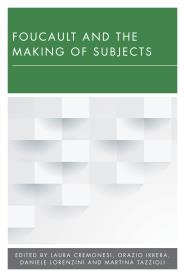
9781786601049Michel Foucault’s account of the subject has a double meaning: it relates to both being a “subject of” and being “subject to” political forces.

This book interrogates the philosophical and political consequences of such a dual definition of the subject, by exploring the processes of subjectivation and objectivation through which subjects are produced.

Drawing together well-known scholars of Foucaultian thought and critical theory, alongside a newly translated interview with Foucault himself, the book will engage in a serious reconsideration of the notion of “autonomy” beyond the liberal tradition, connecting it to processes of subjectivation.

In the face of the ongoing proliferation of analyses using the notion of subjectivation, this book will retrace Foucault’s reflections on it and interrogate the current theoretical and political implications of a series of approaches that mobilize the Foucaultian understanding of the subject in relation to truth and power.

Full details here.

Posted in Michel Foucault, Uncategorized | 1 Comment

Foucault and Shakespeare: Ceremony, Theatre, Politics – audio recording of Cambridge talk

Foucault and Shakespeare (Cambridge).jpg

On 7 November 2016 I gave a talk to the Political Thought and Intellectual History seminar, University of Cambridge, entitled “Foucault and Shakespeare: Ceremony, Theatre, Politics”.

An audio recording is available here.

Posted in Michel Foucault, Shakespearean Territories, Uncategorized, William Shakespeare | Leave a comment

Towards a Geography of Injustice

Clive Barnett on his latest paper (open access) and forthcoming book.

Admin's avatarPop Theory

IMG_0166Just in time for anyone still wondering what they should pack to read by the beach this summer, here is a short paper by me entitled  Towards a Geography of Injustice, available open access at the Finnish journal Alue & Ympäristö (Region and Environment – my paper is not in Finnish, just to be clear), which I’m told is “unofficially” the “critical geography journal of Finland”.  This is pretty much the tidied up script of the Keynote Lecture I presented at the Annual Meeting of Finnish Geographers in Tampere back in October last year. I learnt lots and met nice people at the meeting, and thanks to Kirsi Pauliina Kallio for asking me to write the talk up properly.

This is a short and quite discursive version of only one part of a longer, and I hope deeper, argument about ‘the priority of injustice’ that I have been working out in my…

View original post 214 more words

Posted in Uncategorized | 2 Comments

Carl Schmitt, Land and Sea – a new translation

In 2015 Telos Press published a new translation of Carl Schmitt, Land and Sea: A World-Historical Meditation. While in Cambridge earlier this week I was kindly given a copy by the translator, Samuel Garrett Zeitlin.

schmitt_land_and_sea_medOriginally published in 1942, at the height of the Second World War, Land and Sea: A World-Historical Meditation recounts Carl Schmitt’s view of world history “as a history of the battle of sea powers against land powers and of land powers against sea powers.” Schmitt here unfolds his view of world history from the Peloponnesian War to European colonial expansion to the birth pangs of capitalism, while polemically setting Nazi Germany as a continental land power against Britain and the United States as its maritime enemies. In Land and Sea, Schmitt offers his interpretations of the rise of Venice, piracy, “corsair capitalism,” the spatial revolution of European colonial expansion, the rise of the British empire, and his readings of thinkers as diverse as Seneca, Shakespeare, Herman Melville, and Benjamin Disraeli.

This new and authorized edition from Telos Press Publishing, translated by Samuel Garrett Zeitlin and edited by Russell A. Berman and Samuel Garrett Zeitlin, includes extensive textual annotations that compare critical variations between the original 1942 edition of Land and Sea and the subsequent editions published in 1954 and 1981.

I’ve been critical of Schmitt, and his contemporary appropriation (see my ‘Reading Schmitt Geopolitically: Nomos, Territory and Großraum‘ in Radical Philosophy 161, 2010, pp. 18-26), but it’s good to have this work available in an accurate translation with apparatus.

Posted in Carl Schmitt, Uncategorized | Leave a comment