Arthur Ghins, The People’s Two Powers: Public Opinion and Popular Sovereignty from Rousseau to Liberal Democracy – Cambridge University Press, January 2026

Arthur Ghins, The People’s Two Powers: Public Opinion and Popular Sovereignty from Rousseau to Liberal Democracy – Cambridge University Press, January 2026

The People’s Two Powers revisits the emergence of democracy during the French Revolution and examines how French liberalism evolved in response. By focusing on two concepts often studied separately-public opinion and popular sovereignty-Arthur Ghins uncovers a significant historical shift in the understanding of democracy. Initially tied to the direct exercise of popular sovereignty by Rousseau, Condorcet, the Montagnards, and Bonapartist theorists, democracy was first rejected, then associated with the idea of rule by public opinion by liberals throughout the nineteenth century. This redefinition culminated in the invention of the term ‘liberal democracy’ in France in the 1860s. Originally conceived in opposition to ‘Caesarism’ during the Second Empire, the term has an ongoing and important legacy, and was later redeployed by French liberals against shifting adversaries – ‘totalitarianism’ from the 1930s onward, and ‘populism’ since the 1980s.

  • Provides a chronological and contextual approach to the emergence of modern democracy and liberalism in France
  • Identifies an overlooked conceptual distinction between public opinion and popular sovereignty
  • Explains how, when, and why the term ‘liberal democracy’ was invented, and how it was historically redeployed against shifting opponents
Posted in Uncategorized | Leave a comment

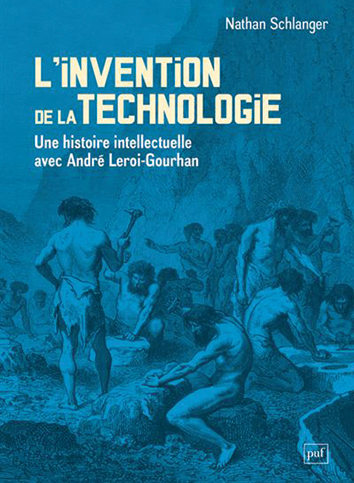
Nathan Schlanger, The Invention of Technology: An Intellectual History with André Leroi-Gourhan – Cambridge University Press, January 2026

Nathan Schlanger, The Invention of Technology: An Intellectual History with André Leroi-Gourhan – Cambridge University Press, January 2026; translation of L’Invention de la technologie: Une histoire intellectuelle avec André Leroi-Gourhan – PUF, January 2023

See also this interview with Stefanos Geroulanos for the Journal of the History of Ideas blog.

What is technology? How and why did techniques – including materials, tools, processes and products – become central subjects of study in anthropology and archaeology? In this book, Nathan Schlanger explores the invention of technology through the work of the eminent ethnologist and prehistorian André Leroi-Gourhan (1911–1986), author of groundbreaking works such as Gesture and Speech. While employed at the Musée de l’Homme in Paris, Leroi-Gourhan initially specialized in ethnographic studies of ‘material civilizations’. By the 1950s, however, his approach broadened to encompass evolutionary and behavioral perspectives from history, biology, psychology and philosophy. Focused on the material dimensions of techniques, Leroi-Gourhan’s influential investigations ranged from traditional craft activities to automated production. They also anticipated both the information age and the environmental crisis of today. Schlanger’s study offers new insights into the complexity of Leroi-Gourhan’s interdisciplinary research, methods, and results, spanning across the 20th century social sciences and humanities.


Posted in Uncategorized | 1 Comment

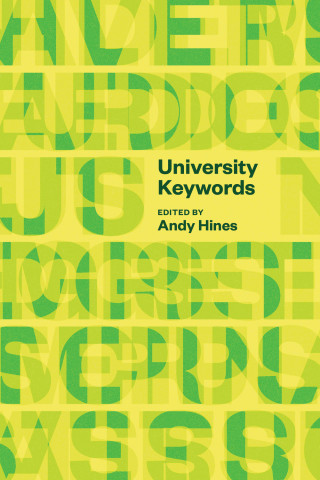
Andy Hines ed. University Keywords – Johns Hopkins University Press, September 2025

Andy Hines ed. University Keywords – Johns Hopkins University Press, September 2025

How American universities operate as social and economic engines that shape society beyond their traditional educational roles.

University Keywords gathers, contextualizes, and develops original understandings of 27 key terms that define the study and operation of the American university today. Editor Andy Hines and the book’s contributors invite readers to rethink the university beyond its public image as a space of learning and understand how it also operates as a real estate powerhouse, a hedge fund, a debt machine, and even a crisis-producing entity embedded in the broader American economy…

Posted in Uncategorized | Leave a comment

Alexandre Kojève, The Idea of Determinism – trans. Robert B. Williamson, St Augustine’s Press, July 2025

Alexandre Kojève, The Idea of Determinism – trans. Robert B. Williamson, St Augustine’s Press, July 2025

The previous volume of Alexandre Kojève’s (1902–1968) work published by St. Augustine’s Press, The Concept, Time and Discourse (2019), was the introduction to an unfinished magnum opus through which Kojève intended to effectively update Hegelian philosophy. For Kojève, Hegel provides the completion of philosophy’s historical development, with the exception of what Kojève deems an inadequate philosophy of nature. The translation of The Idea of Determinism offers insight into what shape Kojève’s “update” to Hegelian philosophy of nature may have taken.

The notion of determinism plays heavily in the philosophy of nature. In the classical age of physics (Newton through Maxwell) it was a commonly held assumption that everything can be predicted, and chance is nonexistent. There was also the belief in the perpetual progress toward absolute precision in scientific measurement. Then in 1814 Laplace set the groundwork for this idea in the modern era: “[If there were] an Intelligence who could know, for a given instant, all the forces with which nature is animated and the relative position of all the beings that compose it—if, moreover, it were vast enough to submit all its data to analysis [in accordance with the laws of nature—it] would embrace in the same formula the motions of the greatest bodies in the universe and those of the slightest atom: nothing would be uncertain for it, and the future, like the past, would be present to its eyes.” 

With dialectical mastery, Kojève examines the implications of these assumptions and finds them wanting, even from within the classical perspective. He then turns to the “modern (quantum) physics” of Planck, Heisenberg and Dirac, which he sees as supporting an epistemological understanding of physical science free of any deterministic assumptions. Kojève also finds it to be rooted in the concrete understanding of physical measurement as an interaction between an observing subject and an observed object, about which statistically accurate predictions can legitimately be made.

Kojève was a contemporary and friend to political philosopher Leo Strauss, and influential in the intellectual formation of Allan Bloom and Stanley Rosen. His political career cannot be ignored when attempting to assess the intentions of his philosophical work, which renders it a brand of political philosophy even when making presentations in the field of natural sciences.  

Posted in Alexandre Kojève, Georg Wilhelm Friedrich Hegel, Uncategorized | Leave a comment

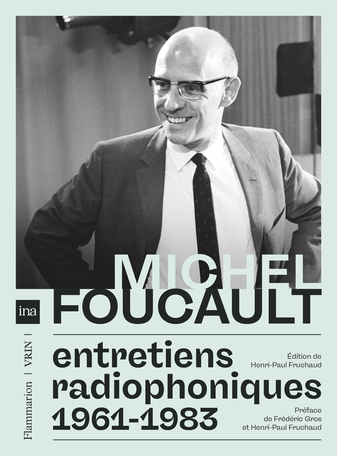
Clare O’Farrell commentaries on interviews in Michel Foucault, Entretiens radiophoniques, 1961-1983

Clare O’Farrell is beginning a series of commentaries on the interviews in Michel Foucault, Entretiens radiophoniques, 1961-1983, Flammarion/VRIN/INA, 2024.

Foucault, Radio Interview 1: The phenomenon of madness

Foucault, Radio Interview 2: Madness silenced

And for her initial review of the volume as a whole, see here.

Posted in Michel Foucault | Leave a comment

Anders Stephenson, American Imperatives: The Cold War and Other Matters – Verso, July 2025

Anders Stephenson, American Imperatives: The Cold War and Other Matters – Verso, July 2025

A radical reinterpretation of the Cold War by its most iconoclastic historian.

What was the cold war? Conventional wisdom makes it coextensive with an epoch stretching from the end of the Second World War to the collapse of the Soviet Union, a geopolitical period dominated by the confrontation between the United States and the USSR. In a fundamental challenge to prevailing orthodoxy, Anders Stephanson explodes this misconception, which has misled historians and obscured the US-centered nature of the entire process. He argues that “the cold war” is better understood as the frame that made the global role of the US after 1947 not only possible but imperative, and that in its classic form it ended in 1963, after the Cuban Missile Crisis.

American Imperatives does not assume that the causes of the great superpower rivalry rest solely with the United States. But the frame was unmistakably and ineradicably American. Without it, there would not have been, properly speaking, a cold war.

Posted in Uncategorized | 1 Comment

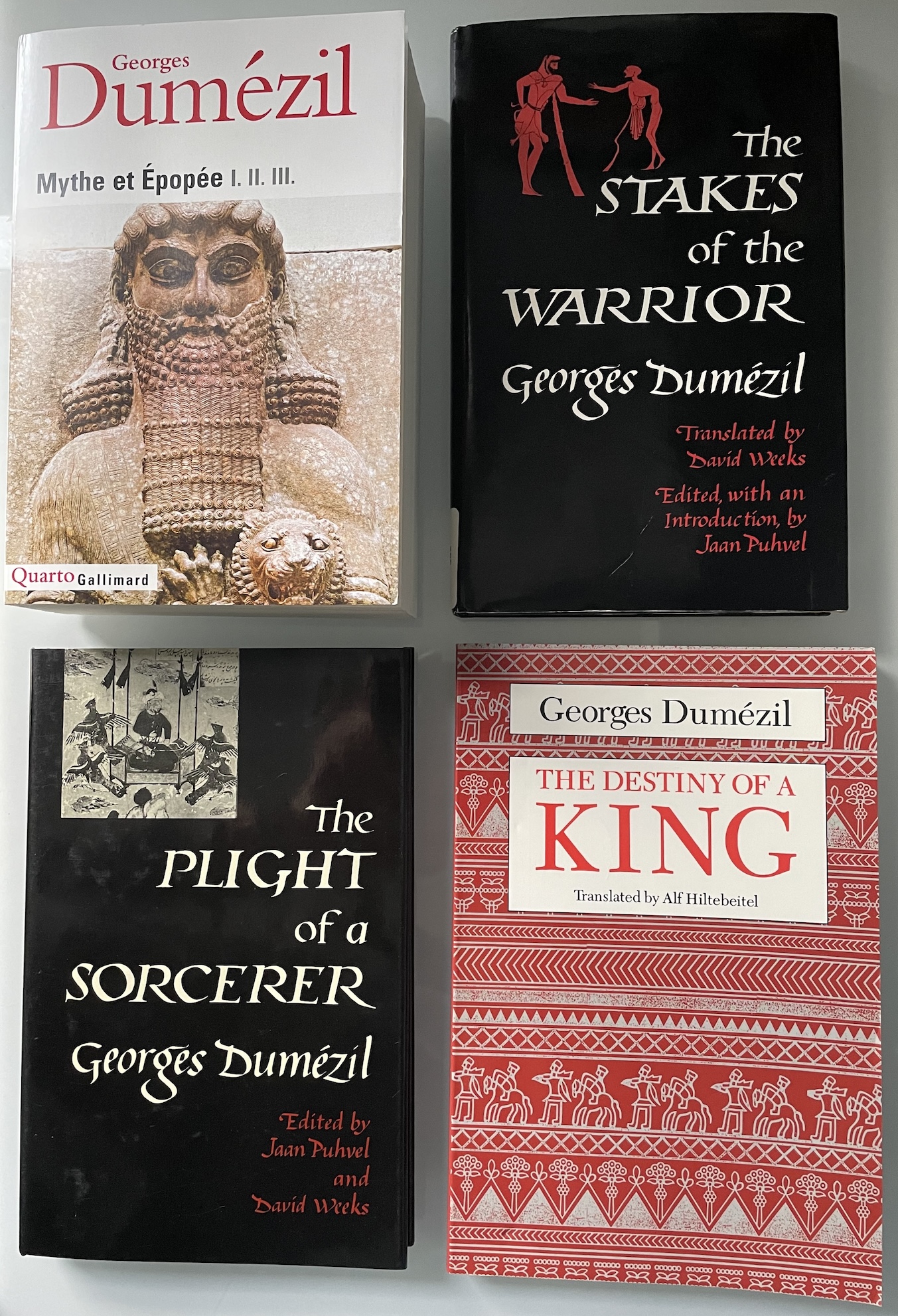
Georges Dumézil’s Mythe et épopée series and its partial English translations – updated

I’ve updated the page on Georges Dumézil’s Mythe et épopée series and its partial English translations with the page references to the 1977 and 1982 notes translated in The Stakes of the Warrior and The Plight of the Sorcerer. The French has notes to all three parts from the editions 1977, 1982 and 1986 gathered at the end of the text in extra pages added to later editions; the English translations of these two parts include the notes in the relevant places. The English translation of the third part, The Destiny of the King, dates from 1973 and so does not include these later notes. None of the 1986 additions are included in English editions.

Apart from the new edition of Mitra-Varuna (print and open access), I think The Destiny of a King is the only work of Dumézil’s in print in English.

This page is part of the research for my project on Indo-European Thought in Twentieth-Century France. For some textual comparison of Dumézil’s major work on the warrior function, Heur et malheur du Guerrier, part-translated as The Destiny of the Warrior, see here; and a few other research resources for that project see here. There are loads more resources here.

Posted in Georges Dumézil, Mapping Indo-European Thought in Twentieth Century France, Uncategorized | Leave a comment

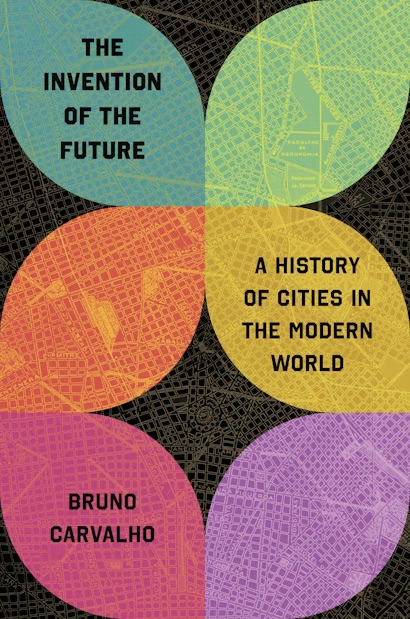
Bruno Carvalho, The Invention of the Future: A History of Cities in the Modern World – Princeton University Press, January 2026

Bruno Carvalho, The Invention of the Future: A History of Cities in the Modern World – Princeton University Press, January 2026

For the past three centuries, urban dwellers and planners have imagined future cities that would be radically different from those of the past. Planners pursued progress, whether focused on flying vehicles above, sewage systems below, or daily life in between. Yet, as Bruno Carvalho shows in this original and wide-ranging history, which features some sixty illustrations, modern cities continuously defied predictions. Visionary designs and technological innovations created dramatic, unforeseen outcomes, and the ongoing urban boom is a story of continuity as well as rupture. A compelling history of imagined futures and the transformation of urban life, The Invention of the Future also suggests what we might learn from the stories of our cities as we shape them for the twenty-first century.

Moving between large-scale changes and detailed examples, this captivating narrative tells the story of key moments and turning points: the rebuilding of Lisbon after the 1755 earthquake; the 1811 Commissioners’ Plan for Manhattan; Parisian reforms from 1853 to 1870; Le Corbusier’s plans for South American cities in the 1920s and 1930s; the postwar victory of the car; the utopian capital of Brasília; and urban growth in Africa.

In recent decades, Carvalho argues, the capacity to invent urban futures has become increasingly constrained. Social and environmental challenges loom large. But the story is not over. While cities helped create current problems, compact and transit-rich urbanization might be our best hope to combine high living standards with sustainability. Sometimes, moving forward can involve reaching back to the future.

Posted in urban/urbanisation | Leave a comment

Hadi Fakhoury ed., New Perspectives on Henry Corbin – Palgrave Macmillan, July 2025

Hadi Fakhoury ed., New Perspectives on Henry Corbin – Palgrave Macmillan, July 2025

This collection brings together scholars from various fields to explore the work, life, and legacy of Henry Corbin (1903–1978), a towering figure in the modern study of Islamic esoteric spirituality. A valuable resource for students and researchers alike, it highlights Corbin’s unique contributions not only to Islamic philosophy and mysticism, but also to Neoplatonism, phenomenology, psychoanalysis, musical and literary theory, film criticism, political thought, and comparative religion.

Corbin is an interesting figure, for as well as the work on Islam mentioned in the book’s abstract, he was also one of the first French translators of Heidegger. He plays a small role in the work I’m currently doing, as a colleague of Dumézil and Benveniste and friend of Mircea Eliade. This book also discusses his importance to Foucault.

Posted in Emile Benveniste, Georges Dumézil, Mapping Indo-European Thought in Twentieth Century France, Martin Heidegger, Michel Foucault, Mircea Eliade | Leave a comment

Nick Srnicek, Silicon Empires: The Fight for the Future of AI – Polity, October 2025

Nick Srnicek, Silicon Empires: The Fight for the Future of AI – Polity, October 2025

Looking beyond the flurry of rapid changes in artificial intelligence, Silicon Empires uncovers the deep economic forces guiding the expansion of AI. Nick Srnicek offers a clear-eyed view of the landscape of generative AI today, while situating it within the broader context of the recent deep learning and cloud computing paradigms. Far from being a disruptive technology, contemporary AI looks set to consolidate the power and position of Big Tech. Yet this power will not come without effort and costs.

Silicon Empires examines the strategies that Big Tech companies are using to expand their control within the AI value chain and across the economy. The implications of this consolidation of power are wide-ranging, particularly in the light of resurgent geopolitical tensions.

This book is a must-read for anyone who wants to understand the forces that are shaping the future of AI.

Posted in Uncategorized | 2 Comments