University of London Institute in Paris in collaboration with l’Institut Mémoires de l’édition contemporaine (IMEC)
The “group of the rue Saint-Benoît” refers to a group of intellectuals that met regularly at Marguerite Duras’ apartment on the rue Saint-Benoît in Paris from the late nineteen forties until the nineteen sixties in search of a “communism of thought”. While they could only be understood as a ‘group’ in an informal sense, their diverse texts and interventions offer a set of propositions on intellectual practice whose implications have yet to be examined and unpacked. This interdisciplinary conference proposes to examine the significance of the group and demonstrate the implications of their work for contemporary intellectual practice.
The group emerged from the wartime experiences of Marguerite Duras, Robert Antelme and Dionys Mascolo and became a regular gathering of intellectuals and friends at Duras’ apartment. Edgar Morin, Claude Roy and Maurice Blanchot (who joined later in the nineteen fifties) were key members, and other visitors, with varying levels of implication, included Maurice Merleau-Ponty, Georges Bataille, Jean Schuster, Jean Duvignaud and Jean-Toussaint Desanti amongst others. Having broken with the PCF at the beginning of the fifties, the core members of the group remained dedicated to a “communism of thought” which found various forms of expression: anticolonial intellectual mobilisations in the nineteen fifties, such as the Comité d’action des intellectuels contre la poursuite de la guerre an Algérie, the development of a politics of refusal with le 14 Juillet (an anti-Gaullist revue published in 1958), the Declaration on the Right to Insubordination in the War in Algeria(their most famous intervention, better known as the Manifesto of the 121), as well as an unrealised project for an international journal and involvement in the events of 1968 in the form of Student-Writer Action Committee (Comité d’Action Écrivains-Étudiants)…
Update: New Books discussion with Morteza Hajizadeh – thanks to dmf for the link
How did modern territoriality emerge and what are its consequences? This book examines these key questions with a unique global perspective. Kerry Goettlich argues that linear boundaries are products of particular colonial encounters, rather than being essentially an intra-European practice artificially imposed on colonized regions. He reconceptualizes modern territoriality as a phenomenon separate from sovereignty and the state, based on expert practices of delimitation and demarcation. Its history stems from the social production of expertise oriented towards these practices. Employing both primary and secondary sources, From Frontiers to Borders examines how this expertise emerged in settler colonies in North America and in British India – cases which illuminate a range of different types of colonial rule and influence. It also explores some of the consequences of the globalization of modern territoriality, exposing the colonial origins of Boundary Studies, and the impact of boundary experts on the Paris Peace Conference of 1919–20.
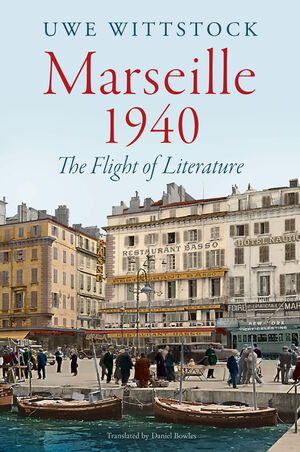
June 1940: France surrenders to Germany. The Gestapo is searching for Heinrich Mann and Franz Werfel, Hannah Arendt, Lion Feuchtwanger and many other writers and artists who had sought asylum in France since 1933. The young American journalist Varian Fry arrives in Marseille with the aim of rescuing as many as possible. This is the harrowing story of their flight from the Nazis under the most dangerous and threatening circumstances.
It is the most dramatic year in German literary history. In Nice, Heinrich Mann listens to the news on Radio London as air-raid sirens wail in the background. Anna Seghers flees Paris on foot with her children. Lion Feuchtwanger is trapped in a French internment camp as the SS units close in. They all end up in Marseille, which they see as a last gateway to freedom. This is where Walter Benjamin writes his final essay to Hannah Arendt before setting off to escape across the Pyrenees. This is where the paths of countless German and Austrian writers, intellectuals and artists cross. And this too is where Varian Fry and his comrades risk life and limb to smuggle those in danger out of the country. This intensely compelling book lays bare the unthinkable courage and utter despair, as well as the hope and human companionship, which surged in the liminal space of Marseille during the darkest days of the twentieth century.
Offers a new reading of humanity in decolonial theory
Articulates an original humanism informed by decolonial and post-colonial theory
Advances an ethical theory across Black Studies, Caribbean philosophy, and Continental philosophy
Defends the concepts of ‘the human’ and ‘humanity’
Outlines a more constructive critical theory in our hyper-critical moment
Is there a way of being human that could invite people away from today’s models of violence and consumerism? Looking forward to a new, increasingly creolized century, in 1997 the Martinican poet and philosopher Édouard Glissant asked, ‘Do we have the right and the means to live another dimension of humanity? But how?’
Building on the defense of human rights he outlined in Choose Your Bearing, Benjamin P. Davis traces figures of ‘the human’ and ‘humanity’ in W. E. B. Du Bois, Édouard Glissant, Sylvia Wynter and Edward Said. He concludes with a reflection on Hannah Arendt’s post-war correspondence with Karl Jaspers, which offers lessons for a new humanism as we witness ongoing wars today.
Global Trade in the Premodern World offers an authoritative and expansive history of exchange and interaction across Eurasia from the prehistoric origins of trade to the integration of large parts of this world-system by the fifteenth century CE.
The book tackles questions that are critical to our understanding of premodern globalization. How did global trade in the premodern world take shape? Who did the trading and what motivated them? Which commodities were traded and how did different goods influence how trading networks functioned? How did geography change how and where people carried goods? How did states and communities seek to control the practice of commerce? And finally, what was the impact of trade on political structures and in the relationship between different states, empires, and communities?
Drawing on the fruits of research in history, anthropology, and archaeology, as well as primary sources produced by authors from Africa, Asia, and Europe, Global Trade in the Premodern World is a book of remarkable scope written engagingly and accessibly with scholars, students, and non-specialists in mind.
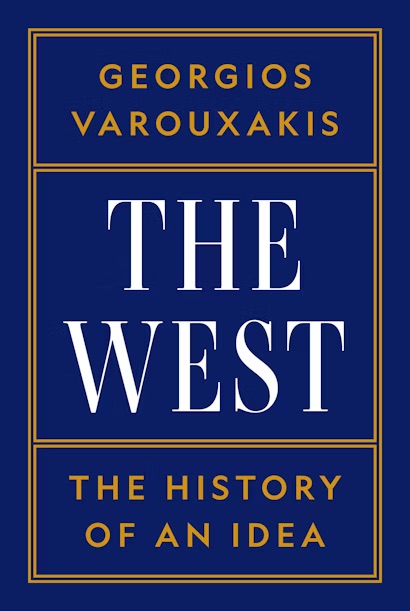
How did “the West” come to be used as a collective self-designation signaling political and cultural commonality? When did “Westerners” begin to refer to themselves in this way? Was the idea handed down from the ancient Greeks, or coined by nineteenth-century imperialists? Neither, writes Georgios Varouxakis in The West, his ambitious and fascinating genealogy of the idea. “The West” was not used by Plato, Cicero, Locke, Mill, or other canonized figures of what we today call the Western tradition. It was not first wielded by empire-builders. It was, Varouxakis shows, decisively promoted in the 1840s by the French philosopher Auguste Comte (whose political project, incidentally, was passionately anti-imperialist). The need for the use of the term“the West” emerged to avoid the confusing or unwanted consequences of the use of “Europe.” The two overlapped, but were not identical, with the West used to exclude certain “others” within Europe as well as to include the Americas.
After examining the origins, Varouxakis traces the many and often surprising changes in the ways in which the West has been understood, and the different intentions and repercussions related to a series of these contested definitions. While other theories of the West consider only particular aspects of the concept and its history (if only in order to take aim at its reputation), Varouxakis’s analysis offers a comprehensive, multilayered account that reaches to the present day, exploring the multiplicity of current and prospective meanings. He concludes with an examination of how, since 2022, definitions and membership in the West are being reworked to include Ukraine, as the evolution and redefinition continue.
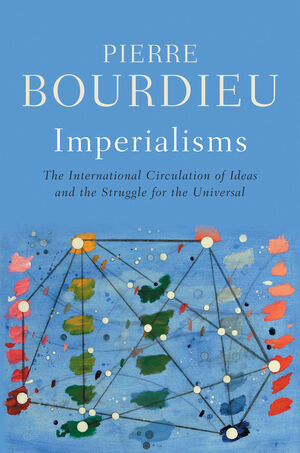
While Bourdieu’s work on cultural production, the reproduction of inequality and the rise of the modern state is well known, his writings on the phenomena of internationalization and imperialism have received much less attention. Bourdieu’s analyses of the international circulation of ideas and the imperialisms of the universal – where two political powers, such as the United States and France, clash on matters of cultural legitimacy – generated multiple research programmes on topics ranging from translation and scientific exchange to global economic policy. The constitution of globalized domains where national problems like unemployment, ethnicity and poverty are subjected to international import-export processes serves to naturalize the dominant vision of dominant countries and impose it on national political contexts.
Freedom, democracy and human rights have been constituted as universal values and some countries claim to embody these values more than others. However, historical analysis shows that things are not so simple and that the actual content given to these values does not necessarily have the universality they claim. For example, the claim to universality of past colonial or imperial policies arouses suspicion in the eyes of some, to the point of calling into question the very idea of universality. But it is possible to move beyond the alternative between, on the one hand, a naïve belief in universality and, on the other, a disenchanted relativism that sees the universal as nothing more than a disingenuous way to legitimize particular interests. Bourdieu argues that the theory of fields enables us to move beyond this alternative by showing that the struggle for the universal can produce its own forms of universality that transcend particular interests.
This volume of Bourdieu’s writings on internationalization, imperialism and the struggle for the universal will be of interest to students and scholars in sociology, anthropology, politics and the social sciences and humanities generally.
This is a revised, expanded and more fully referenced version of a post from March 2024. There is a Spanish translation of the earlier version here.
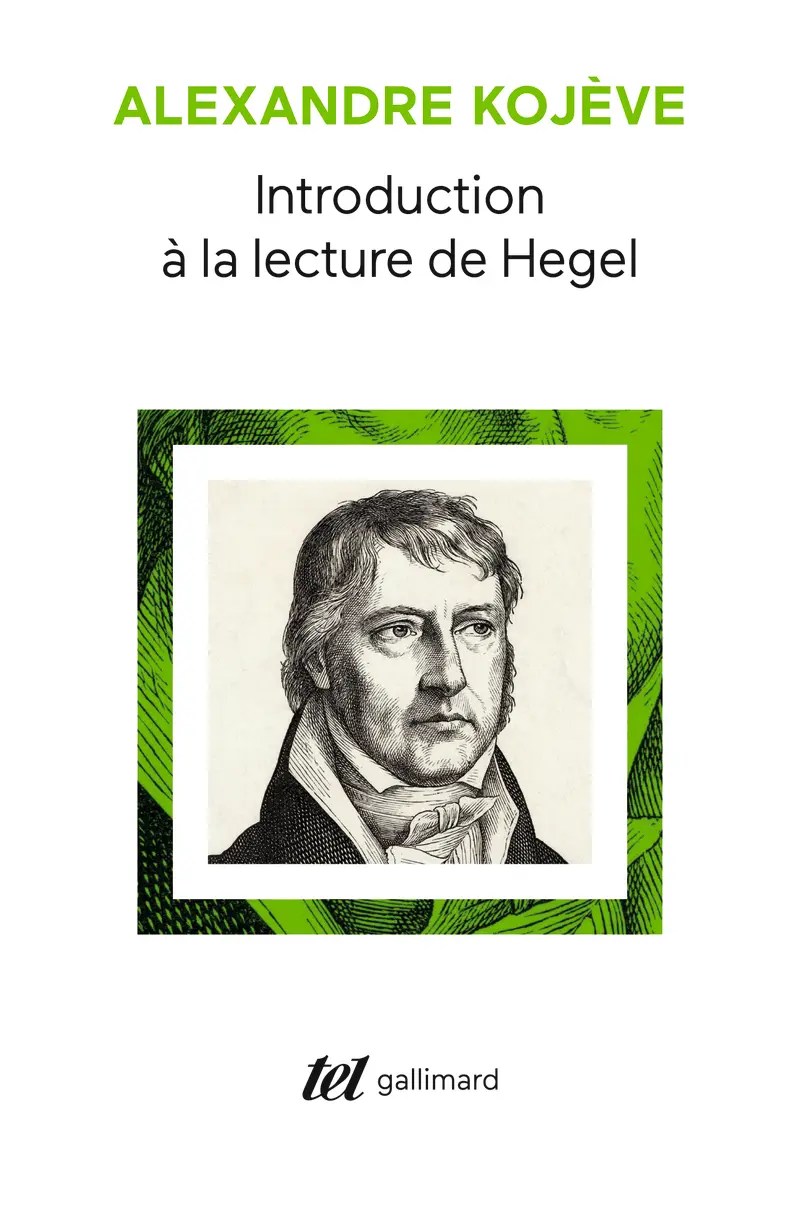
Alexandre Kojève’s seminars on Hegel’s Phenomenology of Spirit, given at the École Pratique des Hautes Études in the years before the Second World War, are an important and much discussed moment in European intellectual history. He was deputising for Alexandre Koyré, while Koyré was teaching in Cairo. Koyré’s lectures were on Hegel and the philosophy of religion; Kojève broadened the focus. The lectures were edited and published in 1947 by Raymond Queneau, and about half of that volume was translated into English by in a selection by Allan Bloom. A complete translation of the lectures by Trevor Wilson is forthcoming from Routledge.
While Kojève’s lectures on Hegel are quite often discussed, they are almost as famous for their audience as their content. A lot of interesting figures were there: Henry Corbin, Jacques Lacan, Georges Bataille, Queneau, and Éric Weil all attended in the first year. There are many, often conflicting, reports of who else was there in subsequent years. I’ve seen Hannah Arendt, Raymond Aron, Maurice Blanchot, André Breton, Alexandre Koyré, Emmanuel Lévinas, Maurice Merleau-Ponty, and Jean-Paul Sartre all mentioned. I said in The Early Foucaultthat Louis Althusser attended (p. 11), but I’ve been told I was mistaken, and a December 1946 letter from Althusser to Kojève indicates that this correction is right – it’s clearly not a letter from someone who had attended these classes. I’ve also seen reports that Henri Lefebvre attended, but when I mentioned this in Understanding Henri Lefebvre (p. 96 n. 33), I said this was uncertain.
The focus here is not about Kojève’s seminar itself. Rather, it concerns how Kojève was working on a French translation of the Phenomenology before the war; who he was potentially working with; and why this was never completed.
In the Kojève archive there is correspondence with Gaston Gallimard in June 1938 indicating that a contract for a translation was close to being agreed. Gallimard offered a royalty of 7% and 10 complementary copies. Kojève wanted 12% for the first 1000 sold and 15% of those afterwards, and 25 copies. Bernard Groethuysen acted as an intermediary on behalf of Kojève with Gallimard. Groethuysen is an interesting figure in his own right, as a translator of Goethe and writer on the French Revolution and political theory, as well as important in the French reception of Kafka. He also founded Gallimard’s “Bibliothèque des idées” series with Jean Paulhan, in which Kojève’s Hegel course first appeared. It seems this series would have included the planned translation.
Kojève’s request was conveyed to Gallimard by Groethuysen, but Gallimard argued that increasing the royalty would put up the cost, which would make the book prohibitively priced, and therefore would benefit none of them. But Gallimard would happily agree to additional copies. Then the surviving Kojève-Gallimard correspondence ends, until it is picked up after the war in relation to publishing books written by Kojève, notably his Essai d’une histoire raisonnée de la philosophie païenne, which also appeared in the Bibliothèque des idées series. Could it really be that Gallimard’s low royalty had derailed the translation?
Kojève’s correspondence with Groethuysen suggests there had previously been another idea. In January 1938 Groethuysen had said that he hopes the saga of the translation could be ended, and that he wanted to introduce Kojève to Henri (misspelt as Henry) Lefebvre. He suggests a three-way meeting, which from subsequent correspondence seems to have happened. (This seems to confirm that Lefebvre had not attended the earlier seminars.) There is one letter from Lefebvre to Kojève in which Lefebvre agrees they should join forces, but notes when they met that they had not decided on a division of labour. Lefebvre indicates the sections of the text for which he has a translation already, and suggests that they could each work on parts. Would Kojève agree to this divide?
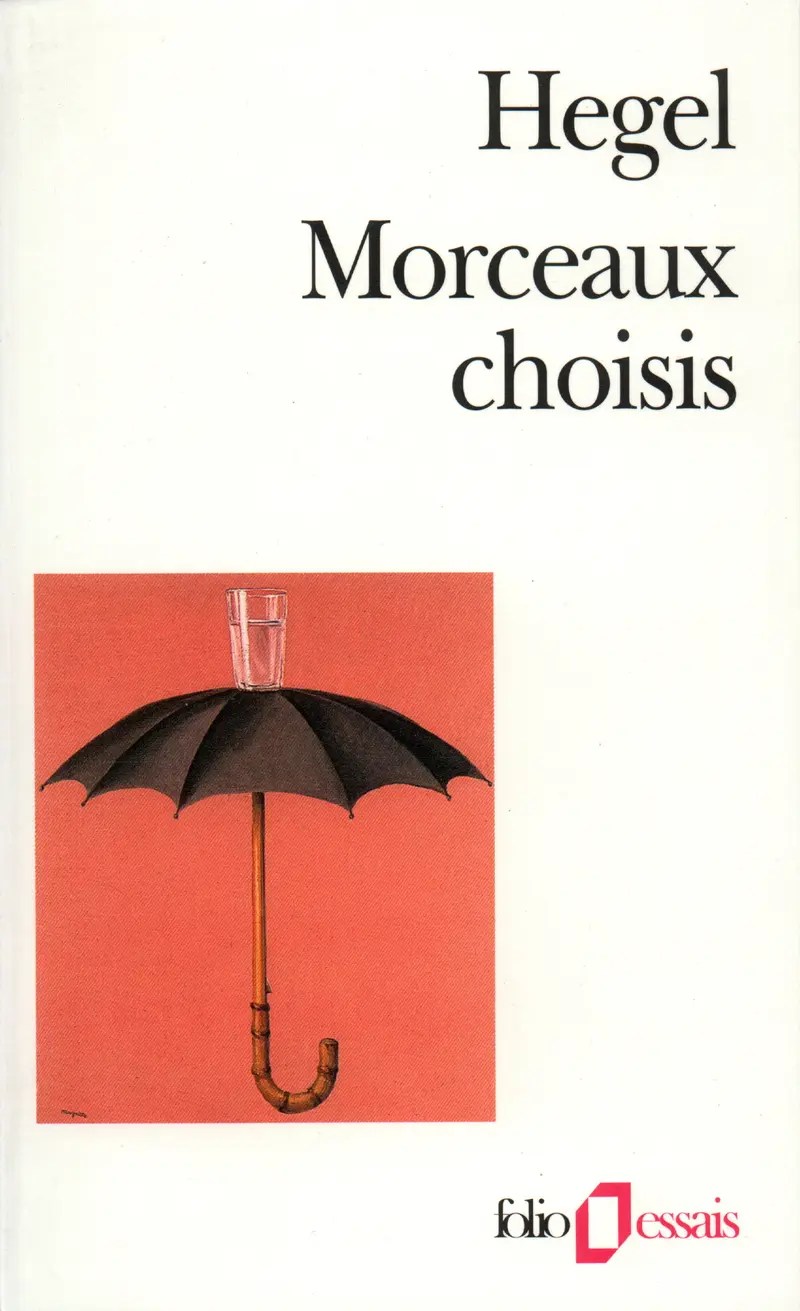
The correspondence with Lefebvre predates the correspondence with Gallimard, so it is possible Kojève rejected the offer and decided to go alone. Notably Lefebvre, along with Norbert Guterman, would publish Morceaux choisis of Hegel with Gallimard shortly afterwards. That book has gone through multiple editions, and Gallimard’s website says it was published on 1 January 1939. Georges Canguilhem damns the book with faint praise: “A useful book, but more likely, by its very nature, to whet the appetite than to satisfy it” (“Hegel en France”, Œuvres completes IV, 327). However, the amount of translated material Lefebvre tells Kojève could be part of a joint venture is much more extensive than the short passages included in Morceaux choisis.
In April 1939 – ten months after the discussion of royalties – Groethuysen writes to Kojève to say that Gallimard has told him that Fernand Aubier will be publishing a translation of the Phenomenology by Jean Hyppolite – misspelt as ‘Hippolyte’. Gallimard doesn’t think two versions in quick succession would be viable. Groethuysen tells Kojève that this is “more than annoying… it’s a disaster”. He says that Hyppolite’s translation was known about, but that he had been assured it was not going to be published. Groethuysen wonders if at least a part of Kojève’s translation could be published, with a commentary. A second-best solution, he thinks, but at least something. Here, again, the correspondence in the files breaks off.
Hyppolite had reportedly chosen not to attend Kojève’s seminar for fear of being influenced. His translation of Hegel’s Phenomenology of Spirit would appear in two volumes in 1939 and 1941, and his massive commentary on the text, Genesis and Structure in Hegel’s Phenomenology of Spirit, also in two volumes in 1946. The latter was recently reedited by Giuseppe Bianco for Classiques Garnier. Amazing as it might seem, these two pieces of work were submitted for his doctoral degree: Genesis and Structure the primary thesis; the translation the secondary thesis. Hyppolite is a major and, I think, somewhat neglected figure today, though there has been some interest in his work in English recently – Philosophy, Politics and Critique recently had a few pieces about him, for example. Hyppolite was the supervisor of Foucault’s recently rediscovered and published diploma thesis on Hegel and rapporteur for his secondary doctoral thesis translating and commenting on Kant’s Anthropology. Bianco has edited a good collection on Hyppolite, which includes his Collège de France course summaries (on which, see here).
Kojève’s commentary, when it did appear after the war in 1947, was a significant moment in itself. The different readings of Hyppolite and Kojève have been discussed in various places. I briefly talk about this in a piece on “Canguilhem, Dumézil, Hyppolite” (requires subscription), mainly through the reading Canguilhem made of “Hegel en France”. Canguilhem rightly indicates the importance of Jean Wahl and Koyré’s earlier work on Hegel in shaping the French reception. Koyré’s important essays on Hegel, including ones on the translation challenges, are reprinted in Études d’histoire de la pensée philosophique. That’s a side of his work which is neglected today, compared to his work on the philosophy and history of sciences.
The correspondence in the fonds Kojève indicates that Lefebvre had much more material than he and Guterman published – or, possibly more likely, he and Guterman had more material which Lefebvre told Kojève he could use for their project. By 1938 Guterman, who was Jewish, was in exile in the United States, and he and Lefebvre’s joint working relationship was largely conducted by letter. I’d long thought it was Guterman who did most of the translation work for their joint ventures before the war, with Lefebvre taking the lead on the commentaries. Guterman would carve out a career in the US as a translator, as well as working with Leo Löwenthal on Prophets of Deceit: A Study of the Techniques of the American Agitator, first published in 1949, recently reedited by Verso. The Second World War and the German occupation made publishing much more complicated, as I discuss in relation to Lefebvre in an earlier piece – “Henri Lefebvre and the “Liste Otto” of Prohibited Books in Occupied France“.
Although the translation work itself doesn’t seem to be discussed in Marco Filoni or Jeff Love’s books on Kojève, Stefanos Geroulanos has indicated how much work Kojève had done preparing his lectures over several years, including translating Hegel.
With the exception of the final year of his course, 1938–39, where his lectures numbered to twelve, Kojève always gave more than twenty lectures (twenty-one the first year, twenty-two the second, twenty-four the third, twenty-six the fourth, and twenty-five the fifth). Kojève numbered the pages of his lecture notes, including in this count the translations he worked off. Though notes from the first four years are relatively scarce, the translation survives in full, and the final page numbers in each of these years indicate a total of more than 2,682 pages of notes.
Those notes are in the Kojève archive. Perhaps the Lefebvre archive will shed light on what, if anything, survives of the material he told Kojève about. Lefebvre’s papers have been deposited at IMEC, and are currently being catalogued. 140 boxes of material is going to take some time for researchers to make sense of – that’s a similar amount of material to the different Foucault collections at the Bibliothèque nationale. How a collaborative project to merge these two translations by Kojève and Lefebvre could have worked is open to question. But the correspondence alone sheds a little light on an interesting aspect of the story of Hegel in twentieth-century France.
Giuseppe Bianco ed., Jean Hyppolite: Entre Structure et Existence, Paris: ENS, 2013.
Georges Canguilhem, “Hegel en France”, Revue d’histoire et de philosophie religieuses 28-29 (4), 1948, 282-97, reprinted in Œuvres complètes tome IV: Résistance, philosophie biologique et histoire des sciences 1940-1965, ed. Camille Limoges, Paris: Vrin, 2015, 321-41.
Stuart Elden, Understanding Henri Lefebvre: Theory and the Possible, London: Continuum, 2004.
Stuart Elden, The Early Foucault, Cambridge: Polity, 2021.
Marco Filoni, The Life and Thought of Alexandre Kojève, Evanston: Northwestern University Press, 2025.
Marco Filoni and Massimo Palma eds., Tyrants at Work: Philosophy and Politics in Alexandre Kojève, Napoli: Editions ETS, 2024.
Michel Foucault, La constitution d’un transcendantal historique dans la Phénoménologie de l’esprit de Hegel: Mémoire du diplôme d’études supérieures de philosophie, ed. Christophe Bouton, Paris: Vrin, 2024.
Stefanos Geroulanos, An Atheism that is not Humanist Emerges in French Thought, Stanford University Press, 2010.
Boris Groys, Alexandre Kojève: An Intellectual Biography, London: Verso, forthcoming 2025.
Norbert Guterman and Leo Löwenthal, Prophets of Deceit: A Study of the Techniques of the American Agitator, Verso, 2021 [1949].
G.W.F. Hegel, Morceaux Choisis, ed. and trans. Henri Lefebvre and Norbert Guterman, Paris: Gallimard, 1939.
G.W.F. Hegel, Phénoménologie de l’esprit, trans. Jean Hyppolite, Paris: Aubier, two volumes, 1939-41.
Jean Hyppolite, Genèse et structure de la Phénoménologie de l’esprit de Hegel, ed. Giuseppe Bianco, Paris: Classiques Garner, 2022 [1946]; Genesis and Structure in Hegel’s Phenomenology of Spirit, trans. Samuel Cherniak and John Heckmann, Evanston: Northwestern University Press, 1974.
Isabel Jacobs and Trevor Wilson eds. “Alexandre Kojève and Russian Philosophy”, Studies in East European Thought, Vol 76 No 1, 2024.
Immanuel Kant, Anthropologie du point de vue pragmatique, trans. Michel Foucault; and MichelFoucault, Introduction à l’Anthropologie, Paris: Vrin, 2008.
Alexandre Kojève, Introduction à la Lecture de Hegel, ed. Raymond Queneau, Paris, Gallimard, 1947.
Alexandre Kojève, Introduction to the Reading of Hegel: Lectures on the Phenomenology of Spirit, ed. Allan Bloom, trans. James H. Nicholls, Jr., New York: Basic Books, 1969.
Alexandre Kojève, Essai d’une histoire raisonée de la philosophie païenne, Paris: Gallimard, three volumes, 1968-73.
This is the twenty-ninth post of a weekly series, where I post short essays with some indications of further reading and sources, but which are not as formal as something I’d try to publish more conventionally. They are usually tangential to my main writing focus, a home for spare ideas, asides, dead-ends and possible futures. I hope there is some interest in them. They are provisional and suggestions are welcome.
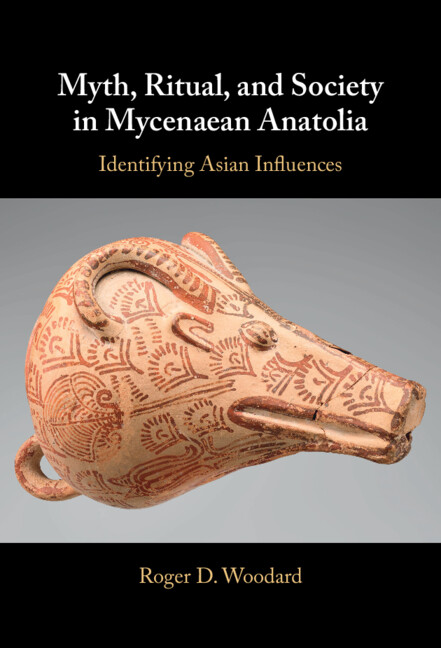
Despite the Mycenaean Linear B script having been deciphered some seventy years ago, much has remained uncertain regarding the ritual ideology of Mycenaean society that the Linear B documents reveal. Roger Woodard here explores this problem by investigating a new range of sources from the Late Bronze Age and Early Iron Age, together with processes of the transfer of knowledge between Anatolia and European Hellas. Bringing together evidence from Mycenaean culture with mythic and cult traditions of Iron Age Greek culture and Indo-Iranian sources, he reveals the close parallels between Mycenaean and Vedic ritual structures and practices, these being particular expressions of Mycenaean Asianism. He also demonstrates how features inspired from Indo-Iranian sources are present in Aeolian Greek epic traditions that emerged during the Iron Age, notably the Argonautic search for the Golden fleece.
Provides examples of inter-disciplinary and multi-disciplinary approaches to the study of Mycenaean and Early-Iron-Age Greek language, myth, society, and culture
Provides examples of inter-disciplinary approaches to the study of Indic and Iranian cult as it existed along the frontiers of Anatolia and its influence on Mycenaean Greek mythic thinking within Anatolia
Makes the arguments and findings accessible to specialist and non-specialist readers alike
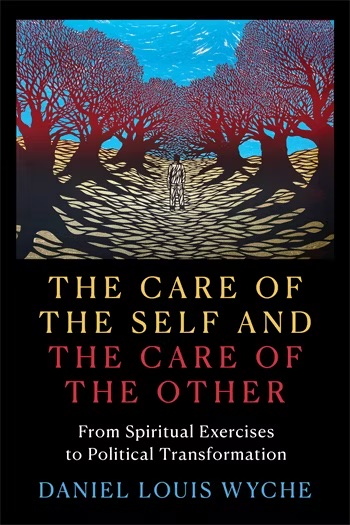
What is the relationship between the ethical transformation of the self and the political transformation of the world? This book explores the ways several twentieth-century thinkers can help us relate the “care of the self” to the “care of the other,” tracing their accounts of how and why practices intended to change an individual can help spur social and political change, just as collective political action can produce a transformation of the self.
Daniel Louis Wyche examines the political implications of what he calls practices of ethical self-change. These include Pierre Hadot’s notion of “spiritual exercises”; what the French sociologist of labor Georges Friedmann calls the “interior effort”; Michel Foucault’s ethics of the “care of the self”; what Martin Luther King Jr. refers to as the work of “self-purification” integral to direct action; and Audre Lorde’s claim that caring for herself constitutes a form of “political warfare.” Wyche argues that these concepts can collectively provide an understanding that effaces distinctions between the care of the self, the other, and the community in a way that avoids reducing the political to the ethical. Ambitious and nuanced, The Care of the Self and the Care of the Other offers a framework for unifying individual moral action and collective political life.