Empowering Workers in an Age of Automation explores how labour market policymakers should respond to the threats and opportunities that arise from automation, artificial intelligence, and other forms of technological progress. The book’s aim is twofold. First, it is to develop and defend a novel philosophical framework for theorizing about the demands of social justice in the labour market, which Parr calls ‘the empowerment model’. At the heart of this view is a concern for fairness and, more specifically, a concern for the growing inequality in prospects between members of the working-class and their middle- and upper-class counterparts. Second, it is to examine a range of concrete political controversies relating to labour markets and the future of work in the light of the empowerment model. The analysis presented is wide-ranging, and includes discussion of technological unemployment, the four day work week, the gender earnings gap, working from home, and role of higher education.
Throughout the text, Parr is keen to caution against sensationalist narratives, and instead emphasizes the more prosaic but still hugely consequential ways in which technology is changing how we work. To do this, he draws on a wealth of empirical research, and extensively from findings in labour economics. The result is a book that takes seriously, and aims to shed light on, some of the most pressing challenges that we actually face.
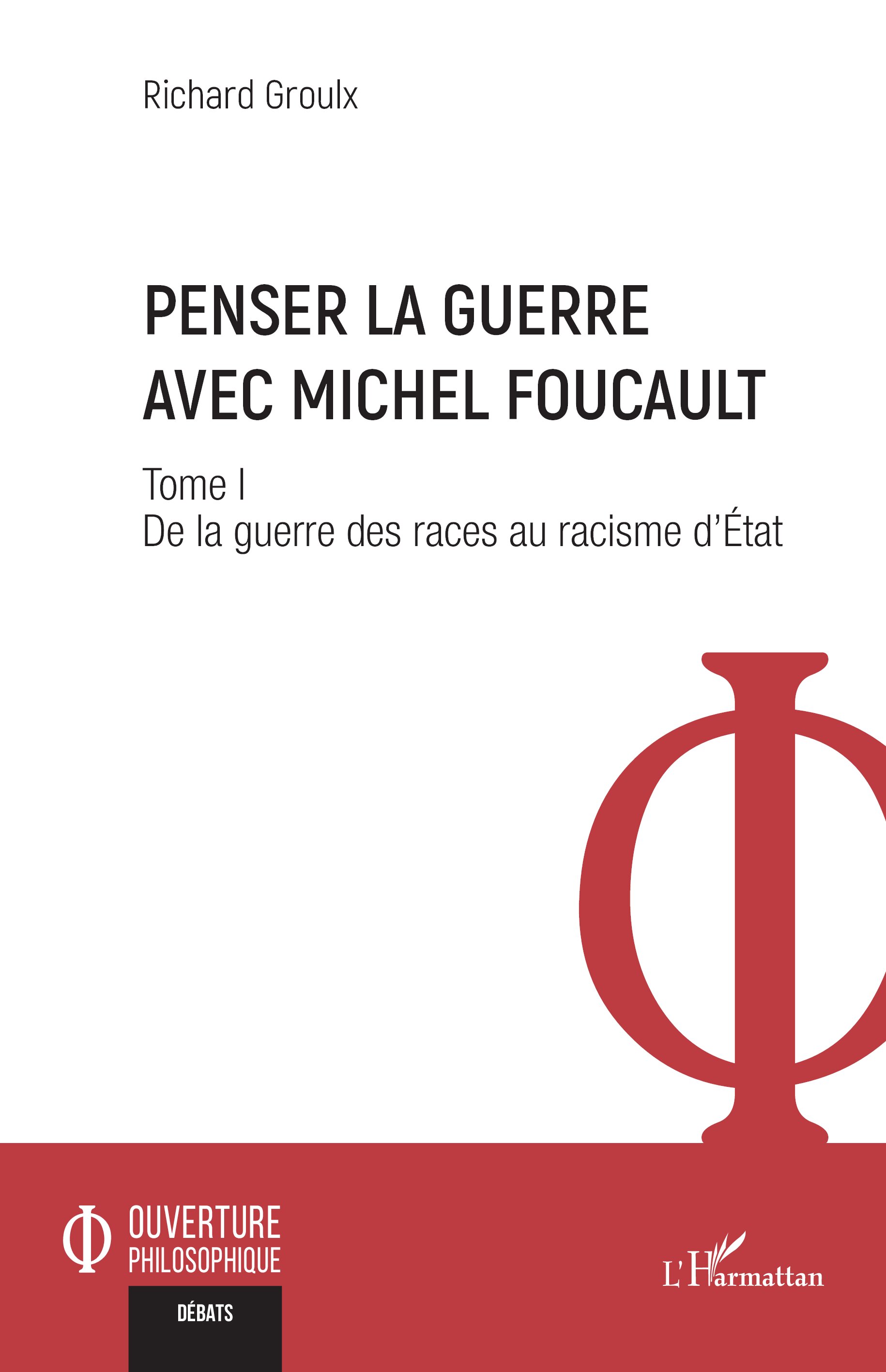
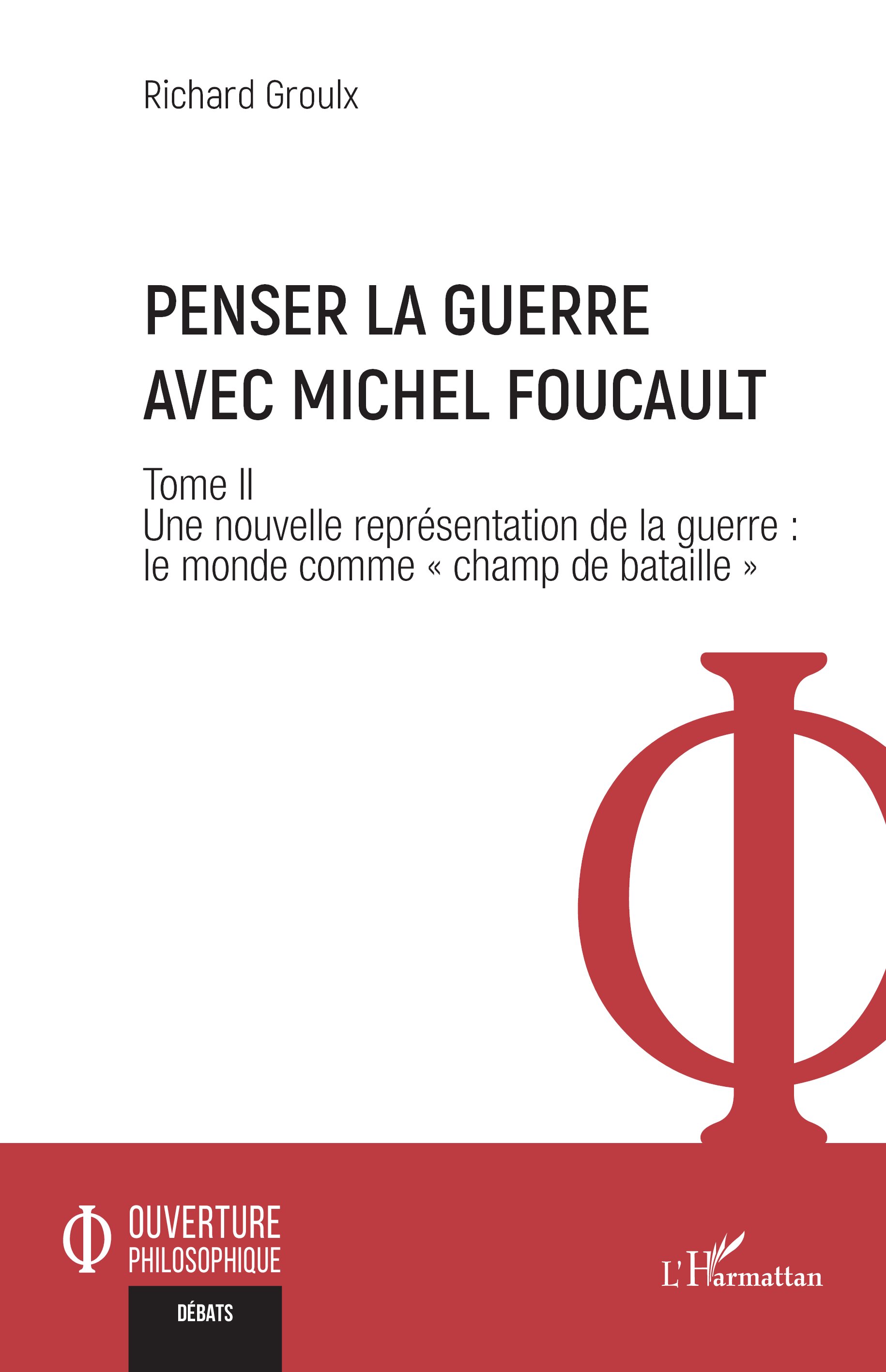
Au fond de la politique, qu’y a-t-il sinon la guerre ? Et cette guerre, comment la définir ? Telles sont les questions posées par Michel Foucault dans son cours au Collège de France, Il faut défendre la société, comme une analyse des fondements de la conception raciste et exclusiviste de la société. À la première question, il répond que la politique a été pensée depuis toujours comme un rapport de force. À la deuxième question, la réponse toujours actuelle ne manque pas de faire grincer des dents, puisqu’au fondement des batailles menées par la politique, que trouvons-nous sinon des « guerres de races » ? Renversant l’axiome de Carl von Clausewitz qui soutenait qu’avec la modernité « la guerre n’est que la simple continuation de la politique par d’autres moyens », Foucault affirme, au contraire, qu’aujourd’hui la politique est de plus en plus continuée par la guerre. À l’interrogation « sommes-nous à la veille de faire la guerre ? », il invite à se demander s’il est possible d’arrêter cette machine infernale.
Au sujet de la représentation des conflits comme « guerre des races », Foucault demande s’il est possible de filtrer la « violence barbare ». De la même façon, comment filtrer la « violence de l’État » ? À la première question, il répond que le récit historique a produit trois filtres qui permettent de rendre compte à la fois de la monarchie absolutiste et de son épuisement jusqu’à la Révolution avec l’émergence de l’État-nation. À la deuxième question relative au racisme d’État et à l’État d’exception qui apparaît au nom de la « défense de la société », il reste plus circonspect, en particulier quant aux attentes placées dans l’espérance de la société assurancielle ou à l’égard de ce qu’il appelle le « chantage des Lumières ». Les questions essentielles restant pour lui : comment arriver à se détacher de la représentation du conflit politique ou du dissensus intellectuel en termes de guerre ou de guerre des races ? À quelles conditions pouvons-nous renouveler la culture politique contemporaine ?
With the publication of Georges Bataille, Critical Essays Volume 2: 1949-51 (trans. Chris Turner, eds. Alberto Toscano and Benjamin Noys), English readers now have access to all of the essays in volume 11 of Bataille’s Œuvres complètes and a good chunk of volume 12. The last promised volume of Critical Essays should cover the rest of volume 12.
Given the very useful “Bibliography and Notes” in Critical Essays, doing this update was an easy task. With Volume 11, this site’s bibliography is now mainly of use for showing where the pieces which are not in Critical Essays can be found – mostly in The Absence of Myth and Essential Writings.
We should be grateful to the editors and translator for including all the hitherto untranslated pieces from the years they cover, without leaving any missing from the years they cover, and generally not providing new translations of ones already in English just for the sake of it. Given the sporadic and inconsistent approach to translations of Bataille before this, this more systematic approach is very welcome. One thing which initially confused me is that some of Bataille’s longer reviews are split into two or three essays in the English.
Shakespeare in Tongues interrogates the popular conflation of “the language of Shakespeare” with English by examining the role Shakespeare’s works have played in overlapping histories of colonialism, slavery, and migration that continue to shape the linguistic cultures of the United States.
Opening up urgent and overdue conversations about linguistic oppression, racism, and resistance within the settler colonial nation-state, Kathryn Vomero Santos draws our attention to artists, activists, and educators who have conjured, embraced, remade, and rejected Shakespeare in service of multilingual counternarratives that push back against dominant perspectives, refuse assimilation, and strive for more polyglot and polyvocal futures. As they shine a bright light on the legacies of the federal Indian boarding school system, Indigenous language revitalization efforts, the militarization of the U.S.–Mexico border, and battles over ethnic studies in classrooms, these critical and creative engagements with Shakespeare offer powerful examples of how his works might be used to facilitate a more truthful understanding of the past and to identify restorative paths forward.
Shakespeare in Tongues issues an imperative to redirect the material and intellectual resources that have been devoted to Shakespeare and his language toward truth, justice, and healing. This is essential reading for anyone studying or researching Shakespeare, race, translation, adaptation, and comparative literatures.
In his Vocabulaire, the Dictionary of Indo-European Concepts and Society,Émile Benveniste mentions some questions relating to spatiality and territory that I have briefly surveyed here. One question he raised I said was worthy of further attention.
In his French text, and its English translation, the word in question is transliterated as wánaks, but it is usually rendered as wanax. It is a term from Mycenaean Greek, first accessed through the deciphering of the Linear B script. It is found in a later form in Homer, usually written as anax,but there is a danger in assuming that term straight-forwardly explains the earlier one (see Palaima, “The Nature of the Mycenaean Wanax”, 123; Yamagata, “ἂναξ and βασιλεύς in Homer”). (I understand the difference in spelling is because the letter digamma or wau at the beginning of the word became obsolete.) James T. Hooker sets out the linguistic evidence, and its limitations, in “The wanax in the Linear B Texts”; Lothar Willms explores its plausible roots in “On the IE Etymology of Greek (w)anax”.
Benveniste was an interested participant in the first international conference after Michael Ventris’s decipherment of Linear B in the early 1950s (on which, see here). In his Vocabulaire Benveniste describes the wanax as the “holder of royal power, even if we cannot define the extent of his territory [l’étendue de son territoire]” (Vocabulaire Vol II, 24; Dictionary,320). In the earlier post I gave this as one example of how his work was more interesting for spatial and territorial questions than I had perhaps previously recognised.
Benveniste indicates that:
Greek possesses two names for the king, basileús (βασιλεύς) and wánaks (wάναξ). These two terms do not exist on the same level, but they both defy any etymological analysis. They have no correspondent in other languages, and we cannot even detect any connections, even partial ones, within Greek itself (Vocabulaire Vol II, 23; Dictionary, 319).
For Benveniste, the Mycenaean sources indicate that “the basileús was merely a local chieftain, a man of rank [notable] but far from a king”, without “political authority”, whereas the wánaks was “the holder of royal power” (Vocabulaire Vol II, 24; Dictionary, 320). Benveniste suggests that the analysis of the words in Homer can be revealing. Wánaks is a term used to describe Apollo and also Zeus, while basileús is not used to describe a god. A human could be both a wánaks and a basileús, but not all the chieftains have the higher status. “There are even degrees and a kind of hierarchy among basileîs, to judge by the comparative basileúteros and the superlative basileútatos, whereas there is no such variation on wánaks in Homer” (Vocabulaire Vol II, 25; Dictionary, 321). Benveniste therefore suggests this distinction:
This implies that wánaks alone designates the reality of royal power; basileús is no more than a traditional title held by the chief of the génos, but which does not correspond to a territorial sovereignty [une souveraineté territoriale] and which a number of persons may hold in the same place (Vocabulaire II, 26; Dictionary,321).
The relation of the basileus, often translated as king, to the genos, the people in the sense of a shared kinship or tribe, is another question entirely. But the idea of the wanax is interesting, since it suggests a higher form of kingships over more tribal chiefs, with a meaning close to king of kings or high king. If the basilieús is subservient, Benveniste stresses that this form of power could be shared and is not territorial in its object.
As Margalit Fox indicates:
At the head of each palace hierarchy stood the wanax, the early Greek word for ‘king’ or ‘ruler’, written, according to Linear B spelling rules, as wa-na-ka. (The word’s descendant, anax, meaning ‘lord’ or ‘master’, turns up five hundred years later in Homeric Greek. The wanax was the administrative leader of each Mycenaean kingdom, overseeing domestic economics and foreign trade, military preparedness, ritual observance, law, and in an inevitability that seems a hallmark of every human civilization, taxation (The Riddle of the Labyrinth, 272).
This is important in terms of a type of political power and its relation to a spatial question. In a discussion of the Greek word krátos, Benveniste draws some distinctions. In the first sense, it implies “superiority [prevalence] or advantage”, which may be “power [pouvoir] as an individual attribute”, i.e. being master of oneself, or“‘power [pouvoir]’ as power [puissance] in a territorial or political sense”. The other sense is about power as hard compared to soft, and may mean “brutal, cruel, painful”. Of the latter, he says that “it never acquires a social or political value and it has unfavourable connotations” (Vocabulaire II, 80-81; Dictionary,369). The first though, itself split, and there is a distinction made between pouvoir and puissance, hard to render in English, but perhaps power as capacity and power as force might capture something of this. (Foucault almost exclusively uses ‘pouvoir’.)
If some rulers do not necessarily have a spatial extent of their power, Benveniste does recognise that other terms do have a spatial component. One example is the demos, from which of course we get the word democracy – the kratos of the demos. “Dēmos is a territorial and political concept [concept territorial et politique], and it designates both a division of land [une portion de territoire] and the people who inhabit it” (Vocabulaire II, 90; Dictionary,378). This fits with an analysis I have made elsewhere of the different senses of the Greek deme (see Elden, The Birth of Territory, Chapter 1, 37-38).
The wanáks or wanax might be a large land-owner, but the power they exercise is not primarily tied to land. As Cynthia Shelmerdine says:
His superior rank and title make it easy to see him as the political and administrative head of state, and the throne in the main megaron [great hall] was no doubt reserved for him, but other archaeological evidence for kingship is almost non-existent: the Mycenaeans, like the Minoans, lacked the impulse to depict their ruler in frescoes or other arts. The limited focus of the tablets, in turn, means that it is hard to discern the full range of his functions. We never see the king acting directly as a military leader, a lawgiver, or an international statesman. Indeed, the noun wanax appears fewer than 20 times in the whole Linear B corpus of some 4500 tablets, and only two texts show the king actually doing anything (“Mycenean Society”, 128).
These two instances are appointing someone to a role “probably a provincial official”, and taking part in a ceremony. Shelmerdine says the role is clearer as an “economic administrator” (“Mycenean Society”, 128-29). Thomas G. Palaima offers a detailed discussion, relating this to Georges Dumézil’s analysis of the three functions, and following Dumézil’s cautions about the situation of the king in relation to them. Palaima also wants to guard against projecting back from subsequent understandings into earlier models – the later Greek basileus, the Homeric wanax or basileus, and the Mycenaean wanax may not be straight-forwardly equivalent; nor are these understandings “purely or mainly Indo-European”, since the words are “likely borrowings from foreign cultures” (“The Nature of the Mycenaean Wanax”, 122-23).
While Shelmerdine (and Benveniste) both stress the rule or administrative oversight role are not territorial, other analyses do stress that aspect. Klaus Kilian argues that the wanax is both the “head of the social hierarchy” and “the most important (though not the sole) co-ordinator of the landholding system” (“The Emergence of Wanax Ideology in the Mycenaean Palaces”, 293). He goes on to suggest that the wanax of Tiryns was “the secular and religious lord of his territory” (293-94). Palaima suggests that:
At the pinnacle of the Mycenaean socio-political hierarchy stood the wanax, the figure around whom the Mycenean palatial system was created. It is not difficult to speculate how and why a borrowed, non-Greek term was used for this central figure of authority and power. There was a transition from a society with many locally based chieftains (each a basileus) to one in which single figures (each a wanax) held power over larger, separate territories and over the local communities in which the basilêes continued to function (“The Nature of the Mycenaean Wanax”, 125).
In time, basileus would become the more common term for a ruler, and the wanax seems to have become less common. I would hesitate over the use of ‘territory’ to describe the object of their rule, but the distinction, and the spatial extent of their power, is an interesting question raised by Benveniste, and as I’ve indicated here, by other writers on Greek kingship.
Émile Benveniste, Le Vocabulaire des institutions indo-européennes, 2 volumes,Paris: Éditions de Minuit, 1969; Dictionary of Indo-European Concepts and Society, trans. Elizabeth Palmer, Chicago: Hau Books, 2016; originally published as Indo-European Language and Society, Coral Gables: University of Miami Press, 1973.
Pierre Carlier, “Wa-na-ka derechef: Nouvelles réflexions sur les royautés mycéniennes”, BCH [Bulletin de Correspondance Hellénique] 122 (2), 1998, 411-15, https://una-editions.fr/wa-na-ka-derechef/
Stuart Elden, The Birth of Territory, Chicago: University of Chicago Press, 2013.
Margalit Fox, The Riddle of the Labyrinth: The Quest to Crack an Ancient Code and the Uncovering of a Lost Civilisation, New York: Ecco, 2014.
J.T. Hooker, “The Wanax in the Linear B Texts”, Kadmos 18, 1979, 100-11.
Klaus Kilian, “The Emergence of Wanax Ideology in the Mycenaean Palaces”, Oxford Journal of Archaeology 7 (3), 1988, 291-302.
Stephen O’Brien, “The Development of Warfare and Society in ‘Mycenaean’ Greece”, Stephen O’Brien and Daniel Boatright (eds.), Warfare and Society in the Ancient Eastern Mediterranean. Papers arising from a colloquium held at the University of Liverpool, 13th June 2008, BAR International Series, 2013, 25-42.
Thomas G. Palaima, “The Nature of the Mycenaean Wanax: Non-Indo-European Origins and Priestly Functions”, in Paul Rehak (ed.), The Role of the Ruler in the Prehistoric Aegean, Liège: Université de Liège, 1995, 119-39.
Cynthia W. Shelmerdine, “Mycenaean Society” in Yves Duhoux and Anna Morpurgo Davies (eds.), A Companion to Linear B: Mycenaean Texts and their World, Louvain-la-Neuve: Peeters, 2008, Vol I, 115–58.
Cynthia W. Shelmerdine, “The Individual and the State in Mycenaean Greece”, Bulletin of the Institute of Classical Studies 54 (1), 2011, 19-28.
Lothar Willms, “On the IE Etymology of Greek (w)anax”, Glotta: Zeitschrift für griechische und lateinische Sprache 86, 2010, 232-71.
Naoko Yamagata, “ἂναξ and βασιλεύς in Homer”, The Classical Quarterly 47 (1), 1997, 1-14.
This is the twenty-eight post of a weekly series, where I post short essays with some indications of further reading and sources, but which are not as formal as something I’d try to publish more conventionally. They are usually tangential to my main writing focus, a home for spare ideas, asides, dead-ends and possible futures. I hope there is some interest in them. They are provisional and suggestions are welcome.
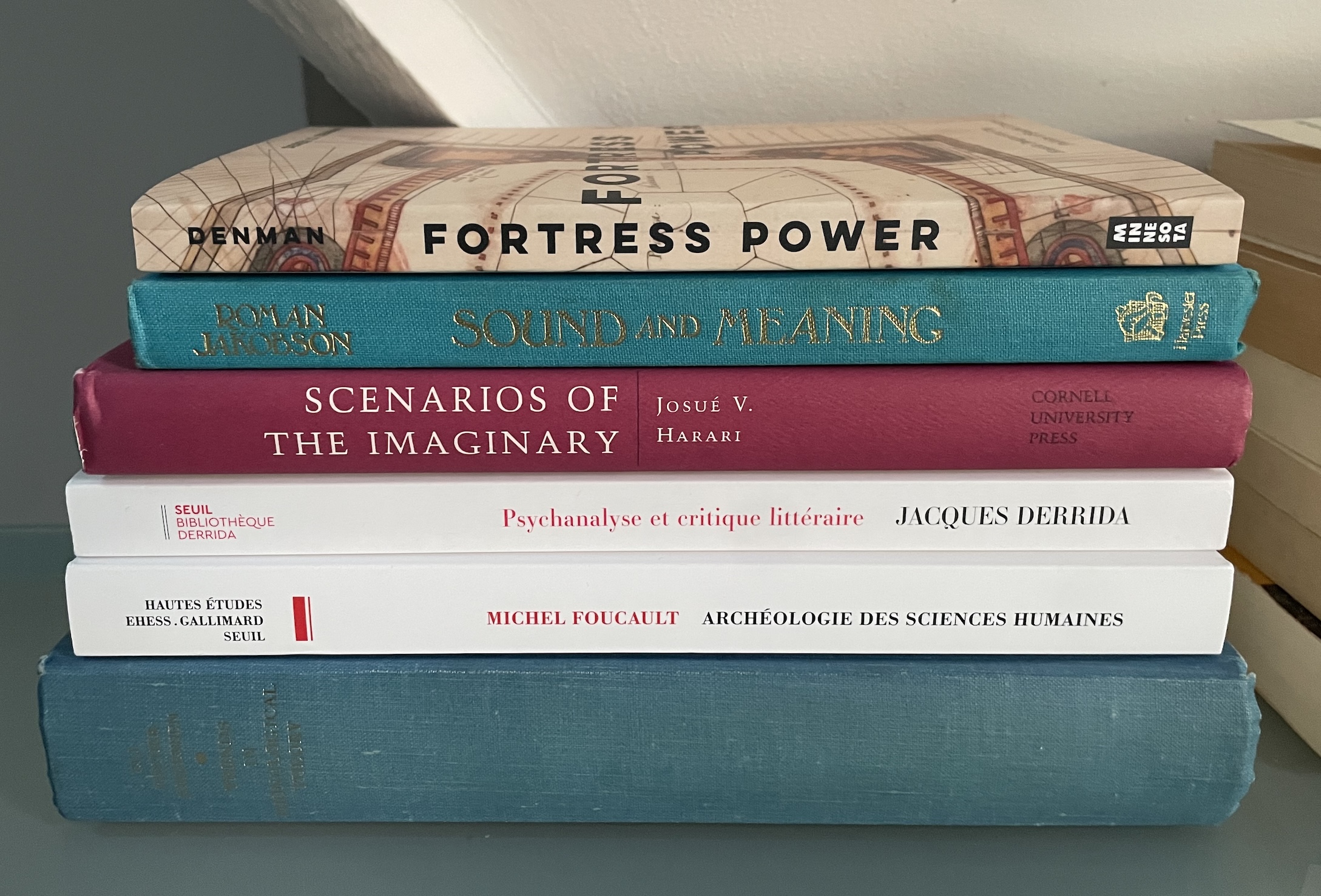
In Michel Foucault’s published and unpublished writings, between Naissance de la Clinique (1963) and L’archeologie du savoir (1969), the recurrence of the term “archaeology” marks the centrality of this notion in the period when the philosopher’s research stood out in the “structuralist” intellectual landscape for its binding together of philosophical reflection and historical research.
Following an analogy that Freud applies to psychoanalysis, archaeology emerges as a historiography of the unthought: that is, as an attempt to reconstruct how what from the past arrives to constitute the present in which we live, without ever having been present in the explicit consciousness of historical agents. Archaeology therefore starts from what is given in the present – in Foucault’s work, the objects or practices of knowledge – and traces back the layers of historicity that remain imperceptible to the immediate gaze of those whose actions are shaped through these objects and practices of knowledge.
However, the title of the chair at the Collège de France that Foucault came to hold in 1970 – Histoire des systèmes de pensée – suggests a more traditional history of philosophy or ideas. And from 1970 onwards, Foucault largely abandons “archaeology”, rendering the term somewhat enigmatic and, in any case, not fully explored in its implications.
The hypothesis animating this special issue is that archaeology, far from being reduced to a stylistic device, constitutes a philosophical concept in its own right, whose meanings and possible developments are not limited to Foucault’s direct reference to it in his works. A decisive factor in the reconfiguration of the relationship between philosophy and historiography (which is far from any philosophy of history in which becoming is crushed under the weight of retrospective awareness), archaeology also implies – as Enzo Melandri suggested as early as 1968 (La linea e il circolo) – an intention to recover what remains unexpressed or repressed from the past. While in the historical field, this entails the distinction in principle between res gestae and historia rerum gestarum (between actual events and their appearance in explicit awareness), in the philosophical field the effect of archaeology seems to consist in a therapeutic posture aimed at dissolving the painful “cramps” in the self-consciousness of an epoch or a society.
On the occasion of the centenary of Michel Foucault’s birth and in light of the posthumous publication of numerous unpublished works by the philosopher, this special issue of Discipline Filosofiche aims to offer a reflection on the “archaeological” method in philosophy and the history of thought.
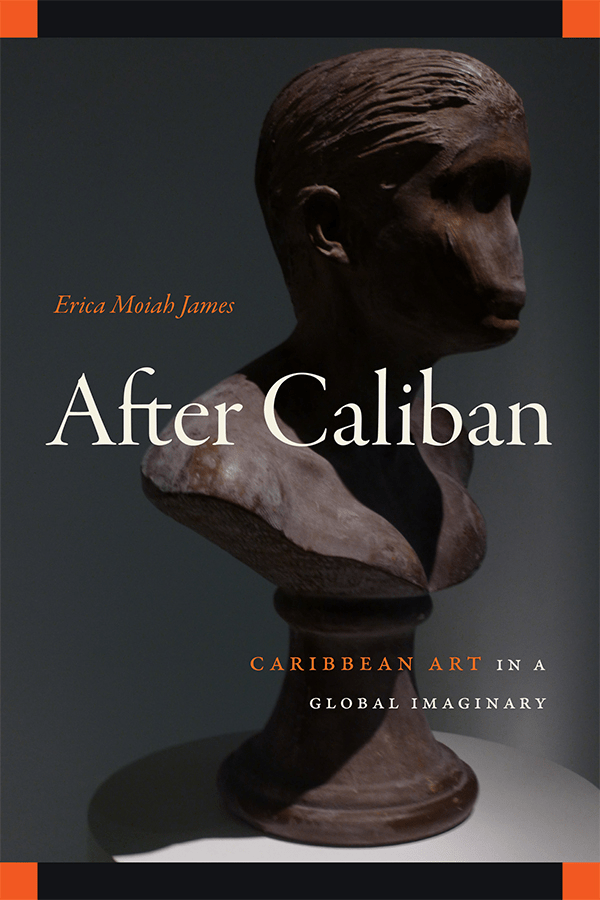
In After Caliban, Erica Moiah James examines the rise of global Caribbean artists in the 1990s and their production of a decolonized art history for the Caribbean. She draws on Aimé Césaire’s rewriting of Shakespeare’s The Tempest, in which Caliban becomes the sole author of his own story, dissolving his fixed position as colonized in relation to Prospero as colonizer. James shows how visual artists such as Marc Latamie, Janine Antoni, Belkis Ayón, Edouard Duval-Carrié, and Christopher Cozier followed Césaire’s model by employing a range of practices and methodologies that refused marginalization. Just as Césaire decolonized The Tempest, so too did these artists, who crafted a decolonial aesthetic that redefined their own cultural and historical narratives and positioned art as a key pathway toward a postcolonial future. By providing the foundation for a postcolonial, post-Caliban art world, these artists redefined the critical and popular notion of contemporary Caribbean art. At the same time, James argues, they fulfilled Césaire’s dream for a postcolonial Caribbean while creating a nonhegemonic art historical practice that exists beyond modern binaries and borders.
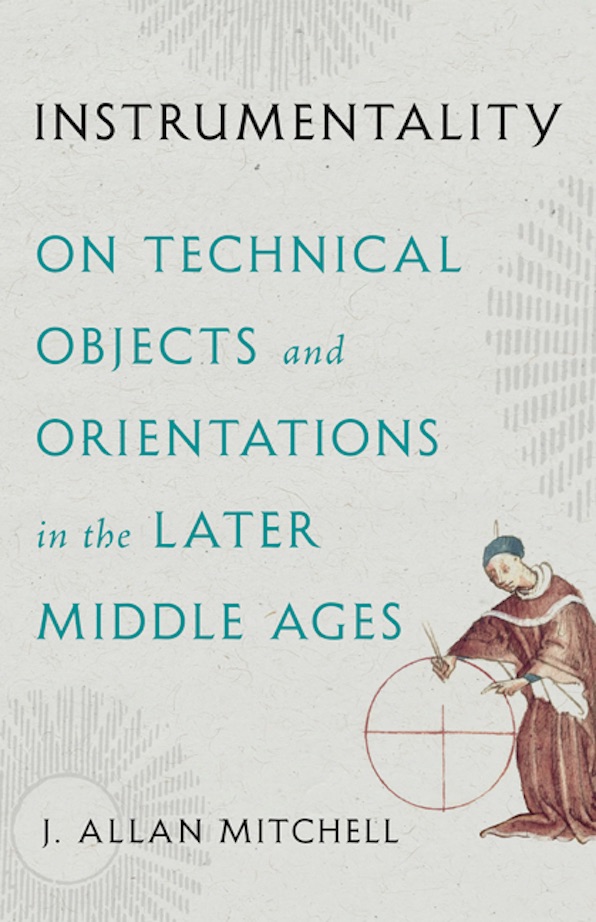
From medieval to modern, exploring instrumental attitudes toward physical gadgets, diagrams, concepts, methods, and disciplines
Opening up the instrumental condition of the human for critical reflection and renewal, Instrumentality illuminates key moments in the intellectual history of the European Middle Ages. J. Allan Mitchell reveals how, in the predigital past, we can recognize many of the operative technics, analytics, and metaphorics that continue to shape human sense and cognition today.
Exploring the diverse modalities of medieval instruments, Mitchell’s case studies encompass techniques as seemingly distinct as time-keeping mechanisms, mathematical diagrams, logical syllogisms, and the literary devices of Geoffrey Chaucer and John Gower. A cultural and intellectual history, Mitchell’s work leads readers from three-dimensional objects (physical mechanisms) to two-dimensional inscriptions (maps and diagrams) and onward to overarching disciplinary norms in the early liberal and mechanical arts. Prying loose the subtle, adaptable, and generative concept of technical objects from limiting contemporary frameworks, he shows how these instruments are indispensable to the past—and the future—of the arts and culture at large. Opening up the instrumental condition of the human for critical reflection and renewal, Instrumentality illuminates key moments in the intellectual history of the European Middle Ages. J. Allan Mitchell reveals how, in the predigital past, we can recognize many of the operative technics, analytics, and metaphorics that continue to shape human sense and cognition today.
Exploring the diverse modalities of medieval instruments, Mitchell’s case studies encompass techniques as seemingly distinct as time-keeping mechanisms, mathematical diagrams, logical syllogisms, and the literary devices of Geoffrey Chaucer and John Gower. A cultural and intellectual history, Mitchell’s work leads readers from three-dimensional objects (physical mechanisms) to two-dimensional inscriptions (maps and diagrams) and onward to overarching disciplinary norms in the early liberal and mechanical arts. Prying loose the subtle, adaptable, and generative concept of technical objects from limiting contemporary frameworks, he shows how these instruments are indispensable to the past—and the future—of the arts and culture at large.
Michael Kelly, Modern French Marxism, expanded and revised 2nd edition, Brill (Historical Materialism series), May 2025
Books in this series published in paperback with Haymarket 12 months later.
Marxist thought was a powerful force in French political and intellectual life throughout the twentieth century. This book takes you from its early beginnings to its peak in the 1970s, when it dominated the battle of ideas. You will follow conceptual debates on the materialist dialectic, explore Marxism as a system of thought, and experience the ambition of the men and women of letters who sought to change the world. This second edition is augmented with essays on how Marxist thinkers grappled with religion, everyday life, the Cold War, and other leading intellectual movements.
This is a long time since the first edition of 1982. I remember using this book when I was first working on Henri Lefebvre during my PhD – at the time there were very few books discussing his work.