CFP: Foucault’s Archaeology: Sources, Questions and Legacy – June 2026

CFP: Foucault’s Archaeology: Sources, Questions and Legacy – June 2026

Discipline Filosofiche, XXXVI, 2, 2026: Foucault’s Archaeology: Sources, Questions and Legacy, ed. by Elisabetta Basso and Andrea Cavazzini

In Michel Foucault’s published and unpublished writings, between Naissance de la Clinique (1963) and L’archeologie du savoir (1969), the recurrence of the term “archaeology” marks the centrality of this notion in the period when the philosopher’s research stood out in the “structuralist” intellectual landscape for its binding together of philosophical reflection and historical research.

Following an analogy that Freud applies to psychoanalysis, archaeology emerges as a historiography of the unthought: that is, as an attempt to reconstruct how what from the past arrives to constitute the present in which we live, without ever having been present in the explicit consciousness of historical agents. Archaeology therefore starts from what is given in the present – in Foucault’s work, the objects or practices of knowledge – and traces back the layers of historicity that remain imperceptible to the immediate gaze of those whose actions are shaped through these objects and practices of knowledge.

However, the title of the chair at the Collège de France that Foucault came to hold in 1970 – Histoire des systèmes de pensée – suggests a more traditional history of philosophy or ideas. And from 1970 onwards, Foucault largely abandons “archaeology”, rendering the term somewhat enigmatic and, in any case, not fully explored in its implications.

The hypothesis animating this special issue is that archaeology, far from being reduced to a stylistic device, constitutes a philosophical concept in its own right, whose meanings and possible developments are not limited to Foucault’s direct reference to it in his works. A decisive factor in the reconfiguration of the relationship between philosophy and historiography (which is far from any philosophy of history in which becoming is crushed under the weight of retrospective awareness), archaeology also implies – as Enzo Melandri suggested as early as 1968 (La linea e il circolo) – an intention to recover what remains unexpressed or repressed from the past. While in the historical field, this entails the distinction in principle between res gestae and historia rerum gestarum (between actual events and their appearance in explicit awareness), in the philosophical field the effect of archaeology seems to consist in a therapeutic posture aimed at dissolving the painful “cramps” in the self-consciousness of an epoch or a society.

On the occasion of the centenary of Michel Foucault’s birth and in light of the posthumous publication of numerous unpublished works by the philosopher, this special issue of Discipline Filosofiche aims to offer a reflection on the “archaeological” method in philosophy and the history of thought. 

All the details here; thanks to Foucault News for the link
Posted in Michel Foucault | 2 Comments

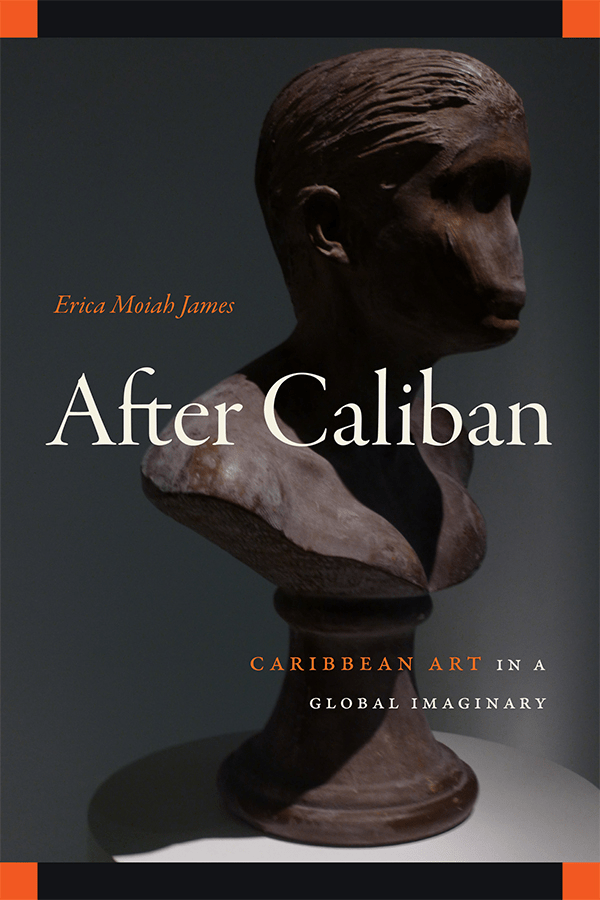
Erica Moiah James, After Caliban: Caribbean Art in a Global Imaginary – Duke University Press, October 2025

Erica Moiah James, After Caliban: Caribbean Art in a Global Imaginary – Duke University Press, October 2025

The introduction is available open access now.

In After Caliban, Erica Moiah James examines the rise of global Caribbean artists in the 1990s and their production of a decolonized art history for the Caribbean. She draws on Aimé Césaire’s rewriting of Shakespeare’s The Tempest, in which Caliban becomes the sole author of his own story, dissolving his fixed position as colonized in relation to Prospero as colonizer. James shows how visual artists such as Marc Latamie, Janine Antoni, Belkis Ayón, Edouard Duval-Carrié, and Christopher Cozier followed Césaire’s model by employing a range of practices and methodologies that refused marginalization. Just as Césaire decolonized The Tempest, so too did these artists, who crafted a decolonial aesthetic that redefined their own cultural and historical narratives and positioned art as a key pathway toward a postcolonial future. By providing the foundation for a postcolonial, post-Caliban art world, these artists redefined the critical and popular notion of contemporary Caribbean art. At the same time, James argues, they fulfilled Césaire’s dream for a postcolonial Caribbean while creating a nonhegemonic art historical practice that exists beyond modern binaries and borders.

Posted in William Shakespeare | Leave a comment

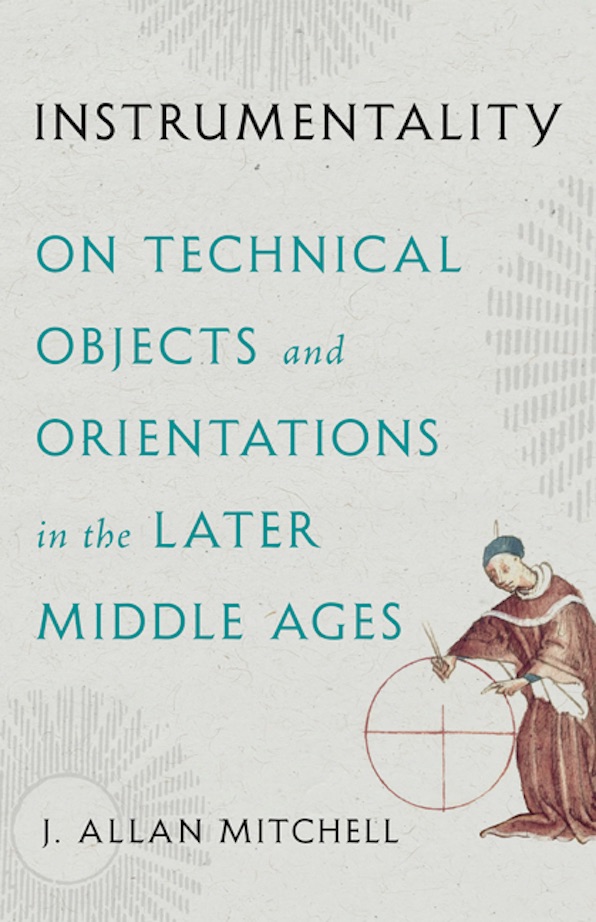
J. Allan Mitchell, Instrumentality: On Technical Objects and Orientations in the Later Middle Ages – University of Minnesota Press, October 2024

J. Allan Mitchell, Instrumentality: On Technical Objects and Orientations in the Later Middle Ages – University of Minnesota Press, October 2024

From medieval to modern, exploring instrumental attitudes toward physical gadgets, diagrams, concepts, methods, and disciplines

Opening up the instrumental condition of the human for critical reflection and renewal, Instrumentality illuminates key moments in the intellectual history of the European Middle Ages. J. Allan Mitchell reveals how, in the predigital past, we can recognize many of the operative technics, analytics, and metaphorics that continue to shape human sense and cognition today. 

Exploring the diverse modalities of medieval instruments, Mitchell’s case studies encompass techniques as seemingly distinct as time-keeping mechanisms, mathematical diagrams, logical syllogisms, and the literary devices of Geoffrey Chaucer and John Gower. A cultural and intellectual history, Mitchell’s work leads readers from three-dimensional objects (physical mechanisms) to two-dimensional inscriptions (maps and diagrams) and onward to overarching disciplinary norms in the early liberal and mechanical arts. Prying loose the subtle, adaptable, and generative concept of technical objects from limiting contemporary frameworks, he shows how these instruments are indispensable to the past—and the future—of the arts and culture at large.
Opening up the instrumental condition of the human for critical reflection and renewal, Instrumentality illuminates key moments in the intellectual history of the European Middle Ages. J. Allan Mitchell reveals how, in the predigital past, we can recognize many of the operative technics, analytics, and metaphorics that continue to shape human sense and cognition today. 

Exploring the diverse modalities of medieval instruments, Mitchell’s case studies encompass techniques as seemingly distinct as time-keeping mechanisms, mathematical diagrams, logical syllogisms, and the literary devices of Geoffrey Chaucer and John Gower. A cultural and intellectual history, Mitchell’s work leads readers from three-dimensional objects (physical mechanisms) to two-dimensional inscriptions (maps and diagrams) and onward to overarching disciplinary norms in the early liberal and mechanical arts. Prying loose the subtle, adaptable, and generative concept of technical objects from limiting contemporary frameworks, he shows how these instruments are indispensable to the past—and the future—of the arts and culture at large.

Posted in Uncategorized | 2 Comments

Michael Kelly, Modern French Marxism, expanded and revised 2nd edition, Brill (Historical Materialism series), May 2025

Michael Kelly, Modern French Marxism, expanded and revised 2nd edition, Brill (Historical Materialism series), May 2025

Books in this series published in paperback with Haymarket 12 months later.

Marxist thought was a powerful force in French political and intellectual life throughout the twentieth century. This book takes you from its early beginnings to its peak in the 1970s, when it dominated the battle of ideas. You will follow conceptual debates on the materialist dialectic, explore Marxism as a system of thought, and experience the ambition of the men and women of letters who sought to change the world. This second edition is augmented with essays on how Marxist thinkers grappled with religion, everyday life, the Cold War, and other leading intellectual movements.

This is a long time since the first edition of 1982. I remember using this book when I was first working on Henri Lefebvre during my PhD – at the time there were very few books discussing his work.

Posted in Henri Lefebvre, Karl Marx, Uncategorized | Leave a comment

Georges Canguilhem, Œuvres complètes Tome VI : Écrits philosophiques complémentaires, conférences publiques, lettres choisies – eds. Camille Limoges and Pierre-Olivier Méthot, Vrin, July 2025

Georges Canguilhem, Œuvres complètes Tome VI : Écrits philosophiques complémentaires, conférences publiques, lettres choisies – Vrin, July 2025

The final volume of this really excellent series, published today.

Textes édités, introduits et annotés par Camille Limoges et Pierre-Olivier Méthot.

Le tome VI et dernier des Œuvres complètes de Georges Canguilhem réunit des écrits retrouvés et complémentaires, jusqu’ici peu accessibles, et dont souvent l’existence même restait ignorée. Y figurent des articles des années 1920, le mémoire de diplôme d’études supérieures sur la théorie de l’ordre et du progrès chez Auguste Comte, et
près d’une dizaine de conférences publiques prononcées des années 1940 aux années 1970, qui témoignent de l’élaboration chez Canguilhem d’une véritable doctrine sur les normes. Ce tome VI contient également quelque trois cents lettres à
une trentaine de correspondants de même qu’un important écrit, Philosophie, sa première synthèse philosophique personnelle, au tournant des années 1930, qui appelle à un réexamen des idées du jeune Canguilhem, notamment sur la psychologie et sur ses rapports avec la philosophie.

Tout en réaffirmant des constats dans la pensée de Georges Canguilhem, ce dernier tome permet d’élargir et d’approfondir notre compréhension d’une oeuvre qui ne connut jamais de purgatoire, mais dont la phase de gestation fut longtemps largement
ignorée.

Posted in Georges Canguilhem, Uncategorized | Leave a comment

CFP: After the Death of the Human: Michel Foucault’s 100th Anniversary International Conference, University of Lisbon, 18-19 June 2026

CFP: After the Death of the Human: Michel Foucault’s 100th Anniversary International Conference, University of Lisbon, 18-19 June 2026

Posted in Conferences, Michel Foucault | 2 Comments

CFP: Reassessing Foucault’s Transhistorical and Transdisciplinary Legacy, University of Pisa, 30-31 January 2026

CFP: Reassessing Foucault’s Transhistorical and Transdisciplinary Legacy, University of Pisa, 30-31 January 2026

Posted in Conferences, Michel Foucault | 1 Comment

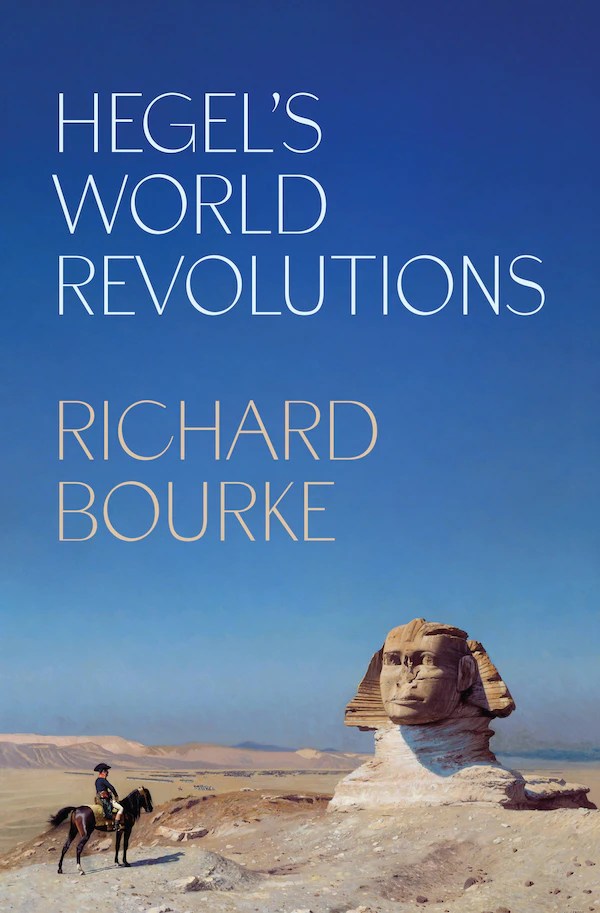
Richard Bourke, Hegel’s World Revolutions – Princeton University Press, October 2023, paperback July 2025 and NDPR review

Richard Bourke, Hegel’s World Revolutions – Princeton University Press, October 2023

NDPR review by Bernardo Ferro

G.W.F. Hegel was widely seen as the greatest philosopher of his age. Ever since, his work has shaped debates about issues as varied as religion, aesthetics and metaphysics. His most lasting contribution was his vision of history and politics. In Hegel’s World Revolutions, Richard Bourke returns to Hegel’s original arguments, clarifying their true import and illuminating their relevance to contemporary society. Bourke shows that central to Hegel’s thought was his anatomy of the modern world. On the one hand he claimed that modernity was a deliverance from subjection, but on the other he saw it as having unleashed the spirit of critical reflection. Bourke explores this predicament in terms of a series of world revolutions that Hegel believed had ushered in the rise of civil society and the emergence of the constitutional state.

Bourke interprets Hegel’s thought, with particular reference to his philosophy of history, placing it in the context of his own time. He then recounts the reception of Hegel’s political ideas, largely over the course of the twentieth century. Countering the postwar revolt against Hegel, Bourke argues that his disparagement by major philosophers has impoverished our approach to history and politics alike. Challenging the condescension of leading thinkers—from Heidegger and Popper to Lévi-Strauss and Foucault—the book revises prevailing views of the relationship between historical ideas and present circumstances.

Terry Eagleton reviews the book in the London Review of Books.

Posted in Georg Wilhelm Friedrich Hegel | Leave a comment

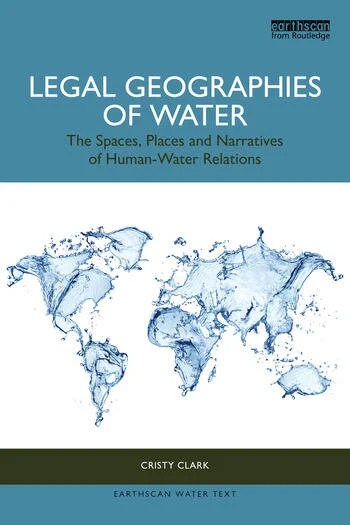
Cristy Clark, Legal Geographies of Water: The Spaces, Places and Narratives of Human-Water Relations – Routledge, June 2025

Cristy Clark, Legal Geographies of Water: The Spaces, Places and Narratives of Human-Water Relations – Routledge, June 2025

Discussion on Law at the End of the World podcast – thanks to dmf for the link.

This book deepens our understanding of humanity’s diverse relationships with water and the law, providing a critical assessment of this relationship, and charting the course towards a more sustainable and just water future.

By using legal geography, this book pays particular attention to the place-based inter-relationships between water, people, and law (both formal and informal) and to the ways that law both constitutes and is constituted by the relationship between people and place. Starting in the 1980s, Chapter 2 investigates the early commodification of water through the liberalisation of rural water markets in Chile and the urban water supply and sanitation systems of England and Wales. Chapter 3 then examines the global expansion of neoliberal water governance in the 1990s, starting with donor-driven reforms in the global south and particularly Manila in the Philippines. Chapters 4 and 5 document both the grassroots response to these neoliberal water reforms and the inherent tensions in the attempts of the early 2000s to reconcile the recognition of a human right to water with the ongoing rollout of market mechanisms, both in the domestic context of South Africa and within the United Nations human rights system. Moving forward again, Chapter 6 examines the recent intensification of neoliberal water governance through financialisation and considers its specific impacts in Detroit and Flint, Michigan. Chapter 7 then considers the renewed global emphasis on living waters and Indigenous ontologies of water by examining the new legislative arrangements for the Whanganui River in Aotearoa, New Zealand. The book concludes in Chapter 8 by highlighting the stories of hope that can be found in many of the case studies explored in the book and in emerging examples from around the world.

This book is essential reading for students and scholars interested in water law, security, and justice from across a wide range of disciplines, including environmental studies, law, geography, human rights, and political ecology.

Posted in Uncategorized | Leave a comment

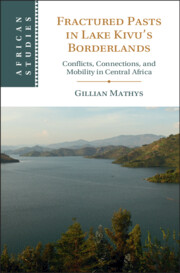
Gillian Mathys, Fractured Pasts in Lake Kivu’s Borderlands: Conflicts, Connections and Mobility in Central Africa – Cambridge University Press, July 2025

Gillian Mathys, Fractured Pasts in Lake Kivu’s Borderlands: Conflicts, Connections and Mobility in Central Africa – Cambridge University Press, July 2025

The Lake Kivu region, which borders Rwanda and the Democratic Republic of the Congo, has often been defined by scholars in terms of conflict, violence, and separation. In contrast, this innovative study explores histories of continuities and connections across the borderland. Gillian Mathys utilises an integrated historical perspective to trace long-term processes in the region, starting from the second half of the nineteenth century and reaching to the present day. Fractured Pasts in Lake Kivu’s Borderlands powerfully reshapes historical understandings of mobility, conflict, identity formation and historical narration in and across state and ecological borders. In doing so, Mathys deconstructs reductive historical myths that have continued to underpin justifications for violence in the region. Drawing on cross-border oral history research and a wealth of archival material, Fractured Pasts embraces a new and powerful perspective of the region’s history.

  • Provides a longue-durée perspective of socio-political processes in the Lake Kivu region
  • Offers an integrated analysis of processes that have shaped current relations between Rwanda and the Democratic Republic of the Congo
  • Rejects a focus on separations and violence in the region, instead exploring histories of continuities and connections
Posted in Boundaries, Territory, Uncategorized | Leave a comment