
Political Geography Virtual Special Issue on the Politics of Migration
The following articles are freely available to read online until 16thOctober 2015.
The politics of migration – Anna-Kaisa Kuusisto-Arponen and Mary Gilmartin
Political geography of contemporary events XI: the political geography of asylum: two models and a case study
Political Geography, 8 (2), 1989, 181–196
Wood, W.The politics of the streets: a geography of Caribana
Political Geography, 11 (2), 1992, 130–151
Jackson, P.Contemporary European migrations, civic stratification and citizenship
Political Geography, 21 (8), 2002, 1035–1054
Kofman, E.The state, the migrant labor regime, and maiden workers in China
Political Geography, 23 (3), 2004, 283–305
Fan, C.Biometric borders: governing mobilities in the war on terror
Political Geography, 25 (3), 2006, 336–351
Amoore, L.Climate change-induced migration and violent conflict
Political Geography, 26 (6), 2007, 656–673
Reuveny, R.The emigration state and the modern geopolitical imagination
Political Geography, 27 (8), 2008, 840–856
Gamlen, A.The enforcement archipelago: Detention, haunting, and asylum on islands
Political Geography, 30 (3), 2011, 118–128
Mountz, A.Desert ‘trash’: Posthumanism, border struggles, and humanitarian politics
Political Geography, 39, 2014, 11–21
Squire, V.“We are not animals!” Humanitarian border security and zoopolitical spaces in EUrope
Political Geography, 45, 2015, 1–10
Vaughan-Williams, N.


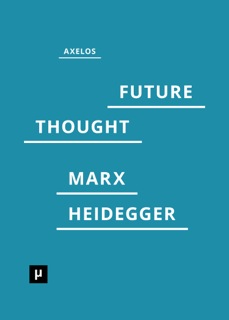 Anticipating the age of planetary technology Kostas Axelos, a Greek-French philosopher, approaches the technological question in this book, first published in 1966, by connecting the thought of Karl Marx and Martin Heidegger. Marx famously declared that philosophers had only interpreted the world, but the point was to change it. Heidegger on his part stressed that our modern malaise was due to the forgetting of being, for which he thought technological questions were central. Following from his study of Marx as a thinker of technology, and foreseeing debates about globalization, Axelos recognizes that technology now determines the world. Providing an introduction to some of his major themes, including the play of the world, Axelos asks if planetary technology requires a new, a future way of thought which in itself is planetary.


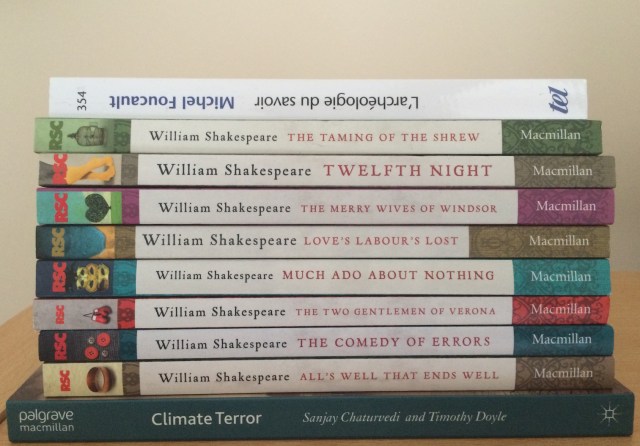 Books received – mainly in recompense for review work for Palgrave. These are the last eight volumes of the
