Henri Lefebvre, Metaphilosophy – available to pre-order

Not out until February 2016, and not yet on the Verso site, but Henri Lefebvre’s Metaphilosophy is listed on PenguinRandomHouse and at a certain online store. David Fernbach did the translation, and I edited the text, compiled the notes and wrote an introduction. Here’s the draft description I wrote for the catalogue and cover.

Best known today for his work on everyday life, the city and the production of space, Lefebvre wrote on a wide range of topics. First published in 1965, Metaphilosophy is a foundational text for his work and contemporary thinking about philosophy’s relation to the world.  Lefebvre frequently said that Hegel, Marx and Nietzsche were the most important thinkers for his work, and Metaphilosophy discusses each in detail. But it also has some of his most important discussions of Heidegger, Sartre, and Axelos. Marx declared that “the world’s becoming philosophical is at the same time philosophy’s becoming worldly, that its realization is at the same time its loss”. Lefebvre takes this as a leitmotif, thinking about the relation of Hegel-Marxist supersession and Nietzschean overcoming to the future of philosophy.

Posted in Friedrich Nietzsche, Georg Wilhelm Friedrich Hegel, Henri Lefebvre, Jean-Paul Sartre, Karl Marx, Kostas Axelos, Martin Heidegger | Leave a comment

London Critical Theory Summer School 2015 Friday Debate II audio recording – Costas Douzinas, Stephen Frosh, Jacqueline Rose, Esther Leslie and Slavoj Zizek

London Critical Theory Summer School 2015 Friday Debate II – Introduction and summing up the 2nd week by by Costas Douzinas, Stephen Frosh, Jacqueline Rose, Esther Leslie and Slavoj Zizek. Audio recording available here.

Posted in Slavoj Zizek | 2 Comments

Margaret Moore, A Political Theory of Territory, reviewed by Tamar Meisels at NDPR.

9780190222246_450The book I mentioned last week, Margaret Moore, A Political Theory of Territory, is reviewed by Tamar Meisels at NDPR.

I’ve yet to read Moore’s book, but it seems striking from the review that the work is conducted as an internal debate within the relatively little work in political theory that has discussed territory, as opposed to the much wider body of work on the topic in political geography. I’ve made related points in two review essays of other books on territory – one in Political Geography in 2010 and one in Society and Space in 2015. Geographers should be reading and engaging with these books; but it would be nice if the reverse was also true.

Posted in Uncategorized | Leave a comment

Draft Translation of Fourquet and Murard’s “La Ville-Ordinateur”

Keith Harris with a draft translation of an important piece by Fourquet and Murard.

Keith Harris's avatarMy Desiring-Machines

As I mentioned last week, this is the essay that kicked off Recherches 13 (1973) and is the context for the two conversations involving Deleuze, Guattari, Foucualt, and Fourquet that are published as texts 129 and 130 in Foucault’s Dits et Écrits (tome 2) and translated into English in Foucault Live (1996) under the title “Equipments of Power.”

This is a draft but I think it comes across fairly clearly. I would like to gather it along with a few of the other key contributions to this issue and putting it our for publication, perhaps along with portions of issue 14 (Stuart Elden provides some insight into issues 13 and 14 here and here). Any advice on how to undertake that or journals you believe might be interested in such an endeavor would be greatly appreciated, as would any comments on the translation itself (or if you know of…

View original post 2,245 more words

Posted in Uncategorized | Leave a comment

Sanjay Chaturvedi, Timothy Doyle – Climate Terror: A Critical Geopolitics of Climate Change

Sanjay Chaturvedi, Timothy Doyle, Climate Terror: A Critical Geopolitics of Climate Change, recently out with Palgrave.

9780230249622Climate Terror investigates the highly differentiated geographical politics of global warming. It explores how fear-inducing climate change discourses could result in new forms of dependencies, domination and militarized ‘climate security’. In this revealing study from Chaturvedi and Doyle, the concept of environmental security is brought to life through cases of the most pressing environmental issues confronting the Global South, which are creating desperate realities for billions of people. The book proposes the following key questions, crucial to our understanding of this issue: Can the climate discourse be re-configured to provide a place where issues of environmental justice and sovereignty are paramount, rather than neo-liberal responses to climate? Can climate change give a voice to the global periphery, and can it be used as a vehicle for emancipation?

Chaturvedi and Doyle’s study concludes by taking note of the more optimistic response of ’emancipatory’ groups and networks to concepts such as climate justice and climate debt, and the ways in which these groups have attempted to use this global climate moment for more democratic purposes. Is the climate story, regardless of its diverse intentions, a discourse now captured by the affluent North to control the development of the Global South? Has the emancipatory moment now passed or is there still hope for the re-emergence of subaltern perspectives on climate futures? The authors further discuss the deployment of terror vocabulary to address climate change, which is a part of refurbished designs and technologies of control, regulation and domination in a neo-liberal, post-political, globalized world marked by profound asymmetries in terms of economic growth and human development. They argue for an increased understanding of the environment, not as an external enemy force, but as a diverse nature that is inclusive of people, a nature that has the potential to provide secure access to citizens of all countries to basic nutrition, adequate access to health, appropriate shelter, and a security to practice a diverse range of livelihoods.

Posted in Uncategorized | 1 Comment

Foucault’s Last Decade Update 25 – resubmission of revised manuscript

Update 25 - resubmission (compressed)

Foucault’s Last Decade is now back with the press, in what I hope is its final form. It is scheduled for publication in spring 2016.

The first update on this book’s writing was made on July 22 2013 –almost exactly two years ago. I didn’t anticipate this book taking nearly so long, since initially I was drawing on a number of pieces I’d written, presented and sometimes published over the past several years – I’d been writing on nearly every one of Foucault’s courses as they were published. The publication of the last Paris lecture course was only earlier this year – it took eighteen years for all thirteen to be published. The earliest text I drew upon was written back in 1999. But this book has become much more than just a sequential arrangement of that material. A lot of archival work helped with the analysis, as well as some of the shorter pieces which have come to light. Most of what existed two years ago has been transformed in the writing. But I’ve not just written this one book in this time – I’ve also written about half of a second book on Foucault, due to a rearrangement of material.

The major change to the final version of the book, in response to the referee reports, was some more explicit signposting of the overall argument and my sense of the impact of the lecture material and other documents for our general sense of Foucault’s project. Much of that was implicit in the previous draft, but it is now brought more to the fore.

There were dozens of other changes as a result of the reports too – many small points of inflection, a few more references to secondary literature, sharpening a few points, tidying up of some Greek terms, a bit more on the final Berkeley seminar, a little more on Foucault’s relation to some of his contemporaries, and a few more references to the analysis which will be in the second book (which is chronologically the first).

I also had to work hard to get the manuscript back to the word limit. The draft submitted for review was right up to the 100,000 word limit, and nearly all the work added to the length. But it was resubmitted just under the limit again.

Very late in the process – and well after I thought there were no more surprises left for me in this work – I chanced across a reference which suggested a different dating for the writing of a peripheral text. At first my thought was that this indication had to be wrong, and that the previous date was correct. But then I began to wonder what if it was from the earlier date, and so I reread it and some other material in this light. The more I looked at it the more plausible this date was. What had once seemed peripheral now became crucial, and necessitated some important structural rearrangement and new discussion.

Here’s the final table of contents:

Acknowledgements
Abbreviations
Introduction
1. Pervert, Hysteric, Child
– The Monstrous and the Perverse
– The Family
– The Constitution of the Normal
2. The War of Races and Population
– Reversing Clausewitz; Clausewitz’s Reversal
– Boulainviller and the Generalization of War
– A Matter of Life and Death
3. The Will to Know and the Question of Confession
– The Will to Know
– The Dispositif of Sexuality
– The Right of Death and Power Over Life
– Towards Future Volumes
– The Power of Confession
– Beyond the Series as Planned
4. From Infrastructures to Governmentality
– Foucault’s Collaborative Projects
– – Hospitals and Normalisation
– – The Politics of Habitat
– – Green Spaces
– The Governmentality Lectures
– – The Christian Pastoral
– – Sexuality and Power
– – Neoliberalism and the Birth of Homo Oeconomicus
– – The Question of Government and the Problem of the State
5. Return to Confession
– On the Government of the Living
– The Early Church Fathers
– About the Beginning of the Hermeneutics of the Self
– The Problem of Confession
6. The Pleasures of Antiquity
– Sexuality, Subjectivity and Truth
– – Artemidorus’s Oneirocritica
– – The Status of Marriage
– – Modes of Life
– – From Aphrodisia to Flesh, and the Emergence of Subjectivity
– The Hermeneutic of the Subject
– – Alcibiades
– – The Multiple Forms of Government and Exercises of Stoicism
– – Towards Christianity and Subjectivity
– – Technologies of the Self
7. The Two Historical Plans of the History of Sexuality
– The March 1983 Draft
– The August-September 1983 Redraft
– The Published History of Sexuality
– – The Use of Pleasures
– – The Care of the Self
8. Speaking Truth to Power
– Lettres de cachet
– The Government of Self and Others
– The Courage of Truth
– Life, work, interrupted

A short break, then off to Paris next week as I begin shaping the material for the second book Foucault: The Birth of Power

You can read more about these books, along with links to previous updates, here.
Posted in Foucault's Last Decade, Foucault: The Birth of Power, Michel Foucault, My Publications | 4 Comments

The Metric Tide – report on higher education research and teaching assessment

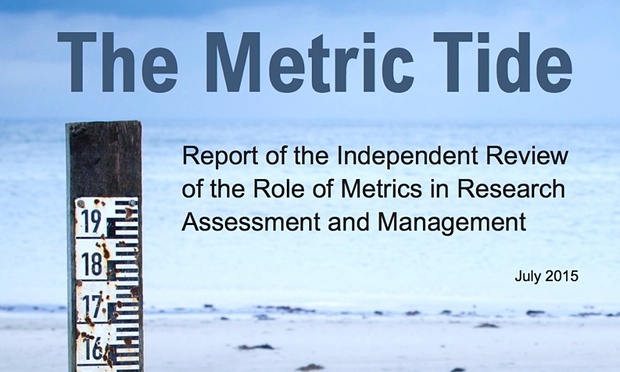
James Wilsdon reports on research metrics, and their wider application in higher education, in The GuardianThe full report can be downloaded here.

Over the past fifteen months, I’ve been chairing an independent review of the role of metrics in the research system. Today we publish our findings. Our report,The Metric Tide, proposes a framework for responsible metrics, and makes a series of targeted recommendations to university leaders, research funders, publishers and individual researchers. Together these are designed to ensure that indicators and underlying data infrastructure develop in ways that support the diverse qualities and impacts of UK research.

ff1e639c-fb7a-416f-a392-66596e5a2ab7-1020x612

Posted in Universities | Leave a comment

Top posts on Progressive Geographies this week

Another quiet week here on the blog, partly due to being in the final stages of work on the Foucault’s Last Decade manuscript. Almost done…

Posted in Uncategorized | Leave a comment

Jeremy Crampton on maps, permissions and Asterix

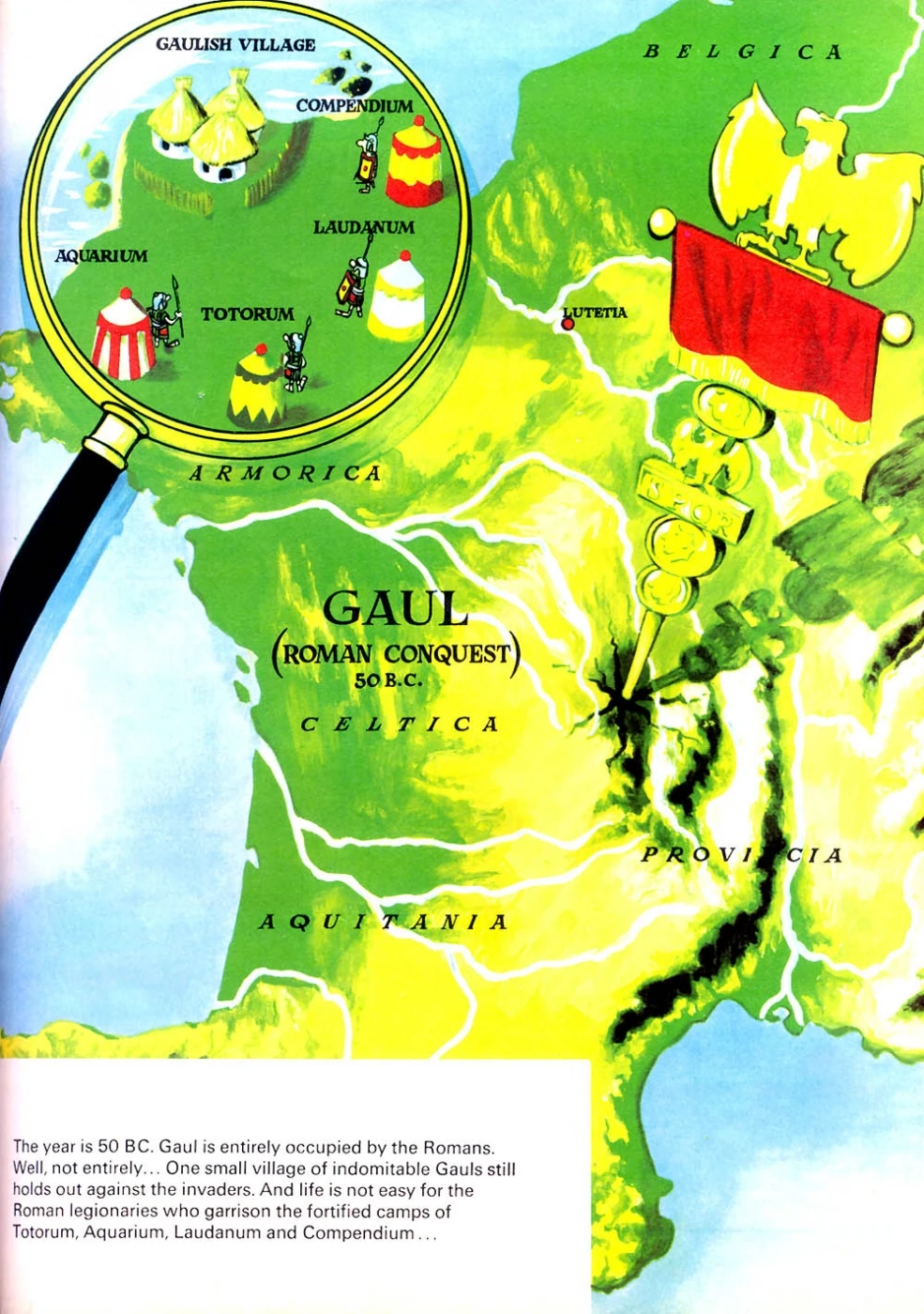
Asterix_-09-_Asterix_and_The_Big_Fight_-_00c_-_map.jpg_1400Slow linking to these, but Jeremy Crampton has two follow-up posts to my earlier sharing of Mary Beard’s interesting piece on the last stages of writing a book – SPQR: A History of Ancient Rome.

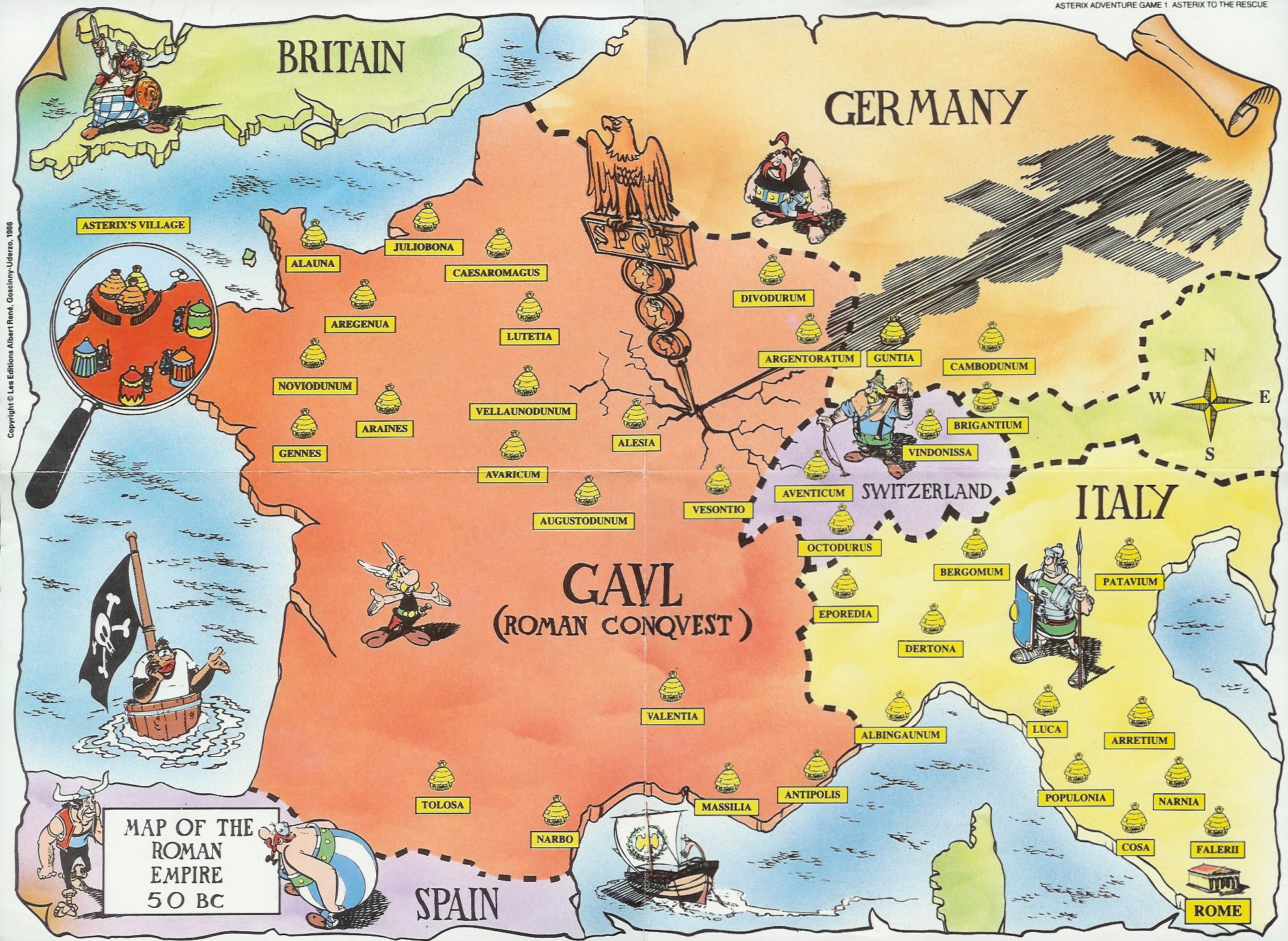
In the first he talks about maps and permissions, and in the second mentions a map he enjoyed as a child. I remember the one on the left well…

Looking for a copy to post online I also found this larger one which gives a wider frame. I hope the account of Rome in The Birth of Territory is a little more geographically-nuanced, but it will be interesting to see what Beard does with the spatial in her history.

asterix_to_the_rescue_map

Posted in Jeremy Crampton, Mary Beard | Tagged , | 1 Comment

Two Summer Schools about Geopolitics at Maastricht University

Two Summer Schools about Geopolitics at Maastricht University organised by Leonhardt van Efferink:

A key objective is to critically compare different perspectives on national identity, power, security and geography, and their role in world politics.

Participants who have registered so far come from various parts of Europe such as Croatia, Hungary, Norway and Portugal. There will also be students and professionals from countries further away such as Ethiopia, Japan, Lebanon and the US.

Posted in Uncategorized | Leave a comment