Gillian Rose and the Indo-Europeanists

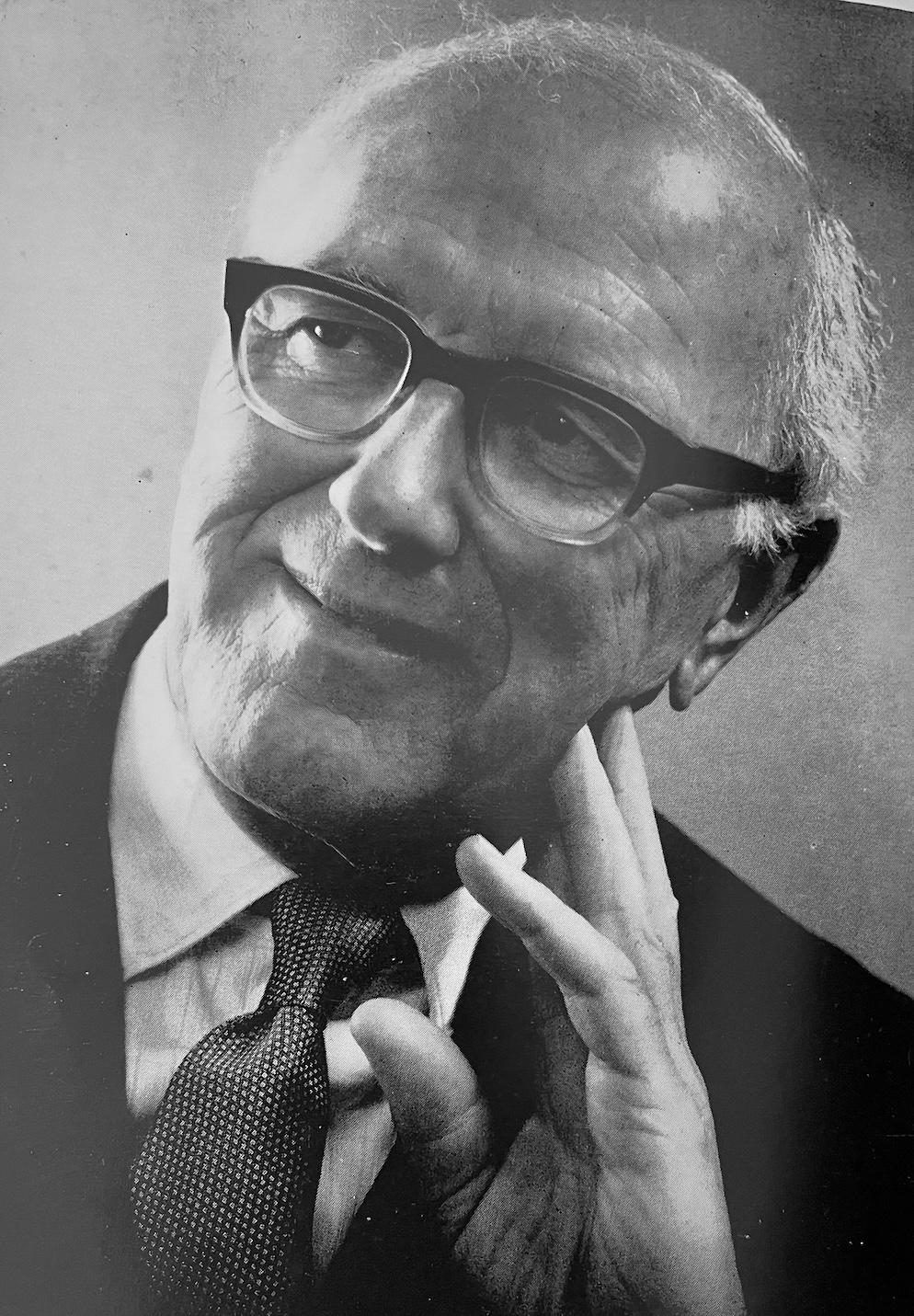
While I’ve been working on my Indo-European thought project, I’ve looked at a few books from the University of Warwick’s library which came from the Gillian Rose collection. Some of the books from that collection could not be borrowed – ones where she had marked the pages in some way. Warwick also has the Rose archive at the Modern Records Centre, and I’ve been hoping to consult that at some point. There has been a welcome resurgence of interest in Rose recently – the reissue of Love’s Work; the editing of lectures on Marxist Modernism; and a theme issue of Thesis Eleven.

I wasn’t initially sure where in her work Rose might discuss some of the people I was interested in, and whose books she had owned. There are odd references – Émile Benveniste, Georges Dumézil and Mircea Eliade are all mentioned in passing in Dialectic of Nihilism, for example. (That was the first book of hers I read, when writing my PhD.) Of the three, she mentions Benveniste the most often, mainly his Vocabulaire or Dictionary of Indo-European Concepts and Society

Benveniste is referenced on “jurisdiction: ius dicere, to speak the law” and on the oath (see Dialectic of Nihilism, 89; 89 n. 17; 135 n. 22). On the first of these questions, she also references Dumézil’s Archaic Roman Religion on the “ius-dicere, declaring the law, the different forms which battle over jurisdiction have taken”, as a contrast to Derrida’s discussion of phone (voice) and writing (Dialectic of Nihilism, 169 and 169 n. 190). She also mentions Benveniste’s essay on subjectivity in relation to language (Dialectic of Nihilism, 111 n. 3), and Mircea Eliade’s The Myth of the Eternal Return on “the contrast of Greek archetype and Hebrew event” (Dialectic of Nihilism, 80 n. 16).

I had thought the place where she engages with this work the most would be The Broken Middle. This is one of her books which is perhaps neglected today. As Maya Krishnan and Nick Gane have both indicated, it is perhaps unfortunate that Rose’s Love’s Work is her best-known book today, rather than her philosophy. Krishnan says “Jacqueline Rose reports that Gillian regarded The Broken Middle (1992) as her masterpiece”. Krishnan adds:

It is certainly her hardest book. Here Rose takes on Kierkegaard, modern Jewish philosophy and theology, and literature and theory ranging across Kafka, Mann, Girard, Arendt and Luxemburg. The book revolves around a contrast between two metaphors: the “holy middle” and the “broken middle.” A “holy middle” is a kind of theoretical fairy tale, a place where the risk of perpetuating violence has been banished. The “holy middle” isn’t something anyone intends to create, but on Rose’s view, it’s what most post-Kantian philosophers have wound up fabricating…

As in Dialectic of Nihilism, in The Broken Middle Rose uses close readings of her interlocutors to show how, without realizing it, they pursue impossible and confused “philosophical purifications.” Rose puts forward the “broken middle” as her alternative. There are no abstract guarantees of justice and goodness. It’s a meta-philosophical thesis: philosophy cannot decide in advance of politics which courses of action will turn out to be genuinely violent.

But The Broken Middle is not a book which has an explicit engagement with the Indo-Europeanists. There are no references to Benveniste, Dumézil or Eliade. But there is a reason, I think, for this. Rose is engaging across the Graeco-Christian and Jewish traditions, in a way that those thinkers never really did. The Semitic was outside of the language and cultural groups that they were interested in. There may be political reasons for this. But even Benveniste – who was Jewish, had been born in Ottoman Syria, and whose parents were teachers for the Alliance israélite universelle – does not often draw on examples from the Semitic languages. Rose, though, as Krishnan indicates, turns her attention much more to Jewish figures within Western thought. She continues this in the companion book of essays, Judaism and Modernity.

One of the chapters in The Broken Middle has a reading of Thomas Mann’s four-part novel Joseph and his Brothers [Joseph und seine Brüder]. Mann’s book was published between 1933 and 1943, and written between 1926 and 1942. The first and second volumes were written in Germany, and published in Berlin, but by their publication Mann was already in exile from Hitler’s Germany in Switzerland. The third volume on Joseph in Egypt was mostly written in exile and published in Vienna, where the publisher had moved; the fourth volume in neutral Sweden. The later volumes were written in Czechoslovakia, Switzerland, Princeton and the final volume in California (on the book’s history, see Woods’s “Introduction”, xiii-xiv).

Rose’s reading is in no sense an engagement with Indo-European work, but the section title is one that is much on my mind when reading that tradition: “Myth out of the Hands of the Fascists” (pp. 115-33).  The title is a slightly adapted quotation from Mann’s 17 November 1942 lecture at the Library of Congress about the work: “The Theme of the Joseph Novels”: 

In this book, the myth has been taken out of Fascist hands and humanized down to the last recess of its language,—if posterity finds anything remarkable about it, it will be this (p. 21).

But instead of critically engaging with the work of, for example, Dumézil and Eliade – both mythologists with far-right affiliations – Rose’s reading turns, of the French mythologists of the twentieth-century, to René Girard. And Girard was working much more in a Judeo-Christian tradition than the Indo-European one.

Gillian Rose, Dialectic of Nihilism and Maurice Olender, The Languages of Paradise

There are themes in Rose’s unfinished and posthumously published Paradiso which could conceivably have connected to the work of the Indo-Europeanists, especially in mystical theology – though Rose is again working on a Judeo-Christian, rather than pagan tradition. The published book, which includes a few sections only, pairs studies of ideas with people. I wonder what she would have made of Maurice Olender’s remarkable book Languages of Paradise, first published in French in 1989 and translated in 1992. It’s not a book in the Warwick library, which suggests Rose didn’t own a copy, though apparently the collection is not exhaustive, since until they introduced stricter controls, some books were stolen. 

In his preface to the book, Jean-Pierre Vernant begins with a biblical story to engage with the Indo-European tradition of thought. The questions he asks are deceptively simple: where is the Garden of Eden and what language did Adam and Eve speak there? Hebrew is just one of the answers that has been given. In the book itself, Olender engages with hypotheses, ideas, histories and prejudices about primal languages, from Semitic to Indo-European, or, as it was sometimes known Indo-German or Aryan. This indicates understandings of the relation of Western European languages to Sanskrit, racial ideals and intellectual trends. It concentrates on the nineteenth century but anticipates debates of the twentieth. It is a book which speaks to so many questions Rose was interested in – relation, religion, language and politics – and crosses between the Indo-European and Semitic language groups. 

Olender died in 2022, and I remember thinking at the time it was a shame he hadn’t done more work in the style of Languages of Paradise. I only knew his other book Race and Erudition. This led me to look for his other work, which is surprisingly brief. But then I learned that his major contribution to scholarship was as an editor, at Hachette, Fayard and Éditions du Seuil. Markus Messling has a good piece in tribute to him, which explains that important role. The list of people he published is quite extraordinary. His archives are at IMEC in Normandy, in 753 boxes!

References

Nicholas Gane, “Gillian Rose and the Promise of Speculative Sociology”, Journal of Classical Sociology, online first, https://doi.org/10.1177/1468795X241312298

Maya Krishnan, “The Risk of the Universal: The Philosophy of Gilian Rose”, 2024, https://thepointmag.com/politics/the-risk-of-the-universal/

Thomas Mann, The Theme of the Joseph Novels, Washington: Library of Congress, 1942 (also available at https://en.wikisource.org/wiki/The_Theme_of_the_Joseph_Novels)

Thomas Mann, Joseph and his Brothers, trans. John E. Woods, New York: Alfred A. Knopf/Everyman’s Library, 2005 (four volumes in one).

Markus Messling, “Writing as Commitment: In Memory of the Philologist and Editor Maurice Olender (1946–2022)”, Philological Encounters 8, 2023, 364-73.

Maurice Olender, Les langues du Paradis: Aryens et Sémites, un couple providential, Paris: Seuil, 1989, revised edition 2002; original version translated as Languages of Paradise: Race, Religion, and Philology in the Nineteenth Century, Cambridge, MA: Harvard University Press, trans. Arthur Goldhammer, 1992.

Maurice Olender, Race sans histoire, Seuil, 2009; parts in Race and Erudition, trans. Jane Marie Todd, Harvard University Press, 2009.

Gillian Rose, Dialectic of Nihilism: Post-Structuralism and Law, Oxford: Basil Blackwell, 1984.

Gillian Rose, The Broken Middle: Out of Our Ancient Society, Oxford: Blackwell, 1992.

Gillian Rose, Judaism and Modernity: Philosophical Essays, Oxford: Blackwell, 1993.

Gillian Rose, Mourning Becomes the Law: Philosophy and Representation, Cambridge: Cambridge University Press, 1996.

Gillian Rose, Paradiso, ed. Howard Caygill, London: The Menard Press, 1999.

Gillian Rose, “Interview with Gillian Rose”, ed. Vincent Lloyd, Theory, Culture & Society 25 (7-8), 2008, 201-18.

Kate Schick, Gillian Rose: A Good Enough Justice, Edinburgh: Edinburgh University Press, 2012.

John E. Woods, “Introduction”, in Thomas Mann, Joseph and his Brothers, trans. John E. Woods, New York: Alfred A. Knopf/Everyman’s Library, 2005, xiii-xvi.

Archives

Gillian Rose’s personal papers 1981-1994, Modern Records Centre, University of Warwick, MSS.377, https://mrc-catalogue.warwick.ac.uk/records/ROS

Fonds Maurice Olender, IMEC, https://collections.imec-archives.com/ark:/29414/a011450969339ebTnyS


This is the twenty-third post of a weekly series, where I post short essays with some indications of further reading and sources, but which are not as formal as something I’d try to publish more conventionally. They are usually tangential to my main writing focus, a home for spare ideas, asides, dead-ends and possible futures. I hope there is some interest in them. They are provisional and suggestions are welcome. 

The full list of ‘Sunday histories’ is here.
Posted in Emile Benveniste, Georges Dumézil, Gillian Rose, Mircea Eliade, Sunday Histories, Uncategorized | 5 Comments

Hugo Canihac, Legal and Political Thinking against Sovereignty: A European Intellectual History – Routledge, September 2025

Hugo Canihac, Legal and Political Thinking against Sovereignty: A European Intellectual History – Routledge, September 2025

At the intersection of the history of constitutional ideas and of political theory, this book offers a new genealogy of the constitutional thought of the European Union. Centrally, the book traces the emergence and transformation of the ‘post-sovereign thesis’ – an argument that seeks to move beyond the routine opposition between states and European organization, by claiming the concept of sovereignty to be obsolete – and of its complicated relationship with political liberalism. Analyzing the thought of a series of constitutional thinkers who have developed different versions of this thesis in relation to European integration, the book shows that, far from being new, as is generally assumed, the post-sovereign thesis goes back to the late nineteenth century. Exploring the interplay of these thinkers’ critical conceptualizations of sovereignty and of their views on political liberalism, the book argues that, although they share a concern for the transformation of a world seen as increasingly interdependent, they imagined deeply different versions of post-sovereignty. Bringing this history into focus, the book offers a rich new perspective on contemporary debates about the EU and the possibilities of global constitutionalism. This book will appeal to scholars and students working in fields of EU and constitutional law, legal history and the history of political thought; as well as others with relevant interests working in political science. 


Posted in Uncategorized | Leave a comment

Lucy Benjamin, Planetary Politics: Arendt, Anarchy and the Climate Crisis – Edinburgh University Press, May 2025 (print and open access)

Lucy Benjamin, Planetary Politics: Arendt, Anarchy and the Climate Crisis – Edinburgh University Press, May 2025 (print and open access)

Explores the connection between ecological crisis and Arendtian politics of the earth

Rereads Hannah Arendt’s writings, with a view to foregrounding her recurrent yet overlooked references to the planetary dimension of politics. 

Critically reinterrogates Arendt’s engagement with the politics of revolution and her refusal to explicitly confront the violence of colonialism in the US context.

Discusses the meaning of political unpredictably and spontaneity in light of climate modelling, planetary ‘tipping points’ and ‘baked in’ climate consequences. 

Critical political theory has been transformed since the declaration of the Anthropocene in the early 2000s. However, a substantive account of a planetary politics, which begins by understanding politics as planetary – as opposed to politics applied to the planet – is yet to be developed. Planetary Politics: Arendt, Anarchy and the Climate Crisis offers precisely such an account of political theory. Rereading the key works of Hannah Arendt, it suggests that Arendt was a theorist of the planet and that claims of hers, such as the fact that ‘plurality is the law of the earth,’ have been radically overlooked. Recovering these moments in Arendt’s writing, this book makes the case for a planetary anarchism and the restaging of revolutionary politics.

Posted in Hannah Arendt, Uncategorized | Leave a comment

Shakespeare and the Slovenian School of Philosophy and Psychoanalysis: A Symposium – 14 June 2025, Garrick’s Temple to Shakespeare, Hampton, UK

Shakespeare and the Slovenian School of Philosophy and Psychoanalysis: A Symposium

The Shakespeare in Philosophy series now has a website (https://shakespeareinphilosophy.org), and is on Bluesky (@shakespeareinphilo.bsky.social) and Facebook

This year’s event takes place on 14 June 2025, back in Garrick’s Temple on the banks of the Thames

Booking required one week ahead if you want lunch

Saturday, June 14, 2025 from 10:00-19:00 BST
Garrick’s Temple to Shakespeare, Hampton, UK

For the Slovenian School of Philosophy and Psychoanalysis, a loose association of thinkers which grew out of dissident movements in socialist Yugoslavia, Shakespeare has always been a reference point – especially Hamlet and its reception by Hegel, Marx, Freud and Lacan. The title of one of Slavoj Žižek’s early books, Looking Awry, is taken from Richard II, and other members of the School have also used Shakespeare to think through the role of representation in politics and culture. Furthermore, the Slovenian School has always been in close dialogue with the artists, musicians and stage practitioners of the group Neue Slowenische Kunst who have been involved in diverse Shakespearean projects. Laibach’s involvement in the Macbeth production of Wilfried Minks and Peter Zadek is to be mentioned in this context, as well as several works of the Scipion Nasice Sisters Theatre (SNST). As SNST co-founder Eda Čufer writes, “Shakespeare exposed the theatrical aspects of establishing and transgressing the law, and made transparent the structural similarities between the ‘deeds’ of legal authorities, criminals (terrorists) and artists (activists).” This symposium will explore the complex history of this statement and its relevance for the relation between theatre, psychoanalysis, politics and philosophy in the present.

Book herehttps://shakespeareslovenianschool.eventbrite.co.uk/

There are four types of tickets available:

  • £20 ticket (+Eventbrite fee) includes admission, sandwich lunch at the Bell Inn as well as tea and coffee during breaks. NOTE: due to catering demands the sale of ticket ends a week before the event.
  • £10 ticket includes admission, tea and coffee during breaks
  • Online ticket, free, possibility to donate to the Temple
  • Community ticket: a limited number of tickets is available for those unable to pay. Please note this does not include lunch.

The event will be partially hybrid (one session) and as a whole will be streamed via Zoom.

All proceeds go to the Temple.

10:00-11:00
(Chair: Björn Quiring)
Short intro
Gregor Moder: Caesar’s Wounds

11:00-11:30: Coffee/tea

11:30-13:15
(Chair: Julia Ng)
11:30-12:15
Dominik Finkelde: The Remains of Richard II: Santner and Žižek on Political Flesh

12:15-13:15
Jure Simoniti: What Remains of Hamlet After Death?

13:15-15:00: Lunch

15:00-15:45
(Chair: Jennifer Rust)
Todd McGowan: Hegel as Philosophy’s Shakespeare: Drama and the Unconscious
(Zoom)

15:45-16:45
(Chair: John Gillies)
Eda Cufer and Miran Mohar: NSK Theater: Play Within a Play (hybrid)

16:45-17:15: Coffee/Tea

17:15-18:00
(Chair: Stuart Elden)
Richard Ashby: Face-Off: Defacement, Ethics and the ‘Neighbour’ in “The Comedy of Errors”

18:00-19:00: Roundtable (Chair: Björn Quiring)

Posted in Slavoj Zizek, Uncategorized, William Shakespeare | Leave a comment

Pierre Nora (1931-2025)

Foucault News has some of the pieces about the death of Pierre Nora, important editor and historian, and one of the last of his generation.

Posted in Uncategorized | 1 Comment

Louis Althusser’s 1967-68 course on ‘philosophy for scientists’ – the resulting publications and the archive of its lectures

Louis Althusser’s seminars at the École Normale Supérieure (ENS) are of course best known for the famous Reading Capital volume, which developed from his 1964-65 seminar. He ran seminars on the young Marx in 1961-62 and Lacan and psychoanalysis in 1963-64. I’ve written about his 1962-63 seminar before in The Archaeology of Foucault (pp. 14-15). This seminar was on structuralism, and Althusser spoke about Foucault and Lévi-Strauss. Among other contributions, Pierre Macherey spoke about Canguilhem – a piece which was published with an introduction by Althusser in 1964. Balibar’s notes from that seminar and some other materials are at IMEC, and I was able to use them back in 2020. 

Between 1967 and 1968 Louis Althusser and some of his students delivered a course at the ENS pitched as ‘philosophy for scientists’ or non-philosophers. Some parts of the course have been published, including Alain Badiou’s Le concept du modèle in 1969 and Michel Fichant and Michel Pécheux, Sur L’histoire des sciences shortly afterwards. Badiou’s text was reissued by Fayard in 2007 and translated as The Concept of Model by re:press that same year.

These early volumes indicate others to follow. In Badiou’s book the list reads:

  1. Introduction (Louis Althusser)
  2. Expérience et Expérimentation (Pierre Macherey and Etienne Balibar)
  3. La «coupure épistémologique» (François Regnault, Michel Péchaux)
  4. Le Concept de Modéle (Alain Badiou)
  5. L’idée d’une histoire des sciences (Michel Fichant)
  6. Conclusion provisoire

Between Badiou’s book and the Fichant and Pécheux one the structure of the series changed, with François Regnault withdrawing his contribution, and the third and fifth volumes being merged. Althusser’s Introduction was eventually published in 1974, as Philosophie et philosophie spontanée des savants (1967), and was translated in Philosophy and the Spontaneous Philosophy of the Scientists. The French text is, I think, out of print, but available on Gallica. More recently, G.M. Goshgarian has edited Althusser’s text Initiation à la philosophie pour les non-philosophes, and translated it as Philosophy for Non-Philosophers, but that is a later text which seems distinct from this project, although clearly linked to it in its approach.

The series as listed in the Badiou and Fichant/Pécheux volumes

Pierre Macherey is very good on the history of the course and the series, in a piece translated in Parrhesia in 2009. He indicates that a fifth lecture which Althusser planned for the concluding volume was published posthumously in Althusser’s Écrits philosophiques et politiques, under the title “Du coté de la philosophie”.

In that piece, Macherey mentions that the original roneotypes of the course materials are available at the ENS archives, donated by Balibar. They have also been made available online to read or download at archive.org

The first page of the lecture typescripts

The ENS description reads:

Louis Althusser. Cours de philosophie pour scientifiques organisés à l’Ecole normale supérieure

Papier.  Documents ronéotypés.  175 f.  325 x 240 mm.

Cours organisés par Louis Althusser : 5 cours de Louis Althusser, 3 cours de Pierre Macherey, 3 cours d’Etienne Balibar, et 1 cours de François Regnault.

Some of the Althusser texts mentioned above, and the Badiou one, are reasonably well known. The Fichant and Pëcheux volume is interesting for some of the debates about epistemology and science with which Foucault and Canguilhem were involved. The availability of the archive material of the course means that there is more material for people to work with…

The books which did appear were all in the ‘Théorie’ series Althusser edited with François Maspero. I put together a list of the books in that series for this site back in 2022, and wrote a short history of the series for the Verso blog.

References

Louis Althusser, Jacques Rancière, Pierre Macherey, Étienne Balibar, Roger Establet, Lire le Capital, Paris: François Maspero, two volumes, 1965; Reading Capital: The Complete Edition, trans. Ben Brewster and David Fernbach, London: Verso, 2016.

Louis Althusser, Philosophie et philosophie spontanée des savants (1967), Paris: François Maspero,1974; “Philosophy and the Spontaneous Philosophy of the Scientists”, trans. Warren Montag, in Gregory Elliott ed. Philosophy and the Spontaneous Philosophy of the Scientists, London: Verso, 1990, 69–165.

Louis Althusser, Initiation à la philosophie pour les non-philosophes, ed. G.M. Goshgarian, Paris: Presses Universitaires de France, 2014; Philosophy for Non-Philosophers, ed. and trans. G.M. Goshgarian, London: Bloomsbury, 2017.

Louis Althusser, “Du coté de la philosophie (cinquième Cours de philosophie pour scientifiques”, Écrits philosophiques et politiques, ed. François Matheron, Paris, Stock/IMEC, 2 volumes, 1994, Vol II, 265-310.

Alain Badiou, Le concept du modèle, Paris: François Maspero, 1969, reissue Paris: Fayard, 2007; trans. The Concept of Model: An Introduction to the Materialist Epistemology of Mathematics, trans. Zachary Luke Fraser and Tzuchien Tho, Melbourne: re:press, 2007.

Stuart Elden, “Louis Althusser’s Théorie series at François Maspero”, https://progressivegeographies.com/resources/louis-althussers-theorie-series-at-francois-maspero/

Stuart Elden, “Louis Althusser’s Théorie series at François Maspero: A Brief History”, Verso blog, March 2022, https://www.versobooks.com/en-gb/blogs/news/5304-louis-althusser-s-theorie-series-at-francois-maspero-a-brief-history

Stuart Elden, The Archaeology of Foucault, Cambridge: Polity, 2023.

Michel Fichant and Michel Pécheux, Sur L’histoire des sciences, Paris: François Maspero, 1969.

Pierre Macherey, “La Philosophie de la science de Georges Canguilhem”, La Pensée 113, 1964, 50-74.

Pierre Macherey, “Althusser and the Concept of the Spontaneous Philosophy of Scientists”, trans. Robin Mackay, Parrhesia 6, 2009, 14-27.

Archives

Louis Althusser, Cours de philosophie pour scientifiques organisés à l’Ecole normale supérieure, https://archive.org/details/ENS01_Ms0169/page/n1/mode/2up

Louis Althusser et. al. “Séminaire 1962-1963”, Fonds Louis Althusser, IMEC, 813ALT/40/4, 813ALT/40/5 and 813ALT/40/6


This piece develops an earlier post about this course from January 2022. I’ve revised the text and expanded the references, in a similar style to what I’ve been doing with the ‘Sunday histories‘ posts.

Posted in Alain Badiou, Etienne Balibar, Georges Canguilhem, Louis Althusser, Michel Foucault, Pierre Macherey, Sunday Histories, Uncategorized | 3 Comments

Mats Andrén, Thinking Europe: A History of the European Idea since 1800 – Berghahn, November 2024 (print and open access)

Mats Andrén, Thinking Europe: A History of the European Idea since 1800 – Berghahn, November 2024 (print and open access)

Presenting a new historical narrative on European integration and identity this title examines how the concept of Europe has been entangled in a dynamic and dramatic tension between calls for unity and arguments for borders and division. Through an in-depth intellectual history of the idea of Europe, Mats Andren interrogates the concept of integration and more recent debates surrounding European identity across the nineteenth and early twentieth centuries and the post-war period. Applying a broad range of original sources this unique work will be key reading for students and researchers studying European History, European Studies, Political History and related fields.


Posted in Uncategorized | 1 Comment

Thomas Nail, The Philosophy of Virginia Woolf: Moments of Becoming – Bloomsbury, May 2025 

Thomas Nail, The Philosophy of Virginia Woolf: Moments of Becoming – Bloomsbury, May 2025 

Towards the end of her life, Virginia Woolf defined her “philosophy”-the “constant idea” that “makes her a writer.” She wrote that this idea had given her “the strongest pleasure known to [her].” She called these “exceptional moments,” or “moments of being.”

Thomas Nail contends that Woolf is a philosopher of being. And these “moments of being” as forming a unique process philosophy of motion. In her description of these moments Woolf gives us access to a world in motion and process; where all of nature and matter flows, ripples, and quivers. In these moments the anthropocentric division between humans and nature dissolves into metastable patterns-without essences or vital forces. Matter becomes dynamic, and what originally appeared solid is perceived as woven, porous, and fluid.

The Philosophy of Virginia Woolf begins by defining the basic idea of the moment of being, why it is important and how to understand it and its philosophical implications. It recounts a series of 14 ‘moments’ each of which explores an aspect of Woolf’s philosophy. They show how the moments evolve and articulate Woolf’s process philosophy of movement. Each moment reveals unique aspects of how moments work and the kind of philosophical vision Woolf held. Nail concludes by addressing some of the ethical and political consequences of these moments in Woolf ‘s thinking. In the end, the book contends that Woolf offers us an absolutely unique philosophical and aesthetic understanding of phenomena, including nature, culture, desire, gender, writing/reading, consciousness, art, ecology, and sensation. It shows that Woolf is a philosopher in her own right, and held a unique philosophical position that makes a unique contribution to how to think in the world.

Posted in Uncategorized | 1 Comment

Space Syntax: Selected Papers by Bill Hillier, eds. Laura Vaughan, John Peponis and Ruth Dalton – UCL Press, April 2025 (print and open access)

Space Syntax: Selected Papers by Bill Hillier, eds. Laura Vaughan, John Peponis and Ruth Dalton – UCL Press, April 2025 (print and open access)

Professor Bill Hillier spent most of his career at The Bartlett, University College London, where he founded and developed, with a team of colleagues, an original research programme that set the study of architecture on a firm scientific basis. His transformational way of thinking about buildings and cities influenced generations of scholars, researchers and practitioners within the built environment disciplines and way beyond – in fields ranging from archaeology and biology to physics and zoology.

Space Syntax: Selected papers by Bill Hillier provides a canon of works that reflects the progression of Hillier’s ideas from the early publications of the 1970s to his most recent work, published before his death in 2019. This selection of influential works ranges from his papers on architecture as a professional and research discipline, through to his later papers that present a theory of the spatial structure of the city and its social functions. By bringing together writing from across his career-span of half a century, with specially commissioned introductions by a wide range of international experts in the field, we are able to contextualise and show the range and evolution of Hillier’s key ideas.

Posted in Uncategorized | 1 Comment

Roman Jakobson, Franz Boas, and the Paleo-Siberian and Aleutian material at the New York Public Library

The support for refugee scholars to come to the United States of America in the 1930s and 1940s is well known. Varian Fry famously helped several hundred European artists and intellectuals to flee Vichy France between 1940 and 1941. The Rockefeller Foundation also supported various academics, as did the Society for Protection of Science and Learning in the United Kingdom. I’ve done some work with these archives before. The records of the Emergency Committee in Aid of Displaced Foreign Scholars are at the New York Public Library, and there are some interesting stories to be told about their support.

The Emergency Committee operated between 1933 and 1945, initially focused on Jewish scholars in Germany, and then extending to other parts of Europe. It was originally called the Emergency Committee in Aid of Displaced German Scholars and changed its name in 1938. The funds were not given directly to the academics, but to universities or other places that would appoint them to positions, often as matching funds. In this way, universities could provide support to a displaced person, but have the benefit of appointing someone for a fraction of the usual cost, often in a temporary or entry-level post. The Emergency Committee supported Claude Lévi-Strauss, Ernst Kantorowicz, Alexandre Koyré, Jean Wahl and many others.

The Russian-born linguist Roman Jakobson had moved to Czechoslovakia in 1920, and taught mainly at the University of Brno, while also being a founding member of the Prague Linguistic Circle. He fled Czechoslovakia in March 1939, just as Germany invaded. He initially went to Denmark, then to Norway, and finally into Sweden. Stephen Rudy tells the story of crossing the Norwegian-Swedish border in a cart, with Jakobson in a coffin and his wife acting as the grieving widow (“Introduction”, x). Jakobson taught in all these Scandinavian countries, including general linguistics and Paleo-Siberian languages at the University of Oslo, and Russian at the University of Uppsala. He felt that the Nazis were following him from one refuge to another. In 1941 he boarded a ship to the United States, along with Ernst Cassirer and both of their wives. Jakobson taught at the École Libre des Hautes Études from 1942, at Columbia University from 1943, and later at Harvard University and MIT.

But his first work in the United States was a bit different than going straight into teaching. He worked for the New York Public Library (NYPL) on some Aleutian material collected by the anthropologist Franz Boas, and later on other languages spoken across eastern Siberia and Alaska. The work concerned collections originally made by Waldemar Jochelson in the Aleutian Islands and Kamchatka in 1909-10 for the Russian Geographical Society, and Waldemar Bogoras’s ethnographic papers from time in the northeast of Siberia in 1901. In June 1941 the NYPL asked the Emergency Committee if they could supplement the $50 per month they could afford to pay Jakobson in order for him to catalogue and organise the material. They said Jakobson’s specialism in East Siberian languages would make him well placed to work on these papers.

A composite image of Franz Boas, Waldemar Jochelson and Waldemar Bogoras, and the typed and handwritten title pages of the Aleutian material in the New York Public Library

Although the initial reaction of the Emergency Committee was that support was unlikely, given the short-term nature of the contract, the committee members consulted were in favour. A note about Jakobson found in the Emergency Committee files shows that he was interviewed by a representative of the Committee. The report notes that he was “an earnest, consecrated, unworldly man – very absorbed in his work”. Matching funding was given, and Jakobson was employed for five months at $100 a month, although the decision was not approved until October 1941. He did not actually begin the work until 1 April 1942, and Boas was already concerned that these five months would be insufficient to complete the study. From correspondence quoted by his biographer Rosemary Lévy Zuwalt, it is clear that Boas was trying to find ways to support Jakobson: “He is a man of unusual knowledge and of great scientific attainment. I am seeing him often, and I have great respect for his knowledge and methods” (Boas to Alfred Louis Kroeber, 19 February 1942, cited in Franz Boas: Shaping Anthropology and Fostering Social Justice, 394; see also the letters in Swiggers, “Roman Jakobson’s Struggle in War-Time America”). 

One letter from Jakobson indicates that he stayed at Boas’s home, and was doing some work for him on the links between Aleut and Gilyak before he was formally employed by the NYPL. Gilyak, also known as Nivkh, was spoken in Russia’s far east, in the area sometimes known as Russian Manchuria. In the letter, Jakobson says he was also doing research on the relatively unknown Yiddish-Czech language spoken by medieval Czech Jews, for the Yiddish Scientific Institute (YIVO), also in New York (Jakobson to Boas, 11 September 1941). He had met YIVO co-founder Max Weinrich in Copenhagen at the Fourth Congress of Linguistics in August 1936 (Jakobson to YIVO, 27 February 1969, Rachel Erlich papers, box 5). Some of Jakobson’s work for YIVO was published in “The City of Learning: The Flourishing Period of Jewish Culture in Medieval Prague” in The American Hebrew in December 1941. Jakobson there says he is “preparing a special detailed study about the ‘Canaan language’ in Jewish medieval culture” (p. 373). In a later piece he describes this as a book entitled Czech in Medieval Hebrew Sources (Selected Writings, Vol VI.2, 886). That study was never completed, though Jakobson did work on Canaanic (see Dittmann, “Roman Jakobson’s Research into Judeo-Czech”; Bláha et. al. “Roman Jakobson’s Unpublished Study on the Language of Canaanite Glosses”). He would also occasionally publish on Yiddish, writing a preface to Uriel Weinreich’s College Yiddish in 1949 (pp. 9-10). Uriel was the son of Max, with whom Jakobson would occasionally work. Jakobson and Morris Halle contributed to Max Weinreich’s Festschrift on “The Term ‘Canaan’ in Medieval Hebrew”. Although not published until 1964, this text was drafted in New York in 1942-44, before being completed in 1962 (see Selected Writings, Vol VI.2, 886).

Jakobson assimilated the material he was tasked with working on at the NYPL quickly into his previous knowledge. An earlier project with Nicolai Trubetzkoy, begun in the late 1920s, on the “Languages of the USSR” had been abandoned (see Nikolai Vakhtin, “Indigenous Minorities of Siberia and Russian Sociolinguistics of the 1920s”, especially 182-83; and Brandist, “Marxism and the Philosophy of Language in Russia in the 1920s and 1930s”). Jakobson published a survey on “The Paleosiberian Languages” in the American Anthropologist, which was published in the final issue of 1942. (This and “The City of Learning” were two of Jakobson’s very first publications in English; after previous publications in Russia, Czech, German and French.) Jakobson also began teaching at the École Libre in the 1942-43 academic year, in rooms provided by the New School. One of the first courses he led was a collaborative seminar on The Song of Igor, which led to the project I’ve discussed before – here and here.

This École Libre teaching was also supported by the Emergency Committee, who part-funded many of the French and Belgian academics who were teaching there. An application was also made to the Rockefeller Foundation to support Jakobson, but this was turned down. Noting this in his correspondence to the Emergency Committee, New School director Alvin Johnson said that his “own opinion of Jakobson is more favorable, perhaps because I have no bias against the Prague School of Philology. Jakobson seems to me an exceptionally brilliant scholar, and a most inspiring teacher” (5 October 1942). Writing in support of this application, the NYPL said that Jakobson “has just completed a study of Aleutian manuscript material from the point of view of language and folklore” (9 October 1942). The Emergency Committee supported his École Libre post with a grant of $1200, matched by the École Libre from other sources. The funding was renewed in subsequent years.

Boas died on 21 December 1942, and so did not live to see the results of the cataloguing work. Jakobson approached the NYPL and the Emergency Committee again in 1944 to ask if they would support him doing similar work on Kamchadal and ‘Asiatic Eskimo’ collections which Boas had given to him. (I am using ‘Eskimo’ as the historical term used to describe this material, as it appears in the letters and reports.) The Kamchadal materials were in the Jochelson papers; the Eskimo in the Bogoras papers. Jakobson told the NYPL and the Committee that Boas had wanted this material deposited in a library only after Jakobson had arranged and catalogued it. This support was given in June 1944, on the same terms as before – $250 from the Committee, with matching funds from the NYPL, for five months work, which began in the autumn.

Some parts of Jakobson’s cataloguing work were reported in two articles by Avrahm Yarmolinsky in the Bulletin of the New York Public Library in 1944 and 1947, both of which include material by Jakobson. Yarmolinksky was head of the Slavonic division of the NYPL from 1918-55. For the most part the two articles present folktales in English translations. The 1944 article has “A Note on Aleut Speech Sounds” by Jakobson and a bibliography he had prepared on Aleutian; the 1947 article a bibliography of work on Kamchadal and Eskimo. Jakobson’s work was described by Yarmolinksky as follows: 

He corrected the summaries [of the folktales] and supplied them where they were lacking, and also classified the tales according to their dialect, literary style and subject-matter. Further, he added a note intended to clarify the phonology of the Eastern dialect of Aleut and simplify its transcription (“Aleutian Manuscript Collection”, pp. 671-72).

In 1944, Jakobson published an article on “Franz Boas’ Approach to Language”, written in tribute in summer 1943. He would write another tribute for the centenary of Boas’s birth in 1959. 

Although Jakobson worked on many other topics, he did complete, or enable, some of these linguistic projects began during the War. In 1957, together with Gerta Hüttl-Folter and John Fred Beebe, Jakobson produced a two-hundred-page bibliographical guide to Paleosiberian Peoples and Languages. That year he also finally completed a study of the Gilyak language group, “Notes on Gilyak”, which he says he first began in Norway in 1939-40, worked on in Sweden in 1941, and discussed with Cassirer on the boat from Sweden to New York (see Selected Writings, Vol II, p. 97). Dean Stoddard Worth published the Kamchadal Texts Collected by Waldemar Jochelson in 1961. In his Introduction he thanks Jakobson: “at whose suggestion this work was begun, and thanks to whose constant help and advice it was finished” (p. 11).

In 1977 Robert Austerlitz surveyed Jakobson’s works on Paleosiberian languages, indicating the published materials, including the two notes in the Bulletin of the New York Public Library articles, and some unpublished conference papers, but not the manuscript material. He makes this point concerning the importance of Jakobson’s work in this area: “In sum, then, the Paleosiberian field has benefited from Jakobson the theoretician and general linguistics from Jakobson the Paleosiberianist” (p. 18).

Finally, in 2023, Nikolai B. Vakhtin published most of Jakobson’s report on the Jochelson material. The article discussing the work is in Russian, but the report is reproduced in English. Vakhtin includes the introduction, the notes on dialectic and motifs, and the grammar, but only a few of the notes on the individual folktales. The part which Yarmolinsky published on the phonology of the languages is shown to have been edited by him, and Vakhtin publishes Jakobson’s original text. As far as I know, the briefer reports Jakobson made on the Kamchadal and Eskimo material have not been published. Reading them gives a clear sense of how Jakobson was able to engage with so many different researchers, from linguistics to literature, to anthropology and mythology. All these reports, and the material they are cataloguing, are in the New York Public Library archives.

References

Robert Austerlitz, “The Study of Paleosiberian Languages” in Daniel Armstrong and C. H. van Schooneveld (eds.). Roman Jakobson: Echoes of his Scholarship, Lisse: Peter de Ridder, 1977, 13–20.

Ondřej Bláha, Robert Dittmann, Karel Komárek, Daniel Polakovič and Lenka Uličná, “Roman Jakobson’s Unpublished Study on the Language of Canaanite Glosses”, Jews and Slavs 24, 2012, 282-318.

Jonathan Bolton, “Jakobson, Roman Osipovich”, The YIVO Encyclopedia of Jews in Eastern Europehttps://encyclopedia.yivo.org/article/411

Craig Brandist, “Marxism and the Philosophy of Language in Russia in the 1920s and 1930s”, Historical Materialism 13 (1), 2005, 63-84.

Robert Dittmann, “Roman Jakobson’s Research into Judeo-Czech”, in Tomáš Kubíček and Andrew Lass eds. Roman O. Jakobson: A Work in Progress, Olomouc: Palacký University, 2014, 145-53.

Murray B. Emeneau, “Franz Boas as a Linguist”, American Anthropologist 45 (3) part 2, 1943, 35-38 (No 61 of Memoir Series of the American Anthropological Association, “Franz Boas, 1858-1942”).

Roman Jakobson, “The City of Learning: The Flourishing Period of Jewish Culture in Medieval Prague” [1941], reprinted in Selected Writings, Vol IX.2, 371-79.

Roman Jakobson, “The Paleosiberian Languages”, American Anthropologist 44 (4), 1942, 602-20, reprinted in Selected Writings, Vol IX.2, 385-407.

Roman Jakobson, “Franz Boas’ Approach to Language”, International Journal of American Linguistics 10 (4), 1944, 188-95, reprinted in Selected Writings, Vol II, 477-88.

Roman Jakobson, “Notes on Gilyak” [1957], reprinted in Selected Writings, Vol II, 72-97.

Roman Jakobson, “Boas’ View of Grammatical Meaning” [1959], reprinted in Selected Writings, Vol II, 489-96.

Roman Jakobson, Selected Writings, The Hague: Mouton & Co, nine volumes, 1962-

Roman Jakobson and Morris Halle, “The Term ‘Canaan’ in Medieval Hebrew” [1964], reprinted in Selected Writings, Vol VI.2, 858-86.

Roman Jakobson, Gerta Hüttl-Folter and John Fred Beebe, Paleosiberian Peoples and Languages: A Bibliographical Guide, New Haven: HRAF Press, 1957.

Rosemary Lévy Zumwalt, Franz Boas: The Emergence of the Anthropologist, Lincoln: University of Nebraska Press, 2019.

Rosemary Lévy Zumwalt, Franz Boas: Shaping Anthropology and Fostering Social Justice, Lincoln: University of Nebraska Press, 2022.

Stephen Rudy, “Introduction”, in Roman Jakobson, My Futurist Years, ed. Bengt Jangfeldt and Stephen Rudy, New York: Marsilio, 1997, ix-xxvi. 

Dean Stoddard Worth, Kamchadal Texts Collected by Waldemar Jochelson, The Hague: Mouton, 1961.

Pierre Swiggers, “Roman Jakobson’s Struggle in War-Time America: More Epistolary Testimonies”, Orbis 36, 1993, 281-85.

Nikolai Vakhtin, “Indigenous Minorities of Siberia and Russian Sociolinguistics of the 1920s: A Life Apart?”, Acta Borealia 32 (2), 2015, 171-89.

Nikolai B. Vakhtin, “Roman Jakobson and the Aleut Materials Collected by Waldemar Jochelson”, Voprosy Jazykoznanija 4, 2023, pp. 117-28, doi: 10.31857/0373-658X.2023.4.117-128

Uriel Weinreich, College Yiddish, New York: YIVO Institute for Jewish Research, 1974 [1949].

Avrahm Yarmolinsky, “Aleutian Manuscript Collection”, Bulletin of the New York Public Library, 48 (8), 1944, 671-80.

Avrahm Yarmolinsky, “Kamchadal and Asiatic Eskimo Manuscript Collections: A Recent Accession”, Bulletin of the New York Public Library 51(11), 1947, 659-69.

Archives

Franz Boas papers, American Philosophical Society, Philadelphia,https://as.amphilsoc.org/repositories/2/resources/852

Waldemar Bogoras papers, MssCol 328, New York Public Library, https://archives.nypl.org/mss/328

Emergency Committee in Aid of Displaced Foreign Scholars records, MssCol 922, New York Public Library, https://archives.nypl.org/mss/922

Rachel (Shoshke) Erlich papers, 1934-1984, RG 1300, YIVO archives, Center for Jewish History, New York, https://archives.cjh.org/repositories/7/resources/22118

Roman Jakobson papers, MC-0072, Department of Distinctive Collections, Massachusetts Institute of Technology, https://archivesspace.mit.edu/repositories/2/resources/633

Waldemar Jochelson papers 1909-1937, MssCol 1565, New York Public Library, https://archives.nypl.org/mss/1565

Acknowledgements

Thank you to Ondřej Bláha and Pierre Swiggers for sharing hard-to-find publications; and the archives listed above for access to materials.


This is the twenty-second post of a weekly series, where I post short essays with some indications of further reading and sources, but which are not as formal as something I’d try to publish more conventionally. They are usually tangential to my main writing focus, a home for spare ideas, asides, dead-ends and possible futures. I hope there is some interest in them. They are provisional and suggestions are welcome. 

The full list of ‘Sunday histories’ is here.
Posted in Alexandre Koyré, Claude Lévi-Strauss, Ernst Cassirer, Ernst Kantorowicz, Roman Jakobson, Sunday Histories, Uncategorized | 7 Comments