Kasia Szymanska, Translation Multiples: From Global Culture to Postcommunist Democracy – Princeton University Press, May 2025 and interview at Journal of the History of Ideas blog

Kasia Szymanska, Translation Multiples: From Global Culture to Postcommunist Democracy – Princeton University Press, May 2025
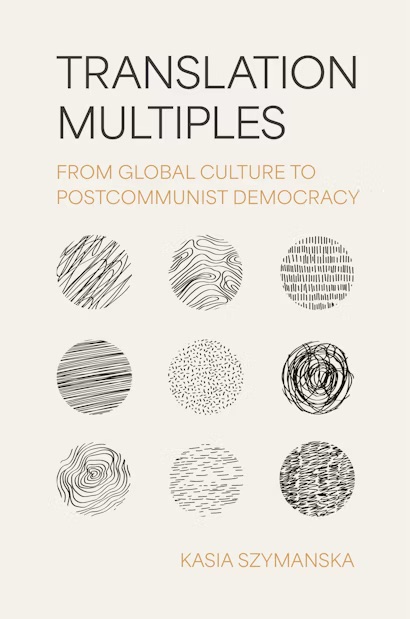
In Translation Multiples, Kasia Szymanska examines what happens when translators, poets, and artists expose the act of translation by placing parallel translation variants next to one another in a standalone work of art, presenting each as a legitimate version of the original. Analyzing such “translation multiples” as a new genre of writing, Szymanska explores how an original text can diverge into variants, how such multiplicity can be displayed and embraced, and how the resulting work can still be read as a coherent text. To do so, she focuses on contemporary projects in two different contexts—Anglophone experimental practices and post–1989 Poland’s emergence into democracy—while viewing them against the backdrop of twentieth-century cultural and political developments.

Szymanska first takes a broad look at Anglophone global culture, debunking the myth of translation as a transparent medium and an unoriginal, secondary form of writing. She then turns to postcommunist Poland, where projects introducing multiple translation variants with different ideological readings offered an essential platform for pluralist political discussion. She examines in particular an elaborate metatranslation of “La Marseillaise”; a triple rendering of Anthony Burgess’s novel A Clockwork Orange; and a quadruple book of Bertolt Brecht’s poetry with distinct readings by four translators. She argues that the creators of such multiples want to tell their own stories—personal, critical, visual, or political. Showing why multiple translations matter, Szymanska calls for a redefined practice of reading translations that follows the ethics of the multiple.

interview at Journal of the History of Ideas blog with Rose Facchini
Posted in Uncategorized | Leave a comment

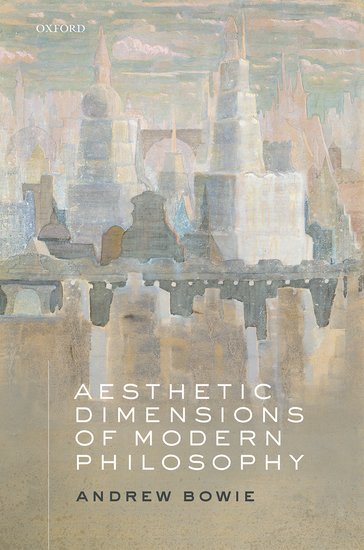
Andrew Bowie, Aesthetic Dimensions of Modern Philosophy – Oxford University Press, paperback May 2025

Andrew Bowie, Aesthetic Dimensions of Modern Philosophy – Oxford University Press, paperback May 2025

Cover of book shows Mikalojus Konstantinas Ciurlionis, The City (1908)

Much of contemporary philosophy, especially in the analytical tradition, regards aesthetics as of lesser significance than epistemology, ethics, metaphysics, and the philosophy of language. Yet, in Aesthetic Dimensions of Modern Philosophy, Andrew Bowie explores the idea that art and aesthetics have crucial implications for those areas of philosophy. 

In the modern period, the growth of warranted scientific knowledge is accompanied both by heightened concern with epistemological scepticism and a new philosophical attention to art and the beauty of nature. This suggests that modernity involves problems concerning how human beings make sense of the world that go beyond questions of knowledge, and are reflected in the arts. The relationship of art to philosophy is explored in Montaigne, Descartes, Hume, Kant, Schelling, the early German Romantics, and Hegel. This book also considers Cassirer’s and the hermeneutic tradition’s exploration of close links between meaning in language and in art. The work of Karl Polanyi, Marx, Nietzsche, Heidegger, Adorno, Dewey, and others is used to investigate how the modern sciences and the development of capitalism change both humankind’s relations to nature and the nature of value, and so affect the role of art in human self-understanding. The aesthetic dimensions of modern philosophy can help to uncover often neglected historical shifts in how ‘subjective’ and ‘objective’ are conceived. Seeing art as a kind of philosophy, and philosophy as a kind of art, reveals unresolved tensions between the different cultural domains of the modern world and questions some of the orientation of contemporary philosophy.

Posted in Uncategorized | Leave a comment

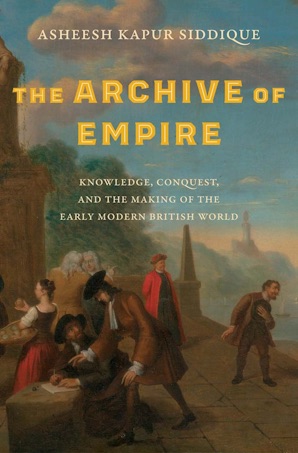
Asheesh Kapur Siddique, The Archive of Empire: Knowledge, Conquest, and the Making of the Early Modern British World – Yale University Press, August 2024

Asheesh Kapur Siddique, The Archive of Empire: Knowledge, Conquest, and the Making of the Early Modern British World – Yale University Press, August 2024

How modern data-driven government originated in the creation and use of administrative archives in the British Empire
 
Over the span of two hundred years, Great Britain established, governed, lost, and reconstructed an empire that embraced three continents and two oceanic worlds. The British ruled this empire by correlating incoming information about the conduct of subjects and aliens in imperial spaces with norms of good governance developed in London. Officials derived these norms by studying the histories of government contained in the official records of both the state and corporations and located in repositories known as archives.
 
As the empire expanded in both the Americas and India, however, this system of political knowledge came to be regarded as inadequate in governing the non-English people who inhabited the lands over which the British asserted sovereignty. This posed a key problem for imperial officials: What kind of knowledge was required to govern an empire populated by a growing number of culturally different people? Using files, pens, and paper, the British defined the information order of the modern state as they debated answers to this question. In tracing the rise and deployment of archives in early modern British imperial rule, Asheesh Kapur Siddique uncovers the origins of our data-driven present.

Posted in Uncategorized | 1 Comment

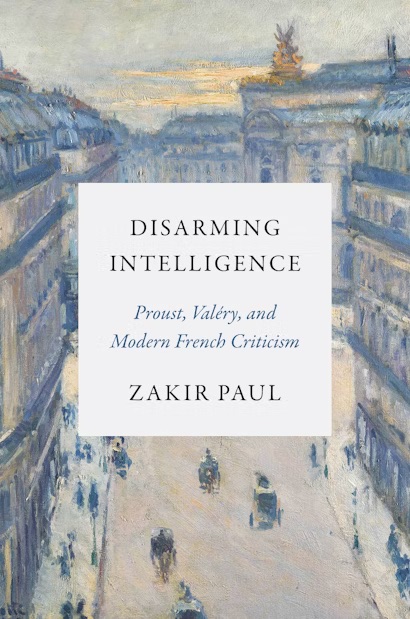
Zakir Paul, Disarming Intelligence: Proust, Valéry, and Modern French Criticism – Princeton University Press, August 2024

Zakir Paul, Disarming Intelligence: Proust, Valéry, and Modern French Criticism – Princeton University Press, August 2024

In the late nineteenth century, psychologists and philosophers became intensely interested in the possibility of quantifying, measuring, and evaluating “intelligence,” and using it to separate and compare individuals. Disarming Intelligence analyzes how this polyvalent term was consolidated and contested in competing discourses, from fin de siècle psychology and philosophy to literature, criticism, and cultural polemics around the First World War.

Zakir Paul examines how Marcel Proust, Henri Bergson, Paul Valéry, and the critics of the influential Nouvelle revue française registered, negotiated, and subtly countered the ways intelligence was invoked across the political and aesthetic spectrum. For these writers, intelligence fluctuates between an individual, sovereign faculty for analyzing the world and something collective, accidental, and contingent. Disarming Intelligence shows how literary and critical styles questioned, suspended, and reimagined what intelligence could be by bringing elements of uncertainty and potentiality into its horizon. The book also explores interwar political tensions—from the extreme right to Walter Benjamin’s engaged essays on contemporary French writers. Finally, a brief coda recasts current debates about artificial intelligence by comparing them to these earlier crises of intelligence.

By drawing together and untangling competing conceptions of intelligence, Disarming Intelligence exposes its mercurial but influential and urgent role in literary and cultural politics.

Posted in Uncategorized | Leave a comment

Emanuel Quashie, The War on Terror in the Caribbean: Schmittian Perspectives – Routledge, May 2025

Emanuel Quashie, The War on Terror in the Caribbean: Schmittian Perspectives – Routledge, May 2025

This book offers a multifaceted understanding of how the 9/11 attacks and the subsequent War on Terror affected the Caribbean.

This book dives deeper into how the 9/11 attacks and the subsequent War on Terror impacted the region’s tourism industry, anti-terrorism legislation, and the banking/financial and immigration system. This book analyzes the US-led War on Terror through a broader conceptual lens, i.e., using two Schmittian perspectives (the friend–enemy and the sovereign in times of exception), which offers an opportunity for the methodological interpretation of Bush’s counterterrorism policy to give a novel conceptual understanding of the War on Terror in relation to the Caribbean. Thus, this book offers a nuanced and novel perspective on the subject matter.

This book will be of much interest to students studying about terrorism, Caribbean studies, political theory, and international relations.

Posted in Carl Schmitt | Leave a comment

Günther Anders, The Obsolescence of the Human, ed. Christian Dries and Christopher John Müller, trans. Christopher John Müller – University of Minnesota Press, December 2025

Günther Anders, The Obsolescence of the Human, ed. Christian Dries and Christopher John Müller, trans. Christopher John Müller – University of Minnesota Press, December 2025

Now available in English—one of the twentieth century’s most important works on the philosophy of technology

With this first English translation of influential German philosopher Günther Anders’s 1956 masterpiece of critical theory, The Obsolescence of the Human, a new generation of readers can now engage with his prescient and haunting vision of a “world without us” dominated by technology. 

Looking at technological events such as the detonation of the nuclear bomb and the arrival of televisions in our living rooms, Anders advances a warning of what humanity looks like in a world where it has surrendered all agency. He outlines the new emotional landscapes that shape our relationship to increasingly capable technology, including Promethean shame, the human sense of unease our own superior technological innovations can instill. Confronting the growing gap between what we can collectively create and what we can individually comprehend, Anders speculates on the trajectory of a developing technological world that rapidly exceeds our ability to control or even foresee its negative consequences. 

The Obsolescence of the Human prefigures contemporary posthumanist discourse and is eerily predictive of current debates around automation, global warming, and artificial intelligence. Providing new ways to conceptualize the intersection of technology and emotion, it offers groundbreaking frameworks for future-oriented ethics. Radical in both its stylistic experimentation and its theoretical insights, this new translation presents a cautionary tale regarding the human capacity to usher in its own destruction.

Posted in Uncategorized | Leave a comment

Kevin Potter, Poetics of the Migrant: Migrant Literature and the Politics of Motion – Edinburgh University Press, paperback May 2025

Kevin Potter, Poetics of the Migrant: Migrant Literature and the Politics of Motion – Edinburgh University Press, paperback May 2025

Since the 1980s, readers and scholars alike have celebrated migrant literature for not only depicting migration, but for inspiring reflections on class, race, gender, nations, and mobility. But, beyond depicting migration, is it possible for migrant literature to be a force of movement itself? Poetics of the Migrant calls upon the philosophy of movement and a counter-history of migration to invent a theory and method for analysing migrant literature. The text uncovers patterns of movement that migrant texts enact and create – in other words, a movement-oriented poetics. Poetics of the Migrant understands movement as the defining force of human history; and the migrant is the primary figure of cultural and political transformation. Migrant literature makes it possible to transform how we process and interpret social history through social motion. Perhaps, from here, we can imagine a different world: one where movement and migrancy are legible and thinkable.


Posted in Uncategorized | Leave a comment

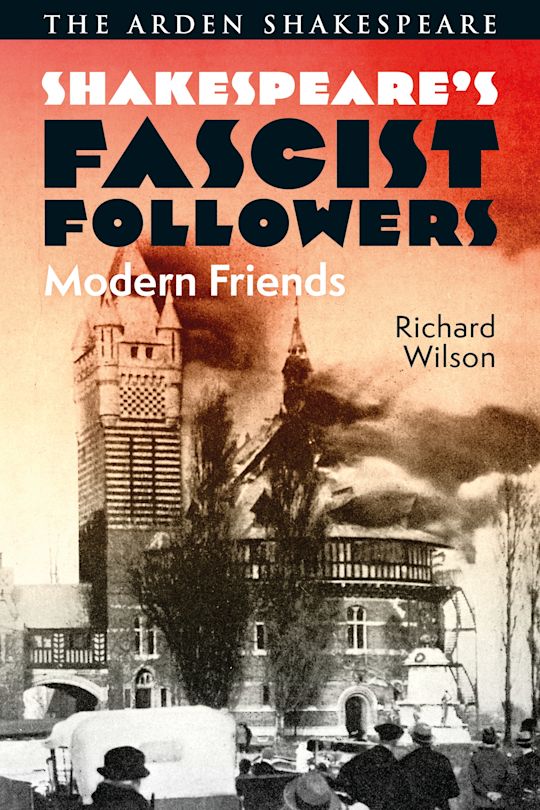
Richard Wilson, Shakespeare’s Fascist Followers – Bloomsbury, August 2025

Richard Wilson, Shakespeare’s Fascist Followers – Bloomsbury, August 2025

This book has been put back to August 2025, but looking forward to this.

‘Richard Wilson’s meticulously researched, powerfully argued and brilliantly written account of Shakespeare’s 20th-century fascist followers is not just an important but a genuinely essential book.’ Robert Shaughnessy, Guildford School of Acting, UK

In this illuminating book, Richard Wilson demonstrates how in the 20th century Shakespeare and his plays were subjected to a sustained institutionalized misreading, which served the purposes of proto-, present and future fascism. It exposes how Shakespeare was misappropriated by the far right to represent Britain’s supposedly glorious history, and the ways in which they utilized him and the cultural capital of his work. Wilson argues that in Britain the plays were invoked as a way to anglicize fascism, as its leaders campaigned ‘to recover theatre for the national cause’ by ‘looking back fondly to Elizabethan England’. His extensive and rigorous research also gestures beyond Britain, taking in case studies from North America, Germany and France.

Some of the names this book unearths will surprise: many of the right-wing political views or leanings of the prominent figures discussed have been brushed under the carpet, left unexplored or ignored. Across its ten chapters, this book provides in-depth case studies of a wide variety of figures, from A. K. Chesterton, who was both editor of the British Union of Fascists’ newspaper Blackshirt and former manager of press and publicity at the Shakespeare Memorial Theatre, to celebrated Shakespeareans such as G. Wilson Knight, through to writers, artists and theatre practitioners including W. B. Yeats, T. S. Eliot, Edward Gordon Craig and Philip Larkin, among many others. At a time when democracy is under threat, populism is on the rise and far right views are increasingly prominent in our political landscape, Richard Wilson’s book makes an especially vital and timely contribution to Shakespeare scholarship.

Posted in William Shakespeare | Leave a comment

Dmirti Shalin, Erving Manuel Goffman: Biographical Sources of Sociological Imagination – Routledge, December 2024 and New Books Network discussion

Dmirti Shalin, Erving Manuel Goffman: Biographical Sources of Sociological Imagination – December 2024

Erving Goffman is the most cited American sociologist. There is no shortage of studies exploring Goffman’s scholarship but no extant biography of Erving Goffman. The chief reason is that a man who looked behind the facades people erect to protect their private selves, zealously guarded his own backstage. This book is the first comprehensive biography of Goffman, an intellectual of Russian-Jewish descent, who turned the “Potemkin village” trope into a powerful research program. The present study shows how key turns in Goffman’s career reflected dramatic events in his family and personal history. It is based on the materials gathered in the Erving Goffman Archives, a repository curated by the author who has been collecting documents and conducting interviews with Goffman’s relatives, colleagues, and friends. The archival work turned up documents which improve our understanding of Goffman the scholar, the teacher, and the man. The approach adopted in this investigation sheds new light on Goffman’s scholarship which has had an enormous and continuous impact across the social sciences and humanities.

New Books Network discussion with Matt Dawson

thanks to dmf for the link

Posted in Uncategorized | Leave a comment

Anna Jurkevics, Contested Territory: A Theory of Land and Democracy beyond Sovereign Bounds – Oxford University Press, April 2025

Anna Jurkevics, Contested Territory: A Theory of Land and Democracy beyond Sovereign Bounds – Oxford University Press, April 2025

Contested Territory presents a critical, non-sovereign theory of territorial rights capable of responding to border-defying global crises such as land dispossession, mass migration, and environmental depredation. Statist theorists have attempted to mitigate these crises within the framework of territorial sovereignty, but have not grasped how this crumbling system causes the problems they seek to solve. Others, pitting cosmopolitanism against sovereignty, have turned away from territoriality, thus ignoring the geographical dimensions of freedom. The need for a radical shift in theorizing territory is urgent. This book embarks on that shift and argues, against the mainstream view, that it is possible to theorize democracy within a framework of territorial non-sovereignty. In an effort to loosen the grip of sovereignty and broaden our territorial imagination, Contested Territoryresuscitates a long-suppressed tradition in the history of political thought: the tradition of theorizing contested territory. The theorists of contested territory—anarchists, exiles, federationists, cosmopolitans, indigenous theorists, and so on—do not view the absence of sovereignty over land as a problem, and instead find democratic potential in overlapping rule. Building on such alternatives, this book charts normative foundations for a cosmopolitan, democratic theory of territory and land politics. Through a critical engagement with the thought of Hannah Arendt, it grounds democratic land governance in the land-based, non-sovereign practices of world-buildingContested Territory concludes that is both possible and desirable to decouple democracy and territorial sovereignty, and that by doing so we can better respond to the border-defying crises of our age.


Posted in Uncategorized | 1 Comment