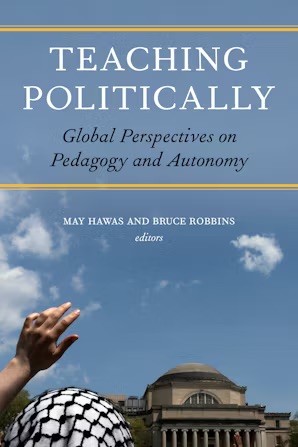
Fernanda Gallo, Hegel and Italian Political Thought: The Practice of Ideas, 1832-1900 – Cambridge University Press, September 2024 and New Books Network discussion

Fernanda Gallo, Hegel and Italian Political Thought: The Practice of Ideas, 1832-1900 – Cambridge University Press, September 2024

I’ve shared news of the book before, but there is now a New Books network discussion with Lily Goren

Across Italy in the nineteenth century, a generation of intellectuals engaged with Hegel’s philosophy while actively participating in Italian political life. Hegel and Italian Political Thought traces the reception and transformation of these ideas, exploring how Hegelian concepts were reworked into political practices by Italians who had participated in the 1848 revolution, who would lead the new Italian State after unification, and who would continue to play a central role in Italian politics until the end of the century. Fernanda Gallo investigates the particular features of Italian Hegelianism, demonstrating how intellectuals insisted on the historical and political dimension of Hegel’s idealism. Set apart from the broader European reception, these thinkers presented a critical Hegelianism closer to practice than ideas, to history than metaphysics. This study challenges conventional hierarchies in the study of Italian political thought, exploring how the ideas of Hegel acquired newfound political power when brought into connection with their specific historical context.

Posted in Georg Wilhelm Friedrich Hegel, Uncategorized | Leave a comment

The Early Edward Said, Michel Foucault and Jonathan Swift

Given all his other achievements, Edward Said’s role in bringing Foucault’s work to an anglophone audience is perhaps understated today. His 1971 essay “Abecedarium culturae”, in Northwestern’s literary journal TriQuarterly was a significant piece on so-called “structuralism”, and the following year’s “Michel Foucault as an Intellectual Imagination” was one of the first articles devoted to Foucault in the United States. It was possibly the first, apart from reviews. “Michel Foucault as an Intellectual Imagination” appeared as the first article in the launch issue of boundary 2, invited by William Spanos. “Abecedarium culturae” was reprinted in Modern French Criticism: From Proust and Valery to Structuralism, a collection edited by Foucault’s host for his visits to Buffalo, John K. Simon. Said’s 1975 book Beginnings has a chapter entitled “Abecedarium culturae” which takes material from both the earlier essays. 

Foucault was an important inspiration for Said’s other work, most notably Orientalism, though from the late 1970s Said began to take a distance from Foucault (though he did attend his late 1980 seminar at New York University). Even by the time of “An Ethics of Language” in 1974, Said’s review essay on The Archaeology of Knowledge, there are some criticisms beginning to appear. Timothy Brennan in Places of Mind: A Life of Edward Said provides some discussion of Said’s changing relation to Foucault, which was partly for intellectual reasons and partly motivated by politics (pp. 174-77). Karlis Racevskis has written a good survey of the connections and criticisms. In a piece about “My Encounter with Sartre”, which took place in Foucault’s apartment, Said says something of his disillusionment with French intellectuals.

As I’ve been going to Columbia University archives for various things connected to my Indo-European project, especially concerning Roman Jakobson, I also requested the Said boxes containing his work on Foucault. One of the archivists told me that the Said papers were the most consulted of their collections. There are boxes with the manuscripts, typescripts and correspondence relating to both the early pieces on Foucault and the later tributes – Foucault’s obituary and “Foucault and the Imagination of Power”. Both those later essays are reprinted in Reflections on Exile. In the correspondence files there is also a November 1972 letter from Foucault to Said, most of which is translated by Brennan in Places of Mind (p. 176):

Upon my return from America, I found the article that you were willing to write about my work. I do not need to tell you how grateful I am for the effort you have made reading, understanding, and analyzing the stutterings I have managed to get out… I infinitely admire your intelligence, your mastery, and the rigor of your analyses to the point that on many points you have helped me clarify the nature of my own future work.

I very much hope that we will have the chance to meet one day, and to have the chance to discuss the theories which concern us both. I would like to find out about where your work is heading.

Foucault to Said, 5 November 1972, Edward Said Papers, box 5a, folder 3. (The ellipses are Foucault’s.)

Foucault’s trip to America was to teach at Cornell; at the time Said was on sabbatical in Beirut. Said proposed a meeting in Paris in spring 1973. However, it was a small detail in the archives which led me down an interesting detour. In 1972 boundary 2 asked Said to give them a brief biographical note to go with his essay. He wrote back to give them this draft:

Was born in Jerusalem, Palestine, and received secondary education there, and in Egypt. BA from Princeton, and PhD from Harvard. Since 1963 I have been at Columbia, and since 1970 I have been Professor of English and Comparative Literature. Guggenheim Fellow, 1972-3; Fellow-Elect, Center for Advanced Study in the Behavioral Sciences, Palo Alto. Author of numerous articles published in English, French and Arabic. Books are Joseph Conrad and the Fiction of Autobiography (Harvard, 1966); Beginnings: Intention and Method (Basic, 1973); Swift’s Tory Anarchy (Harvard, forthcoming). 

Said to Ms. [Ann] Yeoman, 21 April 1972, Edward Said Papers, box 168b, folder 29

Said tells the journal to edit this text as they see fit, and the briefer note they published reads:

EDWARD W. SAID, Professor of English and Comparative Literature at Columbia, is the author of numerous articles published in English, French and Arabic. His books are Joseph Conrad and the Fiction of Autobiography, Beginnings: Intention and Method, and the forthcoming Swift’s Tory Anarchy.

boundary 2 1, 246

The forthcoming book on Jonathan Swift was a surprise. I knew there was an essay of this title, but not a book. 

The essay on Swift was published in Eighteenth-Century Studies in 1969, and it was reprinted as Chapter 2 in The World, the Text, and the Critic, along with another essay, “Swift as Intellectual”, as Chapter 3. That collection was with Harvard University Press, published in 1983. (Its working title was Criticism between Culture and System.) Said never completed his book on Swift. The indication in his own version of the note that it was to be published with Harvard University Press suggests it was more than just an idea for a future project. The project is discussed in Brennan’s biography (pp. 113-21), where he indicates that it was commissioned by Harvard, and that for a while Said worked on it in parallel to Beginnings.

Said’s archive has some materials relating to the Swift book project. As well as a typescript of the “Swift’s Tory Anarchy” article (box 110c), these boxes include various reading notes (boxes 110b and c). One folder has the text of the “Swift as Intellectual” essay (box 76a, with a draft in 110b). It was delivered as a lecture with the title “Swift as Intellectual: Language and Political Action”, at UCLA on 18 January 1980. There it was part of a series with the title “Augustan Myths and Modern Readers”, organised by Alan H. Roper in the 1979-80 academic year at the William Andrews Clark Memorial Library (the rare books and manuscript library). Other speakers included Murray Krieger, Geoffrey Hartman, Eugenio Donato, Margaret Doody, Stanley Fish. Much more interesting for this story is that the archive also includes a three-page proposal for a project with the title “Swift in History” (there are copies in both box 76a and 110b).

Said describes this project as “a study of Swift’s life and work as seen interacting with the history of which they are vital parts” (proposal, p. 1). He argues that in the period Swift is working, there is a “remarkable congruence during the age between literature and politics” (p. 1). His references to Swift’s work are wide-ranging, and he gives lots of historical examples of events and figures. “I read Swift’s work then as a totality, albeit made up of diverse parts, yet very much a unity” (p. 3). As the biographical note indicates, Said’s first book, based on his doctoral thesis, was on Joseph Conrad. In this proposal, he indicates that his “Swift in History” project will work in a related way. He describes the earlier book as “a portrait of Conrad’s mind viewed in his life and work as a structured universe with patterned characteristics” (p. 3). He concludes by saying that he had been teaching on Swift at Columbia for the past two years, and much of the work had therefore already been undertaken (p. 3). Teaching materials in box 110b indicate this means the proposal dates from the late 1960s – one course is from 1965-66 (English C3037x). Said also taught a course on “Jonathan Swift and the Early Eighteenth Century” at a Harvard Summer School in 1968 (English S-247).

Beyond what is said by Brennan, I know of two main pieces exploring Said’s engagement with Swift. One, by Clive Probyn, written before Said’s archives became available, is based on the two essays included in The World, the Text, and the Critic. The other, which makes use of materials in the archive, is by Helen Deutsch, who has written a very interesting piece on Said’s career-long engagement with Swift for boundary 2. Both Deutsch and Brennan call the unfinished book Swift in History, after the proposal, rather than the title given in the author note for boundary 2. Deutsch is working on a book on the Said-Swift relation, under the working title of The Last Amateur, due to be published by University of Chicago Press in 2026. As Deutsch said a few years ago of this intriguing project:

My book argues that Swift was an important and enduring influence on Said, whose abandoned book would have been titled Swift in History, and would have followed his first book, Joseph Conrad and the Fiction of Autobiography (1966). I have spent some of the most thrilling hours of my scholarly life with Said’s papers at Columbia University, documenting his research and teaching on Swift, a truly absorbing and moving experience. But my experience in Said’s archive confirmed my sense that I was not writing a traditional monograph; instead, it started my search for a form that stays true to the notes, the fragments, the urgently underlined jottings that kept Said’s thought alive and unfinished. Swift was a model for Said of how to be a public intellectual: how to speak, from a position of exile, for a human collective that might never exist. In the Drapier’s Letters (1724), Swift called “the whole people of Ireland” into imaginary being a century before an Irish nation was a reality. Author of monumental field-defining monographs though he was, Said was also, as he described Swift, “an occasional writer, an essayist, a pamphleteer.” Accordingly, I read Said in a minor key, building to my final claim that Said’s early unfinished book on Swift inspired his last unfinished book on late style.

It would have been nice if I could have closed the triangle, after talking of Said on Foucault, and Said on Swift, but I can only think of a very few references to Swift by Foucault. One comes in the radio lecture “Le corps utopique” in 1966, recently included in Entretiens radiophoniques. Foucault mentioned Gulliver’s Travels and René Farabet read a passage from the second part, “A Voyage to Brobdingnag”. (The passage is not included in the earlier publication of Foucault’s text, nor its English translation.) There are also brief mentions of Swift in the History of Madness in relation to melancholy, and in Foucault’s 1969 course on sexuality at Vincennes in relation to utopias. In these passing mentions there is little which Said could have directly used to inform his own study. But Said’s engagement with Foucault was very much in the sense of appropriating ideas and tools from his work – notably around discourse and Foucault’s archaeological writings. He didn’t need Foucault to have written about Swift to use Foucault to read Swift.

But how Foucauldian might Said’s study of Swift have been? In The World, the Text and the Critic, the first of the Swift texts is from 1969, before Foucault was a major focus for Said; the second is from 1980, by which time Said was taking his distance from Foucault. Indeed, the only reference to Foucault in either of the two Swift essays comes in “Swift as Intellectual” in 1980:

In general, contemporary criticism has been concerned with authors and texts whose formal characteristics exist in some disjunctive relationship with their ideological or thematic surface: thus the critic’s job is to illuminate the disjunction by exposing, or deconstructing, the contradictions woven into the text’s formal being. Moreover, the critic’s position about the texts he analyzes is a marginal one; that is, the text is important whereas the critic’s role is a secondary one, limited to revealing the text’s conditions of being. This procedure is true, I think, of the Derridean school, the school of Marxist readers, of Foucault’s disciples, the semioticians, of the so-called Yale school.

Swift resists this approach and, as I said earlier, it is his resistance that makes him so interesting and challenging a figure. My argument is that the main avenue to understanding Swift is that we take seriously the way in which he resists any kind of critical approach that does not make his existence, his functioning, and above all his self-consciousness as an intellectual—albeit an intellectual in the special historical circumstances of his cultural moment—the main avenue to approaching him (p. 87).

The “Swift in History” book proposal seems to date between these two essays. It is a development of the “Swift’s Tory Anarchy” essay, but the project is seemingly abandoned by the time of “Swift as Intellectual”. But from the brief proposal it does not seem Foucault was intended to be a major focus. Said mentions four Francophone theorists – Lucien Goldmann (Romanian-born, though lived and worked in France), Jean Starobinski (who was Swiss), Georges Poulet (Belgian) and Roland Barthes, the only one of the four who was, like Foucault, French. It will be interesting to read Helen Deutsch’s book on Said on Swift.

References

Timothy Brennan, Places of Mind: A Life of Edward Said, New York: Farrar, Strauss & Giroux, 2021.

Helen Deutsch, “Living at this Hour: Jonathan Swift, Edward Said, and the Profession of Literature”, boundary 2 46 (4), 2019, 31–62.

Helen Deutsch, “We Must Keep Moving”, The Rambling, 7 August 2020, https://the-rambling.com/2020/08/07/issue9-deutsch/

Michel Foucault, Sexuality: The 1964 Clermont-Ferrand and 1969 Vincennes Lectures, ed. Claude-Olivier Doron, trans. Graham Burchell, Columbia: Columbia University Press, 2021.

Michel Foucault, “Le corps utopique”, in Entretiens radiophoniques: 1961-1983, ed. Henri-Paul Fruchaud, Paris: Flammarion/Vrin/INA, 2024, 413-22.

Clive Probyn, “Blindness and Insight: The World, the Text (of Jonathan Swift), and the Criticism of Edward Said”, Eighteenth-Century Life 32 (2), 2008, 68-80.

Karlis Racevskis, “Edward Said and Michel Foucault: Affinities and Dissonances”, Research in African Literatures 36 (3), 2005, 83-97.

Edward W. Said, Conrad and the Fiction of Autobiography, New York: Columbia University Press, 2008 [1966].

Edward W. Said, “Swift’s Tory Anarchy”, Eighteenth-Century Studies 3 (1), 1969, 48-66, reprinted in The World, the Text, and the Critic, Cambridge, MA: Harvard University Press, 1983, 54-71.

Edward W. Said, “Abecedarium Culturae: Structuralism, Absence, Writing”, c, 1971, 33-71; reprinted in John K. Simon (ed.), Modern French Criticism: From Proust and Valéry to Structuralism, Chicago: The University of Chicago Press, 1972, 341-92.

Edward W. Said, “Michel Foucault as an Intellectual Imagination”, boundary 2 1 (1), 1972, 1-36.

Edward W. Said, “An Ethics of Language”, Diacritics 4 (2), 1974, 28-37.

Edward W. Said, Beginnings: Intention and Method, New York: Basic Books, 1975.

Edward W. Said, The World, the Text, and the Critic, Cambridge, MA: Harvard University Press, 1983.

Edward W. Said, “Foucault and the Imagination of Power”, in David Couzens Hoy ed., Foucault: A Critical Reader, Oxford: Blackwell, 1986, 149-55.

Edward W. Said, Reflections on Exile and Other Literary and Cultural Essays, London: Granta, 2000.

Edward W. Said, “My Encounter with Sartre”, London Review of Books, 1 June 2000.

Archives

Edward Said papers, 1940-2006, MS#1524, Rare Book and Manuscript Library, Columbia University, https://findingaids.library.columbia.edu/archives/cul-5483040


This is the twenty-first post of a weekly series, where I post short essays with some indications of further reading and sources, but which are not as formal as something I’d try to publish more conventionally. They are usually tangential to my main writing focus, a home for spare ideas, asides, dead-ends and possible futures. I hope there is some interest in them. They are provisional and suggestions are welcome. 

The full list of ‘Sunday histories’ is here.

Posted in Edward Said, Michel Foucault, Sunday Histories, Uncategorized | 7 Comments

Michel Foucault, Archéologie des sciences humaines: Cours São Paulo (1965) – ed. Philippe Sabot, EHESS/Seuil/Gallimard, May 2025

Michel Foucault, Archéologie des sciences humaines: Cours. São Paulo (1965) – ed. Philippe Sabot, EHESS/Gallimard/Seuil, May 2025

No publisher page yet, but starting to appear in online bookstores.

Update July 2025: Seuil’s page is here.

À l’automne 1965, Michel Foucault est invité à l’université de São Paulo. Il s’agit de son premier séjour au Brésil. Il vient de remettre à son éditeur le manuscrit de son maître-livre – Les Mots et les Choses. Six mois avant sa parution, il choisit d’en faire la matière d’un cours qu’il intitule : « Archéologie des sciences humaines ».
Cette série de huit leçons permet à Michel Foucault de présenter à un public non préparé la trame historique et philosophique des Mots et les Choses. L’« Archéologie des sciences humaines » constitue ainsi à sa manière une introduction originale à l’ouvrage de 1966. Mais ces leçons proposent également une mise en perspective nouvelle des thèmes et des enjeux qui conduiront Foucault, au cours des années suivantes, à modifier en profondeur les coordonnées conceptuelles, philosophiques et épistémologiques de son « archéologie ».

Posted in Uncategorized | Leave a comment

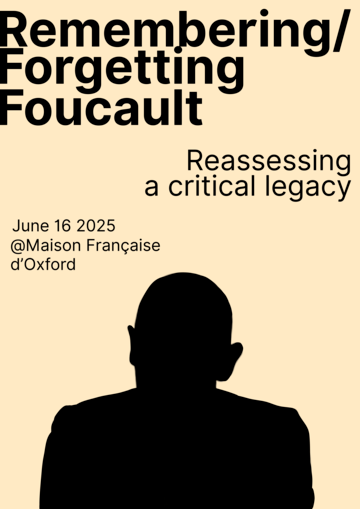
Reassessing Power: Foucault’s Legacy in Historical and Contemporary Research – Gdansk, 17-19 July 2025

Reassessing Power: Foucault’s Legacy in Historical and Contemporary Research – Gdansk, 17-19 July 2025

Posted in Conferences, Michel Foucault | Leave a comment

Vanessa Grossman, A Concrete Alliance: Communism and Modern Architecture in Postwar France – Yale University Press, November 2024

Vanessa Grossman, A Concrete Alliance: Communism and Modern Architecture in Postwar France – Yale University Press, November 2024

The compelling story of the significant relationship between communism and modern architecture in postwar France
 
The massive reshaping of French cities that took place between 1958 and 1981 is commonly regarded as a unique episode in which modernist ideals were tested on an unprecedented scale. Yet the history of postwar French modernism has never fully accounted for the influence of one of architecture’s most important institutional patrons, the French Communist Party (PCF). Drawing political theory and architectural history into conversation, Vanessa Grossman probes the shifting but enduring alliance between modern architecture and the PCF in the aftermath of the political crisis of 1958, prompted by the Algerian War of Independence and Charles de Gaulle’s rise to power.
 
Focusing on key episodes, Grossman discusses the work of Renée Gailhoustet (a rare female architect of her generation), Jean Renaudie, and members of the Atelier d’urbanisme et d’architecture (AUA), in collaboration with architectural elders such as Jean Prouvé and Oscar Niemeyer, who self-exiled to France, and in relation to contemporary Marxist thinkers such as philosophers Louis Althusser and Henri Lefebvre. Grossman exposes how communist politics and architectural modernism were mutually reinforcing ideologies that circulated in France across national and international networks of architects, urban planners, civil servants, intellectuals, activists, and politicians. Offering a new understanding of the postwar realization that architecture, particularly housing, could be employed as a political tool, this highly original book reveals the meaningful dialogue between French communism and architectural modernism.

Thanks to John Raimo for the link

Posted in Uncategorized | Leave a comment

Keith Michael Baker, Jean-Paul Marat: Prophet of Terror – University of Chicago Press, November 2025

Keith Michael Baker, Jean-Paul Marat: Prophet of Terror – University of Chicago Press, November 2025

952 pages!

A landmark biography of one of the most notorious and controversial protagonists of the French Revolution—Jean-Paul Marat.
 
Who better to pen an authoritative biography of Jean-Paul Marat (1743–93) than preeminent historian of France, Keith Michael Baker? Decades in the making, this monumental work takes readers on a journey through the intriguing, sometimes shocking life of this writer and thinker.
 
Starting with his Swiss family and upbringing, Baker then sheds light on Marat’s early years in England, his career as an aspiring scientist in Paris, his gradual transformation from impassioned pamphleteer to revolutionary newspaperman, and, finally, his murder and martyrdom. Throughout, Baker offers readers the unique opportunity to reconsider the outbreak and development of the French Revolution through Marat’s eyes and in his own words. To help make sense of Marat’s trajectory, he shows how his violent and incendiary public calls to render unseen forces visible, to inject immediacy into an increasingly abstract modern world, would transform classical republicanism into the language of the Terror.
 
Far beyond a standard rendering of Marat’s life and its milestones, this biography offers readers an opportunity to see the French Revolution as never before, through the perspective of one of its major figures. Baker’s book reveals how someone like Marat could go from translating Newton and engaging Franklin to calling for an ever-growing number of heads to roll—a transformation as chillingly relevant as ever.

Posted in Uncategorized | Leave a comment

The Complete Correspondence of Friedrich Hölderlin, ed. Charlie Louth – SUNY Press, October 2025

The Complete Correspondence of Friedrich Hölderlin, ed. Charlie Louth – SUNY Press, October 2025

The first English translation of Hölderlin’s complete correspondence, with a full introduction and notes.

Friedrich Hölderlin (1770–1843) is widely acknowledged to be one of the most significant European poets and thinkers. His poems continue to fascinate and compel; his role in the development of German Idealism is well-known; and his writings continue to shape philosophical reflections on subjectivity and the place of poetry in the world. Hölderlin’s correspondence is indispensable for anyone hoping to come to terms with his work, yet until now only selections have been available in English. This new and complete edition includes all the letters Hölderlin received and ranges from early letters written while he was still at school to letters pondering the French Revolution and its consequences in Germany, relaying to Hegel his arguments with Fichte’s lectures, setting out his poetic theory, to his final letters written in half-concealed madness to his mother. The chief source of what we know of Hölderlin’s biography, the letters vitally illuminate his poetry and thought at every point, German Romanticism.

Posted in Uncategorized | Leave a comment

Henri Lefebvre, “Socialisme industriel et socialisme paysan/Industrial Socialism and Peasant Socialism”, Actuel Marx, 2023, eds. Claire Revol and Armelle Lefebvre

I missed this when published a couple of years ago – a previously unpublished lecture by Henri Lefebvre, taken from his archives, which have been deposited at IMEC and are being catalogued – see the initial notice.

Henri Lefebvre, “Socialisme industriel et socialisme paysan” / “Industrial Socialism and Peasant Socialism“, Actuel Marx, 2023, eds. Claire Revol and Armelle Lefebvre (requires subscription)

Cet inédit issu du fonds d’archives Henri Lefebvre est la retranscription d’une conférence prononcée en 1959 qui porte sur l’évaluation des enjeux des luttes paysannes, mal saisis selon l’auteur. Il est augmenté d’une présentation qui insiste sur l’inscription de ce thème dans un programme précoce qui, attaché à la question de la rente foncière dans la perspective des textes de jeunesse de Marx, alimentera la réflexion lefebvrienne sur les formes sociales comme fondements de la sociologie historique de Marx. Selon Lefebvre, les travaux incessants de Marx sur la dissolution de la propriété collective au cours de l’histoire et hors du contexte européen sont à la fois inaboutis et insuffisamment compris, alors qu’ils faisaient une place plus importante au socialisme paysan.

This unpublished work from the Henri Lefebvre archives is a transcript of a lecture given in 1959 on the evaluation of the issues involved in peasant struggles, which, according to the author, were poorly understood. It is supplemented by an introduction emphasizing the inclusion of this theme in an early program which, dedicated to the question of ground rent from the perspective of Marx’s early texts, would feed into Lefebvre’s thinking on social forms as the foundation of Marx’s XV historical sociology. According to Lefebvre, Marx’s incessant work on the dissolution of collective _ property in the course of history and outside the European context was both unfinished and insufficiently understood, even though it gave greater prominence to peasant socialism.

A useful supplement to Henri Lefebvre, On the Rural: Economy, Sociology, Geography, eds. Stuart Elden and Adam David Morton, trans. Robert Bononno et. al., Minneapolis: University of Minnesota Press, 2022.

Posted in Adam David Morton, Henri Lefebvre | 1 Comment

The Gillian Rose Memorial Lecture Conference 2025 – Swedenborg Hall, London, 18-19 June 2025

The Gillian Rose Memorial Lecture Conference 2025 – Swedenborg Hall, London, 18-19 June 2025

‘Keep your mind in hell, and despair not’ – Rose’s discovery of Silouan the Athonite’s maxim provided the occasion for Love’s Work and guided its weaving journey along the quotidian verges of hell and despair. Whether passing through the three cities of death or across the thresholds of stormed paradises, Rose’s work refuses any alleviation of the state of perdition. For her, trying to keep the mind out of hell is the real council of despair. And yet the promise that sustains her season in hell is not the humility of Christian hope taught by the Athonite nor the pride of Stephen Daedalus evoked throughout Love’s Work, but one of divine comedy or fidelity to the movements of the bacchanalian revel and repose in its sin. The Gillian Rose Memorial Lecture conference this year departs from Love’s Work in an exploration of the play of promise and perdition throughout the full range of Rose’s philosophical writing.

Posted in Conferences, Gillian Rose | Leave a comment

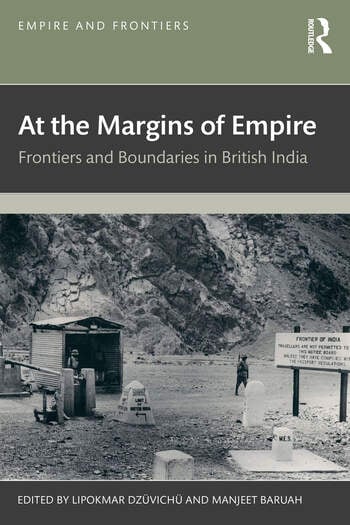
Nicholas D. Anderson, Inadvertent Expansion: How Peripheral Agents Shape World Politics – Cornell University Press, January 2025 and New Books Network discussion

Nicholas D. Anderson, Inadvertent Expansion: How Peripheral Agents Shape World Politics – Cornell University Press, January 2025

In Inadvertent Expansion, Nicholas D. Anderson investigates a surprisingly common yet overlooked phenomenon in the history of great power politics: territorial expansion that was neither intended nor initially authorized by state leaders. 

Territorial expansion is typically understood as a centrally driven and often strategic activity. But as Anderson shows, nearly a quarter of great power coercive territorial acquisitions since the nineteenth century have in fact been instances of what he calls “inadvertent expansion.” A two-step process, inadvertent expansion first involves agents on the periphery of a state or empire acquiring territory without the authorization or knowledge of higher-ups. Leaders in the capital must then decide whether to accept or reject the already-acquired territory.

Through cases ranging from those of the United States in Florida and Texas to Japan in Manchuria and Germany in East Africa, Anderson shows that inadvertent expansion is rooted in a principal-agent problem. When leaders in the capital fail to exert or have limited control over their agents on the periphery, unauthorized efforts to take territory are more likely to occur. Yet it is only when the geopolitical risks associated with keeping the acquired territory are perceived to be low that leaders are more likely to accept such expansion. 

Accentuating the influence of small, seemingly insignificant actors over the foreign policy behavior of powerful states, Inadvertent Expansion offers new insights into how the boundaries of states and empires came to be and captures timeless dynamics between state leaders and their peripheral agents.

Interview at New Books Network with Eleanora Mattiacci. Thanks to dmf for the link

Posted in Uncategorized | Leave a comment