Elisabeth Raucq, animal names and approaches to Indo-European vocabulary

In the preface to the second edition of his Mitra-Varuna, Georges Dumézil mentions some of the people who attended the lecture course which became the book. Delivered at the École Pratique des Hautes Études in 1938-39, this was the last year of teaching before the war. Attendees included Roger Caillois, Lucien Gerschel, Marie-Louise Sjoestedt, Deborah Lifschitz and Elisabeth Raucq. He also mentions an assistant professor at the University of Ghent called Pintelon (English edition, p. xxxvii). Some of these people – Sjoestedt, Lifschitz and Pintelon – did not survive the war. Dumézil says his fondness for this class is therefore “a memory peopled by ghosts” (p. xxxvii). Caillois is a well-known figure; Gerschel was one of Dumézil and Benveniste’s most loyal students. I have written about the Celtic language scholar Sjoestedt before on this site.

Here I want to say something about the work of Elisabeth Raucq, though there are few published traces of her career. Raucq also attended Émile Benveniste’s Comparative Grammar and Iranian lecture courses in 1938-39, as well as classes with Jules Bloch and Jean Filliozat. There are no indications she attended the EPHE in previous years, so it seems this was a visiting year from the University of Ghent, where she was working with George van Langenhove. The book which I focus on is a linguistic study of animal names or nouns in Indo-European languages: Contribution à la linguistique des noms d’animaux en indo-européen, published by De Sikkel in Antwerp in 1939. This was a publication series from the University of Ghent, and I suspect it was her thesis. She is working in the tradition of van Langenhove, and references work by Antoine Meillet in the book, and two of his most important students, Jerzy Kuryłowicz and Benveniste. Her reference to Benveniste’s work is to his 1936 book Origines de la formation des noms en indo-européen.

Given what else was happening in 1939 it is unsurprising there were few reviews at the time of publication. The three I know are by the medievalist Urban T. Holmes Jr. in Language in 1940, Alfred Ernout in the Revue de Philologie, de Littérature et d’Histoire Anciennes, and by Berhard Rosenkranz in Indogermanische Forschungen, both in 1941. Ernout’s review is just a book note, but in only a few words raises some significant issues:

This book develops from the teaching of Monsieur van Langenhove: it is an application of his theory of the structure of ‘primitive’ Indo-European. According to Mlle Raucq in her preface, “Animal nouns are fixed [immotivés] in the system of nominal formations characteristic of Indo-European in the verbal period. They can be analysed as semantemes belonging to the static period of Indo-European” [p. viii]. Her study is devoted to this analysis. The noun ox [bœuf], for example, can be traced back to a root ǝg2 suffixed by *-eu- and variously expanded (p. 88), or rather to a primary IE form *ǝg2ǝ3eu- (p. 90). One can admire the ease with which Mlle Raucq proceeds with these reconstructions. For my part, they worry me a bit, and I see emerging, more or less implicitly, the idea that through Indo-European we can reconstitute ‘original’ forms. It is the same idea, rejuvenated and presented in a more complicated form, that Bopp expressed in the preface of his 1833 Grammar: I am afraid it will lead to the same misunderstandings.

Holmes also situates Raucq within the lineage of van Langenhove, but includes Meillet’s students too: “In this investigation of the semantemes and idea-signifiers of pre-dialectal Indo-European, the author is a disciple of Van Langenhove, and therefore of Kurylowicz and Benveniste” (241). Holmes concludes: “This type of linguistic reasoning is still in its experimental stage, and no one as yet can judge its ultimate value. We must read with care the studies of Benveniste, Kurylowicz, Van Langenhove, Raucq, and others” (p. 241).

Rosenkranz suggests the book “appears extremely convincing… partly due to the consistency with which she pursues her principles and methods”. But he identifies “serious concerns”, particularly around the way it follows a line, excludes material which does not fit, and proposes some dubious etymologies. Ultimately he sees Raucq’s “‘test case’” for van Langenhove’s theory as “a failure” (p. 61). The book is also mentioned in passing by Albert Cuny in the Revue Hittite et Asianique in 1939, again seeing it in the lineage of van Langenhove, but on a topic outside the scope of that journal. 

Another review appeared somewhat belatedly, because of the war, in the Bulletin de la société de linguistique de Paris, in an issue spanning 1942-45. The author of this review was Benveniste, who discussed the book alongside the first two volumes of van Langenhove’s Linguistische Studiën. It is, frankly, brutal, and clearly disassociates his work from this approach. While he acknowledges van Langenhove makes some valuable analyses of Germanic morphology, he is sceptical of the wider claims. “I must confess that, in these long considerations and these meticulous analyses, I was unable to grasp any useful ideas; I even admit that most of the principles behind them remain unintelligible to me” (p. 44). He contrasts the documentation and the theory: the former is “extensive, precise, generally taken from the best authors”, but the latter is a “nebulous and inconsistent doctrine which is superimposed on it” (pp. 44-45). 

In the second part of his review he argues that Raucq’s project is entirely based on these “pseudo-principles”, because she believes only van Langenhove’s method “leads to results”. This is its problem for Benveniste: “it is a question of establishing that nouns considered simple are prehistoric compounds”. Her work is misled by thinking about Greek words without considering they are “borrowings from some other Indo-European language”. He closes with the wish that “I hope Mlle Raucq abandons these sterile paths and in future devotes her gifts and knowledge to more real objects” (p. 45).

For a while at least, Raucq continued in the lineage of van Langenhove. Her other book-length study was a Dutch work, Bijdrage tot de studie van de morphologie van het Indo-Europeesch verbum, published in 1947, but completed on 14 July 1943 (p. 194). Its title would translate as Contribution to the study of the morphology of the Indo-European verb. Being in Dutch would have narrowed its audience, even within linguistic specialists, and I cannot find any indication it was translated into another language. From the reviews I have seen (i.e. Edgar Polomé in 1951 and Arthur Beattie in 1952), it seems that this continued to build on van Langenhove’s work. He died, suddenly, in 1943, at the age of just 51, and a third volume of his Linguistische Studiën was published posthumously in 1946, edited by two of his colleagues. The first volume of this series is mostly in Dutch; one essay of the first volume and the other two volumes in French. There were plans for additional volumes, which van Langenhove did not achieve. Raucq dedicates Bijdrage tot de studie to van Langenhove’s memory: the completion date is the day of his death. 

The only other publication by Raucq of which I’m aware is a very specialist study of a manuscript held in Brussels, “Die Runen des Brüsseler Codex No. 9565 – 9566”. Runes were another of van Langenhove’s interests. The article begins with a Dutch summary, but is mostly in German. It is in a 1941 issue, but notes that it was a paper delivered on 21 June 1942. (I suspect this discrepancy is because publication schedules were erratic during the war, and that the 1941 volume was delayed enough to allow a 1942 paper to appear within it.) 
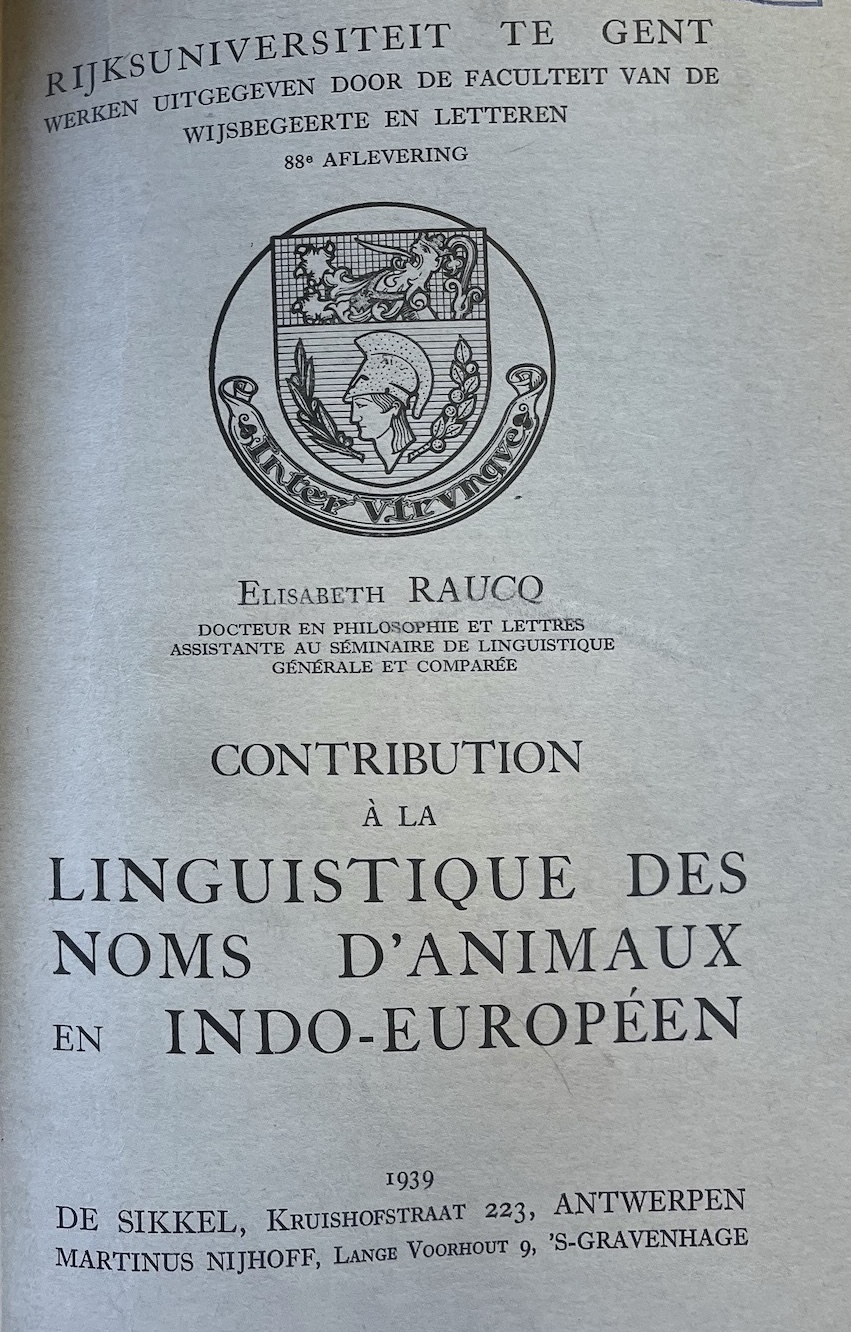
Beyond these pieces, I can find nothing of what Raucq went on to do. The cover page of Bijdrage tot de studie says that she was an “assistant to the seminar in general and comparative linguistics (1938-1944)”. Perhaps that role did not continue after van Langenhove’s death. Or she may have married and changed her name. It is possible she did not pursue an academic career. If that is the case, it’s hard not to think the highly critical reviews played a part.

Her career therefore appears to be highly abbreviated: a 1939 book, a 1942 paper, and another book completed in 1943 and published in 1947. One each in French, German and Dutch. The book on animals is especially remarkable for its date of 1939. The methodological differences are significant between Benveniste and Raucq, as his review indicates, but thematically there are parallels. Benveniste would himself publish on animal nouns in his later work, both in Indo-European in 1949 and in the High-Yukon native American language in 1953. It is striking that, even as a contrast, Benveniste does not mention Raucq’s book in the first of these. The Native American essay was based on fieldwork on the Pacific Northwest coast, and builds on the limited work on native American languages in European research of the time. It lists the names of multiple kinds of mammals, birds, fish and insects, and provides a short text, “The Bear and the Porcupine”, with a translation.

Raucq’s work might even be seen as something of a model for Benveniste’s later work on the vocabulary of Indo-European institutions, which we have in English as the Dictionary of Indo-European Concepts and Society. But in that work, Benveniste is not so much concerned with trying to reconstruct words in Indo-European but rather the subsequent forms, their relations and significations. It is also a book which by its nature is much more explicitly political.

References

A.J. Beattie, “E. Raucq: Bijdrage tot de Studie van de Morphologie van het Indo-Europeesch Verbum…”, The Classical Review 2 (2), 1952, 111-12.

Émile Benveniste, Origines de la formation des noms en indo-européen, Paris, Adrien Maisonneuve, 1935.

Émile Benveniste, “George van Langenhove. – Linguistische Studiën I, II… Élisabeth Raucq. – Contribution à la linguistique des noms d’animaux…”, Bulletin de la société de linguistique 42 (2), 1942-45, 44-45.

Émile Benveniste, “Noms d’animaux en indo-européen”, Bulletin de la Société de linguistique 45 (1), 1949, 74-103.

Émile Benveniste, “Le vocabulaire de la vie animale chez les indiens du Haut-Yukon”, Bulletin de la société de linguistique 138 (1), 1953, 79-106.

Émile Benveniste, Le Vocabulaire des institutions indo-européennes, 2 volumes, Paris: Éditions de Minuit, 1969; Dictionary of Indo-European Concepts and Society, trans. Elizabeth Palmer, Chicago: Hau Books, 2016; originally published as Indo-European Language and Society, Coral Gables: University of Miami Press, 1973.

Albert Cuny, “G. van Langenhove, Linguistische Studiën, II”, Revue Hittite et Asianique 5 (37-38), 1939, 185-86.

Georges Dumézil, Mitra-Varuna. Essai sur deux représentations indo-européennes de la souveraineté, Paris: Gallimard, second edition, 1948; Mitra-Varuna: An Essay on Two Indo-European Representations of Sovereignty, critical edition, trans. Derek Coltman, ed. Stuart Elden, Chicago: Hau, 2023.

A. Ernout, “Elisabeth Raucq, Contributions à la Linguistique des Noms d’Animaux en Indo-Européen”, Revue de Philologie, de Littérature et d’Histoire Anciennes 15, 1941, 177.

Urban T. Holmes, Jr., “Contributions à la Linguistique des Noms d’Animaux en Indo-Européen by Elisabeth Raucq”, Language 16 (3), 1940, 241.

Klaus Karttunen, “Langenhove, George van”, Who Was Who in Indology, 2017, https://whowaswho-indology.info/6644/langenhove-george-charles-van/

George van Langenhove, Linguistische Studiën, Antwerpen: De Sikkel, three volumes, 1936-46.

E. Polomé, “Raucq (E.). Bijdrage tot de studie van de morphologie van het indo-europeesch verbum”, Revue belge de philologie et d’histoire 29 (4), 1951, 1199-1205.

Elisabeth Raucq, Contribution à la linguistique des noms d’animaux en indo-européen, Antwerpen: De Sikkel, 1939.

Elisabeth Raucq, “Die Runen des Brüsseler Codex n° 9565-9566”, in Mededeelingen van de Koninklijke Vlaamsche Academie voor wetenschappen, Letteren en schoone kunsten van België. Klasse der letteren III (4), 1941, 1-26.

Elisabeth Raucq, Bijdrage tot de studie van de morphologie van het Indo-Europeesch verbum, Brugge: De Tempel, 1947.

B. Rosenkranz, “George van Langenhove: Linguistische Studien II: Essais de linguistique indo-européenne… Elisabeth Raucq, Contribution à la linguistique des noms d’animaux en Indo-Européen…”, Gnomon 17 (2), 1941, 56-61.

Archives and Sources

Fonds Georges Dumézil, Collège de France, DMZ 56.4.

École pratique des hautes études, Section des sciences historiques et philologiques. Annuaire 1939-1940, 1939.


This is the fifteenth post of a weekly series, where I post short essays with some indications of further reading and sources, but which are not as formal as something I’d try to publish more conventionally. They are usually tangential to my main writing focus, a home for spare ideas, asides, dead-ends and possible futures. I hope there is some interest in them. They are provisional and suggestions are welcome. 

The full list of ‘Sunday histories’ is here.
Posted in Antoine Meillet, Emile Benveniste, Georges Dumézil, Mapping Indo-European Thought in Twentieth Century France, Roger Caillois, Sunday Histories, Uncategorized | 4 Comments

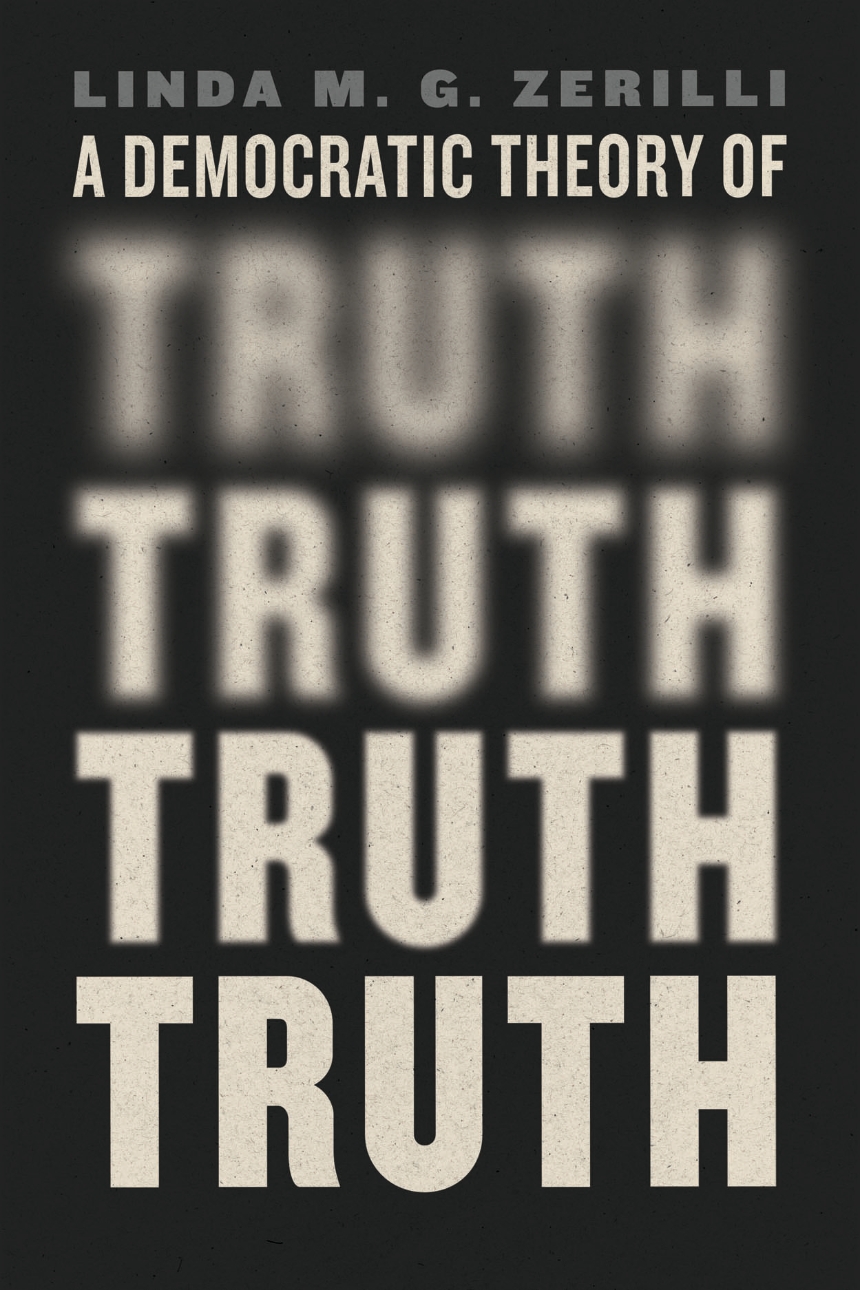
Linda M.G. Zerilli, A Democratic Theory of Truth – University of Chicago Press, April 2025

Linda M.G. Zerilli, A Democratic Theory of Truth – University of Chicago Press, April 2025

A critique of the concept of truth presupposed by the post-truth debate—and a bold new vision for a more pluralistic citizenry.

We say that we live in a “post-truth” era because disinformation threatens our confidence in the existence of a shared public world. Affirming objective truth may, therefore, seem necessary to save democracy. According to political theorist Linda M. G. Zerilli, such affirmation can stifle political debate and silence dissent. In fact, Zerilli argues that the unqualified insistence on objective truth is as dangerous for democracy as denying it.

Drawing on Arendt, Foucault, and Wittgenstein, A Democratic Theory of Truth challenges the concept of truth presupposed by the post-truth debate. It argues that we, the people, have an essential role in discovering and evaluating any truth relevant to the political realm. The result is a striking defense of plurality, dissent, and opinion in contemporary democratic societies.

Posted in Uncategorized | Leave a comment

Benoit Daviron, Biomass, Capitalism, and Hegemony: A Rich and Powerful History – Bloomsbury, January 2025 (print and open access)

Benoit Daviron, Biomass, Capitalism, and Hegemony: A Rich and Powerful History – Bloomsbury, January 2025 (print and open access)

How did Europeans achieve global dominance and continue to satisfy their ever-growing needs? How do we explain the effects this has on the rest of the world? 

In his magnum opus, published here in English for the first time as an open access book, world-renowned critical development scholar Benoit Daviron blends Braudelian history and a food systems approach to show how biomass–as the metabolism of societies and as a source of matter and energy–explains key historical phases of Western capitalist hegemony and the transitions between them. By examining various uses of biomass, technical production and extraction methods, forms of labour mobilization, and exchange systems, Daviron provides startling new insights into capitalist development from the 16th century to the present. 

This book is essential reading for students and scholars of critical approaches to global development, and for anyone interested in how capitalist domination came to be and how the bio-meatabolic imbalances it created might be redressed.

The ebook editions of this book are available open access under a CC BY-NC-ND 4.0 licence on bloomsburycollections.com.

Posted in Uncategorized | Leave a comment

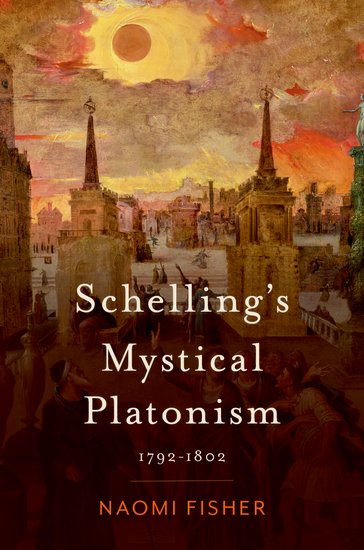
Naomi Fisher, Schelling’s Mystical Platonism: 1792-1802 – Oxford University Press, May 2024

Naomi Fisher, Schelling’s Mystical Platonism: 1792-1802 – Oxford University Press, May 2024

Schelling came of age during the pivotal and exciting years at the end of the eighteenth century, as Kant’s philosophy was being incorporated into the German academic world. At this time, in addition to delving into the new Kantian philosophy, Schelling engaged in an intense study of Plato’s dialogues and was immersed in a Neoplatonic intellectual culture. Attention to these aspects of Schelling’s early philosophical development illuminates his fundamental commitments. Throughout the first decade of his adult life, from 1792-1802, Schelling was a mystical Platonist. 
Naomi Fisher argues that Schelling is committed to two overarching theses, which together comprise his mystical Platonism. First, Schelling considers the absolute to be ineffable: It cannot be described in conceptual terms. For this reason, it remains inferentially external to any given philosophical system and is only intimated to us in certain analogical formulations, in works of art, or in nature as a whole. Second, Schelling is committed to a kind of priority monism: All things are grounded in the absolute, but finite things possess an integral unity all their own, and so have a distinct and relatively independent existence.
Highlighting these commitments resolves an interpretive dispute, according to which Schelling is a Fichtean idealist or a Spinozist, or he vacillates between these positions. Interpreting Schelling as advancing a mystical Platonism provides an alternative way of interpreting these early texts, such that they are by and large consistent. Fisher presents Schelling’s early philosophy as a unique and compelling fusion of the old and new: Schelling fulfills the characteristic aims of post-Kantian philosophy in a way distinctive among his contemporaries, by drawing on and appropriating various strands of Platonism.

Posted in Uncategorized | Leave a comment

David L. Prytherch, Reclaiming the Road: Mobility Justice beyond Complete Streets – University of Minnesota Press, June 2025

David L. Prytherch, Reclaiming the Road: Mobility Justice beyond Complete Streets – University of Minnesota Press, June 2025

For the past century, our roadways have been engineered as pipes for cars, but they offer vast potential as public spaces. From New York and Boston to Portland and Los Angeles, cities are rethinking their streets, going beyond sidewalks and bike lanes to welcome nonmotorists to share the asphalt roadway. Reclaiming the Road traces the historical evolution of America’s streets and explores contemporary movements to retake them from cars—temporarily and permanently—for diverse forms of mobility and community life. To share the street raises important questions of equity, in transportation and beyond. David L. Prytherch proposes a bold, intersectional vision of a more just street. 

Reclaiming the Road connects cutting-edge theory, policy analysis, and firsthand accounts from those leading the charge in transforming our streets to advocate for changing how we think about and design roads. Prytherch features case studies of nine major cities in the United States to show how experiments in reclaiming streets accelerated during the Covid-19 pandemic to become lasting changes. Through in-depth interviews, he shares stories of how planners, transportation advocates, and community leaders have implemented innovative programs for slowing neighborhood streets, opening roads for walking and biking, and reconstructing roadways with public parklets and street plazas as social spaces for curbside conversation. 

Examining movements to transform streets through the lenses of equity and justice, Reclaiming the Road tackles the conceptual challenge of defining mobility justice and the practicalities of planning a more just public street, offering a compelling vision for the future of America’s public spaces.

Posted in Uncategorized | Leave a comment

Frédéric Keck, Solidarity Between Species: Living with Animals Exposed to Pandemic Viruses – Polity, May 2025

Frédéric Keck, Solidarity Between Species: Living with Animals Exposed to Pandemic Viruses – Polity, May 2025

This book examines how the Covid-19 pandemic can be described as a biopolitical crisis, taking into account a fact often overlooked by commentators: Covid-19 is a zoonosis, a disease transmissible between animal species. The Sars-Cov2 virus causing this respiratory disease circulated in bats before passing to humans under as-yet mysterious conditions, and it was transmitted from humans to other species, notably mink and deer.

Building on Michel Foucault’s revival of the term “biopolitics” and related notions (disciplinary power, pastoral power, cynegetic power), this book traces a set of public health measures taken over the last two centuries to control epidemics. It underlines how the need to conserve virus strains in order to identify and anticipate their mutations has given rise to cryopolitics, a set of techniques aimed at suspending the living in order to defer death. The book then questions the emancipatory scope of this cryopolitics by examining interspecies solidarity built by the warning signals sent by animals to humans about coming threats, be they pandemics, natural disasters, or climate change. By blurring the boundaries between the wild and the domestic resulting from the process of domestication, the politics of zoonoses relies on sentinels who preserve the memory of signs from the past to prepare living beings for future threats by involving them in a common ideal.

Posted in Uncategorized | Leave a comment

David Beer, ‘When Simmel met Rodin’, Half Thoughts

David Beer, ‘When Simmel met Rodin‘, Half Thoughts

Posted in Uncategorized | 1 Comment

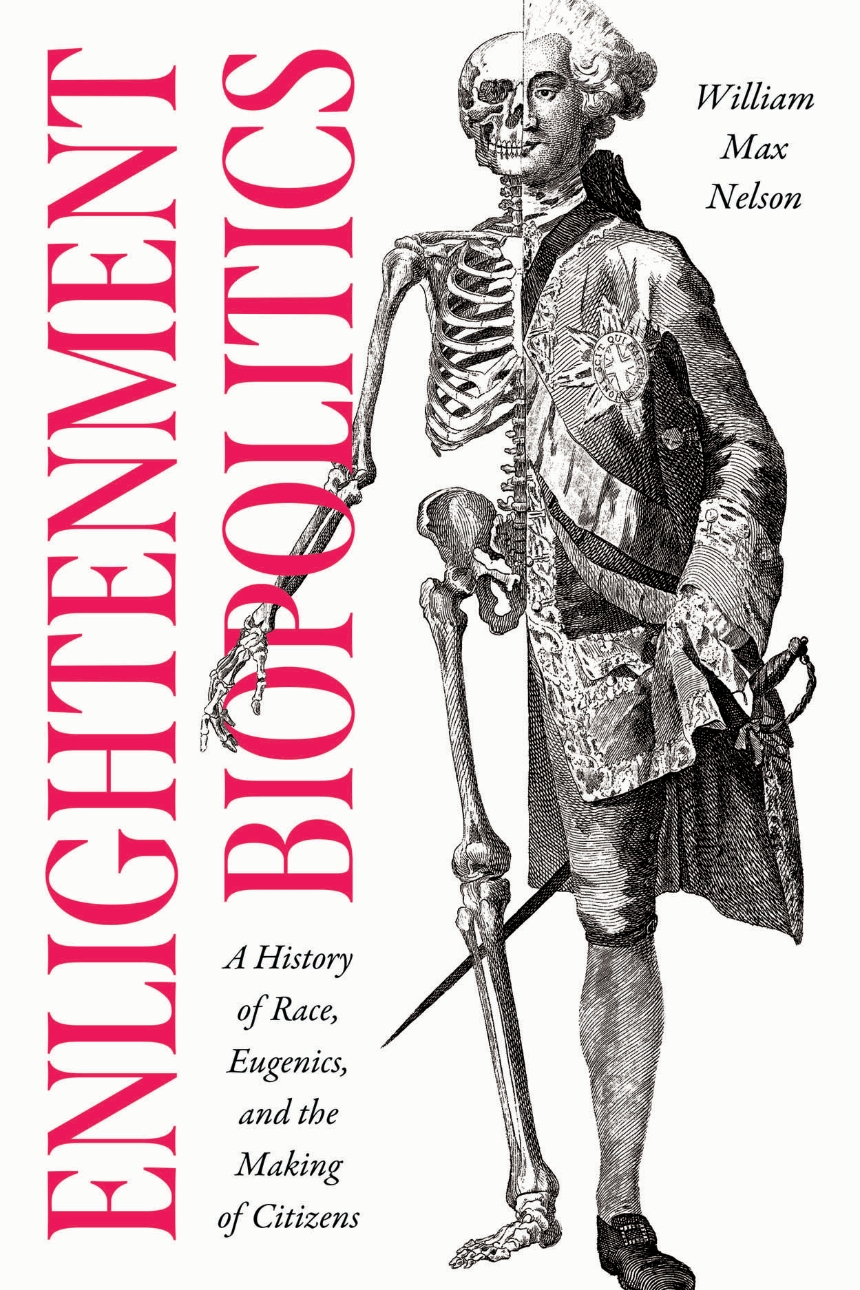
William Max Nelson, Enlightenment Biopolitics: A History of Race, Eugenics and the Making of Citizens – University of Chicago Press, May 2024 and New Books discussion

William Max Nelson, Enlightenment Biopolitics: A History of Race, Eugenics and the Making of Citizens – University of Chicago Press, May 2024

New Books discussion with Morteza Hajizadeh – thanks to dmf for this link

A wide-ranging history tracing the birth of biopolitics in Enlightenment thought and its aftermath.

In Enlightenment Biopolitics, historian William Max Nelson pursues the ambitious task of tracing the context in which biopolitical thought emerged and circulated. He locates that context in the Enlightenment when emancipatory ideals sat alongside the horrors of colonialism, slavery, and race-based discrimination. In fact, these did not just coexist, Nelson argues; they were actually mutually constitutive of Enlightenment ideals.

In this book, Nelson focuses on Enlightenment-era visions of eugenics (including proposals to establish programs of selective breeding), forms of penal slavery, and spurious biological arguments about the supposed inferiority of particular groups. The Enlightenment, he shows, was rife with efforts to shape, harness, and “organize” the minds and especially the bodies of subjects and citizens. In his reading of the birth of biopolitics and its transformations, Nelson examines the shocking conceptual and practical connections between inclusion and exclusion, equality and inequality, rights and race, and the supposed “improvement of the human species” and practices of dehumanization.

Posted in Uncategorized | Leave a comment

Who translated Michel Foucault’s The Order of Things?

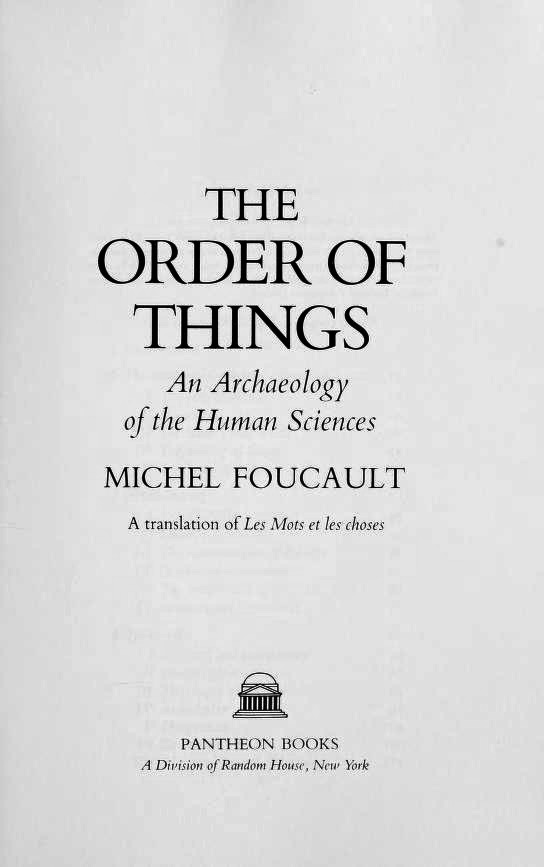
Who translated Michel Foucault’s The Order of Things? The original English edition, published by Pantheon in 1970 (and Tavistock in the UK) has the title The Order of Things: An Archaeology of the Human Sciences, and under the author name says “A translation of Les Mots et les choses”. No translator is named. The “Publisher’s Note” explains the change of title from the literal Words and Things to The Order of Things, because of a potential confusion with other books titled Words and Things. But it is a publisher note, rather than a translator note, and yet it says things that ordinarily a translator would say, closing with:

In view of the range of literature referred to in the text, it has not proved feasible in every case to undertake the bibliographical task of tracing English translations of works originating in other languages and locating the passages quoted by M. Foucault. The publisher has accordingly retained the author’s references to French works and to French translations of Latin and German works, for example, but has, as far as possible, cited English editions of works originally written in that language (p. viii of original edition). 

At least one reviewer picked up on the lack of a named translator. George Steiner had this to say in a review entitled “The Mandarin of the Hour“:

The translator (whom, with maddening disregard for human effort and responsibility, the publisher leaves anonymous) has striven hard. Nevertheless, an honest first reading produces an almost intolerable sense of verbosity, arrogance and obscure platitude. Page after page could be the rhetoric of a somewhat weary sybil indulging in free association. Recourse to the French text shows that this is not a matter of awkward translation (The New York Times, 28 February 1971).

Foucault responded to that review in the first issue of Diacritics, a piece entitled “Monstrosities in Criticism“. But though he engages with several of Steiner’s criticisms, he does not reveal the translator.

Bibliographies of Foucault sometimes credit Alan Sheridan. Sheridan also translated The Birth of the Clinic and The Archaeology of Knowledge in the early 1970s, and went on to translate Discipline and Punish. He translated several other books, some for Tavistock and/or Pantheon. In Sheridan’s 1980 book Michel Foucault: The Will to Truth, the bibliography says “The Order of Things, trans. A.S., London, Tavistock and New York, Pantheon, 1970 (with Foreword by M.F.)” (p. 227). That would seem to indicate he was the translator and is the same way he credits himself for the books which we know he translated. But in the “Author’s Note” to The Will to Truth he thanks publishers of translations that have allowed him to quote from them, and does not mention The Order of Things. At the end of his note he says: “I have taken the liberty, on occasion, of rewording the extracts quoted. In the case of two books, I have preferred to use my own renderings” (p. ix). But this doesn’t seem to apply to The Order of Things. A check of some of his translations from The Order of Things in The Will to Truth suggests he followed the published translation. It is also listed on Sheridan’s own website under his translations. So, until now, I’d been content to think Sheridan was the translator, just strangely uncredited.

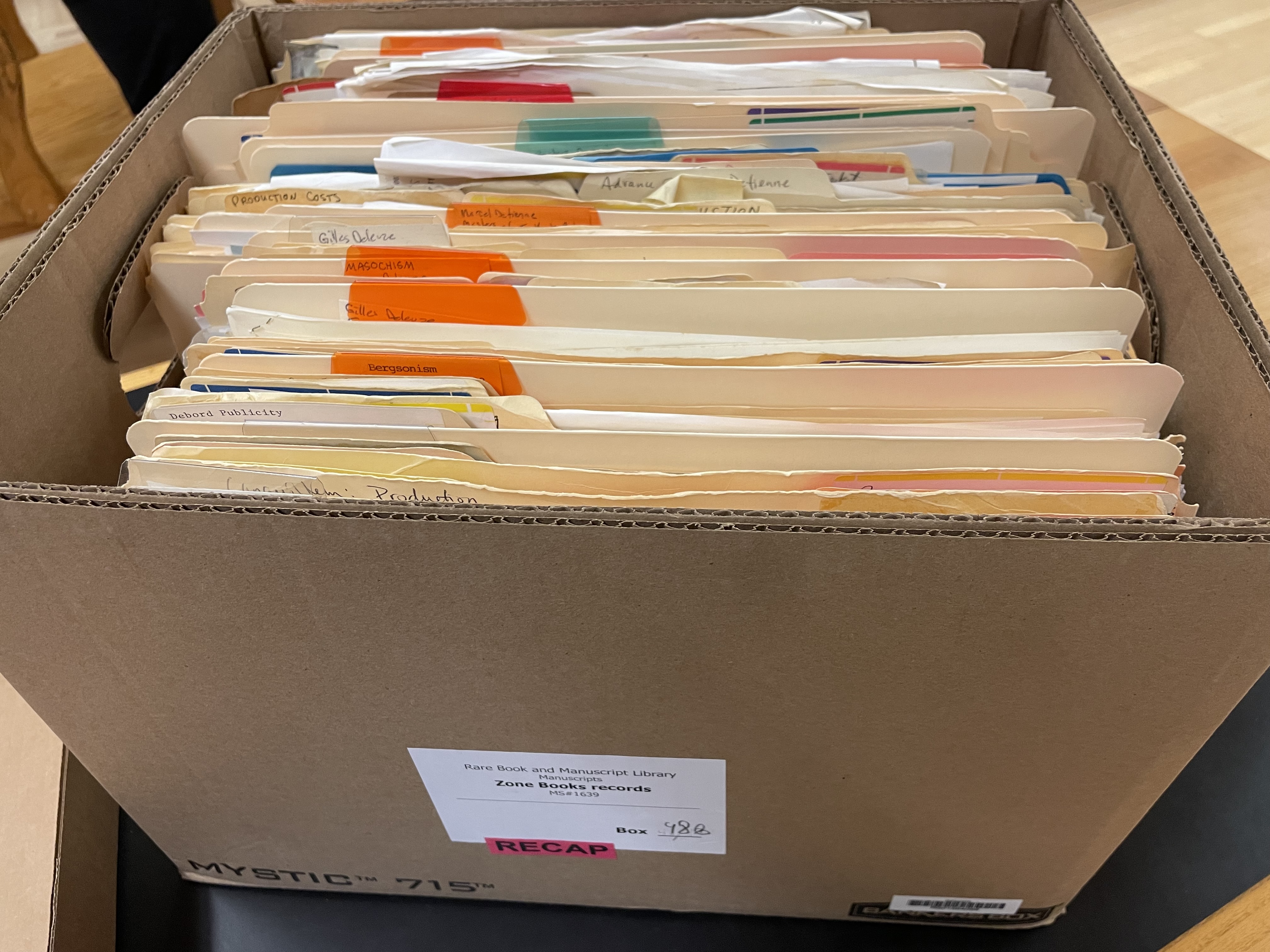
In the Columbia University archives are the records of Zone books, who published the first English translation of Georges Dumézil’s Mitra-Varuna in 1988. I looked at their records relating to this book last month. I have edited a new edition of this text, based on the existing translation, but comparing the first and second French editions, and doing more work with the notes. Among other things in the archive, I was looking for any clues about the translator of that book, Derek Coltman. I had wanted to contact him when the book was going through the re-editing process. I couldn’t find any contact details, and in the end I had assumed he wasn’t still alive, but had not been able to find out for sure. But there is some correspondence with him in the Zone books archive, sent from an old farmhouse in rural Norfolk, England, and he is asked at one point for a cv. He sends what is a rather rambling letter instead, narrating his career to date, from a degree in 1952 to working as a waiter in a cabaret theatre in New York, to his early translations. A 1952 degree suggests he would be very elderly if he were still alive today (Update June 2025: he apparently died in 2012). But I was struck by this astonishing passage about his previous translation experience:

It was in the mid to late sixties also that I did Foucault’s Words and Things for a New York imprint called Pantheon, a fact that I mention partly because Foucault figures on your list of authors and partly because there is a mystery about it that still niggles at me occasionally. It was a project I was rather dubious about tackling in those days; but Richard Howard and Susan Sontag ganged up on me one day in the 8th Street Delicatessen, and what could I do but succumb? An hour with Ms. Sontag and not only do you start suffering from a strange intellectual elation, you even start to suspect yourself of being perhaps rather cleverer than you previously dared hope, So what was the mystery? Well, the translation was approved, accepted, and paid for; but was it ever published? I never received a copy; I didn’t get an answer when I wrote to enquire after the book’s fate; and I’ve never seen it listed in a library catalogue. Never mind, it was a fascinating book to do. The first chapter in particular: a long, amazingly detailed, continually surprising analysis of Velazquez’s Las Meninas.

I like the idea that Richard Howard – who had translated the abridged version of the History of Madness as Madness and Civilisation – and Susan Sontag persuaded Coltman. Some parts of this seem plausible, but I don’t think he can have looked very hard in libraries. That said, if he was only looking for a book entitled Words and Things, then perhaps that would explain why he couldn’t locate it. Could he really have missed that the book had appeared as The Order of Things? By the late 80s, when this CV was written, Foucault was well-known, and his 1984 death was widely noted. But why did Pantheon not acknowledge Coltman’s role in the published version, nor according to him, respond to their correspondence?

It could be that Coltman’s translation was not used, for an unknown reason, and Pantheon commissioned Sheridan instead. But if Pantheon were unhappy with the quality, why did they accept it and pay Coltman? Or maybe Sheridan was asked to rework Coltman’s draft, and translator credit was unmentioned, perhaps to avoid indicating problems. (There are translations where a committee approach means no one wants their name to appear. Claude Lévi-Strauss’s The Savage Mind being one example – its problems begin, but by no means end, with the title.) The Pantheon archives are at Columbia too, but I can find no records relating to Coltman, Foucault, or Sheridan there. The records of Georges Borchardt, Inc. are also at Columbia. This is a literary agency who represented Gallimard and Plon to anglophone publishers, and negotiated the translation rights to this and other works by Foucault. The file on Foucault has some interesting material, but nothing on who translated the text. There is a note that Sontag tried to persuade another publisher to buy the rights, after she had picked up a copy of Les Mots et les choses in Paris in 1966, so she was certainly interested in the idea of its translation. Perhaps there is something in the Tavistock archives. But the question of who translated The Order of Things, which I’d thought settled by Sheridan’s 1980 book, is, for me, open to question again. 

Update 17 June 2025: I’ve been told that Derek Coltman died in 2012. I’d written to the address I found in the file but the current owners informed me he had moved away and later died. Sheridan died in 2015, Howard in 2022 and Sontag in 2004. It seems this is only going to be resolved by some other archival trace somewhere.

References

Georges Dumézil, Mitra-Varuna: An Essay on Two Indo-European Representations of Sovereignty, trans. Derek Coltman, ed. Stuart Elden, Chicago: Hau books, 2023.

Michel Foucault, The Order of Things: An Archaeology of the Human Sciences, New York: Pantheon/London: Tavistock, 1970.

Michel Foucault, “Monstrosities in Criticism”, trans. Robert J. Matthews, Diacritics 1 (1), 1971, 57-60, https://www.jstor.org/stable/464562

Alan Sheridan, Michel Foucault: The Will to Truth, London: Tavistock, 1980.

George Steiner, “The Mandarin of the Hour”, The New York Times, 28 February 1971, https://archive.nytimes.com/www.nytimes.com/books/00/12/17/specials/foucault-order.html

Archives

MS#0135, Georges Borchardt Inc. records, 1949-2024, box 234, Foucault, Michel, Rare Books and Manuscript Library, Columbia University, https://findingaids.library.columbia.edu/archives/cul-4078396

Pantheon Books records, 1944-1968, Rare Books and Manuscript Library, Columbia University, https://findingaids.library.columbia.edu/archives/cul-4079194

Zone Books records, Box 48b, Rare Books and Manuscript Library, Columbia University, https://findingaids.library.columbia.edu/archives/cul-10080831

Zone Books records, box 48B, Columbia University

This is the fourteenth post of an occasional series, where I try to post short essays with some indications of further reading and sources, but which are not as formal as something I’d try to publish more conventionally. They are usually tangential to my main writing focus, a home for spare ideas, asides, dead-ends and possible futures. I hope there is some interest in them. They are provisional and suggestions are welcome. 

The full list of ‘Sunday histories’ is here.

Posted in Georges Dumézil, Michel Foucault, Sunday Histories | 10 Comments

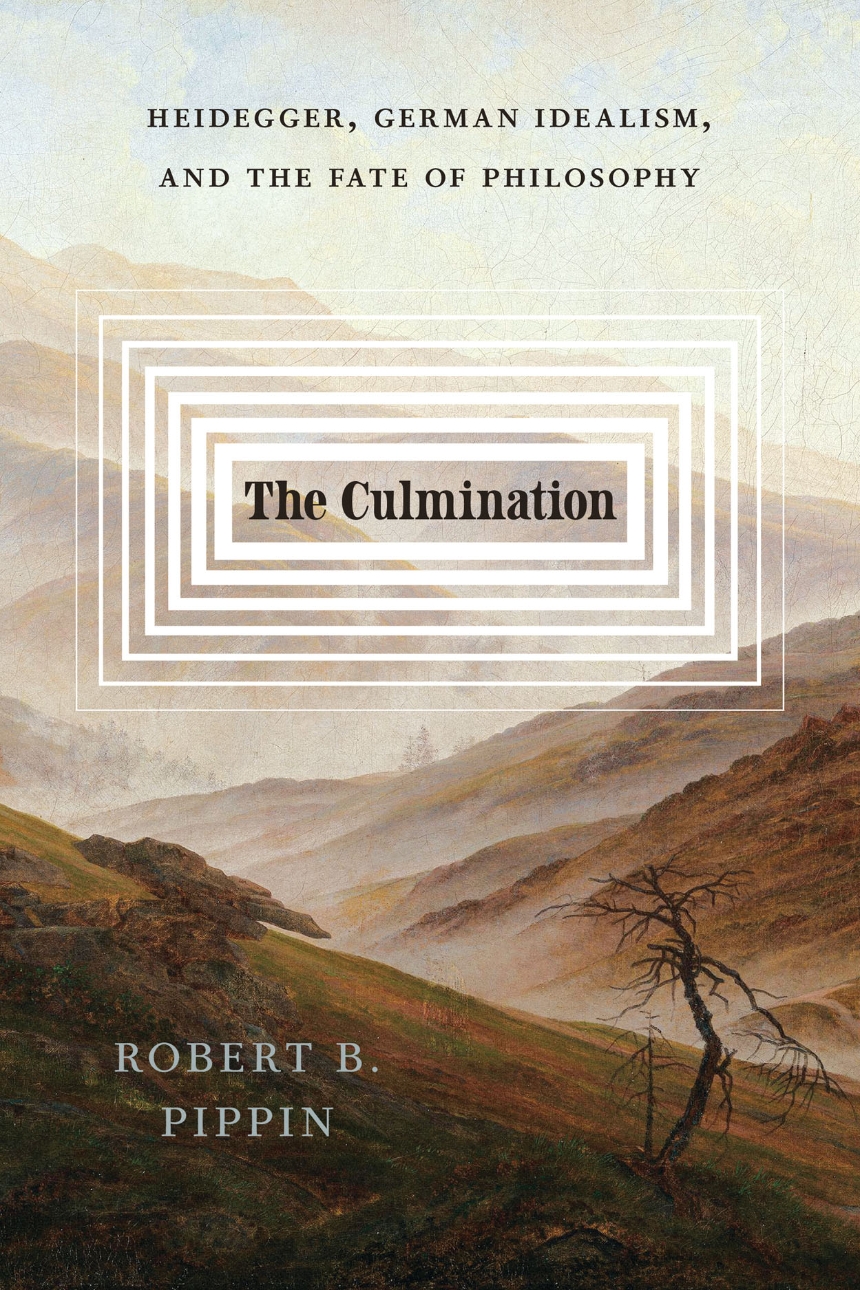
Robert B. Pippin, The Culmination: Heidegger, German Idealism and the Fate of Philosophy – University of Chicago Press, January 2024 and review at NDPR

Robert B. Pippin, The Culmination: Heidegger, German Idealism and the Fate of Philosophy – University of Chicago Press, January 2024

review at NDPR by Sebastian Gardner

A provocative reassessment of Heidegger’s critique of German Idealism from one of the tradition’s foremost interpreters.

Heidegger claimed that Western philosophy ended—failed, even—in the German Idealist tradition. In The Culmination, Robert B. Pippin explores the ramifications of this charge through a masterful survey of Western philosophy, especially Heidegger’s critiques of Hegel and Kant. Pippin argues that Heidegger’s basic concern was to determine sources of meaning for human life, particularly those that had been obscured by Western philosophy’s attention to reason. The Culmination offers a new interpretation of Heidegger, German Idealism, and the fate of Western rationalism.

There is a discussion between Pippin and Xavier Bonilla here. Thanks to dmf for the links.

Posted in Georg Wilhelm Friedrich Hegel, Immanuel Kant, Martin Heidegger | Leave a comment