Michel Foucault and Richard Sennett’s 1980 NYU seminar on “Sexuality and Solitude” – some notes on attendance and readings

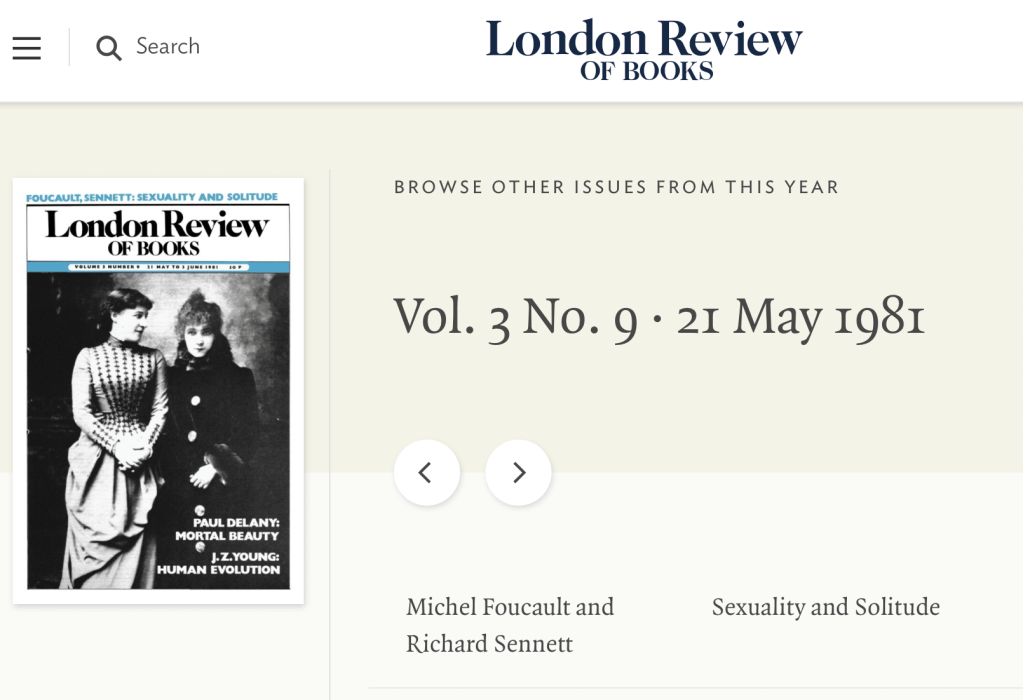
The “Sexuality and Solitude” lecture was delivered by Richard Sennett and Michel Foucault to the New York Institute for the Humanities on 20 November 1980 at 5.30pm. It was held in the Tishman Auditorium of Vanderbilt Hall on Washington Square. A 400-seat room, attendance was such that at the beginning Sennett voices a concern about safety and the Fire department. It was published in the London Review of Books in May 1981 (open access). Reprints of the lecture in collections of Foucault’s work remove the Sennett introduction and his second part, and just reproduce the middle part by Foucault. A recording of the lecture (without some of the opening remarks) is available at the New Books Network – part of The Vault of NYIH recordings.
The lecture was reporting on a joint seminar run by Foucault and Sennett at New York University, which took place in three sessions on 31 October, 7 November and 14 November 1980. The sessions were held in the Bobst Library, room 1135 at 2.30pm. While at least one session of the seminar was recorded, the first publication of the seminar was in 2024, alongside other material, in the important Généalogies de la sexualité volume edited by Daniele Lorenzini and Henri-Paul Fruchaud, and with an introduction by the editors and Arnold Davidson. This includes a French version of Foucault’s manuscript for the seminar, divided into four sessions, and a French translation of the English version of that text, divided into three sessions, along with Foucault’s part of the lecture. As the editors of Généalogies de la sexualité indicate, the English version of the seminar material “is not a translation of the French version, but rather a rewriting” (p. 322). For the English version they translated, they were able to use the recording of the first session, alongside the manuscript. An English edition and translation of this volume should appear in the University of Chicago Press series, The Chicago Foucault Project.
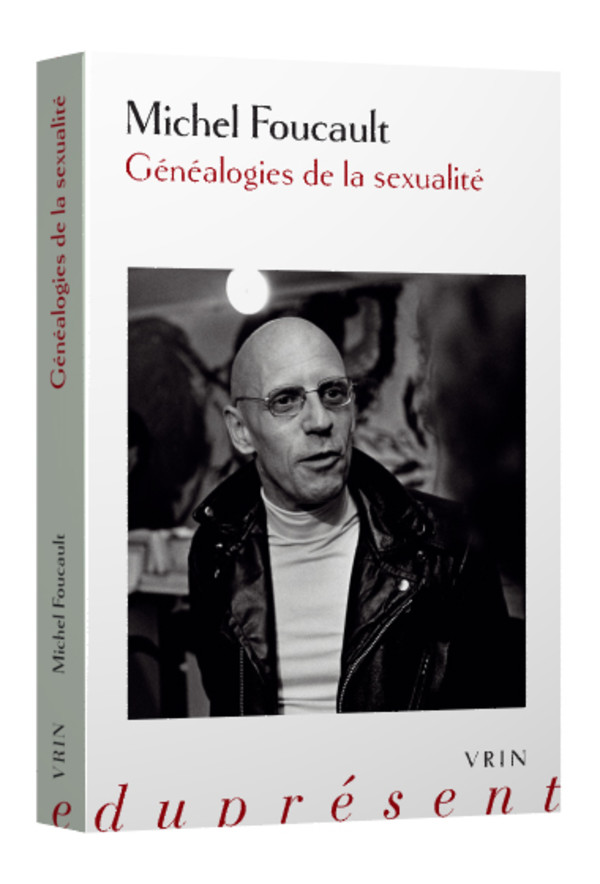
The material in Généalogies de la sexualité is excellent for getting a fuller sense of what Foucault presented, and also for giving an insight into his thinking in late 1980 about his History of Sexuality project, which was going through some important changes. As Lorenzini, Fruchaud and Davidson rightly note (pp. 12, 35-36, 321), the seminar and lecture present material which, in a revised form, would appear in Confessions of the Flesh, the fourth volume of the series. When I wrote Foucault’s Last Decade, I briefly discussed the lecture, and other lectures from a similar time, in that light (pp. 122, 125-26). The fourth volume, left incomplete at Foucault’s death, was unpublished until 2018. 

The archives of the New York Institute for the Humanities, at New York University, have some material relating to the Foucault and Sennett seminar and lecture. Box 29, folder 4, includes a rough transcription of the lecture, an improved transcription, and the London Review of Books page proofs, with some corrections to Sennett’s part. A few opening words are not in the published version. Folders 2 and 3 contain some more interesting material. Folder 2 includes a lot of correspondence about the seminar, and folder 3 some photocopies of reading material in relation to the sessions. 

Sennett was in correspondence with various people about the seminar, inviting them to be involved. This included Princeton history professors Natalie Zemon Davis and Lawrence Stone, the journalist and historian Frances Fitzgerald, and the philosopher William Earle. Davis certainly attended some of the sessions, and sent Sennett some reading suggestions and material. Stone, who later had an exchange about Foucault’s History of Madness in The New York Review (following a review of books he saw as inspired by Foucault), seems to have attended too. Perhaps their sharp words later develop from a disagreement at this time. Others requested that they be allowed to join, including Michael S. Roth, then a PhD researcher at Princeton, who went on to publish especially on Freud and Hegel and is now president of Wesleyan University. Susan Sontag sent her apologies as she would be in Turin rehearsing the Pirandello play. John Boswell, a history professor at Yale, attended some sessions. Other names from the attendance list will be familiar to Foucault scholars – Richard Howard, Sylvère Lotringer, John Rajchman, and Mark Blasius. Thomas Nagel, Edward Said and Edmund White are listed too. Sennett says in his invitations that he hoped to keep it to about 25 people; the final attendance list suggests just over 30 seminar members.

Folder 3 includes some photocopies of reading material. It isn’t clear that all of these were assigned as readings for the seminar participants, but they certainly relate to the seminars, as the editors recognise (see “Introduction”, pp. 37-38). As they note, some of these relate to Foucault’s focus at the time; others to Sennett’s contribution to the seminar and lecture. A simple list of the material in this folder follows (I’ve identified editions where I can provide this, and/or indicated sections for works with more than one edition):

  • Natalie Zemon Davis, “‘Women’s History’ in Transition: The European Case”, Feminist Studies III (3/4), 1976, 83-103 [handwritten note indicates especially p. 89].
  • Sigmund Freud, The Interpretation of Dreams, 208-19 [Chapter V, part B. Infantile Material, section II].
  • C. Schorske, Fin du siècle Vienna, [New York: Alfred A. Knopf, 1979,] pp. 193-98.
  • Richard von Krafft-Ebling, Psychopathia Sexualis: A Medico-Forensic Study, trans. H.E. Wedeck [G.P. Putnam’s Sons, 1965], pp. 306-27 [“General Pathology”, section on “Antipathic Sexuality”].
  • S.A.D. Tissot, Onanism, 1766, xiii-xvi, 12-13, 18-19, 22-27, 48-51.
  • Owen Chadwick, John Cassian: A Study in Primitive Monasticism, Cambridge, University Press, 1950, 50-51.
  • Jean Cassian, Institutions Cénobitiques, Latin-French edition, ed. and trans. Jean-Claude Guy, Paris: Les Éditions du Cerf, 1965, book VI, “De l’esprit de fornication”, pp. 261-89.
  • Jean Cassian, Conférences I-VII, Latin-French edition, ed. and trans. E. Pichery, Paris: Les Éditions du Cerf, 1955, VIII, “De la mobilité de l’âme et des esprits du mal”, pp. 241-77.

Natalie Davis also sent Sennett a copy of Ludovico Maria Sinistrari (1622-1701), Peccatum Mutum: The Secret Sin, pp. 19-51, and part of the syllabus of “Society and Sexes in Early Modern Europe, History 348”, including a passage from “Jacques du Val—A Physician on Male-Female Sexual Experience (1612)” (four typed pages). There are also some plates copied from a book by Havelock Ellis (plates 5-8) and a page of a work about Ellis (p. 222).

One thing which is interesting is that Sennett’s focus relates to Foucault’s earlier plan for a volume of the History of Sexuality on masturbation, abandoned in the mid 1970s, but a topic on which Foucault lectured in the 1974-75 course Les Anormaux, translated as Abnormal. Notes and draft materials for the planned book, La Croisade des enfants [The Children’s Crusade], exist in Foucault’s archives at the Bibliothèque nationale de France.

References

Stuart Elden, Foucault’s Last Decade, Cambridge: Polity, 2016.

Michel Foucault, Les Aveux de la chair, ed. Frédéric Gros, Paris: Gallimard, 2018; The Confessions of the Flesh: the History of Sexuality Volume 4, trans. Robert Hurley, 2022.

Michel Foucault, Généalogies de la sexualité, eds. Daniele Lorenzini and Henri-Paul Fruchaud, Paris: Vrin, 2024.

Michel Foucault and Richard Sennett, “Sexuality and Solitude”, London Review of Books, 21 May 1981, https://www.lrb.co.uk/the-paper/v03/n09/michel-foucault/sexuality-and-solitude (Foucault’s part is translated in Dits et écrits and reprinted in Essential Works and elsewhere.)

Daniele Lorenzini, Henri-Paul Fruchaud and Arnold I. Davidson, “Introduction”, in Michel Foucault, Généalogies de la sexualité eds. Daniele Lorenzini and Henri-Paul Fruchaud, Paris: Vrin, 2024, 7-49.

Archives

Records of the New York Institute for the Humanities, New York University special collections, RG.37.4, box 29, folders 2, 3 and 4, https://findingaids.library.nyu.edu/archives/rg_37_4/

Fonds Michel Foucault, Bibliothèque nationale de France, NAF 28730, https://archivesetmanuscrits.bnf.fr/ark:/12148/cc98634s


This is the twelfth post of an occasional series, where I try to post short essays with some indications of further reading and sources, but which are not as formal as something I’d try to publish more conventionally. They are usually tangential to my main writing focus, a home for spare ideas, asides, dead-ends and possible futures. I hope there is some interest in them. They are provisional and suggestions are welcome. 

The full list of ‘Sunday histories’ is here.

Posted in Edward Said, Foucault's Last Decade, Michel Foucault, Sunday Histories, Uncategorized | 7 Comments

Juliet Fall, Along the Line: Writing with Comics and Graphic Narrative in Geography – EPFL Press, April 2025

Juliet Fall, Along the Line: Writing with Comics and Graphic Narrative in Geography – EPFL Press, April 2025, distributed by University of Chicago Press

I’ve mentioned the French version Bornées: Une histoire illustrée de la frontière before; but the English also has an academic text alongside the graphic narrative.

There will be an ‘author meets critics’ session on this at the Royal Geographical Society-Institute of British Geographers conference in August 2025, with Juliet Fall, Giana Peterle, Klaus Dodds, Rachael Squire and me.

Update: there is a discussion of the book with the Thinking Through Infrastructure Network; and the RGS-IBG session is planned for Dialogues in Human Geography.

Transforms the study of borders into an immersive visual and intellectual experience, revealing how boundaries are drawn and lived.

Part travelogue, part scholarly inquiry, Along the Line reimagines the study of borders through the lens of lived experience and graphic storytelling. Beginning with the COVID-19 border closures of 2020, Juliet Fall embarks on a three-year journey tracing the boundary between France and Geneva, uncovering the deep historical and personal significance of these invisible lines. Through vivid sketches and a feminist political geography perspective, this work confronts conventional academic narratives and demonstrates how borders shape both landscapes and lives.

Through a blend of theory with immersive storytelling, Fall invites readers to slow down, observe, and rethink their understanding of space, mobility, and belonging. Along the Line is a groundbreaking contribution to border studies, political geography, and international relations, and also a powerful example of how creative and visual methods can transform academic research.

Posted in Boundaries, Juliet Fall, terrain, Territory, Uncategorized | Leave a comment

Martin Albrow, Integrity: The Rise of a Distinctive Western Idea and its Destiny – Polity, January 2025

Martin Albrow, Integrity: The Rise of a Distinctive Western Idea and its Destiny – Polity, January 2025

Public life is dominated from time to time by media storms around integrity. The behaviour of elected political leaders has led many to decry the deterioration in standards and the lack of integrity in public life. But what is integrity, and where does our concern with integrity in public life come from?

 In this book, Martin Albrow argues that integrity has been an essential component of the rise of the West and a key feature that distinguishes the West from other civilizations. He traces the idea of integrity back to its roots in ancient Greece and Rome, where integrity acquired its special meaning: the unique feature of any object with integrity was that it combined its wholeness or completeness with the embodiment of standards that came from outside it. Integrity was unity through values. He then follows the story of integrity through early Christianity and the Renaissance to the present day. Today, we find ourselves in the paradoxical situation where the lack of integrity in public life is widely condemned while, at the same time, politicians can remain popular without even pretending to act with integrity: this is the new politics of the integrity vacuum.

The idea of integrity may be a distinctively western one but, like many other aspects of western culture, it has now become a property of worldwide society. Albrow concludes by arguing that integrity could add more value today by being combined with non-western wisdom as we strive to create an order where honesty, trust and reliability in our relationships with others are paramount.

This highly original account of an idea that lies at the heart of western culture will be of interest to anyone concerned about the state and future of our public life.

Posted in Uncategorized | Leave a comment

St Andrews and Nottingham talks on the ‘Indo-European’ project – audio recordings

A couple of audio recordings of talks I’ve given on my ‘Mapping Indo-European Thought in Twentieth-Century France‘ project. There is background on the project and some other recordings, updates on the research, short pieces and research resources at that page.

29 November 2024, “Indo-European Thought at the Collège de France”, Social Anthropology research seminar, University of St Andrews – audio file here

Emile Benveniste and Georges Dumézil both lost their teaching positions under the Vichy regime, but for different reasons and with different outcomes. Benveniste was Jewish, had been captured shortly before the Armistice, and when he escaped, he went into exile in Switzerland. Before being deployed to Turkey, Dumézil had briefly been a Freemason and was excluded due to the laws on secret societies. He got his position back, remained in Paris, and published throughout the war with Gallimard. At the Liberation he was under suspicion of collaboration, and temporarily lost his position again. Benveniste returned to the Collège de France, and in 1949 proposed Dumézil for a chair in Indo-European civilisation. For the next two decades Benveniste and Dumézil taught there in parallel – Benveniste usually teaching one course on linguistics, and another on vocabulary; Dumézil teaching on mythology but also his interest in Caucasian languages and folklore. Some of their most important publications, including Dumézil’s Myth and Epic and Benveniste’s Vocabulary of Indo-European Institutions, were originally presented in their classes. Using teaching records, publications, archival materials and correspondence, this talk will discuss the period when Indo-European thought was at the centre of one of France’s elite institutions.

29 January 2025, “The Ideology of the Indo-Europeans”, Future of Ideologies webinar, University of Nottingham – audio file here

This talk was an edited version of the St Andrews one. It’s a bit shorter, and drops some of the examples, especially on linguistics. But given the ‘Ideologies’ focus of the seminar series, I do say more about that aspect. As I say at the beginning, I understand the title in the dual sense of what might be said about the ideology of people labelled Indo-European, and the ideology that there were such people who could be labelled that way.

Posted in Emile Benveniste, Georges Dumézil, Mapping Indo-European Thought in Twentieth Century France, Uncategorized | 1 Comment

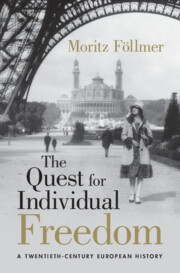
Moritz Föllmer, The Quest for Individual Freedom: A Twentieth-Century European History – Cambridge University Press, March 2025

Moritz Föllmer, The Quest for Individual Freedom: A Twentieth-Century European History – Cambridge University Press, March 2025

What does it mean to see oneself as free? And how can this freedom be attained in times of conflict and social upheaval? In this ambitious study, Moritz Föllmer explores what twentieth-century Europeans understood by individual freedom and how they endeavoured to achieve it. Combining cultural, social, and political history, this book highlights the tension between ordinary people’s efforts to secure personal independence and the ambitious attempts of thinkers and activists to embed notions of freedom in political and cultural agendas. The quest to be a free individual was multi-faceted; no single concept predominated. Men and women articulated and pursued it against the backdrop of two world wars, the expanding power of the state, the constraints of working life, pre-established moral norms, the growing influence of America, and uncertain futures of colonial rule. But although claims to individual freedom could be steered and stymied, they could not, ultimately, be suppressed.

Posted in Uncategorized | Leave a comment

Ada Palmer, Inventing the Renaissance: The Myth of a Golden Age – University of Chicago Press, March 2025

Ada Palmer, Inventing the Renaissance: The Myth of a Golden Age – University of Chicago Press, March 2025

From the darkness of a plagued and war-torn Middle Ages, the Renaissance (we’re told) heralds the dawning of a new world—a halcyon age of art, prosperity, and rebirth. Hogwash! or so says award-winning novelist and historian Ada Palmer. In Inventing the Renaissance, Palmer turns her witty and irreverent eye on the fantasies we’ve told ourselves about Europe’s not-so-golden age, myths she sets right with sharp clarity.

Palmer’s Renaissance is altogether desperate. Troubled by centuries of conflict, she argues, Europe looked to a long-lost Roman Empire (even its education practices) to save them from unending war. Later historians met their own political challenges with a similarly nostalgic vision, only now they looked to the Renaissance and told a partial story. To right this wrong, Palmer offers fifteen provocative portraits of Renaissance men and women (some famous, some obscure) whose lives reveal a far more diverse, fragile, and wild Renaissance than its glowing reputation suggests.

Posted in Uncategorized | Leave a comment

Jerome C. Wakefield, Foucault Versus Freud: Oedipal Theory and the Deployment of Sexuality – Routledge, July 2024

Jerome C. Wakefield, Foucault Versus Freud: Oedipal Theory and the Deployment of Sexuality – Routledge, July 2024

I missed this when it came out last year, but looks interesting – Wakefield was part of Foucault’s 1983 seminar at Berkeley, which is why the cover has a picture of some of that group. I talk about the photo, and its lesser-known companion, and the people in it here – Foucault’s 1983 seminar at Berkeley – the two cowboy hat photographs

In Foucault Versus Freud, Jerome C. Wakefield offers a novel analysis of one of the great intellectual clashes of our times, the attack on Sigmund Freud’s influential sexual theories by the eminent French philosopher and historian of ideas Michel Foucault.

Starting from Foucault’s question, “What makes the psychoanalytic theory of incest acceptable to the bourgeois family?”, and drawing on Foucault’s relatively unexplored published lectures as well as his celebrated History of SexualityVol. 1, Wakefield evaluates Foucault’s argument that there is a continuity between the two-century medical anti-masturbation crusade and Freud’s theory, providing the reader with an accessible introduction to Foucault’s conceptual innovations including power/knowledge, the deployment of sexuality, and the use of surveillance and confession as tactics in medicalizing sexuality and reshaping family life.

Rather than allowing the argument to stay at the evidentially uncertain level one often finds in Foucault’s writings, Wakefield undertakes close readings of both Freud’s “seduction-theory” texts and later Oedipal-period texts to test whether Foucault’s provocative arguments find support or disconfirmation. Despite identifying weaknesses in Foucault’s position, Wakefield argues that a careful look at Freud’s sexual theories through Foucault’s theoretical lens changes forever the way one sees Freud’s theory—and has the potential to help psychoanalysis move forward in a constructive way.

This book is written to be understandable for those who are not steeped in philosophy or familiar with Foucault’s philosophy, offering a lucid introduction to Foucault’s ideas and his clash with Freud that will be of interest to clinicians, students, and scholars alike.

Posted in Michel Foucault, Sigmund Freud | 1 Comment

Julia Rose Kraut, Threat of Dissent: A History of Ideological Exclusion and Deportation in the United States – Harvard University Press, March 2023

Julia Rose Kraut, Threat of Dissent: A History of Ideological Exclusion and Deportation in the United States – Harvard University Press, March 2023

Beginning with the Alien Friends Act of 1798, the United States has passed laws in the name of national security to bar or expel foreigners based on their beliefs and associations. From the War on Anarchy to the War on Terror, the government repeatedly turns to ideological exclusions and deportations to suppress radicalism and dissent.

Threat of Dissent delves into major legislation and court decisions at the intersection of immigration and the First Amendment without losing sight of the people involved. We follow the cases of foreign-born activists and artists such as Emma Goldman and Carlos Fuentes, meet determined civil rights lawyers like Carol Weiss King, and discover how the ACLU and PEN challenged the constitutionality of exclusions and deportations. While sensitively capturing the particular legal vulnerability of foreigners, Julia Rose Kraut reminds us that deportations are not just a tool of political repression but a deliberate instrument of demagogic grandstanding.

Posted in Uncategorized | Leave a comment

Frédéric Gros, A Philosophy of Shame: A Revolutionary Emotion, trans. Andrew James Bliss – Verso, May 2025

Frédéric Gros, A Philosophy of Shame: A Revolutionary Emotion, trans. Andrew James Bliss – Verso, May 2025

An original reflection on shame as the central feeling of our age — the expression of an anger that is the necessary condition for new struggles

Can shame become a source of political strength? Faced with injustice, growing inequality and systemic violence, we cry out in shame. We feel ashamed of obscene wealth amid wider deprivation. We feel ashamed of humanity for its ruthless and relentless exploitation of the earth. We feel ashamed of the racism and sexism that permeate society and our everyday lives.

This difficult emotion is not just sadness or a withdrawal into oneself, nor is it a paralysing sense of inadequacy. As Frédéric Gros argues in A Philosophy of Shame, it arises when our perception of reality rejects passivity and resignation and instead embraces imagination. Shame thus becomes the expression of an anger that is a powerful, transformative force —one that assumes a radical character.

In dialogue with authors such as Primo Levi, Annie Ernaux, Virginie Despentes and James Baldwin, Gros explores a concept that is still little understood in its anthropological, moral, psychological and political depths. Shame is a revolu­tionary sentiment because it lies at the foundation of any path of subjective recognition, transformation and struggle.

Posted in Uncategorized | Leave a comment

Etienne Anheim and Paul Pasquali, Bourdieu et Panofsky: Essai d’archéologie intellectuelle, suivi de leur correspondance inédite – Éditions de Minuit, March 2025

Etienne Anheim and Paul Pasquali, Bourdieu et Panofsky: Essai d’archéologie intellectuelle, suivi de leur correspondance inédite – Éditions de Minuit, March 2025

Ce livre raconte, à partir d’archives inédites, l’histoire de la rencontre entre deux figures emblématiques des sciences humaines du XXe siècle, Pierre Bourdieu (1930-2002) et Erwin Panofsky (1892-1968). Rien de commun, en apparence, entre le jeune sociologue français, œuvrant au milieu des années 1960 à la refondation de sa discipline dans un monde intellectuel dominé par le structuralisme, et le vieil historien d’art allemand reconnu internationalement, émigré aux États-Unis après avoir fui le nazisme. Et pourtant, c’est dans la collection « Le sens commun », dirigée par Bourdieu aux Éditions de Minuit, que paraît la première traduction française de Panofsky, Architecture gothique et pensée scolastique, au printemps 1967, en même temps que les Essais d’iconologie chez Gallimard.

L’édition d’Architecture gothique et pensée scolastique est minutieusement préparée par Bourdieu qui, fait unique dans sa carrière, réalise lui-même la traduction. Il y joint une longue postface qui deviendra célèbre : c’est là qu’apparaît sous sa plume la première théorisation du concept d’habitus.

En s’appuyant sur des sources multiples – dont la correspondance des deux savants reproduite en annexe –, cette enquête retrace pas à pas une aventure éditoriale et intellectuelle unique, moment clé dans la réception d’Erwin Panofsky, mais aussi dans la carrière d’un Pierre Bourdieu en pleine construction des outils qui lui permettront de s’imposer dans les décennies suivantes comme l’auteur d’une œuvre capitale.

This looks interesting – the story behind the edition of Erwin Panofsky, Architecture gothique et pensée scolastique – translated by Bourdieu, who contributed a postface. Foucault reviewed this book, and Panofsky’s Essais sur l’iconographie (Gallimard, 1967) as “Les mots et les images” in Le Nouvel observateur (reprinted as Dits et écrits, text 51). There is no published translation of the review.

Posted in Erwin Panofsky, Michel Foucault, Pierre Bourdieu, Uncategorized | Leave a comment