A wide-ranging history tracing the birth of biopolitics in Enlightenment thought and its aftermath.
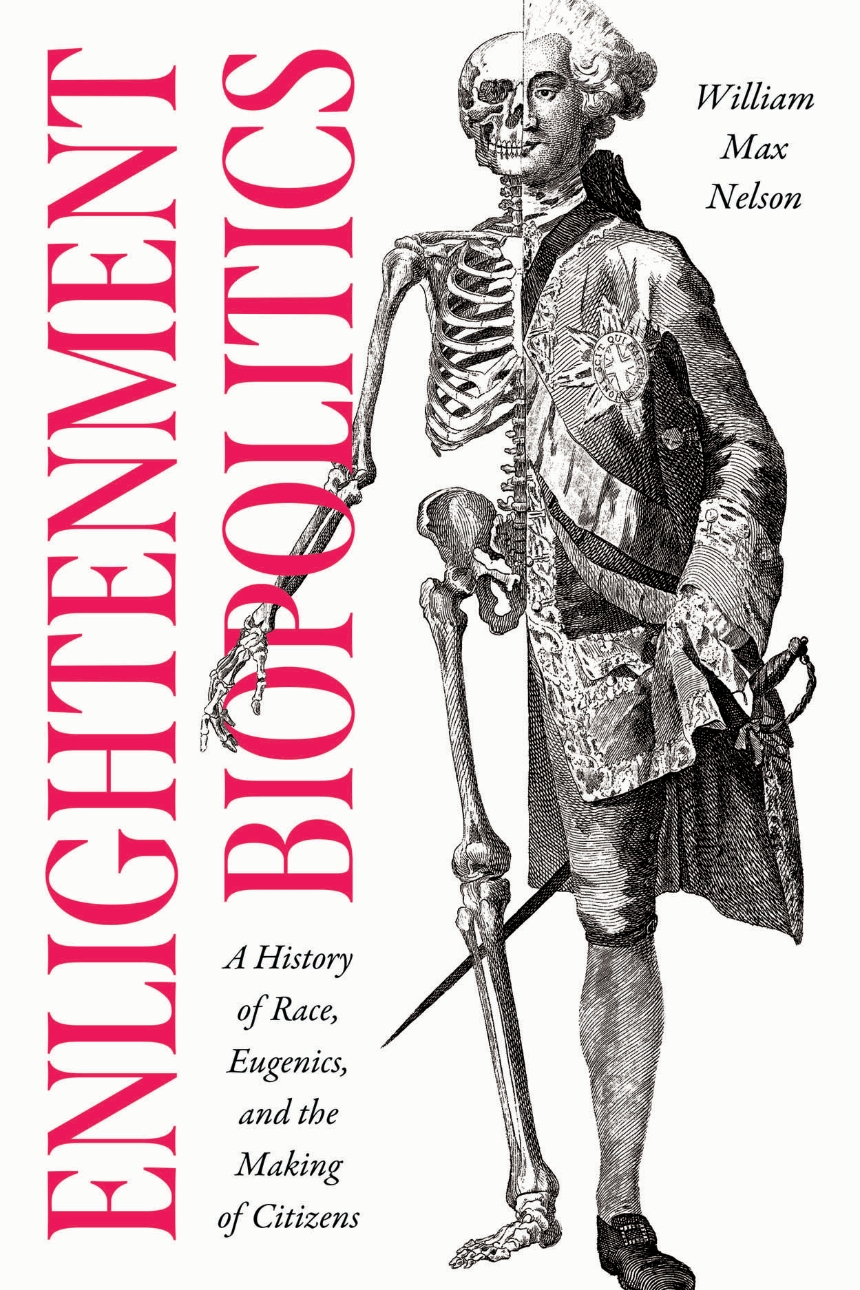
In Enlightenment Biopolitics, historian William Max Nelson pursues the ambitious task of tracing the context in which biopolitical thought emerged and circulated. He locates that context in the Enlightenment when emancipatory ideals sat alongside the horrors of colonialism, slavery, and race-based discrimination. In fact, these did not just coexist, Nelson argues; they were actually mutually constitutive of Enlightenment ideals.
In this book, Nelson focuses on Enlightenment-era visions of eugenics (including proposals to establish programs of selective breeding), forms of penal slavery, and spurious biological arguments about the supposed inferiority of particular groups. The Enlightenment, he shows, was rife with efforts to shape, harness, and “organize” the minds and especially the bodies of subjects and citizens. In his reading of the birth of biopolitics and its transformations, Nelson examines the shocking conceptual and practical connections between inclusion and exclusion, equality and inequality, rights and race, and the supposed “improvement of the human species” and practices of dehumanization.
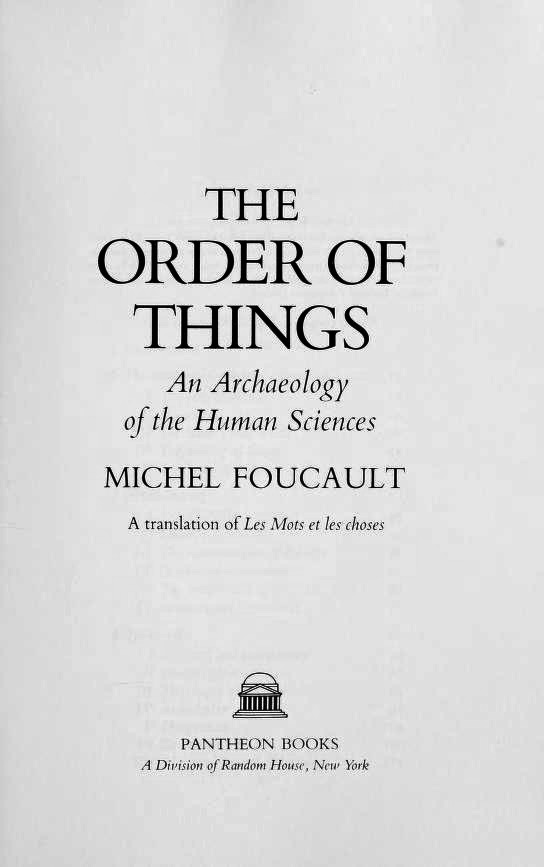
Who translated Michel Foucault’s The Order of Things? The original English edition, published by Pantheon in 1970 (and Tavistock in the UK) has the title The Order of Things: An Archaeology of the Human Sciences, and under the author name says “A translation of Les Mots et les choses”. No translator is named. The “Publisher’s Note” explains the change of title from the literal Words and Things to The Order of Things, because of a potential confusion with other books titled Words and Things. But it is a publisher note, rather than a translator note, and yet it says things that ordinarily a translator would say, closing with:
In view of the range of literature referred to in the text, it has not proved feasible in every case to undertake the bibliographical task of tracing English translations of works originating in other languages and locating the passages quoted by M. Foucault. The publisher has accordingly retained the author’s references to French works and to French translations of Latin and German works, for example, but has, as far as possible, cited English editions of works originally written in that language (p. viii of original edition).
At least one reviewer picked up on the lack of a named translator. George Steiner had this to say in a review entitled “The Mandarin of the Hour“:
The translator (whom, with maddening disregard for human effort and responsibility, the publisher leaves anonymous) has striven hard. Nevertheless, an honest first reading produces an almost intolerable sense of verbosity, arrogance and obscure platitude. Page after page could be the rhetoric of a somewhat weary sybil indulging in free association. Recourse to the French text shows that this is not a matter of awkward translation (The New York Times, 28 February 1971).
Foucault responded to that review in the first issue of Diacritics, a piece entitled “Monstrosities in Criticism“. But though he engages with several of Steiner’s criticisms, he does not reveal the translator.
Bibliographies of Foucault sometimes credit Alan Sheridan. Sheridan also translated The Birth of the Clinic and The Archaeology of Knowledge in the early 1970s, and went on to translate Discipline and Punish. He translated several other books, some for Tavistock and/or Pantheon. In Sheridan’s 1980 book Michel Foucault: The Will to Truth, the bibliography says “The Order of Things, trans. A.S., London, Tavistock and New York, Pantheon, 1970 (with Foreword by M.F.)” (p. 227). That would seem to indicate he was the translator and is the same way he credits himself for the books which we know he translated. But in the “Author’s Note” to The Will to Truth he thanks publishers of translations that have allowed him to quote from them, and does not mention The Order of Things. At the end of his note he says: “I have taken the liberty, on occasion, of rewording the extracts quoted. In the case of two books, I have preferred to use my own renderings” (p. ix). But this doesn’t seem to apply to The Order of Things. A check of some of his translations from The Order of Things in The Will to Truth suggests he followed the published translation. It is also listed on Sheridan’s own website under his translations. So, until now, I’d been content to think Sheridan was the translator, just strangely uncredited.
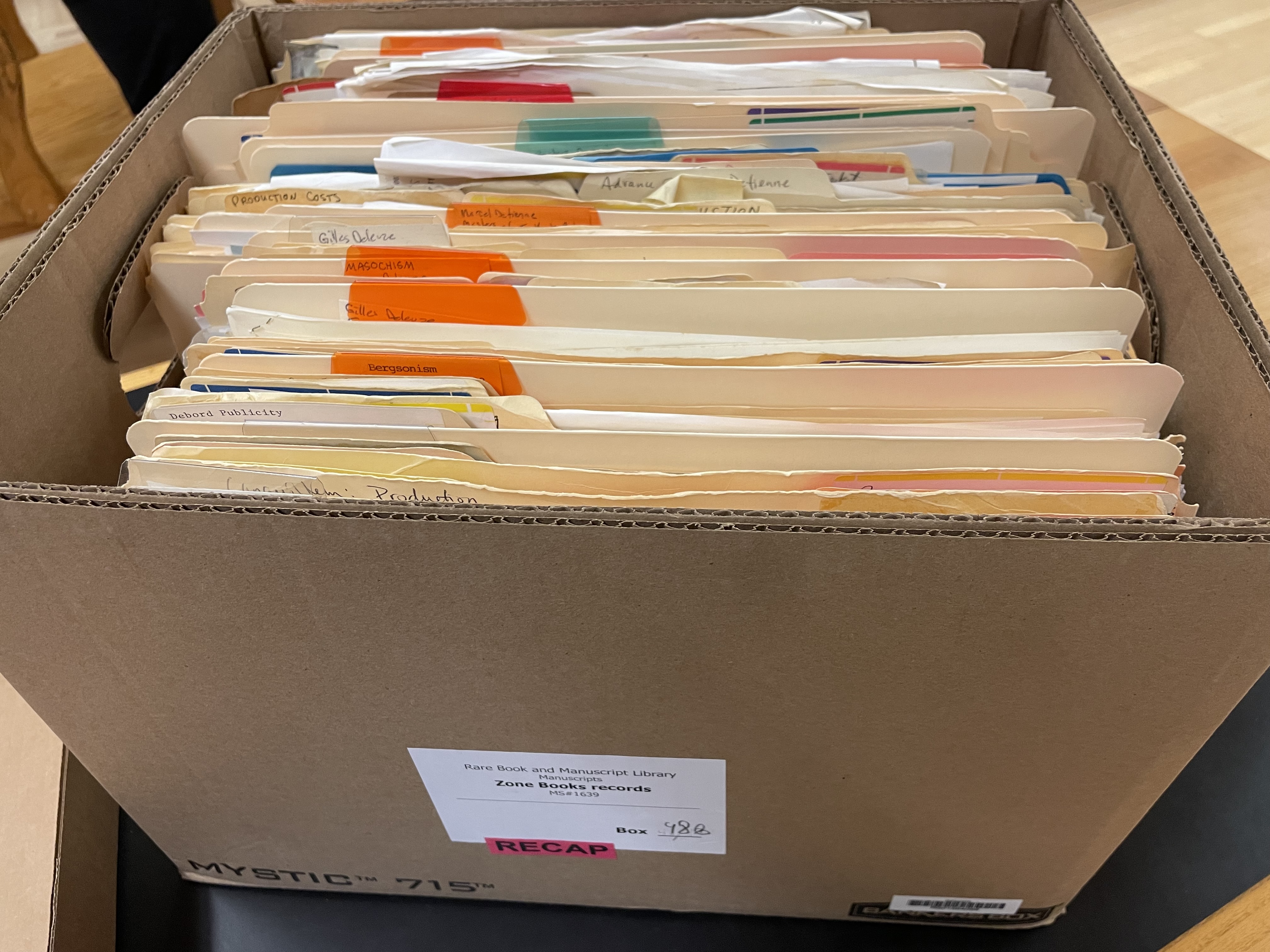
In the Columbia University archives are the records of Zone books, who published the first English translation of Georges Dumézil’s Mitra-Varuna in 1988. I looked at their records relating to this book last month. I have edited a new edition of this text, based on the existing translation, but comparing the first and second French editions, and doing more work with the notes. Among other things in the archive, I was looking for any clues about the translator of that book, Derek Coltman. I had wanted to contact him when the book was going through the re-editing process. I couldn’t find any contact details, and in the end I had assumed he wasn’t still alive, but had not been able to find out for sure. But there is some correspondence with him in the Zone books archive, sent from an old farmhouse in rural Norfolk, England, and he is asked at one point for a cv. He sends what is a rather rambling letter instead, narrating his career to date, from a degree in 1952 to working as a waiter in a cabaret theatre in New York, to his early translations. A 1952 degree suggests he would be very elderly if he were still alive today (Update June 2025: he apparently died in 2012). But I was struck by this astonishing passage about his previous translation experience:
It was in the mid to late sixties also that I did Foucault’s Words and Things for a New York imprint called Pantheon, a fact that I mention partly because Foucault figures on your list of authors and partly because there is a mystery about it that still niggles at me occasionally. It was a project I was rather dubious about tackling in those days; but Richard Howard and Susan Sontag ganged up on me one day in the 8th Street Delicatessen, and what could I do but succumb? An hour with Ms. Sontag and not only do you start suffering from a strange intellectual elation, you even start to suspect yourself of being perhaps rather cleverer than you previously dared hope, So what was the mystery? Well, the translation was approved, accepted, and paid for; but was it ever published? I never received a copy; I didn’t get an answer when I wrote to enquire after the book’s fate; and I’ve never seen it listed in a library catalogue. Never mind, it was a fascinating book to do. The first chapter in particular: a long, amazingly detailed, continually surprising analysis of Velazquez’s Las Meninas.
I like the idea that Richard Howard – who had translated the abridged version of the History of Madness as Madness and Civilisation – and Susan Sontag persuaded Coltman. Some parts of this seem plausible, but I don’t think he can have looked very hard in libraries. That said, if he was only looking for a book entitled Words and Things, then perhaps that would explain why he couldn’t locate it. Could he really have missed that the book had appeared as The Order of Things? By the late 80s, when this CV was written, Foucault was well-known, and his 1984 death was widely noted. But why did Pantheon not acknowledge Coltman’s role in the published version, nor according to him, respond to their correspondence?
It could be that Coltman’s translation was not used, for an unknown reason, and Pantheon commissioned Sheridan instead. But if Pantheon were unhappy with the quality, why did they accept it and pay Coltman? Or maybe Sheridan was asked to rework Coltman’s draft, and translator credit was unmentioned, perhaps to avoid indicating problems. (There are translations where a committee approach means no one wants their name to appear. Claude Lévi-Strauss’s The Savage Mind being one example – its problems begin, but by no means end, with the title.) The Pantheon archives are at Columbia too, but I can find no records relating to Coltman, Foucault, or Sheridan there. The records of Georges Borchardt, Inc. are also at Columbia. This is a literary agency who represented Gallimard and Plon to anglophone publishers, and negotiated the translation rights to this and other works by Foucault. The file on Foucault has some interesting material, but nothing on who translated the text. There is a note that Sontag tried to persuade another publisher to buy the rights, after she had picked up a copy of Les Mots et les choses in Paris in 1966, so she was certainly interested in the idea of its translation. Perhaps there is something in the Tavistock archives. But the question of who translated The Order of Things, which I’d thought settled by Sheridan’s 1980 book, is, for me, open to question again.
Update 17 June 2025: I’ve been told that Derek Coltman died in 2012. I’d written to the address I found in the file but the current owners informed me he had moved away and later died. Sheridan died in 2015, Howard in 2022 and Sontag in 2004. It seems this is only going to be resolved by some other archival trace somewhere.
References
Georges Dumézil, Mitra-Varuna: An Essay on Two Indo-European Representations of Sovereignty, trans. Derek Coltman, ed. Stuart Elden, Chicago: Hau books, 2023.
Michel Foucault, The Order of Things: An Archaeology of the Human Sciences, New York: Pantheon/London: Tavistock, 1970.
Michel Foucault, “Monstrosities in Criticism”, trans. Robert J. Matthews, Diacritics 1 (1), 1971, 57-60, https://www.jstor.org/stable/464562
Alan Sheridan, Michel Foucault: The Will to Truth, London: Tavistock, 1980.
This is the fourteenth post of an occasional series, where I try to post short essays with some indications of further reading and sources, but which are not as formal as something I’d try to publish more conventionally. They are usually tangential to my main writing focus, a home for spare ideas, asides, dead-ends and possible futures. I hope there is some interest in them. They are provisional and suggestions are welcome.
A provocative reassessment of Heidegger’s critique of German Idealism from one of the tradition’s foremost interpreters.
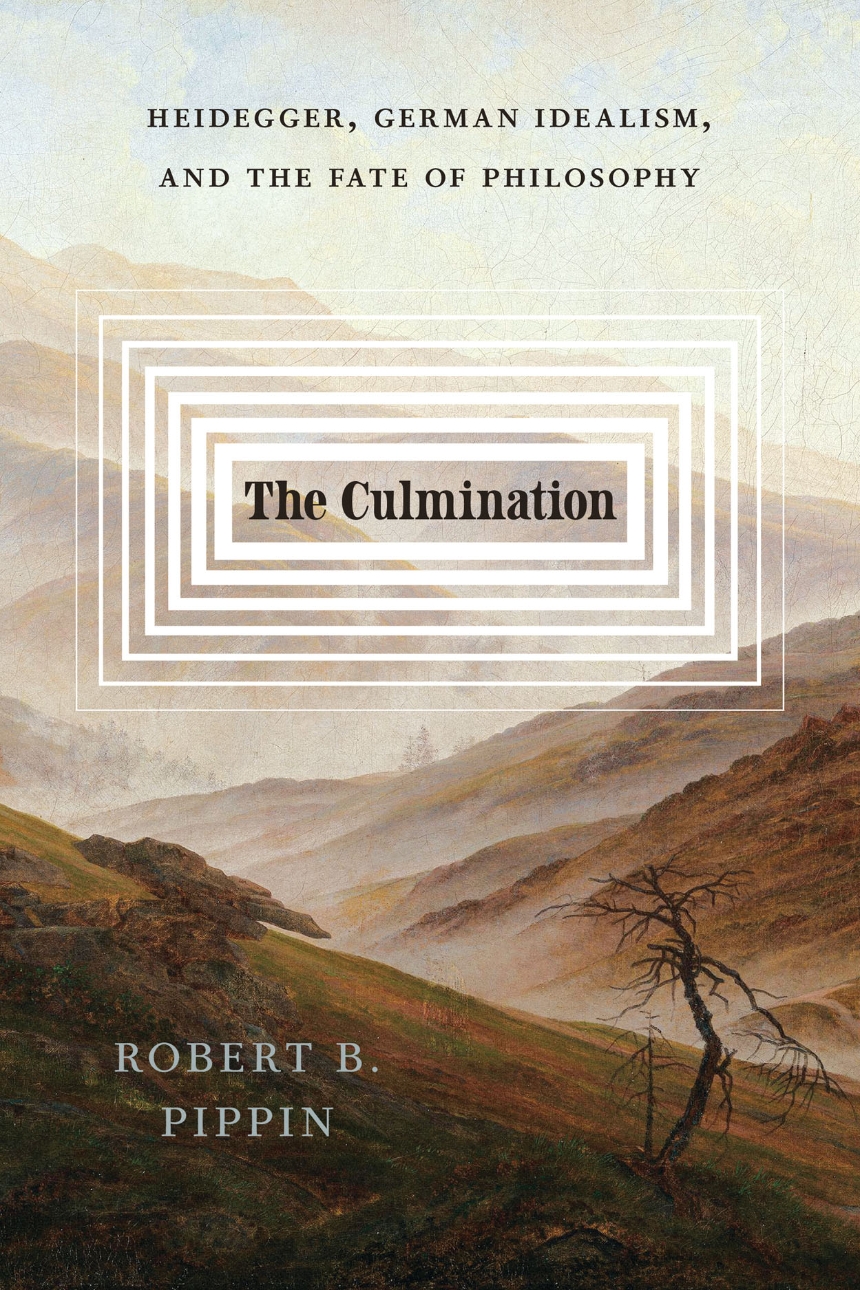
Heidegger claimed that Western philosophy ended—failed, even—in the German Idealist tradition. In The Culmination, Robert B. Pippin explores the ramifications of this charge through a masterful survey of Western philosophy, especially Heidegger’s critiques of Hegel and Kant. Pippin argues that Heidegger’s basic concern was to determine sources of meaning for human life, particularly those that had been obscured by Western philosophy’s attention to reason. The Culmination offers a new interpretation of Heidegger, German Idealism, and the fate of Western rationalism.
There is a discussion between Pippin and Xavier Bonilla here. Thanks to dmf for the links.
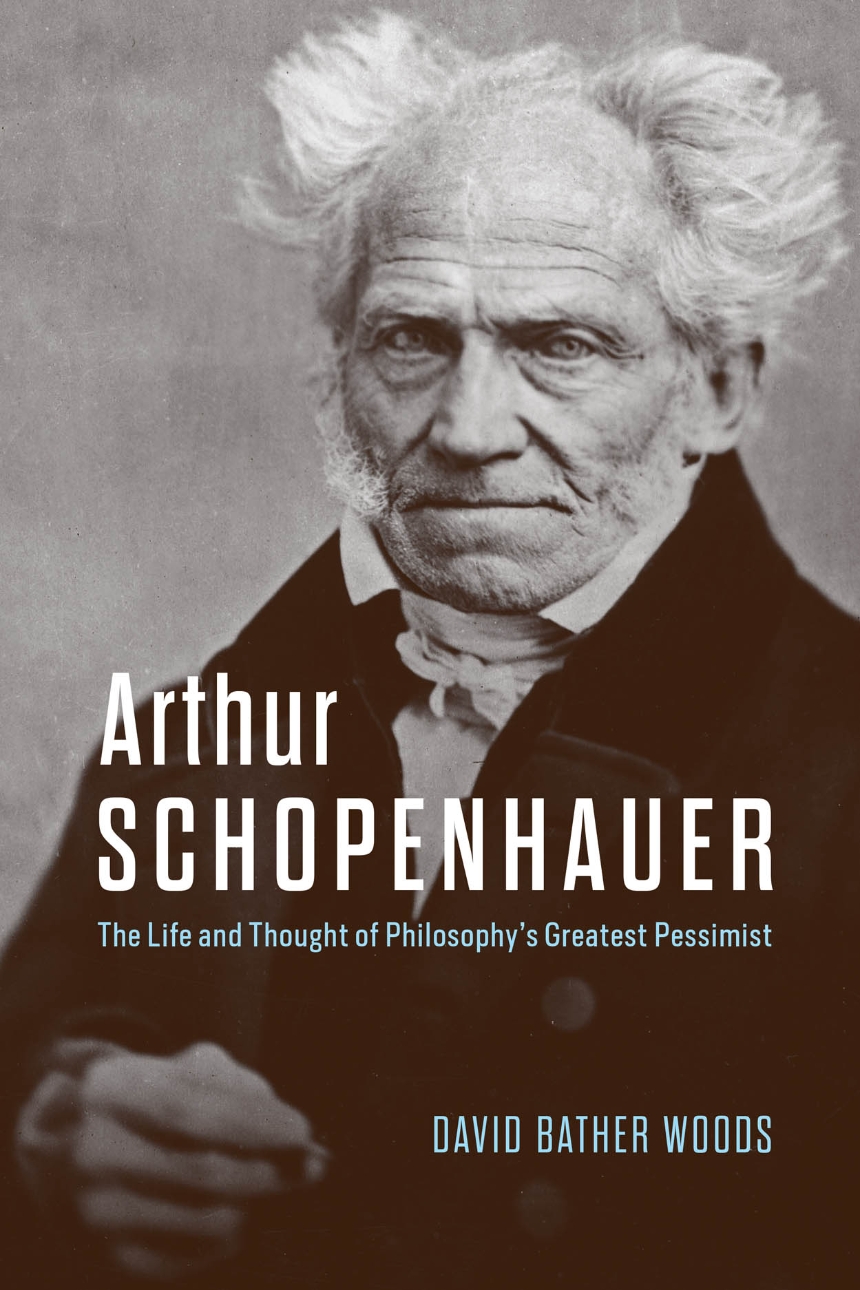
An engaging biography of one of the most influential Western philosophers and a thought-provoking exploration of how to live with Arthur Schopenhauer’s pessimism.
Arthur Schopenhauer (1788–1860) almost wasn’t one of the greatest philosophers of the nineteenth century. Born in the Free City of Danzig to a family of shipping merchants, he was destined for a life of imports and exports until his father died in a suspected suicide. After much deliberation, the young Schopenhauer invested his inheritance in himself and his philosophical vocation. But the long road to recognition was a difficult one, with Schopenhauer spending all but the last decade of his life in total obscurity. Yet his ideas and style went on to influence great thinkers, including Friedrich Nietzsche, Ludwig Wittgenstein, and Sigmund Freud, as well as artists such as the composer Richard Wagner and writers Marcel Proust, Thomas Mann, Samuel Beckett, and many more.
A singular and remarkably influential thinker, Schopenhauer is usually described as an extreme pessimist. He questioned the purpose of existence in a world where pain and suffering are inescapable and happiness is all too brief. In this engaging philosophical biography, David Bather Woods reevaluates Schopenhauer’s pessimism in the context of his life experiences, revealing the philosopher’s relentless fascination with the world and making a case for his contemporary relevance. Bather Woods weaves together Schopenhauer’s ideas with the story of how he came to be, including such topics as love, loneliness, morality, politics, gender, sexuality, death, suicide, fame, and madness. In doing so, this book answers some of life’s most challenging questions about how to deal with pain and loss, and how to live with ourselves and each other.
Despite his pessimistic outlook on human existence, Schopenhauer didn’t give up on life. Rather, he recognized that the question of how to live becomes even more pressing, and he worked to provide an answer. Bather Woods shows how Schopenhauer’s life informed his ideas and how they still resonate today.
Facticity and the Fate of Reason After Kant is the first history of the concept of facticity. G. Anthony Bruno argues that this concept’s coining, transmission, and repurposing by post-Kantian thinkers leaves a lasting divide concerning the question of whether a science of intelligibility can tolerate brute facts. In the phenomenological tradition, ‘facticity’ denotes undeducibly brute conditions of intelligibility such as sociality, mortality, and temporality. This suggests an affirmative answer to the post-Kantian question. However, the term’s original use in the German idealist tradition is associated with a negative answer: a science of intelligibility must eliminate bruteness in order to be systematic, as Fichte says, or presuppositionless, as Hegel says. Moreover, eliminating bruteness requires a new logic for deducing conditions of intelligibility from reason’s self-contradictions, a dialectical logic that Fichte invents and Hegel develops. In response to the German idealists, Heidegger argues that dialectic ineluctably presupposes brute facts of lived experience, whose interpretation requires a hermeneutics of facticity. The untold history of the concept of facticity thus contains the deepest parting of the ways after Kant, one in which reason is fated to transform from the hand that holds the world to the thrown activity of being-in-the-world. Facticity and the Fate of Reason After Kant explores this transformation while confronting our inheritance of the still-pressing post-Kantian question.
Below is a recent video of a detailed interview with Achille Mbembe covering his work, ideas and writing.
Achille Mbembe received the 2024 Holberg Prize for his groundbreaking research in African history and politics, and related fields. Mbembe is research professor of history and politics at Wits Institute for Social and Economic Research, University of Witwatersrand. Interviewer: Kari Jegerstedt, associate professor of gender studies in the humanities and Head of the Centre for Women’s and Gender Research, University of Bergen. The interview was recorded on 3rd June, 2024, during the Holberg Week in Bergen. For more information and other video productions: See holbergprize.org.
A selection of Leroi-Gourhan’s most important texts—many translated into English for the first time.
André Leroi-Gourhan is undoubtedly one of the most acclaimed figures of twentieth-century anthropology and archaeology. In France, his intellectual importance rivals that of the Claude Lévi-Strauss, yet Leroi-Gourhan’s major contributions are almost entirely unknown in the Anglophone world. This collection seeks to change that. This selection highlights some of his chief influences, such as elaborating a theory of technology, which argues that material culture focuses on the object in use and how use is a dynamic feature that has specific consequences for human evolution and human society. With serious ramifications for our understanding of material culture, putting Leroi-Gourhan’s thinking about technology into English will have an immediate and transformative impact on material culture studies.
War is urbanising. From Mosul to Mumbai, Aleppo to Marawi, the largest and most intense battles of the twenty-first century have taken place in densely populated urban areas. In the Ukraine War, Russian and Ukrainian troops have converged on urban areas, Kyiv, Mariupol, and Bakhmut, to fight brutal attritional sieges. Meanwhile the Battle of Gaza rages.
Through a close analysis of recent urban conflicts and their historical antecedents, sociologist Anthony King explores the changing typography of the urban battlescape. Whilst many tactics used in urban warfare are not new, he shows how operations in cities today have coalesced into localised micro-sieges, which extend from street level – and below – to the airspace high above the city, as combatants fight for individual buildings, streets and districts. At the same time, digitalized social media and information networks communicate these battles to global audiences across an urban archipelago, with these spectators often becoming active participants in the fight.
Fully revised and updated to include detailed examples from Ukraine and Gaza to illustrate the anatomy of twenty-first century urban warfare, the second edition of this popular text is a timely reminder of the costs and the horror of war and violence in cities. As such, it offers an invaluable interdisciplinary introduction to urban warfare in the new millennium for students of international security, urban studies and military science, as well as military professionals.