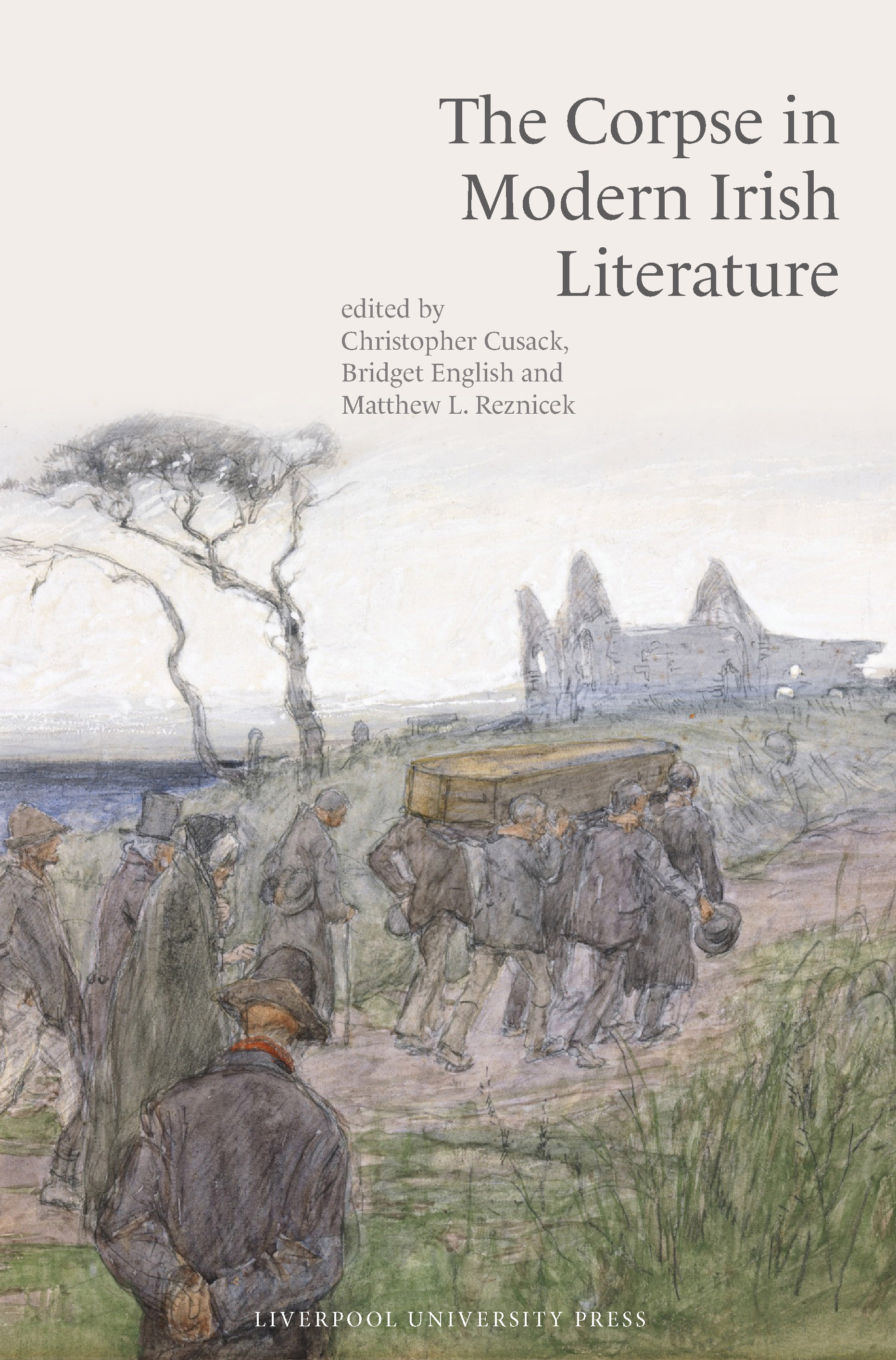
From the bodies rotting by the wayside in Famine fiction, Synge’s sodden corpses and Joyce’s dead, to Nuala Ní Dhomhnaill’s talking corpses and the unburied and dissected remains of Celtic Tiger fiction, the figure of the corpse is ubiquitous in Irish writing. This collection examines the Irish corpse as a conceptually rich centrepoint with multiple differently signifying implications across this historical period as expressed in different social, political and creative contexts.
Taking Irish literature’s obsession with death as its starting point, The Corpse in Modern Irish Literature demonstrates the wide-ranging implications of this fixation, extending it through the contexts of the tragedies of the Irish past and the emergence of new identities in the wake of colonial modernity. In their range of authors and genres from the eighteenth to the twenty-first century, the chapters bring into focus patterns of change and continuity and extend current understanding of the Gothic mode, the national tale, the Irish modernist novel, Irish-language poetry, the elegiac mode, comic and tragic revivalist writings and the generic complexity of autofiction and contemporary fiction. In so doing, The Corpse in Modern Irish Literature makes a significant intervention in Irish studies, Gothic studies, death studies and medical and health humanities.
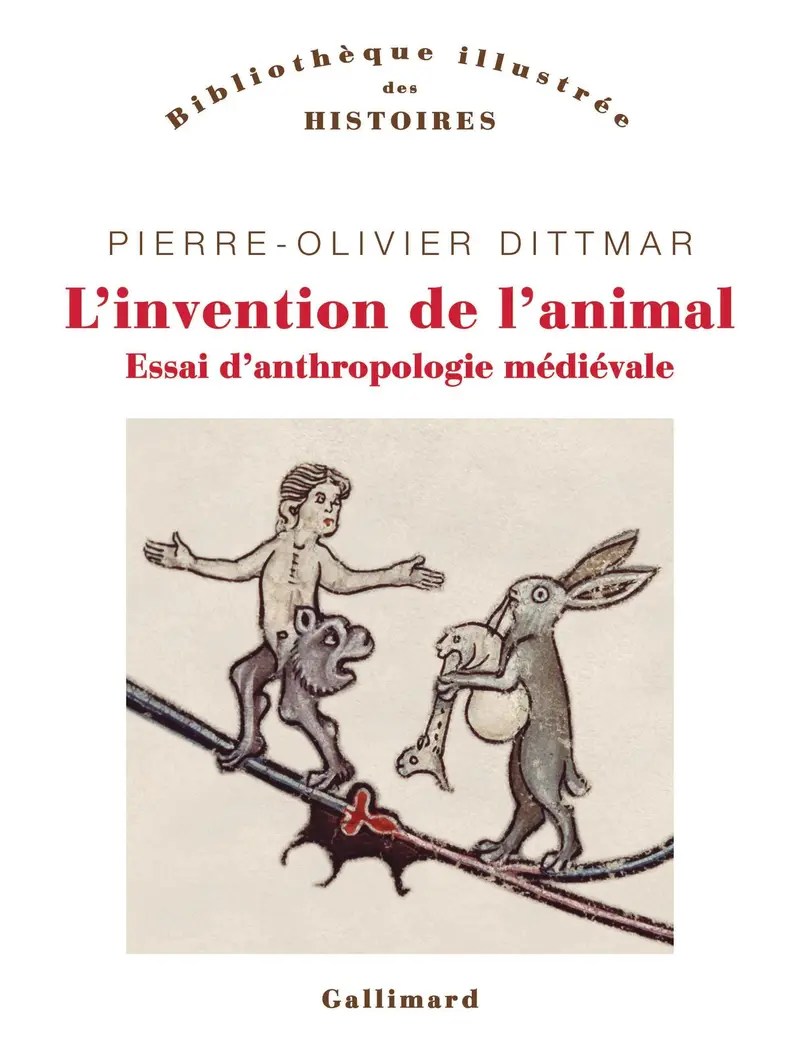
Il n’y avait pas d’animal au Moyen Âge. Des cochons et des oiseaux, des bœufs et des belettes, des lapins et des ours, des loups et des abeilles, des licornes même, oui. Mais si les animaux étaient présents en nombre, partageaient leur territoire et bien d’autres relations avec les humains, l’animal en tant que catégorie, tel que nous le connaissons aujourd’hui, n’existait pas. Or l’invention de ce concept ne crée pas seulement une fracture entre les humains et le reste du monde ; elle produit aussi m1second partage, moins visible, plus intime, qui donne naissance à une « part animale » au sein de chaque individu. L’objet de cet ouvrage est de témoigner d’un monde, d’une période, qui ignorait cette double coupure et l’a fait émerger. Au croisement de l’histoire religieuse et de l’histoire intellectuelle, de l’histoire de l’art ou de celle de l’alimentation, il met en lumière, notamment par les images, un mode particulier de rapport au vivant et un moment décisif de l’histoire des sociétés occidentales.
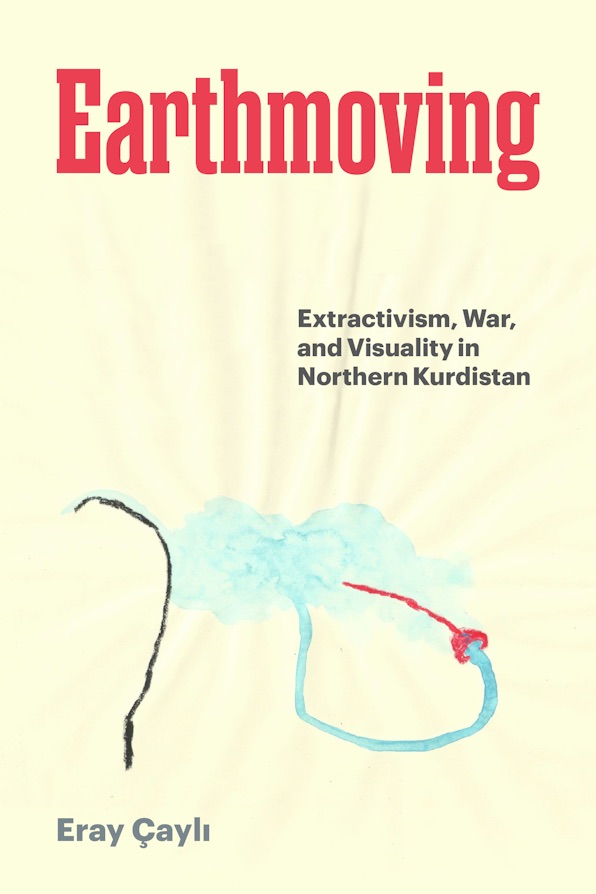
Focuses on contemporary art and media to examine the role of visuals in environmental violence and war in Northern Kurdistan.
Extractivism—exploiting the earth for resources—has long driven racial capitalism and colonialism. And yet, how does extractivism operate in a world where ecological and humanitarian sensibilities are unprecedentedly widespread? Eray Çaylı argues it does so by mobilizing these sensibilities in new ways. Extractivism is no longer only about moving the earth—displacing peoples, fossils, minerals, and waters—but also leaving those who witness this violent displacement sentimentally moved.
Earthmoving conceptualizes this duality. Derived from Çaylı’s years-long work in Northern Kurdistan, home to the world’s largest stateless nation—rendered stateless by colonial policies since the nineteenth century—Earthmoving focuses on the 2010s, a decade that began with peace talks between Turkey and the Kurdish liberation movement but ended with war. The decade saw extractivism intensify in the region and images of its harm proliferate across art and media. Together with contemporary artists, Çaylı shows that images challenge extractivism both by making its harm visible and by fostering self-reflexive and reciprocal collaboration that breaks with its valuation of the colonized and the racialized only in quantifiable and marketable terms.
This is a major, and very expensive, reference work. I say a bit about my chapter, on Foucault and structuralism, here. The Routledge website says July, but Daniele says the production schedule is being timed for the 100th anniversary of Foucault’s birth, 15 October.
[I’ve updated the description below to match the most recent version on the Routledge website.]
Michel Foucault is one of the most influential, and controversial, thinkers of the twentieth century. His work has had a transformative effect on the study of the humanities and social sciences. His engagement with topics such as truth, power and language continues to exert significant influence on a huge range of disciplines, from philosophy, sociology and anthropology to history, politics, law, literature, religion and many others. Yet, paradoxically, Foucault’s work is rarely discussed systematically within philosophy in the Anglophone world.
The Foucauldian Mind is an outstanding exploration and assessment of Foucault’s thought, demonstrating its coherence, insight and continuing relevance to current debates in a multiplicity of fields within philosophy, and beyond. Comprising over forty chapters authored by an international team of expert contributors, it addresses the following topics and more:
the formation of Foucault’s thought and his most important writings, from History of Madness and The Order of Things to Discipline and Punish, the History of Sexuality, and his later works on governmentality and the aesthetics of existence
Foucault’s theoretical and methodological engagements, including with phenomenology, existentialism, structuralism, Marxism, psychoanalysis, critical theory, pragmatism and feminism
Foucault’s contributions to ethics, political philosophy and law
Foucault’s often misunderstood engagements with science, race and gender
the legacy of Foucault’s thought, including for environmental studies, biopolitics, migration studies and philosophy of disability.
With its comprehensive analysis of Foucault’s work and its original discussion of both traditional and new topics, The Foucauldian Mind is a superb resource for anyone studying Foucault’s thought from a broadly philosophical standpoint.
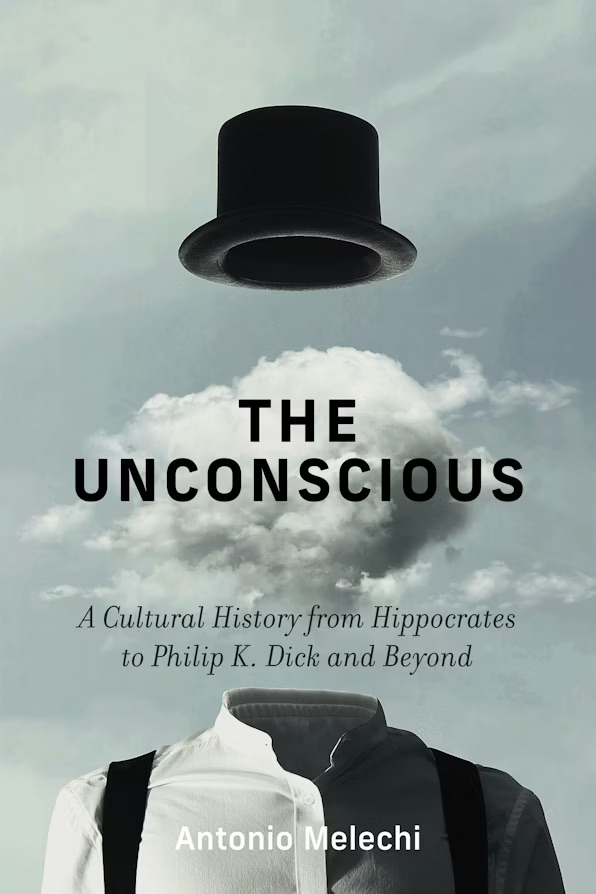
A highly original first anthology on the cultural history of the unconscious that is destined to become definitive.
“Know thyself”—the injunction that was once inscribed upon the Temple of Apollo—became a touchstone for classical and modern philosophers before being embraced as the endgame of psychoanalysis by Freud and his followers. The conceptual baggage that Freud took on his armchair journey into the unconscious mind is well known—and so, too, is the more recent science on implicit memory, blindsight and automatic processing—but the history of the unconscious beyond the consulting room and laboratory has largely been overlooked.
From ancient dream theory to hypnosis, somnambulism to psychedelic mind-expansion, The Unconsciousby Antonio Melechi traces the wider social and scientific history of the unconscious mind. It brings together a chorus of voices—including Friedrich Nietzsche, Henri Bergson, Mary Arnold-Forster, Swami Vivekananda, and Philip K. Dick, to name only some—to investigate the elusive psychology of memory and learning, instinct and imagination, creative breakthrough and mental breakdown.
Moving beyond the familiar psychoanalytic framework, the book draws on a rich seam of sources, including case studies, psychological experiments, pulp fiction, urban legend, and commercial hype. Approaching the unconscious as a product of both discovery and invention, the anthology underscores its importance as a perennial source of debate, a tantalizing mirror to our hidden selves, and a powerful master key that continues to influence contemporary thought.
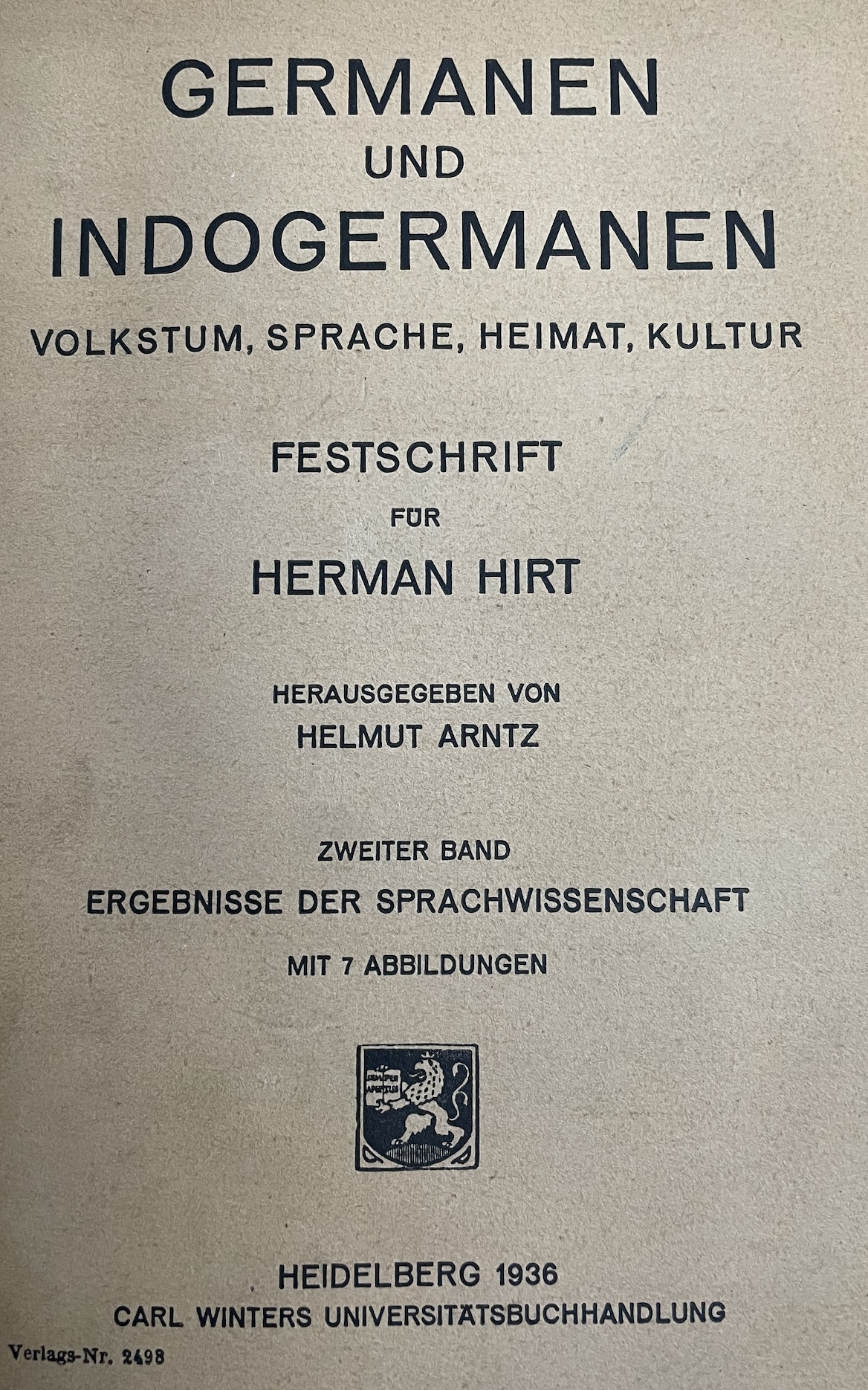
In their important piece examining the stakes of the 1930s debate about Caucasian linguistics between Georges Dumézil and Prince Nikolai Trubetzkoy, Stefanos Geroulanos and Jamie Philips indicate that Dumézil was one of the contributors to a 1936 Festschrift for the linguist Herman Hirt (1865-1936), Germanen und Indogermanen. Hirt was known for several works on Indo-European philology and history, including the seven-volume Indogermanische Grammatik and the two-volume Die Indogermanen. Ihre Verbreitung, ihre Heimat und ihre Kultur [The Indo-Germans: Their distribution, their homeland and their culture]. Hirt, like most German writers of his time, used Indo-German when French and English would talk of Indo-European. Early in his career, Hirt had edited Arthur Schopenhauer, Parerga und Paralipomena: Kleine philosophische Schriften. (There is some inconsistency with the spelling of his first name – some of his own publications are ‘H’, some ‘Herman’ and some ‘Hermann’. ‘Herman’ seems most common, so has been used here.)
The Festschrift was edited by Helmut Arntz, who had done a doctorate with Hirt on the links between Balto-Slavic and Germanic languages, but who primarily worked on runes. His Handbuch der Runenkunde had appeared in 1935. In the foreword to the Festschrift Arntz explicitly linked the book’s project to Hirt’s wishes, and to the Nazi regime:
The present work demonstrates collaborative work, scientific research, and a focus on a common goal is now possible. Not only in Germany alone: it was your intention that I should invite collaborations across Europe. How enthusiastically our colleagues participated: from Paris, Helsinki, and Åbo [i.e. Turku], from Copenhagen and Aarhus, from Warsaw, Padua, Innsbruck, and Vienna. The prestige of your illustrious name undoubtedly played a significant role in overcoming inner reservations. For much poison has been sown, even in our science, much hate and bitterness hurled by the world against the Third Reich, the new state that we have finally formed. Supposedly our science is no longer free, but gagged and used for propaganda—that is the ugliest reproach. This Festschrift rejects that accusation: each of the scholars involved offered his opinion freely; and of course, that high science as a cultural factor is of propagandistic value, applies to other states no less than to us. In the desire to cooperate with all the true, popular scholars of the world in cordial camaraderie, you and I agree with the leadership of the Reich. And our work is a striking example of the success of its good will (Vol I, viii; part-quoted and translated in Geroulanos and Philips, “Euroasianism versus IndoGermanism”, p. 365).
Geroulanos and Philips note that “Dumézil, alongside Meillet and perhaps more surprisingly Benveniste, had no evident qualms contributing to a volume prepared by an avid Nazi”, and add that: “Without explicitly endorsing it, French contributors could not have missed the spirit of a volume which included essays on the racial status of IndoGermans, Nordics, and Germans by, for example, the ‘Race Pope’ Hans Günther (as of 1935 Professor of Racial Science in Berlin)” (p. 365). Günther’s chapter in the first volume is co-signed with the Nordischer Ring [Nordic Ring] and is on a racial perspective on Indo-Europeans and Germanic cultures.
In his Aryan Idols, Stefan Arvidsson comments upon Arntz’s propaganda purposes in the volume, suggesting that, despite the French contributions “about purely technical linguistic questions, Germanen und Indogermanen in its entirety appears to be a one-sided defence of Nazi scholarship”. He indicates that despite Arntz’s claim that the book was filled with only genuine scholars, those that might take a critical view were excluded, and “certain contributions (at least Benveniste’s) have encountered the paternalistic comments of the editor (p. 254-55 n. 37). This political bias is somewhat in tension with Hirt’s own work. Arvidsson describes him as “probably the foremost philologist of the turn of the century”, alongside Otto Schrader (p. 176, 196). Arvidsson notes that “Hirt has also supported the archaeologists who argued for a northern European homeland” for the Indo-Europeans, “which suited the Nazi ideology”. But he adds that “not even Hirt’s works were completely easy to adapt to the Nazi mythology”, since Hirt stressed “patrilinear clans” where “a simple folk and peasant democracy reigned” rather than an aristocratic and hierarchical society (p. 197). Arvidsson indicates that Arntz had to distort Hirt’s positions, and sometimes even his words, to suit the volume’s purpose (p. 254 n. 37). Arvidsson’s analysis is summarised by Geroulanos and Philips as the “Nazi overtones and exclusionary institutional politics of the volume” (p. 365 n. 59).
The Festschrift is certainly politically charged, and the involvement of French scholars is problematic. The editorial introduction was presumably a late addition, and it is not clear the contributors would have known in advance about its propaganda function. This is especially true given Arvidsson’s claim that even the dedicatee of the Festschrift was being distorted in the political cause. As he indicates, the French scholars are all part of the second volume of the Festschrift, on linguistic research. The first volume was on cultural history and anthropology, and was the most politically charged part. This means the French contributions are somewhat detached from the racial and cultural essays of the first volume. This isn’t to excuse their involvement, but I wonder if some differentiation of the contributions is necessary.
Meillet contributes only a very brief piece, “Les gutturals et le tokharien”, just over a page long. He was already very ill when the volume was being produced – Benveniste covered his teaching at the Collège de France in both 1934-35 and 1935-36 – and died in September 1936. It’s not clear how much involvement he had in the project. He was not a surprising person to invite though, since he and Hirt had been reading each other’s work since before the First World War. This was certainly not with much enthusiasm. Hirt had reviewed one of Meillet’s books in 1902, saying that “if we may judge the value of a work by the enlightenment one gains from it, then this value for me has been very small” (“Meillet A. De indo-europea radice *men- ‘mente agitare’”, p. 16). Meillet’s comments on Hirt were a bit more positive, but he summarises his view of Hirt’s study of accent as containing “useless and unprovable hypotheses and errors, though clear, full of ideas, new connections and interesting suggestions, and with very accurate general ideas on linguistic development” (Introduction à l’étude comparative des langues indo-européennes, p. 446).
Dumézil’s involvement in the Festschrift is troubling but sadly not surprising. Even if we put aside the debates about his own politics before the war (which I discuss in the Introduction to the new edition of his Mitra-Varuna, where I indicate the key accusations), he had and kept friendships with some very problematic figures. For example, he was friends with Otto Höfler, who served as part of Heinrich Himmler’s Ahnenerbe during the war, and lost his teaching position under de-Nazification. Höfler wrote the foreword to a German translation of one of Dumézil’s books in 1959, and Dumézil contributed to his 1976 Festschrift. Jan de Vries and Mircea Eliade were also colleagues and correspondents. Dumézil and his defenders see these links as purely academic, detached from politics and motivated by friendship, but his detractors naturally see things differently.
René Lafon and Georges Lacombe wrote a piece for the Hirt Festschrift on Indo-European, Basque and Iberian. Lacombe (1879-1947) and Lafon (1899-1974) were both important French scholars of Basque, and Lacombe wrote the chapter on the Basque language in Antoine Meillet and Marcel Cohen’s Les Langages du Monde, in both the first edition of 1924 (pp. 319-326) and the second edition of 1952 (pp. 257-70). Lafon worked on both Basque and Caucasian languages, and at the time, there were some, including Dumézil, who believed that Basque was part of the same language family. Today, that hypothesis is largely discredited – Basque is usually seen as a language isolate, unconnected to other languages, and the only surviving pre-Indo-European language in Western Europe. I don’t know more about Lafon and Lacombe, and their politics.
Benveniste’s contribution to the Festschrift is on “Tokharien et Indo-Européen”, and I wonder if his writing on Tocharian was to fulfil a request made of Meillet to contribute on that language, which Meillet was only partly able to fulfil. Meillet’s very short piece immediately precedes the longer contribution by Benveniste, and Benveniste was often asked by Meillet to cover both his teaching and prepare new editions of some of his earlier publications. Benveniste was very much Meillet’s successor – he took over his teaching at the École Pratique des Hautes Études, covered the teaching at the Collège and was elected as Meillet’s replacement there in 1937. (Some time before, he had, on Meillet’s request, taken over the work of Robert Gauthiot on Sogdian, which I discuss here. Before his death, Gauthiot was clearly Meillet’s intended successor.)
Benveniste is certainly the strangest French contribution to the Hirt Festschrift, since he was Jewish and it seems odd both that he was invited and that he agreed to contribute. Benveniste had discussed some of Hirt’s work in Origines de la formation des noms en indo-européen in 1935. Rolf Hiersche has an essay on “Benveniste et Herman Hirt” in the proceedings of a 1983 conference on E. Benveniste aujourd’hui, which discusses Benveniste’s distance from Hirt in Origines, but does not mention the Festschrift at all.
Strangely, given he was one of its contributors, Benveniste reviewed the Festschrift for the Bulletin de la Société de linguistique de Paris later in 1936. He says it is good that the tribute to Hirt is “a truly collective work and not just a group of disparate articles” (p. 26). But he says that the benefits of the work assembled here are only if scholars “remain within the bounds of their respective fields and work without preconceived notions” (p. 26). In this respect, he suggests the two volumes are not the same. The first, on “the archaeological, cultural, ethnic and anthropological prehistory of the Indo-Europeans” is beyond the focus of the journal he is reviewing for, but he describes it as “much more dogmatic than the second”, and that it equates German with Indo-German (p. 26). Unsaid, but important, is ‘Indo-German’ is already restricted, and then further reduced here to German alone. This racial narrowing is due, he suggests, to the debt of most of the contributors in the first volume to “Günther’s theories”, and he particularly highlights Günther’s hope that today other Germanic people can, like National Socialist Germany, avoid “the Rassenpflege, racial mixing, that weakened and ultimately ruined the ‘nordic ruling class [Herrenschicht]’” (p. 27, quoting Nordischer Ring und Hans Günther, “Indogermanentum und Germanentum, rassenkundlich betrachtet”, Vol I, p. 317). The second volume, on linguistics, is, he says, “more limited, and therefore more precise… Each contributor addressed only one aspect of the vast Indo-European problem, without attempting to solve it as a whole” (pp. 27-28). As he tersely notes, “Linguists have been less assertive than prehistorians” (p. 29).
Benveniste praises Arntz’s editorial work to bring contributors together and “assign each of them a specific task, and assemble all these contributions into a relatively homogeneous and truly informative work” (p. 26). With the linguistic work, however, he suggests that Indo-European was conceived in “too ‘Western’ a perspective”, with nothing on “Indo-Iranian, Greek, Armenian, Thraco-Phrygian, or Slavic” (p. 29). The reasons for why this might be the case are not difficult to understand. His overall conclusion, though it seems he only means this to apply to the linguistic part, is that “this volume offers only many points an accurate assessment of our knowledge and provides numerous new suggestions”. He says it is “highly recommended” to anyone working in this field (p. 29). He does however indicate the production problems: “I regret the numerous printing errors that remain in my article: only one proof was submitted to me, and not all of my corrections were incorporated” (p. 28 n. 1). He also signals that Arntz intervened in two footnotes, one of which was in his own essay, where a reader of Benveniste’s comment about the Asian origin of the Indo-Europeans is directed to the first volume’s essay by Fritz Flor on ethnology for an alternative view (see “Tokharien et Indo-Européen”, 240 n. 1). This was a reference Benveniste would not have made himself. Gently and discretely, this review allows him to set the record straight and take his distance.
Most of Benveniste’s pre-1940 archive is lost – his flat was occupied and ransacked during the war. In the sequel to Origines, Noms d’agent et noms d’action en indo-européen, published in 1948, he says that he had to reconstitute all the work done before the war (p. 5 n. 1). Although there are some pre-1940 materials among his archived papers, there is very little, and I’ve not found anything which might shed further light on his contribution to the Festschrift.
References
Helmut Arntz, Handbuch der Runenkunde, Halle: Max Niemeyer, 1935, second edition 1944.
Helmut Arntz ed. Germanen und Indogermanen: Volkstum, Heimat und Kultur. Festschrift für Herman Hirt; Erster Band: Ergebnisse der Kulturhistorie und Anthropologie and Zweiter Band: Ergebnisse der Sprachwissenschaft, Heidelberg: Carl Winter Universitätsbuchhandlung, 1936.
Helmut Arntz, “Herman Hirts Schriften” in Arntz ed. Germanen und Indogermanen, vol II, 591-602.
Stefan Arvidsson, Aryan Idols: Indo-European Mythology as Ideology and Science, trans. Sonia Wichmann, Chicago: University of Chicago Press, 2006; new edition New Delhi: Motilal Banarsidass, 2025.
Émile Benveniste, Origines de la formation des noms en indo-européen, Paris, Adrien Maisonneuve, 1935.
Émile Benveniste, “Tokharien et Indo-Européen”, in Arntz ed. Germanen und Indogermanen, Vol II, 227-40.
Émile Benveniste, “Germanen und Indogermanen…” Bulletin de la Société de linguistique de Paris 37, 1936, 26-29.
Émile Benveniste, Noms d’agent et noms d’action en indo-européen, Paris, Adrien Maisonneuve, 1948
Georges Dumézil, “Langues caucasiennes et basque”, in Arntz ed. Germanen und Indogermanen, Vol II, 183-98.
Georges Dumézil, “Attila entre deux trésors,” in Helmut Birkhan, ed., Festgabe für Otto Höfler zum 75. Geburtstag, Vienna: Braumüller, 1976, 121-27.
Stuart Elden, “Mitra-Varuna: A Re-Introduction to Georges Dumézil”, in Georges Dumézil, Mitra-Varuna: An Essay on Two Indo-European Representations of Sovereignty, trans. Derek Coltman, ed. Stuart Elden, Chicago: Hau, 2023, vii-xxvi.
Fritz Flor, “Die Indogermanenfrage in der Völkerkunde”, in Arntz ed. Germanen und Indogermanen, Vol I, 69-129.
Stefanos Geroulanos and Jamie Philips, “Euroasianism versus IndoGermanism: Linguistics and Mythology in the 1930s’ Controversies over European Prehistory”, History of Science 56 (3), 2018, 343-78.
Rolf Hiersche, “Benveniste et Herman Hirt” in Guy Serbat, Jean Taillardat, and Gilbert Lazardeds. E. Benveniste aujourd’hui: actes du Colloque international du C.N.R.S., Université François Rabelais, Tours, 28-30 septembre 1983, Paris: Société pour l’Information Grammaticale, two volumes, 1984, Vol II, 85-92.
H. Hirt, “Meillet A. De indo-europea radice *men- ‘mente agitare’”, Anzeiger für indogermanische Sprach- und Altertumskunde 13, 1902, 15-16.
Herman Hirt, Die Indogermanen. Ihre Verbreitung, ihre Heimat und ihre Kultur, Strassburg: Karl J. Trübner, two volumes, 1905-07.
Hermann Alfred Hirt, Indogermanische Grammatik, Heidelberg: Carl Winter’s, seven volumes, 1921-37 (reprint edition from Cambridge University Press, 2009).
Otto Höfler, “Zur Einführung”, in Georges Dumézil, Loki, trans. Ingo Köck, Darmstadt: Wissenschaftliche Buchgesellschaft, 1959, xi-xv.
Georges Lacombe, “Langue Basque”, in Meillet and Cohen eds., Les Langues du monde first edition 319-326; second edition 257-70.
Georges Lacombe and René Lafon, “Indo-européen, basque et ibère”, in Arntz ed. Germanen und Indogermanen, Vol II, 109-123.
Antoine Meillet, Introduction à l’étude comparative des langues indo-européennes, Paris: Hachette, 1908 (reprint edition from Cambridge University Press, 2010).
Antoine Meillet, “Les gutturals et le tokharien”, in Arntz ed. Germanen und Indogermanen, Vol II, 225-26.
A. Meillet and Marcel Cohen eds., Les Langues du monde, Paris: Édouard Champion, 1924; second edition, Paris: CNRS, 1952.
Nordischer Ring and Hans Günther, “Indogermanentum und Germanentum, rassenkundlich betrachtet”, in Arntz ed. Germanen und Indogermanen, Vol I, 317-40.
Arthur Schopenhauer, Parerga und Paralipomena: Kleine philosophische Schriften, ed. Hermann Hirt, Halle: Otto Hendel, two volumes, 1892.
This is the 60th post of a weekly series, posted every Sunday throughout 2025, and now entering a second year. The posts are short essays with indications of further reading and sources. They are not as formal as something I’d try to publish more conventionally, but are hopefully worthwhile as short sketches of histories and ideas. They are usually tangential to my main writing focus, a home for spare parts, asides, dead-ends and possible futures. I hope there is some interest in them. They are provisional and suggestions are welcome. A few, usually shorter, pieces in a similar style have been posted mid-week. I’m not sure I’ll keep to a weekly rhythm in 2026, but there will be at least a few more pieces.
The full chronological list of ‘Sunday histories’ is here, with a thematic organisation here.
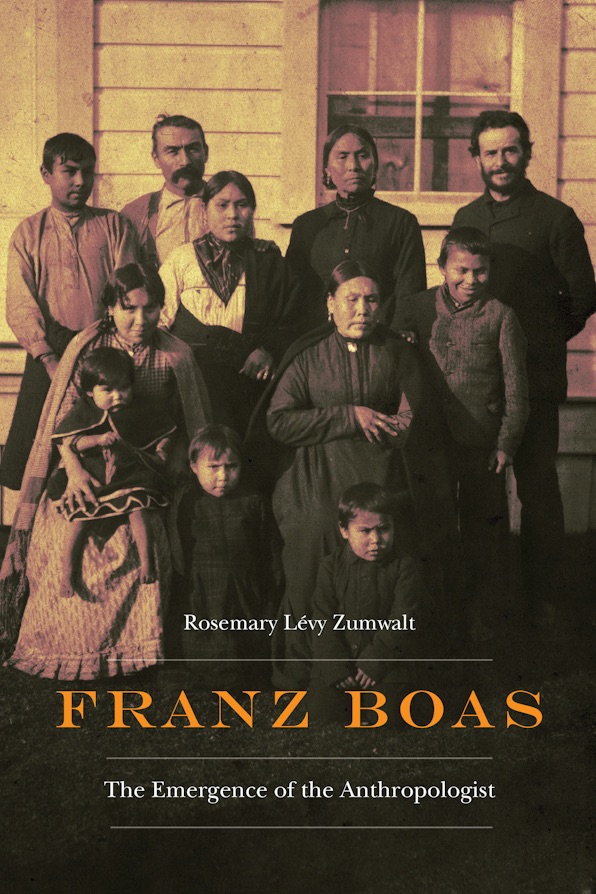
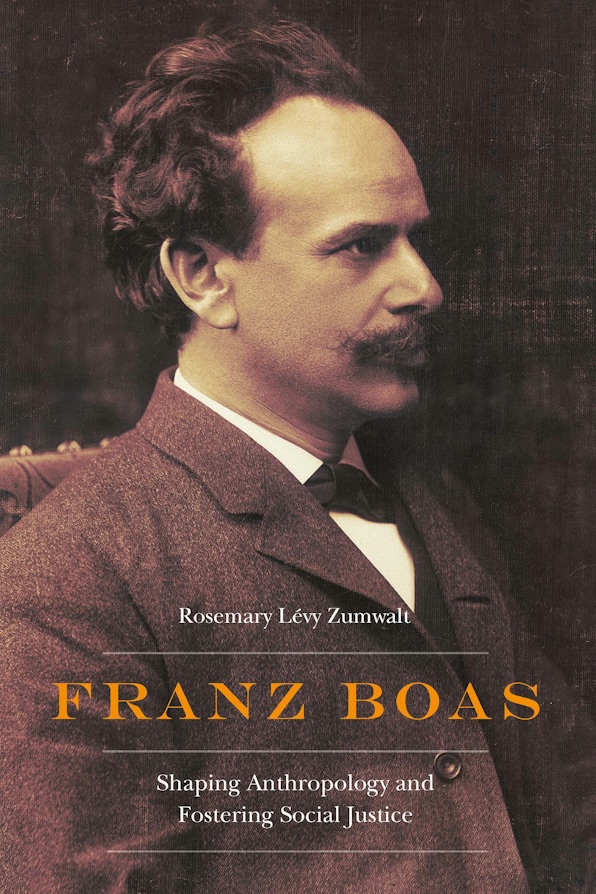
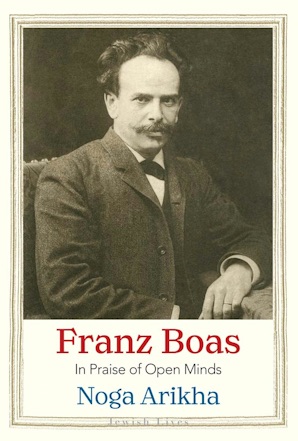
A thought-provoking account of the life and work of Franz Boas and his influential role in shaping modern anthropology
Franz Boas (1858–1942) is widely acknowledged for his pioneering work in the field of cultural anthropology. His rigorous studies of variations across societies were aimed at demonstrating that cultures and peoples were not shaped by biological predispositions. This book traces Boas’s life and intellectual passions from his roots in Germany and his move to the United States in 1884, partly in response to growing antisemitism in Germany, to his work with First Nations communities and his influential role as a teacher, mentor, and engaged activist who inspired an entire generation.
Drawing from Boas’s numerous but rarely read writings, Noga Arikha brings to life the man and the ideas he developed about the complex interplay of mind and culture, biology and history, language and myth. She provides a comprehensive picture of the cultural contexts in which he worked, of his personal and professional relationships, and of his revolutionary approach to fieldwork. He was celebrated in his lifetime for the cultural relativism he developed and the arguments he marshaled against entrenched racialism. But his was a constant battle, and Arikha shows how urgently relevant his voice and legacy have become again today.
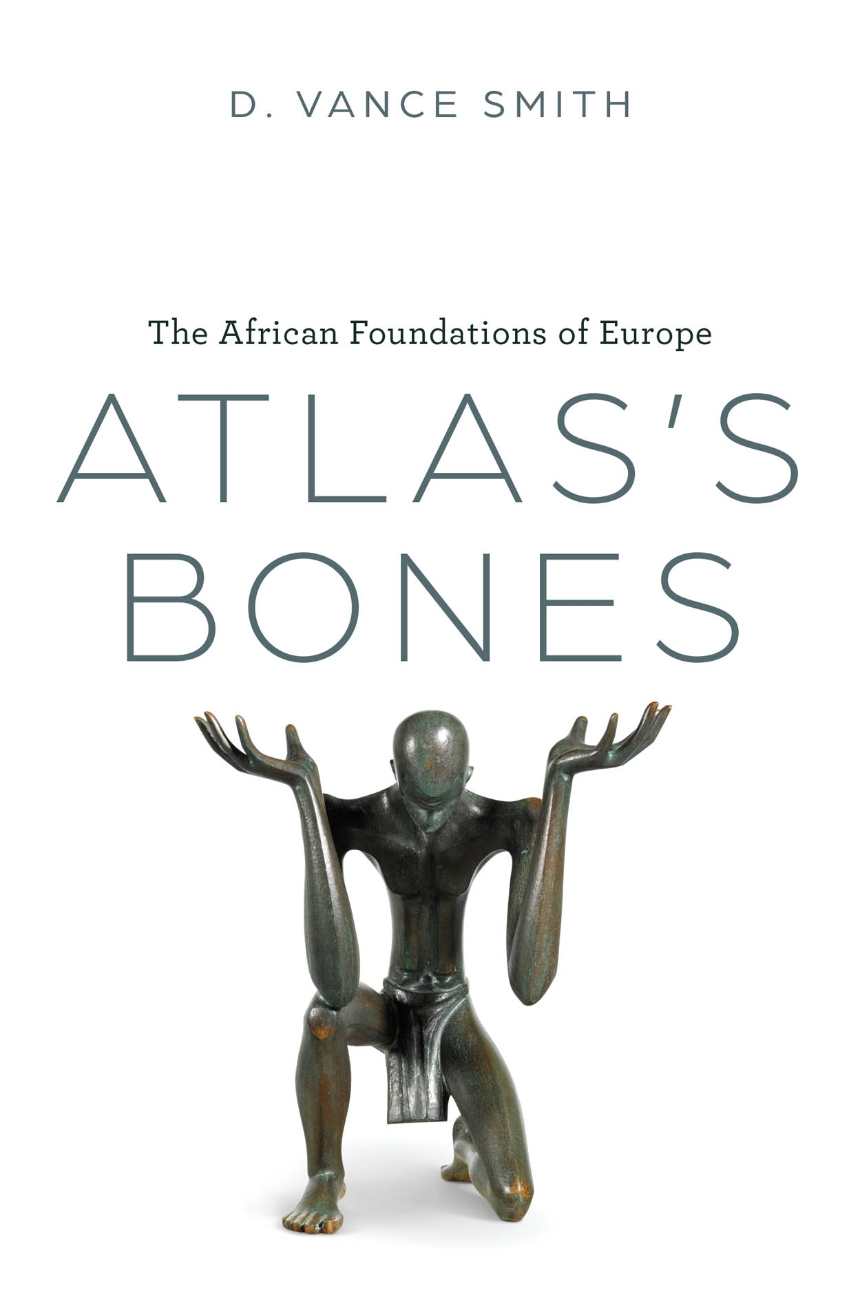
A major new look at Africa’s influence on European culture and how colonization remade Africa in the image of a medieval Europe.
Virgil. Chaucer. Petrarch. These names resonate with many as cornerstones of European culture. Yet, in Atlas’s Bones, D. Vance Smith reveals that much of what is claimed as European culture up to the Middle Ages—its great themes in literature, its sources in political thought, its religious beliefs—originated in the writings of African thinkers like Augustine, Fulgentius, and Martianus Capella, or Europeans who thought extensively about Africa. In fact, a third of Virgil’s Aeneid takes place in Africa. Francis Petrarch believed his most important achievement was his epic Africa; while Geoffrey Chaucer wrote repeatedly about the figures of Scipio Africanus, actually two different men who defeated and destroyed Carthage.
Smith tells the story of how Europe created a false “medieval” version of Africa to acquire resources and power during the era of imperialism and colonialism. The first half of the book, “Reading Africa,” traces Egypt’s, Libya’s, and Carthage’s influence on classical and medieval thinking about Africa, highlighting often ignored literary and legendary traditions, for example, that Alexander the Great named himself the son of an African god. The second part, “Writing Africa,” focuses on how the different cultures of the two great African cities—Carthage and Alexandria—shaped modern literary criticism and political theology and examines the cross-influences of modern anthropology, medieval studies, and colonial law.
Atlas’s Bones firmly re-establishes the significance of Africa in European intellectual history. It will be essential reading for anyone seeking to understand how much of Africa informs our artistic and cultural world.
This volume offers a broad-ranging and comprehensive analysis of the history and theory of the political idea of ‘crisis’, from the interwar period through to the present day. It considers how the multiple crises of civilization, capitalism, social cohesion, liberalism, democracy, socialism, and the nation-state were conceptualized; how these spheres of crisis became entangled; and who the intellectuals, politicians and experts were who employed these discourses.
Intellectuals and the Crisis of Politics in the Interwar Period and Beyond maps the range of meanings the term ‘crisis’ has borne and the roles it has performed across disciplines and countries, de-centering the dominant narrative that takes Western European positions and developments as normative. It especially focuses on the historical roots of two key contemporary contesters of liberal democracy: neoliberalism and populism, and presents an innovative analysis of the roots of contemporary illiberalism in Europe.
Bringing these ideas into the present day, Balázs Trencsényi offers ideas on how a reflective and self-critical liberal democratic political position could be defined and defended in our current predicament, which is increasingly compared to the interwar period and is often described as a “polycrisis”.