A provocative reassessment of Heidegger’s critique of German Idealism from one of the tradition’s foremost interpreters.
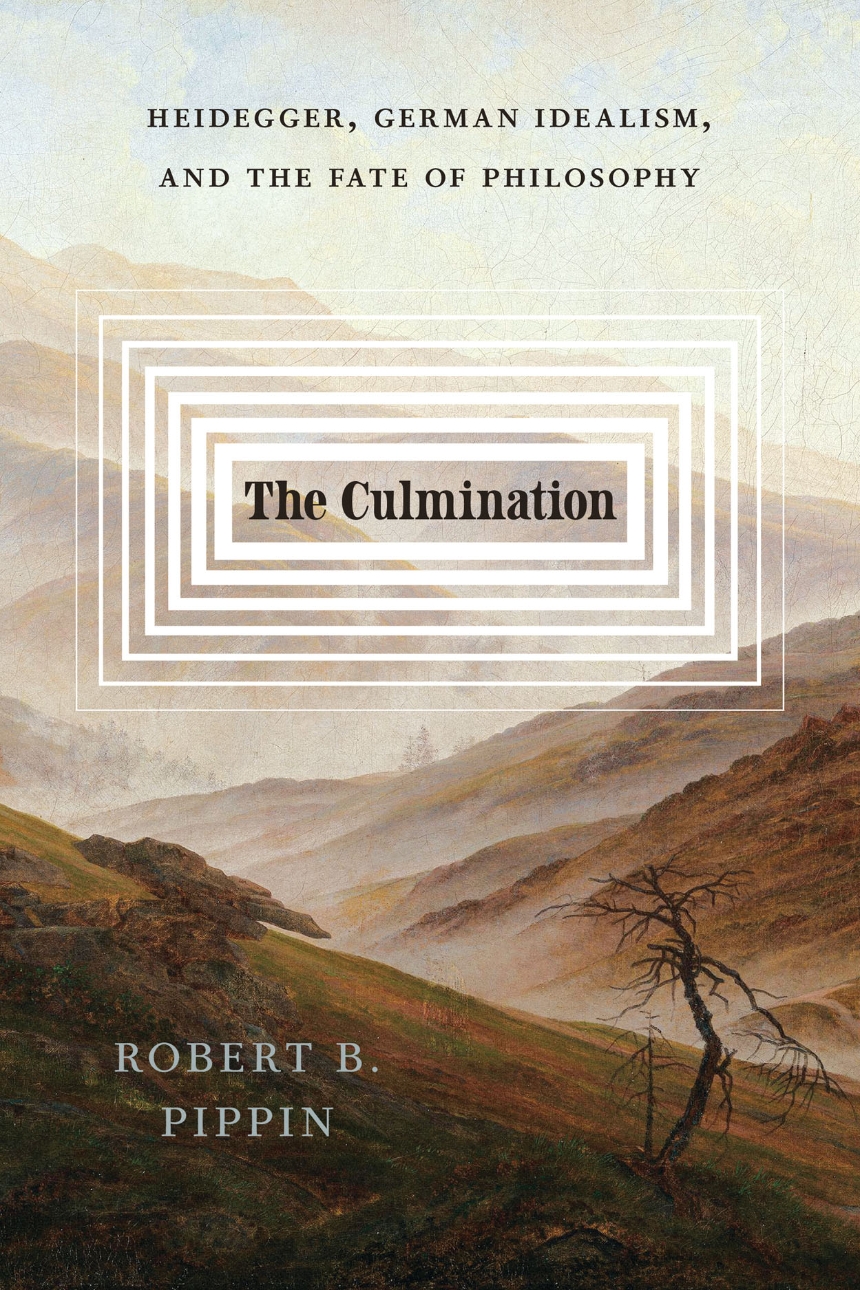
Heidegger claimed that Western philosophy ended—failed, even—in the German Idealist tradition. In The Culmination, Robert B. Pippin explores the ramifications of this charge through a masterful survey of Western philosophy, especially Heidegger’s critiques of Hegel and Kant. Pippin argues that Heidegger’s basic concern was to determine sources of meaning for human life, particularly those that had been obscured by Western philosophy’s attention to reason. The Culmination offers a new interpretation of Heidegger, German Idealism, and the fate of Western rationalism.
There is a discussion between Pippin and Xavier Bonilla here. Thanks to dmf for the links.
An engaging biography of one of the most influential Western philosophers and a thought-provoking exploration of how to live with Arthur Schopenhauer’s pessimism.
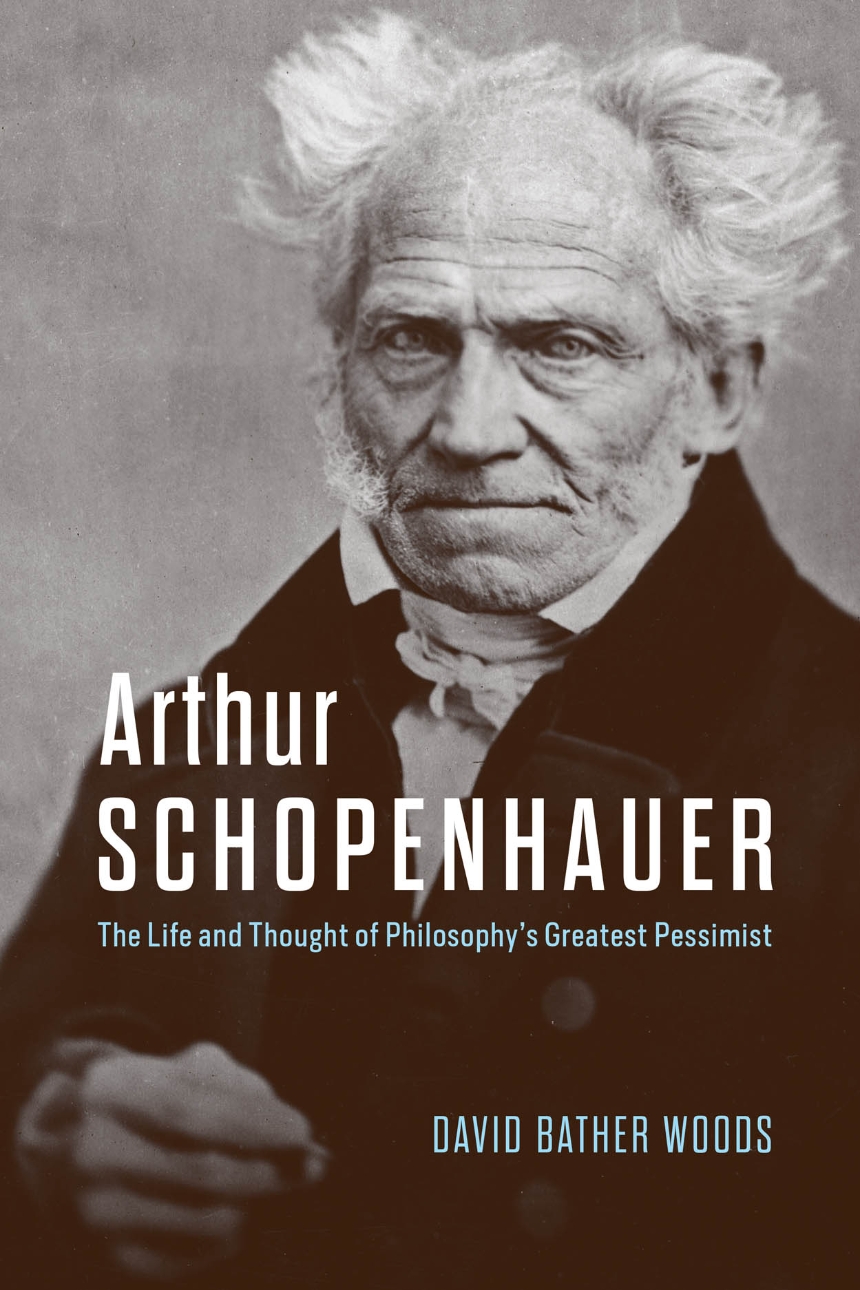
Arthur Schopenhauer (1788–1860) almost wasn’t one of the greatest philosophers of the nineteenth century. Born in the Free City of Danzig to a family of shipping merchants, he was destined for a life of imports and exports until his father died in a suspected suicide. After much deliberation, the young Schopenhauer invested his inheritance in himself and his philosophical vocation. But the long road to recognition was a difficult one, with Schopenhauer spending all but the last decade of his life in total obscurity. Yet his ideas and style went on to influence great thinkers, including Friedrich Nietzsche, Ludwig Wittgenstein, and Sigmund Freud, as well as artists such as the composer Richard Wagner and writers Marcel Proust, Thomas Mann, Samuel Beckett, and many more.
A singular and remarkably influential thinker, Schopenhauer is usually described as an extreme pessimist. He questioned the purpose of existence in a world where pain and suffering are inescapable and happiness is all too brief. In this engaging philosophical biography, David Bather Woods reevaluates Schopenhauer’s pessimism in the context of his life experiences, revealing the philosopher’s relentless fascination with the world and making a case for his contemporary relevance. Bather Woods weaves together Schopenhauer’s ideas with the story of how he came to be, including such topics as love, loneliness, morality, politics, gender, sexuality, death, suicide, fame, and madness. In doing so, this book answers some of life’s most challenging questions about how to deal with pain and loss, and how to live with ourselves and each other.
Despite his pessimistic outlook on human existence, Schopenhauer didn’t give up on life. Rather, he recognized that the question of how to live becomes even more pressing, and he worked to provide an answer. Bather Woods shows how Schopenhauer’s life informed his ideas and how they still resonate today.
Facticity and the Fate of Reason After Kant is the first history of the concept of facticity. G. Anthony Bruno argues that this concept’s coining, transmission, and repurposing by post-Kantian thinkers leaves a lasting divide concerning the question of whether a science of intelligibility can tolerate brute facts. In the phenomenological tradition, ‘facticity’ denotes undeducibly brute conditions of intelligibility such as sociality, mortality, and temporality. This suggests an affirmative answer to the post-Kantian question. However, the term’s original use in the German idealist tradition is associated with a negative answer: a science of intelligibility must eliminate bruteness in order to be systematic, as Fichte says, or presuppositionless, as Hegel says. Moreover, eliminating bruteness requires a new logic for deducing conditions of intelligibility from reason’s self-contradictions, a dialectical logic that Fichte invents and Hegel develops. In response to the German idealists, Heidegger argues that dialectic ineluctably presupposes brute facts of lived experience, whose interpretation requires a hermeneutics of facticity. The untold history of the concept of facticity thus contains the deepest parting of the ways after Kant, one in which reason is fated to transform from the hand that holds the world to the thrown activity of being-in-the-world. Facticity and the Fate of Reason After Kant explores this transformation while confronting our inheritance of the still-pressing post-Kantian question.
Below is a recent video of a detailed interview with Achille Mbembe covering his work, ideas and writing.
Achille Mbembe received the 2024 Holberg Prize for his groundbreaking research in African history and politics, and related fields. Mbembe is research professor of history and politics at Wits Institute for Social and Economic Research, University of Witwatersrand. Interviewer: Kari Jegerstedt, associate professor of gender studies in the humanities and Head of the Centre for Women’s and Gender Research, University of Bergen. The interview was recorded on 3rd June, 2024, during the Holberg Week in Bergen. For more information and other video productions: See holbergprize.org.
A selection of Leroi-Gourhan’s most important texts—many translated into English for the first time.
André Leroi-Gourhan is undoubtedly one of the most acclaimed figures of twentieth-century anthropology and archaeology. In France, his intellectual importance rivals that of the Claude Lévi-Strauss, yet Leroi-Gourhan’s major contributions are almost entirely unknown in the Anglophone world. This collection seeks to change that. This selection highlights some of his chief influences, such as elaborating a theory of technology, which argues that material culture focuses on the object in use and how use is a dynamic feature that has specific consequences for human evolution and human society. With serious ramifications for our understanding of material culture, putting Leroi-Gourhan’s thinking about technology into English will have an immediate and transformative impact on material culture studies.
War is urbanising. From Mosul to Mumbai, Aleppo to Marawi, the largest and most intense battles of the twenty-first century have taken place in densely populated urban areas. In the Ukraine War, Russian and Ukrainian troops have converged on urban areas, Kyiv, Mariupol, and Bakhmut, to fight brutal attritional sieges. Meanwhile the Battle of Gaza rages.
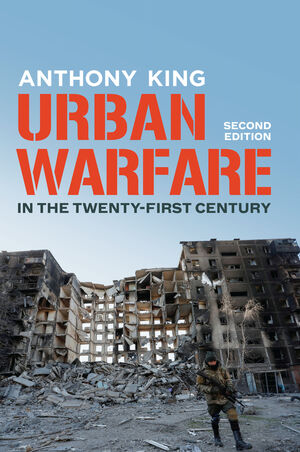
Through a close analysis of recent urban conflicts and their historical antecedents, sociologist Anthony King explores the changing typography of the urban battlescape. Whilst many tactics used in urban warfare are not new, he shows how operations in cities today have coalesced into localised micro-sieges, which extend from street level – and below – to the airspace high above the city, as combatants fight for individual buildings, streets and districts. At the same time, digitalized social media and information networks communicate these battles to global audiences across an urban archipelago, with these spectators often becoming active participants in the fight.
Fully revised and updated to include detailed examples from Ukraine and Gaza to illustrate the anatomy of twenty-first century urban warfare, the second edition of this popular text is a timely reminder of the costs and the horror of war and violence in cities. As such, it offers an invaluable interdisciplinary introduction to urban warfare in the new millennium for students of international security, urban studies and military science, as well as military professionals.
Troubling Classical Bodies, Remarque Institute, New York University, 11 April 2025, 12.30pm and online – Brooke Holmes, Anurima Banerji and Stuart Elden
Through three short talks and a moderated conversation, we consider the relationship between idealized bodies and processes of classicization in the late nineteenth and twentieth centuries, drawing on our respective research on classical Indian dance, the reception of ancient Greek medicine, and the modern study of Indo-European languages. We ask more broadly how the body is imagined as a bridge between an ancient past and the present, sustaining fantasies of continuity while also inviting practices that unsettle stable antiquities.
Lunch will be served at 12pm Event will begin at 12:30pm
This event is part of an ongoing series concerning Legacies of Classical Ideas and their Recasting in the 20th Century, generously supported by the Gladys Krieble Delmas Foundation, and co-sponsored by the Center for Ballet and the Arts.
Please RSVP here to attend in person. Advance registration is strictly required, or join us via Zoom.
I’ll be speaking about an aspect of my Indo-European project, on an early text by Émile Benveniste about the Sogdian language, and a puzzle of corporeal vocabulary which he explains through a comparative approach.
The link for the entire book is at the bottom of the page
This is an open access title available under the terms of a CC BY-NC-ND 4.0 License. It is free to read, download and share on Elgaronline.com. From concentration camps to refugee settlements, there is little consensus about what exactly defines ‘the camp’. This timely and comprehensive book adopts a geographical perspective to develop a spatial theory of the camp, advancing the interdisciplinary field of camp studies. Richard Carter-White and Claudio Minca explore the spatial logics and practices that unite different camps, demonstrating why the camp has become such an integral tool of contemporary governance and what this reveals about the geopolitics and biopolitics of the modern nation-state.