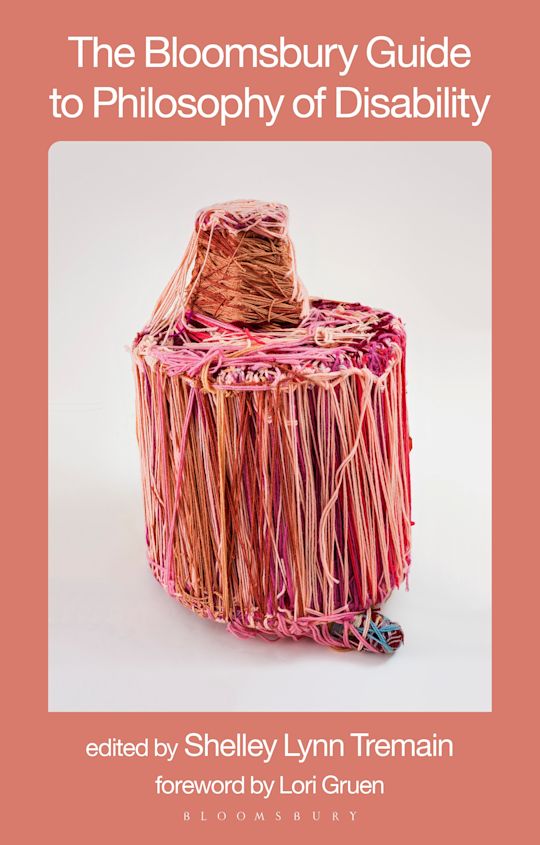
The Bloomsbury Guide to Philosophy of Disability is a revolutionary collection encompassing the most innovative and insurgent work in philosophy of disability. Edited and anthologized by disabled philosopher Shelley Lynn Tremain, this book challenges how disability has historically been represented and understood in philosophy: it critically undermines the detrimental assumptions that various subfields of philosophy produce; resists the institutionalized ableism of academia to which these assumptions contribute; and boldly articulates new anti-ableist, anti-sexist, anti-racist, queer, anti-capitalist, anti-carceral, and decolonial insights and perspectives that counter these assumptions.
This rebellious and groundbreaking book’s chapters–most of which have been written by disabled philosophers–are wide-ranging in scope and invite a broad readership. The chapters underscore the eugenic impetus at the heart of bioethics; talk back to the whiteness of work on philosophy and disability with which philosophy of disability is often conflated; and elaborate phenomenological, poststructuralist, and materialist approaches to a variety of phenomena. Topics addressed in the book include: ableism and speciesism; disability, race, and algorithms; race, disability, and reproductive technologies; disability and music; disabled and trans identities and emotions; the apparatus of addiction; and disability, race, and risk. With cutting-edge analyses and engaging prose, the authors of this guide contest the assumptions of Western disability studies through the lens of African philosophy of disability and the developing framework of crip Filipino philosophy; articulate the political and conceptual limits of common constructions of inclusion and accessibility; and foreground the practices of epistemic injustice that neurominoritized people routinely confront in philosophy and society more broadly.
A crucial guide to oppositional thinking from an international, intersectional, and inclusive collection of philosophers, this book will advance the emerging field of philosophy of disability and serve as an antidote to the historical exclusion of disabled philosophers from the discipline and profession of philosophy.
The Bloomsbury Guide to Philosophy of Disability is essential reading for faculty and students in philosophy, disability studies, political theory, Africana studies, Latinx studies, women’s and gender studies, LGBTQ studies, and cultural studies, as well as activists, cultural workers, policymakers, and everyone else concerned with matters of social justice.
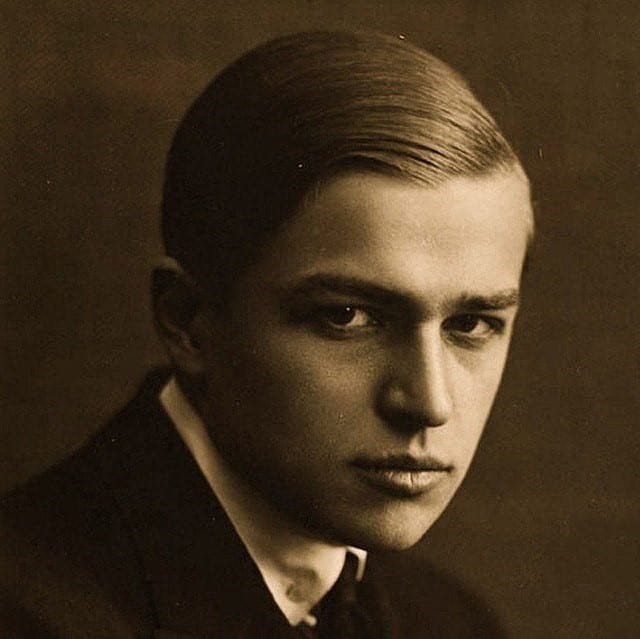
In 1918 the Russian-French philosopher Alexandre Kojève (1902-1968) was caught selling soap on the black-market in Moscow by the Tchèka, the political police of the Bolshevik party. After Kojève’s stepfather was killed by raiding peasants in 1917, the Kozhevnikov’s, an archetypical Muscovite bourgeois family, plunged into financial precarity leading Kojève to earn an extra buck in the informal economy. At the time of the Russian Civil War, the Tchèka were executing thousands of people for petty crimes. Kojève’s niece, Nina Kousnetzoff, stated that Kojève, while sitting in his prison cell, fully understood the risk of being executed. There were adolescents, the same age as Kojève, who were being executed for much less. Luckily, after three days, he was released via family connections. In this think-piece, I argue, following Dominique Auffret’s biography of Kojève, that this short imprisonment in a Tchèka cell was an intellectually formative moment for him, that is, it held a Bildungseffekt on Kojève’s later work on revolutionary terror in his lectures on Hegel’s Phenomenology of Spirit during the 1930s, specifically his analysis on Hegel’s commentary of the French Revolution…. [continues here]
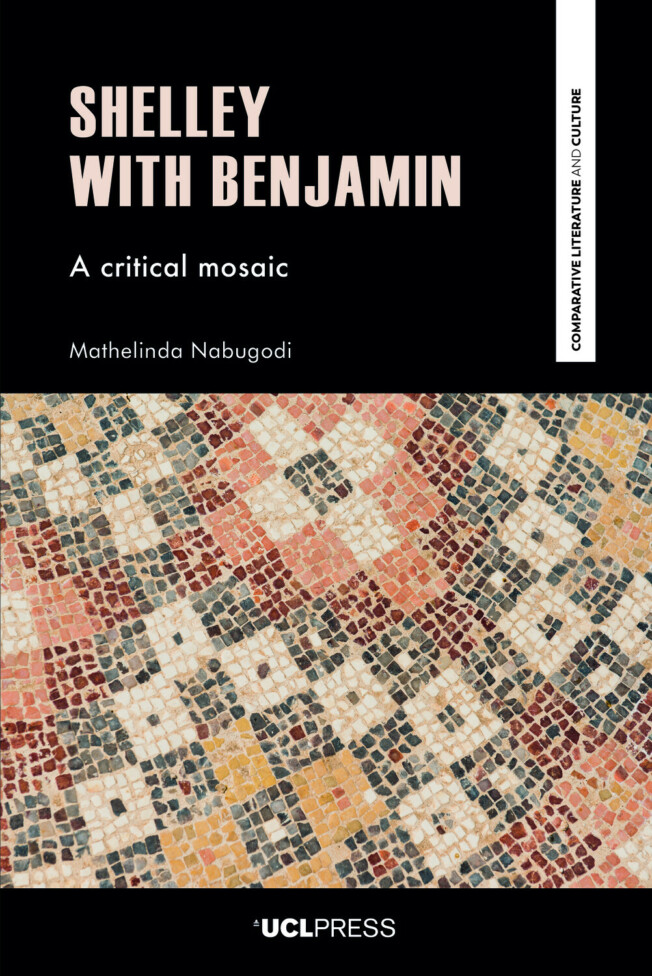
*Yet what surprises me most of all at this time is that what I have written consists, as it were, almost entirely of quotations. – Compositions so produced are to poetry what mosaic is to painting. – It is the craziest mosaic technique you can imagine – and the very mind which directs the hands in formation is incapable of accounting to itself for the origin, the gradations, or the media of the process.
Shelley with Benjamin: A critical mosaic is an experiment in comparative reading. Born a century apart, Percy Bysshe Shelley and Walter Benjamin are separated by time, language, temperament and genre – one a Romantic poet known for his revolutionary politics and delicate lyricism, the other a melancholy intellectual who pioneered a dialectical method of thinking in constellations. Yet, as the above montage of citations from their works demonstrates, their ideas are mutually illuminating: the mosaic is but one of several images that both use to describe how literature lives on through practices of citation, translation and critical commentary.
In a series of close readings that are by turns playful, erotic and violent, Mathelinda Nabugodi unveils affinities between two writers whose works are simultaneously interventions in literary history and blueprints for an emancipated future. In addition to offering fresh interpretations of both major and minor writings, she elucidates the personal and ethical stakes of literary criticism. Throughout the book, marginal annotations and interlinear interruptions disrupt the faux-objective and colourblind stance of standard academic prose in an attempt to reckon with the barbarism of our past and its legacy in the present.
The book will appeal to readers of Shelley and Benjamin as well as those with an interest in comparative literature, literary theory, romantic poetics, and creative critical writing.
The author of the acclaimed Marx at the Margins analyses the late Marx on Indigenous communism, gender, and anti-colonialism.
In his late writings, Marx went beyond the boundaries of capital and class in the Western European and North American contexts. Kevin Anderson carries out a systematic analysis of Marx’s Ethnological Notebooks and related texts on Russia, India, Ireland, Algeria, Latin America, and ancient Rome. These texts, some of them only now being published, provide evidence for a change of perspective, away from Eurocentric worldviews or unilinear theories of development. As Anderson shows, the late Marx elaborated a truly global, multilinear theory of modern society and its revolutionary possibilities.
Global Politics: A New Introduction engages directly with questions that those coming to the study of world politics bring with them. From that innovative starting point, it explores key issues through a critical and inquiring perspective, presenting theoretical ideas and concepts in conjunction with a global range of historical and contemporary case studies.
Revised and updated throughout, the fourth edition offers examples engaging with the latest developments in global politics: the climate crisis and anthropocentrism, Indigenous experiences and thinking, racism and the rise of xenophobia, artificial intelligence, citizen journalism, global health and pandemic response and drone warfare.
Global Politics:
• examines most significant issues in global politics – poverty, development, colonialism, human rights, gender, inequality, race, war, peacebuilding, security, violence, nationalism, authority and what we can do to change the world;
• offers chapters written to a common structure ideal for teaching and learning and features a key question, an illustrative example, general responses and broader issues;
• integrates theory and practice throughout the text, drawing on international relations, political theory, postcolonial studies, sociology, geography, peace studies and development.
This exciting, up-to-date and ground-breaking textbook is essential reading for all those concerned about global politics.
Rethinking the philosophical grounds of police power, Melayna Lamb argues that traditional ideas of sovereignty and the law need to be radically re-evaluated. In placing police at the centre of analysis this book demonstrates the manner in which police power exists in a complex and overlapping relationship with sovereignty and law in a form which is not reducible to implementation. In doing this it argues for the centrality of order in any consideration of police and challenging a common narrative whereby a dynamic, interventionist sovereign power that follows from a belief of order as ‘artificial’ is replaced by a liberal, limited non-interventionist sovereign power that proceeds from a ‘natural’ order. Moving through thinkers such as Hobbes, Hegel and Adam Smith the book argues that police power is in fact an-archic in form, in a manner that makes it impossible to hold accountable through the law.
Lamb adopts an interdisciplinary approach that turns to philosophy to make sense of global events that see police power at their centre. This includes the history of police brutality in the US, the structural injustices made more apparent by COVID-19 and the growing calls to abolish the police.
There is no political representation without performance. When politicians, protesters, and even celebrities appear in public, they make or constitute political representation by performing it, shaping how we view roles and institutions and imagine society. Building theory through rich case studies—from the festival stage to the toppling of statues, and from presidential inaugurations to parliaments and council chambers – the book deepens our understanding of political representation by exploring how embodied action in different spaces creates representative claims in our highly mediatized contemporary politics. It shows how a performative take on representation is critical to our understanding of: the symbolism of political authority; the limits of democratic leadership; the politics of material spaces and presences; political empowerment and disempowerment; and the claim to and denial of authenticity in political life.
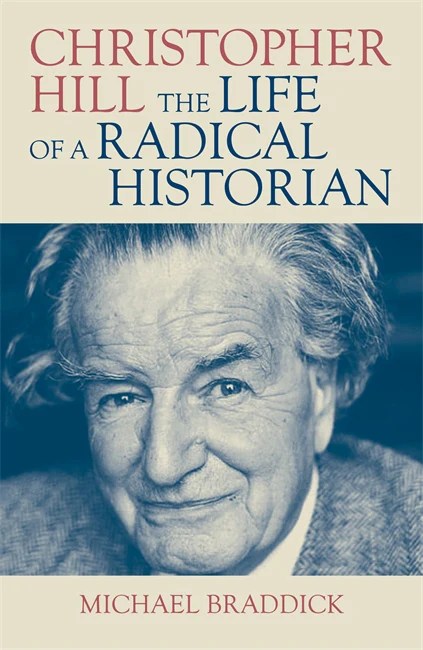
A luminous biography of one of the 20th century’s most influential historians
Christopher Hill was one of the leading historians of his generation. His work across more than 15 books and dozens of articles fundamentally rewrote the way we understand the English Revolution and the development of the modern British state. While his career brought many of the trappings of establishment respectability – he was both a Fellow of the British Academy and the Master of Balliol College, Oxford – he was also seen as a threat to that very same establishment. Under surveillance by the security services for decades, in the 1980s Hill was publicly accused of having been a Soviet agent during the war. His was a Cold War life, as well as a scholarly one.
In this brilliant work of biography, Michael Braddick charts Hill’s development from his abandonment of the respectable provincial Methodism of his youth, through his embrace of Marxism, his membership and eventual break with the Communist Party, as well as his celebrated intellectual career. While many of his books – not least the thrilling work of historical resurrection, The World Turned Upside Down, and God’s Englishman, his classic biography of Oliver Cromwell – are still widely read and admired, his intellectual reputation was damaged by sustained academic criticism in the politically-charged atmosphere of the 1980s.
Braddick’s judicious biography not only situates Hill’s life and work in their historical context but seeks to rescue Hill for a new generation of readers.
One of the challenges with my current project on Indo-European thought in France is how male-dominated it is. If you look at a photograph of the professors of the Collège de France in 1967, you can perhaps see why. It wasn’t much better at the Collège de France almost 20 years later (1985).
In fields related to those I’m studying for this project, it’s interesting that the first female professor of the Collège de France was Jacqueline de Romilly (1913-2010), elected to a chair with the title Greece and the Formation of Moral and Political Thought [La Grèce et la formation de la pensée morale et politique] in 1973. I think that the second was Françoise Héritier (1933-2017), who was elected a whole decade later. She succeeded Claude Lévi-Strauss, with a chair in the Comparative Study of African Societies [Étude comparée des sociétés africaines] in 1983. So far, neither of them has featured in the work I’m doing, though both have connections to those people whose careers I am exploring.
Of course, the Collège de France is an elite institution, and there are all kinds of complicated politics in terms of who gets elected. But even looking at other major institutions shows a clear gender imbalance. There are many interesting figures who connect to the story I’m trying to tell, but relatively few women and it can be difficult to find out much information about them.
Of an earlier generation, Marie-Louise Sjoestedt is particularly intriguing. She was born on 20 September 1900. Her father was a Swedish diplomat based in France and her mother was a novelist from Corsica. Her older sister was the artist Yvonne Sjoestedt. She was part of the impressive generation of students taught by Antoine Meillet in the 1920s, alongside Pierre Chantraine, Jerzy Kuryłowicz, Louis Renou, Emile Benveniste and – slightly more distantly – Georges Dumézil. Her husband Michel Jonval, also a linguist with a specialisation in Baltic languages, died young in 1935, just three years after they married. Meillet said this generation was remarkable in that it was clear that many of them would soon be masters themselves.
Sjoestedt died at the age of just 40 by suicide, not long after the French defeat and the arrest of her second husband by the Germans. In a brief biography Renou says that there had been several previous attempts (p. 11). Dumézil acknowledges her death in the second edition of his Mitra-Varunain a somewhat guarded way: “she was not to survive France’s first misfortunes” (p. xxxvii).
Sjoestedt was the author of several technical works on the Welsh and Irish languages, including L’aspect verbal et les formations à affixe nasale en celtique, which appeared when she was just 25. It was her primary doctoral thesis, defended in June 1926. Renou says that Meillet was the rapporteur for this thesis; Joseph Vendryes for the secondary thesis on a Middle Irish Saga, ‘The siege of Druim Damhghaire’ (p. 6). Natalie Zemon Davis says Vendryes directed the first thesis, which seems likely. Vendryes worked on Latin and Celtic, and taught alongside Meillet at the École Pratique des Hautes Études (EPHE). In time, Sjoestedt, Benveniste, Dumézil, Chantraine and other Meillet students would teach at the EPHE too. Sjoestedt taught there between 1926 and 1928, in a temporary post, and then Greek at the University of Rennes in Brittany, before a post in Celtic languages was created for her at the EPHE in 1929 (Renou pp. 7-8; see Pierre-Yves Lambert’s entry in the Dictionary of Irish Biography).
Sjoestedt spent a lot of time in Ireland and Wales, and produced a two-volume study of Irish dialects – Phonétique d’un parler irlandais de Kerry (1931) and Description d’un parler irlandais de Kerry (1938) – building on then innovative research on phonology. She also worked on Celtic mythology, especially the legend of Cuchulainn, and her Dieux et héros des Celtes (1940) was intended for a much wider audience. It was translated by her former student Myles Dillon as Gods and Heroes of the Celts after her death.
Sjoestedt was one of the editors of Études celtiques, alongside Vendryes. She attended some of Dumézil’s classes on mythology in the 1930s, but he recalls that he was also her student, as she taught him Welsh and Irish. Dumézil said that his aim was to gain the ability to read myths in those languages, not to be able to speak the modern versions. He did, however, later spend some time in Bangor in North Wales. Dumézil references Sjoestedt’s work in Mitra-Varuna, dedicates Jupiter, Mars, Quirinus to her memory, and as noted above, in the preface to the second edition mentions her as one of his students and colleagues lost in the war.
Natalie Zemon Davis, in a valuable essay on “Women and the World of the Annales” situates Sjoestedt in relation to a wider intellectual network. Much of her discussion covers the story outlined above, but is based on a reading of sources in the Annuaire of the EPHE as well:
Joining [Germaine] Rouillard at the Ecole Pratique in 1926 and under like auspices was a young woman whose family was of Swedish origin, Marie-Louise Sjoestedt. She had published her doctoral thesis that year, a technical linguistic study directed by the great Celtic specialist at the Sorbonne, Joseph Vendryes. Vendryes had just taken over the Celtic program at the Ecole Pratique and brought Sjoestedt along as Chargie de conferences to teach both middle and modern Irish. She continued to work as his associate over the years: in 1936, when the Etudes Celtiques were founded (published by Eugénie Droz), Vendryes was the editor and Sjoestedt was the Secretaire de la Rédaction, while writing reviews and articles for the journal. But, a Directeur d’études from 1930 on, she also developed on her own, marrying a fellow linguist who worked on Baltic languages and Latvian myth, discussing linguistic matters with her colleague at the Ecole, Emile Benveniste, and returning often to Ireland for field work in language and folklore. In 1938, she reviewed a new History of Ireland for the Annales. Her important book on the structure of Celtic myths about gods and heroes was under press as the Germans invaded France. She committed suicide in early December 1940 at age forty; her Dieux et héros des Celtes appeared a few weeks later.
Reviewing the book in the first Annales to appear under the Occupation, [Lucien] Febvre praised Sjoestedt’s ‘remarkable knowledge of the languages, beliefs and customs of the Celtic world’ and regretted that she was gone when so much was still to be expected from her labour.
A collection of tributes – including ones by Benveniste and Dumézil and a brief biography by Louis Renou – was published in 1941: Marie-Louise Sjoestedt (1900–1940). In Memoriam. Vendryes’s obituary was published in Études Celtiques in 1948. As far as I’m aware, there is no archive of her papers available.
Cover of L’Aspect verbal et les formations à affixe nasal en celtiquephotograph of SjoestedtCover of Celtic Gods and Heroes
References
Marie-Louise Sjoestedt (1900–1940). In Memoriam, suivi de Essai sur une littérature nationale, la littérature irlandaise contemporaine, Paris: E. Droz, 1941.
Georges Dumézil, Mitra-Varuna: An Essay on Two Indo-European Representations of Sovereignty, trans. Derek Coltman, ed. Stuart Elden, Chicago: Hau, 2024.
Lucien Febvre, “Histoire des Religions: une nouvelle collection”, Annales d’histoire sociale 3, 1941, 98-99.
Seán Ó Lúing, “Marie-Louise Sjoestedt, Celtic Scholar (1900-1940)”, Journal of the Kerry Archaeological and Historical Society 20 (1987), 79-93.
Louis Renou, “Notice biographique”, in Marie-Louise Sjoestedt (1900–1940). In Memoriam, 3-11.
Marie-Louise Sjoestedt, L’Aspect verbal et les formations à affixe nasal en celtique, Paris: Librarie Ancienne Honoré Champion, 1926.
Marie-Louise Sjoestedt, Phonétique d’un parler irlandais de Kerry, Paris: Ernest Leroux, 1931.
Marie-Louise Sjœstedt-Jonval, “Légendes épiques Irlandaises et monnaies gauloises: recherches sur la constitution de la légende de Cuchulainn”, Études Celtiques I, 1936, 1-77.
Marie-Louise Sjoestedt, Description d’un parler irlandais de Kerry, Paris: Honoré Champion, 1938.
Marie-Louise Sjoestedt, Dieux et héros des Celtes, Paris: PUF, 1940; Celtic Gods and Heroes trans. Myles Dillon, New York: Dover, 2000 [1949].
Joseph Vendryes, “Nécrologie: Marie-Louise Sjoestedt”, Études Celtiques 4 (2), 1948, 428-33.
This is a revised and expanded version of a post from May 2023. It is the fourth post of an occasional series, where I try to post short essays with some indications of further reading and sources, but which are not as formal as something I’d try to publish more conventionally. They are usually tangential to my main writing focus, a home for spare ideas, asides, dead-ends and possible futures. I hope there is some interest in them. They are provisional and suggestions are welcome. The other posts so far are:
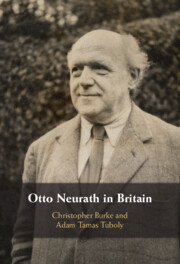
Christopher Burke and Adam Tamas Tuboly, Otto Neurath in Britain – Cambridge University Press, January 2025
Otto Neurath (1882–1945) was an Austrian-born philosopher of science, sociologist and political economist, and one of the most multi-faceted and creative thinkers in the Vienna Circle. Forced into exile by fascism, he was part of the intellectual exodus from Central Europe. After an adventurous escape to England and internment as an ‘enemy alien’, he enthusiastically adapted to British culture, working on documentary films and publications for the war effort using the Isotype method of visualization. He treasured the British habit of ‘muddling through’, and debated planning and economics with fellow Central European émigrés, Friedrich Hayek, Karl Mannheim and Karl Popper. Based on new archival research, this book explores a little-known period of Neurath’s rich and fascinating life, weaving together biographical, historical, and philosophical strands that reflect the cross-cultural currents of twentieth-century intellectual history through the lens of Neurath’s contribution.