Caroline Ashcroft, Catastrophic Technology in Cold War Political Thought – Edinburgh University Press, November 2024

Caroline Ashcroft, Catastrophic Technology in Cold War Political Thought – Edinburgh University Press, November 2024
Explores a Cold War concept of technology as a catastrophic influence on modern politics

  • Explores the intellectual history of a ‘catastrophic’ concept of technology in the work of some of the twentieth century’s most important political thinkers
  • Reveals the centrality of this narrative in the work of what is otherwise generally considered to be an ideologically and philosophically diverse group of theorists
  • Contextualises this concept of technology in the Cold War period to reveal the fundamentally political character of the critique as a rejection of liberalism
  • Studies both ‘technology’ as an overarching concept as well as particular realisations of technology in these theorists’ work: technologies of war, production, media and biotechnology
  • Reveals the way in which this concept of technology produces a specific critique of the relationship between humans, world and nature in modernity, which brings the critics of technology into discourse with early environmentalism

In the mid-twentieth century, a certain idea of technology emerged in the work of many influential political theorists: a critical, catastrophic concept of technology, entangled with the apocalyptic fears fuelled by two all-consuming world wars and the looming nuclear threat. Drawing on the work of theorists such as Hannah Arendt, Jacques Ellul, Martin Heidegger and Herbert Marcuse, Catastrophic Technology in Cold War Political Thoughtexplores the critical idea of technology as both a response to a dramatically changing world, and a radical political critique of Cold War liberalism.
Posted in Uncategorized | 1 Comment

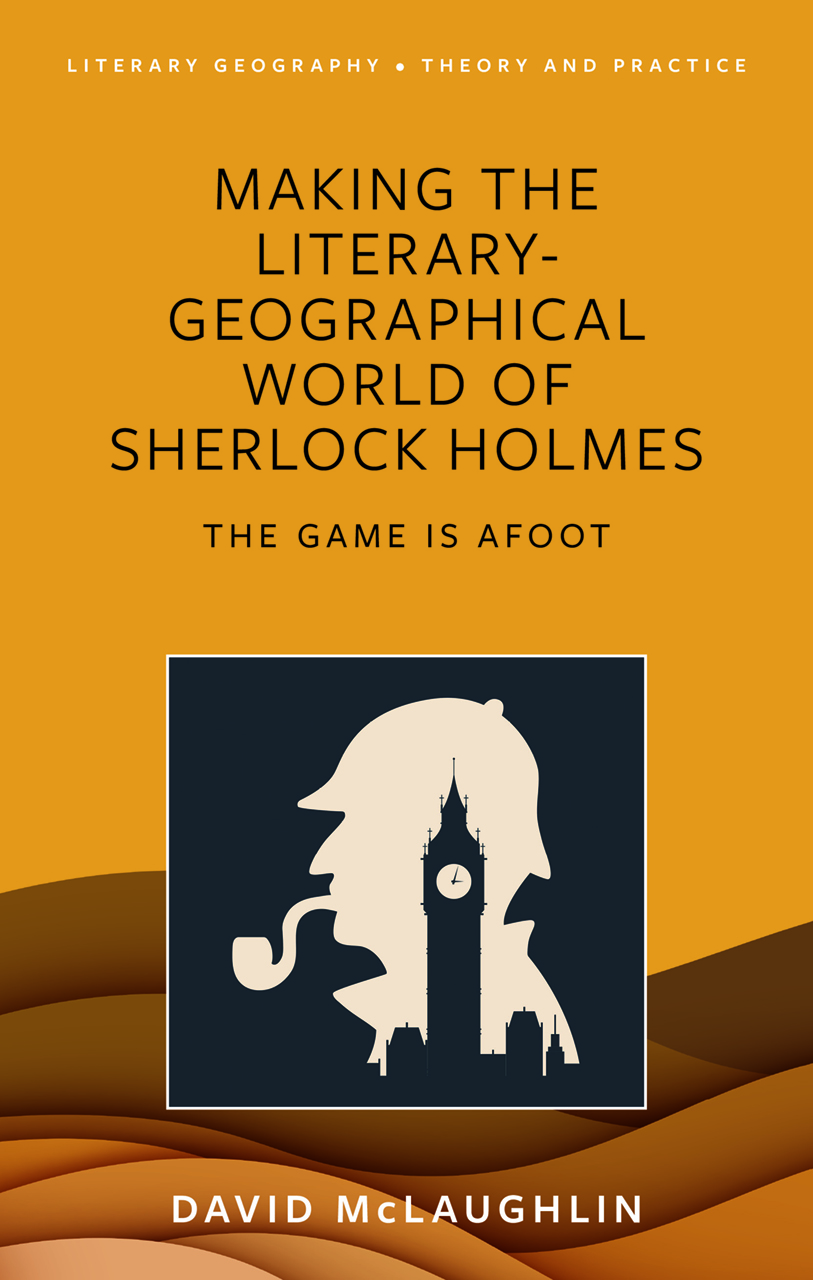
David McLaughlin, Making the literary-geographical word of Sherlock Holmes: The game is afoot – University of Wales Press, October 2024

David McLaughlin, Making the literary-geographical word of Sherlock Holmes: The game is afoot – University of Wales Press, October 2024

In the second half of the twentieth century, American readers of Arthur Conan Doyle’s Sherlock Holmes stories – known as Sherlockians – worked together to create a ‘world of Sherlock Holmes’ that crossed the boundary between reality and fiction. This book applies an innovative literary-geographical lens, informed both by geographical theories of spatiality as a process and literary scholarship readers’ active roles in making stories happen, to define the contours of a world in which the ontological boundary ordinarily assumed between the actual and the fictional bend, blur and break. Drawing extensively on the University of Minnesota’s Sherlock Holmes Collections, the world’s largest archive of Sherlockiana, this book aims to shine light on Sherlockian activities in the mid- to late-twentieth century. This is a relatively understudied but creatively rich period, in which the imaginative foundations of the fandom as we know it were laid. In these years, the world of Sherlock Holmes was collectively created by readers through a variety of textual and embodied practices: writing, mapping, playing and walking.

‘This engaging study explores some of the key ideas currently animating literary-geographical work. Taking Arthur Conan Doyle’s texts to be spatial events, McLaughlin carefully traces the collective, playful unfoldings of relations and meanings created by readers, leaving traces of the Sherlockian world scattered a long way from Baker Street.’

James Kneale, Associate Professor in Geography, University College of London

Posted in Uncategorized | Leave a comment

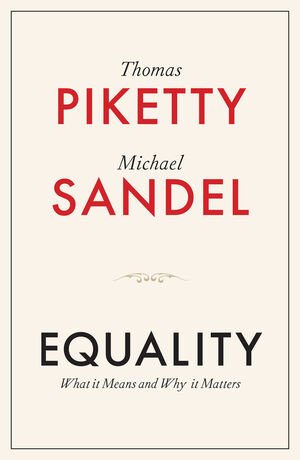
Thomas Piketty and Michael J. Sandel, Equality: What it Means and Why it Matters – Polity, January 2025

Thomas Piketty and Michael J. Sandel, Equality: What it Means and Why it Matters – Polity, January 2025

In this compelling dialogue, two of the world’s most influential thinkers reflect on the value of equality and debate what citizens and governments should do to narrow the gaps that separate us. Ranging across economics, philosophy, history, and current affairs, Thomas Piketty and Michael Sandel consider how far we have come in achieving greater equality. At the same time, they confront head-on the extreme divides that remain in wealth, income, power, and status nationally and globally.

What can be done at a time of deep political instability and environmental crisis? Piketty and Sandel agree on much: more inclusive investment in health and education, higher progressive taxation, curbing the political power of the rich and the overreach of markets. But how far and how fast can we push? Should we prioritize material or social change? What are the prospects for any change at all with nationalist forces resurgent? How should the left relate to values like patriotism and local solidarity where they collide with the challenges of mass migration and global climate change?

To see Piketty and Sandel grapple with these and other problems is to glimpse new possibilities for change and justice but also the stubborn truth that progress towards greater equality never comes quickly or without deep social conflict and political struggle.

Posted in Uncategorized | 1 Comment

Books received – Bradley, Konings, Nail, Adey, TCS

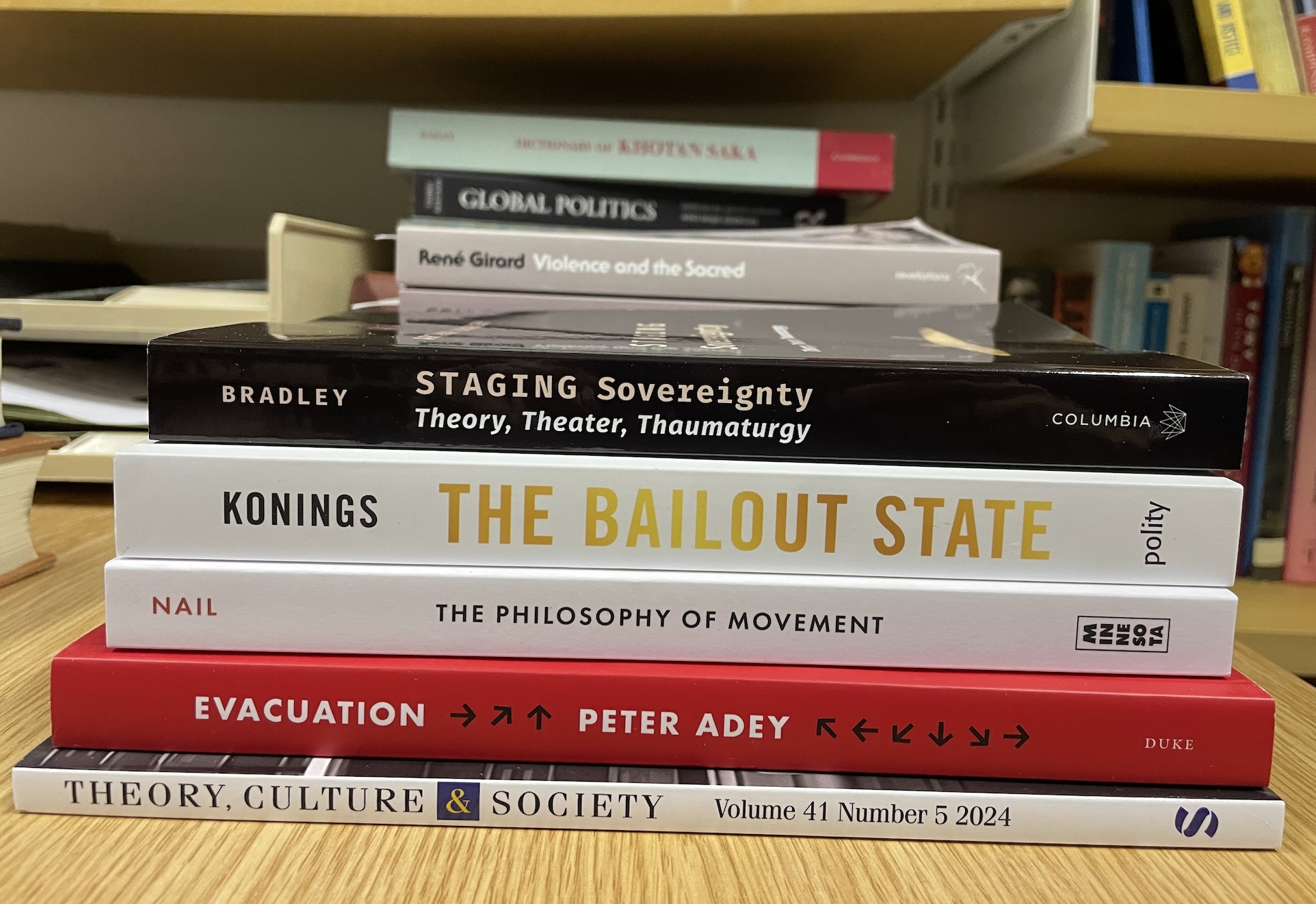
Some books previously mentioned here, sent by publishers – Arthur Bradley, Staging Sovereignty: Theory, Theater, Thaumaturgy; Martijn Konings, The Bailout State: Why Governments Rescue Banks, Not People; Thomas Nail, The Philosophy of Movement: An Introduction; Peter Adey, Evacuation: The Politics and Aesthetics of Movement in Emergency; and the theme issue of Theory, Culture & Society on ‘Thinking with Latour‘.

Posted in Bruno Latour, Theory, Culture and Society | 1 Comment

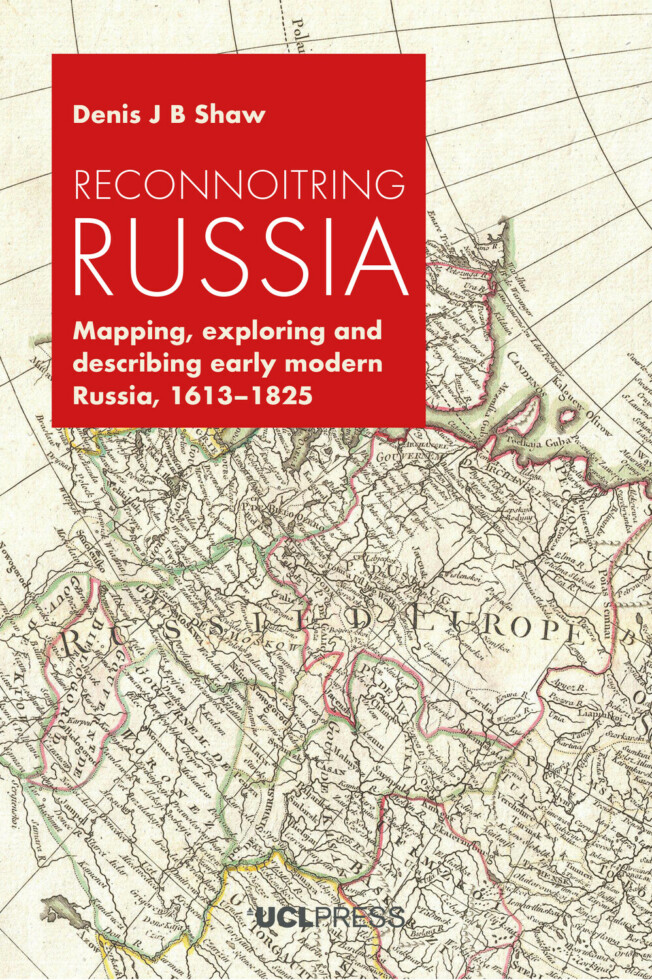
Denis J.B. Shaw, Reconnoitring Russia: Mapping, exploring and describing early modern Russia, 1613-1825 – UCL Press, October 2024 (print and open access)

Denis J.B. Shaw, Reconnoitring Russia: Mapping, exploring and describing early modern Russia, 1613-1825 – UCL Press, October 2024 (print and open access)

Like many European countries during the Great Age of Discovery and Exploration, Russia embarked on policies of state building, exploration and imperial expansion. At the beginning of the fourteenth century, the territory under Moscow’s control was about twenty thousand square kilometres. By 1800 Russia’s empire had expanded to some eighteen million square kilometres. Russia had thus become one of the world’s greatest empires.

By focusing on such geographical practices as exploring, observing, describing, mapping and similar activities, Reconnoitring Russia seeks to explain how Russia’s rulers and its educated public came to know and understand the territory of their expanding state and empire, especially as a result of the modernizing policies of such sovereigns as Peter the Great and Catherine the Great. It places the Russian experience into a comparative context, showing how that experience compares with those of other European countries over the same period. The book adopts a broad chronological framework, exploring the age between 1613 when the Romanov dynasty assumed power and 1825, the conclusion of Alexander I’s reign, or what is often termed the end of the ‘long eighteenth century’.

Posted in Uncategorized | Leave a comment

Rhodri Lewis, Shakespeare’s Tragic Art – Princeton University Press, October 2024

Rhodri Lewis, Shakespeare’s Tragic Art – Princeton University Press, October 2024

In Shakespeare’s Tragic Art, Rhodri Lewis offers a powerfully original reassessment of tragedy as Shakespeare wrote it—of what drew him toward tragic drama, what makes his tragedies distinctive, and why they matter.

After reconstructing tragic theory and practice as Shakespeare and his contemporaries knew them, Lewis considers in detail each of Shakespeare’s tragedies from Titus Andronicus to Coriolanus. He argues that these plays are a series of experiments whose greatness lies in their author’s nerve-straining determination to represent the experience of living in a world that eludes rational analysis. They explore not just our inability to know ourselves as we would like to, but the compensatory and generally unacknowledged fictions to which we bind ourselves in our hunger for meaning—from the political, philosophical, social, and religious to the racial, sexual, personal, and familial. Lewis’s Shakespeare not only creates tragedies that exceed those written before them. Through his art, he also affirms and invigorates the kinds of knowing that are available to intelligent animals like us.

A major reevaluation of Shakespeare’s tragedies, Shakespeare’s Tragic Art is essential reading for anyone interested in Shakespeare, tragedy, or the capacity of literature to help us navigate the perplexities of the human condition.

Posted in Uncategorized, William Shakespeare | Leave a comment

Michael Marder and Giovanbattista Tusa (eds.), Contemporanea: A Glossary for the Twenty-First Century – MIT Press, March 2024

Michael Marder and Giovanbattista Tusa (eds.), Contemporanea: A Glossary for the Twenty-First Century – MIT Press, March 2024

A groundbreaking, multidisciplinary collection that rethinks our present moment and anticipates the key concepts that will shape and direct the twenty-first century.

Contemporanea is a nascent lexicon for the twenty-first century edited by seasoned philosophers and authors Michael Marder and Giovanbattista Tusa. The collection showcases perspectives from a range of noteworthy thinkers in philosophy, ecology, and cultural studies, as well as artists, from across the globe, including Slavoj Zizek, Timothy Morton, Denise Ferreira Da Silva, and Vandana Shiva, who each describe what they anticipate will be the concepts shaping the trajectory of this century—everything from the world state to the nuclear taboo, automation to Teslaism, plant sexuality to arachnomancy, and ecotrauma to resonances, to name a few.

This century, as the editors explain, has to date grounded itself in the debris of the preceding century, whose revolutions and struggles failed to transform our time: post-colonialism, post-fascism, and post-liberalism have morphed into neocolonialism, neoliberalism, and neofascism, often combined in a previously unimaginable mix. And, just as the political developments at the beginning of the twenty-first century revived and reshuffled those of the preceding epoch, so too have philosophical trends sought to breathe fresh life into the stillborn -isms of the past—realism, vitalism, logicism, materialism, empiricism, criticism—adding the adjective “new” and sometimes “radical” before them. To articulate a different future, another language is needed. And, to develop another language, one needs to develop fresh concepts, including the concepts proposed in this collection.

Contributors
Mieke Bal, Claudia Baracchi, Amanda Boetzkes, Erik Bordeleau, Anita Chari, Emanuele Coccia, Valentina Desideri, Roberto Esposito, Filipe Ferreira, Denise Ferreira da Silva, Claire Fontaine, Graham Harman, Yogi Hale Hendlin, Ranjit Hoskote, Cymene Howe, Daniel Innerarity, Joela Jacobs, Ken Kawashima, Sabu Kohso, Bogna Konior, Brandon LaBelle, Anna Longo, Artemy Magun, Michael Marder, Michael Marder, Jason Bahbak Mohaghegh, Timothy Morton, Mycelium, Jean-Luc Nancy, Bahar Noorizadeh, Kelly Oliver, Uriel Orlow, Richard Polt, Marcia Sá Cavalcante Schuback, Tomás Saraceno, Vandana Shiva, Anton Tarasyuk, Anaïs Tondeur, Giovanbattista Tusa, Sjoerd van Tuinen, Santiago Zabala, Zahi Zalloua, Slavoj Žižek

Posted in Graham Harman, Jean-Luc Nancy, Roberto Esposito, Slavoj Zizek, Timothy Morton | Leave a comment

Elias J. Palti, Intellectual History and the Problem of Conceptual Change, Cambridge University Press, May 2024

Elias J. Palti, Intellectual History and the Problem of Conceptual Change, Cambridge University Press, May 2024

How does long-term intellectual change occur? Can we develop a theoretical framework for understanding past systems of knowledge? In this ambitious study, Elías José Palti seeks to reassess the main concepts in the field of intellectual history. Evaluating modes of thought from the seventeenth century to the present, this book aims to prevent an anachronistic understanding of the texts of the past. Palti rejects the idea of conceptual change as a coherent process deriving from one single source. Instead, he offers a convincing explanation of converging developments emanating from three different sources: namely, the Cambridge school, the German school of conceptual history, or Begriffsgeschichte, and French politico-conceptual history. Intellectual History and the Problem of Conceptual Change also closely examines the temporality of concepts, questioning how and why political languages mutate.

Posted in Uncategorized | 1 Comment

Dimitris Vardoulakis, The Ruse of Techne: Heidegger’s Magical Materialism – Fordham University Press, September 2024

Dimitris Vardoulakis, The Ruse of Techne: Heidegger’s Magical Materialism – Fordham University Press, September 2024

The Ruse of Techne offers a reappraisal of Heidegger’s entire work by focusing on the forms of activity he regards as separate from instrumentality. Non-instrumental activities like authenticity, poetry, and thinking—in short, the ineffectual—are critical for Heidegger as they offer the only path to the truth of being throughout his work.

By unearthing the source of the conception of non-instrumental action in Heidegger’s reading of Aristotle, Vardoulakis elaborates how it forms part of Heidegger’s response to an old problem, namely, how to account for difference after positing a single and unified being that is not amenable to change. He further demonstrates that an action without ends and effects leads to an ethics and politics rife with difficulties and contradictions that only become starker when compared to other responses to the same problem that we find in the philosophical tradition and which rely on instrumentality.

Heidegger’s conception of an action without ends or effect forgets the role of instrumentality in the tradition that posits a single, unified being. And yet, the ineffectual has had a profound influence in how continental philosophy determines the ethical and the political since World War II. The critique of the ineffectual in Heidegger is thus effectively a critique of the conception of praxis in continental philosophy. Vardoulakis proposes that it is urgent to undo the forgetting of instrumentality if we are to conceive of a democratic politics and an ethics fit to respond to the challenges of high capitalism.

Posted in Uncategorized | Leave a comment

Madeleine Chalmers, French Technological Thought and the Nonhuman Turn – Edinburgh University Press, December 2024

Madeleine Chalmers, French Technological Thought and the Nonhuman Turn – Edinburgh University Press, December 2024

Update October 2025: New Books discussion with Gina Stamm.

Uncovers the nonhuman turn’s unexpected roots in the avant-gardes and mysticisms of nineteenth-century France

  • Builds a new genealogy which highlights the unacknowledged expression of Catholic mysticism and avant-garde French literature in the nonhuman turn
  • Brings into play both canonical and non-canonical authors, from Symbolism to Surrealism and beyond
  • Mines unexplored elements of major thinkers, including Gilbert Simondon and Gilles Deleuze
  • Tackles the porous boundaries between literature, philosophy, science, politics, and theology in French thought

French Technological Thought and the Nonhuman Turn traces a genealogy of thinking and writing about technology, which takes us from the French avant-gardes to the contemporary ‘nonhuman turn’ in Anglo-American theory via the Surrealists, Gilbert Simondon, and Gilles Deleuze. 

Tracking the unruly transition from Catholic vocabularies of grace, potentiality, and actuality to the modern and contemporary secular lexicon of agency, virtuality, and affect, this book explores technology as a source of subject matter and conceptual metaphors, but also probes how ideas and words are modes of technicity through which we shape and reshape the world. Fusing literature, philosophy, and theology, it offers readers new contexts – and questions – for the egalitarian ontological commitments of contemporary post- and nonhuman thinking.

Posted in Uncategorized | Leave a comment