Reiner Schürmann, Selected Writings and Lecture Notes – Diaphenes, 2019-
I hadn’t realised this project was ongoing… five volumes already and two more in December.

Reiner Schürmann, Selected Writings and Lecture Notes – Diaphenes, 2019-
I hadn’t realised this project was ongoing… five volumes already and two more in December.
Eunsong Kim, The Politics of Collecting: Race and the Aestheticization of Property – Duke University Press, August 2024
Open access introduction at the link above

In The Politics of Collecting, Eunsong Kim traces how racial capitalism and colonialism situated the rise of US museum collections and conceptual art forms. Investigating historical legal and property claims, she argues that regimes of expropriation—rather than merit or good taste—are responsible for popular ideas of formal innovation and artistic genius. In doing so, she details how Marcel Duchamp’s canonization has more to do with his patron’s donations to museums than it does the quality of Duchamp’s work, and she uncovers the racialized and financialized logic behind the Archive of New Poetry’s collecting practices. Ranging from the conception of philanthropy devised by the robber barons of the late nineteenth century to ongoing digitization projects, Kim provides a new history of contemporary art that accounts for the complicated entanglement of race, capital, and labor behind storied art institutions and artists. Drawing on history, theory, and economics, Kim challenges received notions of artistic success and talent and calls for a new vision of art beyond the cultural institution.
Bartolus of Sassoferrato, Three Tracts on City Government and Related Writings, ed. and trans. George Garnett and Magnus Ryan – Cambridge University Press, 2024

The medieval jurist Bartolus of Sassoferrato (d. 1357) has long been accorded seminal importance by historians of political thought. This volume provides the first complete English translation of his three most celebrated tracts: On Guelfs and Ghibellines, On the Government of a City, and On the Tyrant, which constituted the first consolidated response by a medieval lawyer to the problem of tyranny in the city republics of central and northern Italy. Crucial sections of Bartolus’ academic commentaries on Roman law are also translated in an appendix. George Garnett and Magnus Ryan make the writings of Bartolus accessible to an expanded audience, situating his political theory in its original context and explaining his arguments. Footnotes to the translation explain all Bartolus’ references to normative sources, legal and otherwise, and a detailed glossary of legal terms and institutions is provided. This translation allows readers to understand how Bartolus mobilised the Roman and canon laws to address immediate political developments, and why he was the most famous and enduringly influential medieval lawyer.
This looks to be a valuable collection of an important theorist, not much of whose work was previously available in English. Bartolus plays an important role in my book The Birth of Territory.
Kristof Smeyers, Supernatural Bodies: Stigmata in Modern Britain and Ireland – Manchester University Press, September 2024
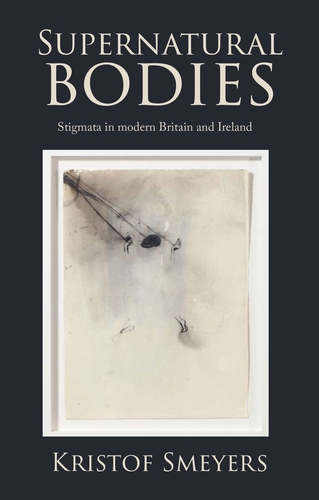
This book is the first in-depth study of the changing perceptions and receptions of supernatural bodies in modern Britain and Ireland. It focuses on one phenomenon that became hotly contested and discussed in the public sphere between 1840 and 1940: the stigmata. In 1874, an Irish reporter asked why the wounds of the crucified Christ on mortal bodies could ‘not be discussed with calmness. without indulging in angry rhetoric’. Supernatural bodies takes that question seriously. It draws on previously unexamined archival materials to place supernatural bodies at the heart of long-lasting discussions about the position of Roman Catholicism in society; the supernatural in modern Christianity and society; the authority of sciences; the relationship between Britain and Ireland, and between Britain and the Continent. Through the lens of stigmata controversies, this book shows how these discussions could converge around supernatural bodies.
The RTE interview of Gillian Rose (audio)
Thanks to Robert Lucas Scott for the link.
Update 21 November: I should have given the link to the transcription published in Theory, Culture and Society in 2008, edited by Vincent Lloyd. It’s good to have both available.
Jacob Chamberlain, Migrant Justice in the Age of Removal: Rights, Law, and Resistance against Territory’s Exclusions – University of Georgia Press, March 2025
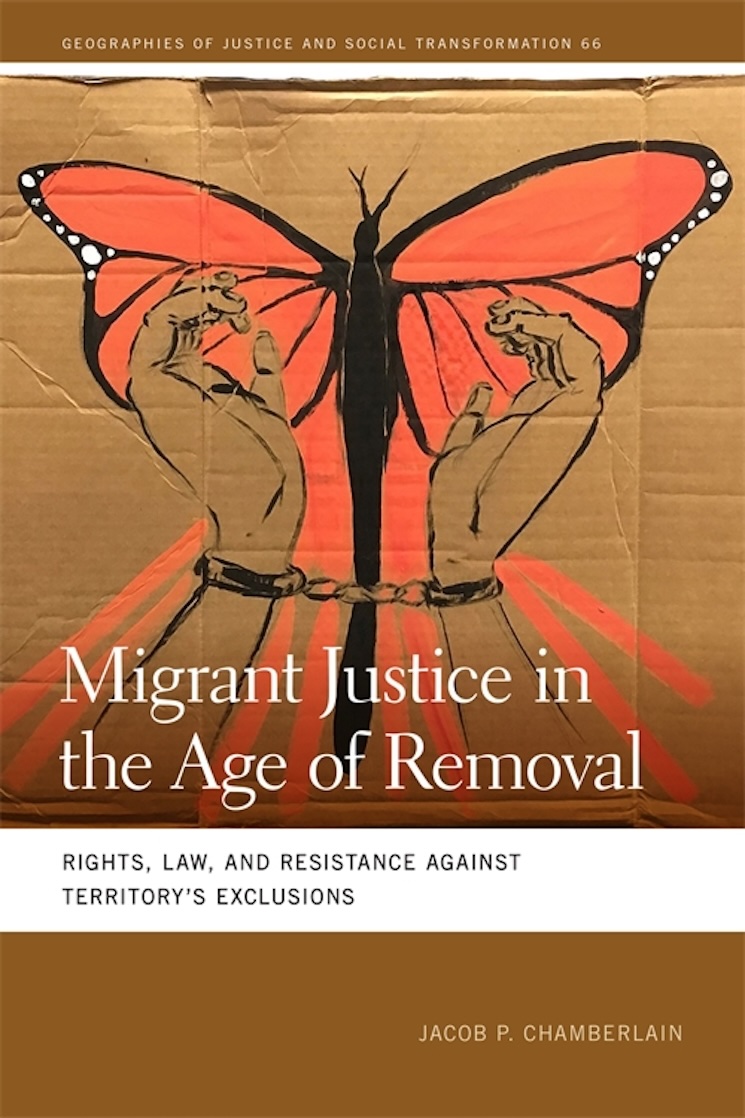
Migrant Justice in the Age of Removal details the story of Migrant Justice, a migrant rights organization led by undocumented workers in a complicated and perhaps unexpected location: Vermont, U.S. This compelling story, which includes U.S. Immigration and Customs Enforcement’s use of a covert informant to infiltrate the group and deport key members of their community, provides a detailed analysis of the state of immigration enforcement in the country today, alongside an intimate portrait of successful modes of resistance against it.
Migrant Justice has gone on to improve rights for migrants in Vermont and across the country in these incredibly precarious times for migrant activists. This book places Migrant Justice’s activism within what is defined as the Age of Removal, or the last three decades in which immigration enforcement in the U.S. has increasingly used enhanced enforcement mechanisms like the “order of removal,” which aids in the confinement, control, and exploitation of migrants. Migrant Justice’s work also fits within a growing landscape of migrant rights movements that have arisen during this time, and Jacob Chamberlain provides a crucial snapshot of their work to better understand their successful forms of organizing in these contexts. In this confluence of opposing forces, we see egregious abuses against migrant actors, but we also see new and progressively powerful forms of resistance that are posing a specific challenge to bordered and territorially based limitations on rights and democracy. Migrant Justice’s work expands rights access to people, regardless of citizenship, which essentially works towards a deterritorialization of rights access—or the opening of sociopolitical belonging to new actors.
Update: there is a review essay on the book by Leah Montange in Antipode (open access pdf)
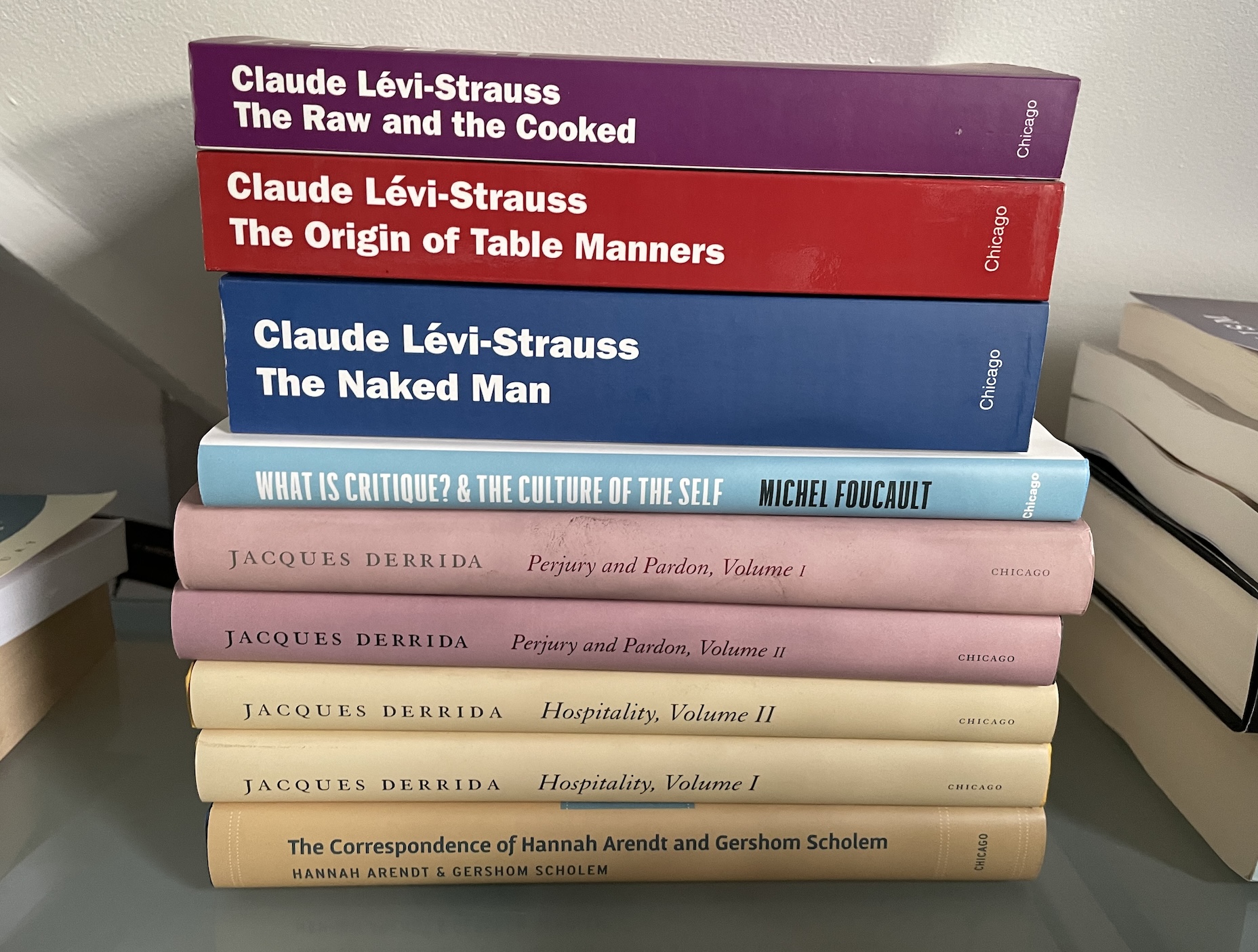
Books sent in recompense for review work for University of Chicago Press – three of the four volumes of Claude Lévi-Strauss’s Mythologies (the other one is out of print), Michel Foucault, What is Critique? and The Culture of the Self, the four most recent volumes of the Derrida seminars, and The Correspondence of Hannah Arendt and Gershom Scholem.
Christopher Falzon, Foucault and the History of Philosophical Transcendence: Freedom, Nature and Agency – Bloomsbury, August 2024
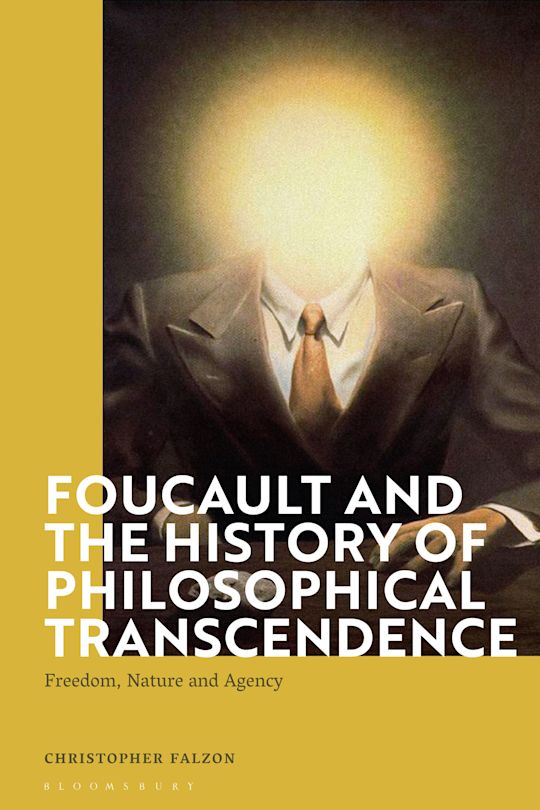
In an original approach to Foucault’s philosophy, Christopher Falzon argues for a reading of Foucault as a philosopher of finite transcendence, and explores its implications for ethics.
In order to distinguish Foucault’s position, Falzon charts the historical trajectory of transcendence as a philosophical concept, starting with the radical notion of transcendence that was introduced by Plato, and which reappears in various forms in subsequent thinkers from the Stoics to Descartes, and from Kant to Sartre. He argues that Foucault’s critique of the transcendent subject of humanism is a rejection not of transcendence per se but of radical transcendence in its distinctively modern form. As such, he shows how Foucault’s conceptualisation of transcendence as finite enables a picture of the human being as neither fully determined nor a creature of infinite possibilities, but as both subject and object, affected by but also able to affect the world.
With the notion of finite transcendence Falzon captures the essence of Foucault’s unique philosophy and provides a new insight into his contribution to ethics. Demonstrating its contemporary relevance, Foucault and the History of Philosophical Transcendence further explores the potential application of Foucault’s approach to the current ecological crisis.
Thanks to Foucault News for the link.
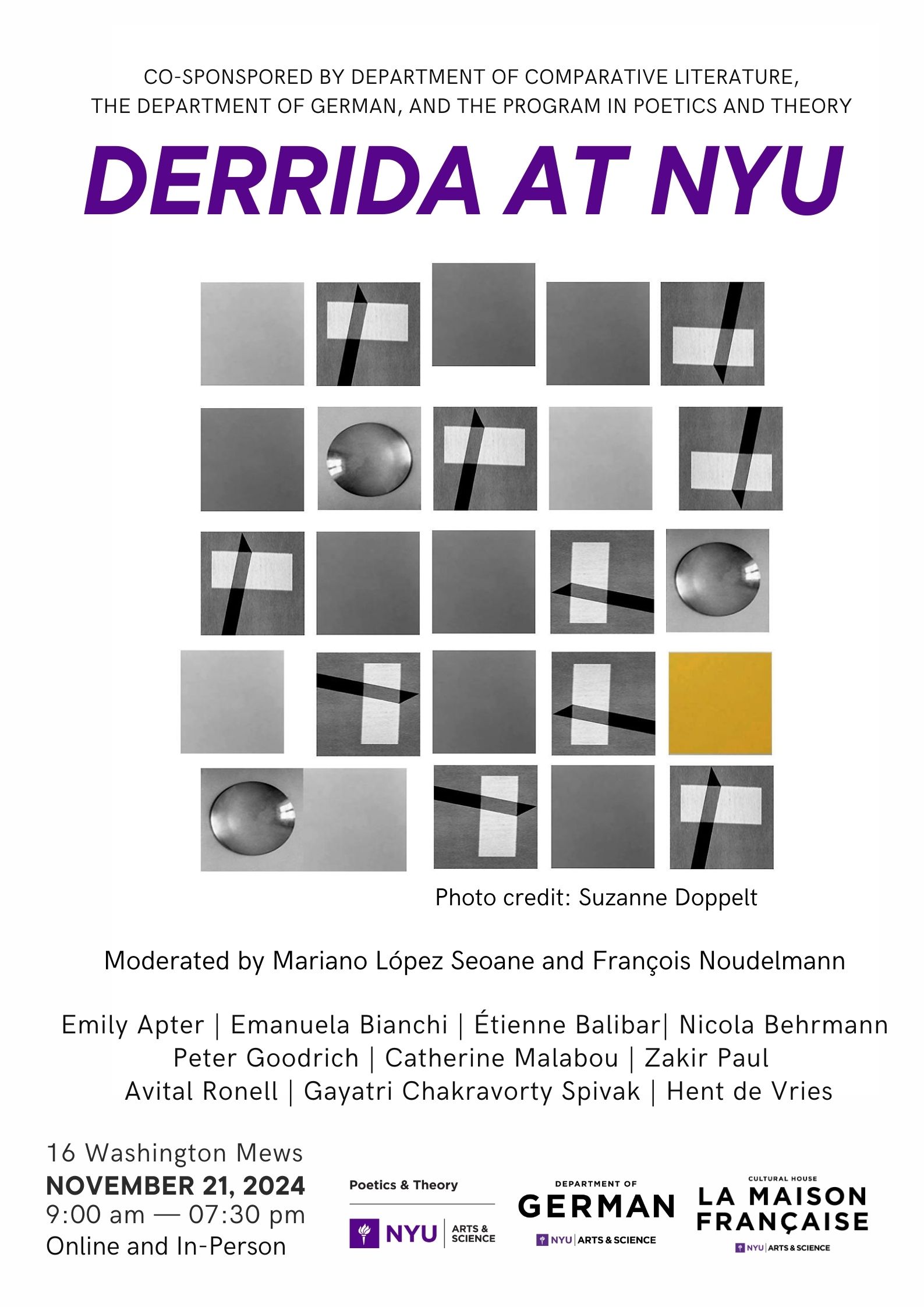
Derrida at NYU, 21 November 2024 – online and in-person