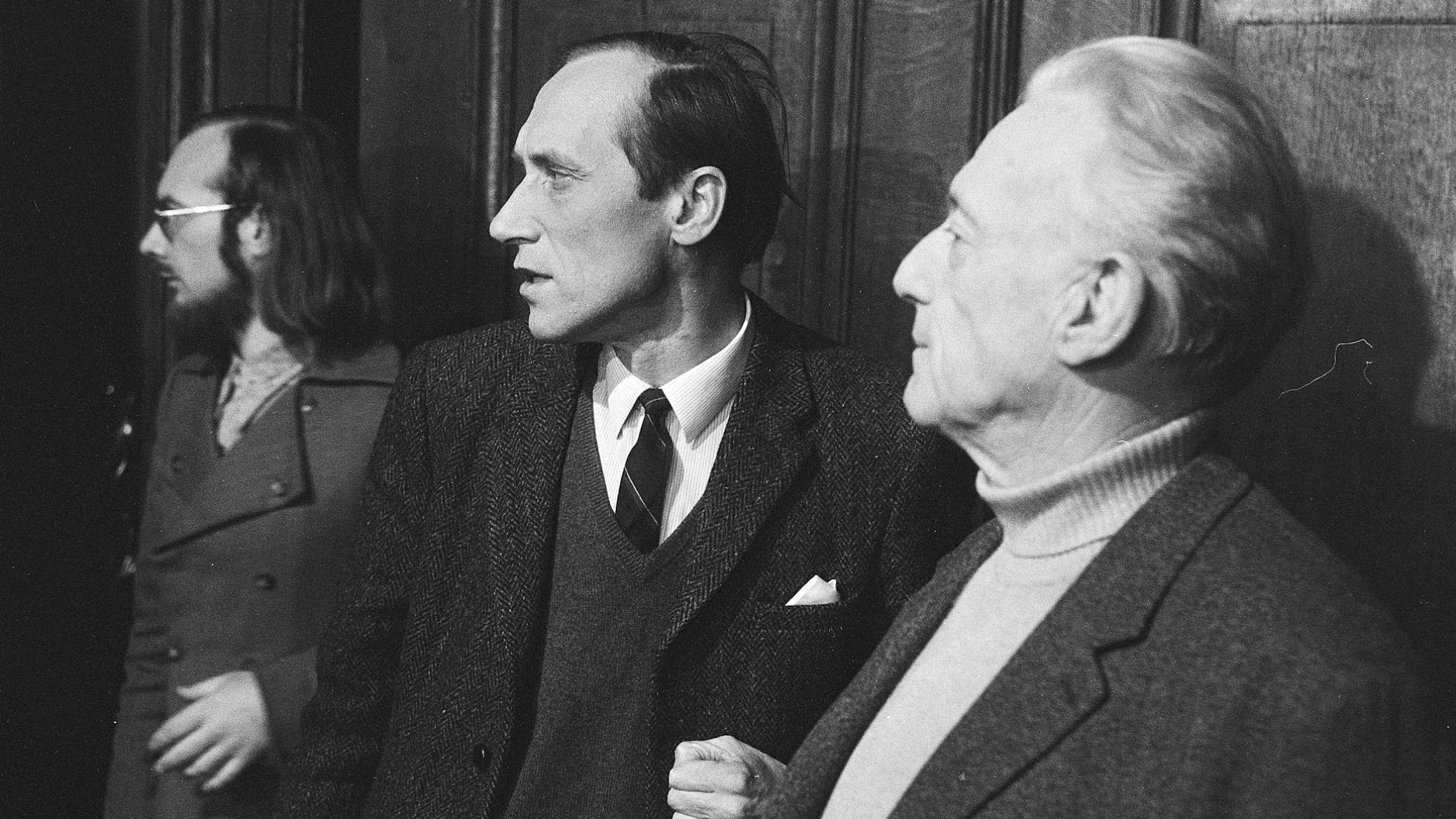
Robcis traces how the Catalan psychiatrist François Tosquelles, together with his colleagues and patients in the village of St-Alban-sur-Limagnole, transformed the practice and theory of psychiatry during and after the Second World War. They did this by turning towards the institution of the hospital itself, and considering how psychiatric care could be rooted in an ethical and political critique of social conditions. This resulted in a new movement called institutional psychotherapy, which Robcis traces between Spain, France, and Algeria, and in the work and legacies of influential thinkers such as Jean Oury, Frantz Fanon, Félix Guattari, and Michel Foucault.
To become sovereign, one must be seen as sovereign. In other words, a sovereign must appear—philosophically, politically, and aesthetically—on the stage of power, both to themselves and to others, in order to assume authority. In this sense, sovereignty is a theatrical phenomenon from the very beginning.
This book explores the relationship between theater and sovereignty in modern political theory, philosophy, and performance. Arthur Bradley considers the theatricality of power—its forms, dramas, and iconography—and examines sovereignty’s modes of appearance: thrones, insignia, regalia, ritual, ceremony, spectacle, marvels, fictions, and phantasmagoria. He weaves together political theory and literature, reading figures such as Plato, Aristotle, Montaigne, Leibniz, Kant, Hegel, Schmitt, Benjamin, Derrida, and Agamben alongside writers including Shakespeare, Cervantes, Schiller, Melville, Valéry, Kafka, Ionesco, and Genet.
Formally inventive and deeply interdisciplinary, Staging Sovereigntyoffers a surprising and original narrative of political modernity from early modern political theology to the age of neoliberal capitalism.
Update August 2025: There is an interview about the book with Richard B. Gibson at the Blog of the APA. Thanks to dmf for this link. There is also a review by K. Daniel Cho at Theory, Culture & Society.
The book is in English, but I can only find this abstract:
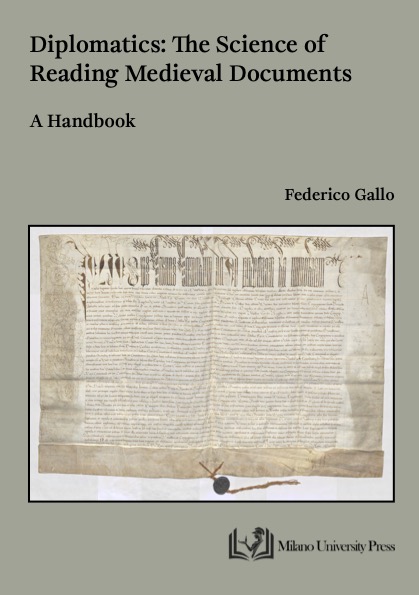
La Diplomatica è la scienza che studia i documenti, in modo particolare quelli di epoca medioevale. La parola ‘Diplomatica’ non ha nulla a che vedere con la diplomazia: il termine deriva da ‘diploma’, ossia un testo scritto certificato, dal valore giuridico. Gli oggetti di studio della disciplina sono i documenti pubblici e privati, le loro caratteristiche esterne ed interne, il linguaggio, la cronologia, la produzione, la trasmissione, la registrazione, l’edizione. Questo manuale colma un vuoto notevole negli studi di Diplomatica perché fornisce finalmente al pubblico di lingua inglese la possibilità di conoscere l’affascinante universo della documentazione medievale.
Neoliberals should have seen the end of the Cold War as a total victory—but they didn’t. Instead, they saw the chameleon of communism changing colors from red to green. The poison of civil rights, feminism, and environmentalism ran through the veins of the body politic and they needed an antidote.
To defy demands for equality, many neoliberals turned to nature. Race, intelligence, territory, and precious metal would be bulwarks against progressive politics. Reading and misreading the writings of their sages, Friedrich Hayek and Ludwig von Mises, they articulated a philosophy of three hards—hardwired human nature, hard borders, and hard money—and forged the alliances with racial psychologists, neoconfederates, ethnonationalists, and goldbugs that would become known as the alt-right.
Following Hayek’s bastards from Murray Rothbard to Charles Murray to Javier Milei, we find that key strains of the Far Right emerged within the neoliberal intellectual movement not against it. What has been reported as an ideological backlash against neoliberal globalization in recent years is often more of a frontlash. This history of ideas shows us that the reported clash of opposites is more like a family feud.
“A creative and engaging intellectual detective story that cuts through the far right’s smoke-and-mirrors claims of rupture and novelty, tracing the movement’s deep neoliberal roots and exposing a shared set of supremacist beliefs about which lives have value and which lives do not. Ideas have consequences and very few scholars take the history of ideas as seriously as Slobodian, even when the ideas themselves are absurd, patently false, and deeply dangerous.” – Naomi Klein, author of Doppelganger and The Shock Doctrine
With the advent of print in the fifteenth century, Europe’s cultural elite assembled personal libraries as refuges from persecutions and pandemics. Andrew Hui tells the remarkable story of the Renaissance studiolo—a “little studio”—and reveals how these spaces dedicated to self-cultivation became both a remedy and a poison for the soul.
Blending fresh, insightful readings of literary and visual works with engaging accounts of his life as an insatiable bookworm, Hui traces how humanists from Petrarch to Machiavelli to Montaigne created their own intimate studies. He looks at imaginary libraries in Rabelais, Cervantes, Shakespeare, and Marlowe, and discusses how Renaissance painters depicted the Virgin Mary and St. Jerome as saintly bibliophiles. Yet writers of the period also saw a dark side to solitary reading. It drove Don Quixote to madness, Prospero to exile, and Faustus to perdition. Hui draws parallels with our own age of information surplus and charts the studiolo’s influence on bibliographic fabulists like Jorge Luis Borges and Umberto Eco.
Beautifully illustrated, The Study is at once a celebration of bibliophilia and a critique of bibliomania. Incorporating perspectives on Islamic, Mughal, and Chinese book cultures, it offers a timely and eloquent meditation on the ways we read and misread today.
Using the recent turn to ecology as a starting point, Hannah Richter and Elisa Randazzo bring ecological thinking into contact with Critical Indigenous Studies, in which awareness of the necessity for sustainable relations between humans and non-humans has long preceded Western Anthropocene discourse. Currently, the drastic ecological changes labelled as ‘the Anthropocene’ not only increasingly shape the political awareness and the priorities of citizens and governments, but also inform a large body of social scientific scholarship.
Indigenous scholarship and practice, in particular ecological adaptability, is intrinsically related to power structures and political struggle – hence indigenous understanding of Anthropocene discourses are intertwined with discourses of colonialism and political contestation. This book problematises the depoliticising character of Western Anthropocene discourses in relation to indigenous ecologies. The authors reveal how the anti-colonial struggles of Indigenous communities and the unequal distribution of responsibilities for and suffering from ecological change, are concealed and devalued in Western discourses of the Anthropocene.
A deep dive into the nature of translation from one of its most acclaimed practitioners
Avoiding theoretical debates and clichéd metaphors, award‑winning translator Damion Searls has written a fresh, approachable, and convincing account of what translation really is and what translators actually do. As the translator of sixty books from multiple languages, Searls has spent decades grappling with words on the most granular level: nouns and verbs, accents on people’s names, rhymes, rhythm, “untranslatable” cultural nuances. Here, he connects a wealth of specific examples to larger philosophical issues of reading and perception. Translation, he argues, is fundamentally a way of reading—but reading is much more than taking in information, and translating is far from a mechanical process of converting one word to another. This sharp and inviting exploration of the theory and practice of translation is for anyone who has ever marveled at the beauty, force, and movement of language.
I’ve done a bit of tidying up and made a few additions to the ‘Lefebvre resources‘ page on this site.
It includes Where to start with reading Henri Lefebvre? – my guide to his books in English, to a few untranslated ones, and major works on him. But there are a few other things on the page which may be of interest, including a couple of videos (one below) and audio, an unpublished text, and links to some posts on this site about him, and the translations of his in English I’ve been involved with.
There are a lot of other resource pages on this site, including a separate page for resources on Foucault (lots of links, some images, translations, a bibliography of his collaborative projects, audio and video links, etc.) – but also things on Althusser, Axelos, Bataille, Binswanger, Sartre, and others, and a little on some political issues around Ebola, Boko Haram and covid-19, and some writing and publishing advice.
The first English-language biography of Henri Bergson, the French philosopher who defined individual creativity and transformed twentieth-century thought
At the dawn of the twentieth century, Henri Bergson (1859–1941) became the most famous philosopher on earth. Where prior thinkers sketched out a deterministic, predictable universe, he asserted the transformative power of individual consciousness and creativity. An international celebrity, he made headlines around the world debating luminaries like Bertrand Russell and Albert Einstein about free will and time. The vision of creative evolution and freedom he presented was so disruptive that the New York Times branded him “the most dangerous man in the world.”
In Herald of a Restless World, Emily Herring recovers how Bergson captivated a society in flux. She shows how his celebration of the time-bending uniqueness of individual experience struck a chord with those shaken by modern technological and social change. Long after he faded from public view, his insights into memory, time, laughter, and the creative continue to shape how we see the world around us.
Herald of a Restless World is an electrifying portrait of a singular intellect. Bergson’s extraordinary insight into life’s fundamental questions remains urgent and relevant to this day.
Pleased to hear that the Spanish translation of Foucault’s Last Decade (Polity Press, 2016) has just been published. Many thanks to Albert Fuentes for the translation, and Melusina and Polity for publishing this.
Una guía imprescindible de la ingente obra que Foucault produjo entre 1974-1984. El 26 de agosto de 1974, Michel Foucault terminó de trabajar en Vigilar y castigar y ese mismo día comenzó a escribir el primer volumen de su Historia de la sexualidad. Poco menos de diez años más tarde, el 25 de junio de 1984, tras la aparición del tercer volumen, el filósofo moriría produciéndose así un cierre forzoso y prematuro de su gran y último proyecto. Se trata de los diez años más fascinantes de su carrera iluminados a través de losescritos, artículos, conferencias y cursos impartidos en el Collège de France, gran parte de los cuales han permanecido inéditos.
Foucault’s Last Decade is obviously on the final years of Foucault’s life, but it was the first of the four I wrote. I then went back to earlier periods of his work. All the books were published by Polity.