Banu Bargu, Disembodiment: Corporeal Politics of Radical Refusal – Oxford University Press, November 2024

Banu Bargu, Disembodiment: Corporeal Politics of Radical Refusal – Oxford University Press, November 2024

Disembodiment examines self-destruction, self-injury, and self-endangerment as actions that express the injustices and indignities of the life conditions of impoverished, dispossessed, and dominated peoples. Author Banu Bargu troubles the dominant approach that treats these acts as individual pathologies, cries for help, and signs of despair. Instead, she suggests that they should be read as unconventional performances of resistance and refusal that are erased, marginalized, and distorted by metanarratives of history as progress and of agency as freedom and intentionality. Situating these practices in a dialectic of desubjectivation and counter-subjectivation, Bargu argues that they dispel a western metaphysics of subjecthood and invoke alternative ways of being human and of relating to one’s body and the world. Pursuing philosophical questions about the meaning of agency, the direction of history, and the limits of the political generated by the forfeiture of the body, Bargu offers a stark and unforgiving critique of our present. 

As a work in global critical theory whose normative compass is the suffering body, Disembodiment brings together corporeal enactments of defiance and refusal from the global south with major thinkers of western modernity and prominent critical-theoretical traditions of the twentieth century. Bargu moves from such historical precedents as the suicides of enslaved Africans during the transatlantic crossing, the hunger strikes of woman suffragists in England’s prisons, and Gandhian fasting practices in the Indian anticolonial struggle to contemporary examples that include the hunger and thirst strikes in the Maze and Guantánamo, the self-incineration of Mohammed Bouazizi, and the lip-sewing practices of migrants and asylum seekers in detention centers and border zones of the global north today. She takes the reader on an unsettling journey that delineates the emergence of a corporeal repertoire of contention. Performed by the powerless who find themselves in crisis, this repertoire is built on the expressive agency of the body and its ability to irrupt, undoing its training in composure and radicalizing the meaning of dignity. 

Disembodiment presents a bold materialist theory of corporeal agency, which upholds the body’s powers as fundamentally rebellious and ultimately undomesticatable

Posted in Uncategorized | 1 Comment

Derrida Seminars: A Digital Repository of Jacques Derrida’s Teaching Notes

Derrida Seminars: A Digital Repository of Jacques Derrida’s Teaching Notes

Several of Derrida’s Seminars (and some related material) have been edited over the past several years (Galilée and then Seuil) and translated with University of Chicago Press. I’ve only looked at a few things at the IMEC archive – there are also papers at University of California, Irvine. Derrida’s library is in Princeton, and I’ve looked at a few things remotely (a planned trip was cancelled due to the pandemic, and I’ve not managed to get there since.) They are now digitising all the teaching material and making it available on this site. An extraordinary and extraordinarily useful project.

Here’s part of the explanation:

However, while this work of transcription, editing, and translation is ongoing, thanks to the collaboration of the UC Irvine Libraries and the Institut Mémoires des Éditions Contemporaines (IMEC), the Princeton University Library has made available a digital repository of Derrida’s seminar papers, hoping to increase access to these materials, and to make them as broadly and openly available as possible for students, scholars, and readers around the world. In this way students and scholars are able to follow the most intimate threads of Derrida’s thinking such as he caringly and meticulously wove for his audiences in the classroom. 

The pages of this archive span more than 40 years of Derrida’s teaching career, offering the secrets and insights of a lifetime to be unpacked, nourished and contextualized, with the purpose of preserving Jacques Derrida’s memory, but also in the hope of enlarging the field of what it is possible to think.

Update 24 October 2024: David Beer shared this discussion on the seminars from a few years ago

Posted in Jacques Derrida, Uncategorized | Leave a comment

Emiliano Bevilacqua, Mariano Longo, Michael Hviid Jacobsen (eds.), Love and Sexuality in Social Theory – Routledge, November 2024

Emiliano Bevilacqua, Mariano Longo, Michael Hviid Jacobsen (eds.), Love and Sexuality in Social Theory – Routledge, November 2024

Just a silly priced hardback at the moment, unfortunately.

Love and Sexuality in Social Theory considers the role that love and sexuality play in private and public life. 

Drawing on both classical and contemporary social theory, this book presents both theoretical and empirical studies of love and sexuality as social factors, from the earliest reconstructions of modern emotional life to the most recent analyses of liquid love. With attention to the consequences that passions and desires have both on morals and behaviour, it departs from the analysis of society in terms of the division of labour and utilitarian mechanisms to consider how a society based on performances values human energy and emotional behaviour in a contradictory way. This book, therefore, presents and discusses classic authors, from Georg Simmel and Pitirim Sorokin to Marianne Weber and Simone De Beauvoir, through the work of Erving Goffman and ending with contemporary authors such as Michel Foucault, Anthony Giddens, Zygmunt Bauman, Ulrich Beck, and Eva Illouz.

By presenting love as the social foundation of altruism, an essential element in modern conceptions of subjectivity, and a force shaping intimacy and contemporary social life, this book will appeal to scholars of sociology, particularly those interested in social theory and the sociology of emotions.

Posted in Uncategorized | Leave a comment

Heinrich Meier, Nietzsche’s Legacy: Ecce Homo and The Antichrist, Two Books on Nature and Politics – University of Chicago Press, trans. Justin Gottschalk, March 2024, and review at NDPR

Heinrich Meier, Nietzsche’s Legacy: Ecce Homo and The Antichrist, Two Books on Nature and Politics – University of Chicago Press, trans. Justin Gottschalk, March 2024

I’ve posted about this book before, but it is reviewed by Joshua Fox at NDPR

A reappraisal of Ecce Homo and The Antichrist within Nietzsche’s oeuvre.

Nietzsche’s Legacy takes on the most challenging and misunderstood works in Nietzsche’s oeuvre to illuminate his view of what a philosopher is and what constitutes a philosophic life. Interpreting Ecce Homo and The Antichrist as twin books meant to replace the abandoned Will to Power project, Heinrich Meier recovers them from the stigma of Nietzsche’s late mental collapse, showing that these works are, above all, a lucid self-assessment. The carefully written pair contains both the highest affirmation—the Yes of the “revaluation of all values”—and the most resolute negation—the No to Christianity. How the Yes and the No go together, how the relation between nature and politics is to be determined, how Nietzsche’s intention is governing the political-philosophical double-face: this is the subject of Nietzsche’s Legacy, which opens up a new understanding of Nietzsche’s philosophy as a whole.

Posted in Uncategorized | Leave a comment

Nat Dyer, Ricardo’s Dream: How Economists Forgot the Real World and Led Us Astray – Bristol University Press, November 2024

Nat Dyer, Ricardo’s Dream: How Economists Forgot the Real World and Led Us Astray – Bristol University Press, November 2024

From the workings of financial markets to our response to the ecological crisis, economic theory shapes the world. But where do these ideas come from?

Ricardo’s Dream tells the fascinating story of David Ricardo, Adam Smith’s only real rival as the ‘founder of economics’. The wealthiest stock trader of his day, Ricardo introduced the study of abstract models to economics. He also developed the theory of trade that underpinned globalization and hides, behind its mathematical facade, a history of power, empire, and slavery.

Brimming with fresh ideas and stories, Ricardo’s Dream shows how too many economists, from Ricardo’s day to our own, have turned away from observing the real world and led us astray.

Posted in Uncategorized | Leave a comment

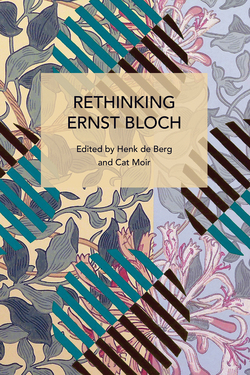
Henk de Berg and Cat Moir (eds.), Rethinking Ernst Bloch – Haymarket, October 2024

Henk de Berg and Cat Moir (eds.), Rethinking Ernst Bloch – Haymarket, October 2024

Rethinking Ernst Bloch offers a critical reassessment of the thought of Ernst Bloch, best-known for his groundbreaking study The Principle of Hope and one of the most significant European thinkers and public intellectuals of the twentieth century. It explores Bloch’s life, work and reception; his debt to Marx and Hegel; his central concepts of hope and utopia; his affinities with philosophers such as Gramsci and Žižek; and his radical reframing of our understanding of history, society and culture. Above all, this volume examines the relevance of Bloch’s ideas today, in a world still shot through with economic inequality and social injustice.

Contributors are: Agata Bielik-Robson, Ivan Boldyrev, Henk de Berg, Sam Dolbear, Vincent Geoghegan, Holger Glinka, Loren Goldman, Douglas Kellner, Cat Moir, Jan Rehmann, Nina Rismal, Johan Siebers, and Peter Thompson

Posted in Uncategorized | Leave a comment

British Library update

British Library update – more of the collection available, remote ordering possible, with more detail here.

My anecdotal experience recently, in the two rooms I’ve used most over the past few years (Rare Books and Asian and African Studies) is that the new online ordering is a bit laborious, but that the staff are very helpful in getting you to see what you want. I was asking for something quite difficult in one case. It’s not as straightforward as it used to be, still, but certainly an improvement on earlier this year.

Posted in Uncategorized | Leave a comment

Wim Carton and Andreas Malm, Overshoot: How the World Surrendered to Climate Breakdown – Verso, October 2024

Wim Carton and Andreas Malm, Overshoot: How the World Surrendered to Climate Breakdown – Verso, October 2024

A devastating critique of the forces propelling us beyond critical temperature limits, by the bestselling author of How to Blow Up a Pipeline

The world is on the cusp of one and a half degrees of warming – just the rise it has committed itself to avoiding. Heat at such levels would be intolerable. Even before one and a half, seasons of climate disaster have struck with ever more devastating force, and yet a notion has taken hold that the cause is now lost: the intolerable has become unavoidable. The limit will be overshot – perhaps two degrees as well – and the best we can do is cool down the Earth at some later point, towards the end of the century, by means of technologies not yet proven.

How did this happen? How could the idea of overshoot gain such traction? What forces are driving us into a climate that people – particularly poor people in the global South – won’t be able to cope with? In Overshoot: How the World Surrendered to Climate Breakdown, Andreas Malm and Wim Carton present a history of the present phase of the crisis, likely to extend decades into the future, as the fossil fuel industry swims in the largest profits ever made. Money continues to flow into the construction of pipelines, platforms, terminals, mines – assets that will have to be destroyed for the planet to remain liveable. Too much heat has become officially acceptable because such revolutionary destruction is not. But should the rest of us abide by that priority?

Unflinchingly critical of business-as-usual and the calls for surrender to it, sweeping in scope, stirring and sobering, Overshoot lays out the stakes for the climate struggle in the years ahead.

Posted in Uncategorized | Leave a comment

Sharad Chari, Apartheid Remains – Duke University Press, 2024 (open access introduction; New Books discussion)

Sharad Chari, Apartheid Remains – Duke University Press, May 2024

The introduction is open access here

New Books discussion with Geoffrey Gordon – thanks to dmf for this link

In Apartheid Remains, Sharad Chari explores how people handle the remains of segregation and apartheid in South Africa as witnessed through portals in an industrial-residential landscape in the Indian Ocean city of Durban. Through long-term historical and ethnographic research, Chari portrays South Africa’s twentieth century as a palimpsest that conserves the remains of multiple pasts, including attempts by the racial state to remake territory and personhood while instead deepening spatial contradictions and struggles. When South Durban’s denizens collectively mobilized in various ways—through Black Consciousness politics and other attempts at refusing the ruinous articulation of biopolitics, sovereignty, and capital—submerged traditions of the Indian Ocean and the Black Atlantic offered them powerful resources. Of these, Chari reads Black documentary photography as particularly insightful audiovisual blues critique. At the tense interface of Marxism, feminism, and Black study, he offers a method and form of geography attentive to the spatial and embodied remains of history. Apartheid Remains looks out from South Durban to imaginations of abolition of all forms of racial capitalism and environmental suffering that define our planetary predicament.

Posted in Uncategorized | Leave a comment

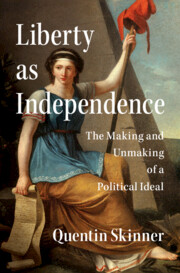
Quentin Skinner, Liberty as Independence -Cambridge University Press, February 2025 

Quentin Skinner, Liberty as Independence – Cambridge University Press, February 2025 

What does liberty entail? How have concepts of liberty changed over time? And what are the global consequences? This book surveys the history of rival views of liberty from antiquity to modern times. Quentin Skinner traces the understanding of liberty as independence from the classical ideal to early modern Britain, culminating in the claims of the Whig oligarchy to have transformed this idea into reality. Yet, with the Whig vision of a free state and civil society undermined by the American Revolution of 1776, Skinner explores how claims that liberty was fulfilled by an absence of physical or coercive restraint came to prominence. Liberty as Independence examines new dimensions of these rival views, considering the connections between debates on liberty and debates on slavery, and demonstrating how these ideas were harnessed in feminist discussions surrounding limitations on the liberty of women. The concept of liberty is inherently global, and Skinner argues strongly for the reinstatement of the understanding of liberty as independence.

Thanks to Tom Ashby for the link – and noting that the cover shows “La liberté” (c.1793-1794) by Nanine Vallain

Posted in Quentin Skinnner | Leave a comment