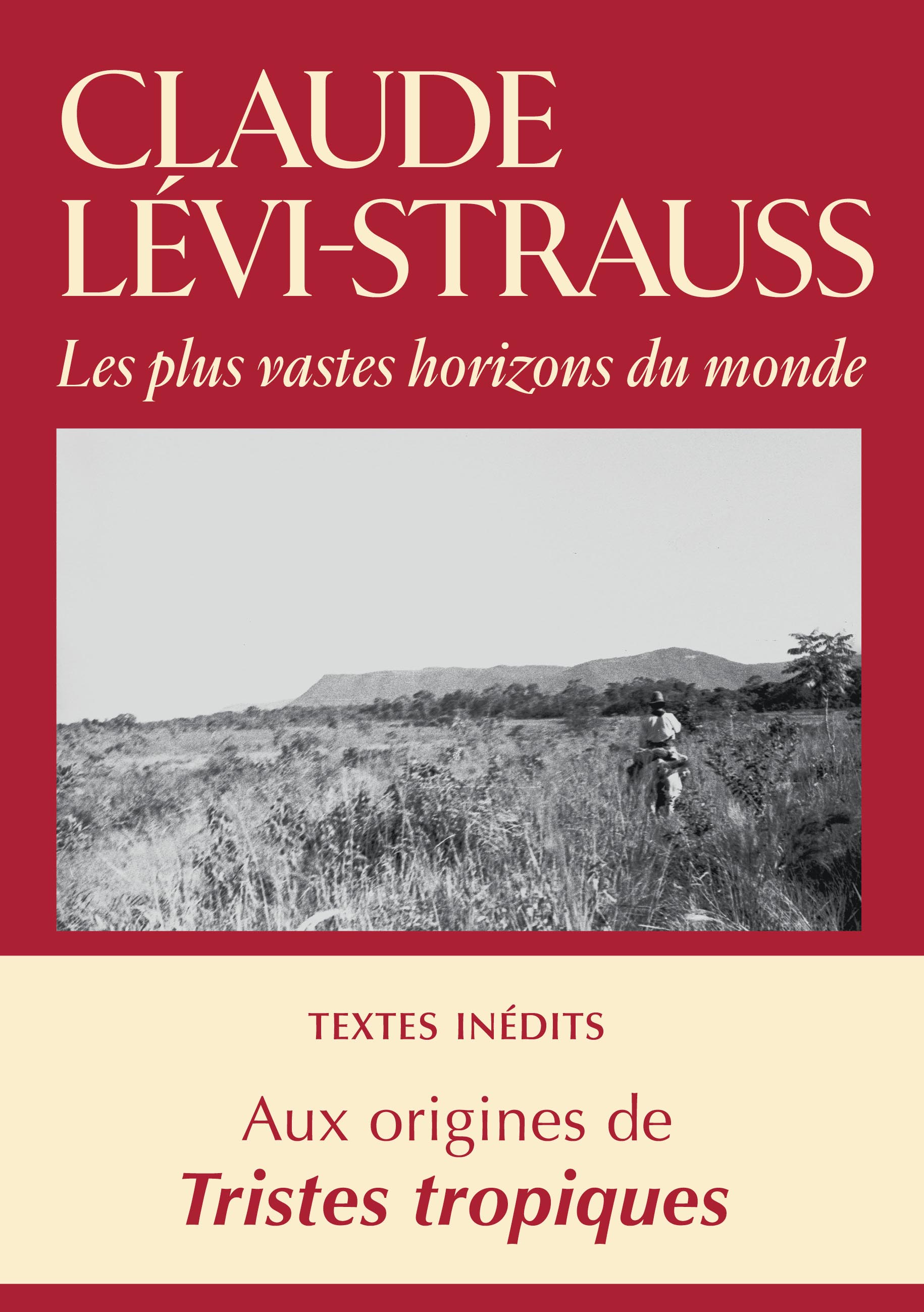
Les plus vastes horizons du monde rassemblent dix textes de Claude Lévi-Strauss pour la plupart inédits en français.
Publiés entre 1935 et 1942 en traduction portugaise dans diverses revues au Brésil ou délibérément relégués à l’oubli par l’auteur mûr, ces écrits se lisent ensemble pourtant comme un vrai roman de formation du grand maître de l’anthropologie du XXe siècle. Sa volonté de prendre le large, son ouverture sur le monde et vers l’autre sont formidablement présents dans ce recueil.
Cet ouvrage exceptionnel est illustré de nombreux documents iconographiques, dont certains méconnus du grand public, ainsi que de cinq films ethnographiques co-réalisés avec sa première épouse, Dina Dreyfus, et restaurés spécialement pour cette édition.
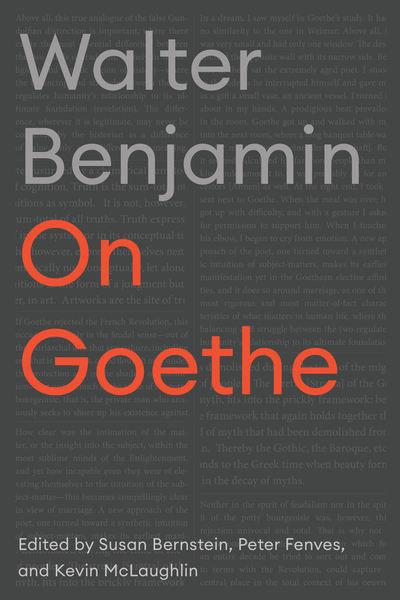
Walter Benjamin, On Goethe – ed. Susan Bernstein, Peter Fenves and Kevin McLaughlin, Stanford University Press, April 2025
On Goethe contains the full range of Walter Benjamin’s reflections on the central figure in modern German culture. The writings in this volume—newly translated, fully annotated, and framed by an extensive introduction—display a variety of styles and cover a vast array of topics. The collection revolves around two strikingly different essays. Whereas “Goethe’s Elective Affinities” develops a theory of critique in which a work is illuminated wholly from within itself, an article Benjamin wrote on Goethe for the Soviet Encyclopedia represents his first large-scale attempt to elaborate an historical-materialist methodology. The other thirty translations stand in similarly productive tension with one another. Some are concerned with concepts of beauty and categories of the aesthetic, others with the relation of art to politics and the status of “classical authors” in contemporary culture, and still others with what remains of humanistic traditions in the wake of their disappearance under fascist regimes and what synthesis is required for the construction of an historical object. The volume provides a glimpse into the laboratory of Benjamin’s thought, while granting readers a series of insights into the epochal phenomena that gather around the name “Goethe.”
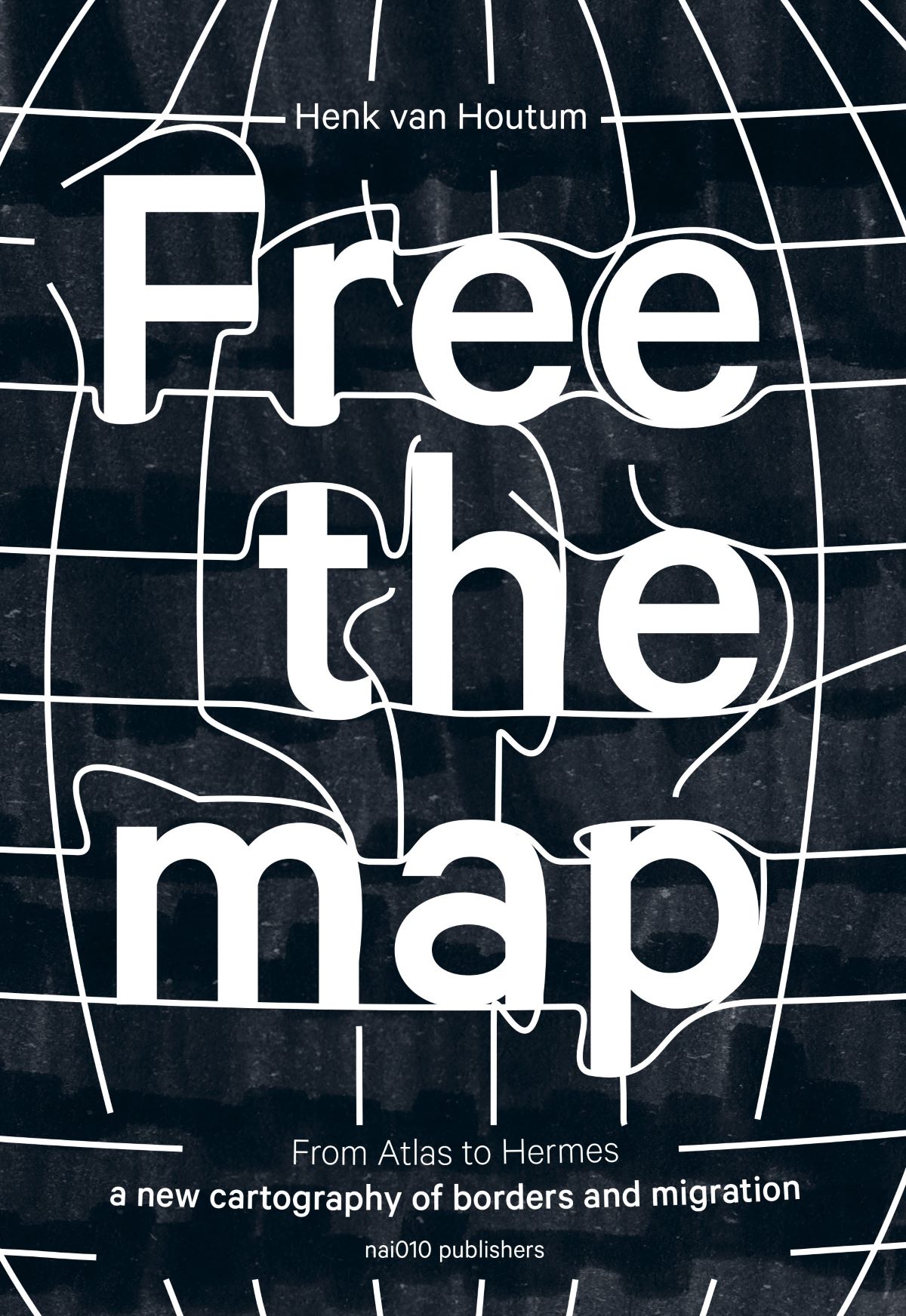
‘Map attack! In Free the Map, a new publication by Henk van Houtum, traditional maps are challenged and new cartographic stories and representations are discussed and encouraged. A must for our readership.’ Defactoborders
> An innovative cartography on borders and migration > With exciting mapping assignments for Maplabs and education > On counter-maps showing human relations, experiences, and connections
A map is a visual story of the world. It feeds our imagination and shapes our view of the world. A standard atlas, however, predominantly tells only one story, that of the nation-state. It depicts a world in which people are uniformly packed into national containers, enclosed by borders, and in which migration is often represented as threatening invasion arrows.
Free the Map goes beyond this narrow, state-centric cartography. The book argues for a new cartographic story: a Hermes – the grandson of Atlas and the god of mobility and human connections. To this end, it discusses several visually compelling, alternative cartographic representations of borders and migration.
Free the Map ends with a call to action. Various artists and cartographers offer exciting ready-to-use Hermes challenges for education and public Maplabs.
Cette édition présentée et annotée des textes publiés par Éric Weil dans la revue Critique, revue générale des publications françaises et étrangères fondée par Georges Bataille en 1946, complète le corpus déjà vaste de l’œuvre philosophique de Weil. Elle situe son activité dans le cadre de la politique éditoriale de la revue et des rapports riches et complexes entre Weil et Bataille. Elle met en évidence la singularité de la pratique philosophique de Weil, entre les grands livres théoriques – Logique de la philosophie, Philosophie politique, Philosophie morale – et les analyses historiques et politiques concrètes des Essais et conférences. Partant de comptes rendus d’ouvrages qui témoignent de la vie intellectuelle de l’après-guerre, Weil traite en profondeur de l’Allemagne, des États-Unis, de l’URSS, de l’Angleterre, de l’avenir de l’Europe, de l’éducation en démocratie … Ses articles et notes critiques ouvrent sur une passionnante diversité de sujets et d’auteurs, connus ou moins connus.
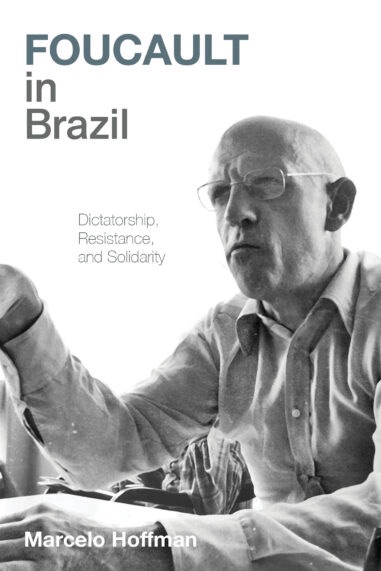
My review of Marcelo Hoffman’s remarkable book Foucault in Brazil is scheduled to appear in Political Theory next year, but is now available online first. Many thanks to Verena Erlenbusch-Anderson for asking me to write the review, and Marcelo for such a good book to discuss.
The review is subscription only, but if you want to read it and you can’t get a copy another way, email me or request on ResearchGate. Here are the first two paragraphs:
Michel Foucault made five visits to Brazil—one in 1965 and four in the mid-1970s. All took place under the military dictatorship that lasted from 1964 until 1985. Each time, Foucault delivered important lectures, some of which were published in his lifetime while others have remained largely unknown. In 1965, he gave a course on his book-in-progress, Les mots et les choses, translated as The Order of Things. The course manuscript is an early draft of the book itself and is due to be edited by Philippe Sabot for the new series of “Cours et travaux” (“Courses and Works”) that precede Foucault’s time at the Collège de France. In 1973, Foucault gave five lectures in Rio de Janeiro, which have been translated as “Truth and Juridical Forms.” In 1974, he gave a number of lectures on social medicine and public health, of which three have been published. In 1975, he gave a course on sexuality, which preceded the first volume of The History of Sexuality the following year and which gave valuable insight into the originally envisioned plan for its subsequent unpublished volumes. It is due to be published in Généalogies de la sexualité. In 1976, his last visit, he gave lectures of which “The Meshes of Power” is the key published source. During these visits, he spent time with academics and students, activists and friends. There were some important interviews with Brazilian interlocutors and discussions following some of the lectures.
In his remarkable book, Foucault in Brazil: Dictatorship, Resistance, and Solidarity, Marcelo Hoffman adds significantly to our understanding of this period of Foucault’s career. It comes after two other important contributions—Heliana de Barros Conde Rodrigues’s Ensaios sobre Michel Foucault no Brasil (2016; translated into French in 2020) and an issue of the Carceral Notebooks on “Foucault and the Politics of Resistance in Brazil,” edited by Hoffman himself in 2017. The lectures that have been published from Foucault’s visits have also been discussed in various works. Hoffman suggests that previous discussions of the lectures have missed the specifically Brazilian context in which they were delivered and that Conde Rodrigues provides a great deal of context but relatively little on the content of the lectures (6). Hoffman’s aim, and his major contribution, is to resituate the intellectual projects Foucault outlines within the specifics of the place in which and the audience to which they were delivered. The political context is brought, importantly, to the fore.
Foucault’s Critical Philosophy of History: Unfolding the Present provides a comprehensive interpretation of Foucault’s work by focusing on its methodological, procedural, and epistemological elements. Adam Takács argues that despite all its thematic and analytical diversity, Foucault’s procedure can be understood within a unified framework based on the historical problematization of the present. This procedure, triggered by current social issues and aiming at a diagnostic screening of the present through a constructive exploration of the past, thus sets in motion not only a specific philosophical vision of history and a research practice often related to the procedures of historiography, but also new ways of critical analysis of social phenomena. This book subjects all these elements to a systematic analysis, demonstrating that within this framework, Foucault’s often debated views on historical realism and constructivism—his methodological choices and ontological commitments—take on a coherent profile, culminating in a timely social critical project of “liberation of knowledge” and “political subjectivation.”
Explores the Canada–US border through a variety of theoretical, cultural and literary approaches
Includes chapters discussing the work of Wayde Compton
Includes chapters discussing Native American Literature and Border Theory
Features case studies of the Detroit River and Twin Towns along the Canada–US and Mexico–US Borders
Includes an afterword by Victor Konrad
Presents a chronology of events at the Canada-US Border
Moving beyond border studies paradigms dominated by the Mexico–US border, this collection aims to contextualise cultures and communities within a wider global understanding of border thinking. It builds on recent considerations of, and changes to, the cultural life of (and across) the Canada–US border, to prioritise theoretical reflections on representations, identities and policies. Approaching the border as a place, a theory, a practice and a process, this collection draws attention to the ways in which aspects of the Canada–US border itself (re)frame discussions of the borderlands as sites that continue to evoke, invoke and provoke ideas of nation and post nationalism; negotiation and imposition; resistance and refusal.
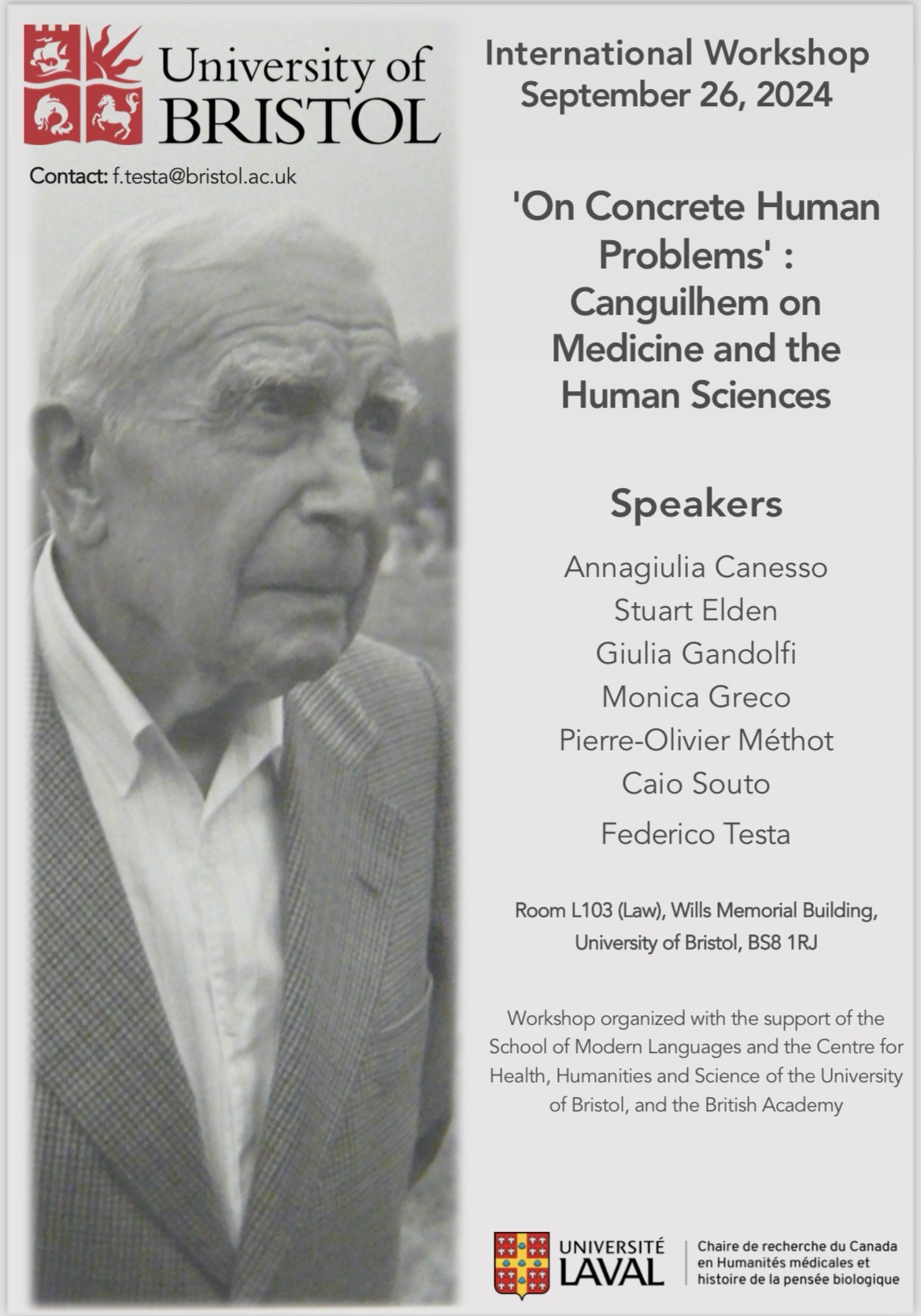
Speakers: Annagiulia Canesso (Università Cattolica del Sacro Cuore/Università degli Studi Padova), Stuart Elden (University of Warwick), Giulia Gandolfi (Università Ca’Foscari Venezia/Karlsruhe), Monica Greco (University of Bath), Pierre-Olivier Méthot (Université Laval), Caio Souto (Universidade Federal do Amazonas), Federico Testa (University of Bristol).
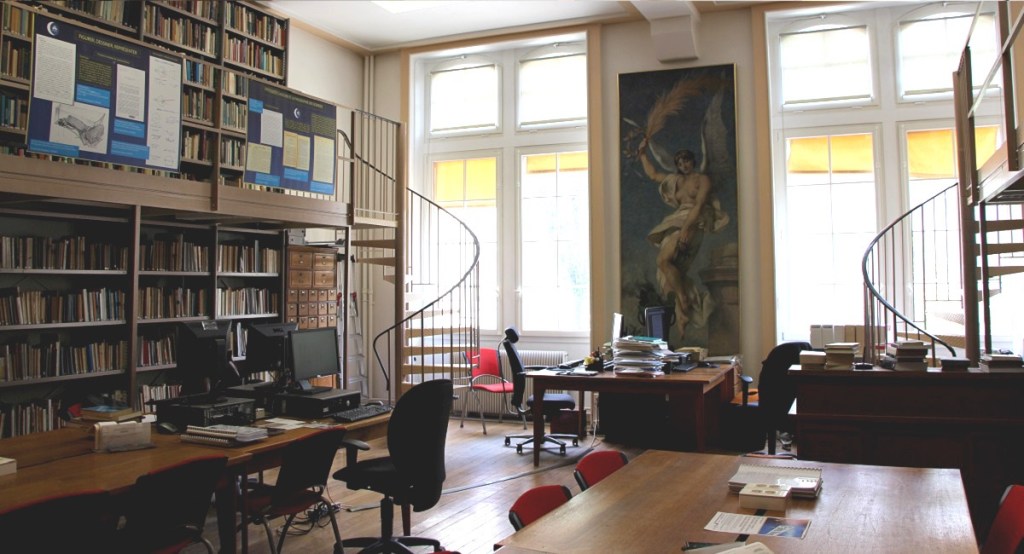
In Paris I followed up on some connections between Koyré and two people I’d worked on before – Georges Canguilhem and Jean Gottmann. The Canguilhem-Koyré link is well known, since both are seen as key figures in a French tradition in epistemology and the history of the sciences. Their connections are the topic of my contribution to the Bristol workshop next week organised by Federico Testa and Pierre-Olivier Méthot. My main source of material was CAPHÉS at the ENS, but I also found something useful at the Archives Nationales. The main Koyré archive is at the Humathèque-Condorcet, but I know that’s a much larger collection which would take a lot of time. I have been avoiding opening up that as a line of research as I know it will take me away from the Indo-European project too much. But the CAPHÉS material was just a morning’s worth of work, at least for now, and it was helpful for the Bristol paper, which I hope will be published in some form.
I also found, while looking for something else in the BnF catalogue, that there are some letters between Koyré and Gottmann, another Russian-born French naturalised citizen who, being Jewish, also spent the war years in the United States. Gottmann was a generation younger, but taught at the École Libre des Hautes Études, which Koyré led for a couple of years. As well as many writings on urban questions, Gottmann was the author of The Significance of Territory, which I found very useful for my own work on that topic and which I wrote about here. I had half-wondered if the correspondence between Koyré and Gottmann might be in Russian, but fortunately for me it’s in French. And it was quite interesting.
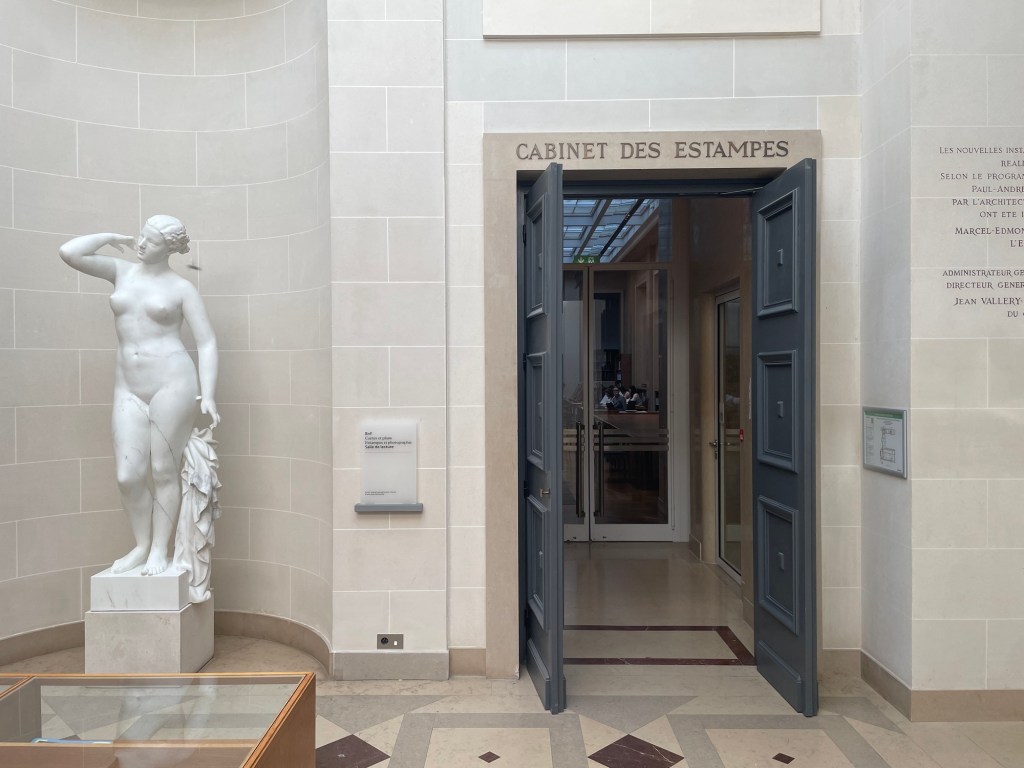
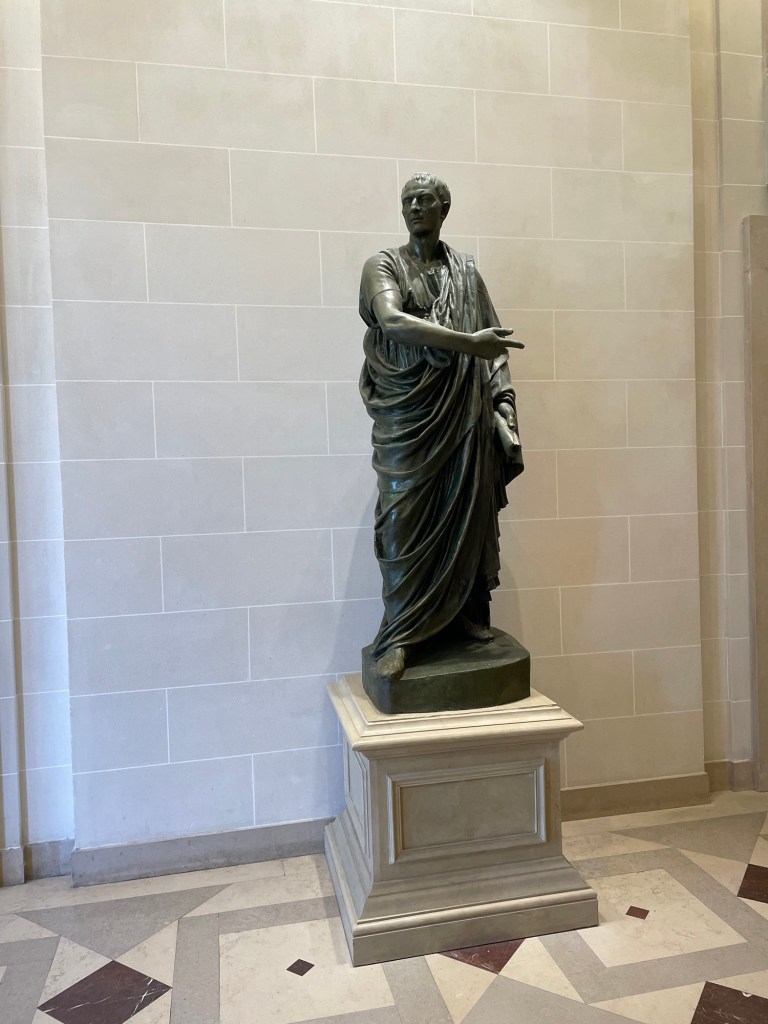
It was most revealing for Koyré’s role as secretary general of the ELHE, since most of the letters are from him. (There is little correspondence in the Koyré archive, apparently.) But there is one interesting draft from Gottmann at the BnF, about one of the courses he taught. This file is probably most useful if I do more on Koyré, but nonetheless interesting to see. It’s held in the Salle Cartes et Plans, in a different part of the Richelieu site which I hadn’t used before. It’s a remarkable space, part of the newly renovated site. I know António de Ferrez Oliveira has used the Fonds Gottmann in his work (see, for example this essay), as has Luca Muscarà for his book on Gottmann, but I hadn’t had a reason to visit before this.
A genre-bending blend of naturalism, memoir, and social manifesto for rewilding the city, the self, andsociety.
A Natural History of Empty Lots is a genre-defying work of nature writing, literary nonfiction, and memoir that explores what happens when nature and the city intersect.
During the real estate crash of the late 2000s, Christopher Brown purchased an empty lot in an industrial section of Austin, Texas. The property—abandoned and full of litter and debris—was an unlikely site for a home. Brown had become fascinated with these empty lots around Austin, so-called “ruined” spaces once used for agriculture and industry awaiting their redevelopment. He discovered them to be teeming with natural activity, and embarked on a twenty-year project to live in and document such spaces. There, in our most damaged landscapes, he witnessed the remarkable resilience of wild nature, and how we can heal ourselves by healing the Earth.
Beautifully written and philosophically hard-hitting, A Natural History of Empty Lots offers a new lens on human disruption and nature, offering a sense of hope among the edgelands.