Edward Said Memorial Lecture – Étienne Balibar, “Geometries of Imperialism in the 21st Century”, November 2024 (video)
The Department of English and Comparative Literature hosted in November 2024 the Edward Said Memorial Lecture, titled ‘ Geometries of Imperialism in the 21st Century’ The lecture was given by Professor Étienne Balibar, French Philosopher. It was introduced by Tahia Abdel Nasser; Professor of English Literature; and Robert Switzer, Professor of Philosophy.
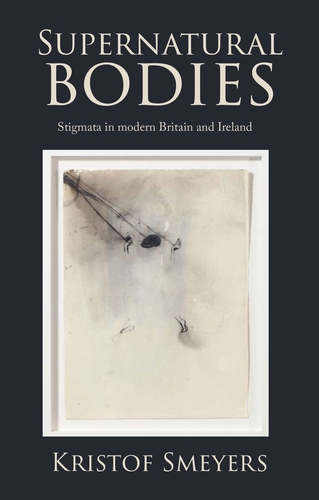
This book is the first in-depth study of the changing perceptions and receptions of supernatural bodies in modern Britain and Ireland. It focuses on one phenomenon that became hotly contested and discussed in the public sphere between 1840 and 1940: the stigmata. In 1874, an Irish reporter asked why the wounds of the crucified Christ on mortal bodies could ‘not be discussed with calmness. without indulging in angry rhetoric’. Supernatural bodies takes that question seriously. It draws on previously unexamined archival materials to place supernatural bodies at the heart of long-lasting discussions about the position of Roman Catholicism in society; the supernatural in modern Christianity and society; the authority of sciences; the relationship between Britain and Ireland, and between Britain and the Continent. Through the lens of stigmata controversies, this book shows how these discussions could converge around supernatural bodies.
Update 21 November: I should have given the link to the transcription published in Theory, Culture and Society in 2008, edited by Vincent Lloyd. It’s good to have both available.
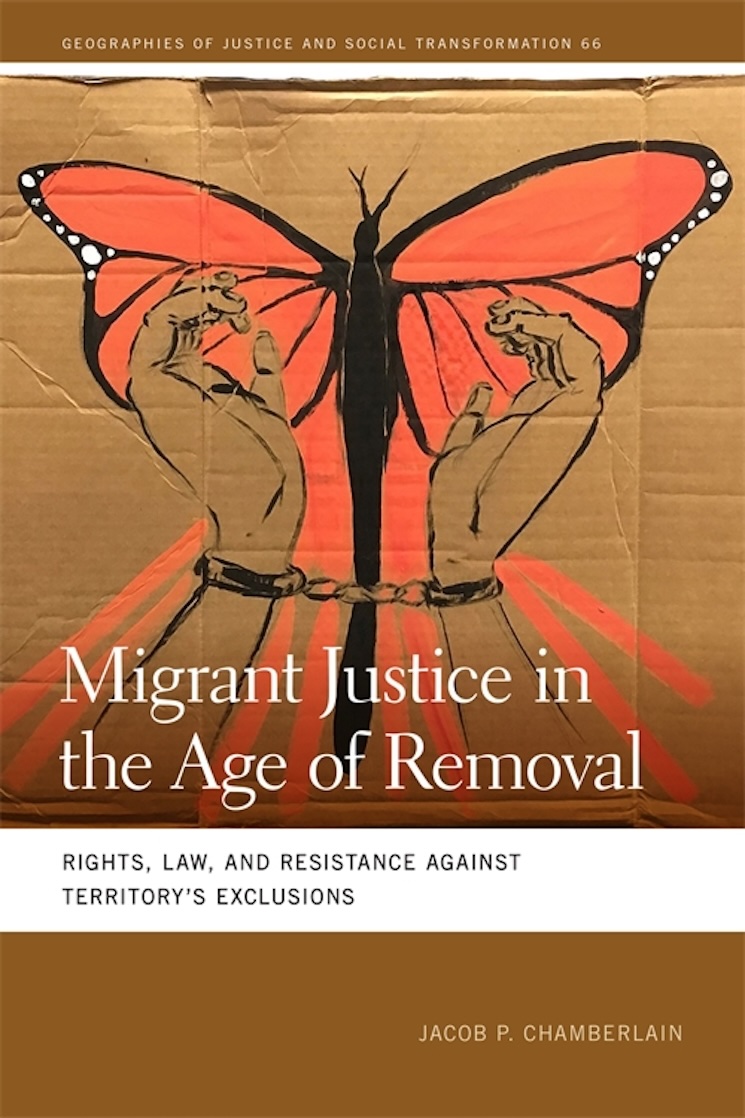
Migrant Justice in the Age of Removal details the story of Migrant Justice, a migrant rights organization led by undocumented workers in a complicated and perhaps unexpected location: Vermont, U.S. This compelling story, which includes U.S. Immigration and Customs Enforcement’s use of a covert informant to infiltrate the group and deport key members of their community, provides a detailed analysis of the state of immigration enforcement in the country today, alongside an intimate portrait of successful modes of resistance against it.
Migrant Justice has gone on to improve rights for migrants in Vermont and across the country in these incredibly precarious times for migrant activists. This book places Migrant Justice’s activism within what is defined as the Age of Removal, or the last three decades in which immigration enforcement in the U.S. has increasingly used enhanced enforcement mechanisms like the “order of removal,” which aids in the confinement, control, and exploitation of migrants. Migrant Justice’s work also fits within a growing landscape of migrant rights movements that have arisen during this time, and Jacob Chamberlain provides a crucial snapshot of their work to better understand their successful forms of organizing in these contexts. In this confluence of opposing forces, we see egregious abuses against migrant actors, but we also see new and progressively powerful forms of resistance that are posing a specific challenge to bordered and territorially based limitations on rights and democracy. Migrant Justice’s work expands rights access to people, regardless of citizenship, which essentially works towards a deterritorialization of rights access—or the opening of sociopolitical belonging to new actors.
Update: there is a review essay on the book by Leah Montange in Antipode (open access pdf)
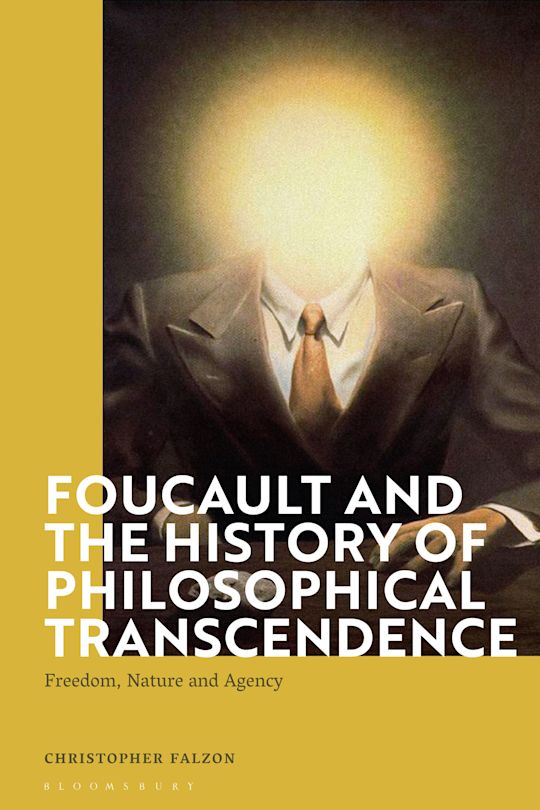
In an original approach to Foucault’s philosophy, Christopher Falzon argues for a reading of Foucault as a philosopher of finite transcendence, and explores its implications for ethics.
In order to distinguish Foucault’s position, Falzon charts the historical trajectory of transcendence as a philosophical concept, starting with the radical notion of transcendence that was introduced by Plato, and which reappears in various forms in subsequent thinkers from the Stoics to Descartes, and from Kant to Sartre. He argues that Foucault’s critique of the transcendent subject of humanism is a rejection not of transcendence per se but of radical transcendence in its distinctively modern form. As such, he shows how Foucault’s conceptualisation of transcendence as finite enables a picture of the human being as neither fully determined nor a creature of infinite possibilities, but as both subject and object, affected by but also able to affect the world.
With the notion of finite transcendence Falzon captures the essence of Foucault’s unique philosophy and provides a new insight into his contribution to ethics. Demonstrating its contemporary relevance, Foucault and the History of Philosophical Transcendencefurther explores the potential application of Foucault’s approach to the current ecological crisis.
This Element is a historical tour of Ukraine from the medieval Kyivan prince Volodymyr the Great through to Ukraine’s twenty-first-century rock star president Volodymyr Zelensky. It presents Ukraine as an actor, not a pawn, in international history. And it focuses on people. In the past, historians wrote about Ukraine from a colonial perspective that portrayed it as a region, not its own entity. This shaped the way people thought about Ukraine and created mental maps where it was just part of something else. Put in contemporary terms, Ukraine was subjected to a historical disinformation war. This Element joins voices that are decolonizing that way of thinking by drawing a different mental map, one where Ukraine exists as itself. It explains how the people living on its lands have their own distinct history, how they shaped it, were shaped by it, and had an impact on both European and global history.
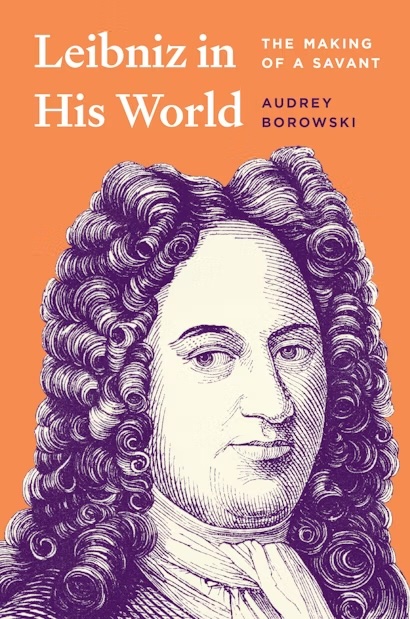
Described by Voltaire as “perhaps a man of the most universal learning in Europe,” Gottfried Wilhelm Leibniz (1646–1716) is often portrayed as a rationalist and philosopher who was wholly detached from the worldly concerns of his fellow men. Leibniz in His World provides a groundbreaking reassessment of Leibniz, telling the story of his trials and tribulations as an aspiring scientist and courtier navigating the learned and courtly circles of early modern Europe and the Republic of Letters.
Drawing on extensive correspondence by Leibniz and many leading figures of the age, Audrey Borowski paints a nuanced portrait of Leibniz in the 1670s, during his “Paris sojourn” as a young diplomat and in Germany at the court of Duke Johann Friedrich of Hanover. She challenges the image of Leibniz as an isolated genius, revealing instead a man of multiple identities whose thought was shaped by a deep engagement with the social and intellectual milieus of his time. Borowski shows us Leibniz as he was known to his contemporaries, enabling us to rediscover him as an enigmatic young man who was complex and all too human.
An exhilarating work of scholarship, Leibniz in His World demonstrates how this uncommon intellect, torn between his ideals and the necessity to work for absolutist states, struggled to make a name for himself during his formative years.