Taylor Knight, Merleau-Ponty and the Essence of Nature: A Return to Elemental Symbolism – Edinburgh University Press, 2024

Taylor Knight, Merleau-Ponty and the Essence of Nature: A Return to Elemental Symbolism – Edinburgh University Press, 2024

Reconfigures our concept of nature through the concept of the element

  • Evaluates and builds upon Merleau-Ponty’s contribution to the twentieth century return to the Greek idea of nature as a dynamic principle
  • Utilizes the phenomenological tradition to offer a new interpretation of the relationship between philosophy and its origin in mythological modes of thought
  • Integrates Merleau-Ponty into the history of philosophy
  • Articulates a new ontology for the ecological age
  • Presents the first book-length study of a key concept in Merleau-Ponty’s late thought: the idea of being as element

Taylor Knight reveals the way in which phenomenology initiates a return to ontology construed through a dialectical relationship between being and element. Within phenomenology’s return to the elemental, Merleau-Ponty’s late philosophy is a key locus, opening critical paths forward into an ontology for the ecological age. With reference to his phenomenological forebears – Heidegger, Husserl, Levinas – his non-phenomenological influences – Bachelard, Schelling, Freud – and his dialogue with Greek thought – Heraclitus, Plato, Aristotle – Knight shows what is authentically new in Merleau-Ponty’s late ontology.

Posted in Uncategorized | Leave a comment

Engin Isin, Citizenship: New Trajectories in Law (Routledge, May 2024) – London book launch October 3, 2024

Engin Isin, Citizenship: New Trajectories in Law – Routledge, May 2024

What comes after citizenship? 
A discussion with Gargi Bhattacharyya, Rachel Humphris Jef Huysmans, Engin Isin, and Nivi Manchanda, Sivamohan Valluvan as part of (B)OrderS Book Forum at Queen Mary University of London. 

Thursday, October 3,  5 – 7pm GMT+1
Room 313, Third Floor, School of Law
Queen Mary University of London Mile End Road London E1 4NS

Register here

This book outlines a critical theory of citizenship, with an emphasis on how citizenship institutes power relations and organises the rights and obligations of those who become its subjects.

Whether it is the question of the rights of animals, children, migrants, minorities, mothers, or mountains, and whether such rights are protected or guaranteed by national law, international law, or human rights law, the issue of citizenship has already indelibly marked the 21st century. As an institution, citizenship governs the relationship between a polity and its peoples by dividing them into citizens and noncitizens, with differentiated rights and obligations. So necessarily, this book argues, citizenship is an institution of domination and emancipation that brings into play the struggles of those who want to protect certain privileges and the struggles of those who are against being caught in either second-class or noncitizen categories. Deconstructing dominant theories and practices of citizenship, a critical theory of citizenship must, therefore, not only analyse intersecting rights, but also connect citizenship to these broader social struggles. For it is these struggles, the book maintains, that give meaning to citizenship itself.

The book will be of interest to scholars and students in sociolegal studies, sociology, politics, and as well as those working in citizenship, migration, and refugee studies.

Posted in Engin Isin, Uncategorized | Leave a comment

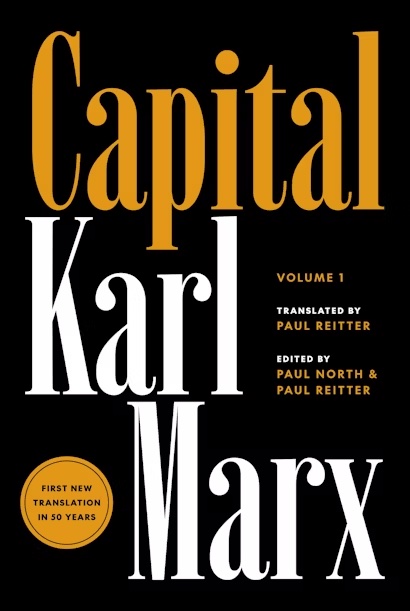
Interviews with Paul North and Paul Reitter on the new edition of Karl Marx’s Capital, Vol. 1

I posted about one of these interviews a couple of days ago, but there are a couple more now available:

The Regime of Capital: An Interview with Paul North and Paul Reitter on the new edition of Karl Marx’s Capital, Vol. 1 – Journal of the History of Ideas blog

Wendy Brown has a piece in The Nation on Capital’s enduring influence.

Brown interviews North and Reitter for Jacobin.

There is a New Books interview here.

Details of the new translation from Princeton University Press are here.

Posted in Karl Marx, Uncategorized, Wendy Brown | Leave a comment

Ege Selin Islekel, Nightmare Remains: The Politics of Mourning and Epistemologies of Disappearance – Northwestern University Press, September 2024

Ege Selin Islekel, Nightmare Remains: The Politics of Mourning and Epistemologies of Disappearance – Northwestern University Press, September 2024

Offering a political epistemology of collective mourning

Focusing on forms of improper burial in Turkey and Latin America, Ege Selin Islekel argues that a political technology of mourning is fundamental to contemporary politics. This technology of necrosovereignty shapes not only individuals’ and populations’ lives but also their epistemic and political afterlives. Local practices of mourning, however, contain resistant capacities, opening alternative ways of knowing, remembering, and assembling. “Nightmare knowledges,” Islekel posits, are resistant modes of knowing tied up with grief that challenge the contemporary politics of death and those politics’ archival boundaries. Seen in mothers’ movements across the globe, from the Mothers of the Plaza de Mayo of Argentina to the Saturday Mothers of Turkey, nightmare knowledges produce counterarchives that mobilize traditionally ignored epistemic categories.

Nightmare Remains forges a new dialogue between post-Foucauldian political theory and decolonial thought and brings a fresh critical perspective to the theoretical discourse of enforced disappearances.

Posted in Uncategorized | 1 Comment

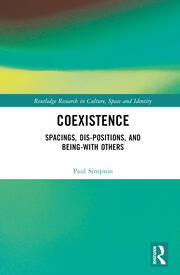
Paul Simpson, Coexistence: Spacings, Dis-positions, and Being-with Others – Routledge, December 2024

Paul Simpson, Coexistence: Spacings, Dis-positions, and Being-with Others – Routledge, December 2024

very expensive hardback only unfortunately

This book aims to develop an account of living together with difference which recognises the tension that we are inescapably with others – both human and non-human – but at the same time are always differing from and with those with whom we find ourselves.

A concern for coexistence and questions over how we might live together have been raised and approached from a host of conceptual starting points in recent times, including via calls for a rethinking of communism today, the articulation of forms of ‘cosmopolitics’ or ‘pluralism’, the re-figuring of understandings of ecology as dark or feminist, amongst others. This book responds to such questions of coexistence by developing what it calls a ‘co-existential analytic’. In doing so, this book introduces a range of post-phenomenological thought which offers means for thinking about such questions of living together with difference. The thought of Emanuel Levinas on the face of the other, Jean-Luc Nancy on being as being-with, Roberto Esposito on the munis, and Michel Henry on pathic auto-affection are introduced and critically reflected upon in terms of what they offer for thinking about such coexistence. Alongside these conceptual starting points, a series of encounters – with cinema, everyday life, politics, and literature – are used to animate and illustration the discussion.  Ultimately, the book argues for a ‘spacing’ of subjectivities with that world and those encountered within it.

This book is intended primarily for researchers and postgraduate students interested in questions of identity, difference, and subjectivity. It will be of interest to those in the fields of social and cultural geography, sociology, social theory, and cultural studies.

Posted in Uncategorized | Leave a comment

Jeremy F. Lane, Rancière’s Counter-sociology. Politics, History, Education – Palgrave, September 2024

Jeremy F. Lane, Rancière’s Counter-sociology. Politics, History, Education – Palgrave, September 2024

Jacques Rancière is almost unique amongst contemporary thinkers in his consistent hostility to sociologically informed modes of interpretation. This hostility is not limited to his detailed critiques of Pierre Bourdieu—it characterises his thinking about politics, emancipation, democracy, history, aesthetics, and social class; it extends into a rejection of Marxist or marxisant modes of analysis. For Rancière’s harshest critics, this hostility to sociology reflects an interpretative negligence on his part, an intellectual, political, or moral flaw. Even his more favorable commentators typically upbraid him for failing to specify the historical conditions of possibility of democratic emancipation.

This book argues that such reactions are fundamentally mistaken and fail to grasp what is at stake in Rancière’s rejection of sociological modes of enquiry. This rejection is attributable neither to his negligence nor to some moral flaw, and nor is it merely incidental to his thought. On the contrary, Rancière understands sociology to constitute a problematic, a set of assumptions and interpretative procedures whose blind spots must be identified and thought through in order that the possibility of intellectual and political emancipation, of democracy, and of history can be thought at all. Rancière’s thought thus represents a counter-sociology and his rejection of the sociological problematic serves as the positive condition of possibility of his theory of democracy, equality, and emancipation. This new study both clarifies the nature of Rancière’s critique of the sociological problematic and shows what his counter-sociology allows him to think in the domains of politics, history, and education.

Posted in Uncategorized | Leave a comment

A dialogue between Bernard Geoghegan and Jussi Parikka (video)

“A dialogue between Bernard Geoghegan and Jussi Parikka”


Thanks to dmf for the link.

Posted in Uncategorized | Leave a comment

Yuk Hui, Machine and Sovereignty: For a Planetary Thinking – University of Minnesota Press, October 2024

Yuk Hui, Machine and Sovereignty: For a Planetary Thinking – University of Minnesota Press, October 2024

Developing a new political thought to address today’s planetary crises

What is “planetary thinking” today? Arguing that a new approach is urgently needed, Yuk Hui develops a future-oriented mode of political thought that encompasses the unprecedented global challenges we are confronting: the rise of artificial intelligence, the ecological crisis, and intensifying geopolitical conflicts. 

Machine and Sovereignty starts with three premises. The first affirms the necessity of developing a new language of coexistence that surpasses the limits of nation-states and their variations; the second recognizes that political forms, including the polis, empire, and the state, are technological phenomena, which Lewis Mumford terms “megamachines.” The third suggests that a particular political form is legitimated and rationalized by a corresponding political epistemology. The planetary thinking that this book sketches departs from the opposition between mechanism and organism, which characterized modern thought, to understand the epistemological foundations of Hegel’s political state and Schmitt’s Großraum and their particular ways of conceiving the question of sovereignty. Through this reconstruction, Hui exposes the limits of the state and reflects on a new theoretical matrix based on the interrelated concepts of biodiversity, noodiversity, and technodiversity. 

Arguing that we are facing the limit of modernity, of the eschatological view of history, of globalization, and of the human, Hui conceives necessary new epistemological and technological frameworks for understanding and rising to the crises of our present and our future.

Posted in Uncategorized | Leave a comment

Nitzan Itzhak Lebovic, Homo Temporalis: German Jewish Thinkers on Time – Cornell University Press, January 2025

Nitzan Itzhak Lebovic, Homo Temporalis: German Jewish Thinkers on Time – Cornell University Press, January 2025

thanks to John Raimo for this link

Homo Temporalis focuses on the importance of temporal concepts for four German Jewish thinkers who profoundly shaped twentieth-century intellectual history: Martin Buber, Walter Benjamin, Hannah Arendt, and Paul Celan. By analyzing the concept of time, Nitzan Lebovic explores Buber’s stress on the temporality of the dialogue between I and Thou; Benjamin’s now-time and “dialectics in standstill”; Arendt’s understanding of democracy as “natality” or a “permanent revolution”; and the “breathturn” that informs Celan’s poetry. Framing the reception of German Jewish thinking in the second half of the twentieth century as a parallel story to the rise of the modern humanities, Homo Temporalis also highlights how these foundational temporal concepts illuminate the causes of the present crisis in the humanities and its disciplinary limitations in the age of biopolitics and the Anthropocene.

Posted in Uncategorized | Leave a comment

The Regime of Capital: An Interview with Paul North and Paul Reitter on the new edition of Karl Marx’s Capital, Vol. 1 – Journal of the History of Ideas blog; Wendy Brown’s foreword

The Regime of Capital: An Interview with Paul North and Paul Reitter on the new edition of Karl Marx’s Capital, Vol. 1 – Journal of the History of Ideas blog

Details of the new translation from Princeton University Press are here.

Wendy Brown has a piece in The Nation on Capital’s enduring influence, which I think is the foreword to this edition.

update 14 September 2024: Wendy Brown interviews North and Reitter for Jacobin.

update 17 September 2024: there is a New Books interview here.

Posted in Karl Marx, Uncategorized, Wendy Brown | 1 Comment