Daniel G. König (ed.), Entangled Worlds: 600-1350 — Harvard University Press, March 2025

Daniel G. König (ed.), Entangled Worlds: 600-1350 — Harvard University Press, March 2025

The period between the seventh and fourteenth centuries is hardly thought of as an era of globalization. Entire societies in the Americas, Australia, and Oceania developed in relative isolation from other parts of the world. Even on the interconnected landmass of Eurafrasia, many people had little to do with processes of transregional exchange.

Yet the period 600–1350 CE in fact witnessed an explosion of connectivity amid the consolidation of sophisticated approaches to human organization. Flows of people, goods, and ideas across regional boundaries intensified, changing lives at all social levels, from rulers to the enslaved. In the Americas, large cities and north-south trade networks took shape. The Arabic-Islamic conquests of the seventh and eighth centuries, along with the Mongol expansion of the thirteenth, tied together diverse polities from southeast Asia to sub-Saharan Africa. Regions also became more culturally and politically integrated: Latin-Christian models of social organization spread across Europe; the Sinitic written language drew eastern Eurasia into a common elite culture; and the accumulation of significant agricultural surpluses in the Indian subcontinent supported the emergence of a settled political order.

Entangled Worlds sees the completion of the magisterial six-volume set History of the World, offering an authoritative introduction to a vibrant era of global history. The distinguished contributors make clear that there never was a stagnant “Middle Ages” wedged between Antiquity and Modernity but instead a period defined by decisive strides toward global connection, urbanization, and the cultural and political formations we live with today.
Posted in Uncategorized | Leave a comment

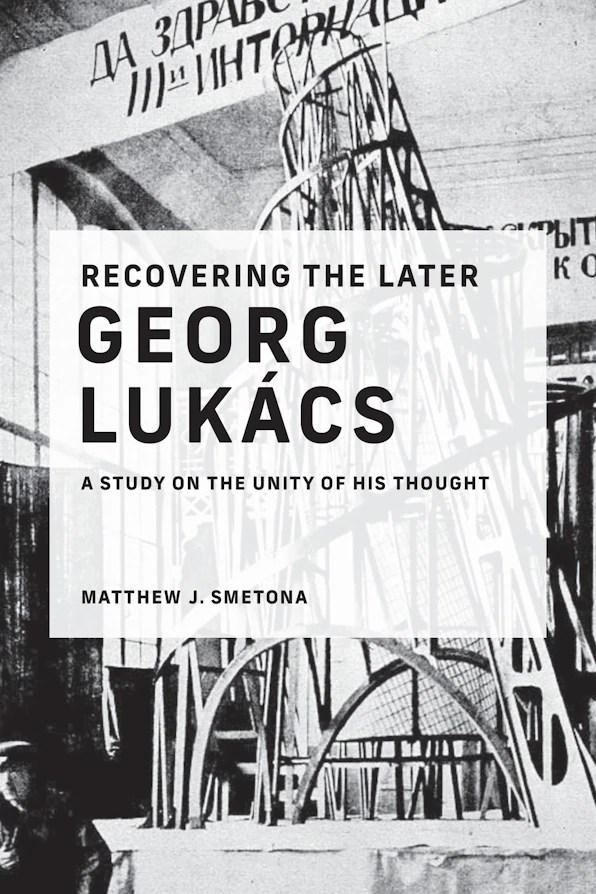
Matthew J. Smetona, Recovering the Later Georg Lukács: A Study on the Unity of His Thought – MIT Press, April 2023

Matthew J. Smetona, Recovering the Later Georg Lukács: A Study on the Unity of His Thought – MIT Press, April 2023

New resources for the critique of capitalism in culture from the late writings of Georg Lukács, one of the first authors in the tradition of Western Marxism.

The Hungarian literary critic, philosopher, and Marxist social theorist Georg Lukács is best known for his 1923 History and Class Consciousness, in which he offered an influential critique of reification from the standpoint of a dialectical conception of totality. While Lukács’s early works have been central to the study of Marxist thought, his later works have often been dismissed as political accommodations to Stalinism. In this new study, Matthew Smetona argues for a revisionist interpretation of Lukács’s later writings on topics as diverse as aesthetics, politics, and ontology. 

Smetona demonstrates that these writings reveal a methodological unity that follows directly from History and Class Consciousness, in which realism, in both literary and extraliterary senses, becomes the basis for the critique of reification. As Lukács had demonstrated, reification is that process by which the social relations between persons seem to take on the character of a thing. Rooted in Marx’s concept of commodity fetishism, the critique of reification proved, in Lukács’s hands, to be a flexible tool capable of clarifying all manner of obfuscations that arise within the social relations that capitalism produces. To recover the later work of Lukács is to open up new horizons for Marxist cultural criticism.

Posted in Georg Lukács | Leave a comment

Valentina Antoniol and Stefano Marino (eds.), Foucault’s Aesthetics of Existence and Shusterman’s Somaesthetics – Bloomsbury, August 2024

Valentina Antoniol and Stefano Marino (eds.), Foucault’s Aesthetics of Existence and Shusterman’s Somaesthetics – Bloomsbury, August 2024

Bringing together Michel Foucault’s aesthetics of existence and Richard Shusterman’s somaesthetics, this volume provides a critical comparison of two of the most influential philosophical theories of the late 20th and early 21st centuries.

Introduced by a comprehensive overview of both concepts by editors Stefano Marino and Valentina Antoniol, the ensuing chapters interrogate the affinities and variances between Foucault’s and Shusterman’s philosophies. Building on the interdisciplinary character of somaesthetics and aesthetics of existence, international scholars explore these ideas through a wide range of topics ranging from care of the self and of the social self to the ethical and political challenges posed by themes as white ignorance, construction of resistances, and production of subjectivities. Given the central role played by the body in both concepts, this volume also affords particular attention to the philosophy of sexuality.

Demonstrating the value of reading these two thinkers together through the adoption of radical interpretive perspectives, Foucault’s Aesthetics of Existence and Shusterman’s Somaesthetics highlights the potentialities and the relevance of Foucault’s and Shusterman’s theories, even with respect to our actualité.

Posted in Uncategorized | Leave a comment

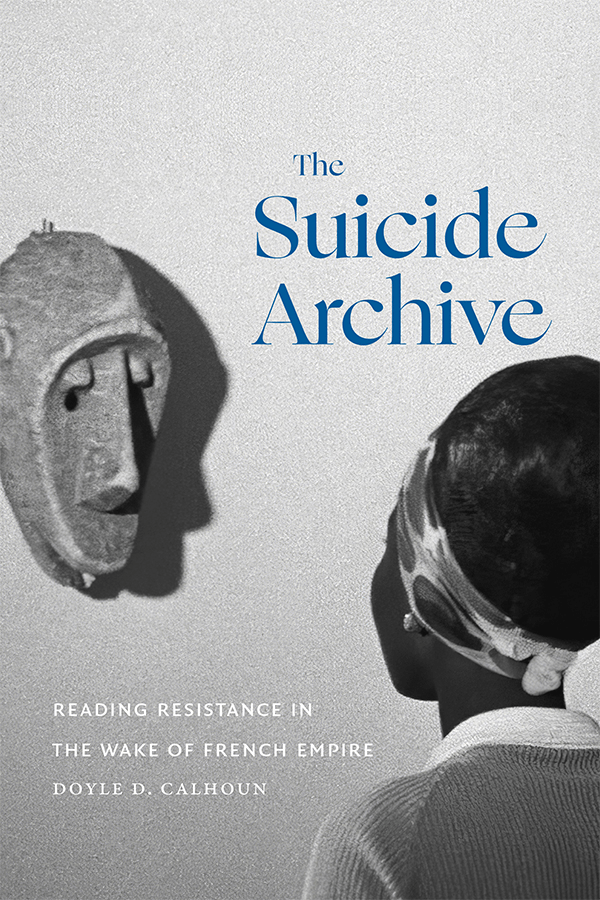
Doyle D. Calhoun, The Suicide Archive: Reading Resistance in the Wake of French Empire – Duke University Press, October 2024, with open access introduction available now

Doyle D. Calhoun, The Suicide Archive: Reading Resistance in the Wake of French Empire – Duke University Press, October 2024

The open access introduction is available now.

Throughout the French empire, from the Atlantic and the Caribbean to West and North Africa, men, women, and children responded to enslavement, colonization, and oppression through acts of suicide. In The Suicide Archive, Doyle D. Calhoun charts a long history of suicidal resistance to French colonialism and neocolonialism from the time of slavery to the Algerian War for Independence to the “Arab Spring.” Noting that suicide was either obscured in or occluded from French colonial archives, Calhoun turns to literature and film to show how aesthetic forms and narrative accounts can keep alive the silenced histories of suicide as a political language. Drawing on scientific texts, police files, and legal proceedings alongside contemporary African and Afro-Caribbean novels, film, and Senegalese oral history, Calhoun outlines how such aesthetic works rewrite histories of resistance and loss. In so doing, Calhoun offers a new way of writing about suicide, slavery, and coloniality in relation to literary history.

Posted in Uncategorized | Leave a comment

Ingrid A. Medby, Arctic State Identity: Geography, History, and Geopolitical Relations – Manchester University Press, January 2025 

Ingrid A. Medby, Arctic State Identity: Geography, History, and Geopolitical Relations – Manchester University Press, January 2025 

This book sets out to answer what it means to hold a formal title as one of the eight ‘Arctic states’; is there such a thing as an Arctic state identity, and if so, what does this mean for state personnel? It charts the thoughtful reflections and stories of state personnel from three Arctic states: Norway, Iceland, and Canada, alongside analysis of documents and discourses. This book shows how state identities are narrated as both geographical and temporal – understood through environments, territories, pasts and futures – and that any identity is always relational and contextual. As such, demonstrating that to understand Arctic geopolitics we need to pay attention to the people whose job it is to represent the state on a daily basis. And more broadly, it offers a ‘peopled’ view of geopolitics, introducing the concept and framework of ‘state identity’.

Posted in Uncategorized | Leave a comment

Stuart Elden, “Alexandre Koyré and the Collège de France”, online first in History of European Ideas (open access)

My article “Alexandre Koyré and the Collège de France”, is now available online first in History of European Ideas, and it’s open access.

This article discusses an important moment in the career of Alexandre Koyré, and the history of philosophy in France. It looks at the 1951 election of a successor to Étienne Gilson at the Collège de France, for which Koyré was one of the possible candidates, alongside Henri Gouhier and Martial Gueroult. Koyré came close, but Gueroult was elected to the chair. In time, Gueroult was succeeded first by Jean Hyppolite and then, in 1970, by Michel Foucault. Using archival documents to discuss the process in detail, this article shows the weakness of Koyré’s proposers, and the strength of Gouhier’s application. Finally, drawing on Koyré’s outline of his proposed teaching programme, it discusses how success might have shaped his future career, using this as an indication of his position within and beyond a French tradition in the philosophy and history of the sciences.

I’ll be speaking briefly about Koyré and Canguilhem at a workshop organised by Federico in Bristol on 26 September. I’ll share more news about that when I can.

Posted in Alexandre Koyré, Georges Canguilhem, Jean Hyppolite, Michel Foucault, Territory, The Birth of Territory | 1 Comment

Shannon Mattern, Library as Infrastructure – Places Journal

Shannon Mattern, Library as Infrastructure – Places Journal

Fascinating and beautifully illustrated piece on libraries.

Posted in Uncategorized | Leave a comment

Stuart Elden and Morteza Hajizadeh – New Books Network discussion of The Birth of Territory

Stuart Elden and Morteza Hajizadeh – New Books discussion of The Birth of Territory

Although I’ve done quite a few interviews for the New Books Network with Dave O’Brien, these were on the Foucault books and Shakespearean Territories. So I was pleased to be asked by Morteza Hajizadeh to have a discussion of my earlier book The Birth of Territory (University of Chicago Press, 2013). I’m not sure anyone celebrates 11th birthdays of books, but it is close to that anniversary.

Thanks to Morteza and the New Books Network for the interest in the book. I talk a bit about Terror and Territory at the start, and Shakespearean Territories at the end, so it briefly covers all my work on this question.

Posted in Shakespearean Territories, Terror and Territory, The Birth of Territory | Leave a comment

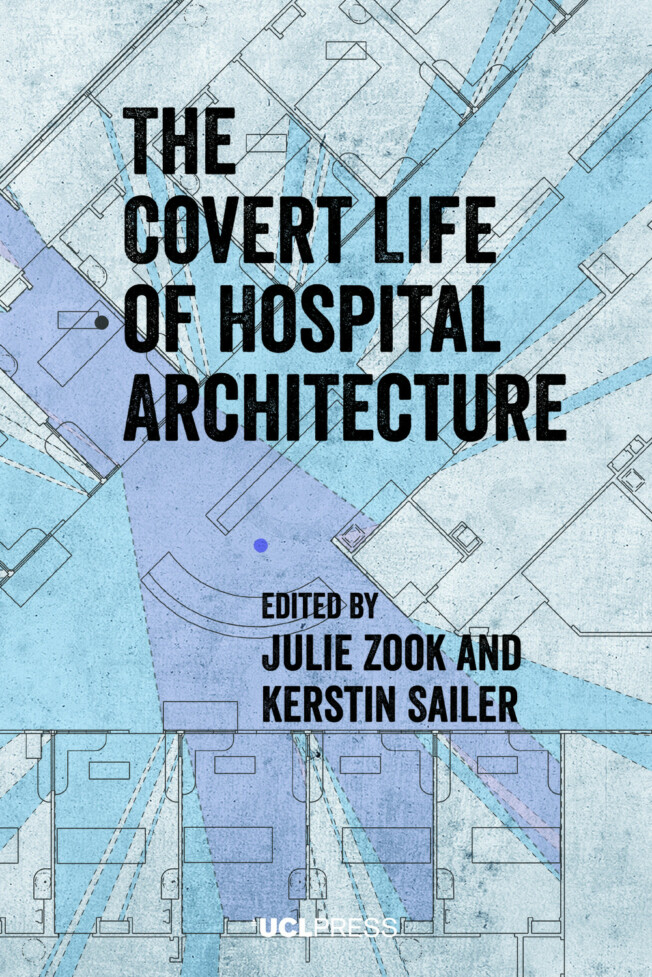
Julie Zook and Kerstin Sailer (eds.), The Covert Life of Hospital Architecture, UCL Press, March 2022 (print and open access)

Julie Zook and Kerstin Sailer (eds.), The Covert Life of Hospital Architecture, UCL Press, March 2022 (print and open access)

The Covert Life of Hospital Architecture addresses hospital architecture as a set of interlocked, overlapping spatial and social conditions. It identifies ways that planned-for and latent functions of hospital spaces work jointly to produce desired outcomes such as greater patient safety, increased scope for care provider communication and more intelligible corridors.

By advancing space syntax theory and methods, the volume brings together emerging research on hospital environments. Opening with a description of hospital architecture that emphasizes everyday relations, the sequence of chapters takes an unusually comprehensive view that pairs spaces and occupants in hospitals: the patient room and its intervisibility with adjacent spaces, care teams and on-ward support for their work and the intelligibility of public circulation spaces for visitors. The final chapter moves outside the hospital to describe the current healthcare crisis of the global pandemic as it reveals how healthcare institutions must evolve to be adaptable in entirely new ways. Reflective essays by practicing designers follow each chapter, bringing perspectives from professional practice into the discussion.

The Covert Life of Hospital Architecture makes the case that latent dimensions of space as experienced have a surprisingly strong link to measurable outcomes, providing new insights into how to better design hospitals through principles that have been tested empirically. It will become a reference for healthcare planners, designers, architects and administrators, as well as for readers from sociology, psychology and other areas of the social sciences.

Posted in Uncategorized | Leave a comment

Jo van Every – Spotlight on: Burnout

Jo van Every – Spotlight on: Burnout

I published my first post with “burnout” in the title, “Burnout is real”,  in 2022. We were just coming out of the most intense phase of the COVID pandemic disruptions. The term was familiar to people, but the idea that it might be a real diagnosable medical condition was less well known. It might still be.

In March 2024, I interviewed a client of mine who had taken sick leave for burnout about her experience with clinically significant burnout. I learned a lot from that conversation. It gave me a different perspective on the situations other clients were facing, and a new perspective on some of the topics I’ve been writing about for years.

Burnout is characterised by severe fatigue. Physical fatigue may even result in collapsing at work. That physical fatigue will be accompanied by cognitive fatigue, symptoms of which include inability to concentrate, memory problems, and so on. Fatigue also contributes to emotional dysregulation.

Another major sign of burnout is starting to hate what you used to love. This may also present as a kind of malaise in which things seem meaningless.

Burnout is caused by exceeding your capacity for an extended period of time. Your physical capacity. Your cognitive capacity. Your emotional capacity. Your body will use adrenaline and cortisol to help you do this, but at some point, even your adrenal glands will give up. I hope you don’t get there.

If you get to that extreme stage, it is going to take time to recover. It is crucial to address fatigue earlier.

continues here

Posted in Uncategorized | Leave a comment