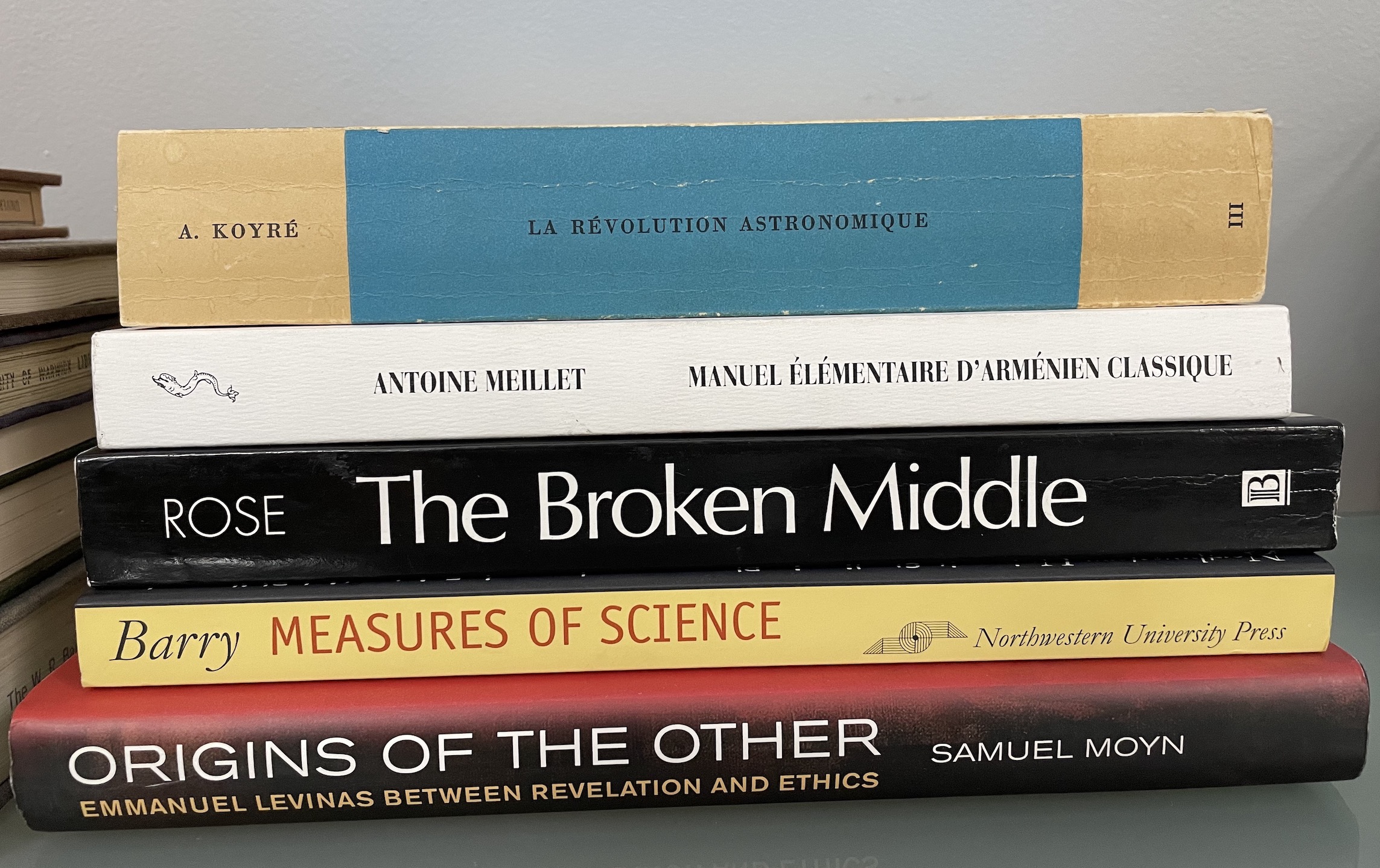
Some recently bought second-hand books, including Gillian Rose’s The Broken Middle, James Barry, Measures of Science, and Samuel Moyn, Origins of the Other: Emmanuel Levinas between Revelation and Ethics. Top of the pile is a first edition of Alexandre Koyré’s La Révolution astronomique, dedicated and initialled by Koyré himself – a lovely find.
They relate to the Mapping Indo-European Thought research is some way, though Barry and Koyré more to the side-project on Koyré – the first part of which was recently published as “Alexandre Koyré and the Collège de France” in History of European Ideas, online first and open access.
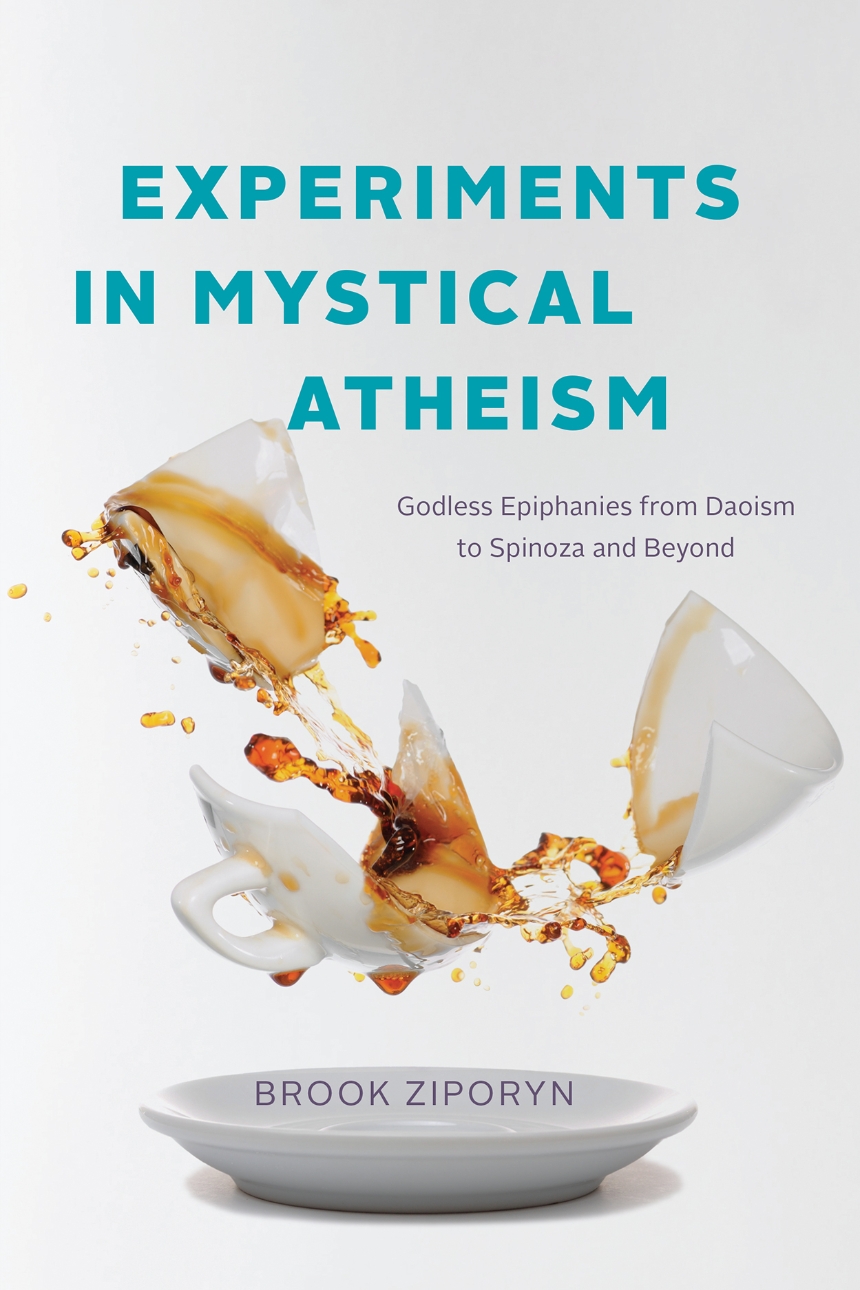
A new approach to the theism-scientism divide rooted in a deeper form of atheism.
Western philosophy is stuck in an irresolvable conflict between two approaches to the spiritual malaise of our times: either we need more God (the “turn to religion”) or less religion (the New Atheism). In this book, Brook Ziporyn proposes an alternative that avoids both totalizing theomania and atomizing reductionism. What we need, he argues, is a deeper, more thoroughgoing, even religious rejection of God: an affirmative atheism without either a creator to provide meaning or finite creatures in need of it—a mystical atheism.
In the legacies of Daoism and Buddhism as well as Spinoza, Nietzsche, and Bataille, Ziporyn discovers a critique of theism that develops into a new, positive sensibility—at once deeply atheist and richly religious. Experiments in Mystical Atheism argues that these “godless epiphanies” hold the key to renewing philosophy today.
This book argues that the received view of the distinction between freedom and power must be rejected because it rests on an untenable account of the discursive cognition that endows individuals with the capacity for autonomy and self-governed rationality.
In liberal and Kantian approaches alike, the autonomous subject is a self-standing starting point whose freedom is constrained by relations of power only contingently because they are external to the subject’s constitution. Thus, the received view defines the distinction between freedom and power as a dichotomy. Michel Foucault is arguably the most important critic of that dichotomy. However, it is widely agreed that Foucault falls short of justifying the alternative view he develops, where power and freedom are essentially entangled instead. The book fills out the gap by investigating the social preconditions of discursive cognition. Drawing on pragmatist-inferentialist resources from the philosophy of language (Wittgenstein, Sellars, and Brandom), it presents a new interpretation of Foucault’s philosophy that is unified by his overlooked idea of “the archaeology of knowledge.” As a result, the book not only explains why and how power and freedom must be entangled but also what it means ethically to pursue and gain autonomy with respect to one’s own understanding.
Power and Freedom in the Space of Reasons will appeal to scholars and advanced students working in social and political philosophy, critical theory, ethics, philosophy of language, and the history of 20th-century philosophy.
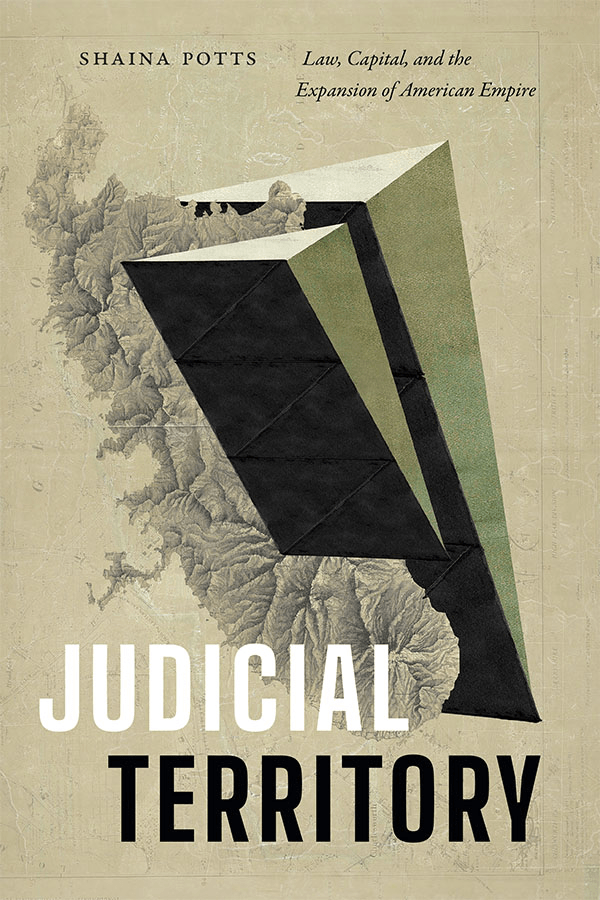
In Judicial Territory, Shaina Potts reveals how the American empire has benefited from the post-World War II expansion of United States judicial authority over the economic decisions of postcolonial governments. Introducing the term “judicial territory” to refer to the increasingly transnational space over which US courts wield authority, Potts argues that law is an essential tool for US geopolitical and economic interests. Through close examination of cases involving private US companies, on the one hand, and foreign state-owned enterprises, nationalizations, and sovereign debt, on the other, she shows that technical changes relating to the treatment of foreign sovereigns in domestic US law allowed the United States to extend its purview over global financial and economic relations, including many economic decisions of foreign governments. Throughout, Potts argues, US law has not become divorced from territoriality but instead actively remapped it; it has not merely responded to globalization, but actively produced it—making the whole world part of US economic space in the process.
The final volume of this really excellent series. [Update – now listed for May 2025]
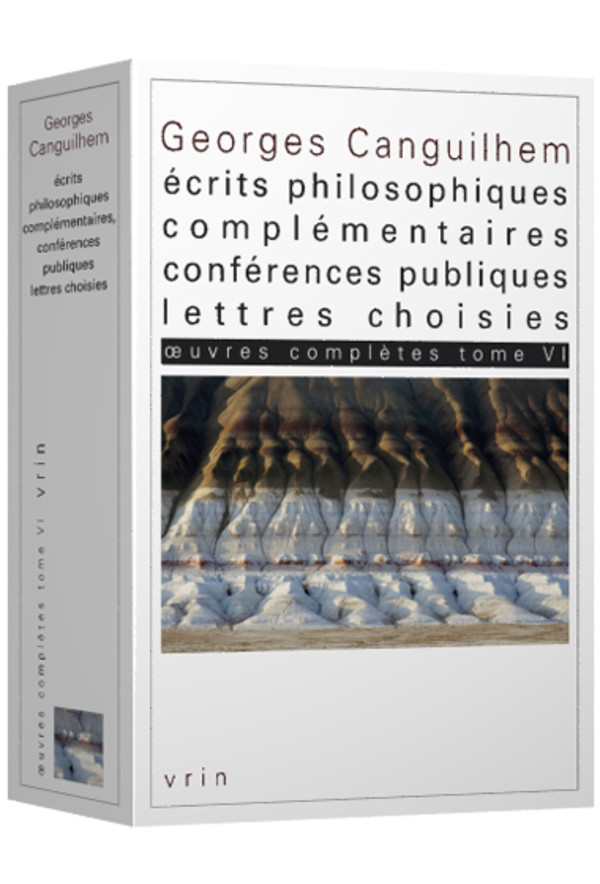
Textes édités, introduits et annotés par Camille Limoges et Pierre-Olivier Méthot.
Le tome VI et dernier des Œuvres complètes de Georges Canguilhem réunit des écrits retrouvés et complémentaires, jusqu’ici peu accessibles, et dont souvent l’existence même restait ignorée. Y figurent des articles des années 1920, le mémoire de diplôme d’études supérieures sur la théorie de l’ordre et du progrès chez Auguste Comte, et près d’une dizaine de conférences publiques prononcées des années 1940 aux années 1970, qui témoignent de l’élaboration chez Canguilhem d’une véritable doctrine sur les normes. Ce tome VI contient également quelque trois cents lettres à une trentaine de correspondants de même qu’un important écrit, Philosophie, sa première synthèse philosophique personnelle, au tournant des années 1930, qui appelle à un réexamen des idées du jeune Canguilhem, notamment sur la psychologie et sur ses rapports avec la philosophie.
Tout en réaffirmant des constats dans la pensée de Georges Canguilhem, ce dernier tome permet d’élargir et d’approfondir notre compréhension d’une oeuvre qui ne connut jamais de purgatoire, mais dont la phase de gestation fut longtemps largement ignorée.
Gut, Brain, and Environment in Nineteenth-Century French Literature and Medicine offers a new way of conceptualizing food in literature: not as social or cultural symbol but as an agent within a network of relationships between body and mind and between humans and environment. By analysing gastrointestinal health in medical, literary, and philosophical texts, this volume rethinks the intersections between literature and health in the nineteenth century and triggers new debates about France’s relationship with food. Of relevance to scholars of literature and to historians and sociologists of science, food, and medicine, it will provide ideal reading for students of French Literature and Culture, History, Cultural Studies, and History of Science and Medicine, Literature and Science, Food Studies, and the Medical Humanities. Readers will be introduced to new ways of approaching digestion in this period and will gain appreciation of the powerful resources offered by nineteenth-century French writing in understanding the nature of connections between gut, mind, and environment and the impact of these connections on our status as human beings.
Just an expensive hardback and e-book at the moment.
Establishes an enduring relationship between theories of categories and ideas about knowledge, politics, and history
Explores the concept of a category and contemporary debates on category politics, category mistakes and the imperialism of categories
Shows how the ideas of classic thinkers on categories, including Plato, Aristotle, Kant and Hegel, have informed three distinct modern schools of thought on the subject including thinkers in both analytical and continental traditions
Explains modern thought on categories as a tension between a desire for a single dominant perspective, whether scientific (as in logical empiricism) or phenomenological (as in Heidegger), and a belief in irretrievable fragmentation (as in Nietzsche and later post-modern thought), with a minority of thinkers (like Cassirer and Ricoeur) trying to find a middle ground
Addresses debates on categories in wide range of different fields in the humanities including the history of philosophy, political philosophy, critical theory, phenomenology, and the philosophy of history
In ancient and modern Western thought, the problem of the nature of categories has been inseparable from arguments about the nature of selfhood; about how knowledge is organised; about how power should be distributed; and about how history should be understood. For Plato, Forms belonging to a timeless order of being played the role of categories or fundamental concepts; for Aristotle categories were immanent in things; for Kant they were a priori logical structures of our consciousness; and for Hegel they were dynamic, dialectical inter-related ideas. In Categories, O’Sullivan shows how these answers have gone forward into the contemporary era, and identifies three key schools of thought that have developed since Hegel in particular. He explains modern thought as a tension between a desire for a single dominant perspective, whether scientific or phenomenological; a belief in irretrievable fragmentation; and an effort to find a middle ground.
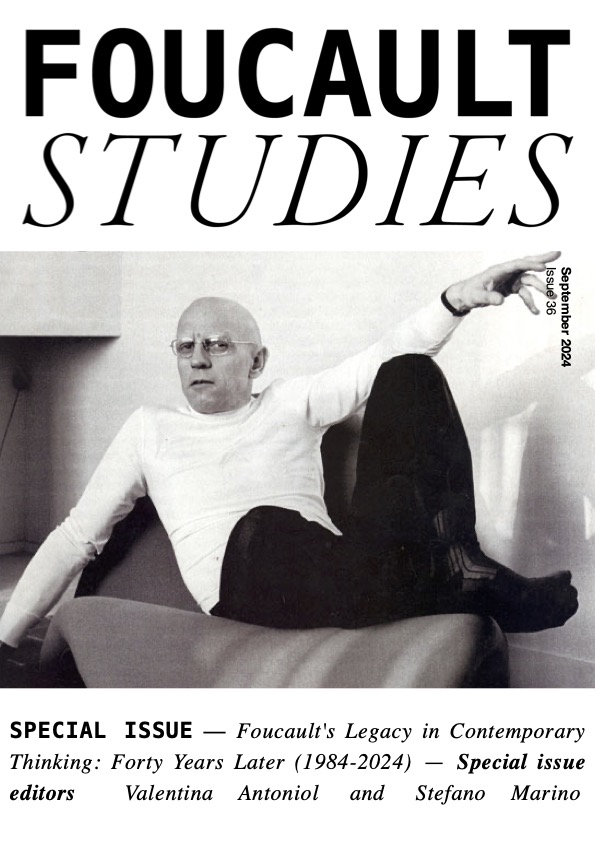
If you missed the 2023 Special Issue of Theory, Culture & Society on ‘Foucault Before the Collège de France‘, which I edited with Daniele Lorenzini and Orazio Irrera…
All papers are open access or free access at the moment
Papers include ones by most of the editors of the early courses and manuscripts by Foucault, currently being published and in the process of being translated.