David Matless, England’s Green: Nature and Culture since the 1960s – University of Chicago Press, August 2024

David Matless, England’s Green: Nature and Culture since the 1960s – University of Chicago Press, August 2024

A sweeping history of how ecological challenges have shaped English society over the last sixty years.
 
England’s Green explores how environmental concerns have shaped and reflected English national identity since the 1960s. From agriculture to leisure, climate change, folklore, archaeology, and religion, David Matless shows how national environmental debates connect to the local, regional, global, and postcolonial worlds. Moving across a breadth of material including government policy, popular music, ecological polemic, and television comedy, England’s Green shows the richness and complexity of English environmental culture. Along the way, Matless tracks how today’s debates over climate and nature, land, and culture, have been molded by events over the past sixty years.
Posted in Uncategorized | Leave a comment

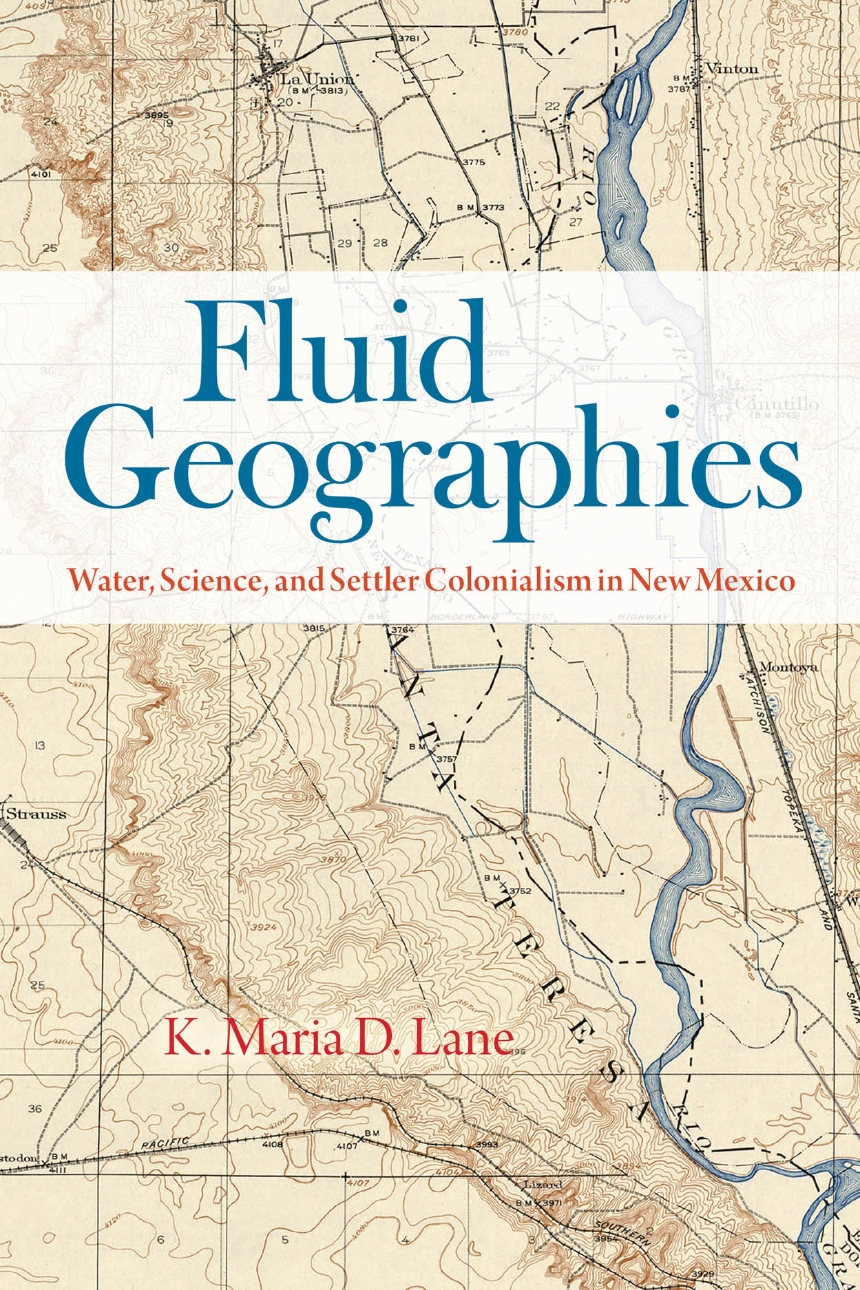
K. Maria D. Lane, Fluid Geographies: Water, Science, and Settler Colonialism in New Mexico – University of Chicago Press, July 2024

K. Maria D. Lane, Fluid Geographies: Water, Science, and Settler Colonialism in New Mexico – University of Chicago Press, July 2024

An unprecedented analysis of the origin story of New Mexico’s modern water management system.
 
Maria Lane’s Fluid Geographies traces New Mexico’s transition from a community-based to an expert-led system of water management during the pre-statehood era. To understand this major shift, Lane carefully examines the primary conflict of the time, which pitted Indigenous and Nuevomexicano communities, with their long-established systems of irrigation management, against Anglo-American settlers, who benefitted from centralized bureaucratic management of water. The newcomers’ system eventually became settled law, but water disputes have continued throughout the district courts of New Mexico’s Rio Grande watershed ever since.
 
Using a fine-grained analysis of legislative texts and nearly two hundred district court cases, Lane analyzes evolving cultural patterns and attitudes toward water use and management in a pivotal time in New Mexico’s history. Illuminating complex themes for a general audience, Fluid Geographies helps readers understand how settler colonialism constructed a racialized understanding of scientific expertise and legitimized the dispossession of nonwhite communities in New Mexico.

Posted in Uncategorized | Leave a comment

“A Different Open Access Model for Journals”, Daily Nous; David Murakami Wood “radical open access [journals] in the Social Sciences”

A Different Open Access Model for Journals“, Daily Nous

Recent discussion of open-access journals and their financing prompted a reader to share information about a different model for publishers and journals converting to open-access, known as “subscribe-to-open”.

This model isn’t really open access, but it’s an interesting approach.

David Murakami Wood is making a list of ‘radical open access [journals] in the Social Sciences

Posted in Uncategorized | 1 Comment

Debbie Hall, Adventures in Maps – Bodleian Library Publishing, July 2024

Debbie Hall, Adventures in Maps – Bodleian Library Publishing, July 2024

A richly illustrated collection that maps twenty historical journeys.

Adventures in Maps features twenty awe-inspiring journeys, ranging in distances from a few miles to great treks across land, sea, air, and space. Some chart the route a traveler followed, while some are the fruits of exploration, and others were made to help future travelers find their way. 

Among these maps are sea charts depicting the sixteenth-century adventures of Richard Hawkins sailing to South America, the surveys of Captain James Cook, and the route followed by pioneering solo yachtswoman Naomi James. On land, we travel North America’s Route 66, follow the archaeological expeditions of David Hogarth along the Euphrates and Aurel Stein on the Silk Road, experience Thomas Cook’s first package tour, and move with pilgrims making their way across Europe. By air and space, we learn the stories of the Arctic explorations needed to enable a Great Circle route by air over Greenland, the first flight from London to Manchester, and the surveys of the Moon that ultimately facilitated the first landing. 

These inspirational accounts are drawn from diaries, letters, memoirs, and travelogues: all illustrated with fascinating, beautiful maps.

Posted in Uncategorized | Leave a comment

Books received – Koyré, Meillet, Rose, Barry, Moyn

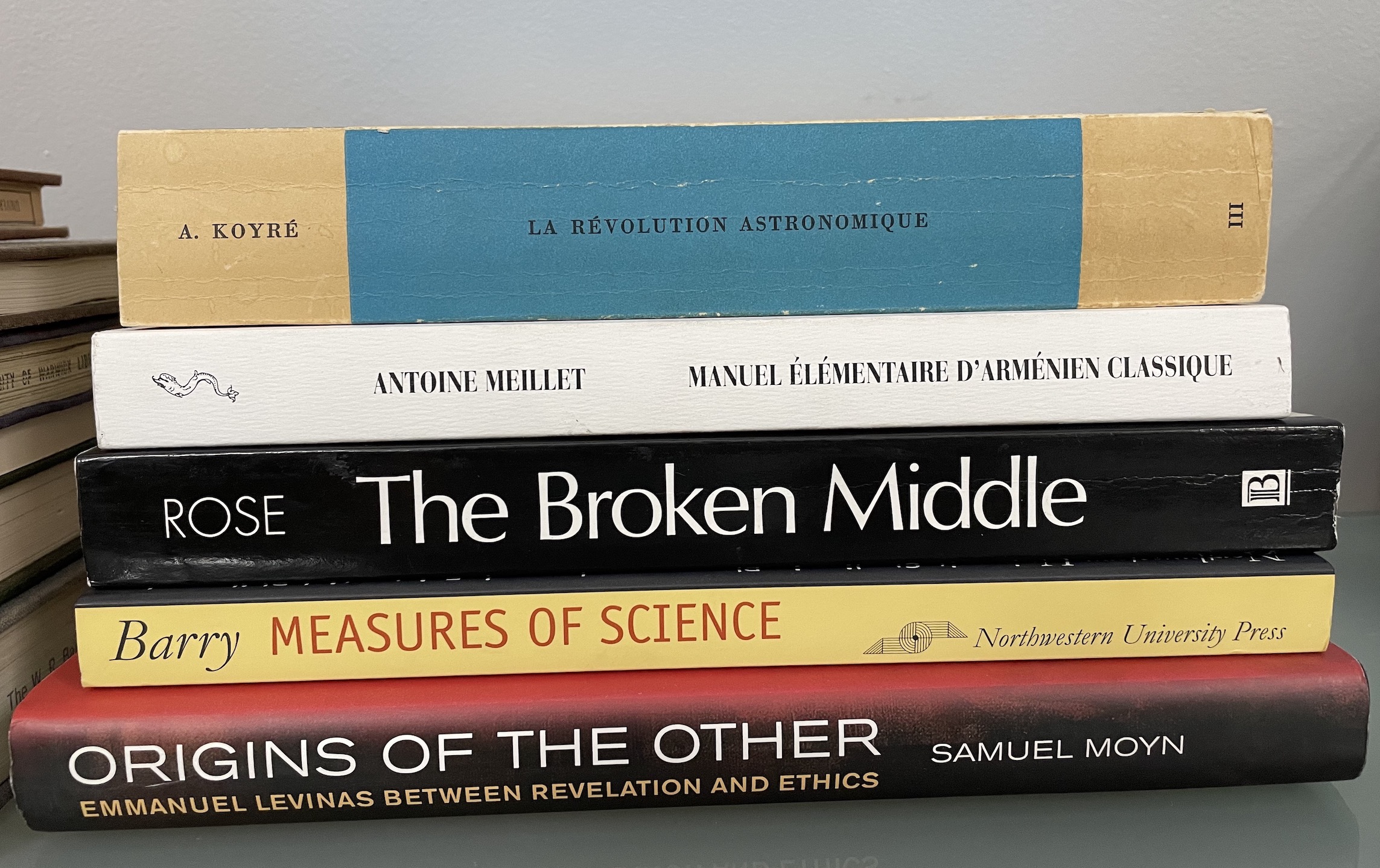
Some recently bought second-hand books, including Gillian Rose’s The Broken Middle, James Barry, Measures of Science, and Samuel Moyn, Origins of the Other: Emmanuel Levinas between Revelation and Ethics. Top of the pile is a first edition of Alexandre Koyré’s La Révolution astronomique, dedicated and initialled by Koyré himself – a lovely find.

They relate to the Mapping Indo-European Thought research is some way, though Barry and Koyré more to the side-project on Koyré – the first part of which was recently published as “Alexandre Koyré and the Collège de France” in History of European Ideas, online first and open access.

Posted in Alexandre Koyré, Antoine Meillet, Emmanuel Levinas, Gillian Rose, Mapping Indo-European Thought in Twentieth Century France | 1 Comment

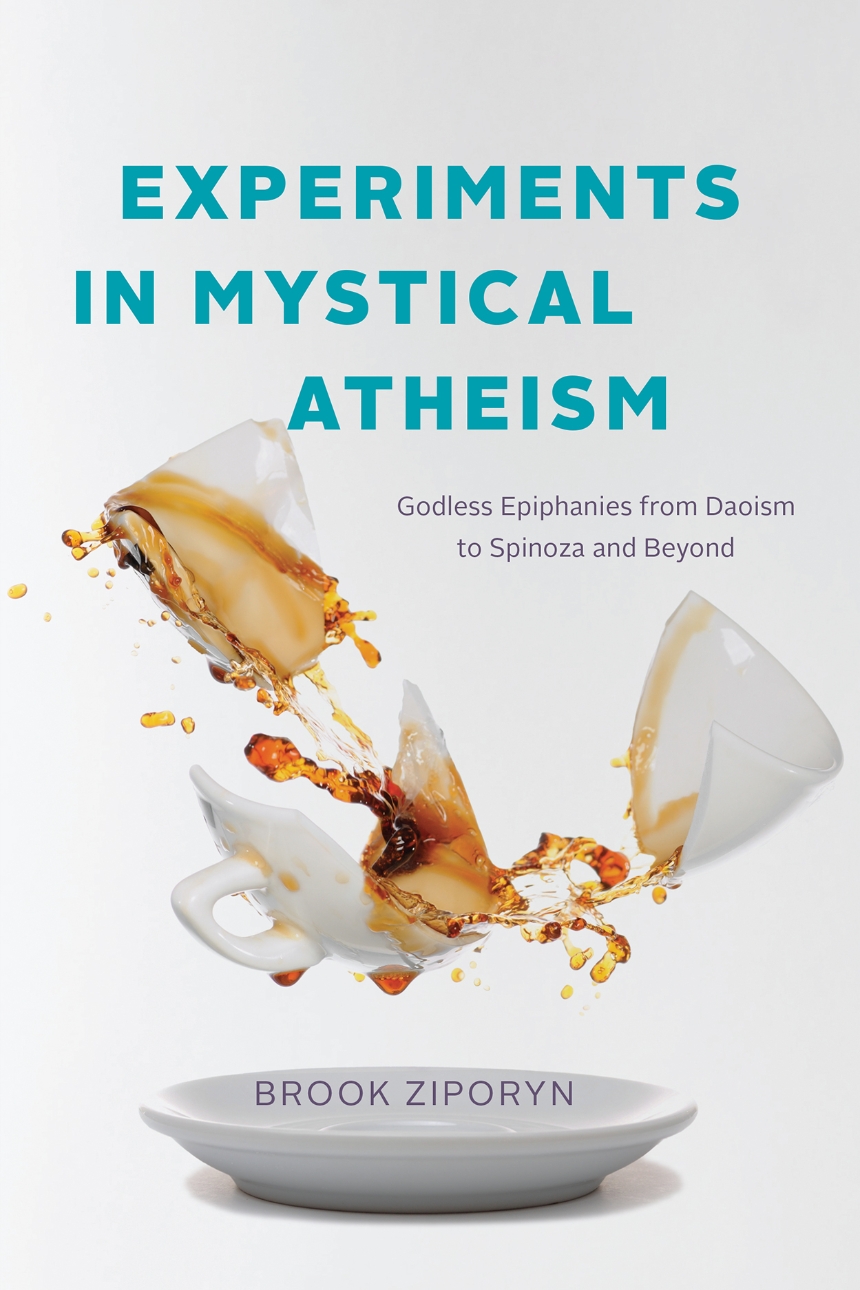
Brook Ziporyn, Experiments in Mystical Atheism: Godless Epiphanies from Daoism to Spinoza and Beyond – University of Chicago Press, October 2024

Brook Ziporyn, Experiments in Mystical Atheism: Godless Epiphanies from Daoism to Spinoza and Beyond – University of Chicago Press, October 2024

A new approach to the theism-scientism divide rooted in a deeper form of atheism.

 Western philosophy is stuck in an irresolvable conflict between two approaches to the spiritual malaise of our times: either we need more God (the “turn to religion”) or less religion (the New Atheism). In this book, Brook Ziporyn proposes an alternative that avoids both totalizing theomania and atomizing reductionism. What we need, he argues, is a deeper, more thoroughgoing, even religious rejection of God: an affirmative atheism without either a creator to provide meaning or finite creatures in need of it—a mystical atheism.

In the legacies of Daoism and Buddhism as well as Spinoza, Nietzsche, and Bataille, Ziporyn discovers a critique of theism that develops into a new, positive sensibility—at once deeply atheist and richly religious. Experiments in Mystical Atheism argues that these “godless epiphanies” hold the key to renewing philosophy today.

Posted in Uncategorized | Leave a comment

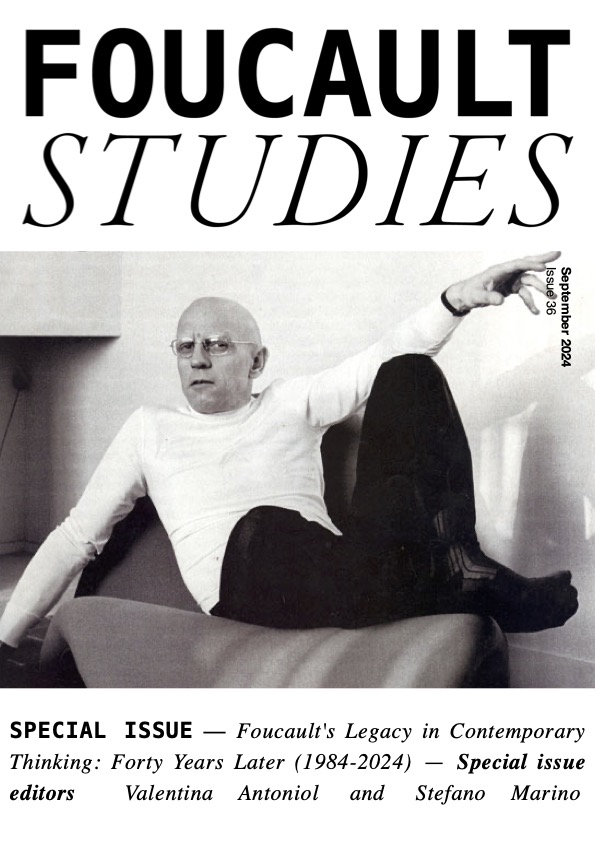
Foucault Studies 36: Special Issue – Foucault’s Legacy in Contemporary Thinking: Forty Years Later (1984-2024)

Foucault Studies 36: Special Issue – Foucault’s Legacy in Contemporary Thinking: Forty Years Later (1984-2024)

The issue is edited by Valentina Antoniol and Stefano Marino – all open access and able to download either individual essays or the issue as a whole.

Posted in Uncategorized | Leave a comment

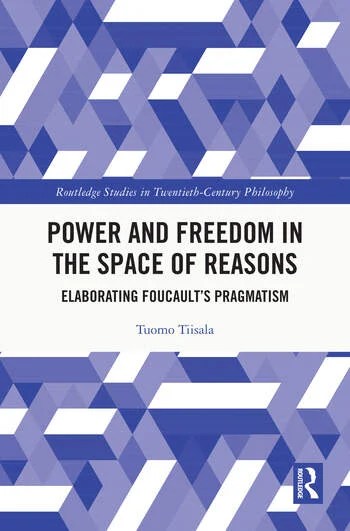
Tuomo Tiisala, Power and Freedom in the Space of Reasons: Elaborating Foucault’s Pragmatism – Routledge, July 2024 (open access)

Tuomo Tiisala, Power and Freedom in the Space of Reasons: Elaborating Foucault’s Pragmatism – Routledge, July 2024 (open access)

Update: Colin Koopman reviews it at NDPR

This book argues that the received view of the distinction between freedom and power must be rejected because it rests on an untenable account of the discursive cognition that endows individuals with the capacity for autonomy and self-governed rationality.  

In liberal and Kantian approaches alike, the autonomous subject is a self-standing starting point whose freedom is constrained by relations of power only contingently because they are external to the subject’s constitution. Thus, the received view defines the distinction between freedom and power as a dichotomy. Michel Foucault is arguably the most important critic of that dichotomy. However, it is widely agreed that Foucault falls short of justifying the alternative view he develops, where power and freedom are essentially entangled instead. The book fills out the gap by investigating the social preconditions of discursive cognition. Drawing on pragmatist-inferentialist resources from the philosophy of language (Wittgenstein, Sellars, and Brandom), it presents a new interpretation of Foucault’s philosophy that is unified by his overlooked idea of “the archaeology of knowledge.” As a result, the book not only explains why and how power and freedom must be entangled but also what it means ethically to pursue and gain autonomy with respect to one’s own understanding. 

Power and Freedom in the Space of Reasons will appeal to scholars and advanced students working in social and political philosophy, critical theory, ethics, philosophy of language, and the history of 20th-century philosophy.

Posted in Uncategorized | 1 Comment

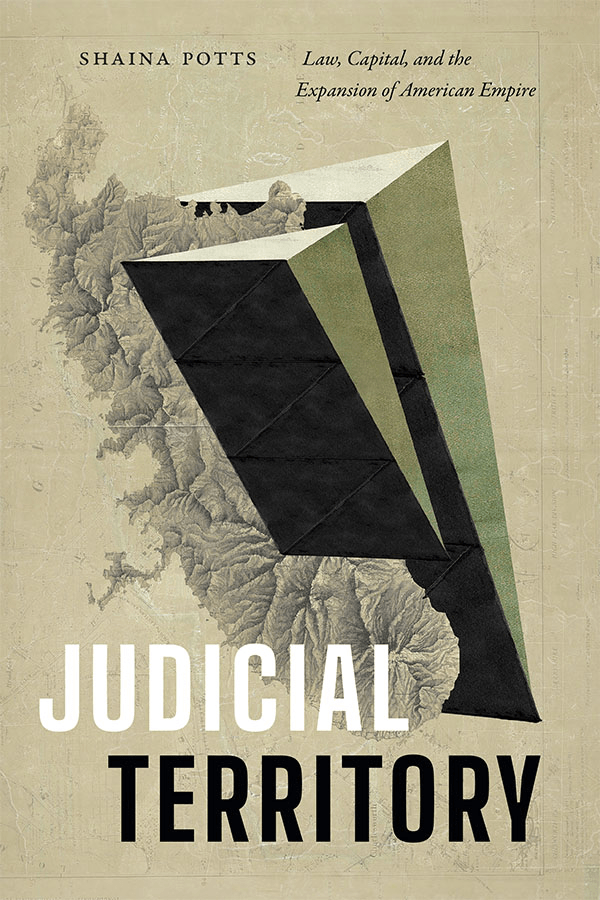
Shaina Potts, Judicial Territory: Law, Capital, and the Expansion of American Empire – Duke University Press, September 2024

Shaina Potts, Judicial Territory: Law, Capital, and the Expansion of American Empire – Duke University Press, September 2024

Introduction open access at this link

In Judicial Territory, Shaina Potts reveals how the American empire has benefited from the post-World War II expansion of United States judicial authority over the economic decisions of postcolonial governments. Introducing the term “judicial territory” to refer to the increasingly transnational space over which US courts wield authority, Potts argues that law is an essential tool for US geopolitical and economic interests. Through close examination of cases involving private US companies, on the one hand, and foreign state-owned enterprises, nationalizations, and sovereign debt, on the other, she shows that technical changes relating to the treatment of foreign sovereigns in domestic US law allowed the United States to extend its purview over global financial and economic relations, including many economic decisions of foreign governments. Throughout, Potts argues, US law has not become divorced from territoriality but instead actively remapped it; it has not merely responded to globalization, but actively produced it—making the whole world part of US economic space in the process.

Posted in Uncategorized | Leave a comment

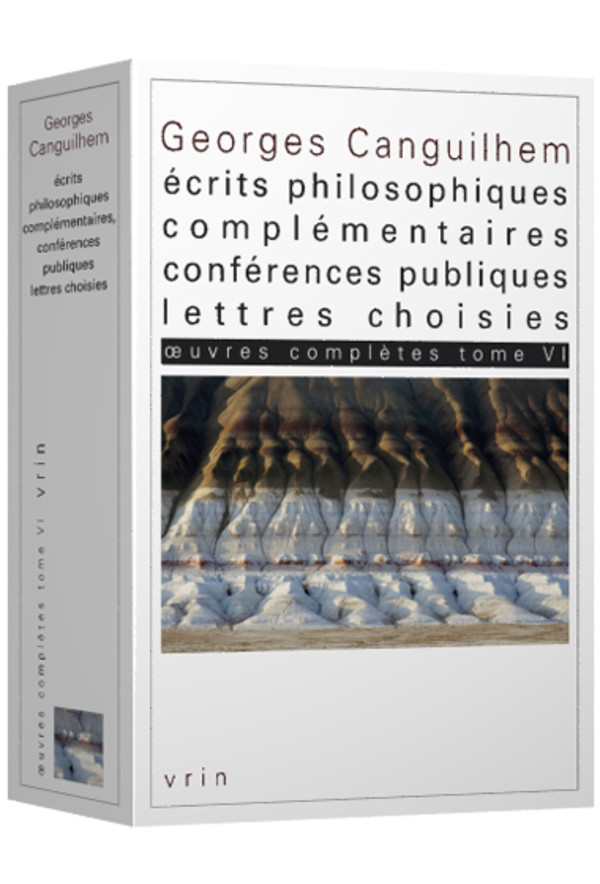
Georges Canguilhem, Œuvres complètes Tome VI : Écrits philosophiques complémentaires, conférences publiques, lettres choisies – Vrin, November 2024

Georges Canguilhem, Œuvres complètes Tome VI : Écrits philosophiques complémentaires, conférences publiques, lettres choisies – Vrin, November 2024

The final volume of this really excellent series. [Update – now listed for May 2025]

Textes édités, introduits et annotés par Camille Limoges et Pierre-Olivier Méthot.

Le tome VI et dernier des Œuvres complètes de Georges Canguilhem réunit des écrits retrouvés et complémentaires, jusqu’ici peu accessibles, et dont souvent l’existence même restait ignorée. Y figurent des articles des années 1920, le mémoire de diplôme d’études supérieures sur la théorie de l’ordre et du progrès chez Auguste Comte, et
près d’une dizaine de conférences publiques prononcées des années 1940 aux années 1970, qui témoignent de l’élaboration chez Canguilhem d’une véritable doctrine sur les normes. Ce tome VI contient également quelque trois cents lettres à
une trentaine de correspondants de même qu’un important écrit, Philosophie, sa première synthèse philosophique personnelle, au tournant des années 1930, qui appelle à un réexamen des idées du jeune Canguilhem, notamment sur la psychologie et sur ses rapports avec la philosophie.

Tout en réaffirmant des constats dans la pensée de Georges Canguilhem, ce dernier tome permet d’élargir et d’approfondir notre compréhension d’une oeuvre qui ne connut jamais de purgatoire, mais dont la phase de gestation fut longtemps largement
ignorée.

Posted in Georges Canguilhem, Uncategorized | Leave a comment