Ilias Alami and Adam D. Dixon, The Spectre of State Capitalism – OUP, July 2024 (print and open access)
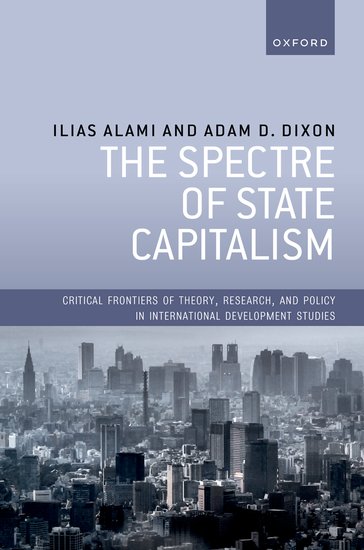
Ilias Alami and Adam D. Dixon, The Spectre of State Capitalism – OUP, July 2024 (print and open access)

The state is back, and it means business. Since the turn of the 21st century, state-owned enterprises, sovereign funds, and policy banks have vastly expanded their control over assets and markets. Concurrently, governments have experimented with increasingly assertive modalities of statism, from techno-industrial policies and spatial development strategies to economic nationalism and trade and investment restrictions. 

This book argues that we are currently witnessing a historic arc in the trajectories of state intervention, characterized by a drastic reconfiguration of the state’s role as promoter, supervisor, shareholder-investor, and direct owner of capital across the world economy. It offers a comprehensive analysis of this “new state capitalism”, as commentators increasingly refer to it, and maps out its key empirical manifestations across a range of geographies, cases, and issue areas. Alami and Dixon show that the new state capitalism is rooted in deep geopolitical economic and financial processes pertaining to the secular development of global capitalism, as much as it is the product of the geoeconomic agency of states and the global corporate strategies of leading firms. The book demonstrates that the proliferation of muscular modalities of statist interventionism and the increasing concentration of capital in the hands of states indicate foundational shifts in global capitalism. This includes a growing fusion of private and state capital, and the development of flexible and liquid forms of property that collapse the distinction between state and private ownership, control, and management. This has fundamental implications for the nature and operations of global capitalism and world politics.

This is an open access title available under the terms of a CC BY-NC-ND 4.0 International licence. It is free to read on the Oxford Academic platform and offered as a free PDF download from OUP and selected open access locations.
Posted in Uncategorized | Leave a comment

Stuart Elden, “Foucault and Dumézil on Antiquity” – article published in Journal of the History of Ideas

I’m really pleased to have an article in the new issue of the Journal of the History of Ideas:

Stuart Elden, “Foucault and Dumézil on Antiquity”, Journal of the History of Ideas, Vol 85 No 3, July 2024, 571-600

The biographical links between Michel Foucault and the comparative mythologist and philologist Georges Dumézil have received more attention than their intellectual connections. This article contributes by surveying Foucault’s engagements, from a 1957 radio lecture to his late lectures at the Collège de France. Particular focus is on lectures on structuralism and history in 1970, some references between 1970 and 1981, and the use of Dumézil’s work in each of Foucault’s two final courses at the Collège de France. In each, Foucault takes up Dumézil’s analyses of mythology in developing his own projects concerning history and antiquity.

The article is behind a paywall, but email me if you don’t have institutional access to a copy.

This piece is a sequel to an earlier book chapter on Foucault and Dumézil’s understandings of sovereignty, published last year in the Handbook on Governmentality, and a piece published earlier this year on the relationship between three of Foucault’s mentors – “Canguilhem, Dumézil, Hyppolite: Georges Canguilhem and his Contemporaries“. In my mind these make an informal trilogy of articles which bridge the Foucault and Canguilhem books, on the one hand, and my new project on Indo-European thought in twentieth-century France, on the other.

Preprints are available at Warwick’s WRAP site if you don’t have library access or, as I said above, I’ll share if you send me an email.


Posted in Uncategorized | 2 Comments

Theory and Social Inquiry – relaunch of Theory and Society as open access journal

Theory and Social Inquiry – relaunch of Theory and Society as open access journal

Theory and Social Inquiry is dedicated to analyzing all facets and dimensions of social life, from micro-level interactions between individuals to the durable institutions that organize societies at a macro level. Our modal article asks big questions, theorizes boldly, and draws on thorough empirical research to arrive at knowledge that often challenges conventional wisdom. We endorse the principle that a critical analysis of existing social structures and social processes is not divorced from – but an important source of – scientific discovery. The journal values rigorous humanistic inquiry as well as historical perspectives on continuity and change. We are open to the full range of social scientific methods, including scholarship that draws on new and innovative approaches under the rubric of problem-solving sociology and engaged research. Theory-inspired, theory-driven, and theory-relevant social science takes many forms. Theory and Social Inquiry is interested in all these modes.

Posted in Uncategorized | Leave a comment

Peter Osborne (ed.) Futurethoughts: Critical Histories of Philosophy – CRMEP, 2024 (open access; includes new translations of Foucault)

Peter Osborne (ed.) Futurethoughts: Critical Histories of Philosophy – CRMEP, 2024

Available open access, this includes new translations of Foucault – parts of his 1950s course on anthropology and his tribute to Jean Hyppolite.

Contributors: Isabelle Alfandary, Éric Alliez, Anna Argirò, Howard Caygill, Michel Foucault, Daniel Gottlieb, Louis Hartnoll. Orazio Irrera, Eric Prenowitz, Morteza Samanpour, Stella Sandford, Naomi Waltham-Smith, Simon Wortham

Post-Kantian European philosophy has always involved a process of reflection upon and contestation of its own problematic status as an independent discipline. The constant setting and the overstepping of boundaries – conceptual and institutional – are the hallmark of its development. The writings in this volume – organized according to the institutional genres of the presentations within CRMEP from which they derive – revisit some of these encounters of phil­osophy with anthropology, economy, sociology and psycho­analysis, respectively, in both the French and German traditions. Increasingly, thinkers such as Foucault and Derrida – the bookends of this collection – appear as singular figures only within the broader, densely imbricated contexts from which they depart. Still figures of the future, constituting our philosophical present with new pasts.

This book is available as a free eBook. The electronic version of this book is licensed under a Creative Commons Attribution-Non-Commercial No Derivatives 4.0 International Licence (CC-BYNC-ND). For more information, visit creativecommons.org.

Posted in Michel Foucault | Leave a comment

Shakespeare and the Reactionary Mind: Counterrevolution Fascism Militarism – Garrick’s Temple to Shakespeare, 31 August 2024

Shakespeare and the Reactionary Mind: Counterrevolution, Fascism, Militarism – Garrick’s Temple to Shakespeare, 31 August 2024

Garrick’s Temple to Shakespeare, Hampton Court Road, Hampton, TW12 2EJ, United Kingdom

Speakers – John Gillies, Amy Lidster, Björn Quiring, Jennifer Rust and Richard Ashby.

Booking via Eventbrite

Conservatives have always tended to claim Shakespeare as one of their own. In the 1950s, E. M. W. Tillyard developed the influential thesis that
Shakespeare’s plays uphold the traditional social hierarchies and suggest that these hierarchies are embedded in nature. Ulysses’ speech on “degree”
in ‘Troilus and Cressida’ serves as one of the key witnesses in this context. Since Tillyard’s time, scholars have persistently pointed out elements of Shakespeare’s plays that do not fit this assumption: the actions on stage persistently seem to contradict and subvert the noble proclamations of Ulysses and his peers. In the histories and tragedies, the persons on top of the hierarchy mostly seem to end up there by a combination of luck, political manipulation and, first and foremost, the effective use of violence, rather than by any apparent inborn excellence.

Accordingly, Shakespeare’s plays represent a volatile social order in which communal life unfolds as perpetual warfare between interest groups – sometimes open, sometimes covert. With Corey Robin and others, one might venture the hypothesis that this apparent discrepancy between words and deeds delineates a symptomatic ambivalence that characterizes the reactionary worldview: while reactionaries claim to be conservative, their enforcement of traditional hierarchies often takes on the form of a violent interruption of these very traditions. In the name of nature and of “real life”, they voice unprecedented demands that those who are destined to rule may finally be allowed to rule as they must and to keep their inferiors in the subjugated position they deserve. The most extreme form these demands can take is that of fascism, a militant movement of
revolutionary conservatism that, according to Hannah Arendt, has the inherent tendency to destroy everything it ostensibly holds sacred (such as the family, the state and the nation). Shakespeare’s plays (first and foremost, ‘Coriolanus’, ‘Julius Caesar’, ‘King Lear’ and ‘Hamlet’) have been used to explore this ambivalence, by reactionaries and fascists as well as by their opponents. This one-day symposium aims to investigate this complex relationship.

Posted in Uncategorized | Leave a comment

Foucault’s revised texts – a list with links to comparisons

Michel Foucault did not continually revise his earlier texts in the way some other authors do. But some of his books and articles do exist in different versions. This is not always fully recognised, and some of these changes are quite important in tracking his changing ideas and terminology. 

A photograph of some photocopies of texts by Foucault with handwritten indications of changes between versions

Over the years I’ve been working on Foucault I’ve done quite a lot of comparisons between variant forms of texts, which have informed my writing, and many of which I’ve shared here on Progressive Geographies. I’ve now made a list with an attempt at a comprehensive survey of those texts, with links to comparisons I’ve done or where they can be found elsewhere. There are still texts where comparison is yet to be done.

The list does not include excerpts from Collège de France lectures which have now been published in full. Nor does it include texts which were published in unauthorised editions which have since been reedited in more reliable versions in the Vrin series Philosophie du présent. This is very valuable work, but in those instances the original unauthorised version is fully superseded by the critical edition. What I’m interested in are those texts where Foucault himself published two distinct versions, where both retain an importance in tracing his ideas.

In some instances, Dits et écrits provides a comparative text, marking the changes, but the English translation in Essential Works simply reprints or lightly amends a previous translation of one or other version instead. This is unfortunate, since Essential Works claims to be a translation of texts from Dits et écrits, and the French editors had already done the hard work.

For English translations of short texts by Foucault see Richard Lynch and Daniele Lorenzini’s useful bibliography. As that listing shows, there are often multiple translations of texts, but that is not my purpose with this list – it is to point to comparison of different French versions.

The list is here. As ever with these research resources it is work in progress and comments and corrections are welcome. I hope people working on Foucault find it useful.

Posted in Michel Foucault, Uncategorized | Leave a comment

How annoying are adverts on Progressive Geographies?

If you read this blog on the web (rather than through an rss reader, for example), and don’t use an ad-blocker, how annoying are the adverts?

They are hopefully fairly minimal and have two benefits – they mean I don’t have to pay WordPress to not have them, and the tiny amount they bring in covers the running cost of the site (domain registration, file storage upgrade, etc.).

I’ve largely thought that if people find them that annoying they can use an ad-blocker – this site is hardly the only place where you experience them. But I’m tempted to remove them entirely, even if that costs me a bit. I’ve not wanted to go down the subscription model, or premium content, or donations…

Any thoughts appreciated.

Posted in Uncategorized | 4 Comments

Jean-Luc Nancy and Claire Denis, The Intruder – trans. Jeff Fort, Fordham University Press, May 2024

Jean-Luc Nancy and Claire Denis, The Intruder – trans. Jeff Fort, Fordham University Press, May 2024

In 1991, Jean-Luc Nancy’s heart gave out. In one of the first such procedures in France, a stranger’s heart was grafted into his body. Numerous complications followed, including more surgeries and lymphatic cancer. The procedure and illnesses he endured revealed to him, in a more visceral way than most of us ever experience, the strangeness of bodily existence itself and surviving the stranger within him. 

During this same period, Europe began closing its borders to those seeking refuge from war and poverty. Alarmed at this trend and drawn to a highly intimate form of strangeness with which he had been living for years, Nancy set out in The Intruder to articulate how intrusion—whether of a body or a border—is not antithetical to one’s identity but constitutive of it. 

In 2004, Claire Denis adapted The Intruder into a film already hailed among the most important of our century. This edition includes Nancy’s and Denis’s accounts of turning philosophy into film and the text of a shorter collaboration between the two of them. Throughout, Nancy and Denis push us to recognize that to truly welcome strangers means a constant struggle against exoticism, enforced assimilation, and confidence in our own self-identity

Posted in Jean-Luc Nancy, Uncategorized | Leave a comment

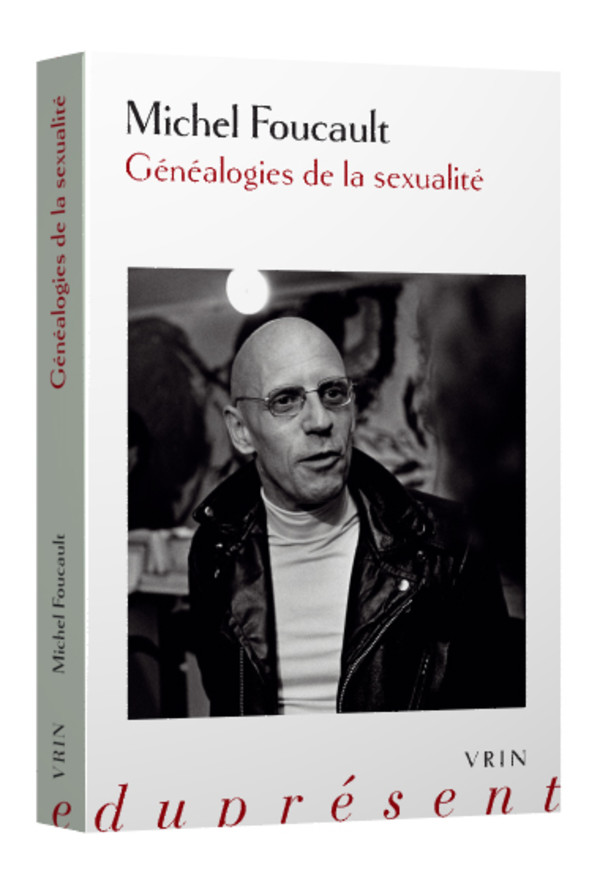
Michel Foucault, Généalogies de la sexualité – ed. Henri-Paul Fruchaud and Daniele Lorenzini, Vrin, September 2024

Michel Foucault, Généalogies de la sexualité – ed. Henri-Paul Fruchaud and Daniele Lorenzini, Vrin, September 2024

A really important collection of material around the early stages of the History of Sexuality, including insights into volumes not published, and a critical edition of the 1980 seminar in New York which is a valuable document in how the series was undergoing a major transformation.

La sexualité, est-elle réprimée? Devrions-nous par conséquent nous efforcer de la libérer? Et si elle l’est, pourquoi sommes-nous sans cesse appelés à en parler – à dire vrai à propos de nos désirs sexuels et à reconnaître dans notre sexualité la clé de notre identité?
Ces questions sont au cœur du projet foucaldien d’une histoire de la sexualité. Ce volume réunit une série de textes inédits qui relèvent de deux moments fondamentaux dans l’élaboration d’un tel projet. D’une part, le moment 1975-1976 : les conférences prononcées aux États-Unis sur la notion de répression, le cours à l’Université de São Paulo sur la généalogie du savoir moderne sur la sexualité, ainsi que la première version du début de La volonté de savoir sont tous centrés sur l’époque moderne et nous offrent une perspective précieuse sur la façon dont Foucault conçoit initialement son Histoire de la sexualité. D’autre part, le séminaire que Foucault anime, en 1980, au New York Institute for the Humanities sur le thème « Sexualité et solitude » témoigne du recentrement de l’étude du dispositif de sexualité en direction de l’analyse de l’émergence historique de la chair chrétienne dans le christianisme primitif.
Les textes ici recueillis permettent ainsi de suivre l’évolution complexe du projet foucaldien d’une histoire de la sexualité et de prendre la mesure de son ambition, de sa richesse et de son actualité.

Édition et apparat critique par H.-P. Fruchaud et D. Lorenzini. Introduction par D. Lorenzini, H.-P. Fruchaud, A.I. Davidson.

Posted in Michel Foucault, Uncategorized | 1 Comment

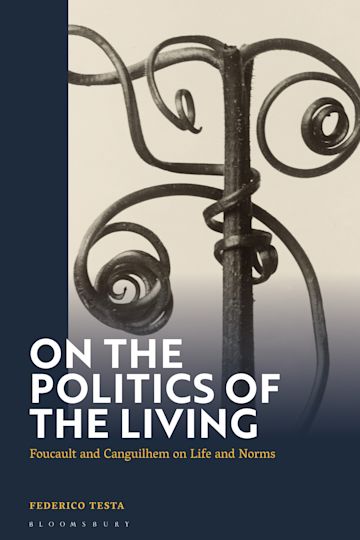
Federico Testa, On the Politics of the Living: Foucault and Canguilhem on Life and Norms – Bloomsbury, December 2024

Federico Testa, On the Politics of the Living: Foucault and Canguilhem on Life and Norms – Bloomsbury, December 2024

Bringing the philosophies of Michel Foucault and Georges Canguilhem into dialogue, Federico Testa examines the notions of life and norms underlying our modern experience of politics. 

Today’s global health crisis acts as a stark reminder that life is at the core of our political debates and dilemmas. We can no longer think of forms of political organization, citizenship and participation without considering the materiality and precarity of our own organic life. Ours is a politics of the living.

Within this context, this book examines Foucault’s work on the politicization of life and biopolitics through the lens of Canguilhem’s notion of norms. Testa extracts from Canguilhem’s philosophy the conceptual tools to re-interpret Foucault’s ideas on power, and reconceptualises normativity as a process of the creation of norms that provide tools for political and social analysis and for thinking resistance. In so doing, he uncovers new and important possibilities for biopolitical resistance. 

Demonstrating not only Canguilhem’s underexplored social and political concerns but also the intellectual osmosis between the two thinkers, On the Politics of the Living is an urgent examination of the ever-increasing significance of the concepts of life, care and health in today’s political discourse.

Posted in Georges Canguilhem, Michel Foucault, Uncategorized | 5 Comments