Richard Wilson, Shakespeare’s Fascist Followers – Bloomsbury, February 2025

Richard Wilson, Shakespeare’s Fascist Followers – Bloomsbury, February 2025
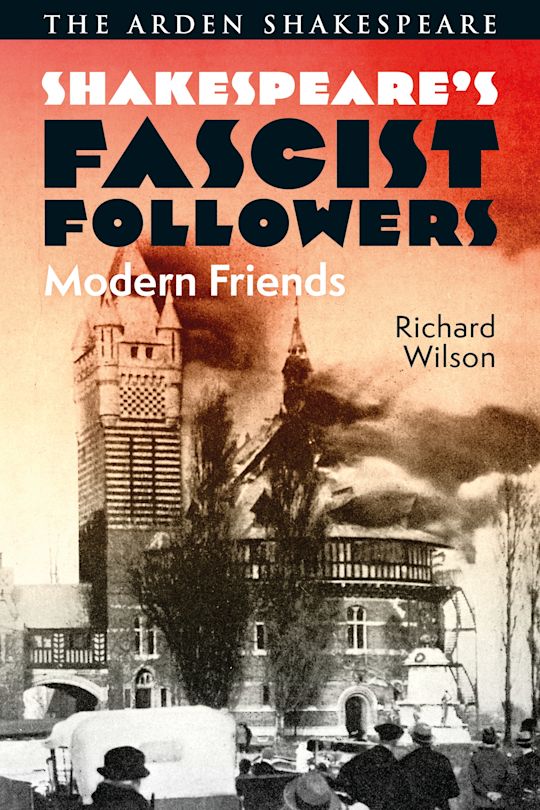
Very good to see this book scheduled. (update May 2025: it is now scheduled for August 2025. I’ve added the cover.)

‘Richard Wilson’s meticulously researched, powerfully argued and brilliantly written account of Shakespeare’s 20th-century fascist followers is not just an important but a genuinely essential book.’ Robert Shaughnessy, Guildford School of Acting, UK

In this illuminating book, Richard Wilson demonstrates how in the 20th century Shakespeare and his plays were subjected to a sustained institutionalized misreading, which served the purposes of proto-, present and future fascism. It exposes how Shakespeare was misappropriated by the far right to represent Britain’s supposedly glorious history, and the ways in which they utilized him and the cultural capital of his work. Wilson argues that in Britain the plays were invoked as a way to anglicize fascism, as its leaders campaigned ‘to recover theatre for the national cause’ by ‘looking back fondly to Elizabethan England’. His extensive and rigorous research also gestures beyond Britain, taking in case studies from North America, Germany and France.

Some of the names this book unearths will surprise: many of the right-wing political views or leanings of the prominent figures discussed have been brushed under the carpet, left unexplored or ignored. Across its ten chapters, this book provides in-depth case studies of a wide variety of figures, from A. K. Chesterton, who was both editor of the British Union of Fascists’ newspaper Blackshirt and former manager of press and publicity at the Shakespeare Memorial Theatre, to celebrated Shakespeareans such as G. Wilson Knight, through to writers, artists and theatre practitioners including W. B. Yeats, T. S. Eliot, Edward Gordon Craig and Philip Larkin, among many others. At a time when democracy is under threat, populism is on the rise and far right views are increasingly prominent in our political landscape, Richard Wilson’s book makes an especially vital and timely contribution to Shakespeare scholarship.

Posted in William Shakespeare | Leave a comment

Futures of Critique in a Pluricentric World, London, 12-13 July 2024

Futures of Critique in a Pluricentric World

A British Academy conference exploring horizons and methods of a critical theory for the 21st century

Venue: Stewart House 2/3, Senate House London

Dates: 12 and 13 July, 2024 from 10:00 am to 6:00 pm BST

Taking as its premise the notion that critical languages move multi-directionally between a plurality of centres rather than disseminate from a single, metropolitan axis of power, this conference considers the emergences, conflicts, suppressions, adaptations and mutations of concepts that take place at a distance from the loci traditionally associated with critical theory—metropolitan Europe, North America. The speakers explore, inter alia, cases of conceptual cross-pollinations across worlds and histories beyond the “Global North”; and the influence, facilitated by variously colonial and imperial conditions of linguistic and philosophical translation, of concepts from the “Global South” on the development of critical theory. Broadly construing critical theory to include not only Frankfurt School Critical Theory but also feminist and gender theory, eco-criticism, psychoanalysis, and postcolonial and decolonial theory among others, the conference will have a dual aim: (i) to frame critical theory as a productively unstable entity that retains intelligible markers of its origins in sociopolitical and epistemological “crises”; and (ii) “map” the historical and contemporary diversity of critical keywords, their translations, and the tools they provide us for articulating the emancipatory potentials of vocabularies be they indigenous, hybrid, or global.

Free and open to the public, though registration is required. To register, please visit here:

This event is the third of three associated with Dr. Julia Ng’s British Academy Mid-Career Fellowship project Daoism and Capitalism: Early Critical Theory and the Global South (MCFSS23\230039). Thanks also go to the Centre for Philosophy and Critical Thought ** and Royal Holloway’s Centre for Continental Philosophy for their generous support.

** N.B. Due to the UCU boycott of Goldsmiths and in solidarity with the staff who are currently at risk of redundancy due to the restructure planned by Goldsmiths’ management, this conference has been moved from campus to an alternative location and dissociated from Goldsmiths. We thank you for your understanding and support.

(For updates and more information, including abstracts, please visit here)

Posted in Uncategorized | Leave a comment

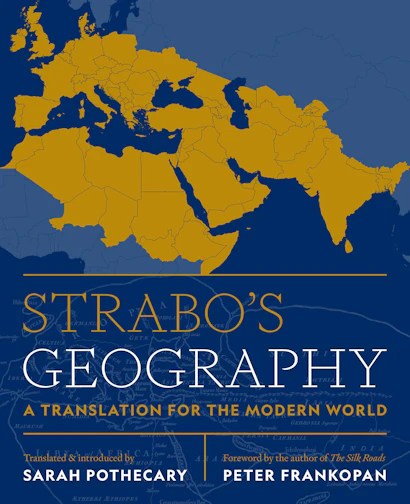
Strabo’s Geography: A Translation for the Modern World, trans. Sarah Pothecary – Princeton University Press, June/August 2024

Strabo’s Geography: A Translation for the Modern World, trans. Sarah Pothecary – Princeton University Press, June/August 2024

Strabo’s Geography is an encyclopedic description of the ancient world as it appeared to a contemporary observer in the early Roman empire. Information about taming elephants, collecting saffron, producing asphalt, and practicing yoga is found alongside accounts of prostitution, volcanic activity, religious festivals, and obscure eastern dynasties—all set against the shifting backdrop of political power in the first century CE. Traveling around the Mediterranean, Strabo gathered knowledge of places and people, supplementing his firsthand experiences with an immense amount of reading to create a sweeping chronicle that attempts to answer the implicit questions “Who are we?” and “Where do we come from?” Sarah Pothecary’s new translation of Strabo’s complete Geography makes this important work more accessible, relevant, and enjoyable than ever before.

Conveying the informal, lively, and almost journalistic style of Strabo’s Greek, this translation connects the ancient and modern worlds by providing modern names and maps for places mentioned in the text, a generous page layout, and marginal notes, allowing readers to appreciate Strabo’s work directly and immediately. The result mimics what Strabo was doing two thousand years ago—relating the rapidly changing present of his original readers to their own ancient past.

A remarkably modern translation of a revealing window on the ancient world, this is essential reading for anyone interested in how we look at both antiquity and the world today.

Posted in Uncategorized | Leave a comment

Danielle Rosvally, Theatres of Value: Buying and Selling Shakespeare in Nineteenth-Century New York City – SUNY Press, July 2024

Danielle Rosvally, Theatres of Value: Buying and Selling Shakespeare in Nineteenth-Century New York City – SUNY Press, July 2024

Theatres of Value explores the idea that buying and selling are performative acts and offers a paradigm for deeper study of these acts—”the dramaturgy of value.” Modeling this multifaceted approach, the book explores six case studies to show how and why Shakespeare had value for nineteenth-century New Yorkers. In considering William Brown’s African Theater, P. T. Barnum’s American Museum and Lecture Hall, Fanny Kemble’s American reading career, the Booth family brand, the memorial statue of Shakespeare in Central Park, and an 1888 benefit performance of Hamlet to theatrical impresario Lester Wallack, Theatres of Value traces a history of audience engagement with Shakespearean cultural capital and the myriad ways this engagement was leveraged by theatrical businesspeople.

Posted in Uncategorized | Leave a comment

Jacques Rancière on Eric Hazan at Sidecar

Jacques Rancière on Eric Hazan at Sidecar – Grand Éditeur

There is an infinitely reductive way of commemorating Eric Hazan, simply by saluting him as a courageous publisher and defender of the radical left, an unyielding supporter of the rights of the Palestinians and a man who, against the grain of his times, so believed in revolution that he devoted a book to the first measures to be taken on the morning after.

He was certainly all these things, but we first need to register the essential point: in an age when the word ‘publishing’ conjures up empires of businessmen for whom everything is a commodity, even the most nauseating ideas, he was first and foremost a great publisher. This was not simply a matter of competence. It was much more a question of personality. And Eric was an exceptional personality: possessed of a mind curious about everything, a scientist by training and neurosurgeon in a previous life, but also a connoisseur of the arts and lover of literature; a city-dweller, sensitive to the living history of every stone in the street; an open and welcoming man with a radiant smile and eloquent handshake, eager to communicate his passions, to share his discoveries and convince others – without preaching – of what he considered to be the exigences of justice.

This article was originally published in French in Libération.

Read on: Eric Hazan, ‘Faces of Paris’, NLR 62.

Posted in Uncategorized | Leave a comment

Gillian Rose, Marxist Modernism: Introductory Lectures on Frankfurt School Critical Theory – Afterword by Martin Jay, edited by James Gordon Finlayson and Robert Lucas Scott, Verso Books, July 2024

Gillian Rose, Marxist Modernism: Introductory Lectures on Frankfurt School Critical Theory – Afterword by Martin Jay, edited by James Gordon Finlayson and Robert Lucas Scott, Verso Books, July 2024

Update October 2024: there is a review by Adrian Wilding in Historical Materialism (open access)

Lectures on art, Marxism, and critical theory by the legendary philosopher, collected for the first time

Marxist Modernism is a comprehensive yet concise and conversational introduction to the Frankfurt School. It is also a new resource from one of the twentieth century’s most important philosophers: Gillian Rose.

Her 1979 lectures on the Frankfurt School explore the lives and philosophies of a range of the school’s members and affiliates, including Adorno, Lukács, Brecht, Bloch, Benjamin, and Horkheimer, and outline the way each theorist developed Marx’s theory of commodity fetishism into a Marxist theory of culture.

Posted in Uncategorized | Leave a comment

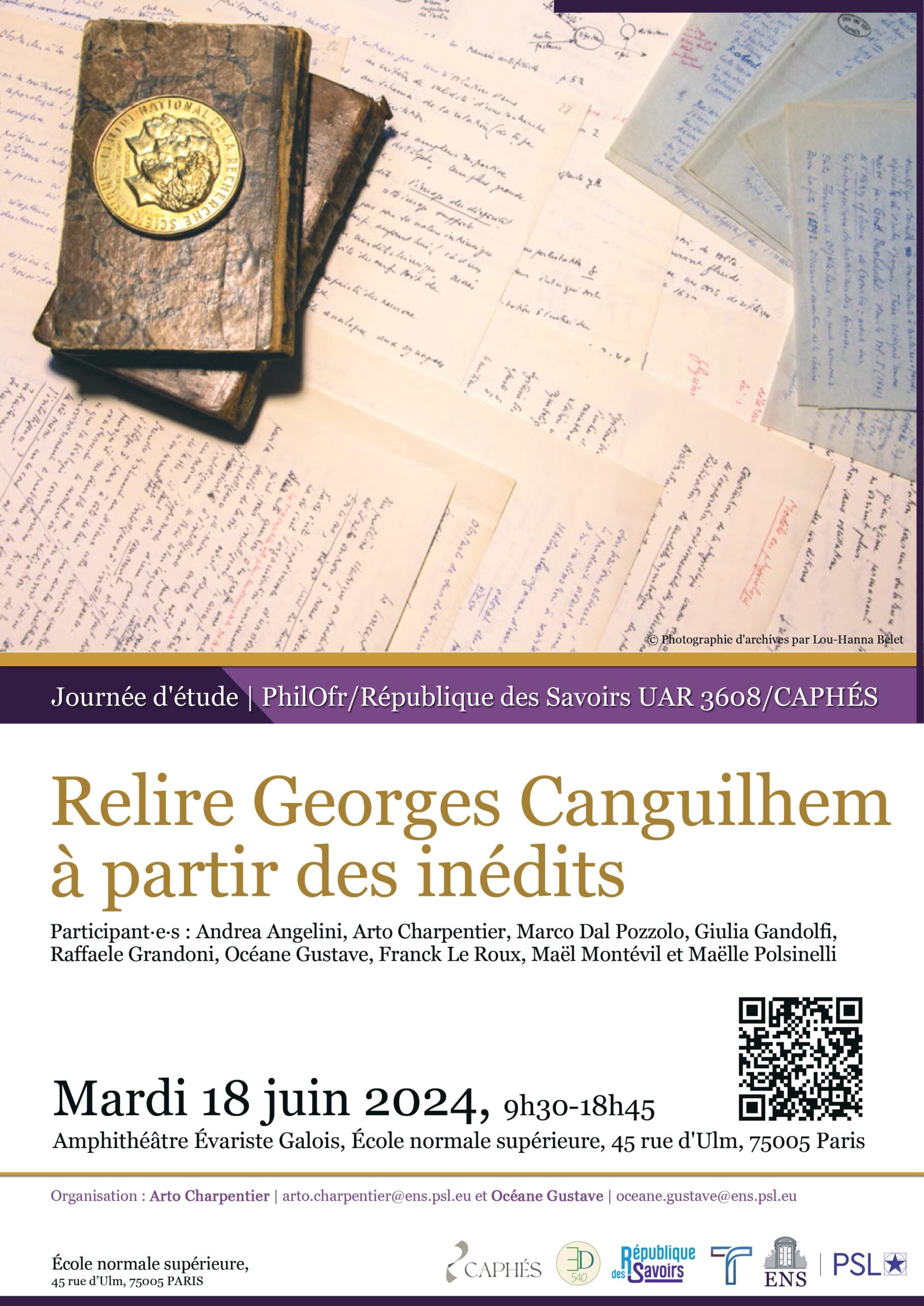
Journée d’étude: Relire Canguilhem à partir des inédits – ENS-PSL, Paris 18 juin 2024

Journée d’étude: Relire Canguilhem à partir des inédits – ENS-PSL, Paris 18 juin 2024

Posted in Conferences, Georges Canguilhem, Uncategorized | Leave a comment

Stanley Aronowitz, Live Theory: The Aronowitz Reader, foreword by Cornel West, edited by Peter Bratsis, Bruno Gulli, Kristin Lawler, and Michael Pelias – Columbia University Press, September 2024

Stanley Aronowitz, Live Theory: The Aronowitz Reader, foreword by Cornel West, edited by Peter Bratsis, Bruno Gulli, Kristin Lawler, and Michael Pelias – Columbia University Press, September 2024

Stanley Aronowitz was a towering figure on the American Left for over sixty years. Both a tireless organizer and a militant social and political theorist, Aronowitz was a highly perceptive analyst of class power. He was dedicated throughout his career to the development and circulation of conceptual weapons for the working class and for all those who faced oppression within American society.

Live Theory: The Stanley Aronowitz Reader brings together in thirteen seminal essays Aronowitz’s theoretical contributions to fundamental questions regarding science, class, culture, and education, alongside his pioneering interventions on labor, contract unionism, and the ongoing struggle for radical democracy. It is a crucial introduction to an indispensable thinker.

Posted in Uncategorized | Leave a comment

Étienne Achille and Oana Panaïté, Fictions of Race in Contemporary French Literature: French Writers, White Writing – Oxford University Press, March 2024

Étienne Achille and Oana Panaïté, Fictions of Race in Contemporary French Literature: French Writers, White Writing – Oxford University Press, March 2024

Fictions of Race in Contemporary French Literature: French Writers, White Writingengages with Whiteness in French literature to provide an unprecedented critique of the institutionally and symbolically hegemonic figure that has gone heretofore unacknowledged and untheorized. The book identifies a set of formal features, functions, and aesthetic dispositions which reveal the ways in which White writers grapple with the postcolonial subject matter. We focus on seven case studies featuring texts by Marie Darrieussecq, Virginie Despentes, Annie Ernaux, Nicolas Fargues, Pierre Lemaitre, Édouard Louis, and Nicolas Mathieu, representative of a larger body of works published by left-leaning, politically progressive writers who stand in stark ideological contrast while sharing certain thematic and aesthetic similarities with books published by neo-reactionary authors such as Michel Houellebecq, purportedly the epitomic French writer of our age. By positing the operative and transitional concept of White writer, our analysis surpasses disciplinary boundaries established in distinct historical and political contexts and maintained by institutional inertia and ideological inducements, to foreshadow the poetics of White writing in contemporary France and offer a replicable model for engaging with a literary field pervaded by (post)colonial themes. We argue that it is imperative to recast critically the enduring boundedness of race and empire as a matter of equal concern to White and non-White writers. Ultimately, this epistemological gesture, stemming from the recognition that Whiteness constitutes a determining factor in the construction of the modern literary field, allows readers and scholars to grasp the relationality of contemporary writing and to uncover the ‘common library’ of literature in French.

Posted in Uncategorized | Leave a comment

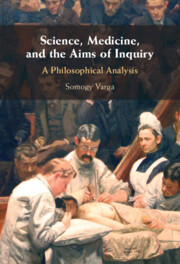
Somogy Varga, Science, Medicine, and the Aims of Inquiry: A Philosophical Analysis – Cambridge Univesity Press, May 2024

Somogy Varga, Science, Medicine, and the Aims of Inquiry: A Philosophical Analysis – Cambridge Univesity Press, May 2024

After its unparalleled rise and expansion over the past century, medicine is increasingly criticized both as a science and clinical practice for lacking scientific rigor, for contributing to overmedicalization, and for failing to offer patient-centered care. This criticism highlights serious challenges which indicate that the scope and societal role of medicine are likely to be altered in the 21st century. Somogy Varga’s ground-breaking book offers a new perspective on the challenges, showing that they converge on fundamental philosophical questions about the nature and aim of medicine. Addressing these questions, Varga presents a philosophical examination of the norms and values constitutive of medicine and offers new perspectives on how to address the challenges that the criticism raises. His book will offer valuable input for rethinking the agenda of medical research, health care delivery, and the education of health care personnel.

Posted in Uncategorized | Leave a comment