
In 1940, Alexandre Koyré was persuaded by Charles de Gaulle’s government in exile that he could make his most useful contribution to the French war effort by moving to New York and acting as secretary general of the planned École Libre des Hautes Études (ELHE). In his late 40s, Koyré had initially tried to join the army instead. Modelled on Paris’s École Pratique des Hautes Études, but explicitly tied to France Libre, the ELHE was to be a home for several French and Belgian exiles, teaching predominantly in French, in New York. It was given accommodation and other support by the New School for Social Research, which had been initially founded by Columbia University academics disputing US involvement in World War I, and hosting the University in Exile, made up of scholars leaving Nazi Germany or Fascist Italy in the 1930s. (The University in Exile was renamed the Graduate Faculty of Political and Social Science in 1935.)
Koyré’s role at the ELHE is relatively well-known, at least from the administrative side, as is his role editing its journal Renaissance. His teaching there is perhaps less known, especially since he was also teaching at the New School itself, where he was an Associate Professor. A Russian, whose education was in Germany and France, he was now teaching classes in French at the ELHE and in English at the New School. Koyré was not financially supported by the Emergency Committee in Aid of Displaced Foreign Scholars, but they did consider him as a recipient of support, and sent his details to several universities which they urged to consider him for a post. The Rockefeller Foundation partially supported his position at the New School.
Some of the teaching in New York relates to his publications – most explicitly to his books on Plato and Descartes. Some of the themes would be later discussed in his 1957 book From the Closed World to the Infinite Universe, which developed from teaching at Johns Hopkins University in the early 1950s, and in his work on Galileo, Newton and astronomy. But there are also some themes which are less developed in his major publications. In her biography of Koyré, Paola Zambelli gives some of the details of his teaching but not a full list of classes. Perhaps there is some interest in setting out what I currently know, taken from the course catalogues of the ELHE and New School, and other material in the New School archives and elsewhere.
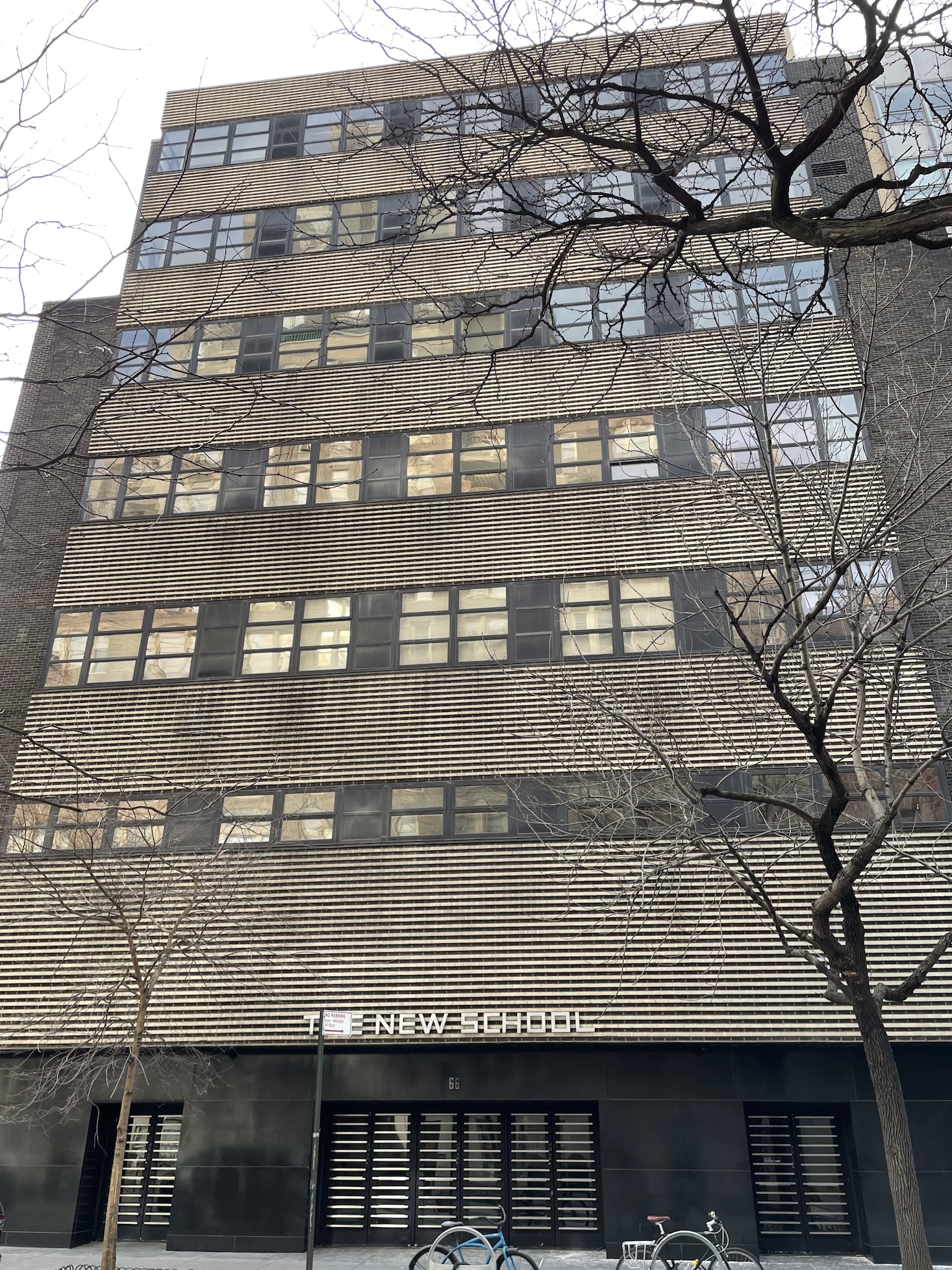
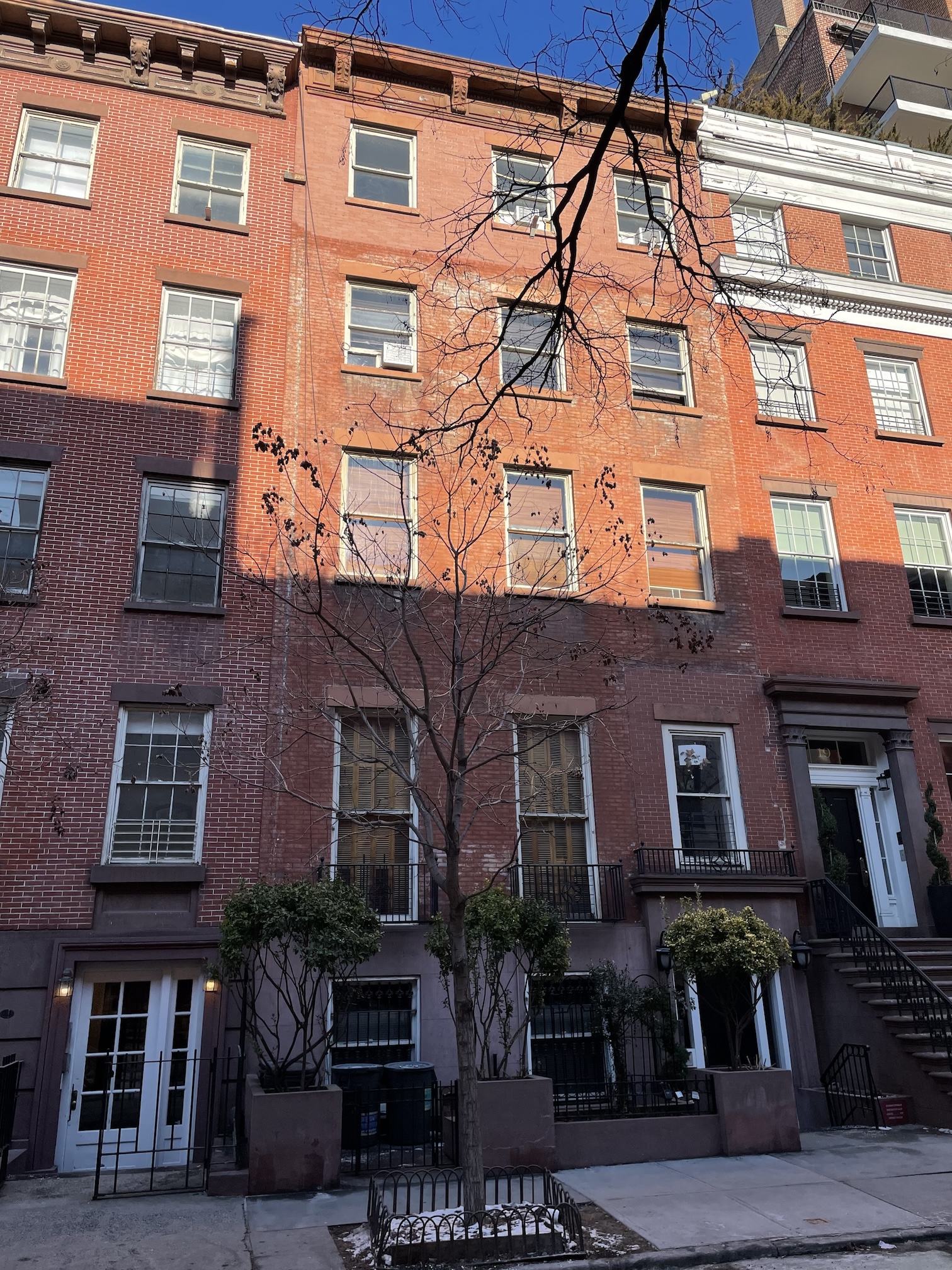
1941-42
New School: 3 October 1941 “What is Truth?”
ELHE launched 24 November 1941, formal opening 14 February 1942.
Spring 1942
ELHE: “Descartes et le cartésianisme”, six lessons (public)
ELHE: “Conférences de licence, travaux d’étudiants, explication de textes”, 15 classes (closed)
New School: “Readings of Philosophical Classics”, 15 weeks (on Plato’s Meno, Protagoras, and Theaetetus)
New School: “Introduction to Modern Logic”, 15 weeks
Fall 1942
ELHE: “Pascal”, six classes (public)
ELHE: “Problèmes de logique et d’épistémologie”, 15 lectures (closed)
New School: “Introduction to Medieval Philosophy” (Fall and Spring)
Spring 1943
ELHE: “Philosophie médiévale”, ten classes (public)
ELHE: “Textes de philosophes médiévaux: S. Augustin, S. Anselme” (closed)
ELHE: “Philosophie Tchèque du moyen-âge et de la renaissance”, four classes
He also participated in an ELHE course on “Le Dit d’Igor et la question de son authenticité”, organised by the Slavic Section, alongside Henri Grégoire, Roman Jakobson, Wacław Lednicki and George Vernadsky. The Song (or Tale) of Igor was an Old East Slavic poem, probably dating from the 12th-13th century CE. Grégoire, Jakobson and Marc Szeftel would collaborate on an edition and translation of the text as La Geste du Prince Igor’ in 1948 (on which, see here.)
New School: “Introduction to Medieval Philosophy” (continuation)
Fall 1943
ELHE: “La Doctrine politique de Platon”, 12 classes
ELHE: “Lecture de textes de Platon”, 12 classes
New School: “Introduction to Logic”
Koyré’s 1945 book Introduction à la lecture de Platon, translated as Discovering Plato, treats the Meno, Protagoras and Theatetus in its first part (the dialogues discussed in 1942), after an introductory discussion of “Philosophic Dialogue”; and its second part is on Politics.
Spring 1944
ELHE: “Les origins intellectuelles du monde moderne”
New School: “History of Modern Philosophy”
Fall 1944
ELHE: “Les Grandes Problèmes de la Métaphysique”, 15 classes (October-January)
ELHE: “Lecture de Textes et Exercises Pratiques”, 30 lessons (October-May)
New School: “Science and the Modern World: Studies in the Origin and Rise of Scientific Outlook from Copernicus to Newton”
New School: “Theory of Knowledge”, joint seminar with Kurt Riezler and Leo Strauss on “Idealism and empiricism on the basis of Plato’s dialogue, Theaetetus”
Spring 1945
ELHE: “L’Age de la Raison: de Montesquieu à Voltaire” (February-May)
ELHE: “Lecture de Textes et Exercises Pratiques” (continuation)
New School: “Reading of Philosophical Texts” (Descartes’ Meditations and Principles of Philosophy and Hume’s Dialogues on Natural Religion)
1945-46
These courses were announced but not delivered, as he returned to Europe after the war ended:
New School: “Plato and Parmenides”, joint seminar with Kurt Riezler (Fall)
New School: “Philosophical Problems of Contemporary Science” (Spring)
In the post-war period, Koyré regularly returned to the United States. He returned to the New School in 1946 and 1950.
1946 New School (visiting professor)
“Present Trends in French Thought”
“Science and Technics in the Modern World”
Both courses were announced as being of eight lectures. In the end only one of the first course was delivered and the latter was expanded to 15 lectures. Other records call the second course “Science and Technology in the Modern World”.
1950 New School (visiting professor)
“New Approaches in France to the Problems of Philosophy”, three lectures.
These were held on 13 October, 27 October and 17 November 1950, within Horace M. Kallen’s course on “Basic Problems in Philosophy”. The topics of Koyré’s three lectures were existentialism; neo-Thomism and “his own approaches to these subjects”.
The lecture “Present Trends of French Philosophical Thought”, published in 1998, is either from 1946 or possibly 1950, as the editor Paola Zambelli indicates. In her biography of Koyré she more clearly indicates the 1946 date, which seems likely (Alexandre Koyré: Un juif errant? 191, 226). Much of the lecture focuses on existentialism.
In her notes to that lecture, Zambelli says the first 1946 course had the subtitle “Existentialism, Personalism, and Rationalism”, and she describes the second 1946 course as “Les philosophes et la machine”. Koyré would publish a two-part essay of that latter title in Critique 23 and 26 in 1948, as a review of Pierre-Maxime Schuhl’s Machinisme et Philosophie, and also published “Du monde de l’a peu près a l’univers de la precision” in Critique 28 later that year. (They are all reprinted in his Études d’histoire de la pensée philosophique.)
Koyré also taught in Paris at the École Pratique des Hautes Études before and after the war, in Cairo before and during the war, and at various other US universities later in his career. I’ve briefly discussed his time in Cairo before, and will update that post soon; and have published about his failed attempt to get elected to the Collège de France in an open-access article in History of European Ideas. I may say more about his Paris teaching or his other US lectures in a future post. I discuss his friendship with Hannah Arendt here.
References
La Geste du Prince Igor’: Épopée Russe du douzième siècle, ed. and trans. Henri Grégoire, Roman Jakobson and Marx Szeftel, New York: Columbia University Press, 1948.
François Chaubet and Emmanuelle Loyer, “L’École Libre des Hautes Études de New York: Exil et resistance intellectuelle (1942-1946)”, Revue Historique 302 (4), 2000, 939-72.
Stuart Elden, “Alexandre Koyré and the Collège de France”, History of European Ideas, online first, https://doi.org/10.1080/01916599.2024.2391378
Judith Friedlander, A Light in Dark Times: The New School for Social Research and its University in Exile, Columbia University Press, 2019.
Alexandre Koyré, Introduction à la lecture de Platon, New York: Brentano’s, 1945.
Alexandre Koyré, Discovering Plato, trans. Leonora Cohen Rosenfield, New York: Columbia University Press, 1945.
Alexandre Koyré, Introduction à la lecture de Platon suivi de Entretiens sur Descartes, Paris: Gallimard, 1962.
Alexandre Koyré, “Present Trends of French Philosophical Thought”, Journal of the History of Ideas 59 (3), 1998, 521-48.
Emmanuelle Loyer, Paris à New York, Intellectuels et artistes français en exil, 1940-1947, Paris: Grasset, 2005.
Peter M. Rutkoff & William B. Scott, “The French in New York: Resistance and Structure”, Social Research 50 (1), 1983, 185-214.
Peter M. Rutkoff & William B. Scott, New School: A History of the New School for Social Research, New York: The Free Press, 1986.
Paola Zambelli, Alexande Koyré in Incognito, Firenze: Leo S. Olschki, 2016; trans. Irène Imbart, Alexandre Koyré, un juif errant? Firenze: Musée Galileo, 2021.
Aristide R. Zolberg with Agnès Callard, “The Ecole Libre at the New School 1941-1946”, Social Research 65 (4), 1998, 921-51.
Archives and Sources
New School Bulletin
École Libre des hautes études and The New School for Social Research course catalogues
The New School Archives and Special Collections, New York
The New School for Social Research, Our History
Emergency Committee in Aid of Displaced Foreign Scholars records, New York Public Library special collections, https://archives.nypl.org/mss/922
Rockefeller Archives Center, Refugee Scholars files
This is the tenth post of an occasional series, where I try to post short essays with some indications of further reading and sources, but which are not as formal as something I’d try to publish more conventionally. They are usually tangential to my main writing focus, a home for spare ideas, asides, dead-ends and possible futures. I hope there is some interest in them. They are provisional and suggestions are welcome. The other posts so far are:
Benveniste, Dumézil, Lejeune and the decipherment of Linear B – 5 January 2025
Foucault’s 1972 visit to Cornell University – 12 January 2025 (updated 14 January)
Benveniste and the Linguistic Circle of Prague – 19 January 2025
Marie-Louise Sjoestedt (1900-1940): an important scholar of Celtic languages and mythology – 26 January 2025
Thomas Sebeok, Umberto Eco and the Semiotics of Nuclear Waste – 2 February 2025
Vladimir Nabokov, Roman Jakobson, Marc Szeftel and The Song of Igor – 9 February 2025
Ernst Kantorowicz and the California Loyalty Oath – 16 February 2025
Walter B. Henning, Robert Oppenheimer, Ernst Kantorowicz, the Institute for Advanced Study and the Khwarezmian Dictionary Project – 23 February 2025
The Friendship between Hannah Arendt and Alexandre Koyré – 2 March 2025
The full list of ‘Sunday histories’ is here.
Discover more from Progressive Geographies
Subscribe to get the latest posts sent to your email.


public geography/philo
https://www.theguardian.com/commentisfree/2025/mar/07/trumps-attacks-on-south-africa-are-a-punishment-for-independence
Pingback: Sunday histories – short essays on Progressive Geographies | Progressive Geographies
Pingback: Indo-European Thought in Twentieth-Century France update 27: more archive work on Saussure, Blanchot, Foucault, Jakobson and Koyré, two recordings, and a talk at the University at Buffalo | Progressive Geographies
Pingback: Indo-European Thought in Twentieth-Century France update 27: more archive work on Saussure, Blanchot, Foucault, Jakobson and Koyré, two recordings, and a talk at the University at Buffalo | Progressive Geographies
Pingback: Alexandre Koyré in Cairo | Progressive Geographies