The reason why writers write is mostly mysterious, even to the writers themselves. When occasionally invited to account for their work, the reflections usually tend toward the practical and the material. Take the podcasts dedicated to the craft of writing, questions of practice are commonly the focus. There is talk of daily schedules, desk spaces, locations, word counts, repeated routines, trusted productivity techniques, chapter plans, editing tips, promotional activities and the like. There are the occasional biographical tales too, often centred on how they got into writing. All are welcome insights into process. Writers often talk in interesting and amusing ways about their toils.
La nostra attualità ci interroga sulla comprensione della guerra e sullo statuto del suo rapporto con la politica. Questo libro si misura con tale questione e lo fa a partire dalle riflessioni di Michel Foucault sull’argomento, le quali vengono messe in relazione con le posizioni di Carl Schmitt: un confronto tra due diverse genealogie che è stato raramente praticato e sul quale la letteratura è all’oggi ancora esigua. Tenendo conto dei manoscritti inediti conservati presso gli archivi del Fonds Michel Foucault, viene mostrato che il modello polemocritico foucaultiano si costruisce sulla base di alcune rilevanti prossimità teoriche rispetto alla formulazione schmittiana della teoria del politico e si sviluppa come una critica radicale verso questa. Pensare Foucault come critico di Schmitt si rivela non solo importante ai fini della comprensione del pensiero del filosofo francese, ma anche fondamentale per indagare l’attualità dei due autori rispetto al tema della guerra.
Philosopher Michel Foucault’s cultural criticism crosses disciplines and is well known as an influence on modern conceptions of knowledge and power. Less well known are the five trips he took to Brazil between 1965 and 1976. Although a coup in 1964 had installed a military dictatorship, Foucault kept his opinion on the Brazilian government largely to himself until October 23, 1975. On that date, he delivered a manifesto at a student assembly in São Paulo expressing his solidarity with students and professors protesting a wave of arrests and torture. This manifesto caught the government’s attention and became the focal point of the dictatorship’s surveillance of Foucault. Foucault in Brazil explores the production of the public antagonism between the philosopher and the dictatorship through a meticulous consideration of each of his visits to Brazil. Marcelo Hoffman connects history, philosophy, and political theory to open new ways of thinking about Foucault as a person and thinker and about Brazil and authoritarianism.
Brilliant and chock-full of insights and impeccably researched historical portraits, Foucault in Brazil is a luminous, indispensable book in a range of fields, and constitutes a landmark for scholars interested in the French philosopher in the continent and beyond.
Adam Joseph Shellhorse, Temple University
Foucault in Brazil develops a meticulous and riveting historical account of the philosopher’s trips through that country. Hoffman’s scholarship employs rigorous historical investigation to excavate nothing short of a model of what it can mean to marshal one’s social capital to contest power publicly. This work is outstanding and without peer.
Kevin Thompson, DePaul University
This beautifully crafted account of Foucault’s political activities in Brazil in the 1970s is a tour de force. Foucault in Brazil not only illuminates rich archival details about the philosopher’s support of Brazilians fighting a military dictatorship but also brings much needed nuance to our understanding of how his distinct philosophical approach to power was driven by concrete acts of political solidarity.
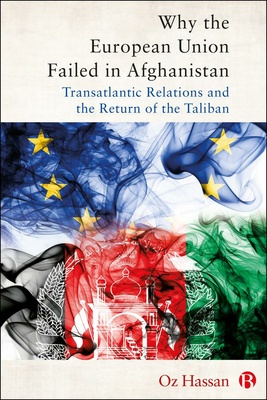
In August 2021, the US-led coalition withdrew from Afghanistan. The Taliban quickly returned to power leaving many wondering what 20-years’ worth of state-building efforts, and considerable loss of life and treasure, had been for. The EU had been a key actor in state-building activities, and, in 2022, the author was asked by the European Parliament’s Foreign Affairs Committee to undertake the first external evaluation of the EU’s efforts in Afghanistan. This book will publish the conclusions of this research, providing a critical analysis of the EU’s policies towards Afghanistan and offering evidence-based recommendations to address these failures, providing valuable lessons for future EU state-building efforts worldwide. It will show that the EU’s state-building exercises were inadequate and deeply flawed; failing to account for the growing insecurity within Afghanistan and changes within the US strategy. While the EU did have successes, such as the establishment of a peace deal that held for some time, corruption and working at cross-purposes with the USA’s shorter-term commitments hindered these successes.
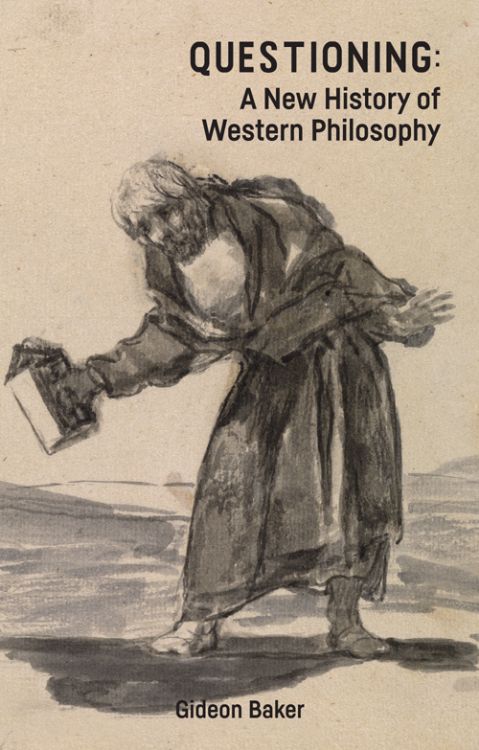
The cover of the book, with Francisco Goya’s ink and pencil image of a begging man (No lo encontraras – You will not find him)
Studies the questions of 18 ancient, medieval and modern philosophers, from Socrates to Judith Butler
Takes a new approach to the history of Western philosophy around the theme of questioning
Looks at an equal balance of ancient and modern philosophers (plus two medieval philosophers) showing how the ancient and the modern are connected
Questions Western philosophy without claiming a God’s-eye view from above it
Gideon Baker provides a gripping genealogy of Western philosophy as a history of questioning. As well as revealing the ancient in the modern, Baker reflects on newer questions in Western philosophy, including: is human being uniquely defined by questioning? And does the negativity of questioning lead to nihilistic despair?
Staying faithful to his theme, Baker calls Western philosophy itself into question, asking why questioning should be seen as central to the true life. Is this not the same prejudice that led Socrates, at the beginning of Western philosophy, to ask whether the unexamined life is worth living?
Far from being timeless, the questioning that lies at the heart of Western philosophy has a strange and unsettling history that concerns us all.
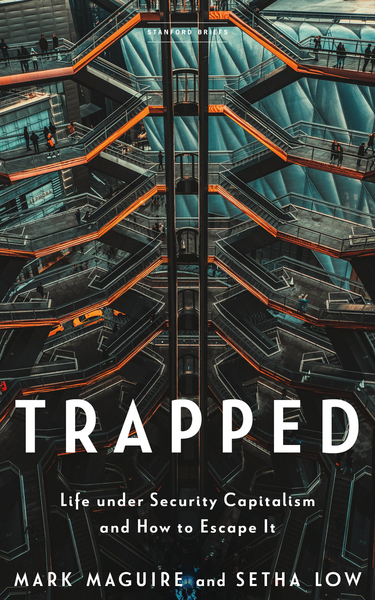
cover of the book with image of The Vessel at Hudson Yards in Manhattan
Exploring the pernicious influence of security capitalism on neighborhoods, airports, cities, and states.
Calls to defund the police or to stop brutal police violence, argue Mark Maguire and Setha Low, will never succeed as long as there are those who enjoy and take comfort in security capitalism. Security capitalism can be recognized by the marks it leaves on society, remaking public space in its own image—privatized, fortified, unequal, striated, and access-controlled. With a global and comparative lens that takes readers from Nairobi to New York City, Maguire and Low offer intimate portraits of the people behind security capitalism—the police, policy makers, and private contractors who agree that a price must be paid in blood to maintain public safety—and critique phenomena like the transfer of public funds to arms dealers via the militarization of police, securitized housing developments, and ineffectual counterterrorism efforts.
But more than just an exposé of the nefarious corporations, corrupt agencies, and incompetent governments, this book uniquely shines the spotlight on the ordinary citizens whose desires for safety drive these phenomena. Angela Davis has written of the challenge of persuading people that “safety, safeguarded by violence, is not really safety.” Maguire and Low aid us in thinking through the challenge, providing a common language to discuss security capitalism and offering ways to escape its clutches.
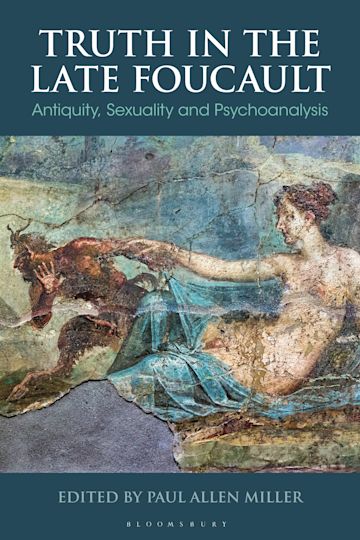
The first full treatment of truth as a core philosophical concept in the late Foucault, this volume examines his work on the ancient world and the early church. Each essay features a deep examination as to how the topics of truth and sexuality intersect with and focus on Foucault’s engagement with ancient philosophy and thought. Truth in the Late Foucault offers readings on Plato, Artemidorus, Cicero, Sophocles and the Stoics, and pays close attention to Cassian, Paulinus of Nola, and early Christian practices of confession.
With the publication of the long-awaited volume 4 of the History of Sexuality: Confessions of the Flesh, the shape of the final Foucault is now brought into stark relief. As well as looking at ancient thought, the contributors explore Foucault’s work in relation to philosophers such as Gadamer, Heidegger, Derrida and Descartes. Foucault’s long-running and often contentious dialogue with psychoanalysis, on the relation between truth and the subject, is also examined. Each essay not only makes an important statement, but also is part of an interconnected arc of topics and understanding, covering both the ancient and modern periods. This book reveals that Foucault’s concern with antiquity raises questions deeply pertinent to the present moment.
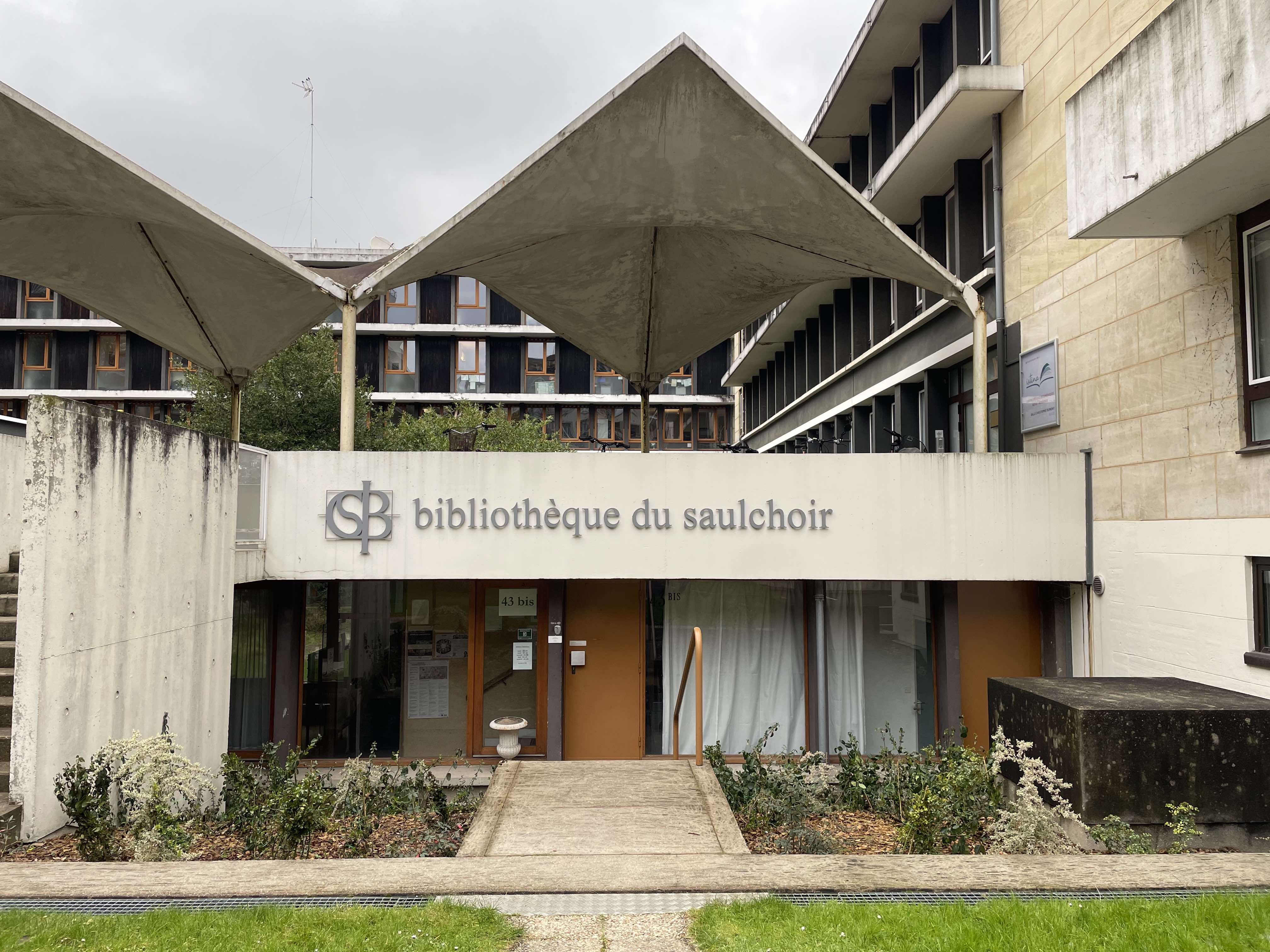
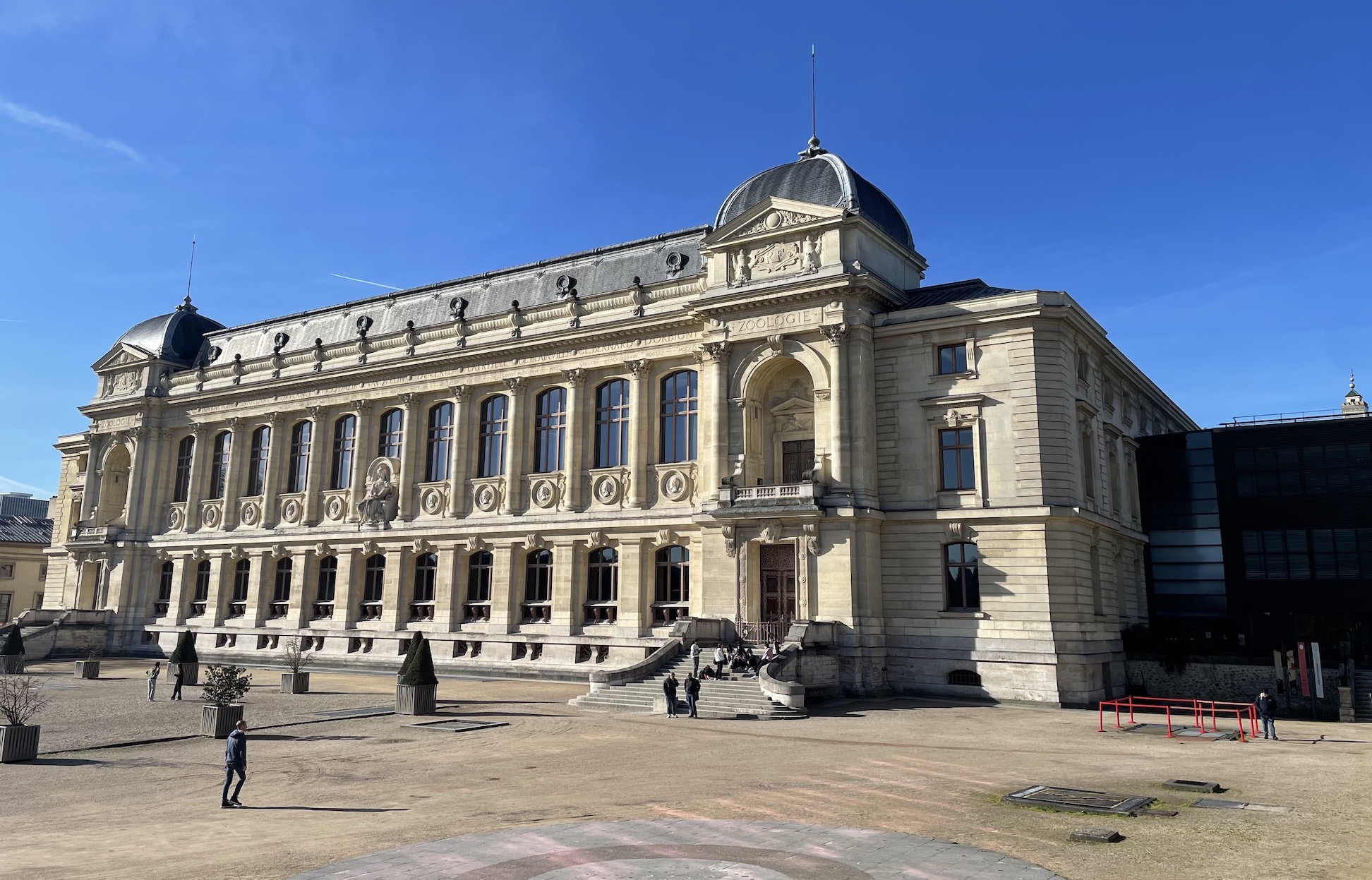
Photographs of Humathèque Condorcet, Bibliothèque universitaire des langues et civilisations (BULAC), Bibliothèque du Saulchoir and Muséum national d’histoire naturelle
In the last update on this project, I talked about the Paris archival work I’d done in early February. There were a few loose ends of references when I got back from Paris, most of which I was able to resolve at Warwick or Oxford libraries. The notes I’d taken from the Fonds Lucien Tesnière helped with situating a couple of discussions of Benveniste’s Origines, published in the Bulletin de la Faculté des Lettres de Strasbourg in 1937. A few letters in the Fonds Alexandre Kojève, one of which was from Henri Lefebvre, spurred me to write a very short piece on a collaborative project that never was. It doesn’t really have a connection to this project, but I wrote a little piece setting out what I could find here. I’ve also started writing another only tangentially connected piece, about Alexandre Koyré’s unsuccessful attempt to get elected to the Collège de France, based on archival materials, which will need a bit more work.
I’ve followed up a few leads about Benveniste’s exclusion from the Collège de France during the war, because of the 1940 Vichy law on Jewish people not holding certain professions. I know this is also going to need a bit more digging. Other Jewish professors took early retirement, including Marcel Mauss, but Benveniste was only in his mid-thirties at the time. The prohibition was rescinded after the liberation, but I’m somewhat amazed by the idea that he could just return and work with people, particularly the administrator, who had put this exclusion into practice. Benveniste’s movements in the war is a fascinating topic, and while the sources I’m drawing on, at least so far, have been used by others, I think I’m able to join some dots in an interesting way.
Although Benveniste didn’t publish anything for four years during the war, and lost his working notes when his apartment was ransacked during the Occupation, he quickly resumed writing in the second half of the 1940s. His essay on the first, second and third persons of the verb was reprinted in his Problems of General Linguistics in 1966, and some other essays from this period are in the posthumous Langues, cultures, religions collection. “Le jeu comme structure [Play as structure]” and some on Indo-European social relations – medicine, social classes and the oath – are perhaps the most interesting of these. When Noms d’agent et noms d’action en indo-européen was published in 1948, the Avant-Propos briefly acknowledges the author’s delay due to “other publications, the interruption of the war, the loss of all his working manuscripts and the need to reconstitute the entire documentation” (p. 5 n. 1).
I also did a bit of work on Benveniste’s 1947 fieldtrip to Persia and Afghanistan, which is mentioned in accounts of his life and his teaching record. A day-by-day account was published by Mohammad Nabi Kohzad, who accompanied Benveniste on the trip. Benveniste’s notebooks from this work are in the archives, and there were plans for a book on the topic of vocabulary across dialects, which he never completed. Georges Redard planned to edit the material after Benveniste’s death, and listed the book as forthcoming. It never appeared, though there are some indications in Redard’s hand of what it could have contained. There is a report on the fieldwork in his archives, which I don’t think was ever published.
I then went back in Paris for two more weeks, working on quite a lot of different things. I looked at a few letters in the Fonds Raymond Aron, some of Georges Bataille’s working notes for lectures on religion, which show his engagement with Mircea Eliade, and a few manuscripts in the Fonds Roland Barthes which discuss Benveniste, all at the Bibliothèque nationale. Some of those Barthes texts are published, but there are a couple of lectures in courses which are not. I’m not sure what I will do with this material, but it was interesting to look at. I also looked at the manuscript of one of Foucault’s Collège de France courses; one of the first to be published, for which they just used the recordings. The manuscript is quite different in places, and has some interesting moments, though much is missing. In particular, I found it interesting for having material he presented in the parallel seminar. As I’ve said before, when providing a list of the topics of Foucault’s seminars, we still know relatively little about what they did in those sessions – with the exception of the Pierre Rivière dossier, and some individual pieces in, for example, The Foucault Effect.
At the Muséum national d’Histoire naturelle I looked at some things in the Paul Rivet papers, including Claude Lévi-Strauss’s extensive letters to him, and some letters from Dumézil to Marcel Mauss. I had discovered that they had some of the Mauss archive there by chance – the other and much larger part is at the Collège de France, along with the Henri Hubert papers. (The latter collection comprises the papers which, like those of Dumézil and some other Collège de France professors, used to be at IMEC.) I also got a card for the fairly new Humathèque Condorcet, which has some records from the EPHE and the EHESS. I took an initial look at some of the EPHE papers, which include a few student notes from Benveniste courses for which I don’t think there is another record beyond the brief reports in the Annuaire.
I also made a visit to the Bibliothèque du Saulchoir, a Dominican library which Foucault used for his research on antiquity in the last five years of his life. I’d never had a reason to go before – it once held the collection of the Centre Michel Foucault, but that moved to IMEC a long time ago. There is a short piece about Foucault’s use of the library by the former librarian Frère Michel Albaric here. It’s a nice quiet place to work, looking onto a little garden. I was there to look at some letters from Dumézil and, especially, Benveniste, to Jean de Menasce. As the last update said, other parts of de Menasce’s archive are at the Bibliothèque universitaire des langues et civilisations (BULAC), which I’ve also consulted. There are other things at the Saulchoir which I might request to look at on a future visit.
I also continued work on the Benveniste and Dumézil archives at the Collège de France, and have completed an initial survey of most of the material they have. I also went through some of the administrative papers for the Assemblies of Professors when key decisions were taken, such as elections. As I usually do, I also made use of the main Bibliothèque nationale site to look at some things which are hard to find in the UK. Across the last three trips to Paris I’ve managed to complete a lot of the work I wasn’t able to do last year. I should be back next in late May. There are a few things at the Archives Nationales for which I’ve requested authorisation, and one file is in a store which is being treated for asbestos, so isn’t currently accessible.
The main thing in Paris which I haven’t even begun to work with is the Benveniste archive at the Bibliothèque nationale, though as far as I can tell, most of that material relates to later parts of his career. I haven’t yet looked at other potentially interesting archives held at the Collège de France, including the Mauss-Hubert, Paul Pelliot and Antoine Meillet ones. I’m going to need to have a plan for a targeted approach with these, given the scale of what they hold, and how much time it would require to even do an initial survey. (The Meillet inventory I have is 300 pages long; the Mauss-Hubert over 1000.) There is some work I’d like to do in Switzerland, and at some point I’d like to get to IMEC for a few things. I’m not sure if I’ll get to places further afield – there are small things which might be interesting to do in several other European cities, but in such a range of places it’s hard to think of a way to do this that isn’t a lot of individual trips. There are other archives in and around Paris, or elsewhere in France which might hold some interesting things. There is always more, of course, but I feel in a few areas I am actually finishing tasks, rather than what has often felt like completing one thing only meant there were four more to do.
I am grateful to Ian Klinke and Jean-François Drolet for an invitation to respond to Ishan Ashutosh’s paper at the “Geopolitics and the Critique of Liberal Order” workshop at St. John’s College, Oxford. While the focus was the contemporary far-right, it was thoroughly informed by the history of ideas and led to some very helpful conversations.
I am now very close to completing a draft of the chapter on Benveniste in the 1930s and 1940s, which has taken far longer than I planned, and is very long. I might have to split this chapter or move material elsewhere. There are a few unresolved things for which I need to consult archives in Switzerland, but I really need to leave Benveniste behind for now and turn back to Dumézil in the 1930s and 1940s for the parallel chapter.
Previous updates on this project can be found here, along with links to some research resources and forthcoming publications, including the still-delayed reedition of Georges Dumézil’s Mitra-Varuna. There is a lot more about the earlier Foucault work here. The final volume of the series, The Archaeology of Foucault, and the special issue of Theory, Culture & Society I co-edited on “Foucault before the Collège de France” are both now published.
In Apartheid Remains, Sharad Chari explores how people handle the remains of segregation and apartheid in South Africa as witnessed through portals in an industrial-residential landscape in the Indian Ocean city of Durban. Through long-term historical and ethnographic research, Chari portrays South Africa’s twentieth century as a palimpsest that conserves the remains of multiple pasts, including attempts by the racial state to remake territory and personhood while instead deepening spatial contradictions and struggles. When South Durban’s denizens collectively mobilized in various ways—through Black Consciousness politics and other attempts at refusing the ruinous articulation of biopolitics, sovereignty, and capital—submerged traditions of the Indian Ocean and the Black Atlantic offered them powerful resources. Of these, Chari reads Black documentary photography as particularly insightful audiovisual blues critique. At the tense interface of Marxism, feminism, and Black study, he offers a method and form of geography attentive to the spatial and embodied remains of history. Apartheid Remains looks out from South Durban to imaginations of abolition of all forms of racial capitalism and environmental suffering that define our planetary predicament.