Philipp Felsch, How Nietzsche Came in from the Cold – Polity, trans. Daniel Bowles, March 2024

Philipp Felsch, How Nietzsche Came in from the Cold: Tale of a Redemption – trans. Daniel Bowles, Polity, March 2024

I’ve mentioned the German Wie Nietzsche aus der Kälte kam before, along with the interview with Felsch at the Journal of the History of Ideas blog, by Isabel Jacobs (part Ipart II). His earlier book, The Summer of Theory: History of a Rebellion, 1960-1990 was translated by Tony Crawford for Polity in 2021.

Nietzsche’s reputation, like much of Europe, lay in ruins in 1945. Giving a platform to a philosopher venerated by the Nazis was not an attractive prospect for Germans eager to cast off Hitler’s shadow. It was only when two ambitious antifascist Italians, Giorgio Colli and Mazzino Montinari, began to comb through the archives that anyone warmed to the idea of rehabilitating Nietzsche as a major European philosopher. 

Their goal was to interpret Nietzsche’s writings in a new way and free them from the posthumous falsification of his work. The problem was that 10,000 barely legible pages were housed behind the Iron Curtain in the German Democratic Republic, where Nietzsche had been officially designated an enemy of the state. In 1961, Montinari moved from Tuscany to the home of actually existing socialism to decode the “real” Nietzsche under the watchful eyes of the Stasi. But he and Colli would soon realize that the French philosophers making use of their edition were questioning the idea of the authentic text and of truth itself.

Felsch retraces the journey of the two Italian editors and their edition, telling a gripping and unlikely story of how one of Europe’s most controversial philosophers was resurrected from the baleful clutch of the Nazis and transformed into an icon of postmodern thought.

Posted in Uncategorized | Leave a comment

Books received – Binswanger & Warburg, Auffret, Foucault, Dumézil, Benveniste et. al, and Derrida

Photo of the books described in the post

Some recently-bought books, mostly in Paris, including Foucault’s very early La constitution d’un transcendantal historique dans la Phénoménologie de l’esprit de Hegel: Mémoire du diplôme d’études supérieures de philosophie and the most recently published seminar from Jacques Derrida, Répondre – du secret. Séminaire (1991-1992). The oldest book here, La civilisation iranienne, has contributions from Dumézil and Benveniste, among others. Although I don’t think it’s mentioned in the book, the contributions were originally broadcast on RTF in the late 1950s.

Posted in Emile Benveniste, Georges Dumézil, Jacques Derrida, Ludwig Binswanger, Michel Foucault, Uncategorized | Leave a comment

Enrique Dussel, The Theological Metaphors of Marx – trans. Camilo Pérez-Bustillo, foreword Eduardo Mendieta, Duke University Press, April 2024

Enrique Dussel, The Theological Metaphors of Marx – trans. Camilo Pérez-Bustillo, foreword Eduardo Mendieta, Duke University Press, April 2024

the introduction is open access here

In The Theological Metaphors of Marx, Enrique Dussel provides a groundbreaking combination of Marxology, theology, and ethical theory. Dussel shows that Marx unveils the theology of capitalism in his critique of commodity fetishization. Capitalism constitutes an idolatry of the commodity that undergirds the capitalist expropriation of labor. Dussel examines Marx’s early writings on religion and fetishism and proceeds through what Dussel refers to as the four major drafts of Capital, ultimately situating Marx’s philosophical, economic, ethical, and historical insights in relation to the theological problems of his time. Dussel notes a shift in Marx’s underlying theological schema from a political critique of the state to an economic critique of the commodity fetish as the Devil, or anti-God, of modernity. Marx’s thought, impact, and influence cannot be fully understood without Dussel’s historic reinterpretation of the theological origins and implications of Marx’s critiques of political economy and politics.

Posted in Eduardo Mendieta, Enrique Dussel, Karl Marx, Uncategorized | Leave a comment

Bruce O’Neill, Underground: Dreams and Degradations in Bucharest – Penn Press, April 2024

Bruce O’Neill, Underground: Dreams and Degradations in Bucharest – Penn Press, April 2024

This book gets to the bottom of the twenty-first-century city, literally. Underground moves beneath Romania’s capital, Bucharest, to examine how the demands of global accumulation have extended urban life not just upward into higher skylines, and outward to ever more distant peripheries, but also downward beneath city sidewalks. Underground details how developers and municipal officials have invested tremendous sums of money to gentrify and expand Bucharest’s constellation of subterranean Metro stations and pedestrian pathways, basements and cellars, bunkers and crypts to provide upwardly mobile residents with space to live, work, and play in an overcrowded and increasingly unaffordable city center. In this sense, the repurposed underground facilitates dreams of middle-class ascendancy. This sense of optimism, the book shows, invariably gives way to ambivalence as the middle classes confront the indignities of being incorporated into the city from below.

Bruce O’Neill argues that these loosely coordinated efforts have not only introduced novel forms of social fragmentation but also a new aesthetics of inequality that are fundamentally shaping where and how the middle classes fit in the city. Pushing urban studies beyond a cartographic perspective—with its horizontal focus upon centers and peripheries, walls and gates—O’Neill brings into focus the vertical dynamics of gentrification that place some “on the bottom” and others “on top” of the city. As cities around the world extend further downward in the name of development and sustainability, Underground makes clear that scholars and practitioners of the twenty-first-century city will need to become ever more attuned to the cultural politics of urban verticality, asking not just who is included in the city and who has been pressed outside of it, but also who is on top and who is placed on the bottom.

Posted in Uncategorized | 1 Comment

La Toupie folle – The Pragmatic Genealogy of Concepts

La Toupie folle – The Pragmatic Genealogy of Concepts

Our research project, The Pragmatic Genealogy of Concepts funded by a Small Grant from the British Academy and Leverhulme Trust, concerns, as its primary object, an issue of the journal Recherches(number 13) from December 1973, which bears the title La Généalogie du capital: les équipments du pouvoir. The issue is the result of a working group of the organisation CERFI (Centre d’études, de recherches et de formation institutionelles), established by French activist, psychiatrist and philosopher Félix Guattari in 1965.

The project is a collaboration between Susana Caló, Patrick ffrench and Daniel Nemenyi. Much more at the project website.

This journal issue was one of the collaborative projects with which Foucault was involved. More on those here.

Posted in Uncategorized | 1 Comment

Gillian Rose, Tips for planning research leave

The geographer Gillian Rose with some Tips for planning research leave

Posted in Uncategorized | Leave a comment

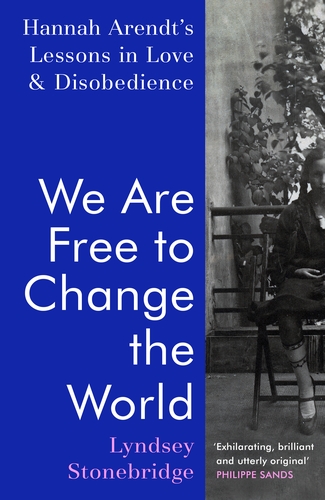
Lyndsey Stonebridge about the writing and research behind a new book on the work of Hannah Arendt

I’ve learnt from Arendt the necessity – as well as dangers – of speaking your mind.

Thanks to Dave Beer for the link.

The book being discussed is Lyndsey Stonebridge, We are Free to Change the World: Hannah Arendt’s Lessons in Love and Disobedience – Penguin, January 2024 (USUK).

Posted in Uncategorized | Leave a comment

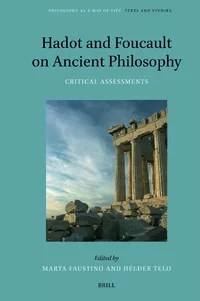
Marta Faustino and Hélder Telo (eds.) Hadot and Foucault on Ancient Philosophy: Critical Assessments – Brill, March 2024

Marta Faustino and Hélder Telo (eds.) Hadot and Foucault on Ancient Philosophy: Critical Assessments – Brill, March 2024

Some interesting looking chapters from a good range of people, but a terrible price, where the e-book is even more expensive than the physical one. Presumably because of VAT, but there are obviously many other costs associated with a physical book.

The affinities between Pierre Hadot’s and Michel Foucault’s interpretations of ancient philosophy, as well as their impact, are well-known. However, these interpretations have been criticized in several crucial points. This book provides the first extensive critical assessment of these interpretations. It brings together specialists in ancient philosophy, as well as Hadot and Foucault scholars, in order both to explore criticisms and clarify Hadot’s and Foucault’s accounts.

In doing so, it not only offers an overview of the main trends in Philosophy as a Way of Life, but also recasts the debate and opens new paths of inquiry in the field.

Posted in Uncategorized | 1 Comment

William K. Carroll (ed.), The Elgar Companion to Antonio Gramsci – Edward Elgar, January 2024

William K. Carroll (ed.), The Elgar Companion to Antonio Gramsci – Edward Elgar, January 2024

You can probably guess from ‘companion’ that this is an interesting-looking collection at a crazy price…

Affirming Antonio Gramsci’s continuing influence, this adroitly cultivated Companion offers a comprehensive overview of Gramsci’s contributions to the interdisciplinary fields of critical social science, social and political thought, economics and emancipatory politics. Within the tradition of historical materialism, it explores the continuing impact of Gramscian perspectives in the present day.

Featuring contributions from eminent scholars, the Companion engages with Gramsci’s thought in the broader context of his life, outlining his innovative theoretical and historical analyses of capitalist modernity. Key themes within Gramscian theory are examined such as historical bloc, passive revolution, integral state, and civil society, which elaborate upon the core concept of hegemony. Chapters map out the development of historical materialism and rigorously analyse contemporary issues of urgency including climate breakdown, the rise of far-right populism, and increasing geopolitical tension.

Offering a state-of-the-art review of Gramscian theory, this Companion will prove beneficial to academics, researchers and students from across the social sciences and humanities, and will be essential reading for those interested in political economy and political theory, sociology, philosophy, radical and feminist economics, environmental studies, gender studies, and post-colonial and cultural studies.

Posted in Uncategorized | Leave a comment

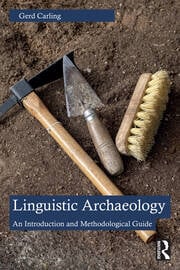
Gerd Carling, Linguistic Archaeology: An Introduction and Methodological Guide – Routledge, May 2024

Gerd Carling, Linguistic Archaeology: An Introduction and Methodological Guide – Routledge, May 2024

Linguistic Archaeology provides students with an accessible introduction to the field of linguistic archaeology, both as theoretical framework and methodological toolkit, for understanding the conceptual foundations and practical considerations involved in reconstructing the prehistory of language.

The book introduces the field’s expansion out of traditional approaches to focus more on the interplay of related disciplines and the reconstruction of human language beyond the written period. The opening chapter outlines key theories and charts their development from the nineteenth century through to today, drawing on work from computational historical linguistics, phylogenetics, and linguistic anthropology. Subsequent chapters build on theory to take a hands-on approach in mining empirical data in the process of reconstructing language prehistory, including references, links, and instructions to open access resources, and offering a step-by-step guide for employing the rich range of available methods in working with this data. Closing chapters situate theory and method in context against chronological and geographic perspectives and look ahead to future trajectories for continued progress in this emerging area of study.

Offering a holistic entry point into linguistic archaeology, this innovative volume will be a helpful resource for students in historical linguistics, linguistic anthropology, language evolution, and cultural geography.

Posted in Uncategorized | Leave a comment